All posts by admin

Mangaluru family makes flags out of pride and passion

Much before preparations for the Independence Day begin, flag-makers across the country work without a pause .

Krishna Shetty at his fruit shop at Padil

Mangaluru :

Much before preparations for the Independence Day began, flag-makers across the country work without a pause. The Shetty family from Talapady, located about 26 km from Mangaluru city, has also been flooded with orders for the last two months to make tricolours of various sizes for the occasion.

Flag-making, however, is not the main job of Jayanth Shetty, who works at a cloth showroom in the city. Despite being preoccupied with the wholesale distribution job, he has been making flags for over 25 years. As Independence Day nears, his days get busier, since orders for flags start pouring in.

“It was in the 1990s, when I was working in a shop owned by a flag-maker, Dooja Poojary, that I got inspired to take up the work. Initially, it seemed to be a Herculean task since we had no machines to rely upon, and everything was made by hand,” he recalls.

A lot of care goes into stitching the flag in the exact required size, and also in the screen printing process, Shetty points out. “If there is an error, the piece gets rejected,” he says, adding that now, printed flags have taken over hand-woven ones, which are mostly supplied from Chennai.

The material used for the tricolour is sourced from wholesale dealers from Surat and Ahmedabad. “We use polyester, which is later cut into required sizes and stitched,” explains Shetty, who claims to be the sole flag-maker in Mangaluru. He does the machine stitching and screen printing of the blue Ashoka Chakra of specific size with the help of his family members — his daughter Divya, who works as an accountant; son Amarnath, a cashier; and wife Jayashree, a home-maker. His brother, Krishna Shetty, too helps in the display and sale of the flags at his fruit shop at Padil a week before the Independence Day.

It takes 10 minutes for the Ashoka Chakra to be printed on the piece of white cloth, while the whole process of making one flag takes nearly 20 minutes. The tricolour is made in six sizes, ranging from large cloth banners to small hand-held ones. This year, the family has already produced almost 800 flags at their house, which have been dispatched. On an average, 1,000 flags are made every year and sent to schools, government offices and wholesalers.

“When I started, we used to supply flags free of cost to government schools, clubs and schoolchildren. However, today the demand has come down, due to the availability of printed flags, which mostly come from outside the state,” Shetty says. “At present, we supply only to dealers in Dakshina Kannada who buy in bulk,” he says recalling an earlier order that required him to supply a large tricolour cloth banner to a foreign country. Shetty is now a recognised figure in the town because of his work. Dr Yathish Kumar, associate professor, Department of Commerce, University College, lauds him for the passion he puts into the job.

“The three colours in the flag are a symbol of unity of India. There is universal affection and respect for the tricolour. Jayanth is one of the few persons in Dakshina Kannada who is into this noble work despite having a busy schedule. All the work done out of respect for our country must be appreciated and supported,” Kumar says.

Shetty too finds satisfaction in the fact that the job involves the feeling of working for the country. “We are not into flag-making to earn any profit,” he says. “We do it purely out of the respect and pride that we have towards India.”

source: http://www.newindianexpress.com / The New Indian Express / Home> States> Karnataka / by Divya Cutinho / Express News Service / August 18th, 2019
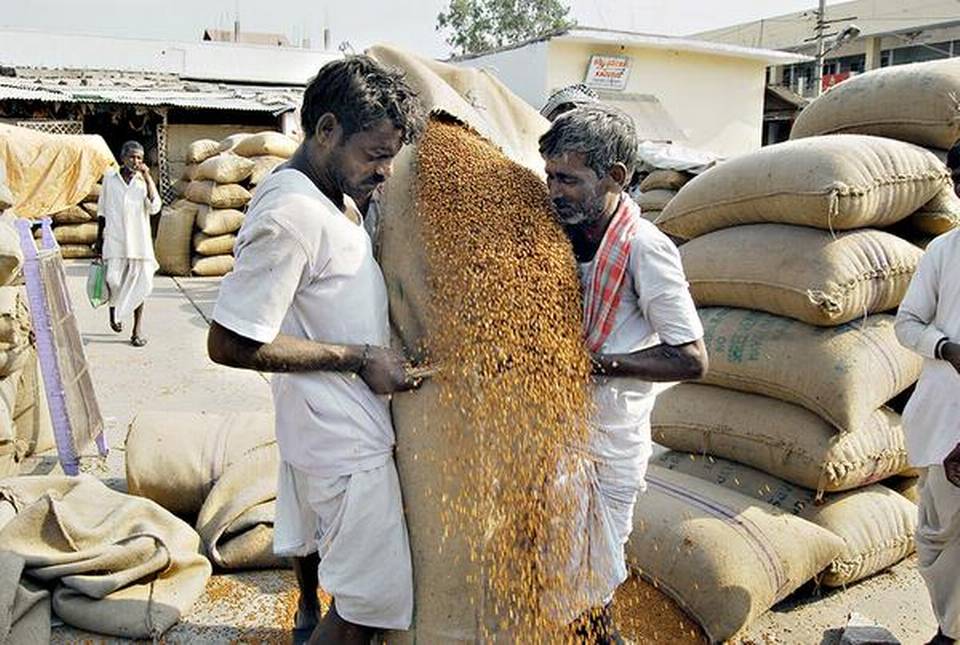
Gulbarga tur dal gets GI tag

GulbargaTurDalbf26aug2019

‘Status achieved after a long and cumbersome process that lasted two years’

The ‘Gulbarga tur dal’ (Kalaburagi red gram), renowned for its superior quality the world over, received Geographical Indication (GI) tag from the government recently.

Speaking to The Hindu on Friday, Dean of Agriculture College Jayaprakash R. Patil and Muniswamy, agriculture scientist at the Agriculture Research Station in Kalaburagi, said that after a long and cumbersome process which lasted two years, the ‘Gulbarga tur dal’ finally got GI status on August 14.

The application was filed by the University of Agriculture Sciences (UAS) Raichur and the Karnataka Red Gram Development Board, with the help of ICRISAT, Intellectual Property Facilitation Centre (IPFC) Hyderabad with Geographical Indications (GI) Registry, in September 2017.

Dr. Muniswamy said the team of scientists from the research station has redrafted the description with the additional specification of GI product and the special characteristics and quality parameters of the produce to get the product certified with GI tag.

He said the high calcium and potassium content of the soil in Gulbarga tur dal-growing region has been one of the major factors for its suprrior quality. According to soil test reports Kalaburagi soil contains 3.6 g/100g calcium and 0.1 g/100g potassium. Whereas the soil sample in Bengaluru contains 0.135 g/100g calcium and 0.045g/100g potassium.

The other test parameters include volume, grain weight after cooking, leachable solid per cent, texture, appearance, colour, flavour, taste, and smell. The tur dal here has a good taste and aroma compared to that grown elsewhere. It also takes less time to cook.

Now, the research station, in association with the Agriculture Department and the farmers’ forum, should organise awareness programmes across the district to make farmers aware of the benefits of the GI tag, Dr. Muniswamy said, adding that the GI tag helps red gram growers get a premium price. Besides minimum support price, the farmers growing tur dal of GI standard can increase the price by 10%.

Dr. Muniswamy said that initially, GI status may not work wonders for the farmers, but in the long term, it would command a better price and create international demand for the produce.

Red gram is the main kharif crop in the Hyderabad Karnataka region. Of the total 9 lakh hectares of red gram cultivated across the State, around 3.7 lakh hectares of the crop is grown in Kalaburagi district alone.

source: http://www.thehindu.com / The Hindu / Home> News> States> Karnataka / by Praveen B. Para / Kalaburagi – August 25th, 2019

Women come out with flying colours

Bengeri unit in Hubballi is the only authorised one in the country to make the official National Flag.

Women employees give final touches to the tricolour | D Hemanth

Hubballi :

As the 73rd Independence Day went by, a tiny village in North Karnataka got busy. To be specific, the women force. This year was no different.

Meet the women behind the making of the Tricolour. For the last two months, the women employees of the country’s largest National Flag manufacturing unit in Hubballi worked in double shifts to meet the demand. This is the only authorised unit, located in Bengeri, Hubballi, in the country to produce the National Flag.

An employee irons the flag

About 1,200 women working in 22 centres in Bagalkot district prepare the cloth – spinning and weaving — for the  flags which are manufactured in  Bengeri, run by the Karnataka Khadi Gramodyoga Samyukta Sangha (KKGSS). About  1,500 employees are attached to the Sangha in Hubballi, of whom 90% of the employees are women.
For years, the Khadi Bhandar has played a vital role in the lives of women in Bagalkot, Viajyapura and Dharwad districts.

It all started in 1981, when the Vijayapura region faced severe drought, drying up job opportunities too, hitting the rural population hard. The government then stepped in to bridge the ‘yarning’ gap. It decided to start khadi spinning units in Vijayapura district and it gave a big boost to the rural  women in the drought-hit areas.

The women in these centres started sewing khadi materials. In 2004, the Bengeri unit got  government’s recognition to start manufacturing the National Flag. Since then, these women have marched on, spinning a success story. The flags are made to specific standards laid down by the Flag Code. There are specifications for the cloth, the yarn and the dye. The dye shouldn’t get washed away by rain. So all these things are tested for every flag. A piece is rejected even if there is the slightest error. They have to follow exacting standards set up by the Bureau of Indian Standards (BIS).

The flags produced here are fluttering not only in India but also around the world. These flags adorn the Parliament building, the Supreme Court and the Red Fort in New Delhi. And This year it was special because the flag was hoisted in the ‘new’ Jammu and Kashmir after the abrogation of Article 370 and the state becoming  a Union Territory.

“It’s a proud feeling to make the National Flag. When everyone including the Prime Minister salutes the flag made in Hubballi,  we feel our hard work  has paid off. Be it a child or anyone, everyone has respect for the  National Flag and we are proud to be part of the making process,” says Annapurna Koti, manager at the flag making unit.

Priya Ballari, an employee at the unit, says, “In a day we make about 20-30 standard-sized flags. We work with patriotic fervour and It gives us  a sense of satisfaction.”
She adds, “We are paid according to our  timings. Both the central and state governments are trying to increase our wages and other facilities like medical aid. We begin our day when our children go to school and wind up by the time they return home. Sometimes we do overtime to meet the demand which surges during the national festivals.”

“The right mixture of cotton and khadi materials is procured from our branches operating in Bagalkot and Dharwad districts. Bengeri is the only BIS-certified national flag-making unit in India and we are proud to be associated with it. The Federation  has plans to popularise khadi and also  increase the production of other materials and items made here. There is a  sale counter in Bengeri unit and the public can choose from several items,” says an employee. “My husband is an autorickshaw driver. It is difficult to run the family on his earnings alone.  After I joined the flag-making unit about two years ago, we are financially better off. Our wages are decided by the Union minister and there is scope for incentives for overtime. When my husband is free and can take care of our children, I do overtime here,” she adds.

In the last 15 years, the unit has produced and sold more than one crore national flags of different sizes. The Bengeri unit is also known for producing the largest-sized khadi National Flag measuriung 14X21 feet. It requires about eight workers to complete it in a day and it weighs about 10 kg.
When the demand increases, all the womenfolk  extend their working hours. As the orders are increasing every passing year, the unit makes the flags throughout the year.

Secretary of KKGSS Shivanand S Matpathi says women employees are the main force behind the unit in Hubballi. “On an average, 2.5 lakh flags of different sizes are made at the Hubballi unit every year. The demand for flags during August 15 and January 26 increases and also work of the women employees. Jobs like stitching, screen printing and ironing are done by the women employees. When the demand for flags increases, all the employees work for additional hours to meet the demand,” he says.

“Ours is a BIS-certified unit. It’s mandatory for all government and private organisations to buy ISI-marked national flags for the celebrations. For the last few years the demand for khadi flags has increased after the government made it mandatory. As all the panchayat buildings hoist tricolour every day, they need at least three flags per year. This has increased the business at the khadi unit here,” he adds.

source: http://www.newindianexpress.com / The New Indian Express / Home> States> Karnataka / by Amit S. Upadhye / Express News Service / August 18th, 2019

Veerappa Award for Kalaburagi artist

Artist Mallikarjun Korvarkar

Kalaburagi-based senior artist Mallikarjun Korvarkar has been selected for the M. Veerappa Endowment Fund Award.

The award will be given at a function to be held in Mysuru.

The award carries a citation and a cash prize of ₹ 68,000.

The senior artist, hailing from Kalagi taluk in Kalaburagi district, is known for his portrait painting, landscapes, film poster designing and screen designs.

M. Veerappa Endowment Fund was established in 2015 by Mysore Toys owner Praful Chandra in memory of his father M. Veerappa.

source: http://www.thehindu.com / The Hindu / Home> News> States> Karnataka / by Staff Reporter / Kalaburagi – August 24th, 2019

Centenary celebrations of Pandit Rajguru begin today

PanditRajguruBF26aug2019

The year-long centenary celebrations of Pandit Basavaraj Rajguru, the renowned Hindustani vocalist from the State, will start on Saturday, the day that marks his 100th birth anniversary.

Pandit Rajguru, hailing from Dharwad, was from the Kirana Gharana and a student of the music legend Sawai Gandharva along with Gangubai Hangal and Bhimsen Joshi. A Padma Bhushan recipient, he died in 1991. He was a contemporary of Kumara Gandharva and Mallikarjun Mansoor.

Parameshwara Hegde, a noted Hindustani vocalist and a student of Pandit Rajguru, said, “Rajguru Smruti, a trust in memory of the late musician, will hold a concert every month through the year.”

The first concert will have vocalist Rekha Bhat, Kotemane, and Pt. Prabir Bhattacharya on the sitar. It will be held on Saturday at Subhash Bhavan, Ideal Homes Layout, Rajarajeshwari Nagar, Bengaluru.

source: http://www.thehindu.com / The Hindu / Home> News> States> Karnataka / by Staff Reporter / Bengaluru – August 24th, 2019

The dawn of a golden era in Bengaluru

GoldenBengaluru01BF24aug2019

The period between 1900 to 1940, is a golden era of all-round development of Bengaluru as well as Mysore Province, mainly due to the vision and dedicated efforts of the magnificent trio, The Maharaja Krishnaraja Wadiyar IV, Sir M. Visvesvaraya (Sir M.V.) and Sir Mirza Ismail. Under the patronage of the Maharaja, Sir M.V. made Bengaluru a prominent centre for industry, trade and commerce while Sir Mirza made the city beautiful.

Dr. DVG who had seen Sir MV from very close quarters takes us through various incidents and anecdotes painting a competent picture of him, a role model for the subsequent generations, particularly for the administrators. Writer Masti Venkatesha Iyengar, edited an excellent volume on Sir M.V. containing contributions of stalwarts of various walks of life. Both in English and Kannada, there are several books published on the life and achievements of ‘The Father of Modern Mysore State’, ‘The Architect of Neo Bangalore’ and ‘The Mahatma of Industrial India’.

GoldenBengaluru02BF24aug2019

ir MV was born in Muddenahalli, a village about sixty kilometres away from Bangalore. He was brought to the city by his uncle, H. Ramaiah. After completing his early education in Weslyian Mission School, he joined Central College. He was very much liked by the college principal Charles Waters. He had given his personal copy of Webster’s Dictionary appreciating his pupil’s principles.

Recognizing his brilliance, Dewan Rangacharlu sanctioned scholarship to take up engineering course in Poona. After completing the studies, Sir MV joined Mumbai Government as an Assistant Engineer. Various projects entrusted to him were successfully done and he was very widely known for his engineering skills. He became a member of Experts Committee of Mumbai University and also started the Deccan Club in Poona. He had close links with the great national leaders like Gopal Krishna Gokhale, Mahadeva Govinda Ranade, Balagangadhara Tilak, Balakrishna V. Agaskar and others.

GoldenBengaluru03BF24aug2019

After the retirement from his service in Mumbai he went for a study tour of Europe. After coming back, on an invitation from the Nizam of Hyderabad he went there to Control the overflow of the river Musi and also built Hussain Sagar and Himayat Sagar, Two huge and well-known lakes to store water. He also made a comprehensive plan for the systematic development of Hyderabad City.

In 1909, while Sir M.V. was in Hyderabad, Dewan T. Ananada Rao, the Dewan of Mysore, conveyed to him that the Maharaja was eager to avail his services for the progress of the state. Sir MV, accepted offer and he was made the Chief Engineer of the state on November 15, 1909. During his three years tenure the State made a remarkable surge in the fields of Agriculture and Industries. The greatest achievement of Sir MV as Chief Engineer was Krishna Rajasagar Dam across the river Kaveri, near Mysore city.

His sincerity, dedication commitment and systematic style of functioning had impressed the Maharaja so much that soon after the retirement of Dewan T. Ananda Rao, Sir M.V. was made the Dewan of the Province in 1912. He was the first person who, as per the tradition was not drawn from the revenue and executive services of the state. Though, many eyebrows were raised due to this, The Maharaja was firm and his visionary decision paid enormous results.

Between 1912 and 1918, Bangalore witnessed a galore of century celebrations of many prestigious institutions like State Bank of Mysore, Kannada Sahitya Parishat, Agricultural University, Century Club, Government Soap Factory, FKCCI, UVCE. Sir MV has played a major role in starting these and many more such centers in the City. All these institutions have not only pushed the city towards progress, but also have been role models for some other states to take up similar ventures.

GoldenBengaluru04BF24aug2019

The saga of the journey of all these institutions through a century, are full of scintillating anecdotes, incidences and experiences which form an integral part of the history of Bangalore. State Bank of Mysore is one such remarkable financial institution of the city. The Industry and Commerce committee of the Economic Conference organization of Sir M.V. decided to start a Bank under the Patronage of Mysore Government and the Maharaja of Mysore. Thus, started the Bank of Mysore Ltd, Bangalore on October 2, 1913. Sir K.P. Puttanna Chetty was the first president, while W.C. Rose, a well-known name in the Banking Sector, was made the first Manager. The Bank started in a humble shed like structure situated at the junction of Kempegowda Road and Avenue Road. But, within a decade, the bank was too well-known and the quantum of the transactions heavily increased. To accommodate the fast growing institution it was decided in 1921 to have a bigger structure by the side of the older one. The new stone building completed in 1923 is a very interesting two storied heritage stone structure of the City. Its elevation is a mixture of European Classical and Indian elements.

Inside the building is a small shrine with a graceful white idol of Mahalakshmi, the Goddess of Wealth. It is believed that since the time of idol’s installation not only the bank has prospered well, even the surrounding area has become a very rich central business district. The Bank, after successfully running for 25 years celebrated the Silver Jubilee on December 2, 1938.

On March 1, 1960, the Bank was merged with the State Bank of India. The Bank of Mysore Ltd came to be known as State Bank of Mysore.

In 2015 a collection of my articles on the history of SBM was compiled and published under the title State Bank Hejje Gururtugalu by the Kannada Balaga to commemorate its silver anniversary and 90th year of the bank.

To be continued…

sureshmoona@gmail.com

source: http://www.thehindu.com/ The Hindu / Home> News> Cities> Bengaluru – Bringing Back Bengaluru / by Suresh Moona / August 22nd, 2019

11-year-old from Bengaluru student aims to master ancient Kannada language

Finding the language filled with tongue twists, Samruddhi Yadav decided to throw herself into learning it at the age of eight years.

Govt. pulls out all stops to promote over 40 Karnataka GI products

Channapatna toys | Photo Credit: S_S_Kumar

Karnataka has the distinction of securing the highest number Geographical Indications in the country

A mobile app that will help artisans promote GI products, easy availability of products on online retail platforms, a thriving brick and mortar marketplace that will showcase the best of what Karnataka has to offer. These are just some of the goals of the Karnataka State Geographical Indications Policy, which aims to promote and market the more than 40 registered GI products from the State.

From handicraft to textiles and horticulture to agriculture products, Karnataka has the distinction of securing the highest number Geographical Indications (GI) in the country. While some like Channapatna toys and dolls and Mysore Sandal Soap had strong brand recall and a huge consumer base even before getting the GI tag, others are still to find a wider market.

Gunjan Krishna, Commissioner, Industrial Development and Director of Industries and Commerce, said, “The policy is also aimed at protecting the rights of artisans and farmers as authorised users of the GI tag. For example, weavers of Ilkal sarees are authorised users of GI for Ilkal Sarees. They will have a mechanism as per the rules to initiate action against those who project and market some other saree as Ilkal sarees. We are already working at the ground level to sensitise artisans and weavers as well as consumers on importance of GIs.” There are also plans to increase their visibility on e-tail platforms. “We are already in talks with Amazon, Flipkart and other platforms on how to showcase GI products from the State online,” Ms. Krishna added.

Udupi Mallige | Photo Credit: handout_mail

The government is also contemplating setting up ‘design clinics’ across the State for the benefit of artisans. On the legal front, the department has reached an agreement with National Law School and other institution on how to protect the interest of GI users at ground level and dissemination of information on GIs.

As per the police, the State government will come up with a GI facilitation centre (GIFC) to implement all the schemes. The other objectives of the policy include a scheme for product standardisation and implementation of a quality control mechanism.

S.R. Satheesha, MD, Visvesvaraya Trade Promotion Centre (VTPC), which has been appointed as the nodal agency for the promotion of GI products, said the institute has already facilitated the registration of 126 artisans, farmers and groups as ‘users’, those who produce GI products in the State. “We have already started working at the ground level interacting with the artisans and farmers producing GI products in the State. We have to go a long way in protecting and promoting many of the GI products that have a strong legacy,” said Mr. Satheesha.

Kinnal toys and wooden fruits | Photo Credit: G_P_Sampath Kumar

Safeguarding dying arts

Some GI handicraft like Udupi sarees, Navalgund durries and Kinhal toys have only a few families to carry on the craft as the younger generations have shifted to other more lucrative or sustainable jobs. “Artisans or farmers must get the right price for their effort. That will happen only when consumers are aware of the legacy of the products and how much labour goes into their making. Some NGOs are supporting artisans in promoting their GI products,” Mr. Sateesha added.

But awareness campaigns are slowly making an impact. He cited the example of some producers GI products like Mattu Gulla (Brinjal) in Udupi district where farmers know the importance of the tag and have taken the measures to protect their interest.

Listing new products for GI registration

The policy has also given impetus for new and prospective GI filings from the State. It states that new products which can be explored for registration include Gokak Toys, Vijayapura Raisins, Sagar Sandalwood carvings, Dharwad cotton sarees, Melkote Panche (Dhoti), Lavancha Craft in Coastal Karnataka, Savanur Betel leaves, Belagavi Kunda, Kadakola mats and others.

Financial assistance

The policy also talks about giving financial assistance to artisans to showcase their products in national and international fora by absorbing the cost of their (economy) plane ticket up to a maximum of ₹10,000 or reimbursing II Tier AC by Rail when they attend domestic exhibitions or fair. The State government will also provide up to ₹25,000 as stall rent and a dearness allowance for a a maximum of 15 days. For international exhibitions, artisans will get an economy airfare of up to ₹1.25 lakh, stall rent to a maximum of ₹1 lakh, and DA of $100 per day for a maximum of five days.

source: http://www.thehindu.com / The Hindu / Home> News> States> Karnataka / by Suchith Kidiyoor / Bengaluru – August 21st, 2019

Bangalore University lecturer wins award for study on tribes

The award was announced on Independence Day. An elated Prabhakar said that however applying for the award was an ordeal.

Dr D K Prabhakar, guest faculty, Department of Studies in Telugu, Bangalore University.

Bengaluru :

For nearly 15 years, Dr D K Prabhakar, guest faculty, Department of Studies in Telugu, Bangalore University, with his roots in Kolar, has been studying tribal communities. Prabhakar told TNIE that his research was to take the path less trodden, an extensive focus on tribal folklore.

His study on  Dongra, Chenchu, Sugali and nomadic Koya tribes and their folklore and problems they face has not just shed light on what the government can do, but also won him the Presidential award of Maharshi Badrayan Vyas Samman for his contribution to Classical Telugu.

The award was announced on Independence Day. An elated Prabhakar said that however applying for the award was an ordeal. The application was to go in by post in June, and as soon as he was told about it he rushed to the general post office at 11.30pm to make his entry.

After two months wait, his works got a stamp of approval by the President’s office. However, this is not his first award. He has been the recipient of the ‘International excellence award’ in 2016 for the best monograph and Sri Krishadevaraya National Award, 2015.

This Kannadiga learnt Telugu literature while chasing his dream of civil services. His love for the language developed over the years, and he completed his PhD in the subject, shedding light on the roots of Telugu language and culture.

source: http://www.newindianexpress.com / The New Indian Express / Home> Cities> Bengaluru / by Pearl Maria D’Souza / Express News Service / August 19th, 2019

Indian Institute of World Culture turns 75

A view of the Library at The Indian Institute of World Culture at Basavanagudi in Bengaluru. Sudhakara Jain | Photo Credit: Sudhakara Jain

The Indian Institute of World Culture not just offers a huge library and cultural activities, but an impressive history of committed voluntary work

A huge hall nearly 100 feet in length is stacked with books running into lakhs on wooden racks. Cooled by ceiling fans on the high Madras ceiling, people of all ages are seen reading journals at the adjoining Behanan’s Reference Library. The building retains the old world charm with wide stairs and thick walls. It houses an auditorium on the ground floor where educational and cultural programmes happen throughout the year. The newly-renovated Children’s library is full of children running around and taking their books for interacting in friendly spaces. This is the Indian Institute of World Culture (IIWC), offering free programmes and activities to the public for more than seven decades now. A model institution run by a strong volunteer-base, IIWC, which stepped into its 75th year in August, was founded with a promise of creating an arena for cultural exchange.

August 1945, Bahman Pestonji Wadia, the founder-president of the institute and a well-known Thesophist, was extra jubilant as the inauguration event coincided with the message of the World War II coming to an end. “Under this double joy we flag off the Institute of World Culture and we shall move from darkness to light, illumined by culture and knowledge,” Wadia had said, as he launched one of the biggest institutes at Basavanagudi in South Bengaluru. The road named after Wadia after his death in 1958, is now an INTACH-listed heritage building.

Born in 1881, BP Wadia belonged to the famous Wadia family of shipbuilders from a village near Surat. Inspired by the Theosophical movement, Wadia had envisioned IIWC as a cosmopolitan cultural centre where books, arts and service thrived.

Wadia’s involvement is said to have been so deep that people had often joked, “if North Bengaluru has the Tata Institute (IISc.,) the South has the Wadia Institute,” says Honorary Secretary Arakali Venkatesh. “IIWC regularly had literary giants as DV Gundappa, VK Gokak, Masti Venkatesh Iyengar and MV Krishna Rao as part of their cultural events and the library during the 1950s and 60s. Its rich history is being preserved for people. And we plan to have a year-long programme of events to mark its Platinum jubilee,” adds Venkatesh.

The institute’s huge 4000 sq.ft. public library houses nearly 1.5 lakh books which are lent out free of charge, apart from a reading room called Behanan’s Reference Library (named after Dr. KT Behanan who handed a huge collection of classics in 1963) that extends 400 periodicals in various languages. The auditorium hosts public lectures, art exhibitions, film shows, and music and dance recitals. “We have had 150 programmes in a year without a break almost since the inception,” adds Venkatesh.

Former Justice MN Venkatachalaiah, past president of the IIWC Executive Committee, had wished to update the infrastructure to suit contemporary needs. “He wanted an auditorium that holds nearly 750 people. It is on our cards,” says the present president VJ Prasad adding that IIWC’s first renovation was the Children’s library. “We have ergonomically designed reading stations created for children to enjoy the near 4000 titles we have, apart from reference books and encyclopedias,” adds Prasad.

______________________

All for free
  • People are welcome to donate books to the IIWC library (080-26678581; www.iiwcindia.org) or become life members by donating ₹5000
  • The main library of IIWC houses 1.5 lakh books on a variety of subjects
  • The institute’s journal ‘Bulletin’ distributed free, has articles and event listings
  • The magazine section has rare collections offering even the first edition of Chandamama of the 1940s; old sets of comics as Tinkle, Champaka, Indrajal and Marvel DC amongst several more.
  • The reading room offers 400 magazines and 30 newspapers
  • IIWC has plans to bring in a fully-equipped auditorium and upscale its building and furniture with public funds

_______________________

From the IIWC library that started off in 1947 with 4,200 books and hundreds of people visiting, today the number has increased to nearly 40 times more. Public donations take care of the operating costs. “We have a modest budget of ₹1.5 lakh a month, but work with higher ideals that the founder believed in,” says Venkatesh.

Speaking about the nostalgia the institute is associated with, paediatric surgeon Dr. Vijayalakshmi Balekundri, Vice President of the committee says, from governors and presidents to Nobel laureates as CV Raman, Ralph Bunche and Julian Huxley, nuclear physicist Homi Bhabha, scientist Vikram Sarabhai, Maharishi Mahesh Yogi, and the erstwhile royals Jayachamarajendra Wadiyar and Travancore Marthanda Varma had visited IIWC. “The institute has been an epitome of economical functioning, but is generous in imparting culture,” adds Vijayalakshmi.

Reminiscing about his childhood who spent borrowing books from IIWC children’s library, businessman Ashish Krishnaswamy, a member of the executive committee says, “As a seven-year-old in the 1980’s I had the thrill of borrowing my first book with a library card. From all comics to Ruskin Bond and Jim Corbett’s amazing tales, the library not just offered books but had fun events to offer. We plan to get this going permanently,” says Ashish who has taken a keen interest in contributing funds and having the children’s library renovated.

The influence

BP Wadia joined the Bombay branch of the Theosophical Society in 1904, and shifted to its Madras branch in 1907. Wadia later worked in the Home Rule Movement along with Dr Annie Besant and George Arundale, which led him towards starting the first labour union in Indian history. Apart from attending conferences on trade union movement, he came into contact with United Lodge of Theosophists (ULT) founded by Robert Crosbie at the United States and worked for it. Thereafter he founded several ULTs in India and abroad along with his wife Sophia Wadia. “The institute shall remain a non-sectarian, non-governmental, private voluntary body to mainly promote inter-cultural exchanges,” Wadia had declared.

source: http://www.thehindu.com / The Hindu / Home> Society> History & Culture / by Ranjani Govind / August 21st, 2019