All posts by admin

Khanapur girl part of World Para-Badminton Championship

Arati (22), a specially-abled player, was born with one hand. From a tender age, she had a passion for sports.

Arati Patil playing badminton. (Photo | EPS)

Belagavi :

Arati Janoba Patil, a native of Nandgad village in Khanapur taluk presently staying at Uchgaon village in Kolhapur district, has been selected for the BWF World Para-Badminton Championship, to be held in Switzerland from August 20-25.

Arati (22), a specially-abled player, was born with one hand. From a tender age, she had a passion for sports. It didn’t take long for determination and hard work she has abundance of, converting into success.
She grabbed the attention of selectors when she proved her mettle in several state, national and international-level badminton competitions.

She bagged the silver medal in Asian Youth Para Games held in Dubai in 2017, and a bronze medal in Victor-Denmark Para-Badminton Championship held in Denmark in 2018. She won bronze again in Uganda Para-Badminton, an international event held in Uganda in April 2019. Her consistent good performances in international events made selectors choose Arati for the world badminton championship.

Arati was born and raised in a poor family at Nandgad village, which happens to be the birthplace of great patriot Sangolli Rayanna. Needless to say, people of Khanapur sing praises of her success.
Speaking to Express, Arati said, “Support and encouragement of my father Janoba, uncle Nagendra Sambrekar and coach Sunil Dewang helped me reach this level in badminton. Although our financial condition was not good, my father arranged money by taking loans for my training and travel expenses to participate in international competitions. I could not have achieved this without my family’s support.”
Arati is one among 21 players who will represent India in World Para Badminton Championship. A team of 30 including coach, manager, physiotherapist will leave for Switzerland on August 15. Physically challenged sportsmen from about 50 countries will take part in the event.

Financial support needed

Only 22 participants including coaches have got travel and other expenditure from the government, while the Paralympic Committee of India has conveyed that the remaining eight players have to bear their own travel and other expenditure.

Although Arati has been selected in the Indian squad, she will not be paid. Arati needed about Rs 2.5 lakh for her expenses of travel and stay, and her family is facing great hardship to arrange this sum. Her father who is a construction worker is struggling to arrange the same.“My father has already arranged Rs 1 lakh by taking a loan. I am in need of Rs 1.5 lakh,” said Arati. Philanthropists could help this budding sportswoman participate on a global platform and give her a chance to make the country proud.

source: http://www.newindianexpress.com / The New Indian Express / Home> States> Karnataka / by Sunil Patil / Express News Service / August 03rd, 2019

KLETU students shine in Aero Design event

The AeroKLE team with their working models. | Photo Credit: Special Arrangement

They come first in regular class and third in micro class in national tournament

AeroKLE, a team of 17 students of KLE Technological University (KLETU), has secured the top place, in the regular class, at the national-level SAE India Aero Design 2019 competition held in Tamil Nadu.

In the recent competition, organised by SRM Institute of Science and Technology, they also secured the third rank in the micro class. As many as 146 teams from across the country took part in the competition.

The team comprised Vineet Anand Bedarman (captain), Amit Allimatti, Sayyed Ahmed Zuhair, Rohit Anvekar, Rahul Pattar, Shridhar Hadimani, Om Prakash Patel, Yajnesh Poojari, Koustubh Annigeri, Sujay C, Nilesh Bandekar, Mallikarjun Pattanshetty, Yeshwanth Kumar, Ajey Joshi, Alex Steven Dharmdas, Calvin Lobo, and G.V. Srikar.

The team was guided by Head of School of Mechanical Engineering, KLETU, B.B. Kotturshettar; Head of Centre of Material Sciences Nagaraj Banapurmath, and faculty coordinator G.M. Hiremath.

They were involved in designing and testing different prototypes in Hubballi.

They also optimised the final aircraft designs and submitted the technical design report at the event.

The report too was praised by judges and was has adjudged the ‘best technical design report’ at the event.

The students have bagged a purse of ₹1.35 lakh.

At the contest, the regular class demanded the highest payload to be lifted, whereas the micro class demanded the highest payload fraction.

The teams had to conform to the mechanical and electrical limitations as prescribed by Society of Automotive Engineers (SAE), India.

Experts from the Indian Space and Research Organisation, the Defence Research and Development Organisation, Hindustan Aeronautics Limited, and National Aerospace Laboratories were the judges for the event.

source: http://www.thehindu.com / The Hindu / Home> News> States> Karnataka / by Special Correspondent / Hubballi – August 02nd, 2019

Kundapureans around the globe celebrate ‘World Kundapura Kannada Day’

Kundapura Kannada has made its presence in several theatre scripts, movie scenes, internet jokes, youtube videos etc.

KundapuraBF09aug2019

Bengaluru :

There are many dialects of Kannada in Karnataka but here is one generation of youngsters who to save their language have decided to dedicate a day and celebrate the language. Kundapureans across the world including those in Israel, Baharain and Russia on August 1 celebrated ‘World Kundapura Kannada Day’.

Thanks to Cultural thinker Uday Shetty Padukare and his team from Kundapura, the group which thought of the need to celebrate this unique day floated the idea on social media and were overwhelmed with the kind of response they got.

“Kannada itself is a pride and Kundapura Kannada is a language in which the figure of speech stresses on emotions and feelings hence making it even more unique. August 1, all Kundapureans across the globe celebrated the day,” Uday Shetty told TNIE.

Kundapura Kannada has made its presence in several theatre scripts, movie scenes, internet jokes, youtube videos etc. From the time of Shivarama Karnath’s characters talking Kundapura Kannada to the recent director Rishab Shetty using the dialogues in his movies like Ulidavaru Kandanthe to the poet, writer Vaidehi’s Ammachi Emba Nenapu, Kundapura Kannada has been a favourite to many.

According to the natives of this small place in Udupi Taluk is there are several people in Kundapura who have left the city for various purposes and have settled abroad or in other states. This kind of unique dialect, when spoken, immediately connects us and we feel at home wherever we are, said Ramanath Shetty, a hotelier from Kundapura, settled in Bengaluru.

Meanwhile, there are several of them who have reportedly worked towards understanding the uniqueness of the language. For instance, Professor A V Navada, Professor at Hampi University has done interviews of several old-timers and have done extensive research of Kundapura Kannada itself.

The natives feel that after passage of one generation sometimes a language gets lost with the interference of English etc so they feel it is very important for us to pass on this language and the tradition to celebrate it and preserve it to the next generation, said Swarna S N, a classical dancer from Kundapura settled in the US.

“The style of speaking Kannada is different in various regions. Our language is a delight to hear and speak. There are many prominent artists, writers, cartoonists, actors and directors who our part of the land has contributed to the Kannada language. We have to keep this culture going and get more and more recognition for the uniqueness of the language,” said Suresh Shettya student in GKVK College in Bengaluru.

The day of ‘Karkataka Amavasya’ has been earmarked for the celebration across the world. So On Thursday several Kundapureans across the globe celebrate the day by performing the local plays, sing songs, dance, folk plays etc in several schools, colleges and offices.

Some of the famous names of Kundapura are director-actor Rishab Shetty, renowned cartoonist Satish Acharya and many.

This region has become popular with sever artists bringing the dialect to the screens with movies like Ondu Motteya Kathe, Upendra’s Nanavanalla, Ulidavuru Kandanthe film director Rishab Shetty, writer Janaki Srinivas Murthy (Vaidehi) and so on.

The August 1 celebration on Thursday garnered positive response on social media platforms too. Several Kundapureans shared memes, jokes, videos and wishes on Facebook, Instagram, WhatsApp too. Some of them even changed their profile pictures with wishes of the day.

source: http://www.newindianexpress.com / The New Indian Express / Home> States> Karnataka / by Chetana Belagere / Express News Service / August 01st, 2019

Growing roots of tomorrow: Chamarajnagar resident shows way

Sunlight filters through the forest. Cool and fresh air invigorates you. Staying far from the madding crowd and surrounded by nature, your happiness quotient could be high.

On his five-acre farmland in Kaniyanapura village, Karthik Davey has given a new meaning to the best usage of degraded lands and management of scarce resources.

Chamarajanagar :

Sunlight filters through the forest. Cool and fresh air invigorates you. Staying far from the madding crowd and surrounded by nature, your happiness quotient could be high. But living on the edge of a forest is not so easy. And when one lives close to a tiger reserve, one has to look for solutions which are sustainable in such a fragile surrounding. For Karthik Davey, the wilds of Bandipur became his home after a decade-long stay in Germany. On his five-acre farmland in Kaniyanapura village of Chamarajnagar district, he has given a new meaning to the best usage of degraded lands and management of scarce resources.

Everybody wants to come to forests, but where is the system to manage the waste or the sewage that is generated in these pristine surroundings, he asks. During weekends, people come in hordes while there is no system for sewage disposal, garbage segregation or collection of waste. Realizing the shortcomings, Davey has shown how to maintain, harvest and recycle available resources in the dry deciduous surroundings where there is scarcity of every resource.

Karthik Davey
Karthik Davey

Davey has converted degraded lands using organic solutions while at the same time he is recycling used water for nondrinking purposes. Be it conversion of sewage water, tapping wind and solar energy for lighting and other purposes, he says they are suitable for rural areas which have no access to water or power supply or have any system for sewage disposal. Further, the waste that is generated in the kitchen is bio-digested. During the monsoon months, rainwater is harvested by installing small check ponds. Says Rahul Agarwal, cofounder, Earthcare, “Davey has undertaken several steps to ensure that nature doesn’t only survive but also thrives by creating several redundant systems.

By creating various ponds and greywater recycling pits, he has made a much-needed water positive impact in an eco-sensitive zone. He has also created a mini forest with tall trees and other bushes and plants where just outside his property you can see the forest land is degraded and no one to care for it.” Davey is a self-made person. He lost his arm in a car accident 21 years ago. He was working for a travel company in Chennai but had to leave it and found succour in Frankfurt where he set up his own company in the hospitality sector. However, returning to India – he settled down in the wilds of Bandipur – taking up organic farming and setting up a homestay – very close to nature.

He is married to a German who partners him in his business activities. Relaxing in the cool backdrop of the Nilgiri Mountains, Davey describes his 12-year-long journey in converting his land into a sustainable and workable solution where people come and stay with him and get a feel of the wilderness and their proximity to nature. Even as his pets – the dholes roam around him affectionately for any tidbits — he says, “My idea was to work from any place but which was wild and had openness. After returning to India, I was looking for a place to settle down and kept coming back to Bandipur – attracted by dholes. Falling in love with its natural beauty, I purchased land here and it took me over two years of thought process to convert this piece of land into a place with least carbon footprint.”

The concept of decentralization has been used for power, water and sewage disposal for each of the rooms in his homestay. His ideas included solar panels about 20 metres, installation of septic tanks, separate lines for hot water, natural aeration with high ceilings, rainwater harvesting and of course, an old method for sewage treatment – the Reed Bed System which goes back in time. Reed beds are aquatic plant-based systems which allow bacteria, fungi and algae to digest the sewage and clean the water. He says, “We live in a world with finite resources and therefore, every resource is precious and has to be managed with great care especially groundwater which is available here only at 600 feet. My living here has been challenging. I take people along while villagers who work for me are part of this sustainable system and do their bit to take it forward.” “We ensure that we leave nothing behind on nature’s trail except a big eco-friendly carbon free footprint. We make sure the wilderness stays with us,” Davey says.

Dholes’ Den 

Dholes’ Den, the unique homestay, set up with sustainable solutions, is an oasis that is dedicated to the Asiatic Wild Dog which Davey says is one of the most fascinating hunters in the Indian jungle with a complex and unique social hierarchy. And he says, “It is our endeavour to emphasize the importance and the beauty of this animal which wrongly stands in the shadow of bigger animals like the tiger, leopard or elephant and win support for the conservation of the jungle in Bandipur with the dhole as its mascot.”

source: http://www.newindianexpress.com / The New Indian Express / Home> States> Karnataka / by Meera Bharadwaj / Express News Service / August 04th, 2019

Mysuru’s Wodeyar royal family-preserved Bhagavat Purana manuscript turned into book

The Bhagavata Purana concerns itself with various aspects and incarnations of the god Vishnu, and book 10 of this long text has to do with the life of Krishna.

The Great Mysore Bhagavata

New Delhi :

A surviving manuscript of the Bhagavat Purana from South India, detailing the exploits of Lord Krishna in his later years, has been transformed into an illustrated book by eminent art historian B N Goswamy.

The manuscript was once in the library of the royal house of the Wodeyars of Mysore before it landed at an exhibition in London. Soon afterwards, Edwin Binney III acquired it, added it to his rich collection of Indian paintings and later donated it to the San Diego Museum of Art.

The subject of the manuscript is the ancient religious text, the ‘Bhagavata Purana’, and we know that it was written and illustrated for the Mysore ruler, Mummadi Krishnaraja Wodeyar (born 1794, died 1868; period of effective rule 1799-1831), said Goswamy.

His book ‘The Great Mysore Bhagavata’ with essays by Robert J Del Bonta and Caleb Simmons seeks to do a complete study of the manuscript.

The intention is to enable the reader to access all that is there in the manuscript, save the complete text in Kannada which in any case is based on the original Sanskrit text of the Bhagavata Purana, he added.

According to the author, the Bhagavata Purana, as a subject, has been painted over and over again, but the section of it which this book deals with – the latter half of the tenth ‘skandha’, which leaves the winsome childhood and the seductive growing years of Krishna far behind – does not have too many precedents.

In ‘The Great Mysore Bhagavata’, published by Niyogi Books, there are leaps of imagination that can mesmerise the readers, and the episodes picked up by its great but unnamed illustrators are explored in dense, brilliant detail.

At each step, the painters seem to have been aware of the importance of the text itself.

The author also describes in detail 60 significant paintings, most of which are related to Krishna.

Although the San Diego manuscript of the Bhagavata Purana is unfinished, it is remarkable for the quantity and intricacy of its illustrations.

The Bhagavata Purana concerns itself with various aspects and incarnations of the god Vishnu, and book 10 of this long text has to do with the life of Krishna and is separated into two parts; this would have been intended to be that second part dealing with Krishna’s adulthood, said Robert J Del Bonta.

source: http://www.newindianexpress.com / The New Indian Express / Home> Lifestyle> Books / by PTI / July 31st, 2019

Engineering students create GPS-enabled clock

This processes the GMT time and converts it to Indian time. 18 Light Emitting Diodes (LED) bulbs give off red, green and blue light to indicate hours, minutes and second hand on a single strip.

Bengaluru :

Six students of Sapthagiri College of Engineering, with help from their faculty designed a clock of 3 feet diameter, which takes the time from the satellite through GPS (Global Positioning System). Much like how location information is enabled through satellites, time information can also be received.

Dr Dinesh K Anvekar, head of Research and Development as well as faculty in the Department of Electronics and Communication Engineering (ECE) said, “The chip or micro-controller called Arduino was fed with a programme prepared by the students in C language. This processes the GMT time and converts it to Indian time. 18 Light Emitting Diodes (LED) bulbs give off red, green and blue light to indicate hours, minutes and second hand on a single strip. There are no moving hands like a regular clock.”

The clock was designed in over three weeks and was done during their holidays. Only an uninterrupted power supply is required to keep the clock running. However, solar power-based supply has also been included in the design.

“It is very useful for providing accurate time for the public in railway and bus stations. Maintenance required is very minimal,” he added.With the procurement of materials, the clock costed Rs 10,000. However, if the size is reduced to 1 feet in diameter, it would cost Rs 4,000.

source: http://www.newindianexpress.com / The New Indian Express / Home> Cities> Bengaluru / by Express News Service / August 04th, 2019

Isro’s Peenya facility to track space debris

NASA estimates that over 20,000 pieces of debris larger than a softball orbit the Earth. Illustration: NASA

To protect Indian satellites from collision with thousands of space debris, the Indian Space Research Organisation just got dead serious. On Friday, Isro made the first step to build a Space Situational Awareness Control Centre at Peenya.

Over 10,000 debris of 10-cm diameter or more float dangerously in the orbits, increasingly populated by satellites big and small launched by countries worldwide. Space situational awareness and management has become increasingly critical to tackle the heightened threat of these debris with operational spacecraft.

The control centre will be part of the Directorate of Space Situational Awareness and Management set up by Isro recently. The directorate’s mandate is to protect high-value space assets from space debris close approaches and collisions.

On the Centre’s radar will be inactive satellites, pieces of orbiting objects, near-earth asteroids and adverse space weather conditions. Data from inactive satellites will be tracked from indigenous observation facilities and analysed to generate information critical for active satellites, informs Isro.

Eventually, the control centre will be part of an ecosystem that boosts research into active space debris modelling and removal. Isro chairman K Sivan laid the foundation stone for the centre on Friday.

As a top space scientist explained to DH, the chances of a debris colliding with an active satellite is still remote. “There is still only a one-in-a-million chance. But both the low orbit of 500 to 2,000 km and the geostationary orbit of 36,000 km are getting populated fast with such debris, and will eventually become a dangerous junkyard,” he noted.

To avoid future collisions, the United Nations Committee on Peaceful Use of Outer Space (COPUOS) had come out with a set of guidelines. One of these is to actively track satellites nearing their life span and lower them to an orbit so that they are burnt on entry into the earth’s atmosphere.

The UN panel had urged the states and intergovernmental organisations to develop technologies to measure, monitor and characterise orbital and physical properties of space debris, determine the risk of collision and make trajectory adjustments to avoid it. The Isro centre will also follow these guidelines.

The National Aeronautics and Space Administration (Nasa) estimates that over 20,000 pieces of debris, larger than a softball, orbit the Earth. They travel at speeds up to 17,500 mph (over 28,000 kmph), fast enough for a relatively small piece of orbital debris to damage a satellite or a spacecraft.

source: http://www.deccanherald.com / Deccan Herald / Home> Cities> Top Bengaluru Stories / by Rasheed Kappan, DH News Service / Bengaluru – August 04th, 2019

India-UK initiative to launch unique air quality measurement system

The Catapult network has decided to focus on Bengaluru to enhance the progress already made in air quality and electric vehicle transition in Bengaluru.

Bengaluru :

British Deputy High Commissioner Dominic McAllister on Wednesday launched a two-year India-UK joint initiative in Bengaluru that would provide a unique air quality measurement system by integrating satellite and sensor data and support India’s transition to Electric Vehicles (EVs). The initiative – Innovating for Clean Air (IfCA) will identify innovations having potential to improve air quality and contribute to a more detailed localised map of the air quality of Bengaluru through the unique combination of satellite and sensor data, including both on-the-ground and mobile data.

The programme will identify relevant challenges around EV-charging infrastructure, grid management and integrating renewable energy to ensure a sufficient, reliable and clean source of power. It will also facilitate opportunities for Indian and UK innovators to collaborate in developing long-lasting relationships to address these challenges.

The programme is led by Innovate UK — part of UK Research and Innovation (UKRI) — and is funded by the Newton Fund with matched resources from various key partners in Karnataka and India, like Indian Institute of Science, Enzen, Project Lithium, Confederation of Indian Industries, C40 Cities and Clean Air Platform.

Other partners include Citizens for Sustainability, World Resources Institute, Indian Institute for Information Technology Bangalore (IIIT-B), Shakti Foundation, Shell Technology Centre, Global Business Inroads and India Smart Grid Forum. A current UK partner, Earthsense is  working in collaboration with the UK Catapults.

The Catapult network has decided to focus on Bengaluru to enhance the progress already made in air quality and electric vehicle transition in Bengaluru.

UK Research and Innovation India (UKRI) Director Rebecca Fairbairn said, “UKRI has been working with India for over a decade, focussing on research that makes a difference to society and to our economies but this is the first time the UK Catapult network, which drives innovation in highly targeted industries has been implemented here and it demonstrates the creativity possible through India-UK partnership.”

British Deputy High Commissioner Mc Allister said, “Such collaborative initiatives are an example of how the UK and India can work as a joint force for good on innovative solutions, and can bring the best of our research communities, academia and businesses together to address shared challenges, such as clean air.”

source: http://www.newindianexpress.com / The New Indian Express / Home> Cities> Bengaluru / by Express News Service / August 01st, 2019

The journey of a lens man over 25 films in Kannada cinema

Swamy01BF01aug2019

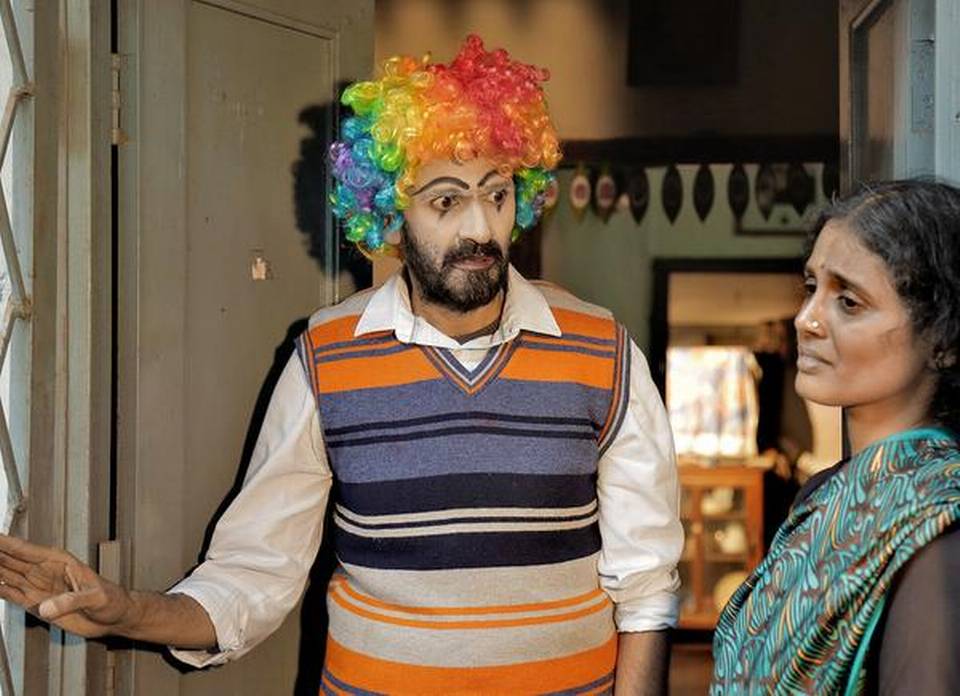
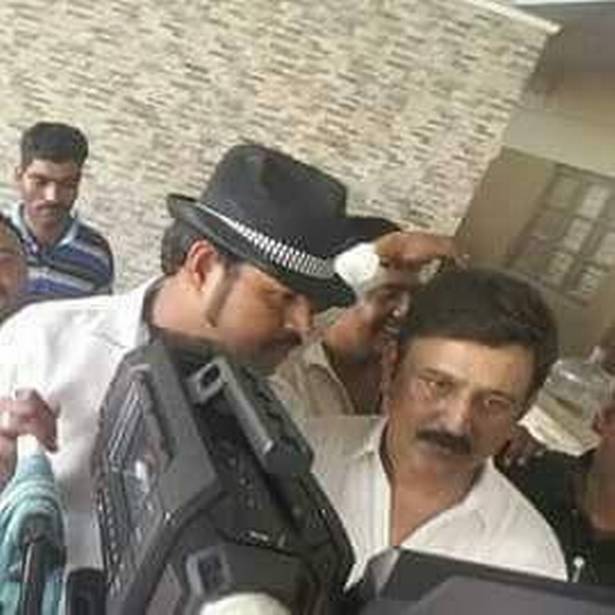
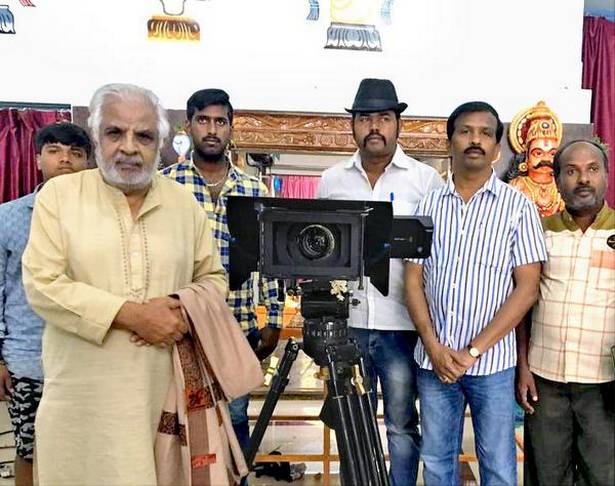
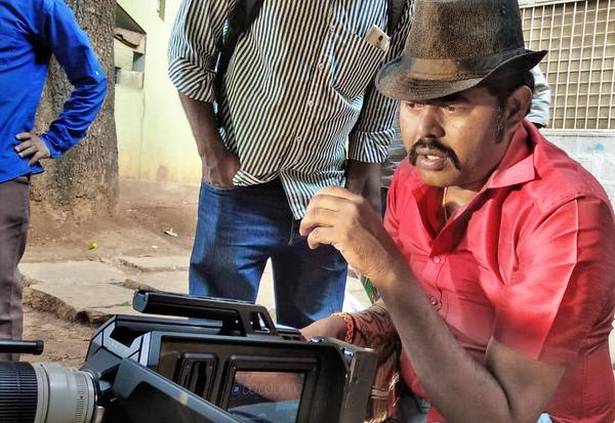
Cameraman PVR Swamy, whose work was celebrated in ‘Reservation’, believes the cinematographer is the beating heart of the film

PVR Swamy, started his journey as a cameraman a decade ago in Kannada cinema. And as most back screen workers, he too went unnoticed till the release of Reservation. The film, directed by Nikhil Manjoo, went on to win the National Award in the best film category. Reservation was screened at many prestigious film festivals, including BIFFes, two years ago.

Swamy02BF01aug2019

That was when people started talking about the visuals in the film and the name Swamy emerged. At the many discussions after the film’s screenings, Swami’s work was appreciated and the man finally came into the spotlight.

Born in Googara Doddi, a small village in Kanakpura, to a famer, Swamy did not want to limit himself to working on the fields. He had larger dreams. In his free time he would read “everything about cinema. I wanted to be in films and camera was something that fascinated me,” says the young cameraman, who started reaching out to people to get into the film industry. “I finally met a man, also from my village, working in the film industry. However, when I called him, he said he was back to farming as life here was tough.”

Swamy03BF01aug2019

Dejected Swamy continued his quest of finding an opening in the film industry and met Srinivas Prasad, an established cameraman here, who introduced Swamy to Techno Mark Television Company. “I was immediately appointed as the cameraman.”

Swami was sent to Hyderabad and worked as the cameraman for almost 6,000 episodes of serials such as Kamanabullu, Arunaraga, Shalini, Cinema Sanchike and Sakshi.

In 2014 that he got an offer to work in the Tamil film Aiyyamai, directed by Vijay Raghavan. “Though I had worked with Technomark, it was Vijay who taught me the nuances of how the camera can be used for films.”

Swamy04BF01aug2019

After this, came many more projects in Kannada including Prathima, made by Techno Mark and Tulu films White and Malladaana. Swamy, who has worked with cinematographers such as PKH Das and HM Ramachandra, has also worked in comnmercial films such as Manvantara, HS Venkatesh Murthy’s Hasiru RibbonHalmidi, Only Srikrishna, Kantri Boys and Ojas.

He is currently working on Vyapthi Pradeshada HoragiddareShalini IAS (the biography of IAS officer, Dr Shalini, directed by Manjoo) and Kranthiveera, based on the life of freedom fighter Bhagat Singh.

The man, who is 25 films old in the industry, reveals that he had never held a camera till he started working with Techno Mark. “I had to learn everything from scratch. The trick about being a good DOP is to visualise the director’s dream and to capture things as he has put on paper. So, in a way, the director’s dream becomes the cameraman’s vision. For me, being a cameraman is like being the heart of a human body. It is a tiny organ which is capable of so many emotions and also keeps this huge body living. That is the same job of a cameraman. The lens may be small but it can capture many things.”

He adds that even a tiny flower looks beautiful through a lens. “Beauty, which is normally ignored in reality, can be celebrated through the camera.”

source: http://www.thehindu.com / The Hindu / Home> Entertainment> Movies / by Shilpa Sebastian / July 31st, 2019

Karnataka govt awards 100 startups, 29 co-founded by women

Elevate 2019, organised by the state Department of IT, BT and S&T (Information Technology, Biotechnology, Science and Technoloy) concluded on Tuesday.

Bengaluru :

Elevate 2019, organised by the state Department of IT, BT and S&T (Information Technology, Biotechnology, Science and Technology) concluded on Tuesday. Of the 270 startups that made their pitch, 100 of them were selected as winners.

“Of the 100 winners, 29 are co-founded by women entrepreneurs and 23 are from Tier 2 and Tier 3 cities. 76 startups from Bengaluru, 10  from Dharwad, 3 from Dakshina Kannada, 2 each from Mysuru and Udupi, and 1 startup from Bijapur, Chamarajnagar, Chikballapur, Davangere, Mandya, Tumakuru and Uttara Kannada respectively won Elevate 2019,” a press statement by the department said.

TM Vijay Bhaskar, chief secretary, said, “Karnataka is the first state in the country to initiate grant in aid to start-ups without taking equity. We will soon set up an innovation authority headed by the CM to empower start-ups to overcome legal hurdles in innovating technologies and ideas.”

“The funds are regularly monitored by the government. Funds are released to the start-ups based on their progress. Elevate 2019 generates a lot of visibility for innovative start-ups and enables them to raise further funds from angel investors and capitalists at a later stage,” said Gaurav Gupta, principal secretary of the department.

source: http://www.newindianexpress.com / The New Indian Express / Home> States> Karnataka / by Express News Service / July 31st, 2019