All posts by admin

Mysuru cocoon market opens

inister for Sericulture S.R. Mahesh, Minister for Higher Education G.T. Deve Gowda, and Mayor Pushpalatha Jagannath at the cocoon market in Mysuru on Sunday.

A publicity campaign was held in Manyda, Mysuru, and Chamarajanagar earlier

A cocoon market began functioning on the Agricultural Produce Marketing Committee (APMC) Yard in Bandipalya on the outskirts of Mysuru on Sunday with more than 3,000 kg of cocoons auctioned on the first day.

The cocoon market in Mysuru will have to vie with established markets in Ramanagaram, Malavalli, T. Narsipura, Kollegal and Santhemarahalli, among other places in the region.

Nataraj, Joint Director of Sericulture, Mysuru, said the cocoon market received a good response. More than 3,000 kg of cocoon was sold. The maximum price was ₹413 per kg and the lowest was ₹280 per kg.

Officials of the Department of Sericulture had carried out a publicity campaign in sericulture-intensive areas of Manyda, Mysuru and Chamarajanagar ahead of the start of the cocoon market here.

A cocoon market in Mysuru will be of convenience to farmers in the region as they can avoid the expenditure otherwise incurred on transporting produce to other far away markets. “For farmers who grow other produce, a cocoon market in Mysuru will help them bring the cocoons to the APMC yard and sell other produce too,” Mr. Nataraj said.

Earlier, Minister for Sericulture S.R. Mahesh, who inaugurated the market, recalled Mysuru’s more than two centuries old agricultural tradition of sericulture introduced during rule of Tipu Sultan. Presently, more than 12 lakh families are dependent on sericulture in Karnataka with Mysuru earning a name for itself in the silk industry.

In the absence of a cocoon market in Mysuru, efforts were made to establish a market to cater to districts of Chamarajanagar and Mandya along with Mysuru, which together had a total of 36,000 growers and 735 reelers.

55 cocoon markets

Karnataka, which is the leading silk producer in the country, has a total of 55 cocoon markets including 20 seed cocoon markets and 35 commercial silk cocoon markets.

Mr. Nataraj said the cocoon market was presently functioning from a premises rented from the APMC yard. The buyers and sellers have to pay 1% of the transaction amount as market fees.

Though the department was facing a shortage of staff in Mysuru to handle the affairs of the market, about five persons including a demonstrator, a first division assistant, and an inspector have been drawn from different places to assist them in the functioning of the cocoon market.

5,000 acres of land

According to Javare Gowda, Deputy Director of Sericulture, Mysuru, Mysuru district alone has mulberry cultivation spread across more than 5,000 acres of land in 600 villages with more than 3,300 farmers and their families engaged in sericulture activities. “A total of 70,000 to 75,000 kg of cocoons are reared in Mysuru every month,” he said.

source: http://www.thehindu.com / The Hindu / Home> News> States> Karnataka / by Special Correspondent / Mysuru – February 24th, 2019

Inspiring village near Karwar shows the way forward

If you want to know what a model Green Village looks like, then you have to visit Satageri near Karwar.

Solar light and battery at a house in Satageri

Karwar  :

If you want to know what a model Green Village looks like, then you have to visit Satageri near Karwar. Until three years ago, women had to blow and invariably inhale the smoke while cooking on firewood. Not any more. Now they boast of an LPG connection. This is not the only clean and green change in this village.

Satageri, located about 25 km from Karwar and surrounded by forests of the Western Ghats, proudly displays solar power, LPG connection and toilet in every house. Solar lamps light up the houses. People do not throw any waste on the streets, and even make vermicompost for use in their garden and fields. The village, with 70 houses and a population of about 270, sets an example of how people can live with forest and nature without harming it.

“We are happy to live here and nobody is interested in leaving the village any more,” says Gajer Vaikuntha Marathe, a farmer from Satageri.The villagers cannot thank the forest department enough for the change that it ushered into their hamlet over three years ago. The forest department took Satageri under its wing in 2016, as part of the Green Village and Smokeless Village schemes of the state government.

LPG cylinder and gas stove;

It distributed free LPG connections and two solar light systems to each house. A total of 12 solar street lights were also set up.According to a senior forest officer, since 34 houses already had LPG connections, they distributed free connections to the remaining 36 houses. All the people were also given fruit and flower saplings, and encouraged to grow trees near their houses. The place has now been converted into a Green Village.

The situation was far different here earlier. The village was like many others in the country. People collected firewood from the forest, electricity was a nightmare during the monsoon months and the surroundings, though enveloped by a verdant green cover, were not clean.Women had to go to the forest every day to collect firewood, otherwise they faced shortage to meet the daily household needs, says Malita Mohan Marathe, talking about how the practice has been stopped over the last three years since food in every house is now cooked using LPG.

Gajer Vaikuntha too points out that all the villagers have happily adopted the new way of life. Each house got a toilet constructed under the Gram Panchayat scheme.Vinod Marathe, who runs an autorickshaw, says he earlier used to pay `100 towards the electricity bill every month, but the charges have come down by half after solar light system was installed at his house. His family uses electricity only to watch TV, and to run the refrigerator and mixer-grinder while the house is lit using solar power.

Satageri has a primary school, and after completing Class 5, children travel 3 km to Ulga village for pursuing higher education, including graduation and some professional courses. People here are engaged in various occupations, including farming, daily wage labour, and small businesses. Some of them work in Karwar and other nearby towns while four persons hold government jobs. Women mostly look after the house and work in their fields.

They are also involved in making vermicompost, and are part of the Village Forest Committee (VFC), that strives to conserve the forest and wildlife, and protect it from poachers. They plant saplings and take up other work with the forest department, for which the latter shares its profit with the VFC.Satageri, which comes under Gopishitta range forest, was selected to be developed as a model village in 2015-16, says K Ganapathi, Deputy Conservator of Forests, Karwar Division. He lauds the women of the village for their commitment towards protecting the forest. “We wish such VFCs come up in other villages too,” Ganapathi says.

What is a Green Village?
State forest department’s Green Village scheme aims to make the whole village smokeless by making people stop using firewood and opting for LPG stoves. Satageri village of Karwar taluk was selected under the scheme on a pilot basis.

Tackling Poverty
More than 65 families of the village have Below Poverty Line (BPL) cards, and all of them have enrolled in Mahatma Gandhi National Rural Employment Guarantee Act (MGNREGA). They have been earning money by taking up activities such as developing  the school ground, desilting the pond, and other  works.

Natural Treasures
The village is surrounded by the thick and evergreen forest of Western Ghats. Along with precious wood, it is home to wildlife such as leopard and black panther. The Kali river flows just a few kilometres away from the village.

source: http://www.newindianexpress.com / The New Indian Express / Home> States> Karnataka / by Arunkumar Huralimath / Express News Service / February 24th, 2019

Veteran Kannada writer Ko Channabasappa passes away

Ko Channabasappa | Photo Credit: Special Arrangement

He died at a private hospital on Saturday morning.

Ko Channabasappa, former judge, writer and a well-known liberal voice in Karnataka passed away on Saturday. He was 97.

He presided over the Kannada Sahitya Sammelana at Vijayapura in 2015. In his Sammelana address, he had defended an individual’s right to expression. He was the recipient of several awards including the Rajyotsava award.

Channabasappa died at a private hospital on Saturday morning. He is survived by two sons and two daughters.

source: http://www.thehindu.com / The Hindu / Home> News> States> Karnataka / by Special Correspondent / Bengaluru – February 23rd, 2019

Seeing 70mm: Mysuru youth’s novel makes its way to the big screen

A Kannada film, Kalbettada Darodekoraru, based on a novel written by Mysuru youth Anush A Shetty is all set to hit theatres this Friday.

Anush Shetty
Anush Shetty

Bengaluru  :

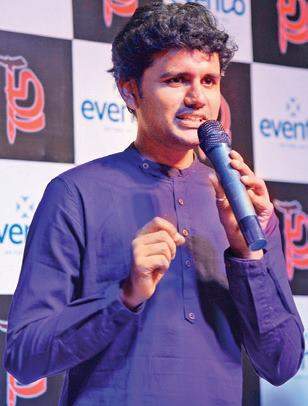
A Kannada film, Kalbettada Darodekoraru, based on a novel written by Mysuru youth Anush A Shetty is all set to hit theatres this Friday. Shetty, a writer and a musician ventured into novel writing while pursuing his Masters. A multi-faceted personality, he not only writes books but is also an exponent in Tabala, Mridangam and other percussions. Kalbettada Darodekoraru isn’t Shetty’s first novel and he has penned four books in total. Ahuthi was his first work, then followed Kalbettada Darodekoraru, Jodpala was third and then Neenu Ninnolage Khaidi was his fourth.

His fiction novel Kalbettada Darodekoraru turned out to be a milestone in his career as a writer as the novel inspired filmmaker Deepak Madhuvanahalli to bring the story to the big screen. It all began when Madhuvanahalli read an article about Shetty and his book. Having liked the novel penned, the filmmaker decided to transform the story into visual art and contacted Shetty for the rights.

“In the past, many people got in touch with me to make a film or short film on the novel, but most of them did not turn up later. Similarly, when Deepak got in touch with me, I did not take it seriously but was surprised when he came with a producer and asked for the rights,” says Shetty.

He added that since he had watched Madhuvanahalli’s previous film Bhagyaraj, which he found “sensible”, he decided to give the rights to the filmmaker. Shetty played an active role in the scripting process and was in constant touch with the team. “They retained the structure of the novel and have made a few necessary changes to fit the story into the film’s format,” he said.

An ardent follower of columnist Abdul Rasheed, Shetty is planning to publish a book soon, on a collection of stories of Rasheed under Anugraha Prakashana. “I am also penning a few short stories that will be made into a book collection of short stories in the near future,” said Shetty, who has also been associated with two music bands ‘Naavu’ and ‘Rhythm Adda’ as well. Kalbettada Darodekoraru is made under the banner of Bridge Cinemas, starring Nataraj, Shwetha R Prasad and Hemanth Sushil in major roles and has music by composer and singer J Anoop Seelin.

source: http://www.newindianexpress.com / The New Indian Express / Home> Cities> Bengaluru / by Karthik K K / Express News Service / February 19th, 2019


U-17 football World Cup star chasing his dream to play in Europe

Sanjeev Stalin assisted Jeakson Singh for India’s only goal in a FIFA World Cup (U-17) against Colombia in New Delhi in October 2017.

Sanjeev Stalin (left)

Bengaluru :

Not everyone fulfils their dream of playing professional football. Stalin too had to be satisfied with amateur football with the Aeronautical Development Establishment. But he and his wife Parameshwari, who were running a small roadside garment shop in Bengaluru, were determined to make their son Sanjeev a professional footballer.

They gambled everything on their 10-year-old son, sending him to Chandigarh Football Academy. Little did they know that their son would script history for India seven years later. Sanjeev Stalin assisted Jeakson Singh for India’s only goal in a FIFA World Cup (U-17) against Colombia in New Delhi in October 2017.

The 18-year-old has come a long way since then. He is an integral part of Indian Arrows squad (All India Football Federation’s developmental team) which helped him support his family. While he is fulfilling his father’s dream, the boy refuses to let success get to his head.

“Playing for India was a dream come true. All the sacrifices my parents made, paid off. It is an experience which will always stay with me. I’m thankful to my parents who made the tough choice of sending me away. It helped change the situation in my family. I could help my parents with money,” he added. In his second season with the Arrows, the left-back is making a transition to a winger. Despite the limited opportunities he is getting, he is pushing his limits to play better.

“People say U-17 WC was the best achievement. But it isn’t everything. I’ve just begun. It was initially difficult to play against experienced players in the I-League. They were older and better than us. I had to adapt to that. It’s been a great learning opportunity. Thanks to all the coaches, especially Nicolai Adam (former India U-17 coach), who gave me the confidence,” said one of the only three footballers from Karnataka playing in the top divisions (I-League and Indian Super League) of India currently.

His coach at the Arrows, Floyd Pinto, is also impressed with his commitments. “Sanjeev has been brilliant so far this season. He is the one who has the capability of dribbling and opening up defences. He can assist and score goals. That’s the role we want to see him in,” Pinto said. But Sanjeev is not swayed by glitzy lifestyle. He wants to grow as a footballer and play in Europe. “I have so many dreams, so many targets. But for now, I want to keep my family happy, play best to my abilities and leave the rest to God,” he said.

source: http://www.newindianexpress.com / The New Indian Express / Home> Cities> Bengaluru / by Krishnendu Banerjee / Express News Service / February 20th, 2019

New imaging technology to the aid of manuscripts

Professor P.R. Mukund and MegaVision president Ken Boydston with the multispectral imaging.

It is currently being used on rare texts in Udupi’s Ashta Mutts

Thousands of manuscripts scattered across India — many lying in neglect or threatened by the exposure to vagaries of nature — are facing threats of destruction. To preserve them, a Bengaluru-based not-for-profit organisation has procured a highly advanced multispectral imaging technology to capture their images. The technology is currently being used on rare texts in the Ashta Mutts of Udupi.

What is special about multispectral imaging is that it can capture texts in manuscripts that are affected by pests, fungus, over written, scribbled, blackened or scraped and cannot be seen with bare eyes. It uses infrared rays and ultraviolet rays to retrieve texts.

Its importance

“Mapping of knowledge is important in the current context. People are not bothered about these manuscripts because they do not see a direct relation with them and understand the importance of the stuff in it,” says P.R. Mukund, professor, Electrical Engineering, at Rochester Institute of Technology and founder of Bengaluru-based Tara Prakashana. “We have brought the technology for the first time in the country and the services would be offered for free. Our aim is to preserve the important written scripts in the country for posterity,” he said.

Tara Prakashana has acquired the imaging system from the U.S.-based MegaVision, a leading digital imaging company, that has worked in similar projects across the world and MegaVision president Ken Boydston has been training people in handling the multispectral imager over the last week.

Prof. Mukund’s interest in developing technology that would help conserve the knowledge for posterity started more than a decade ago when his guru Bannanje Govindacharya sought his help in conserving the 800-year-old Sarvamoola Grantha, authored by Saint Madhvacharya. The text is in the possession of Palimar Mutt and was found to be in bad shape in 2006.

“At that time, I did not have any idea about processing of manuscripts. Help came from a fellow professor from the imaging department at Rochester,” said Prof. Mukund. Since then, more than 3,000 rare manuscript bundles have been digitised, a small part of which has now been published into 500 archival books and nearly 1,000 more archival books will be ready shortly. Currently, ancient texts belonging the lineage of Saint Madhvacharya that are in the possession of the Ashta Mutts in Udupi are being digitised using the technology.

For Mr. Boydston, his association with the project comes from his love to protect ancient works, though he says cultural imaging is still not profitable. “I get to meet people who really know stuff. Even if no money is being paid, there is a lot of stuff to do. Objects [antiquities] have great value. Experts know historical contents and to be in the project is a great honour,” he said.

“We want to make the imaging complete and accurate following which several bundles of copies can be generated to preserve the knowledge for future generation,” said Mr. Boydston.

The next stage

The conservation efforts does not stop at capturing the images of manuscripts. While creation of e-library of manuscripts for the scholars to retrieve and research is currently under way, Tara Prakashana has published about 500 books of manuscripts.

“We have used the acid-free cotton archival paper for publishing these manuscripts. These special papers can last another couple of hundreds of years,” said Prof. Mukund.

To enhance the time span of the texts captured in images, a patented technology developed by Prof. Mukund called the wafer fiche, is being used. Using photo lithography technology, the images are imprinted on silicon wafers. “These copies can last for thousands of years,” he said.

source: http://www.thehindu.com / The Hindu / Home> News> Cities> Bengaluru / by Sharath S. Srivatsa / Bengaluru – February 17th, 2019

Biggest ever’ Aero India opens with tribute to deceased pilot

12th edition brings back civil aviation, ‘India as global runway of opportunities’

Karnataka CM HD Kumaraswamy, Defence Minister Nirmala Sitharaman and Minister of Commerce and Industry and Civil Aviation Suresh Prabhu at the launch of Aero India Show 2019, Bengaluru, February 20, 2019   | Photo Credit: K. Bhagya Praksh
Karnataka CM HD Kumaraswamy, Defence Minister Nirmala Sitharaman and Minister of Commerce and Industry and Civil Aviation Suresh Prabhu at the launch of Aero India Show 2019, Bengaluru, February 20, 2019 | Photo Credit: K. Bhagya Praksh

Defence Minister Nirmala Sitharaman rolled out a red carpet of opportunities in local defence and aerospace manufacturing to global investors as she launched Aero India 2019 here on Wednesday.

As the 12th edition of the biennial international military and civil expo and air show opened at the Air Force Station Yelahanka, the gathering and airmen showered tributes to Wing Commander Sahil Gandhi, who was killed during a rehearsal on Tuesday.

“Aero India 2019 endeavours to put India as the global runway of a billion opportunities,” Ms. Sitharaman told a gathering of a few thousand invitees. Ministers, heads of global defence aerospace companies, corporate and government policymakers, military brass, entrepreneurs, delegates and exhibitors from across the world were at the event.

The chiefs of the three Armed Forces — Air Chief Marshal B.S. Dhanoa, Admiral Sunil Lanba and General Bipin Rawat — were in attendance at the show organised by the Ministry of Defence.

Minister of State for Defence Dr. Subhash Bhamre, Union Ministers D.V. Sadananda Gowda and Suresh Prabhu, Defence Secretary Sanjay Mitra, Secretary-Defence Production Dr. Ajay Kumar and Defence Research and Development Organisation (DRDO) Chairman Dr. G. Satheesh Reddy were at the event.

Chief Minister H.D. Kumaraswamy highlighted Bengaluru’s establishment of itself as the country’s capital in design, research and production in aerospace and defence.

After many years, the edition brings civil aviation back to a largely military show. The Ministry said it was the biggest so far, with 403 exhibitors and 61 aircraft in static or flying displays.

‘Missing man’

Three IAF fighter jets and a Rafale aircraft paid an aerial tribute to Wing Commander Sahil Gandhi, who was killed in a midair mishap during a rehearsal on Tuesday. The Indian jets Tejas, Sukhoi Su-30MKI and Jaguar flew past in a formation called Missing Man. The pilot of a French Rafale fighter in a flying demonstration made a sombre flypast for the killed airman.

Light Combat Aircraft (LCA) did a jaw dropping vertical climb called the Charlie in memory of the late Atal Behari Vajpayee.

source: http://www.thehindu.com / The Hindu / Home> News> Cities> Bengaluru / by Madhumathi D.S / Bengaluru – February 20th, 2019

3D frame launched to assist minimal invasive neurosurgery

According to Venkataramana, the cost of this machine is one-third the cost of the other machines available in the industry.

Bengaluru :

Medical science and engineering technology have come together to bring out a stereotactic frame, 3DR Stereotactic System, which will be used in performing stereotactic and functional neurosurgery. Bengaluru-based Brains Hospital, a neuro spine centre, in association with Mahalasa Medical Technologies, has designed the 3DR Stereotactic System.

According to Dr N K Venkataramana, founder chairman of Brains Hospital, and a chief Neurosurgeon, “This is a versatile machine which can be used during MRI, CT scans, and during surgeries that are carried out for treating tumours, epilepsy and other brain-related diseases.”

According to Venkataramana, the cost of this machine is one-third the cost of the other machines available in the industry. “I can proudly say this is manufactured under Prime Minister’s Make in India concept,” he added.

Launching the product on Tuesday, Union Defence Nirmala Sitharaman Minister said, “One should look at funders from India and not outside India. Bengaluru is blessed as it has all kinds of people, including funders.”

How this frameworks

This is used to carry out minimally invasive surgery. This frame is fixed to the head that guides the surgeon to reach specific targets in the brain. Stereotactic surgery or stereotaxy makes use of a three dimensional coordinates to locate small targets inside the brain and to perform procedures on them such as ablation, biopsy, lesion, injection, stimulation, implantation, and radiosurgery.

source: http://www.newindianexpress.com / The New Indian Express / Home> Cities> Bengaluru / by Express News Service / February 20th, 2019

Latha Puttanna on her wearable gardens

LathaPuttanna01BF19feb2019

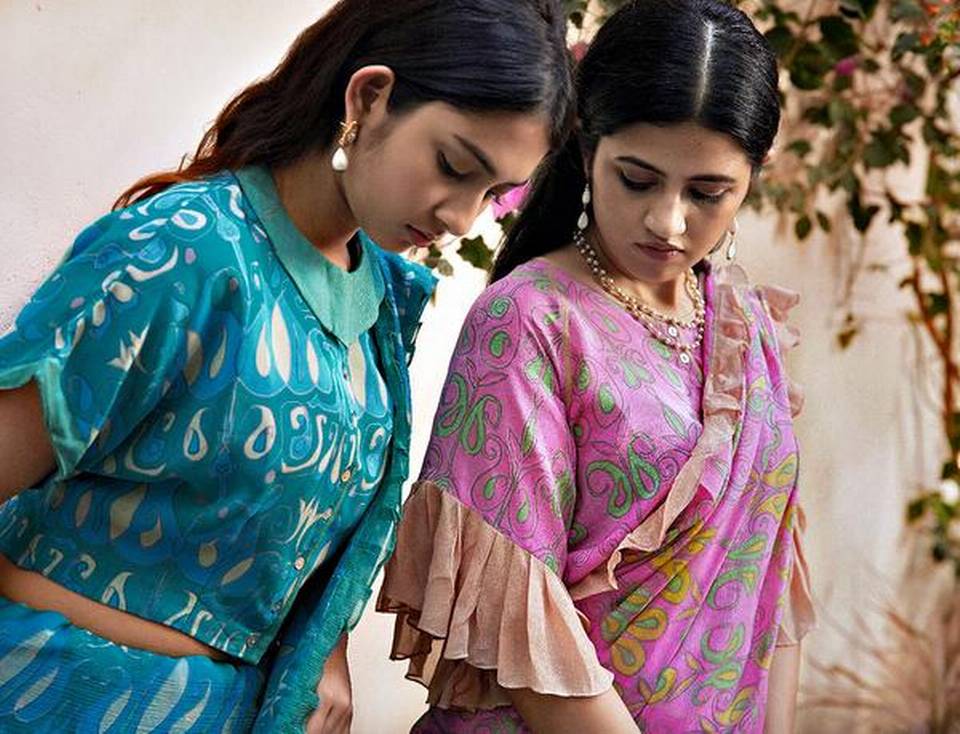
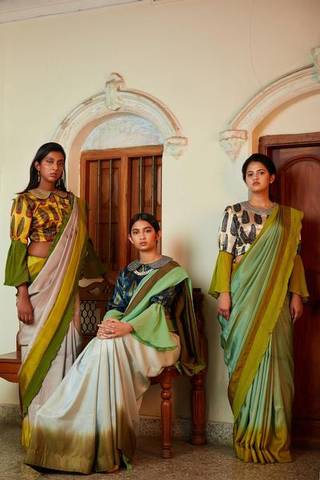
Bengaluru-based designer Latha Puttanna’s summer collection, Bougainvillea, is light, bright and airy

With 27 years of design experience and revival work, Latha Puttanna has often been described as the Design Queen. Known for constantly re-inventing both the sari and blouse, Latha’s work reveals a fine instinct for design doctrine.

“Look at this,” she says pointing to the wall of Srishti, her factory, studio and store at Siddapura. The re-purposed family bungalow has several photos of the women of her family dressed in traditional saris. “I look to these time-honoured saris for inspiration and re-invent their prints and weaves for a present day resonance.”

Latha is passionate about the traditional textile, and aggrieved that a good many crafts are near extinction. “My mission is to revive them all with my designs.”

The collection, Yashoda, which Lata named after her mother, uses six vivid hues in rare combinations for functional saris, salwars, and has taken a cue from the South Indian langa for design and silhouettes. “The flowing, lightweight fabrics use texture-rich weaves on crepe, tissue, Georgette and pure silk yarn. Even if these photos are black-and-white, you can see the colours bursting out.”

In her spring-summer 2019 collection, Bougainvillea, Latha, will also showcase her recently-introduced line of blouses. “There was a demand and I created an equal number of blouses to go with saris, skirts, parallels, trousers and salwars. I decided to create this line with design elements from my work over the past 25 years.”

Latha’s blouses feature kalamkari, ajrakh, bandini, appliqué and aari work on Chettinad cotton, tissue and knit fabric, mix-and-match with embroidery and Orissa weaves. “As I swam through the ocean of fashion and design, I perfected the aari technique. So there is also thread, gold and silver work in this collection,” she says.

LathaPuttanna02BF19feb2019

On what else she has for the hot days ahead Latha says, “The sari does not cease to interest me. I am always in awe of this beautiful outfit with endless possibilities. This is not available anywhere in the world. We should celebrate our sari? We are an end-to-end design house with skilled weavers, artisans and craftspersons from all regions of the country.”

Bougainvillea brings in range of kurtas and tunics in hand-woven mulmul cotton, linen, and pure silk Georgette. They are all done up with bright hand embroidery, not to miss the gold and silver zari-beaten work. “Designed for the hot season, these can be paired with crop-pants and organza dupattas. Bougainvillea also has a collection of tops, shirts, dresses, and pants,” she says.

Speaking of the name of the collection Latha says, “As the name suggests, it is evocative of the freshness of seasonal blooms in the city.

The intricate floral prints or embroidery all sit snugly on hand-woven textiles that I source from my weavers in Kannur, Kerala. Chiffons, silks and Georgettes are used for their lightness and vibrancy.”

The collection has traditional wear, made from natural dyes. “The soft silk saris with table dye in contrast colours are paired with blouses featuring bell-sleeves for a retro-70’s look. A range of light and breezy Ajrak saris are paired with embroidered blouses, while soft silks in striking hues embellished with block dyes are paired with Orissa Ikkat blouses.

“Some of my prints have been digitally transferred on to the fabric from hand-drawn designs.”

The Bougainvillea collection will be showcased on February 19 and 20 at Raintree

source: http://www.thehindu.com / The Hindu / Home> Life & Style> Fashion / by Ranjani Govind / February 18th, 2019

Village in Gadag spreads warmth by making quality quilts

The village has more than 200 families who are into this business.

Women of Jantli Shirur village in Gadag district sew quilts outside their homes. The village is home to more than 200 families who are into this business | D Hemanth

Gadag :

It takes a village to sew quilts.As you enter Jantli Shirur village, you see womenfolk sitting outside their houses busy sewing colourful patterns.People of Gadag and surrounding districts visit the village to buy quilts as the winter starts. This winter too saw the village engaged in stitching these winter warmers.But the ‘yarning gap’ between their hard work and the price they get is a matter of concern, say the villagers.

The village has more than 200 families who are into this business. They sell one quilt for Rs 650 to Rs 1,000 depending on the fabrics they get. They take four days to make one quilt and need four workers to coordinate. The thread they use is Rs 300 per kg and they source it from Mumbai. It is called ‘noolu daara’, a strong thin thread, which cannot be broken easily by hand. Nearly half a kg of thread is used to make one quilt.

They get about 1,000 to 2,000 orders from Huvin Hadagali, Hubballi, Dharwad, Belagavi, Gadag, Benagaluru and even from Andhra Pradesh and Maharasthra.A quilt is made by sewing two or more layers of fabric together to make a thicker padded material. These are used in every house in North Karnataka.
Nirmalavva Navalagund, a resident, says, “We get orders from some agents who supply us with the cloth. They pay us Rs 800 to Rs 1,000 per quilt for sewing and sell it for Rs 2,000 to Rs 2,500, making a neat profit. Though we are not paid much, what brings satisfaction is the praise that our quilts have a long life.”
In the Metros, these quilts are sold in the price range of Rs 3,000 to Rs 4,000.

Basavva Alur, another quilt maker, says, “We finish our daily work in the morning and start stitching quilt from morning 9 to evening 6. We stitch one big quilt in a span of two days and sometimes it takes four days depending on the size. We do not know any other work than this. We request the government or NGOs to help us to get a good platform and also protect this heritage of our village.”

If you stitch the pieces of history together, you find that the art of quilt making in this village dates back to over 150 years. Those days, people in other parts became commercial and used to use cheap material.  Soon, they lost customers. But the ancestors of this village seized the opportunity and used good materials and showed expertise in sewing. Their unique style of making small stitches soon spread and their business blossomed. Thus, the villagers continued this tradition.

But today they are concerned that they don’t get a fair price for their hard work. What bothers them equally is that youngsters giving up this traditional occupation and moving to cities for a better livelihood.

How they get orders 
Jantli Shirur villagers go to nearby villages and collect clothes, some new and some old, to make quilts. Some businessmen visit the village and place orders and give clothes and get the quilts made while some people buy readymade quiltsmade with new fabrics. The price varies from Rs 800 to Rs 1,000

Common thread 
These  villagers who stitch their lives together with the little money they get making quilts say they don’t get a fair price. Though they are paid Rs 800 to Rs 1,000 per quilt, these bright and colourful products are sold by agents for Rs 3,000 to Rs 4,000 per piece in the Metros, and Rs 2,000 to Rs 2,500 in towns.

source: http://www.newindianexpress.com / The New Indian Express / Home> States> Karnataka / by Raghottam Koppar / Express News Service / February 17th, 2019