All posts by admin

PHWRs: Kaiga station’s Unit-1 creates world record

Unit-1 of KGS has been generating electricity continuously since May 13, 2016.

It completed 895 days of continuous operation on Thursday

The Kaiga Generating Station, which is already on India’s Nuclear Power Programme, has created a world record for the longest uninterrupted operation of units having pressurised heavy water reactors (PHWRs).

The earlier record for PHWRs was held by Unit-7 of Pickering Nuclear Generating Station at Ontario, Canada, which operated continuously for 894 days and a few hours. That record was set on October 7, 1994.

In an official release on Thursday, Nuclear Power Corporation of India Ltd. (NPCL) announced that Unit-1 of Kaiga Generating Station (KGS-1) completed 895 days of continuous operation.

Kaiga now stands first in the world for continuous operation with regard to PHWRs and second among all nuclear power reactors. The Advanced Gas Cooled Reactor (AGR), Heysham II-8 of the United Kingdom, holds the overall record of 940 days of continuous operation.

KGS-1 in Kaiga, located 56 km from Karwar, has been generating electricity continuously since May 13, 2016. KGS-1, an indigenously built pressurised heavy water reactor run by domestic fuel (uranium), began its commercial operation on November 16, 2000. This June, KGS-1 set a national record for continuous operation of 766 days and it reached the second position among PHWRs in the world.

Official sources informed The Hindu that KGS-1 was in good condition and was capable of continuing the power generation. As NPCL authorities want to continue the operation of KGS-1, the required procedures, as and when required, would be followed, sources said.

source: http://www.thehindu.com / The Hindu / Home> News> States> Karnataka / by Special Correspondent / Hubballi – October 25th, 2018

Bengaluru-based Trashonomics wins international waste educators award

Bengaluru-based Trashonomics, representing India at the Waste Education Awards,won the first prize, beating Greece and USA.

Trashonomics session in progress at a government school

Bengaluru :

Bengaluru-based Trashonomics, representing India at the Waste Education Awards, won the first prize, beating Greece and USA. They were one of the shortlisted teams for The International Solid Waste Association Young Professionals Group’s (ISWA YPG) ‘Waste Education Award’.”We were awarded at the ISWA World Congress 2018 in Kuala Lumpur, Malaysia. This was part of their global campaign #WhatHappensToMyWaste. We are happy to represent our country. We sent them all our work at Trashonomics, including the illustrative guide for children, our trainer programmes and workshops,” said Archana Prasad Kashyap, co-author of Trashonomics.

“We sent a presentation of our impact as well. For example, we have reached out to 20,000 students in government schools across Bengaluru, Mysuru and Delhi. As a part of training of trainers (TOT) programme, we have trained 300 people to in turn train other volunteers and conduct classes at other schools. This competition had waste educators participating from across the globe,” Archana added.

Of all the applicants, three were shortlisted. PCAI Junior from Greece and The Six R’s from USA, grabbed the second and third place respectively. People could vote for these organisations by sending an e-mail or voting on polls conducting on social media. The five-chapter guide titled Trashonomics, describes itself as a simple guide on solid waste management. It is used to teach children how to manage their waste in the above cities, with Bhubaneswar joining the list recently.

The idea behind Trashonomics is to make children relate to the concept of waste management. They learn to dispose of all kinds of waste – wet, dry, biomedical, electronic – in a responsible manner. The volunteers use hands-on activities in the classrooms such as asking the kids to bring dry waste from their homes and segregate them in the school.

The project is supported by The Anonymous Indian Charitable Trust (TAICT) and has recently received a grant from Millenium Alliance to train 150 government school teachers on the subject, so that they can take it forward without depending on volunteers. Their illustrative guide will soon be available in Tamil and Bengali as well.

source: http://www.newindianexpress.com / The New Indian Express / Home> Cities> Bengaluru / by Ranjani Madhavan, Express News Service / October 23rd, 2018

Muscular Dystrophy: Rare diseases find a cure at the nerve centre

India sees about 3,000 to 5,000 cases of Muscular Dystrophy.

PrasannaBF23oct2018

Bengaluru  :

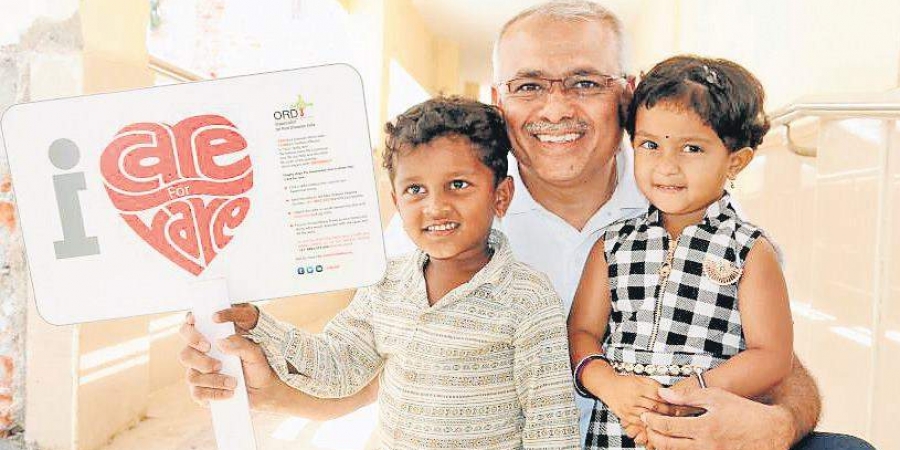
India sees about 3,000 to 5,000 cases of Muscular Dystrophy. While England has about five specialised centres to handle such cases, India has none. This has given rise to India’s first paediatric neuromuscular service, called, ‘The Muscle and Nerve Clinic’. The initiative is for patients who suffer from rare diseases that affect their muscles and nerves, and was launched by Bangalore Baptist Hospital, in association with Organisation For Rare Diseases India (ORDI).

Prasanna Shirol, founder, ORDI, is the father of a girl who suffers from a rare disease, and knows first-hand of the plight one can face in such situations. “People suffering from rare diseases run from pillar to post to find appropriate help and treatment.

We started a rare disease care coordination centre in Indiranagar two years ago. This clinic provides care specialised in neuromuscular diseases and we hope to alleviate the struggle of families and young people dealing with it.”

The Muscle and Nerve Clinic was set up with an aim to provide treatment to families suffering from rare diseases. Some of the conditions treated here include Duchenne Muscular Dystrophy, Spinal Muscular Atrophy, Congenital   Myopathies, Congenital Neuropathies, Congenital and Acquired Myasthenias and Limb Girdle Muscular Dystrophy. These cause weakness in muscles and the affected may not be able to jump, run or even sit without any support.

The clinic is open every Thursday at the Baptist Hospital. Prasanna says, “There are 7,000 rare diseases and the majority of cases that we have observed  are related to muscle and nerves.

The challenge with a rare disease is its proper diagnosis. The symptoms can be visible at any age. Once these symptoms are identified and diagnosed, a treatment or support plan can be prepared. Prognosis can be identified and parents can also be mentally prepared to deal with it.” As many symptoms could be similar to other diseases, doctors might often miss out on these signs or wrongly diagnose them, he says. “This needs care from experts in multiple specialities such as paediatrics, nutrition and diet,” he adds.

Dr Ann Agnes Mathew, paediatric neurologist and neuromuscular specialist, said, “Many of these diseases may have a cure one day soon. But until then, we need to care for them so that children suffering from rare diseases can have a better quality of life. With a proper treatment plan, children who currently need support to sit may be able to do so without any help.”

Prasanna and others are also fighting for the implementation of the National Policy for Treatment of Rare Diseases. “We are filing a PIL. There is no clarity in the policy. It says `100 crore will be provided but the proper demarcation is not available. The treatments have also not begun. They say the treatment would be provided only to below poverty line patients but above poverty line patients may also not be able to afford treatment as costs could run into crores,” he says, adding that even insurances don’t cover rare diseases.

For emergencies contact: 080 22024700 For appointments contact: +91 8892555000 (ORDI helpline), Baptist OPD:080 22024322

source: http://www.newindianexpress.com / The New Indian Express / Home> Cities> Bengaluru / by Akhila Damodaran, Express News Service / October 23rd, 2018

A woman of many words

Rare endeavour: cover of the feminist dictionary.

Scholar compiles feminist dictionary in Kannada

Will a “feminist dictionary” help men and women get a better understanding of contemporary rights movements and shift in laws — the #MeToo campaign and the ruling on Section 377, to name a few — that are changing the fabric of society? Women’s studies scholar H.S. Sreemathi thinks so. She has recently published a dictionary in Kannada that interrogates and scrutinises patriarchy.

It is not a dictionary in its truest sense as it doesn’t just list synonyms, but has notes trying to reconstruct words from a woman’s perspective. The dictionary is a compilation of 444 words and includes seemingly gender-neutral terms like “city” and “technology”. “I show how they are actually male constructs that exclude women, but claim to be inclusive and objective,” she said, citing the example of the word “city” with segregated work and residential spaces.

According to Ms. Sreemathi, a city as we define it, was built from the viewpoint of a man who doesn’t shoulder household responsibilities but expects a woman to do so. “This has made the life of women who straddle both worlds difficult pushing many out of jobs,” she said.

Bettering women’s lives

The dictionary entry for the word “technology” explains how feminists including Simone de Beauvoir thought its advent would help better women’s lives. One of the examples given was contraceptives that would give agency to women. “But who controls this technology?,” Ms. Sreemathi asked.

While there are a handful of feminist dictionaries in English, Ms. Sreemathi’s book, titled Feminist Dictionary, is a rare endeavour in a regional language. A retired professor from Kannada University, Hampi, Ms. Sreemathi was a literature scholar who built the women’s studies department from scratch at the university. “Women’s studies has failed to establish itself as an academic discipline. It also faces a lot of resistance from within the system. There is no adequate reading material for women’s studies, especially in regional languages,” she said. To solve this problem, she first translated feminist classics like Simone de Beauvoir’s Second Sex into Kannada. The feminist dictionary was a step to build terminologies in Kannada, she said.

Early feminist theorists argued that women would achieve independence with education and a job. Today, women — especially in cities — have both, but they still find something lacking. “It is because the entire system — society, education and knowledge systems are male constructs. What feminism strives for is to make social life governed by norms, mores, rules and laws that are inclusive,” she said.

“The backlash against the #MeToo movement shows the man is feeling threatened,” she noted.

Knowing one’s rights

She hopes the dictionary will be a useful tool to women in understanding their rights.

“In women’s studies, academia and activism must complement each other. Academia must learn from the experiences on the ground. Academia will give activism the much needed theoretical framework for activism, without which movements can go off track. These thoughts will help women frame the right questions to the system they are fighting and inform them of what they can expect and how to fight the backlash,” she said.

source: http://www.thehindu.com / The Hindu / Home> News> States> Karnataka / by K.V. Aditya Bharadwaj / Bengaluru – October 22nd, 2018

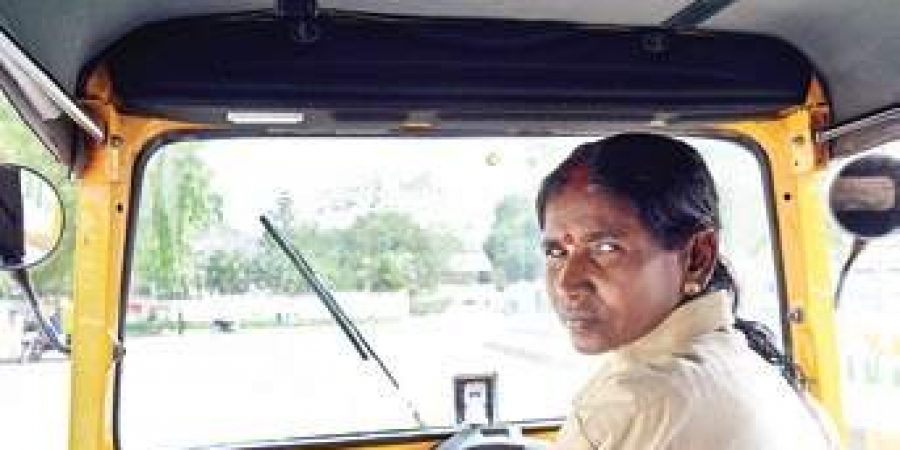
Woman auto driver fights odds to steer her dream

A revolutionary path for women laid by former chief secretary of Karnataka K Ratna Prabha has made this Raichur woman battle against all odds.

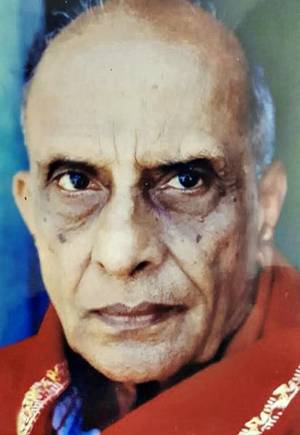
Chaduranga’s family stumbles upon his self-translated story

Chaduranga and (right) his English translation of his short story Nalku Mola Bhoomi. | Photo Credit: Special Arrangement

The writer died on Vijayadashami two decades ago

Exactly two decades after the death of Subrahamanya Raje Urs — Kannada writer and film-maker better known as Chaduranga — his attempt at translating one of his own plays has been found by his family.

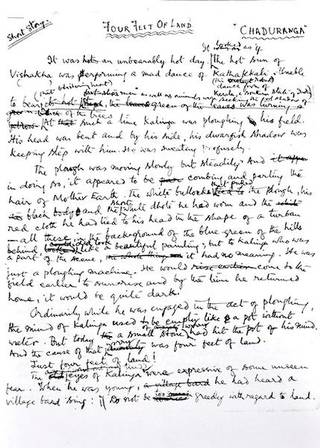
The writer’s son S.N. Vikram Raja Urs recently stumbled upon Four Feet of Land, in his father’s hand, a translation of his short story Nalku Mola Bhoomi from the collection Meenina Hejjepublished in 1958.

‘His only translation’

“This is the only translation of my father, who wrote in Kannada throughout his life. Nalku Mola Bhoomi was one of his own favourite short stories.”

Karnataka : Bengaluru : 16/10/2018 . Hand Writing of Kannada writer ' Chaduranga '. Photo Bhagya Prakash K / THE HINDU | Photo Credit: Bhagya Prakash K
Karnataka : Bengaluru : 16/10/2018 . Hand Writing of Kannada writer ‘ Chaduranga ‘. Photo Bhagya Prakash K / THE HINDU | Photo Credit: Bhagya Prakash K

Chaduranga died on Vijayadashami day. “He died as he was speaking to his friends,” recalled Mr. Urs.

Chaduranga authored four novels, seven collections of short stories, and three plays. His first two novels Sarvamangala and Uyyalehave been made into films. While the first was directed by the author himself, the second was directed by N. Lakshminarayan.

Among his collection of short stories, Mrigaya won the State Sahitya Akademi award for the best short story collection in 1994.

His three plays, Kumara RamaIli Bonu, and Bimba, have been translated into other regional languages and also English.

The English translation of his Vaishaka is being published by the Sahitya Akademi.

source: http://www.thehindu.com / The Hindu / Home> News> Cities> Bengaluru / by Muralidhara Khajane / Bengaluru – October 18th, 2018