All posts by admin

Life is looking up for Mudhol hound breeders

Venkappa Navalagi with his favourite Mudhol hound Raju in Lokapur village of Bagalkot district. Special Arrangement

Most of them are Dalits, who now see a spike in the brand value of their dogs

The Indian Army’s growing interest in Mudhol hounds has pushed up their brand value among animal lovers, and in turn, helped the families of breeders escape the cycle of poverty.

The Remount Veterinary Corps (RVC) of the Army in Meerut has been training Mudhol pups for battle duty and this has increased the demand for the hunting breed from Mudhol and nearby areas of Bagalkot district.

Most of the families of breeders are landless Dalits or tribal families and they have been breeding the hound for generations. The new found interest in the indigenous breed seems to be turning around their fortunes.

Venkappa Navalagi, for instance, has turned prosperous. He earns between ₹5 to ₹7 lakh a year and has built a house for his dogs. His two children are in good schools. “But it was not so always,” he recalls. His father used to hunt rabbits and foxes to feed his children. Neither Venkappa nor his three siblings went to school.

When we were children, I remember bartering a pup for a cup of jowar. After a few years, we sold a couple for ₹10. By the 1990s, we were selling them for ₹800 a pair. Now my pups fetch me ₹10,000 to ₹1 lakh, depending on the bloodline, he said.

The Navalgis have eight dogs and Venkappa’s wife Lakshmi Bai calls them her “children”. A month-old pup sells for ₹10,000 while the adult dog earns up to ₹5,000 for each breeding attempt. A few years ago, Venkappa met with an accident and needed ₹1.5 lakh for a surgery. “Two dogs had 16 pups and helped their father get treatment,’’ says Laksmi Bai.

However, there has been significant government effort behind the spike in prices of the breed. Bidar-based Karnataka Veterinary Animal and Fisheries Sciences University (KVAFSU) started the Canine Research and Information Centre (CRIC) dedicated to the Mudhol hound in Thimmapur village near Mudhol in 2009. survey indicated that there were over 600 families, 90% of them from SC/ST families, that were making a living out of Mudhol breeding in Bagalkot district.

The university used Rs 3 crore of state government funds to set up the centre under the Special Component Plan and Tribal Sub Plan scheme. Of that, Rs 1 crore was used for infrastructure and the rest was set aside as an endowment to pay the salaries of scientists and staff.

The centre trains farmers in intelligent breeding and to avoid crossing between blood relatives or with nondescript breeds. “This ensures that the litter is purebred and fetches the best prices,” says Mahesh Dodmani, director of the centre. The bloodline certificates issued by the centre have ensured good prices for the pups, he said.

The centre’s scientists take breeders to dog shows in many States and help them build a network with kennel clubs, dog enthusiasts, and pet keepers. The CRIC keeps a database of lineage of dogs. It issues purebred certificates to pups bred by farmers and fixes prices for the dogs that can be sold. CRIC’s website and social media handles create awareness about the hound and create a platform for buyers to meet breeders.

“Setting up of CRIC using SCP /TSP funds has been a fruitful exercise. I can confidently say that the centre’s activities have ensured the welfare of Dalit and tribal families and fulfilled the objective of the funds,” said Suresh Honnappagol, Commissioner, Ministry of Animal Husbandry. Dr. Honnappagol started pushing for recognition to the Mudhol hound when he was the KVAFSU Vice-Chancellor. He added that the signals from the Army were positive about possible induction of the Mudhols into the forces. A final decision is yet to be announced, he said.

source: http://www.thehindu.com / The Hindu / Home> News> States> Karnataka / by Rishikesh Bahadur Desai / Mudhol – October 20th, 2018
How Kulgod wrested the best village tag

KulgodBF21oct2018

It beat all gram panchayats in the country on development of the Ministry of Rural Development

How did obscure Kulgod, in Belagavi district, beat 3.5 lakh gram panchayats across the country to emerge as the best rural local body under the Antyodaya scheme of the Ministry of Rural Development? The answer is simple: Kulgod was not built in a day. It took the concerted effort of officials, panchayat members and enlightened villagers many years to bring it to this pinnacle of development.

“Thankfully, our village has had good officers, who implemented schemes in earnest,” says Govindappa Koppad, former GP member from Kulgod, who is now a zilla panchayat member. “They are serious about their work and realise that they are answerable to the people. That helped us,’’ adds Basavaraj Hegganayak, Taluk Panchayat executive officer.

Back in 2005, officials conducted the first survey of health and hygiene in the village as party of the total sanitation campaign. The results were surprisingly good. Irrigation facilities had reached 97% of the 3,550 hectares of land reducing poverty levels significantly. Over 70% of the dwellings were pucca houses and there were amenities like banks and health centres. Toilet coverage was at 60% above the district average.

Still, the officials focussed on sanitation, drainage, and piped water supply. Construction of low-cost houses and other infrastructure was taken up in phases.

“Now we have three borewells, a pipeline from the Ghataprabha river, a mini-purification unit and an overhead tank with a capacity of 3 lakh litres,” says Mr. Koppad. Self-Help Groups and their bank linkage was promoted, number of students in anganwadis and schools increased and there were doctors in the village hospitaland veterinary treatment centre.

“What works for us is that this GP has just one village,” says Parashuram S.K, Panchayat Development Officer (PDO), who lives in the village and is available to the people at all times.

Two and a half years ago, when ZP CEO R. Ramachandran took charge, he had a lot on his hands. He had to run a district with over 550 GPs and nearly 2,000 villages and hamlets. He used funds as an incentive for better-performing GPs and implemented new projects in villages that welcomed them. This helped officers achieve nearly 100 per cent LPG utilization and 100 per cent toilet construction. The GP also built two community toilet complexes in areas with houses with not enough space for individual toilets. He organised training for GP secretaries and PDOs in computer usage and office maintenance. “These sessions, along with regular follow up with officers ” “This ensured that our documentation was ahead of other districts,” the CEO says.

Shakuntala Chippalakatti, GP president, says, “Nature has been kind to us. The Ghataprabha flows close by. She supplies our drinking water needs and irrigates our fields. What more can we ask for,” she asks.

Kulgod got 94 out of 100 in an assessment based on 47 parameters, including infrastructure, social, economic and other sectors. In the last few years, the local body in Belagavi district has been included among the panchayats that have won the Gandhi Gram award at the State level.

source: http://www.thehindu.com / The Hindu / Home> News> States> Karnataka / by Rishikesh Bahadur Desai / October 20th, 2018

Student’s device to detect eye issues shortlisted for Accenture Innovation Challenge

Students of two engineering colleges in Bengaluru have had their projects shortlisted for the Accenture Innovation Challenge.

Bengaluru :

Students of two engineering colleges in Bengaluru have had their projects shortlisted for the Accenture Innovation Challenge. Under the theme ‘Innovate for Societies’, Nihal Konan and Pujari Kiran Sai of Visvesvaraya Institute of Technology, as well as Sabari Prabaaker R, Pranith H, Priyanka S and Deivanai A of Nitte Meenakshi Institute of Technology, have been chosen from the city, among 16 other teams across India.

Participants were expected to demonstrate their tech skills by applying disruptive and emerging tech in areas such as advanced analytics, automation, artificial intelligence, big data, blockchain, crowdsourcing, digital ethics, cybersecurity, immersive reality, and Internet of Things (IoT).

The team from VIT developed a ‘cost-effective, ingestible, battery-less electronic health pill’ to predict and prevent sudden heart attacks. The data from the pill alerts family members or caretakers of an impending heart attack nine to 11 minutes before it happens.

EyeBF21oct2018

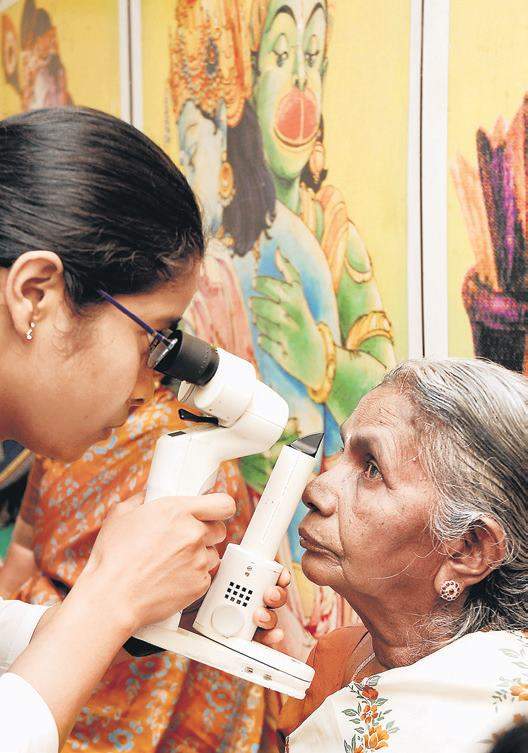
The team from NMIT developed a device that will detect eye problems such as blindness or glaucoma using a virtual reality app.

Mohan Sekhar, senior managing director and lead for Accenture Advanced Technology Centers, said, “Such challenges can help students transition to the industry seamlessly, as it gives them the opportunity to demonstrate their knowledge of new technologies and spark their innovation potential.”

The two themes for this year’s event were innovate for business and innovate for society. “Prizes will be given to all the winning entries on October 24, which will be the grand finale. This will include prizes worth Rs 1,50,000 and Rs 75,000 to each member of the winning team and winners of the two themes respectively. Accenture will also setup a fast-track recruitment process for all eligible finalists,” Mohan added. There are six categories of prizes, including ‘grand prize winners’, ‘theme winners’, ‘best all-women’s team’, ‘jury’s choice and accenture employee’s choice’.

source: http://www.newindianexpress.com / The New Indian Express / Home> Cities> Bengaluru / by Express News Service / October 20th, 2018

Rolling the dice of history

A still from a Kreeda ancient games workshop | Photo Credit: Special Arrangement

Experience a slice of smart heritage in this ancient games workshop by Kreeda, Nazariya and The Courtyard

The names Chowka Bara, Alaguli Mane, Kattayam Vilayattu, or Kalanay Balaney, may evoke a sense of nostalgia in some, and perhaps curiosity, in others who may not know what these words mean.

Nazariya, Kreeda and The Courtyard’s collaboration in this upcoming workshop will cater to both these segments, through their workshop on these ancient games. Titled ‘Let the sacred games begin’, the workshop is part of Nazariya’s Forgotten Cultures Workshop Series.

“One of the objectives of the workshop is, of course, to have fun and enjoy. The other objective is to introduce, or reintroduce traditional games to people,” says Vinita Sidhartha, founder, Kreeda Games. “There are people who have played them before, but have forgotten them; there are people who have seen them or have heard of them, and there people who haven’t heard about them. Through these games, one can build interactions between them, what is also important is that somewhere along the way, we are in danger of losing our games.”

That is why, she says, the purpose of the workshop is to show why these games are still relevant today.

“Though preserving these ancient games for nostalgia is by itself important, we also need to preserve them because in our daily lives, we can learn from them, imbibe lessons from them. That is the third reason why we do this.”

There is learning at various levels in every single game, for children, teenagers and adults, she adds. As more and more people are exposed to the games, she hopes there is movement to preserve them. “And I have seen this over the last 15 years that I have been working on them.”

The games are also known to offer insights into Indian history, mythology, traditions, architecture and antiquity. “Every game comes with its own learning, it starts from the kind of materials we use to play them; to the thought, psychology, and sociology behind the game; and the associated folk tales. Sometimes it is about the types of material, at other times, it is about where you find these games, the kind of monuments, temples, where these games are found, all these in some way contribute to a better understanding of our own psyche as Indians.”

Additionally, many of these stories come from oral traditions, since the rules were never written down. “When more and more play, they trasmit their knowledge. This is a fantastic way of bridging generational gaps, and building relationships.” The workshop will take place at The Courtyard, 105, KH Road, on October 13, from 11 am to 1 pm. For details, call 7338677996.

source: http://www.thehindu.com / The Hindu / Home> News> Cities> Bengaluru / by Harshini Vakkalanta / October 11th, 2018

Now, dine in the sky 180 feet above Bengaluru

So you have tried costumed dining, blind dining and blood-and-guts dining. Next, you can book a table for sky dining.

Bengaluru  :

So you have tried costumed dining, blind dining and blood-and-guts dining. Next, you can book a table for sky dining. Bengaluru-based ‘Sky Lounge’ offers to lift you, your table and your dinner companions up in the air for an hour-long meal. A crane will lift you 180 ft above Nagawara Lake, and the meal will begin. Serving staff will also be with you.

The concept, which is present in more than 45 countries, is operational in India for the first time. The sky dining experience is located at Nagawara next to Manyata Tech Park in Hebbal and has been operational from the last two days. Fly-dining, according to the owners, has been experienced by more than 150 people in just three days.

On Saturday, the first weekend after the launch, a Bengaluru-based youngster got lucky when he proposed to his girlfriend 180 ft above the ground. “He was extremely happy and said the couple had the best experience of their life. The girl was thrilled about the very idea of being proposed at such a height with a beautiful view,” said Avinash J, managing partner of Sky Lounge.

Kishan Kalavadia, director, Sky Lounge, said, “We chose Bengaluru to be our destination as we know people here are ready for an adventure with good food. It is more of an adventurous experience.”Fly-dining is a structure supported by a crane, which can accommodate 22 people around the table and four staff at the centre. “As of now, we have only started the mocktail and dinner options. The mocktail session, which is for half-an-hour, starts from 5 pm while dinner commences at 7 pm and will be for one hour. Limited supply of alcohol, only foreign brands, will be provided for extra charge,” said Kalavadia.

Explaining that there are strict guidelines which need to be followed, Avinash said the primary rule is that the visitor should not weigh more than 150 kg. While children below the age of 13 will not be allowed, the minimum height required is 145 cm. Customers are not allowed to take bags on board, but phones are permitted. If something does get dropped, there’s a “safety” area below.

“Not only is the table supported by 16 huge metal ropes (and just one of them can hold it up on its own), but it is designed and tested by the global provider of technical, safety and certification services TÜV Rheinland. It boasts of a 100% safety record, and you are harnessed and strapped in,” he said.

The diners are expected to pre-book and reach the venue 15 minutes before the dinner as they will be shown a pre-recorded video about the experience and also explained about the brief history of the company. “Just a quick word to a crew member about any kind of emergency will bring you down in five minutes. A health professional is also part of the crew,” Avinash added.

source: http://www.newindianexpress.com / The New Indian Express / Home> Cities> Bengaluru / by Chetana Belagere, Express News Service / October 14th, 2018

State award for Rajeev Taranath

Sarod maestro Pandit Rajeev Taranath has been chosen for the 2018 ‘Rajya Sangeetha Vidwan Gourava Prashasthi’, given to eminent musicians by the State government.

The selection committee, headed by M. Venkateshkumar, Dharwad, selected Pt. Rajeev Taranath, said an official release.

source: http://www.thehindu.com / The Hindu / Home> National> Karnataka / by Staff Reporter / Bengaluru – October 09th, 2018


Bengaluru astrophysicists go on quest for rare herbs across the city

Team spots rare and endangered species of medicinal plants

Eight researchers from Indian Institute of Astrophysics cycled all the way from Koramangala to The University of Trans-Disciplinary Health Sciences & Technology in Yelahanka to explore rare and endangered species of ancient medicinal plants. The tour started at 6 am on Sunday.

The researchers reached their destination in three hours and their excursion proved to be worth the pain. They encountered rare medicinal plants that find mention even in Ayurveda and other Vedic texts.

Binu Kumar Nair, postdoctoral researcher at IIAP, says, “The campus has all those plants that can grow in the South Indian climate. Being an Astrophysics scholar, it was interesting to come across and know about so many plant species. These are plants that we come across every day, but we don’t know about their value.”
Since TDU also has a hospital on the campus, the patients are treated using the herbs and medicinal plants found here.

HerbsBF10oct2018

The university campus has about 1,600 species of medicinal plants and 600 of them available at their nursery for people to take at minimal costs. Of the 1,600 species available, 200 are endangered species.

When Ganesh Babu, Senior Research Officer, visited IIAP a couple of days ago to identify and name the plants available in IIAP, he had invited the researchers to come and explore a variety of species at the Trans-Disciplinary University. He explains, “We have a cure for almost all diseases through our medicinal plants. PterocarpusMarsupium is used for diabetes, Syzygium Caryophyllatum gives nutricious fruits like jamuns which are very sweet, and Wild Moringa helps in joint pains. There are 10 such trees with such rots that are used in medicines. We have 45 tree gardens in all demarcated according to the medicinal uses for example one for treating fever, one for diabetes, one that enhances water quality and so on.”

The researchers also came across the Seetha Ashok tree which helps with female infertility and is endangered, the Rudraksha tree which cures blood pressure, and the Camphor tree and four different types of incense stick trees.

source: http://www.bangaloremirror.indiatimes.com / Bangalore Mirror / Home> Bangalore / by Reya Mehrotra, Bangalore Mirror Bureau / October 09th, 2018