All posts by admin

Kidwai Memorial Institute of Oncology becomes first Karnataka hospital to go digital

The project aims at integrating and managing all aspects of a hospital’s operations such as medical, financial, administrative, legal and compliance, health records online.
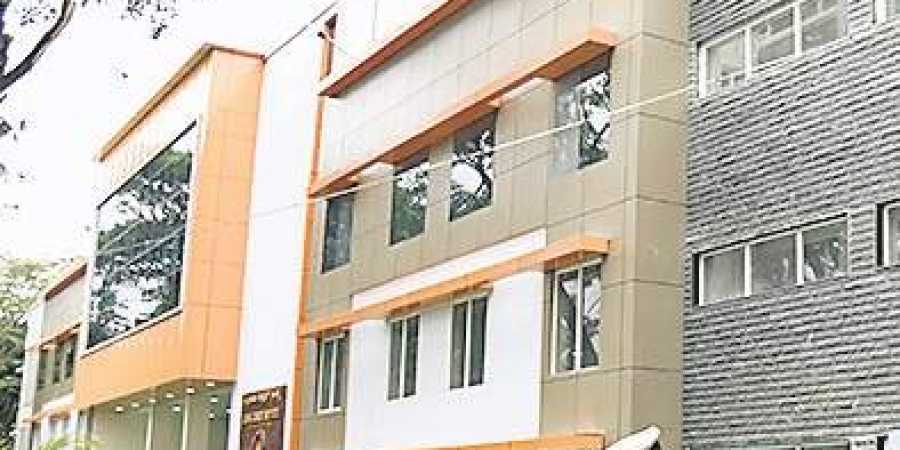
The Kidwai Hospital in Bengaluru.

Bengaluru :

Kidwai Memorial Institute of Oncology (KMIO) has become the first government hospital in Karnataka to execute the Central government’s e-hospital project, the first round of implementation for which started last week. The project aims at integrating and managing all aspects of a hospital’s operations such as medical, financial, administrative, legal and compliance, health records online.

“This system will also ensure that people coming from rural areas across the state need not wait for hours or struggle with losing files,” said Dr C Ramachandra, Director, KMIO.

How will it work?

E-hospital Kidwai will register the patient in the hospital system at the OPD (out patient department) on entering. A patient identification number and a patient-specific barcode will be generated, after which the patient will be given a ‘health card’. At the electronic queue management centre, they will be issued a token which will tell them where to go and which doctor to see.

A senior doctor from KMIO explained that a doctor will scan the patient’s barcode to receive information about the patient, such as medical history, allergies, and demographic data. After the consultation, he will then enter the diagnosis, prescription, and any further tests which should be taken into the system. “For instance, if you were to take a blood test, then you would be directed to the lab and the technician will have already received information about you. The blood sample will then be labelled with a barcode, enabling the technician to retrieve vital information before recording the test results,” he explained.
Digital healthcare

A team from Infosys Foundation is helping the doctors at Kidwai to streamline the data and also link the departments.

On the benefits of digital health care, the director said, “It is one of the answers to our disorganized, overcrowded state hospitals, and the inconsistent quality of hospital services. It is also instrumental in managing information more efficiently.”

He explained that it improves connectivity within healthcare institutions, so there is better coordination between healthcare personnel and also recorded data. Individuals from disadvantaged or low-income backgrounds, who do not manage their health due to poverty or lack of awareness, will be able to have the hospitals manage their health for them, he said.

Dr C Ramachandra also added that Kidwai was the first hospital to ensure that the OT was operational even on holidays.

source: http://www.newindianexpress.com / The New Indian Express / Home> States> Karnataka / by Chetana Belagere / by Express News Service / Ocotober 09th, 2018
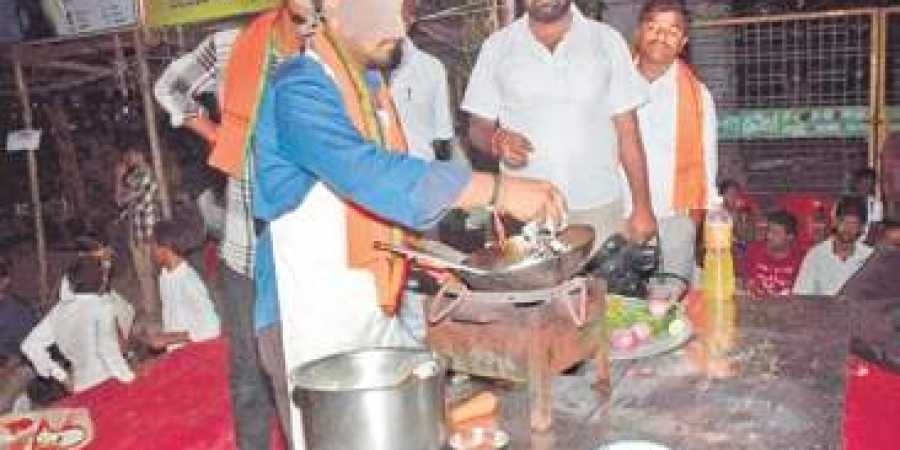
This Bengaluru chef can cook for hours blindfolded

In the future, Sandesh hopes to open his own restaurant, one where he can practise exactly what he likes.

SandeshBF08oct2018

Bengaluru :

“Cooking is my girlfriend,” says Sandesh Adugemane, who has spent most of his life in the kitchen of his father’s restaurant in Gangavati, a town in the state. Now, the chef, who works in Hyderabad and is here in the city for an event, says that his ability to cook blindfolded for hours, has brought him fame.

“I first cooked blindfolded at 18. Since I’ve been in the kitchen since I was about three – I was able to identify ingredients such as turmeric, chilli, tamarind by then – cooking is something that comes to me naturally, and I was confident enough to cook without being able to see,” says Sandesh.

He had to drop out of college in his second year due to personal problems. He started working in the hotel and that’s when the idea to do something different came to him. “Even though word spread that I was cooking blindfolded, my father didn’t support me. People would come from different states to watch me, but my dad didn’t think what I was doing was worthwhile,” he says, adding that the longest he has cooked blindfolded was six hours. He has appeared in over 100 local cooking shows, he says.

It took him over a year to perfect his technique.

“The first dish I made blindfolded was gobi manchurian. A well-wisher happened to take a video and circulated it,” says Sandesh,  who can make Indian and Chinese dishes blindfolded, but is trying to perfect continental cuisine.

About the mishaps when he just started cooking blindfolded, Sandesh says, “I can’t count the number of time I spilt hot oil onto myself. One time, because of being blindfolded and working in the kitchen for hours, my eyes had swollen up so big that I couldn’t open them for two days. My mother was worried and tried to get me to stop, but I was determined.”

In the future, Sandesh hopes to open his own restaurant, one where he can practise exactly what he likes.

source: http://www.newindianexpress.com / The New Indian Express / Home> Lifestyle> Food / by Express News Service / October 08th, 2018

Skin bank richer by 85 donations, 1,500 pledges

SkinBankBF07oct2018

With increasing awareness, State’s first such storage is seeing a rise in donors

With organ donation picking up in the State, awareness on the concept of skin donation is also catching up. The State’s first skin bank set up in the government-run Victoria Hospital has had 85 donations ever since its inception in March 2016. Donated skin has been used for grafting in nearly 40 patients, with skin damage due to burns.

One among the beneficiaries is an eight-year-old boy, who recently suffered third-degree burns after he tried to imitate a stunt that he saw during a Muharram procession.

The son of a driver from Tilaknagar in the city, the boy had burns on his chest, feet, and upper limbs, and was rushed to the Mahabodhi burns ward in Victoria Hospital. Skin grafting and it was done on him 10 days ago.

K.T. Ramesh, head of the department of plastic surgery in Bangalore Medical College and Research Institute (BMCRI), told The Hindu, “Although some patches of skin from his thigh area were used, it was not enough. We used donated skin on a major portion of his chest, and the boy is doing well now. He will be discharged in a few days.”

A great help

With the burns ward in the hospital getting nearly 220 admissions (of which over 70% are serious cases), the skin bank is of great help to patients who deal with the trauma of disfigurement. Hospitals from across the State are placing requests for the facility.

“The skin bank is a boon for patients as there is no blood-group matching required in skin grafting. Anyone over 18 years, who does not have skin disease or infections can donate,” Dr. Ramesh said.

The bank, set up in association with Rotary Bangalore Midtown and Ashirvad Pipes (Rotary Ashirvad BMCRI Skin Bank), did not get a good response in the first year. BMCRI then roped in Kannada cine stars — Prem and Kumar Bangarappa — to popularise the concept of skin donations. “While the actors participated in a few awareness programmes, our skin bank team comprising of paramedics — Nagaraj, Prasanna, and Lakshmikanth — have been doing yeoman service. Apart from visiting colleges and public functions to create awareness, the team also accompanies grief counsellors from Jeevasarthakathe, the State-run body that facilitates the cadaver organ transplantation programme, to hospitals where brain deaths are declared,” said Dr. Ramesh.

‘People call us’

Earlier, despite counselling, relatives of patients who breathe their last in Victoria Hospital (where the bank is located), were not ready to come forward. “Now, we are glad that people call us when there is a death in the family and say they are interested in donating skin. This apart, we have received over 1,500 pledges so far,” the doctor added.

source: http://www.thehindu.com / The Hindu / Home> News> States> Karnataka / by Shan Yasmeen / Bengaluru – October 05th, 2018

‘Sensational’ Bengaluru teen sets karting race afire

14-year-old Mihir S Avalakki, a Class IX student at National Public School, Rajajinagar, Bengaluru, driving for birelArt India, won the Round 2 of FMSCI Rotax Max National Karting Championship 2018 (Junior Category), at ChicaneCircuit, Hyderabad recently.

Being the fastest, he earned P1 position in the qualifying round. After finishing P2 in Heat 1 and P4 in Heat 2, he stared at P2 in the pre-finals and moved to P1 in the very first corner itself and held on to the same till the end of pre-finals.

The final was a closely fought battle where Mihir started at P1 and held on to the position, for a nail-biting finish.

Mihir started his professional racing a year ago where he finished the 2017 FMSCI Rotax Max Championship at a promising sixth place, being a rookie.

Mihir also got a great International exposure where he represented birelArt India at the EasyKart Championship in Europe.

He raced in six different International Racing Circuits in Italy and is currently placed at seventh in the championship among 32 total drivers. This international exposure has helped him raise his level of racing in India, which was evident in his win in the Round 2 of the Indian FMSCI Rotax Max Championship.

Earlier, Mihir was the National Champion at FMSCI National 4 Stroke Karting Championship 2017, which earned him a free ticket to the FMSCI Rotax Max Championship for 2017.

Marco Bartoli, Owner of birelArt India and Former Formula 3 Racer said, “He drove like an experienced driver and he handled the pressure really well. He is shown to have great mix of technical skills, speed, consistency and maturity which are very rare for a driver of his limited experience. He is definitely proving to be a bright star of the future”.

Preetham Muniyappa, co-owner of birelArt India and former Asia Karting Champion, said, “I have been monitoring him from the time he has been driving with our team and he has proved that he is a champion in the making, which was evident in the round 2 of the National Level Championship at Hyderabad. This is the beginning for his long career.”

He is the son of Sushmitha Narayana and Suman Avalakki . His father said: “Mihir is so dedicated, which gives my wife and I, the confidence that he is going to be a great Racer for India even in international circuits.”

source: http://www.bangaloremirror.indiatimes.com / Bangalore Mirror / Home> Bangalore> Others / by Bangalore Mirror Bureau / October 06th, 2018

A successful experiment in organic farming

Y. Eshwar Rao has taken up natural farming on his entire 25 acres of land.

Ballari farmer opts for Palekar model of agriculture

Y. Eshwar Rao, a progressive farmer in Vijayapura camp of Ballari taluk, has opted for natural farming on a sprawling 25-acre land.

He has been following the Palekar model of agriculture, including integrated farming, in his experiment since two years.

Mr. Rao says the yield, as of now, is not important. But what matters is that the soil health has been considerably improving and this has a lot of value.

“For 25 years, I adopted the conventional method of cultivation. I have used chemical fertilizers and pesticides and got good yield too. But after getting to know about organic/natural farming and the Palekar model of agriculture with thrust on zero budget farming, I decided to give it a try and adopted it on my entire piece of land,” he told The Hindu.

Mr. Rao said that he has never met Mr. Palekar, but acquired knowledge by reading his books and watching videos on the subject.

Sharing his experience, he said under natural farming, the input cost was less compared to farming using fertilizers and pesticides.

Presently, Mr. Rao has cultivated sugarcane on about 10 acres, fig on 8 acres, banana on about 2 acres, guava in 3 acres, and paddy on 2.5 acres. In addition, he has also taken up inter-cropping raising beans, cowpea, and drumsticks, which will not only supplement his income but also help increase nitrogen fixation. He has made use of drip irrigation, a facility that he had already had. The drip facility is also used to supply organic fertilizer. He uses manual labour for spraying organic pesticides.

According to him, the labour cost was on the higher side in the initial stage but dependence on it was coming down gradually.

“I will be happy to share my experience with other farmers and also guide them properly if they are willing to adopt natural farming,” he says.

source: http://www.thehindu.com / The Hindu / Home> News> States> Karnataka / by M. Ahiraj / Ballari – October 03rd, 2018

‘Holy compost’ is the buzz word in Bengaluru

The leaf composter at the Venugopalaswamy temple in Malleswaram. | Photo Credit: By Special Arrangement

An increasing number of temples are adopting eco-friendly measures

The idea of ‘holy compost’ is fast gaining ground after one temple in Bengaluru made compost out of its waste, branded it and sold it at a premium. Now, nearly 40 temples have installed leaf composters to process flower waste. They are yet to market the compost, but the trend shows that an increasing number of temples are adopting eco-friendly measures.

A leaf composter was installed at the Venugopalaswamy temple in Malleswaram on Tuesday while two will be installed in the Kadu Malleswara temple complex next week.

According to Vasuki Iyengar, who helped install these composters, most temples use flowers, such as marigolds, chrysanthemum and tulsi. “Some temples are also keen on composting vegetable peels, coffee and tea grounds, apart from the leaf bowls (donne in Kannada) that are used to distribute prasad,” he said. “A lot more temple managements are now open to discussing in situ processing solutions, as there is better awareness. That apart, such solutions require little investment and are not dependent on heavy machinery.”

At the Venugopalaswamy temple, Mr. Iyengar has trained three people to manage the leaf composter. “The temple has two desi cows. Their dung will be used as slurry, along with coco peat to aid composting,” he said.

One of the first temples to compost flower and kitchen waste was the Shakthi Mahaganapathy temple in Kalyan Nagar. The ‘zero waste’ temple has also invested in drum digesters for kitchen waste, said Ashok Betraj, temple trustee.

After installing these in June 2016, the temple management harvested over three tonnes of ‘holy compost’ in October last year and sold it at a premium. The temple’s success story seems to have captured the attention of the managements of many other temples in the city.

source: http://www.thehindu.com / The Hindu / Home> News> Cities> Bengaluru / by Special Correspondent / October 04th, 2018

88 million-year-old isle and crater to be geoparks

St. Mary's Island in Udupi, with hexagonal basaltic rocks, is to get Global Geopark status. | Photo Credit: K. Murali Kumar
St. Mary’s Island in Udupi, with hexagonal basaltic rocks, is to get Global Geopark status. | Photo Credit: K. Murali Kumar

Geological Survey chooses heritage locations in Maharashtra and Karnataka for UNESCO site status

In a first, an ancient circular lake created by a meteorite strike in Maharashtra and a hexagonal mosaic of basaltic rocks in an island off Udupi are poised to become global geoparks, under a Geological Survey of India (GSI) plan.

Lonar Lake in Maharashtra and St. Mary’s Island and Malpe beach in coastal Karnataka are the GSI’s candidates for UNESCO Global Geopark Network status.

The road to recognition, however, is long. An aspiring Global Geopark must have a dedicated website, a corporate identity, comprehensive management plan, protection plans, finance, and partnerships for it to be accepted. In mid-August, GSI moved ahead with the plan, setting a follow-up time frame of 100 days.

The Geopark tag is akin to that of a ‘World Heritage Site’ for historical monuments that can bring India’s famed geological features to the global stage.

“These are spectacular to look at even for the general public who may not understand that they are also geologically important. Lonar lake is the only known meteorite crater in basaltic rock and is world famous, while St. Mary’s island is a unique phenomenon that has been preserved well,” says Asit Saha, Director, Geodata, at the GSI Headquarters in Kolkata.

St. Mary’s Island, declared a national geo-heritage site in 1975, is estimated to be an 88-million-year-old formation that goes back to a time when Greater India broke away from Madagascar.

Relatively young

Lonar crater became a geo-heritage site in 1979. It is relatively young geologically, at just 50,000 years old. A meteorite estimated to weigh two-million-tonnes slammed into the Earth, creating a 1.83-km diameter crater where the lake formed. It is distinguished by a near-perfect, circular ejecta blanket, which refers to earth thrown up during the collision, around it.

source: http://www.thehindu.com / The Hindu / Home> News> National / by Mohit M. Rao / Bengaluru – October 02nd, 2018

Lifetime achievement award for Lakshmi

BANGALORE, 04/03/2009: Actor Lakshmi at the 75th year celebrations of Kannada cinema held at Palace Grounds in Bangalore recently. Photo: K. Bhagya Prakash | Photo Credit: Bhagya Prakash K

Multi-lingual senior actor Lakshmi has won the Dr. Rajkumar award for lifetime achievement for 2017.

The award is given by the Department of Information and Public Relations, Government of Karnataka . Lakshmi has won several awards, including national award for best actress in 1977.

Kannada film-maker S. Narayan has bagged the Puttanna Kanagal award given to film directors for lifetime achievement. Senior Kannada film producer G.N. Lakshmipathy has been chosen for the Dr. Vishnuvardhan award for lifetime achievement for 2017.

This year the award selection committee was headed by senior actor and producer J.K. Srinivasamurthy. All the three awards carry a purse of ₹2 lakh, with a gold medal. The committee met Chief Minister H.D. Kumaraswamy on Monday and submitted their report.

source: http://www.thehindu.com / The Hindu / Home> News> States> Karnataka / by Staff Reporter / Bengaluru – October 02nd, 2018

In Bengaluru, it’s a buy one, get one restored citizens’ initiative

A metal replica of the Begur stone dating back to 890 AD. | Photo Credit: Special Arrangement

The aim is to make metal replicas of stone inscriptions to fund restoration of the original

A 1,100-year-old ‘veeragallu’ (hero stone) dating back to 890 AD, which lay neglected inside the Naganatheshwara temple in Begur, was recently restored thanks to the INTACH. But, not all surviving stones that have Bengaluru’s history etched on them are this lucky. Now, a group of citizens interested in the city’s history are attempting to change this by creating miniature metal replicas of inscription stones as souvenirs and use the proceeds from their sales to preserve and restore inscription stones around the city

“The primary intent of the initiative is to raise funds for safeguarding the inscription stones. To begin with, we will use the funds to build a protective structure for the 750 AD Hebbal inscription stone, which is the oldest known written record of any language found in Bengaluru till date. Depending on the success of this initiative, we will replicate the same for other stones,” said Vinay Kumar, co-founder of Inscription Stones of Bangalore, a citizens group which has been trying to locate, preserve and create awareness about inscriptions stones around the city.

The team has roped in architect Yashaswini Sharma, who has designed a mantapa in keeping with the architecture during the Ganga dynasty.

Palm-sized replicas

Along with the Revival Heritage Hub, the team will be using 3D scanners to scan the inscription, which enhances the readability of the stone. The scan will then be converted into 3D prints, which will be used to create the palm-sized metal replicas.

As a pilot, the team has created a metal replica of the Begur stone.

Mr. Kumar also feels that the initiative will help create a connect between people and the city’s history. “When we started the group, we found that there was lack of awareness and participation among people, leading to neglect of these stones. Through the project, we wish to make heritage conservation inclusive and get a large number of people to take ownership in protecting our heritage,” he said.

We were initially reluctant to go commercial, but felt that these souvenirs can ensure that more people get involved in the preservation of the stones, he said.

“The proceeds from the sales will help make the whole initiative a self-sustainable one.”

However, no decision on pricing has been taken yet. “But, we will try to keep it as affordable as possible,” Mr. Kumar said. The group can be contacted on Facebook (Inscription Stones of Bangalore) or Twitter (@inscriptionblr).

source: http://www.thehindu.com / The Hindu / Home> News> Cities> Bengaluru / by Sarumathi K / Bengaluru – September 29th, 2018

Tracing the oral history of erstwhile Mysuru State

The cover of the book Marethuhoda Mysurina Putagalu. | Photo Credit: By Special Arrangement

Krishnaraja Wadiyar, king of erstwhile Mysuru, had held a meeting in Bengaluru in 1912 to exclusively discuss the impact of fast growing population and the ways and means to check it?

In the meeting held with technocrat Sir M. Visvesvaraya and administrator Mirza Ismail, the king decided to promote family planning in his State besides underlining the need to increase cultivation of crops to feed the growing population.

Such information related to history have been recorded in the Kannada book Marethuhoda Mysurina Putagalu (The forgotten pages of Mysuru) being released in Bengaluru on Sunday.

Authored by Dharmendra Kumar Arenahalli, the book is a collection of 52 stories or instances related to the history of the then Mysuru State including Bengaluru and its kings. “It is oral history or the instances referred to in folklore. I have spent five years and spoken to about 100 persons to collect the stories,” says the author.

Mr. Kumar, 50, is a civil engineer, who worked abroad for 18 years. “I have been fascinated by the history of Mysuru right from my childhood. My grandfather bought the house in which we live in Mysuru from Krishnaraja Wadiyar for ₹two. Since the house had such a history, it also has some of the articles depicting Mysuru heritage. This started drawing my interest towards Mysuru history right from childhood,” he says.

Next thing on Mr. Kumar’s mind is to write on a comprehensive history of Mysuru State and kings right from 1399 to 1947.

Marethuhoda Mysurina Putagalu is being released at JSS College in Jayanagar 7th Block at 10 a.m. in the presence of cricketer Javagal Srinath on Sunday.

source: http://www.thehindu.com / The Hindu / Home> News> Cities> Bengaluru / by Special Correspondent / September 29th, 2018