All posts by admin

Young gymnasts make Karnataka proud

The State team that won two silver and one bronze medals at the 24th Rhythmic Gymnastics National Championship for Juniors and Seniors, which was held in Hyderabad recently.

Team of five girls bags medals in rhythmic gymnastics at national event

When these girls bagged three medals in team events at the 24th Rhythmic Gymnastics National Championship for Juniors and Seniors, they knew that the years of effort they had devoted to training was beginning to yield results. The event was organised under the auspices of the Gymnastic Federation of India (GFI) in Hyderabad recently.

Bhavana Boypati, Keerthana G., Khushi G. Jain, Rhea Bhansali and Yashika Bhandari made up the team, which is the first ever to win a medal for the State in rhythmic gymnastics at the national level. They bagged two silvers and one bronze medal at the event.

It is to their credit that they won these medals despite the State lacking proper facilities for the indoor sports. Bengaluru has a dearth of practise facilities for gymnasts and this has been a long-standing grouse of athletes.

The five girls, who practise at the Sports Promotion Association (SPA) located in the Jayanagar Sports Complex, aspire to further their dreams and represent the country, and win medals in the Olympics.

Much-needed exposure

Bhavana said that the national event gave her the exposure she needs to improve her performance. Keerthana dreams of winning a gold medal for the country in the 2024 Olympics. Khushi credits her success to her coach G. Manohar Kamath and is hoping to participate in international events.

“I learnt a lot from gymnasts from other States and their approach to practise,” said Rhea, while Yashika concurred that the national exposure was good for the team.

The girls are hoping to get access to Federation of International Gymnastics (FIG) approved apparatus and quality sports gear.

source: http://www.thehindu.com / The Hindu / Home> News> Cities> Bengaluru / by Sudhindr A.B. / April 05th, 2018

Bengaluru-based writer chosen for Basavaraju award

Bengaluru-based writer Bilumane Ramadas has been selected for the L. Basavaraju Award for the year 2018.

Kolar’s Dr. L. Basavaraju Pratishthana, founded in memory of scholar L. Basavaraju, is presenting the award since 17 years.

The award will be presented at a function here on April 8, Pratishthana secretary H.A. Purushottam Rao told reporters on Wednesday.

Kannada Development Authority (KDA) chairperson S.G. Siddaramaiah will present the award, he said.

A native of Bilumane in Teerthahalli taluk of Shivamogga district, which is now submerged in the backwaters of Varahi project, Mr. Ramadas worked in the Commercial Taxes Department. He has many literary works to his credit, including several novels.

source: http://www.thehindu.com / The Hindu / Home> News> States> Karnataka / by Staff Reporter / Kolar – April 04th, 2018

Gururaja claims silver, opens India’s CWG medal account

Gururaja shows his silver medal and mascot Borbi after winning the Men's 56kg Weightlifting final during Commonwealth Games in Gold Coast on Thursday. | Photo Credit: AP
Gururaja shows his silver medal and mascot Borbi after winning the Men’s 56kg Weightlifting final during Commonwealth Games in Gold Coast on Thursday. | Photo Credit: AP

Gururaja was third after snatch, pulling off a best of 111kg after two good lifts before surviving a few nervy moments in clean and jerk.

Weightlifter P Gururaja opened India’s medal account on the first competition day of the 21st Commonwealth Gamesclaiming a silver in the men’s 56kg category in Gold Coast on Thursday.

The 25-year-old Gururaja equalled his personal best of 249kg (111+138) to finish second in a field where Malaysia’s three-time Commonwealth Championships medallist Muhammad Izhar Ahmed (117+144) broke the Games record for snatch and overall lift.

Gururaja was third after snatch, pulling off a best of 111kg after two good lifts before surviving a few nervy moments in clean and jerk. The Indian failed in his first two attempts before managing a good lift off his last chance to zoom to the top half of the table.

Ahmed, meanwhile, bettered his compatriot Hamizan Amirul Ibrahim’s snatch record of 116kg, created in 2010 Delhi Commonwealth Games. He then broke the overall Games record, which was also in the name of Ibrahim.

The third position was taken by Sri Lanka’s Lakmal Chaturanga (114+134).

Gururaja, a low-ranking Indian Air Force employee, is a quintessential Indian sports story of immense hardships and just a tiny bit of luck.

Son of a truck driver, Gururaja had aspired to be a wrestler for the longest time before being pushed into weightlifting by a watchful coach who saw potential in him.

source: http://www.thehindu.com / The Hindu / Home> Sport> Other Sports / PTI / Gold Coast – April 05th, 2018

Behind the scenes of selecting the Karaga pujaris

The festivities have been marred by controversy for over five years now

Everyone was expecting N. Manu (centre) to carry the Karaga, a floral pyramid, this year. | Photo Credit: K_MURALI_KUMAR

It was announced that this year the Karaga will be carried by 24-year-old N. Manu, which was to be a first for him. But as a massive number of devotees waited patiently, the Karaga pujari (priest) emerged only in the wee hours of Sunday. And, to everyone’s surprise, it was not Manu. A. Jnanendra was carrying the Karaga even though Manu had led all the rituals for the previous nine days. It later emerged that Manu was unwell because of which Jnanendra had to take over.

“We are happy that the Karaga was not stopped. But we have instituted an inquiry into what actually happened that night,” said Rajgopal, chairman of the Karaga Committee.

Incidentally, Jnanendra had earlier challenged Manu’s appointment as the Karaga pujari and the case, which is before a Muzrai tribunal, is expected to come up for hearing on April 27.

Not new to controversies

The Karaga, the oldest festival of Bengaluru, is not new to controversies. It has been marred by controversy for over five years now over who should be the pujari and carry the Karaga.

In 2013, Jnanendra had taken over mid-procession from C.M. Lokesh, amidst allegations by Lokesh that the Karaga was forcefully taken away from him.

In 2016, Lakshmeesha got a High Court order to carry the Karaga, putting a brake to 15 years of Jnanendra and Lokesha being the pujaris. However, he was forced to resign after being allegedly caught practising carrying the Karaga in a private area before the actual festival.

The job is a coveted one owing to the prestige associated with it in the Vahnikula Kshatriya community. The Karaga pujari is also the head priest of the historical Dharmarayaswamy temple. He gets ‘dakshine’ during and immediately after the Karaga procession, which often runs into several lakhs.

Karaga Committee

The annual Karaga festival was being organised by a large ad-hoc committee of community members. “This year, the State government, for the first time, gave a grant of ₹1 crore for the festivities. Hence, the Muzarai Department has formed a Karaga Committee with seven members, who will have a tenure of three years. This committee will streamline the festivities and root out such confusion and chaos,” said Subbanna, a senior community member.

The Karaga Committee, led by Rajgopal, was formed 15 days before the festival this year. “In the short time we got, we tried our best to manage the festival properly. From next year, we will ensure that there is no confusion or controversy over the Karaga festival,” Rajgopal said.

source: http://www.thehindu.com / The Hindu / Home> News> Cities> Bengaluru / by K.V. Aditya Bharadwaj / April 02nd, 2018

Google Doodle celebrates activist and pioneer of the arts Kamaladevi Chattopadhyay

Google Doodle: Kamaladevi Chattopadhyay | Photo Credit: Google Doodle

Kamaladevi participated in the freedom movement

On Tuesday, Google celebrated the 115th birth anniversary of the multi-faceted freedom fighter, activist and promoter of the arts, Kamaladevi Chattopadhyay, with a doodle.

Kamaladevi, who bagged the Padma Vibhushan in 1987 (a year before her death), was a woman of many firsts. She was an active participant in the freedom movement, championed women’s rights, founded the All-India Womens Conference (AIWC), led the renaissance of Indian handicrafts and handlooms, and worked for the development of the performing arts in India.

Born in Mangalore in 1903, Kamaladevi was widowed at 16. She married Harindranath Chattopadhyay when she was 20 and then headed to London where she graduated with a diploma in Sociology. She joined the freedom movement when she returned to India and she eventually became the first woman to run for a legislative seat in India, when she ran for the Madras Provincial Legislative Assembly.

She then founded the AIWC, which did a lot of work for social reform. She was credited for persuading Mahatma Gandhi to encourage more women to march with him during the freedom struggle. In 1930, Kamaladevi was part of Gandhi’s salt satyagraha team and she was later arrested for entering the Bombay Stock Exchange to sell packets of contraband salt.

Post independence, she worked for the rehabilitation of refugees. She then dedicated her life to the promotion of Indian indigenous arts and crafts and theatre. Thanks to her work behind the scenes, several renowned institutions, including the National School of Drama, Central Cottage Industries Emporium, and the Crafts Council of India, came into existence. She later headed the Sangeet Natak Akademi and in 1974 was awarded the Sangeet Natak Akademi Fellowship.

The doodle, created by Finland-based artist Parvati Pillai, salutes Kamaladevi’s contribution to the creative fields. It depicts the various fields she promoted, including the sitar, sarangi, Karthak dance, embroidery and basket weaving.

source: http://www.thehindu.com / The Hindu / Home> News> National / by The Hindu Net Desk / April 03rd, 2018

The village of boiled beans: How Bengaluru came to be

An aerial view Greenline Metro from Sampige Road to Yelachenahalli on the first day of its operation for public in Bengaluru on Sunday  2017.  Anantha Subramanyam K.  Credits: Mirror, BCCL, Bengaluru
An aerial view Greenline Metro from Sampige Road to Yelachenahalli on the first day of its operation for public in Bengaluru on Sunday 2017.
Anantha Subramanyam K.
Credits: Mirror, BCCL, Bengaluru

It is strange that the city of Bengaluru which we all accept today as a single city was not a single city at all until recently. Before Bengaluru was welded into a single city under a common corporation in 1949, it existed as a twin city. There were two portions to the city. The civil and the military portions were separate entities with a separate municipality and a separate collector. The job of the collector was to look after the revenue and the law and order problems of the city. He was functioning under the Resident. The Collector was also the Municipal President. The Bangalore city agglomeration had a population of 29,21,751 and the corporation area had a population of 24,76,355 in 1981. The city’s population recorded a growth of over 70% between 1971 and 1981.

The site of the present city had many prehistoric settlements. Neolithic tools have been located at the race course and Jalahalli. Byrasandra was also a prehistoric site. Dr Shikaripura Ranganatha Rao, an eminent archaeologist feels that the attractive site of the bugle rock at Basavangudi could have been a prehistoric habitat. Roman coins have been unearthed at Yeshwantpur and Jalahalli.

The name Bangalore is as old as the ninth century and the name is found in a Kannada inscription found near the Begur temple. A long record of circa 890 AD and the name appears to have a floral origin, derived from the tree Benga (Venga or Pterocarpus marsupium or the Indian Kino).

The explanation that the name was derived from Benda kala ooru, or the village of boiled beans as described by the Hoysala King Ballala when he was hungry during his visit to the place (when he was hunting) becomes irrelevant as the above name was much older that King Ballala of the Hoysala dynasty. Benda kala ooru or the place full of granite rocks is another explanation to a place name but granite is neither Bangalore’s exclusive speciality nor the old form, thousand years, found in the record indicates the place name being anyway connected to Benachu kallu. The place mentioned as Bengaluru in the Ganga record is originally a hamlet, even now called as Hale Bengaluru near Kodigehalli, not far away from Hebbal. It is said that Kempe Gowda I when he built the new capital town in 1537 called it Bangalore as his mother and wife belonged to the hamlet Bangalore, now Hale Bengaluru. In literary works, Bangalore is also called Kalyana Nagare or the ‘City Auspicious’. Though the fort built by Kempe Gowda then has totally vanished, the spots like the Yelahanka Bagalu (Mysore Bank Square) and Halsur Bagalu still exist. Halsur Bagalu or gate, now a police station is named after it. The gate proper even now remains hidden. The old remains of the ramparts and the moats were completely demolished during the nineteenth century. The town was conquered by the Bijapur sultans in 1638 and Shaji Bhonsle secured the town and its surroundings as a Jagir in 1638. The testimony to 50 years of Maratha rule is in the form of an inscription of Ekoji, Shaji’s son near the Kadu Malleshwara temple. Bangalore was conquered by the Mughals in 1686. The mosque at Taramandalpet is a notable vestige of Mughal rule. The city was leased to the Mysore ruler, Chikkadeva Wodeyar by the Mughals in 1689 and Chikkadeva Wodeyar expanded the fort to the south and built the Venkatramana temple in this fort area. This new fort in granite was strengthened by Haider Ali who secured Bangalore as a Jagir in1759. The British conquered the city in 1799 after defeating Tipu Sultan.

The original Bangalore city was clustered around the fort and city market and covered the area until the present Mysore bank square. Today, there is a bus stop at the place where the Dharmabudi tank existed earlier. The old city had areas like Cottonpet, Sunkalpet, Kumbharpet and the Balepet areas. The medieval character of the city’s old settlements typical of any old village is indicated by the names of these areas.

Every community or professional caste had its own street or streets in every village or town of ancient times. Sigebeli is the settlements of Brahmins, reminiscent of old Agrahara or Brahmapuri. Kempapura Agrahara was another settlement of the Brahmins created by Kempe Gowda II towards the Magadi road area beyond the Brahmabudi tank. Parts of Gandhi Nagar area appear to have been reclaimed from the Dharmabudi tank during the early part of the nineteenth century.

The Cantonment area grew as a separate township after the British shifted their troops to the place in 1806 and the first camp was located at the present Air Force Hospital in 1808. The present cantonment also consists of many old villages like Halasur, Blackpally, Doddakunte and Akkithimmanahalli. It was no part of the old Bangalore pettahs. At Domlur on the periphery of the old cantonment, the Chokkanatha temple built by the Cholas still remains. At Blackpally or Shivaji Nagar, there existed a Catholic church which later took some shape of the 18th century and now its is the St Marys Basilica. The cantonment area also saw the construction of some of the beautiful buildings of the European Renaissance style. Both churches and secular buildings which were mostly government offices during the 19th century.

New extensions were added to the town in Chamrajpet and Seshadripuram. Chamrajpet was named after Chamraja Wodeyar in 1892, the latter named after Dewan Seshadri Iyer. The visit of a plague in 1898 caused the creation of two bigger extensions in 1898. These were Basavangudi named after Basaveshwara temple or the Bull Temple in Sukenahalli village and Malleshwaram named after the Kadu Malleshwara temple in old Mallapura village. The area in both the places was full of fields.

The next time you think of Bengaluru as the city of Bengaluru, you would do well to remember its origins. There are several people alive today who remember the two distinct facets to the city; the pettahs and the cantonment. These portions were welded and expanded to make the beautiful city we live in.

source: http://www.bangaloremirror.indiatimes.com / Bangalore Mirror / by Siddharth Moorchung & Nikhil Moorchung / Bangalore Mirror Bureau / April 02nd, 2018

Genetic diversity can prevent rapid spread of infectious diseases

Choice of pandemic: The models are best suited to study airborne diseases such as H1N1, say Nagasuma Chandra (left) and Narmada Sambataru.

The team studied how susceptibility sub-populations affect the spread of the disease

An infectious disease can spread at different rates in different countries. This phenomenon has been observed in many cases, for instance in the 2009 H1N1 influenza pandemic. An International group of researchers including those at Indian Institute of Science (IISc), Bengaluru, and The Institute of Mathematical Sciences (IMSc), Chennai, looks at genetics as a way to explain this phenomenon. They find that the greater the genetic diversity in immune response, the stronger is the barrier to the spread of the disease. The results have recently been published in PLOS Computational Biology.

Nagasuma Chandra’s team at IISc chose to study H1N1 as modelling it had some advantages.

“There is a lot of work on H1N1 and a lot of data including clinical and epidemiological. These models are also best suited to study airborne diseases. As H1N1 spreads through air, choosing it made a lot of sense,” says Dr. Chandra.

Pandemic H1N1 virus

The pandemic H1N1 2009 influenza A virus was different from other influenza viruses encountered until then. According to the WHO, this is because it originated from animal influenza viruses and is unrelated to the human seasonal H1N1 viruses that have been in circulation among people formany years In fact, this virus is thought to have arisen from a mixture of two viruses: a North American virus that jumped from birds to swine and humans and a Eurasian swine virus that had circulated in pigs for about a decade before entering humans. Clinically also the virus’s effect was very different from that of other flu viruses in that younger people were more severely affected than older ones.

Narmada Sambataru and Sumanta Mukherjee who were at Dr Chandra’s lab, and Martin Lopez-Garcia from the University of Leeds, UK, spent nearly a year building up the model. Their research led them to establish how an individual’s genetic makeup can influence his or her susceptibility to the infection.

The immune system has both innate and adaptive response types to infections, in general. In the case of H1N1 infection, the adaptive immune system can recognise the presence of a virus within the cell and respond to it only if a molecule called the human leukocyte antigen (HLA) binds to some fragment of the viral protein (epitope) and ‘presents’ it to the environment outside the cell. Dr Chandra’s group has described the details of this aspect of H1N1 in an earlier paper published in the journal Clinical and Translational Immunology.

Immune response

“The main take-away from our work is that understanding how the immune response of different individuals leads to a spread of susceptibilities in a population is vital to figuring out how diseases spread,” says Gautam Menon of The Institute of Mathematical Sciences, a co-author of the paper. “This problem, of how to go from what we know about how individuals can vary in their susceptibility to understanding how epidemics spread across entire populations, has been identified recently as one of the major challenges in the study of epidemics.”

Having worked out how the genetic makeup of an individual can affect their susceptibility to the disease, the individuals can be grouped according to their susceptibility. Using a mathematical model called the SIR (Susceptible-Infected-Recovered) model, the researchers study how the presence of susceptibility sub-populations affect the spread of the disease. “In this model, individuals are initially susceptible but not infected.

“When an infection is introduced, individuals become infected at a rate determined by their estimated susceptibility to the pathogen, estimated using genetic information about the host as well as the pathogen. Infected individuals then proceed to recover,” says Dr Chandra.

Trends

The work captures the qualitative features of well-known trends of influenza spread in various parts of the world. “This work uses publicly available information about HLA class-I genes and their prevalence in populations around the world. Unfortunately, there is a significant shortage of this information for Indian populations,” she says.

The group is planning to propose a detailed study of this for Indian populations. “Once this information becomes available, we can do far more to predict disease spread in India. These predictions can be used to inform public policy and make better decisions. This is the real utility of such modeling methods, that we can explore different situations and ask what responses might be most effective in the context of specific diseases,” says Dr Menon.

source: http://www.thehindu.com / The Hindu / Home> Science / by Subashree Desikan / March 31st, 2018

E-waste industry comes together to streamline recycling process

Bengaluru generates around 1 lakh metric tonnes of e-waste annually. | Photo Credit: Handout_E_Mail

Very little of the estimated 18 lakh metric tonnes of e-waste that India generates per annum is recycled

Of an estimated 18 lakh metric tonnes of electronic waste (e-waste) that India generates per annum, less than 2 lakh tonnes reach licenced recyclers. The rest is either reaching the unorganised sector (such as scrap dealers), or ending up in landfills. Not only does this mean that potentially recyclable e-waste is being wasted, but also that unscientifically managed e-waste is a hazard that stands exposed.

Now, around 180 recyclers from across the country have joined hands to change the narrative and come together to form the All India e-Waste Recyclers’ Association. To be headquartered in Bengaluru, the association will look at streamlining the dismantling and recycling cycle of e-waste in the country.

Gururaj N., general secretary of the new association, told The Hindu that the dismantling and recycling industry is a nascent one, though e-waste itself is not.

“The e-waste quantum is calculated based on the sales that happened in the previous year, according to which the estimated e-waste generated is 18 lakh metric tonne per annum. Bengaluru generates around 1 lakh metric tonnes. The other big contributors are the National Capital Region, Mumbai, Chennai and now Hyderabad and Pune. Electronics is a component in many things — from laptops and air-conditioners to cars, which has 26% electronic component. The rate of progress in technology is a big key in e-waste,” he said.

In addition to what are called ‘white goods’, such as television, household e-waste that includes fans, lights and other essentials translates into 100 to 150 kg of electronic items in each house at any given point of time, which could eventually end up becoming e-waste. Despite all this, recyclers are running at 40 or 50% capacity as little waste is actually reaching them, said Mr. Gururaj.

Tackling the basics

The association is aiming at tackling the basics first: work with local municipal bodies to set up e-waste collection centres similar to the dry waste collection centres that are now being established in many cities. They also want to ensure that people find it convenient to make their e-waste reach recyclers. For this, they are planning to set up technology-driven drop boxes to enable people to put their waste and be paid back through e-wallets.

“It is not a business where people want to give away items for free. In addition, we want to ensure that the recycling process pushes urban mining, wherein dismantling and recycling brings out raw material such as gold, silver and copper (present in small units in many electronic items). There is already a scarcity of ore, and these metals have higher consumption, but the same production levels, which is why their prices have gone up,” he said.

source: http://www.thehindu.com / The Hindu / Home> News> Cities> Bengaluru / by K.C. Deepika / March 30th, 2018

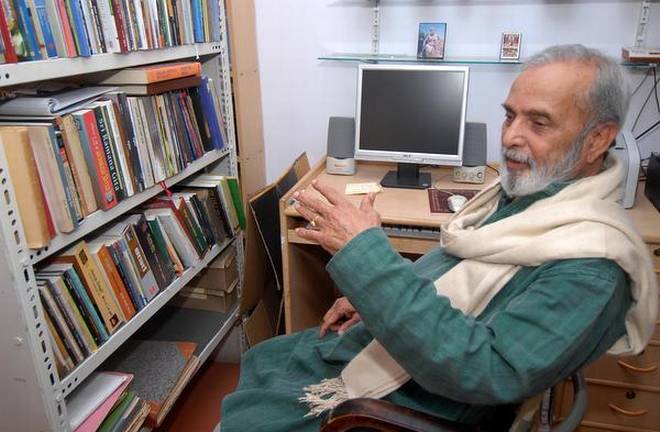
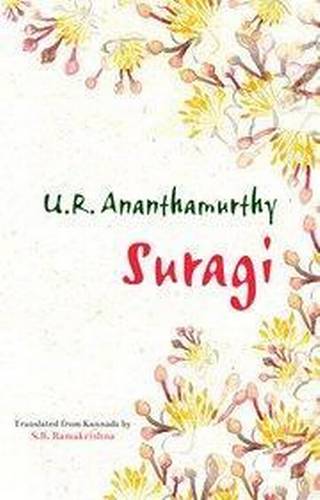
Suragi by U.R. Ananthmurthy review — the phenomenon called URA

AnanthamurthyBF31mar2018

An irrepressible spirit that cannot be contained within the material body of words

“‘Suragi’… this flower from the Malnad region, which takes me back to my childhood, grows more fragrant as it wilts. At a time when my health is failing, I wish to be like the suragi,” wrote URA in his preface to his autobiography in Kannada, published in 2012. S.R. Ramakrishna, who has distilled the essence of this suragi and made its delicate fragrance waft further beyond Kannada country, has ensured it an ‘afterlife’ through his sensitive translation of the text.

After Tagore, if there was one cultural icon at the national level with a similar kind of reach, it was URA. A master storyteller, URA authored many a modern classic such as Samskara, Bharathipura, and Avasthe, several short story collections, along with a prolific body of writing covering literary criticism and essays on culture and politics. While he had written and spoken about his life, his inspirations, and his politics all along at different venues, his autobiography brings together the varied skeins of his complex and colourful life, complementing his literary landscape.

Critical engagement

If URA was an engaging presence, it was because he was truly engaged with everything — little and big — that was happening around him. And his autobiography bears testimony to this unique feature of his personality.

Ananthamurthy02BF31mar2018

Spread over 10 chapters, the work covers crucial aspects of his life: childhood, student days, domestic life, teaching career, writing and creativity, and his experience as Vice-chancellor of Mahatma Gandhi University, Chairman of National Book Trust and Sahitya Akademi. Not to speak of the controversies that marked his journey as a ‘critical insider’ who kept a strict vigil on his social and cultural world and his side of the story.

While the contents page bravely attempts to arrange his life into these categories, the complexity of his lived experience and the even more complex understanding he has of that life do not allow for a linear, straightforward narrative. And all for the better. What we have is a richly textured narrative which combines experience and reflection, the lyrical and the discursive. The style was the man.

URA’s autobiography bears an organic relation to the intellectual and writer he was. A large part of his writing was already autobiographical, especially his stories and novels, which have drawn heavily from his childhood in Malnad region and his later years in Mysuru.

As Ja. Naa. Tejashree — his collaborator who collated and organised the material — notes, while his experience shapes a particular structure of thought in his creative works, the socio-political world that shaped his experience is foregrounded in the autobiography. Thus the text is best read as a political and cultural biography of his times — its hopes and fears, utopias and dystopias.

Ramakrishna, well-known for his creative translations, has provided a fitting ‘saath’ to URA and his collaborator. Based on his intimate knowledge of URA’s milieu, he plays around with English, using his discretion to leave certain words untranslated.

He has followed the shifting contours of the narrative, comfortably moving from the lyrical to the discursive. However, some rigorous copy-editing, especially of the starting chapters, would have made for better readability.

It is surprising that the translation does not carry the name of the collaborator on the cover page, a feature that marks the original text. The original carries a foreword by URA and another by Tejashree which describe the intent and processes involved in the making of this text, which is crucial to reading it as a mediated text.

Charismatic persona

Also, the Kannada original carries at the end a detailed list of URA’s writings, speeches, papers and presentations, as well as awards and honours, along with dates. Including these features of the original would have made the text an even more useful resource for URA scholars.

Despite the candid effort at capturing his life, one wonders if URA remains outside of his text. Could it be that the narrative is so largely social and outward that his inward, creative self has been subdued?

Or is it that URA’s towering achievements and his charismatic persona are hard to contain in words — like the quote from Eliot that URA uses, “Trying to use words… each venture… is a raid on the inarticulate”?

The man had donned so many hats and combined so many spaces and times in one lifetime that his irrepressible spirit cannot be contained within the material body of words. Perhaps this is why Girish Kasaravalli’s film on him was also titled Ananthamurthy: Not a Biography, but a Hypothesis.

To say that a large part of URA still lies outside of his autobiography is to pay homage to the élan vital of the man who engaged with his cultural and political world with exemplary commitment till his last day. Suragi is successful in gesturing towards this phenomenon called URA.

The writer is a teacher and a translator who works with Kannada and English.

Suragi; U.R. Ananthamurthy, trs S.R. Ramakrishna, Oxford University Press,₹650

source: http://www.thehindu.com / The Hindu / Home> Books> Translation / by Venamala Vishwanatha / March 17th, 2018

‘Daggers’ drawn at seventeen

This teenage author, who hails from Belgaum talks about her debut novel and her love for murder mysteries.

Malvika Misra
Malvika Misra

“I started writing The Seven Daggers when I was 12 years old. I have always been very fond of reading and writing, and once I had the story in my head, it evolved as I kept writing,” says the 17-year old author, Malvika Misra who was born in Belgaum, and now lives in New Delhi.

Malvika has always enjoyed adventure and mystery stories, so she was very keen on writing an adventure novel ever since she was a little girl, which is the reason why she based the main characters in her books around that age group too. “It helped me understand how to create characters and their respective behaviour, actions and reactions,” she says.

But apart from her own book, this voracious reader can’t make up her mind about her favourite list! She says her favourites are, The Book Thief, Murder On The Orient Express, Malory Towers and To Kill a Mockingbird. “One thing they all have in common is that they are all fiction, whether it is adventure, crime, or comedy. Fiction gives the writer the power to do anything,” explains Malvika.

The Seven Daggers -Book Cover

Most of all, she adores Agatha Christie! She says, “I love her style of writing. If I met her, I would have loved to ask her, ‘What do you think are the ingredients to make the perfect plot for a mystery novel?’ Because there is nothing more exciting than gripping suspense and mystery in a great novel.”

Her father’s transferrable job was quite overwhelming as they hopped from one city to another but she feels, “Each place offered me new experiences but the best part was making more friends along the way.” She has lived in numerous cities, and just moved to Delhi a couple of years ago, and it has been a good experience.

The 17-year-old also is quite good at golf and likes to play the sport whenever she gets the time. Asking her about what she has been up to lately, she adds, “I’m learning Kuchipudi at the moment. Although, nowadays, I don’t have much time to pursue it as I’ve been busy studying for my board exams.” Studies have got her more than occupied these days!

Back to her book, she describes why Peter Thomas is her favourite character, “I find him very humorous and mysterious. He becomes someone who the other characters can depend on and trust. Another fictional character that I like would be Mary Poppins. She has always been a favourite as she is fun and peculiar!”

In the future, she plans to write a sequel to The Seven Daggers and also try her hand at other genres for different age groups. She also hopes to get recognition for her writing and would also like to trek around the country with her friends, “As there is a lot to explore, see and learn,” Malvika concludes.

source: http://www.deccanchronicle.com / Deccan Chronicle / Home> Lifestyle> Books and Art / by Cathline Chen, Deccan Chronicle / March 07th, 2018