All posts by admin

Karnataka : Kundapur lad sets sights on Mt. Kanchenjunga

Harshad Rao
Harshad Rao

This 29-year-old has made a habit out of scaling peaks. On May 21 last year, Harshad Rao summited the Mount Everest at 8.20 am, and is now aiming to scale the Mt Kanchenjunga, which he will be climbing around May next year.

Mt Kanchenjunga (8586m/28,169ft) referred to as the ‘treasure of the snow’ is the highest peak of India. Rao will take the Nepal route and attempt this extremely tough climb. The software graduate will also give his climb a unique tech touch. He will adapt Live Location Tracking (LLT) system during his climb. “This will help track my climb real time on Google Maps. This is going to be done for the first time in civilian Indian mountaineering history,” he said.

The total budget for Rao’s expedition is about Rs 20 lakh and he is currently working on the permissions and logistics for the expedition in form of oxygen, food and equipment. He is practising long-distance running, cycling and yoga. It is going to be a 60-day expedition along with an international team. He will soon be practising in the hyperbaric chamber in Pune.

“I am working towards it mentally and physically. The peak remains unclimbed in this year and in 2016. In 1988, mountaineers from India attempted to climb Mt Kachenjunga, but fell short of the summit. The summit is definitely technically difficult because of the presence of soft snow on its route. The death ratio is also higher than Mr Everest,” he said.

Rao hails from Ardi village of Kundapur in Udupi district. He gave up his job for the sake of the Mt Everest expedition, which was a tough one especially because his oxygen mask developed a leak. He developed an interest in mountaineering after going on treks regularly. He got formally trained from the Nehru Institute of Mountaineering in Uttar Kashi and the Himalayan Mountaineering Institute. In 2009, he climbed the Jaonli peak (6632 mt) and Jogin 1 and 3 in 2011. He had also undertaken a cycling expedition from Pune to Kanyakumari.

source: http://www.bangaloremirror.indiatimes.com / Bangalore Mirror / Home> News> State / by Deepthi Sanjiv, Bangalore Mirror Bureau / December 21st, 2017

Belagavi swimmer sets sight on Tokyo Paralympics

After bagging three medals at the recently concluded Asian Youth Para Games in Dubai, swimmer Shridhar Malagi of Belagavi wants to qualify for the Tokyo Paralympics in 2020

Belagavi:

Shridhar Malagi of Belagavi, who represented India, at the Asian Youth Para Games held from December 8-14 in Dubai, bagged silver medal in 100m breaststroke and bronze medals in 100m butterfly and 200m individual medley. He was included in the Indian team based on his performance at the national competition in Udaipur where he won five gold medals.

Shridharis being trained by Umesh Kalghatgi, Rajesh Shinde and Guruprasad Tangankar. Shridhar told reporters: “He is now targeting the 2020 Tokyo Paralympics and is practising hard to qualify for the event.”

source: http://www.timesofindia.indiatimes.com / The Times of India / News> City News> Hubballi News / TNN / December 22nd, 2017

In the shade of history

TissuePlants01BF25dec2017

Mother Teresa Peace Park has an avenue with over a 100 trees created from tissue culture

A walk through Tissue Culture Avenue at St. Aloysius College in Mangaluru is a revelation. The avenue has endangered trees created from tissue culture. Over 100 trees have been produced by tissue culture at Dr Kupper’s biotechnology lab in St. Aloysius College.

TissuePlants02BF25dec2017

“These trees form an important lung space on Light House Hill,” Fr Leo D’Souza, director of the lab said. “Research students use biotechnology to clone endangered species, some of which are hyper endemic. I vividly remember the day we planted the first cloned cashew sapling in the world in 1989.”

Tissue Culture Avenue is at Mother Teresa Peace Park and is a haven for collegians doing last-minute preparation and revision. With the fast-approaching festive season, youngsters are also rehearsing carols. Ashwin, a student who was hanging out with his friends, was overwhelmed on learning of the history of the avenue. He hugged the 50-foot-matchwood tree saying, “I never knew you were here.”

Smitha Hegde, a researcher and former associate professor said the matchwood tree (scientific name ailanthus) was planted 26 years ago. In an article in the golden jubilee souvenir of the St. Aloysius Evening College, she writes how Fr D’Souza motivated students to clone endemic trees of the Western Ghats including the Flame of the Forest.

The millingtonia hortensis (akasha mallige) creates a carpet of white, fragrant flowers every morning. Students enjoy studying under this tree. Smitha describes the gnetum ula as a “living fossil. The tree has conical bunches of flowers. It grows on other trees.”

The trees have plates with the names of the researchers and students who have contributed to the development of the tree. These are painted regularly to motivate the students and researchers to keep up the good work.

source: http://www.thehindu.com / The Hindu / Home> Life & Style / by M Raghuram / December 25th, 2017

Meet real-life Mowgli, darling of monkeys, from village near Dharwad

Langurs, boy can’t live without each other; 2-yr-old brokers peace between 2 troops.

Samarth Bangari of Allapur village in Kundol taluk of Dharwad district plays with wild Langurs. DH photo by Irappa Naikar.

The grey langurs or the Hanuman langurs, as they are called, are often not preferred as pets. While some ‘madaris’ tame monkeys and make them dance to their tunes, the langurs are usually not so friendly.

But langurs are soulmates for two-year-old Samarth Bangari of Allapur village in Kundagol taluk, Dharwad district. He literally eats, sleep and plays with the wild langurs.

The langurs, which are tree canopy dwellers, of this village too cannot live without him. If Samarth doesn’t come to play with them at the break of dawn, the langurs go to his bed, remove his bedsheets, wake him up and ‘drag’ him to play.

It all started six-eight months ago, when the tiny Samarth, along with his mother, went to his maternal grandfather’s village. To stop Samarth from crying, his grandmother gave him a piece of jowar roti to eat. He walked straight out of the house and offered the piece of roti to a langur that was resting on a tree along with its little one.

As Samarth babbled, the mother langur climbed down the tree and took the roti from him. Relatives were wonder-struck when the 18-month-old Samarth did not even flinch when eight to 10 langurs came to him, expecting him to offer something for them too. He stood there with a giggle on his face.

The friendship has only grown ever since. The toddler lifts the young ones in the troop or sometimes hits them. The monkeys have no issues with it.

“Earlier we used to fear for the safety of Samarth. The elders used to rush to his ‘rescue,’ but the langurs would attack us,” said Mallikarjun, Samarth’s father. Many times, the elders have sustained injuries or have been bitten by them in their ‘rescue’ mission. There have been instances where these animals have chased the elders for kilometers. But Samarth has not sustained even a scratch due to the langurs.

Family members tried several tricks to make sure Samarth was out of the reach of the langurs, but failed. They had taken Samarth to another village for a few days, but were forced to bring him back, as the langurs trooped there and ransacked everything in their wasy. They virtually searched every house in the village for Samarth. “The langurs stopped the ruckus only after he returned with them,” said a villager.

The village residents said there used to be two groups of langurs in the nearby woods of Allapur and they had constant fights. This had resulted in losses to farmers and housewives, in terms of crops, utensils or eatables. But now, truce prevails as Samarth has played the perfect peacemaker.

The boy now has a fan following of sorts as people from far and wide are coming to Allapur, to see for themselves this strange but strong bond.

source: http://www.deccanherald.com / Deccan Herald / Home> State / DH News Service / Hubballi – December 03rd, 2017

Sahitya Akademi award for Ashoka, Sreemathi

Noted Kannada critic T.P. Ashok has bagged the Sahitya Akademi annual award for 2017 for his literary criticism work ‘Kathana Bharathi’.

The award carries a purse of ₹1 lakh and a copper plaque which will be presented to him on February 12, 2018, in New Delhi during the Festival of Letters being organised by the Akademi.

Another Kannada writer H.S. Sreemathi has bagged the Sahitya Akademi Prize for Translation 2017 for her work ‘Mahashweta Devi Avara Katha Sahitya – 1 and 2’, translation of short stories of Mahashweta Devi (Bengali).

The award carries a purse of ₹50,000 and a copper plaque.

24 languages

The Sahitya Akademi on Thursday announced its annual Sahitya Akademi awards in 24 languages in New Delhi.

Seven novels, five books of poetry, five of short stories, five of literary criticism and one of play and essays have been chosen for the awards.

The awards were recommended by a distinguished jury members representing the 24 Indian languages and approved by the Akademi Executive Board, said a release.

source: http://www.thehindu.com / The Hindu / Home> News> Cities> Bengaluru / by Staff Reporter / Bengaluru – December 22nd, 2017

IISc. scientists create hybrid transistor device

In a first, scientists at the Indian Institute of Science (IISc.) have combined two different types of transistors — MOSFETs (Metal Oxide Semiconductor Field Effect Transistor) and tunnel FETs (Field Effect Transistor) — into a single device that can easily switch between power efficient and high performance modes, depending on the need.

The device has a special type of metal-semiconductor junction, which can be tweaked to make it behave either like a MOSFET or a tunnel FET.

The hybrid variety is an answer to issues that the most common MOSFETs have, that of being unable to bring down the supply voltage for MOSFETs proportionately with transistor size, because of a fundamental design flaw.

To overcome this, the tunnel FETs are being used. But they also have a disadvantage: the desired output — the current flowing when the transistor is on — is greatly reduced.

The hybrid device is capable of switching between MOSFET and tunnel FET modes using two gates instead of one, and a special type of electron barrier called Schottky junction. The Schottky barrier is created when a metal and semiconductor are joined under certain conditions.

According to a release, the dual-gated device was able to operate at a voltage lower than possible with conventional MOSFETs, greatly reducing power consumption. It also showed superior performance compared to current state-of-the-art tunnel FETs.

“You have flexibility,” says Shubhadeep Bhattacharjee, PhD student at the Centre for Nano Science and Engineering, IISc and first author of the paper published in Applied Physics Letters.

source: http://www.thehindu.com / The Hindu / Home> News> Cities> Bengaluru / by Staff Reporter / Bengaluru – December 21st, 2017

Ace Manufacturing opens new unit in Bengaluru

Ace Manufacturing Systems (AMS), an Ace Micromatic group company, has opened its new manufacturing facility in Bengaluru. The company is a single source supplier of machines to many Indian OEMs and large-sized component manufacturers.

Many of the company’s machines find application in industries like automobile, die & mould, aerospace, medical & dental equipment manufacturing. It also caters to the need for general engineering and defence industries, including power, energy and other government sectors.

“The new facility built at a cost of Rs. 80 crore will enhance our production capacity from the present 1,200 machines a year to 3,500 machines,” said P Ramadas, Managing Director, Ace Manufacturing Systems.

“With increased production capacity, this new facility has the capacity to build large-sized horizontal machining centres. A portion of this space is dedicated for automated turnkey solutions,” he added.

source: http://www.thehindubusinessline.com / Business Line / Home> Companies / The Hindu Bureau / Bengaluru – December 22nd, 2017

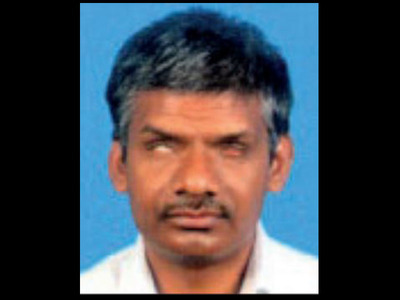
Visually impaired Kannada professor gets BU doctorate for Kuvempu thesis

NagashettyBF22dec2017

Bengaluru :

Disability is not a reason to give up on life, but a weapon one can use to prove that nothing is impossible. Nagashetty, 37, swears by this motto. Born blind in one eye and losing sight in the other when he was 15 years old, the gritty professor is probably the first visually impaired candidate to receive a doctorate from Bangalore University.
A notification on Nagashetty’s doctorate was released by the varsity on Thursday. Completing his thesis on the topic ‘Intuition in Kuvempu’s literary works’ (‘Kuvempu Kavyagalalli Anthardrishti’ in Kannada), from BU’s Kannada department, Nagashetty was awarded the doctor of philosophy degree and will be felicitated at the university’s convocation in 2018.

Nagashetty’s happiness knew no bounds while TOI spoke to him about his achievement. Saying his hard work and patience have finally paid off after nine years, he stated: “It took me six years to get this doctorate. I registered in 2008 and submitted the thesis in 2015. But because the panel was undergoing some changes, I received the doctorate this year.”

“I learned about Kuvempu’s work in school and realized that the prose and poetry have a deep impact on the reader’s mindset. I wanted to delve deeper and and took this up as my thesis topic,” said Nagashetty, a Kannada professor at Government PU College, JC Nagar. He added: “I got some of my PU students to read the works to a group of people and asked them to write down what they understood. Then I got them converted into braille format for my knowledge,” Nagashetty added.

Nagashetty, who lost sight in his second eye in class 9, decided to resume education at Kalaburagi’s blind school where he learnt braille. He secured 75% in SSLC exams. “That pushed me to study further,” he said.

After completing pre-university education in Gadag, Nagashetty came to Bengaluru to study at Sree Veerendra Patil degree college where he studied history, economics and Kannada. Then he joined Bangalore University to pursue postgraduation in Kannada.

Even though the laborious process of converting braille into conventional text and vice versa took up much of the time while completing the thesis, Nagashetty is determined about compiling SL Bhyrappa’s works. “This too may take a long time but I believe it can be achieved,” he signed off.

source: http://www.timesofindia.indiatimes.com / The Times of India / News> City News> Bangalore News / by Deepika Burli / TNN / December 22nd, 2017

Golden jubilee of Kannada’s first Jnanpith

Kuvempu receiving the Jnanpith Award. | Photo Credit: VAIDYA

Though Kuvempu was honoured with the award on December 20, 1968, it was for the year 1967

It has been 50 years since Kannada got its first Jnanpith award. Though it was conferred on Kuppali Venkatappa Puttappa (Kuvempu) for his magnum opus Sri Ramayana Darshanam on December 20, 1968, it was for the year 1967.

He shared the award with Umashankar Joshi, a Gujarati littérateur.

Now, to mark the landmark event, Rashtriya Kuvempu Pratishthana (RKP) has organised a two-day symposium in Kuppali, the birth place of the poet, on December 29 and 30. Writers and critics from across the State will on these two days share their views on Sri Ramayana Darshanam and the other works of Kuvempu.

Kadidal Prakash, RKP secretary, said that the the annual flower show held at Lalbagh this year during Independence Day was themed on Kuvempu Malenadu to commemorate the golden jubilee of Jnanpith for Kannada and Kuvempu. Pusphageethe, a collection of poems authored by Kuvempu on flowers and plants of Malnad, was also released during the flower show.

Kuvempu is the first among the eight recipients of Jnanapith for Kannada and he is the second among the Kannada poets to be revered as “Rashtrakavi.” His poem, Jayabharata Jananiya Tanujate, is the State anthem and his Uluva Yogifarmers’ anthem.

He was the eleventh vice-chancellor of University of Mysore and a university near Shivamogga has been named after him.

His birth place Kuppali near Tirthahalli has become a literary pilgrim centre for many, which is now a museum.

Kuvempu, who contributed to various genres of literature, including, poetry, novel, short stories, plays, literary criticisms, autobiography, translation, and essays has over 70 important works to his credit.

“It would be no exaggeration to say that Sri Ramayana Darshanam is the centre of Kuvempu’s literary output,” says writer and president of Rashtrakavi Kuvempu Pratishthana, Hampa Nagarajaiah. “It is Ramayana epic in modern Kannada in an attempt to make it accessible to the present day,” he added.

Writer Shankar Mokashi Punekar has translated Sri Ramayana Darshanam into English with introduction by literary critic G.S. Amur. RKP has co-produced an 81-volume audio book containing recitations of and commentaries on the work.

source: http://www.thehindu.com / The Hindu / Home> News> States> Karnataka / by Veerendra PM / Bengaluru – Shivamogga,  December 21st, 2017

Kannada film industry all set to break its own record

The number of releases likely to cross the 200 mark this year

The eight-decade-old Kannada film industry, which set a record of sorts last year with the release of 180 films, is all set to break its own record by reaching the 200 mark this year. The number of films released till the middle of December has crossed 190.

It appears that demonetisation and GST have not dampened the enthusiasm of producers.

According to Umesh Banakar, vice-president of Karnataka Film Chamber of Commerce (KFCC), the annual turnover crossed ₹400 crore in 2016 and is likely to touch the ₹500-crore mark this year.

An average of four films were released every week, as against three in the previous year. The highest number (22) of films were released in November while April recorded lowest of eight releases.

However, there is a total mismatch between releases and the success of films at the box office. Success rate stands at a maximum of 10%, which means only 20 of the total films released have recovered their investment. “According to our estimates, the success rate ranges from 3 to 5 per cent. Only a few producers are in comfortable position,” says Mr. Banakar.

He attributes digitalisation for the increase in the number of releases, but regrets that quality is a casualty in this process.

Expressing concern over the trend, veteran actor Anath Nag had recently said that most of the films released in the last two months failed to pull the audience to theatres and producers suffered to the tune of ₹50 crore.

But S. V. Rajendra Singh Babu, President, Karnataka Chalanachitra Academy (KCA), is unperturbed. “There is nothing unusual. Usually, the success rate swings between 7 and 10%.”

While the number of remakes came down significantly, films dubbed from other languages were released without facing much opposition this year. Owing to non-availability of screens in Bengaluru, a few producers released their films in district and taluk centres.

Rajakumara, Hebbuli, Bharjari, Bangara S/o Bangarada Manushya and Mufti did extremely well at the box office while the much-hyped Chakravarti, Mastigudi, Tiger Galli, Upendra Matte Baa, Pushpaka Vimana, Mumbai, Melukote Manja, Veera Ranachandi, Mass Leader and Pataki failed to draw audiences to theatres.

“Quality films have suffered because of the glut, as there are not enough screens to host this volume. Producers are gambling without understanding the ground realities,” regrets Surappa Babu, Secretary, Karnataka Film Producers’ Association.

However, young and talented directors continued the trend of defying the myth that only a stellar star cast can ensure success with films including Ondu Motteya Kathe, Shuddhi, Kempiruve, Dayavittu Gamanisi and Urvi.

source: http://www.thehindu.com / The Hindu / Home> News> Cities> Bengaluru / by Muralidhara Khajane / Decembr 17th, 2017