All posts by admin
15
Young social entrepreneurs share stories, win hearts at CII summit
Bengaluru:
When four youngsters took the stage at the India Innovation Summit on Thursday, the packed hall greeted them with thunderous applause. From a 17-year-old girl who sowed the seeds of her venture in 2015 to a 21-year-old village lad who has gone the extra mile to help distressed farmers, the innovators shared their journeys and success stories at the two-day meet organized by Confederation of Indian Industries (CII).
This app tracks baby’s mental, physical growth
“When I was in class six, school authorities told my parents to get me enroled in a special school. I was 11 when they realized that I was suffering from dyspraxia, a motor disorder caused by damage to the brain. By the time I stepped into class 10, I became an ace coder,” said Harsh Songra, founder of My Child, an app. Featured twice in the Forbes India 30 Under 30 list, he’s been a TedEx speaker too.
Founded in 2015, the app helps parents track the child’s mental and physical development and unusual symptoms from birth to two years. “Today, we connect to over 200 mothers across 140 countries in a month to help them understand their children’s development stages and identify signs of a disorder, if any. The app uses artificial intelligence algorithms. I have also started a content page — We Included — which narrates the tales and travails of the disabled across the globe and sensitizes people,” said Harsha.
Harsh Songra, 21, co-founder, My Child
——————-
A platform which hones communication skills
While chasing the IIT dream, Siddharth Pandiya realized that he was doing no value-addition by becoming another computer engineer. “I left the rat race and started something which I realized is so vital today, a debating platform. My parents always wanted me to develop communication skills,” said Siddharth, who is preparing to join University of California, Los Angeles.
The teenager who just completed PUC from Greenwood High School is the founder of Debate for Change, a forum supported by Google. An avid debater since the age of eight, Siddharth’s aim is to make schoolchildren discuss varied topics with students across the world, hence enhancing their communication skills. “It’s a voice-based platform. One has to meet certain parameters, like the number of debates, to secure a world ranking,” he said, adding, “I’d rather be an aggregator of skills and find the right people to do the right job than a master of all trades. That’s my success mantra.”
Siddharth Pandiya, 18, founder, Debate for Change
——————
This initiative hopes to change mindsets, save resources
Two years ago, when an environmentalist spoke about the impact of wasting resources and degradation of the planet during environment day, classmates Garvita Gulhati and Pooja S chanced upon the idea of a social startup — Why Waste? “The speech got us thinking and we realized we needed to do something,” said Garvita, who was 15 years old then.
“If we drink water from a bottle at a summit and leave it half empty, 14 million litres of water will be wasted in two days? Our initiative intends to change mindsets. I believe we are all tenants on Earth; if we can leave a house spick and span being tenants, why can’t we do that for the planet? We have to stop wasting resources, which are limited,” she said. As part of the initiative, Garvita organizes campaigns to conserve natural resources.
Garvita Gulhati, 17, co-founder, Why Waste?
—————
A tech tool to aid farmers
Hailing from a humble farmer family in a remote Mangaluru village, Ajay Gopi started an agriculture startup in 2015. “I have experienced the agony farmers in our country go through. When about 1,500 farmers committed suicide in Karnataka because of crop failure and debt, I decided to make a difference,” said the collegegoer.
The startup, Teraniru, gives users access to the aquaponics technology, wherein plants grow in soil which sucks the same water in which fish breed. His prototype is functioning since December at the Kaggalipura rural market. “My aim is to do away with middlemen in the agriculture sector. We have to focus on people who contribute to the food chain, otherwise we will not survive,” said Ajay, who is now head of Project DEFY in Mangaluru and a fellow at Ashoka India.
Ajay Gopi, 21, co-founder, Teraniru
source: http://www.timesofindia.indiatimes.com / The Times of India / News> City News> Bangalore News / TNN / July 14th, 2017
Google acquires Bengaluru-based Artificial Intelligence startup Halli Labs
The firm “was founded with the goal of applying modern artificial intelligence and machine learning techniques to solve old problems.”
Google has acquired Bengaluru-based artificial intelligence startup Halli Labs for an undisclosed sum. The firm said it was founded with the goal of applying modern artificial intelligence and machine learning techniques to solve old problems.
“Well, what better place than Google to help us achieve this goal,” said the company in a blog post on Medium. It said the company would be joining Google’s Next Billion Users team to help get technology and information into more people’s hands around the world. “We couldn’t be more excited,” said the company.
Halli Labs was co-founded early this year by Pankaj Gupta, former chief technology officer of online homestay aggregator Stayzilla, which recently closed down its services. An alumnus of Stanford University, Mr.Gupta has also worked as a senior data scientist at Twitter.
Caesar Sengupta, Google’s vice-president for product management tweeted about the acquisition on Wednesday on his Twitter handle.
source: http://www.thehindu.com / The Hindu / Home> Business> Industry / by Special Correspondent / Bengaluru – July 12th, 2017
Professor brings Punjabi back to Sikhs

Dharennavar, a Kannadiga, has been teaching Punjabi to the community in Vijayapura
Back in 2012, Panditrao Dharennavar was in the news for translating Kannada literature into Punjabi. Now, the professor is bringing Punjabi back to the Sikhs in his hometown Indi at Vijayapura district.
Mr. Dharennavar, who teaches sociology at the government degree college in Chandigarh, has turned into an ambassador of the two languages. He teaches Punjabi to Sikh children of Gurunanak Nagar in the taluk, while also translating Kannada works into Punjabi.
Based in Chandigarh for the last decade, Mr. Dharennavar has mastered enough Punjabi to be able to write it. He has translated Vachanas of Veerashaiva saints and social reformers Basaveshwara and Akka Mahadevi into Punjabi.
“When I came here on vacation, I came to know about the colony of Sikhs who have been dwelling here for over 70 years. After being disconnected from Punjab for decades, these people have forgotten Punjabi and speak Hindi and Kannada. They also speak Sikhali, their own language which is similar to Punjabi but has no script,” Mr. Dharennavar said.
That is when he decided to teach Punjabi to the community, mainly the children.
He is happy with the interest shown by the children. “Perhaps it their instinct that makes them learn the language so quickly,” he said.
Ujwal Singh, one of the residents, said that he is grateful to Mr. Dharennavar for having so much concern for the community to teach the language. “We wanted someone to teach us Punjabi so that we could read our religious books. The language also connects us to our roots,” he said.
source: http://www.thehindu.com / The Hindu / Home> News> States> Karnataka / by Firoz Rozindar / Vijayapura – July 12th, 2017
An opportunity for students to develop missile solutions

Students of Class V to X in Mysuru and Bengaluru are being given an opportunity to come up with missile technology solutions as part an education startup’s Young Innovator Hunt.
Those who register for the hunt, are expected to imagine themselves fighting against the British forces from the island town of Srirangapatna on behalf of the 18th Century warrior king Tipu Sultan, who pioneered missile technology.
The participating students will be asked to devise an innovative missile solution to keep at bay the British forces surrounding Srirangapatna, an island town surrounded by two branches of the Cauvery.
Anglo-Mysore War
“We will narrate the story of the second Anglo-Mysore War in which Tipu Sultan scored a historic victory against the British with the help of missile technology, said Dhruva V. Rao, founder, Science Ashram, a science education centre, which believes in teaching concepts of science through experiments. Also, a painting of the battle scenario will be provided to the students.
“The primary reason for Tipu’s victory in the battle was the scientific approach towards problem-solving and high order thinking skills. Students are also expected to think out of the box and provide missile solutions to prevent the British forces from crossing the Cauvery and entering Srirangapatnam,” Mr. Rao added.
Necessary material
Science Ashram will provide a set of tools and necessary materials for students to come up with missile solutions. “The solution can range from a catapult to a ballista to a trebuchet. The missile solution should be around 20 ft,” Mr. Rao added.
Pointing out that the missile technology was born out of such high order reasoning skills displayed by Tipu Sultan, Mr. Rao said NASA had displayed a painting of this battle scene at its centre in USA. “This was recognised by the late President Dr. Abdul Kalam at Wallops Flight Facility, the base for NASA’s Sounding Rocket Programme,” Mr. Rao said.
Students, who register for the programme, will be allotted a day on which they have to visit the Science Ashram either in Bengaluru or Mysuru to develop their missile solution. “We can accommodate about 30 students per day at each centre”, he said.
Last year
Mr Rao is hopeful of young minds coming up with innovative solutions during the exercise. During its first Young Innovator Hunt last year, hundreds of students participated in a contest to come up with a solution to propel a car without fossil fuel. “Participants came up with interesting solutions that included the use of solar energy and electric energy to propel the cars,” he said.
Interested schools may contact Science Ashram at 9980878105 or info@scienceashram.com. While each participant, as a token of appreciation, is given a fidget spinner from the Science Ashram, the winners are given an opportunity to visit ISRO and HAL along with the Science Ashram team, Mr. Rao added.
source: http://www.thehindu.com / The Hindu / Home> News> States> Karnataka / by Laiqh A. Khan / July 11th, 2017
A date with rare stamps
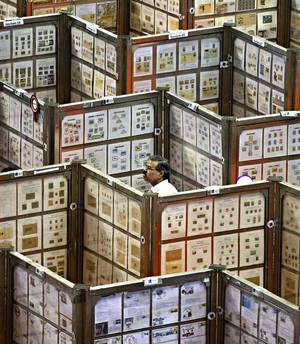
Karnataka Philatelic Society to hold exhibition after 10 years
Philately, like letter writing, does not have many takers today. But young and old collectors will participate in an exhibition of rare stamps by the Karnataka Philatelic Society (KPS) from July 14 to 16 at the Rajarajeshwari Kalyana Mantapa, Rajajinagar. The event is being organised by the society after 10 years. Till 2008, philately exhibitions were held regularly by the Department of Posts, too, but they were stopped when participation dipped.
“Most major collectors these days are in the age group of 40 to 60. Not many young people are interested in hobbies such as philately and numismatics. Through the exhibition, we want to revive interest in them,” said Nikhilesh Melkote, general secretary, KPS.
Of the 114 applications the KPS received for the exhibition from Karnataka, Goa, Telangana, Tamil Nadu, and Assam, only 22 were from children or teenagers. “Till a few years ago, many schools encouraged the hobby and had their own clubs, which is not the case today,” Mr. Melkote said.
Sri Krishnan K.L., 17, is among the exceptions — he started collecting stamps when he was eight. “I always tell my friends that philately is about a lot more than collecting stamps. We learn about countries and their history.”
Two schools that have philatelic clubs are also participating. One of them is the Vijaya High School in Jayanagar, which has been running its philately club since 1973. The school also houses a stamp museum. “The idea is to encourage children to take up the hobby. Our students also participate in State and national exhibitions,” said Nirmala B.K., in-charge of the club, and a collector herself.
Selection process
K. Chaitanya Dev, president, KPS, said exhibits for the show are selected by a committee of three senior philatelists. “We check the entry forms and the previous record of the collector. Some exhibits are rejected on the basis of quality, but to encourage young participants, we have decided to allow all the 22 exhibits by them.”
The best three exhibitions in various categories will receive awards. “Depending on the success of the event, we want to make this a yearly affair,” Mr. Dev said.
Games and quizzes will also be organised. There is also a prized lucky dip, the winner of which will get the world’s first ever postage stamp: the Penny Black, issued in 1840 in Great Britain.
The survivor
The society, affiliated to the Philatelic Congress of India, was started in 1975 by Col. L.G. Shenoi and his like-minded friends.
“At that time, three other clubs were already running, including a Youth Philatelic Club. But, they stopped functioning eventually,” said Mr. Melkote, who joined the the Karnataka Philatelic Society in 1977.
Today, the KPS has nearly 600 members, almost a hundred of whom meet once a month at the General Post Office to discuss and exchange stamps.
source: http://www.thehindu.com / The Hindu / Home> News> States> Karnataka / by Sarumathi K / Bengaluru – July 10th, 2017
Bengaluru girl bags three medal at Dance World Cup
Bengaluru :
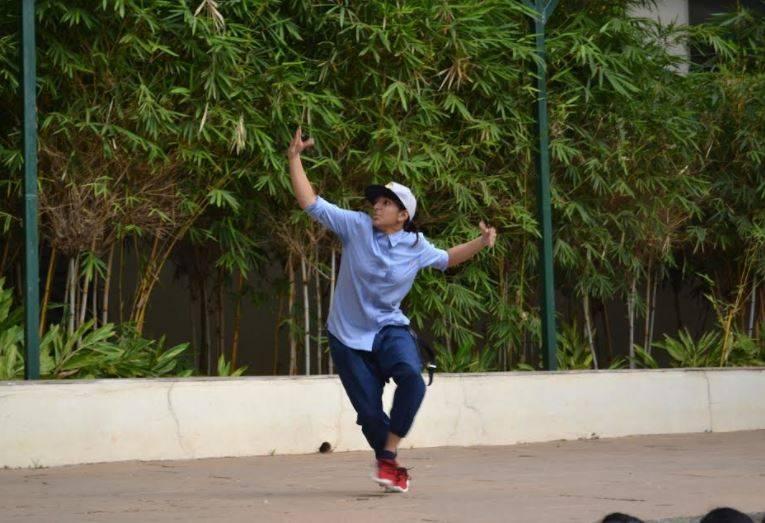
Vinaya Seshan, a grade 10 student of Inventure Academy , won three medals at the 2017 Dance World Cup held recently in Germany .
The event is considered to be one of the world’s top all-genre dance competition for children and youth. More than 12,000 participants from 47 countries competed in the qualifiers, and over 10,000 from 43 countries made it to the final.
Vinaya bagged gold in the duet category and a bronze each in the hip-hop group and hip-hop solo categories, adding to her haul of three medals at last year’s World Championships. Vinaya danced in Inventure’s formal blue uniform as she considers it to be her lucky charm.
Vinaya’s passion for dance began in Grade 1 and she has been a regular in Inventure’s dance teams and musical productions.
She got her big break when she was selected for Berserk, a week-long dance workshop conducted by the Lourd Vijay Dance School. She was part of their squad that won a bronze in the 2015 World Cup.
Vinaya also plays the tabla, guitar and piano. “Being versatile is important; at the same time finding the right balance is difficult, but achievable,” she said.
source: http://www.timesofindia.indiatimes.com / The Times of India / News> City News> Bangalore News / TNN / July 10th, 2017
A ‘sticky’ success story

Avinash Kora, a young farmer from Narasapura village of Yelburga taluk in Koppal district, has successfully experimented with agroforestry. He has planted horticulture and forest species like lemon, guava, custard apple, jamun, red sandalwood, hebbevu and sandalwood in his six-acre farm. The plants are nine months old. Marigold is grown in an area of two acres. A farm pond (30X40 feet) is also constructed in this part of the land.
There is a gap of eight feet between the rows of fruit plants. Six months ago, Avinash decided to grow drumstick in this area. He sowed the seeds directly on the farm. Almost all the seeds sprouted and grew into healthy plants. Drumstick is a perennial crop and once planted, it yields for five years. In Avinash’s farm, the crop was ready for harvest after four months. Since then, he has been harvesting drumstick once every three days. This is the first season of harvest and he has got a yield of 300 to 450 pieces per plant. Generally, drumstick is harvested twice a year and the harvest season spans over two months.
With neat packing (10 kg packs) and proper transportation, the produce remains fresh for hours, and thus fetches good price. Proper packing and identifying the right sale point are the other aspects that have helped him reap rich rewards from drumstick cultivation. Initially, he sent the produce to the local market. But since he didn’t get a good price there, he contacted a vegetable exporter in Belagavi after a quick online search. Now he sells two to three tonnes of harvest every week, and money is transacted online.
“Everything is going on smoothly. Quality produce coupled with proper grading, packing and transportation go a long way in helping farmers get the right price. Hence, it is time we farmers understand that post-harvest management is as important as choosing the right crops and practicing healthy cultivation methods. Also, we should be more enterprising and take the initiative to sell our produce to the consumers directly,” he says. While he has spent Rs 40,000 on cultivation, he has earned Rs 3 lakh through sales in this season.
This is not the first time Avinash has experimented with minor crops. In the first four months of setting up the farm, he had grown marigold and toor dal as intercrops and earned good money.
“Drumstick grows well in almost all types of soil. The agro-climatic conditions of this region are suitable for growing drumstick,” says Linganagouda Patil, assistant director of Horticulture Department in Koppal.
Kishan Rao Kushtagi
(Translated by AP)
source: http://www.deccanherald.com / Deccan Herald / Home> Supplements> Spectrum / by Kishan Rao Kushtagi / July 11th, 2017
This Bengalurean turns soda cans into mini-satellites
HIGHLIGHTS
Bengaluru :
You don’t have to be a space scientist to launch a satellite. All you have to do is stock up some empty beverage cans and turn them into mini satellites .

That’s exactly what a city based computer engineer has been doing for the past two years. He has converted Coke, Red Bull and beer cans into mini-satellites to create an open-source database on several city parameters, including temperature and pollution levels. Suraj Kumar Jana, 22, founder of Opencube Labs, is the mastermind behind the project monikered as CanSat Development Programme. CanSat is a sounding rocket balloon payload built of open hardware (Arduino, RaspberryPi) with the entire satellite components assembled inside a 350ml soda can.
The mini-satellite, which is launched from the Air Force base at Yelahanka, does a controlled descent with the help of a parachute and transmits captured data to the ground station. “The data collected by these mini-satellites include temperature and pollution levels, quality of air and water, ultra-violet penetration and traffic congestion levels in the city. These data can help in research purposes and our civic bodies can even use them to implement better policies,” said Suraj, who is a computer engineer from BMS Institute of Technology .
The CanSat project was aunched in 2014 to provide students an experience of smallscale space missions through several workshops conducted across the city.
Suraj said: “Receiving a real-time experience of smallscale space missions isn’t that reasonable and goes beyond affordability of Indian, middleclass students. Through our workshops, we provide students a first-hand knowledge on making, operating and launching of satellites.”
source: http://www.timsofindia.indiatimes.com / The Times of India / News> City News> Bangalore News> Schools & Colleges / by Sreemoyee Chatterjee / July 10th, 2017