All posts by admin

Journalism Student Bags Five Gold Medals Including Star of Mysore Medal

shivendrabf28dec2016

Mysuru :

Shivendra Urs, a PG student of Mass Communication and Journalism, Manasagangothri, has received the following medals at the annual convocation of Mysore University held recently:

Chinnamma Ramakrishnappa Gold Medal for securing highest marks in Advertising; The Zee News Gold Medal for securing highest marks in TV Production; Star of Mysore Silver Jubilee Medal for securing highest marks in M.A Communication and Journalism; Chandramma Narasimha Murthy Gold Medal for securing highest marks in M.A Communication and Journalism; Dr. Masti Venkatesha Iyengar Gold Medal for securing highest marks in M.A Communication and Journalism.

He has also won Dr. Nadig Krishnamurthy Felicitation Endowment Committee cash prize for highest marks in Paper Editing Practice; The Late Puranik Gundacharya Memorial Prize for highest marks in Paper Newspaper Business Management.

source: http://www.starofmysore.com / Star of Mysore / Home> General News / December 23rd, 2016

Bags ‘ Niranakushamathi Gold Medal ’ of Kuvempu Varsity

vasudevbf28dec2016

Mysuru :

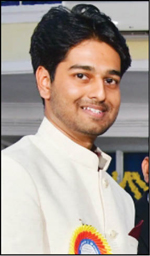
R.M. Ananya Vasudev of Bhadravathi has been awarded ‘Niranakushamathi Gold Medal’ of Kuvempu University for his outstanding achievement in curricular and extra curricular activities.

Ananya Vasudev, a Post Graduate in Earth Science and Resource Management, is the first recipient of this Gold Medal which was presented during the 27th Convocation of the University today (Dec. 23).

He has bagged first place in Hindusthani Tabla Competition of ‘Sahyadri Utsav’ and ‘Sahyadri Sirigandha Utsav’ respectively for two successive years and represented University in Zonal meets.

As an active student, he has participated in ‘International Earth Science Olympiad -2013’ at Mysore and now serving as Regional Ambassador for International Association for Geo Science Diversity and International Geo Science Education Programme Organisation.

His other interests are Environmental Science, wildlife conservation and Map designing. He passed Junior exams of Hindusthani Vocal and Tabla and distinction in Gandharva Tabla Exams conducted by Gandharva Mahavidyalaya, Pune.

He is an approved casual announcer and drama voice of All India Radio. At present he is serving as Guest Lecturer in Government Arts and Science College, Bengaluru.

Ananya Vasudev is the son of G.K. Raveendrakumar, a poet and Assistant Director of Programmes in All India Radio, Bhadravathi and writer Dr. M.R. Mandaravalli, residents of Roopa Nagar, Mysuru.

source: http://www.starofmysore.com / Star of Mysore / Home> General News / December 23rd, 2016

Evolution of Surgical Practice in Mysore

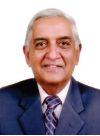
ASICON, the 76th Annual Conference of Association of Surgeons of India (ASI), is being held in Mysuru for the first time from Dec.14 to 18. To mark the occasion, here we publish a write-up on the ‘Surgical Practice in Mysore’ since the time of Prof. J.F. Robinson by Dr. C.G. Narasimhan, Emeritus Surgeon, Kamakshi Hospital, Mysuru. —Ed
drnarasimhanbf21dec2016

by Dr. C.G. Narasimhan

“In 1970 it was Dr. C.G. Narasimhan, a freshly passed Post-Graduate from Mysore Medical College (MMC) who started surgical practice in a full-fledged way for the first time in Mysore by establishing a surgical centre on Dhanvantri Road and operating at the Raman Nursing Home, which was the second nursing home to come up in the city. With bare minimum facilities and in the absence of scanning equipment like Ultrasound and the CT, major surgeries like abdomino perineal resections and pancreatic surgeries were successfully undertaken in this institution.”

Tracing surgical practice in Mysore, a princely town of yesteryears to the present fast growing semi-metro city is very nostalgic and interesting and I have been a part of this evolution. Practice of surgery in Mysore could be discussed in two parts — one ranging between 1930s and 1960 and another from 1960s to the present era.

While during the former it was confined to the monumental Krishna Rajendra Hospital (KRH) and Holdsworth Memorial Hospital (Mission Hospital), the latter saw the emergence of private surgeons and private hospitals. KRH was attached to the University Medical College as called then, and as history suggests the first qualified surgeon was Dr. J.F. Robinson, FRCS (Edin), between 1930 and 1942. He started the Surgery Department in the hospital. He was also the Principal of the Medical College for some time. He was succeeded by Rajavaidya Praveena Dr. C. Krishnaswamy Rao, who in turn handed over to Dr. S. Puttanna, FRCS.

General surgeons of those days in the true sense of the term were masters of all arts, operating on all cases regardless of the specialties like ENT, bone and joint surgery, burr hole and even Ob, Gynaec. It may be of interest to the present generation to note that as MBBS graduates they were doing lump excisions, hernia repair, haemorrhoidectomy and even appendicectomies.

The Chair of the Head of Department of Surgery in KRH was first occupied by Shastra Vaidya Praveena Dr. S. Subba Rao. Dr. T. Seshachalam, whose name is mentioned in the Bailey & Love text book as the founder of the accessory appendicular artery was the next to occupy the Chair of HoD. Incidentally, he was trained by Dr. Robinson. Dr. Seshachalam was succeeded by Dr. B.N. Balakrishna Rao, FRCS and later by Lt. Col.R. Nagendran, FRCS. The former went to Gwalior Medical College and later became the HoD of Surgery, AIMS, New Delhi.

Prof. M. Authikesavalu, FRCS, became the HoD in late 40s and continued till 1955.Though leonine in his appearance, he was an extremely kind person and a very good teacher. Another FRCS Dr.K. Krishnamurthy was the RMO of KRH at that time. When Dr. Authikesavalu was transferred to Bangalore, Dr. A.K. Gopalarajan (AKG), FRCS, took over as the HoD of Surgery. He was also a very good teacher and very popular among the patients. He held his post till 1964 and our batch was trained under him. Dr. AKG is remembered even today in Mysuru after more than 50 years. K. R. Hospital used to attract patients from the neighbouring districts of Mandya, Hassan and Coorg. The operative procedures were mainly related to peptic ulceration, thyroid problems, Buerger’s disease apart from some traumatic cases here and there.

Wesleyen Mission started its first Hospital in Mysore called Holdsworth Memorial Hospital (HMH), commonly known as the Mission Hospital. It was located in the Mandi Mohalla area of Mysore catering mainly to Muslim and Christian population. Later the hospital gained popularity among the other sections of the society and became one of the landmark hospitals of the city. Surgeon of great eminence Dr. Frank I. Tovey was the chief surgeon of this hospital from early 50s to late 60s. He worked extensively on peptic ulcers in South Indian population. Several of his original work appeared in the British Journal of Surgery and in other journals. Dr. Tovey also did a lot of reconstructive surgery in leprosy patients of T. Narasipur area of Mysuru district. HMH attained glorious heights during Dr. Tovey’s period. He was later awarded the prestigious OBE from the Queen of UK. Dr. John D. Eswaraiah, who succeeded Dr. Tovey, served for the next two decades. Now Dr. Ruebin Prakash has been ably managing the hospital as its Chief Surgeon.

Private Nursing Homes were far and few those days before 1960s.One Dr. D.R. Prasad and his wife Dr. Anandi Bai started perhaps the first full-fledged nursing home in Mysore near the Central Police Station in mid- 40s. Though they did not have a regular surgeon operating there, one Dr. Venugopal from Madras, who was also an honorary surgeon in K.R. Hospital, used to operate cases from 1962 to 1967.After a period of lull, this institution has flourished very well with Dr. Mahesh Kumar, MS, FRCS, as its chief surgeon under a new name Chitra’s Hospital. They have also achieved national accreditation.

Southern Railways found it suitable to start their divisional hospital in Mysore in 1960 with Dr. O.J. Ram as the surgeon and CMO. Presently senior surgeon Dr. G.S. Ramachandra has given an impetus to the surgical department.

The Department of Surgery in KRH by now saw the ever active and ebullient surgeon Dr. R.H.N. Shenoi. Though he stayed in Mysore for a short time he left an indelible mark among the students and colleagues by his teaching and innovative surgeries. Dr. H. Nanjarajaiah, Dr.H.V. Jeevandhara Kumar and Dr.Y.B. Hegde occupied the chair in succession till the late 1990s.

In 1970, it was Dr. C.G. Narasimhan, a freshly passed Post-Graduate from Mysore Medical College who started surgical practice in a full-fledged way for the first time in Mysore by establishing a surgical centre on Dhanvantri road and operating at the Raman Nursing Home which was the second nursing home to come up in the city. With bare minimum facilities and in the absence of scanning equipments like Ultrasound and the CT, major surgeries like abdomino perineal resections and pancreatic surgeries were successfully undertaken in this institution.

Not until around 1973-74 some more nursing homes and private hospitals came up in Mysore. Bantwal Sulochana Madhav Shenoi Trust started Kamakshi Hospital in 1973 followed by Ravi Nursing Home and Kiran Nursing Home in 1974. Routine surgeries were carried out in these institutions.

Upper GI Endoscopy was started for the first time in Mysore in early 80s in Kamakshi Hospital. It was at this point of time two big private hospitals were started. B.M. Hospital was started in memory of his father by Dr. C.B.Murthy, who was a professor of surgery in KRH. It shot into prominence particularly after the fire mishap of the TV serial ‘Sword of Tipu Sultan.’ Apart from general surgery, traumatic and emergency surgery developed considerably in this hospital. The other big hospital was attached to a new JSS Medical College started around 1982-83. Dr.S.B. Vasanth Kumar, Dr.G. Siddesh and Dr.C.P. Madhu started their surgical career as staff of this hospital. Within a short period of time the hospital has grown in size and efficiency. Cardiac procedures are being done in this institution.

Onco surgery was the next to develop in Mysore. Bharath Cancer Hospital was started in the Hebbal area of Mysore by Dr.B.S. Ajai Kumar, a radiation oncologist trained in the US in the year 1991. Dr. Anil Thomas, who was trained at the Kidwai Institute of Oncology, Bangalore, operated for more than a decade before starting his own hospital. Two of our city surgeons Dr. T.V. Ramesh and Dr.K. Subramanya excelled in the treatment of haemorrhoids and anal problems establishing their own units.

Laparoscopic surgery in Mysore was started by Dr. C.G. Narasimhan and by Dr. G. Siddesh in the mid 90s. But the credit of developing it further should go to Dr. Victor Menezes who started his surgical practice as a laparoscopic surgeon. He has his own unit devoted only to laparoscopic procedures.

The scene of medical practice in the city thoroughly changed with the corporate hospitals coming in to Mysore. Vikram Hospital was the first one to come in 2002.Open heart, vascular, thoracic and emergency surgeries are routinely done here. With the advent of Apollo, Columbia Asia and recently Narayana Hrudayalaya Hospitals, the health delivery system has improved to a large extent.

An exhaustive coverage of evolution of surgery needs the mention of some of the lady surgeons who have chosen to practice in Mysore. Dr. Avadhani K. Geetha tops the list. She is perhaps the first lady to become the Head of a unit and also become the HoD of surgery in KRH. Dr. Lavanya Shenoi is the other lady surgeon practicing in Mysore. There are some more of them including Dr.Preethi, who is an associate professor in JSS Medical College.

Development of super specialties was delayed till early 90s when Dr. M.S. Bhaskar was the first Neuro-surgeon and Urologists Dr. K.M. Madappa, Dr. Prakash Prabhu and Dr. M.S. Ranganath arrived on the scene. Plastic and reconstructive surgeries also took shape with Dr. B.N. Jayaram, Dr. Pundalika Herle and Dr.H.V.Sathish started operating in BM, JSS and other hospitals. Of late, a few paediatric surgeons have chosen Mysuru for their practice. With a boom of several new hospitals and the arrival of young surgeons, surgical care is bound to improve in rendering quality treatment to the needy.

Lastly about the Surgical Society of Mysore — It was started in the year 1990 by Dr. D.R. Shekar, a Plastic Surgeon who is settled now in Bengaluru, Dr. C.G. Narasimhan and Dr. R. Srinath who is now retired. For the first time, Mysore hosted the 12th annual conference of KSC/ASI in 1994.It was a great success. Later a conference of the International College of Surgeons was held in 1999. Dr. S. B. Vasanth Kumar was the Vice-President of ICS Indian section for 3 years in succession. In 2003, Mysore hosted the State Conference for the second time. Two of the members of Mysore chapter Dr. C.G.Narasimhan and Dr.G. Siddesh have donned the Chairmanship of the State Chapter in 2004 and 2014 respectively. It is a matter of immense satisfaction that the Mysore chapter has instituted two awards in the Annual State Conference for the Best PG Paper Presentation and for the Best Poster Presentation.

Innovations in the field of surgery is a never-ending phenomena. We have had a challenging journey from open incisions to robotic surgery. Viewing tubular structures in the body has made a tremendous stride including ‘capsule endoscopy.’ Laparoscopic bariatric surgery has offered a great relief for obese patients. I earnestly hope that the younger colleagues in the field of surgery will carry the torch forward.

source: http://www.starofmysore.com / Star of Mysore / Home> Feature Artices / December 15th, 2016
T. Narasipur farmers bag National recogniton

narasipurfarmersbf20dec2016

Mysuru :

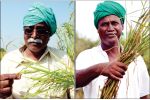
M.K. Shankarguru of Madralli and M. Rachanna from Hosa Malangi, both from T. Narasipur taluk, have been selected for the prestigious ‘Plant Genome Saviour Farmer Recognition’ awarded by the Protection of Plant Varieties and Farmers’ Right Authority (PPV & FRA), New Delhi. The recognition comes as an encouragement to all the farmers involved in conservation and development of plant varieties.

Shankarguru is recognised for developing his own paddy variety, NMS 2, which thrives under minimum management practices and is a high yielder whereas Rachanna has been conserving over 300 paddy varieties most of them being very rare indigenous varieties, with medicinal value.

JSS Krishi Vigyan Kendra in Suttur had sent their nominations to PPV & FRA in 2014, the results of which have been announced this week. The farmers will be receiving the award from the Union Minister for Agriculture, Cooperation and Farmers’ welfare, Radha Mohan Singh, on Dec. 21 in New Delhi. Each farmer will get a cash prize of rupees one lakh, a memento and a certificate.

The recognition, sponsored by the ‘National Gene Fund’, is being given to farmers, farmer/ tribal communities annually by the PPV & FRA to encourage protection of indigenous land races and farmers seed sovereignty.

source: http://www.starofmysore.com / Star of Mysore / Home> General News / Dec 14th, 2016

DFRL comes to the rescue of tomato growers

tomatobf20dec2016

Mysuru :

City-based Defence Food Research Laboratory (DFRL) has come to the rescue of tomato growers who often face rock-bottom price for the produce.

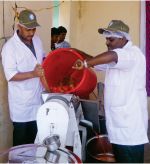
Under its rural development programme, DFRL with the help of Spoorthy Janaabhivruddi Samsthe, an NGO, conducted a one-day awareness programme for farmers at Ahalya village on Dec. 11 (Sunday) on tomato processing and various products made out of tomatoes developed by the laboratory.

Scientists and technical staff of DFRL demonstrated various technologies which have been developed for tomato utilisation to reduce the post harvest losses. The technologies have been developed with special focus on progressive farmers, Self Help Groups (SHGs) and rural enterprises. All these technologies are farm-amenable and have been developed keeping in view the traditional Indian palate. The products are good for consumption from 6 months to 9 months when stored at ideal temperature. The products, in ready-to-serve (RTS) or ready-to-prepare (RTP) form requires less preparation before being serving.

A number of tomato-based value-added products, namely tomato RTS beverage, tomato sambar paste, tomato rasam paste, tomato curry paste, tomato sauce, tomato pulp, green tomato chutney, red tomato chutney, tomato powder and intermediate moisture tomato slices were displayed to the farmers.

DFRL is ready to share the technology with the NGOs which plan to help the farmers to set up the tomato processing units as it believes that such units would help in value realisation for the farmers. The project will also be funded by NABARD.

Earlier, the workshop was inaugurated by DFRL Director Dr. Rakesha Kumar Sharma. Janaabhivruddi Samsthe CEO Deepak, NABARD AGM Arvamudhan, Entrepreneurship Development Institute (EDI), Bengaluru, Chairman Yashasvi Naag, DFRL Scientists Dr. N. Gopalan, Dr. O.P. Chauhan, Tanushree, C. Nanjappa, DFRL PRO Dr. Mallesha, Members of Ahalya Village Panchayat and others were present.

source: http://www.starofmysore.com / Star of Mysore / Home> General News / December 14th, 2016

All song and play at this school

Children attend music and academic classes at the Kalkeri Sangeet Vidyalaya near Dharwad | D Hemanth

Kalkeri , Dharwad :

As dawn breaks over a picturesque little hillock in sleepy little Kalkeri, about 16 km  from Dharwad, the village wakes up daily to the strains of music from a nearby school.
The Kalkeri Sangeet Vidyalaya, situated on the hillock and surrounded by three beautiful lakes and spread over 3.5 acres, has 248 children studying in various classes. The uniqe contribution of this music gurukul is just that…being musical.

Music is the life of this school so much so that even cottages in this residential school are named after Hindustani ragas  — Asavari, Khamaj, Bhairavi, Thodi etc.
The only qualification to join this school is that a child has to be from a lower economic strata and rural background.

Started in 2002, the school runs on a different rhythm. A typical day includes not just academic classes but also riyaz (music practice). It focuses on Hindustani classical music, classical dance and drama.
The day here starts at 5am when children gather for yoga and exercises. Post breakfast, they have classes in singing, playing bansuri, tabala, harmonium or any other musical instrument in the large common hall. Later, the children disperse to the cottages to pursue their academic classes.
The children are provided free food and education. Currently, the school has classes up to SSLC and follows the Karnataka state syllabus.

Children who study PUC and further will have to pursue their education in other institutions, where fees and other expenses are taken care of by the school administration.
Veeranna Pattar, head of Music Department, says the idea is to support children from poor socio-economic background and help them earn their bread and butter. “Several students from our music school are running institutes or working in various cities across India.”

Santosh Pujar, HR of the school, says that in 2002 the school started with just 14 students and today the strength has increased to 248.
Founded by Mathieu Fortier, Agathe Meurisse Fortier, Blaise Fortier from Canada and musicians from Dharwad Ustad Hameed Khan and Pandit Ravi Kudligi, the school’s goal is to empower the poor and rural children by providing them fundamental rights like access to education, quality healthcare and clean food.
The Canadian founders had travelled across India extensively and spent a few years in Shantiniketan in West Bengal learning Hindustani music. When they landed in Dharwad and found it was home to Hindustani music, they decided to open a school here, says Pujar.

Vishalakshi Charnthimath who has been staying at the music school for the last 10 years, says, “The school has shaped the life of many poor children.”
Sarita Rapanavar, a student, says she has won many prizes in dance competitions. “The teachers here support our interest towards music and also build our confidence,” she adds.
Today there is a huge demand for admissions after witnessing the positive results of this experiment.
“The founding team plans to expand the faciltiies. We are looking for land nearby,” says Pattar.

source: http://www.newindianexpress.com / The New Indian Express / Home> States> Karnataka / by Mallikarjun Hiremath / Express News Service / December 18th, 2016

This farmer’s toor is the envy of others

Anand Bagalkot, a farmer in Somadevarahatti village, is expecting a bumper crop as he has cultivated the BSMR-736 variety of toor.

While many toor farmers have to watch their standing crop wither owing to deficit rain, the sight at the farm of Anand Bagalkot is the envy of other farmers.

On the five-acre farm in Somadevarahatti village, the lush green crop which stands over five-feet tall is a stark contrast to most of the crop in the district.

The main reason is that Mr. Bagalkot has used the new variety of toor seed, BSMR-736, which is believed to be the best for irrigated land.

It has been developed by University of Agriculture Sciences, Dharwad.

Speaking to The Hindu, Manjunath, Joint Director of the Agriculture Department, said that unlike the traditional variety, which gives a maximum yield of five quintals per acre, the ‘736’ variety could give a yield of nearly 20 quintals per acre if maintained properly.

“However, the crop takes about 210 days to grow while the traditional crop takes only 130 days. Though the farmers will have to spent couple of more months to get the crop, yet the benefits of waiting is high,” he said.

He said that another advantage of the improved variety is that since the first three months is only the vegetative period, the farmers could use the time for inter-cropping to sow groundnut or green gram which would give additional revenue.

He said that the cost of cultivating the traditional crop is around Rs. 10,000 to Rs. 12,000 per acre. The ‘736’ variety will cost the farmer around Rs. 18,000 per acre.

“After that, the farmer could earn around Rs. 80,000 per acre while the traditional variety will fetch the farmer only Rs. 30,000 per acre,” he said. He said the variety is good for places such as Bidar which receives around 800 mm rain per year, but in places such as Vijayapura, the farmers should have irrigation facility as the district does not receive this quantum of rain.

The official said that since pulses do not damage the soil fertility commercial crop such as sugarcane, the traditional sugarcane farmers could switch over to this variety of toor for higher yield.

source: http://www.thehindu.com / The Hindu / Home> News> States> Karnataka / by Firoz Rozindar / Vijayapura – December 17th, 2016

Award-winning cadet: NCC not just about march-past

Bengaluru :

He had to struggle a bit to find his way into Bengaluru’s National Cadet Corps (NCC) group, but it was worth a try. From winning the Prime Minister’s coveted baton to represent India at the youth exchange programme in Kazakhstan, Cadet Adithya SP proved wrong the assumption that NCC is “just about march-past”.

For Adithya from Shivamogga, taking part in the Republic Day Camp (RDC) held in Delhi has been a long cherished dream and emerging as the All India Best Cadet was icing on the cake.

Currently pursuing Bachelor of Science at Christ University, Adithya said: “There were some issues because of which I couldn’t join the NCC group at Christ University. But that didn’t stop them from supporting me while I was getting training at the Jalahalli camp.”

After joining the No. 2 Karnataka Air Squadron camp in 2014, he pursued his passion to be in the Indian Armed Forces. The selection camp for the RDC was in 2015 September.

With this year’s contingent all set to travel to Delhi for the camp, Adithya recalled that the last year’s camp—being the commander for the All India Air Force contingent at the guard of honour (parade) and mastering skills in dancing and extempore— was not a cakewalk. Competing with equally tough cadets from six other groups in the Karnataka-Goa NCC directorate and winning the gold medal at his very first step was a thrilling experience, he said.
Last title was in 2006

The title got the Air Wing contingent a gold medal and Adithya was awarded a trophy by the Air Chief Marshal.Cadets from Karnataka had won the title previously in 1997 and in 2006.

“My mother was very proud of me though she couldn’t come to Delhi. It was the collective effort of all training officers. My seniors and officers who train us inspired me to join the defence. Not everyone can be forced into joining the armed forces. If everything goes well, I will soon be training with the Air Force,” said Adithya who is also a cycling enthusiast.

Lesson from Kazakhstan 

In May, this year, Adithya and 11 others represented India at the Youth Exchange Programme in Kazakhstan. “Every boy there has to serve in their Army for at least a year. They are all nurtured in that way. Most people of my age think that NCC is all about march-past and drills. But actually it is preparing us for a respectable future,” Adithya said.

source: http://www.timesofindia.indiatimes.com / The Times of India / News> City News> Bangalore News / by Deepika Burl / TNN / December 16th, 2016

A truly special day at AIISH

Specially-abled persons — Akash Raghav and Srivats — who were felicitated by AIISH during ‘Specially-abled Day’ celebrations yesterday, are seen with AIISH Director Dr. Savithri and others. Picture right shows C.S. Savitha who received 'AIISH Mother of the Year 2016' award.
Specially-abled persons — Akash Raghav and Srivats — who were felicitated by AIISH during ‘Specially-abled Day’ celebrations yesterday, are seen with AIISH Director Dr. Savithri and others. Picture right shows C.S. Savitha who received ‘AIISH Mother of the Year 2016’ award.

Mysuru :

The specially-abled children displayed their cultural skills during the ‘Specially-abled Day’ celebrations at Panchavati campus of the All India Institute of Speech and Hearing (AIISH).

Prior to the event, C.S. Savitha was awarded with the ‘AIISH Mother of the Year 2016’ award which has been instituted by Dr. Prathiba Karanth, to encourage mother looking after their special kids.

C.S. Savitha, who is trained in special skills, has been able to improve the communication skills in her kid. Considering this, the AIISH conferred the award upon her.

The Institute also felicitated two specially-abled persons, Aakash Raghav, an engineer working with a private company and Srivats, who also works for a private company, for their achievements.

Speaking on the occasion, AIISH Director Dr. S.R. Savithri, said that the specially-abled children are trained before they are allowed to join the normal school.

She also expressed her concerns over some institutions not providing admissions to special children despite government orders and also mentioned that there were examples of educational institutions not providing the necessary facilities even though the special children are admitted to the schools.

Department of Women and Child Welfare Deputy Director K. Radha, Dr. N. Sridevi of AIISH and others were present.

source: http://www.starofmysore.com / Star of Mysore / Home> General News / December 10th, 2016

151-year-old government museum enters the digital world

w of Halmidi incription, the first Kannada inscription, found in Halmidi in Hassan district displayed at the Government Museum on Kasturba Road.   | Photo Credit: Bhagya Prakash K
w of Halmidi incription, the first Kannada inscription, found in Halmidi in Hassan district displayed at the Government Museum on Kasturba Road. | Photo Credit: Bhagya Prakash K

Is conducting trials of an app that seeks to serve as an audio guide to visitors

Bengaluru:

Moving through the dank corridors where exhibits — often thousands of years old — lie in the shadows, an app could be the gateway to the rich history within the Government Museum.

The 151-year-old museum on Kasturba Road is preparing to enter into the digital world with a tour of the premises being incorporated in an app, named Pinakin. The app seeks to serve as an audio guide to visitors.

For a visitor, the labels around the Deccan-style paintings in the museum hardly provide adequate details. On the app, however, a voice guides you into the time of the kings and the techniques of the painters. The strokes that bring out the colours were done using squirrel or pig tail hair, guides the voice.

Similarly, the hero stone – where again the museum has put little by way of information. The app brings out the tale of the chieftain who died in a battle against the Ganga king.

Officials said the app is undergoing trials. “It should be available in a week or so. People can use the app to find more information about the exhibits and we hope this will lead to greater footfalls,” said an official.

Pinakin already offers free tours of Mysore Palace and Meenakshi Temple in Madurai, among other places.

Need for curation

Pinakin is free to download and covers over 20 exhibits out of the more than 185 in the museum. Available in English and Kannada, the recordings – which can be downloaded offline – runs to around 40 minutes.

“It is not merely a lecture on history. It brings out interesting facts to induce inquisitiveness among visitors and shifts the perspective from merely photographic memory to information,” says Srikanth Iyer, Chief Executive Officer of Aseuro Technologies, which has developed the app.

He hopes to expand the app to include paintings in the Venkatappa Art Gallery while information on the Government Museum will be constantly updated. “After six months or so, we can add 15 to 20 exhibits in the app so that those revisiting the museum will always have something more to see,” said Mr. Iyer.

Revamping the city’s heritage through museums

The city is far more than just about pubs and IT hubs. Bengaluru is, contrary to popular perception, a city where history played out for over five centuries.

This history, however, seems to have been forced into the sidelines during the city’s exponential growth. The birthplace of the ‘Bangalore Rocket’ – a torpedo which was developed by Tipu Sultan – has virtually disappeared, while the city’s museums – which are to chronicle this history – remains little more than storehouses of antiques.

Priyank Kharge, State Minister of Tourism, hopes to change the perception of the city’s history by introducing the Kempegowda Tower Tourism Circuit or tours featuring Colonial history at Cantonment. “It is an uphill task, and much of it has disappeared. But, whatever is there needs to be protected. As a start, we need to celebrate our museums and ensure that there is better curation so that a visit becomes an experience for tourists. We have started this on a trial basis in the Government Museum through an app,” he said.

Over the years, a mixture of apathy and lack of public interest in history has seen museums being forced into the sidelines. For instance, in its heydays at the start of the last century, over four lakh people would visit the museum (or, Tamasha House as it was called). Now, the number barely touches two lakh. Of this, many are school students out on an excursion.

While welcoming initiatives such as an audio-visual app for exploration of museums, Meera Iyer, co-convenor of Indian National Trust for Art and Cultural Heritage (INTACH), says much more needs to be done to improve facilities on the ground. “What needs to be done is to revamp the museum. The method of labelling and giving out information is abysmal; the walls are damp, the lighting is not good. There is poor display. All of this needs to change,” she says.

The Tourism Department has sought a proposal from the State Archaeology Department on projects that would improve facilities and conservation of artifacts of the Government Museum.

The potential of museums

“There are a lot of interesting stories to be told of the heritage of Bengaluru. Apart from Government Museum, we want to include Tipu Sultan’s Summer Palace and the historical Someshwara Temple in our audio tours. Even the botanical gardens of Lalbagh will provide lots of interesting stories for visitors,” says Srikanth Iyer, CEO, Aseuro Technologies.

“In other cities, museums are celebrated. But here, they are not being curated properly. We are trying to change this. To begin with, we are starting with museums of the State Archaeology Department,” says Priyank Kharge, Tourism Minister.

source: http://www.thehindu.com / The Hindu / Home> Cities> Bengaluru / by Mohit M. Rao / December 13th, 2016