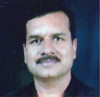
Dr. T. S. Harsha, Chairman, DoS in Environmental Science, KSOU, Mysuru, was awarded Adarsh Vidya Saraswati Rashtriya Puraskar by the Global Management Council (GMC), Ahmedabad, Gujarat, recently in recognition of his contribution to the field of education.
GMC, an apex body that promotes and encourages commendable achievements from all over the country, regularly organises national-level seminars with the help of its members to promote socially responsible education practices and sustainable development in economic as well social front in India.
This Puraskar is given to those eminent teachers, lecturers, professors, researchers, scholars and personalities, who have contributed substantially in the field of education but have not been noticed and duly recognised by the society. The award comprised a trophy, an appreciation certificate and a gold medal.
In addition to this honour, the Council has nominated Dr. Harsha as the Editorial Board Member for Glacier Journal of Scientific Research in Environmental Science field.
source: http://www.starofmysore.com / Star of Mysore / Home> General News / May 29th, 2016
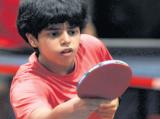
Archana Kamath is keen to raise the bar in her chosen sport
Unlike the many fascinating tales that generally surround sporting prodigies, Archana Kamath’s impressive journey has been marked with simplicity.
Ever since she started playing table tennis at the age of nine, Archana has kept her visions clear and the 15-year-old Bengaluru girl has been climbing the ladder of success at a rapid rate.
After enjoying a terrific season last year on the junior circuit, Archana tasted consistent success at the international level. Starting off with two bronze medals (singles and doubles) at the Italian Junior Open, Archana raised the bar to bag the silver in the cadet girls’ team of the Belgium Open. The youngster then struck gold in the cadet girls’ doubles category at the French Open.
Archana’s big moment arrived when she became the first Indian girl to make the quarterfinals of the ITTF World Junior Circuit Finals in Indore. Archana didn’t disappoint in her maiden appearance, finishing a creditable fifth.
Daughter of eye specialists Girish and Anuradha Kamath, Archana’s interest in the game was spurred by her brother Abhinav, who was an ardent table tennis lover. What began as a hobby of playing the sport with her brother soon became a serious pursuit.
“We encouraged her in music and dance to see where her interests lie. Despite introducing her to various co-curricular activities at a very young age, Archana remained keen on table tennis and we are glad to have supported her,” says Anuradha.
Learning the basics of the game from Praveen Joshi, a senior State coach, Archana’s first major triumph came in 2013, when she bagged the singles title in the sub-junior nationals in Ajmer.
“That was my first gold at the national level and it will always remain very memorable,” says Archana, who is undergoing a training stint in Germany with Peter Engel, India’s former national coach.
Dominating the national scene on a regular basis since her triumph in Ajmer, Archana slowly became the player to watch out for on the junior circuit in India. Archana has so far accounted for 17 medals at the national stage, including 11 gold and the Bengaluru girl’s commitment towards her training has taken her to great heights, feel her parents.
“She is coached by Bona Thomas John (Cantonment Rail Club) and Aloysius Sagayaraj (MSSTA), and her determination to be regular in her training has helped her become a fierce competitor. She trains six hours every day and these two coaches have contributed immensely in shaping her career,” says her mother.Travelling across the globe for various tournaments, Archana is slowly learning to face the tough phase with grace.
“For me it is a tough phase every time I lose. Initially the bitterness would last long and but as I keep playing, I am learning to respect the efforts of my opponents as well. Even though a defeat still hurts, the feeling doesn’t last that long,” notes Archana, who received the Ekalavya award earlier this month.
Supported by the Olympic Gold Quest, Archana made her debut at the Senior Nationals this year. “Table Tennis is a wonderful game for the body, mind and the soul. I have wonderful coaches who have made me feel that table tennis is my life,” she says.
Archana’s focus and dedication towards the game has been the secret behind her achievements, feels coach Sagayaraj.
“I begin training every day at 5:30 am and she is ready by 5:00 am. It is very difficult to find a player so committed to a sport at such a young age. Archana stands apart for her aggressive nature of play. She is very attacking in her style and if she continues to work hard on her fitness and on her game, she will definitely win more medals at the international level,” remarks Sagayaraj.
Sporting commitments may keep her busy, but Archana is equally impressive in her academics. The youngster recently finished her 10th standard at the Poorna Prajna Education Centre (Sadashivanagar) with 98.72%, with a staggering score of 617/625.
“Throughout her schooling, Archana was well supported by her teachers. They believed in Archana’s potential and provided the required flexibility to balance her academics and sporting responsibilities. There was never a doubt in her teachers’ mind about her learning capabilities,” says Anuradha.
Archana is a proven achiever in the junior circuit, but a long road beckons the youngster who aims to succeed more at the international level.
“I want to work hard and bring laurels to our country. I have grown up seeing Saina Nehwal play and she is my inspiration. I want to succeed at the international level and see our tri-colour fly high,” she beams.
source: http://www.deccanherald.com / Deccan Herald / Home> Supplements> Sportscene / by Vivek M V / DHNS – May 22nd, 2016
“With drug-discovery pipelines drying out, a new molecule that can be deployed against pathogens has become the holy grail in the pharmaceutical arena.” PHOTO: SPECIAL ARRANGEMENT
Bengaluru-based labs and start-ups are attempting to design molecules that can be developed into broad-spectrum drugs to combat drug-resistant bacteria.
The sugar-loving Klebsiella pneumoniae, that resembles a squished-up earplug, can strike fear into the hearts of surgeons and scientists. The bacterium can repel even the most powerful antibiotics. It has pumps that can eject most antibiotics that breach its cell wall. More worryingly, this pathogen has begun producing an enzyme that renders a sophisticated class of antibiotics called carbapenems useless.
Healthy people usually don’t get Klebsiella infections, but its presence in an ICU can be a harbinger of death for immune-compromised patients. “When the bacteria enter the bloodstream, doctors stand by helplessly as a patient dies of multiple organ failure,” says microbiologist Dr. V. Balasubramanian.
The holy grail of pharma
A project commissioned by the U.K. government recently announced that drug-resistant bacteria — or their more evocative moniker, superbugs — will cause 10 million deaths per year by 2050. With drug-discovery pipelines drying out, a new molecule that can be deployed against pathogens such asKlebsiella pneumoniae has become the holy grail in the pharmaceutical arena.
Dr. Balasubramanian is on one such mission. The founder of Bugworks, a Bengaluru-based start-up, is attempting to design molecules that can effectively be developed into broad-spectrum drugs, which work on bacteria like Klebsiella. The team at Bugworks claims to have made some headway in overcoming the challenges presented by gram-negative bacteria, a group of bacteria (includingKlebsiella) with greater resistance to drugs. “The biggest challenge in gram negatives has been efflux pumps, which basically throw out anything that comes in. We think we have cracked a methodology by which we can overcome the pumps,” says Dr. Balasubramanian.
Bugworks operates out of the Centre for Cellular and Molecular Platforms (C-Camp) — a not-for-profit Department of Biotechnology start-up incubator — and shares a campus with the National Centre for Biological Sciences. Both organisations are part of the Bangalore Life Sciences Cluster.
Long-drawn-out war
Several scientists at NCBS like Dr. Aswin Sai Narain Seshasayee, who heads a computational research lab, Bugbears, are on the bacterial trail. “In a lab setting, I have seen bacteria develop resistance to a new molecule in a few hours,” says Seshasayee, likening the situation to a long-drawn-out war that “will have us look to the future for new ways to win the battle”.
The team at Bugworks sees itself on the frontline of this war. But can a start-up play in an arena dominated by big pharma? “Our focus is on designing the molecule. Everything else is done through a network of contracts,” says CEO and MD of Bugworks, Anand Anandkumar.
Perhaps pared-down start-ups, free of red tape, may just have that disruptive edge. “We can do it. Bacteria have been producing antibiotics for three billion years,” says Dr. Mukund Thattai, physicist-turned-biologist at NCBS.
In the microbial world, bacteria often develop molecules against each other. This is the source of the antibiotics we use. “But just because you’ve made a new antibiotic, it doesn’t mean it’s going to be useful forever,” says Dr. Thattai. He suggests that instead of copying the molecule, we copy the process that bacteria use to make that molecule. “Bacteria have developed a sort of protein assembly line, like a factory. The pathways were not designed to make a single product, but different products,” he says, using the analogy of an assembly line that can make a car and also be turned around to make a toaster with minimal effort.
Now that would be a better weapon in a war with no permanent solution. Where all gains are temporary and where, as Dr. Thattai puts it, only evolution can be pitted against evolution.
anjali.thomas@thehindu.co.in
source: http://www.thehindu.com / The Hindu / Home> Opinion> Comments / by Anjali Thomas / May 29th, 2016
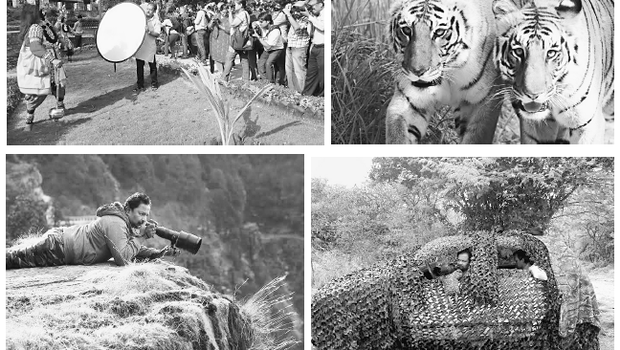
With cameras becoming more accessible and user-friendly, many people are developing a passion for photography. But setting the right frame for a perfect picture is something only a trained photographer would know.
Members of the 43-year-old Youth Photographic Society train aspiring photographers.
The group, founded in 1971, conducted a portrait workshop on May 22. The subjects for the portraits were Yakshagana artistes.
K S Srinivas, senior photographer and a group member, taught aspirants how to take pictures in different lights and various techniques in photography. The group also launched their website and a Facebook page on that day.
You can also sign up for regular lessons. “Regular workshops are conducted on first and third Saturdays where those interested get together to learn the nuances of photography,” says H Satish, president of the group since two months. “The workshops are taken by eminent photographers in the group.”
On June 4, the members will be taught macro photography and on June 5, they have planned an outing to Lal bagh.
The team also goes out together to click pictures. Their subjects change with season. “We go to Western Ghats in monsoon for macro photography. When it rains, smaller lifeforms such as insects and butterflies and frogs, come out,” he says.
They go for landscape photography from October to December to capture green expanses and waterfalls.
“The air also will be pure and sky will be clear,” says Satish who has been member of the group since 33 years.
As wildlife comes to watering holes in summer, the group journeys to spot them. These trips are planned for between March and May. They conduct an event called All India Photography Salon where about 5,000 entries come in every year. This is the 35th year of the competition to be held in October.
The group, which does not charge for the classes or workshops, also encourages the photographers by exhibiting their work at the their centre.
Deepak Kumar, a member of the group for 10 years, says, “My passion for photography made me join the group. I learnt the composition of pictures. As the senior photographers have worked on films (reels), they know the subject in depth. The workshops they conduct are quite enriching.”
The group is open to any photo enthusiasts 14 years and above. The one time membership fee is `500 for a year.
For details contact H Satish at 94486 87595.
source: http://www.newindianexpress.com / The New Indian Express / Home> Cities> Bengaluru / by Pratima Shantaveerish / Express News Service / May 26th, 2016
‘Nammuru Banuli’, a community radio station of the non-governmental organisation Women’s Welfare Society was inaugurated on its premises atop a hillock in Yellapur village of Hukkeri taluk recently.
Minister for Small Scale Industries and district in-charge Satish L. Jarkiholi inaugurated the station.
Important role
Mr. Jarkiholi said that the station could play an important role in spreading awareness on various issues like literacy, health, women and child development and agricultural practices, provide weather information and cultural programmes to villagers.
The former general manager of BCL, Bengaluru, N. Narasimha Swamy, said more NGOs should come forward to set up such stations in rural areas.
Amarsiddeshwar Swami of Adavisiddeshwar Mutt, Kundargi, was present.
‘Nammuru Banuli’ director Keerti S. Chougala briefed about the efforts put in to set up the station and highlighted its salient features and said more than a lakh people living in about 65 to 70 villages of Belagavi, Hukkeri and Gokak taluks falling in the radius of 15 to 25 km from the station would be able to access the radio programmes.
Topics
The Nammuru Banuli CRS will air programmes on various topics from 7 a.m. to 8 a.m. and from 7 p.m. to 8 p.m. at FM 90.8MHz every day, where the evening schedule would be repetition of the morning programme.
Programmes
The programmes to be aired in Kannada language during the week are — Devotional and Spiritual – Shubhodaya; Agriculture – Raitharagagi Bitthona Beliyona; Women – Akka Kelavva; Children – Chinnara Mela, Health – Arogya Mitra; Education – Kaliyona Banni; Folklore – Janapara Jagatthu; Laughter – Nage Mallige; Environment – Parisara Premi; Employment – Namma Udyoga Namma Ayake; Legal literacy – Kanoon Samaya and Music – Raga Ranjani.
source: http://www.thehindu.com / The Hindu / Home> National> Karnataka / by Special Correspondent / Belagavi – May 25th, 2016
A Bengaluru based company contributing to areas of nuclear power, factory automation, engineering construction, space and healthcare announced handing over 3000th Heat Pipe to Padmashree awardee, Dr M Annadurai, director of Indian Space Research Organisation (ISRO) to commemorate the long standing relationship with ISRO.
The Heat Pipes which were handed over to ISRO, have been manufactured in the Bommasandra facility of Avasarala Technologies and are used as critical components in Aerospace Applications for spacecraft cooling and temperature stabilization.
TT Mani, managing director and CEO of Avasarala Technologies, said “Today, Avasarala is one of the leading manufacturers of specialized and critical systems and components to Strategic Sectors under Make in India Program. We are extremely happy to receive Dr Annadurai to our facility and equally honoured to hand over our 3000th Heat Pipe to him, endorsing our longstanding association with Indian Space Research Organisation (ISRO)”.
source: http://www.timesofindia.indiatimes.com / The Times of India / News Home> City> Bangalore / by Sreemoyee Chatterjee / TNN / May 25th, 2016
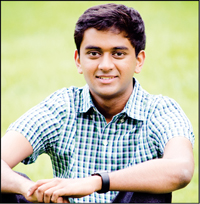
City’s 17-year-old Siddarth (in pic.) has become the first Indian to win an International Science Fair Grand Award at the 9th annual International Sustainable World Energy, Engineering and Environment Project (I-SWEEEP) Olympiad held in Houston, Texas, USA recently in which 385 highly qualified projects from 62 countries participated.
The Grand Award was given to Siddarth Eswarachari, a resident of city who now lives in Minneapolis, Minnesota, USA and Sarah Carlson.
Siddarth’s research project ‘Cleaner Water: Investigating Homogentisate Chemotaxis Receptors in Pseudomonas Putida F1 for Bio-remediation of Aromatic Hydrocarbons’ has won four International awards and two National awards. He is also the captain of his schools Robotics team and led his team to the International Robotics competition held in St. Louis, Missouri, USA where his team won the ‘Engineering Inspiration’ and ‘Excellence in Engineering’ awards.
He will be attending the Carnegie Mellon University College of Engineering, where he plans to major in Robotics and Biotechnology Engineering.
source: http://www.starofmysore.com / Star of Mysore / Home> General News / May 21st, 2016
City’s Varunya Chandrashekar teaming up with Sansrithi Ranjan of Karnataka won the women’s doubles title in the 50K AITA Women’s Tennis Tournament held at Navasahyadri in Pune recently.
In the final, top-seeds Varunya and Sansrithi beat the second seeded Andhra pair of Sindhu Janagan and Aareyali Chavan 7-5, 7-5.
In the semi-finals, Varunya and Sansrithi beat third seeds S. Nithasha and Neha Ghare of Maharashtra 2-6, 6-2, 13-11.
In the quarter-finals, the duo combined well to beat Sameer and Nikita 6-2, 6-1.
source: http://www.starofmysore.com / Star of Mysore / Home> Sports News / May 18th, 2016
Born in Hassan, Aluru Seelin Kiran Kumar, well-known as A.S. Kiran Kumar, is a renowned Indian space scientist and Chairman of Indian Space Research Organisation (ISRO). He has held several techno-managerial positions at ISRO since 1975. In his capacity as Associate Director and subsequently as Director of Space Applications Centre, Ahmedabad, he steered the design and development of microwave, communication, navigation payloads and their application activities.
In recognition of his contributions, he was conferred with Padma Shri award by the President of India in 2014. ISRO’s Individual Service Award in 2006 and Performance Excellence Award in 2008 Bhaskara Award of Indian Society of Remote Sensing in 2007 to name a few. Star of Mysore (SOM) caught up with A.S. Kiran Kumar for a brief interview during his recent visit to Vidyavardhaka College of Engineering in city. Excerpts:
SOM: Can you tell us about recent achievements of ISRO?
Kiran Kumar: I am really pleased to say that country’s prestigious organisation ISRO has been very active in contributing memorable and laudable achievements for the societal needs. The two great achievements are successive launching of Chandrayaan-1 and Mars Orbiter Mission (MOM). In addition to these accomplishments, I wish to strongly mention that ISRO has been responsible for the development of three-tier imaging system for many satellites, ocean colour instruments by using push broom technology, high resolution stereo imaging system for Cartosat-1, sub-meter resolution optical imaging sensors and meteorological payload channels. India is expected to move ahead of other nations to become a premier nation in the world in all spheres. For this to happen, people should acquire knowledge and harness skills for the societal benefit.
SOM: How do you think satellites and space technology will benefit the common man?
Kiran Kumar: There are nearly 35 satellites providing communication, navigation and information to the planet Earth. Today, we are in a position to generate digital television model for India, where information is very resourceful for various application. This is helping in planning infrastructure and providing information on tunnels and railway tracks for effective construction. The State and Central Governments are also making use of space technology for planning and monitoring activities. In future, technology will help the farming community for agricultural purpose.
Space technology has been benefiting the fisherman and saving Rs. 15,000 crore approximately for the government annually. Additionally, technology is saving precious lives by predicting cyclones and other natural calamities. We must emphasise on adopting technology based on innovations and discover solutions for the specific problems with ease.
SOM: There has been a misconception that studying engineering is better or preferable compared to basic sciences. What is your opinion or suggestion on this?
Kiran Kumar: It is shocking to hear such things. I believe that the misconception is mainly in parents or adults which has to be completely erased and to do that there is a need for creating awareness on the significance of pure or basic science authoritatively.
Without the comprehension of elementary sciences — Mathematics, Physics, Chemistry and others — the learning process for a student will be incomplete and he/she will never understand the technological aspects or its advancements.
SOM: Sir, can you tell about the future projects or plans of ISRO?
Kiran Kumar: ISRO has been extremely active and ambitious from four decades. With the able guidance of Dr. Vikram A. Sarabhai, Dr. Homi J. Bhabha, Dr. A.P.J. Abdul Kalam and Dr. Satish Dhawan, this organisation has accomplished many achievements.
I believe that, the next year or by 2018, Chandrayaan-2 may be launched. Chandrayaan-1 and MOM have been successful and been sending very good information to the earth station. Astrosat has been functioning effectively. We have been keenly working for the design and development of Aditya, an ambitious venture for Sun during 2018 or 2019.
[This interview was done by Prof. S.A. Mohan Krishna, amateur Astronomer and Associate Professor, Vidyavardhaka College of Engineering, Mysuru, on behalf of Star of Mysore]
source: http://www.starofmysore.com / Star of Mysore / Home> General News / May 18th, 2016
From launching a startup to topping one of the toughest entrance exams in the country, this Bengaluru boy did it all in a year’s time.
Viraj Ananth (18) emerged the top ranker in the All-India Rankings in the general category when the results of the Common Law Admission Test (CLAT) were announced on Sunday evening.
Science student
A science student from the Vidyashilp Academy, he took a gap year after his Cambridge exams coincided with the CLAT last year, making it difficult to appear for the test for admissions to the National Law Schools.
With no marks card in hand, he decided to put his year off to good use.
“My friend and I started Intermind Global, which tied up with schools and held public speaking workshops for students,” he told The Hindu.
By October, Viraj decided to start preparing for CLAT, nursing his law school dream he had harboured since class 11. With a last-minute monthlong crash course in a Chennai-based coaching centre, he was good to go.
‘Unorthodox advice’
“I have some unorthodox advice to give others. Find yourself a mentor, someone from a law school, if possible. Find a study partner as well, and concentrate on GK. Almost 80 per cent of my preparations were for GK,” he said.
Viraj, who studied in Bishop Cottons Boys School, is exploring his options in law, including sports law, international humanitarian law, and corporate law.
His first choice is the National Law School of India University, Bangalore. A resident of Sadashivanagar, his father, Ananth Ramaswami, works for a Canadian aviation company, and his mother, Sapna Ramaswami, is a teacher.
source: http://www.thehindu.com / The Hindu / Home> News> Cities> Bengaluru / by Staff Reporter / Bengaluru – May 23rd, 2016