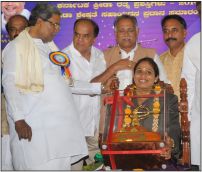
Sushmitha Pawar seen receiving the Ekalavya Award from Chief Minister Siddharamaiah in city recently.
One of the toughest games to be played ever is Kabaddi. Having originated in our country, Kabaddi has been one sport which India has dominated both in men’s and women’s categories. This sport being widely played at the rural level has seen many talented players emerging out of our State to represent the National team in South Asian Games, Asian Games and World Cup. One such player to have emerged from our city is Sushmitha Pawar, who was part of the National Women’s Team which won the gold medal in the Asian Games held at Incheon in South Korea. Sushmitha was awarded the Ekalavya award by the State Government at a function held at Mysuru recently.
Speaking to Star of Mysore, Sushmitha said it was a proud moment for her to receive such a prestigious award in recognition of her achievements in Kabaddi.
Sushmitha, who works with State Police Department in Bengaluru, has won many accolades for her achievements in the sport. She was part of the State Women’s Kabaddi team which took part in the Senior National Championship held in 2010, 2011 and 2013. Her consistent performance at the National level earned her a place in the National team which took part in the 2014 Asian Games.
Having inspired by Sports Authority of India (SAI) Kabaddi coach Sridhar to take up Kabaddi, Sushmitha went on to represent in the Junior National Team for the first time and also the State in Amrita League in 2004.
Sushmitha, who hails from a poor family, was ably supported by parents Omprakash Rao Pawar and Manjula Bai, residents of N.R. Mohalla, who run a flour mill. Sushmitha said that her parents borrowed money from her relatives and friends to provide funds for her travel. Having started to play Kabaddi in 2003, Sushmitha says that the Police Department has supported her in all her endeavours.
She captained the Karnataka Junior Kabaddi team and was member of the South Zonal and Karnataka Senior team. Sushmitha also credited her husband Venkatesh for her success. After having achieved her initial goal, Sushmitha aims to take part in the Olympics.
source: http://www.starofmysore.com / Star of Mysore / Home> Feature Articles / May 14th, 2016
N. Lokesh flanked by his parents Narasimhamurthy and Laksh
Another Namma Huduga to be conferred with the Ekalavya Award is N. Lokesh. Having taken up gymnastics accidentally, Lokesh has gone on to achieve great feats in his favourite sport. He won the gold medal in the 54th Senior National Championship held at Hyderabad in 2014 apart from winning Bronze in 53rd Senior National Championship held at Kurukshetra in 2013.
Speaking to Star of Mysore, Lokesh said that he was happy to be recognised by the State Government for his achievements. “It is the recognition which I have received for the sincere efforts put in over the past 18 years. Such recognition always motivates sportspersons to achieve more feats and work harder to bring glory to State and country,” he said.
Lokesh, who aims at participating in International-level championships, rued that there were no basic facilities for gymnastics and urged the State Government to provide the same to help youngsters build a bright career. Lokesh is currently gearing up for the Goa National Games during which he aims at winning the feat that he achieved in 2014.
Having completed his B.E in Electrical and Electronics from PES College, Mandya, Lokesh is currently working as a Production Engineer in one of the private companies in Tumakuru. Though he has been finding it tough to dedicate time for his practice, Lokesh makes sure to attend the same for at least a couple of hours every day.
“Currently, I have not been able to give much time for practice. With National Games round the corner, there is a need for me to dedicate more time. I will make sure to repeat the golden feat once again at the National level,” said Lokesh.
While Lokesh was immensely happy to be receiving the award, his father Narasimhamurthy, a retired KEB Junior Engineer, was one step ahead. He was seen with his chest up feeling proud to see his son receiving the award in Mysuru from Chief Minister Siddharamaiah, who also hails from Mysuru.
“It is a proud moment for me and my family to see Lokesh receiving the prestigious award. It is a great achievement to be recognised at this level. Though we supported his interest to join gymnastics we had never thought he would reach such a great height. I hope to see him grow at a much higher level, so that he could bring laurels to the State as well as the country,” says Narasimhamurthy.
source: http://www.starofmysore.com / Star of Mysore / Home> Feature Articles / May 14th, 2016
Nishya Joseph seen with her parents Joseph Mari and Elizabeth
by S.N. Venkatnag Sobers
A native of a small village called Dornahalli in K.R. Nagar Taluk, Mysuru district, this talented volleyball player has represented the country’s Senior Women as well as Junior Women volleyball teams.
She was part of the Senior Women’s Volleyball Team which took part in the Asian Senior Championship held at China in 2013. This talented player is none other than Nishya Joseph, who received the prestigious Ekalavya award for her achievements in volleyball.
Having completed her primary education at her native, Nishya joined the Sports Hostel-Vidyanagar in Bengaluru where she completed her secondary education. Later, she came to Mysuru and joined the Sports Hostel and completed her PU and Under-Graduation at Teresian College.
Speaking to Star of Mysore, Nishya Joseph said that it was a dream come true for her to be receiving the award. “It is a proud moment for me to be receiving the prestigious Ekalavya award. Even my parents and other relatives wanted to see me receiving the award and today I have fulfil their dreams,” she said.
Talking about the support extended by her family, Nishya said that her father Joseph wanted her to take up volleyball and added that her uncle, Vijaykumar, who works as a Physical Education teacher, helped her in the game as she had the perfect physique and height.
“As per my uncle’s instructions I took up volleyball and here I am today. Currently, I am focusing on being a part of the Senior Women’s Volleyball Team,” Nishya said.
Being a part of the Indian Railway Team, Nishya works as a Ticket Collector for Indian Railways at Pune in Maharashtra. When asked about shifting base from Karnataka to Maharashtra, Nishya said that there is not much job opportunities for sportspersons in Karnataka which was the main reason for her to shift to Pune.
“The State Government has to encourage sportspersons by providing jobs in public sectors. There are other States which have been encouraging achievers in sports by providing jobs and other facilities. But in our State it is not the same. Even the facilities provided for volleyball is not up to the mark. Though we have sports hostels yet there is a need for more infrastructure to compete at the international level,” she added.
Joseph Mari, Nishya’s father, said that it was a proud moment to see her daughter receive the award. “Majority in our family are involved in one or the other sport. But till date none of them have grown to a level where Nishya has reached. It feels good to see my daughter making us proud through her achievements. I hope she would continue with her efforts and play at much higher level and bring laurels to our country,” he adds.
source: http://www.starofmysore.com / Star of Mysore / Home> Feature Articles / May 14th, 2016
Who says you cannot master your mother tongue in a foreign land?
A Class 10 student, who was born in Karnataka but did most of her early schooling outside the state, has proved that no formal training is needed when it comes to love for your mother tongue.
Shreya, who is currently studying in Kundapur of Udupi District in Karnataka, has scored 99 out of 100 in Kannada in her board exams.
This despite the fact that Kannada was not a part of her curriculum during most part of her school education.
She has scored 600 out of 625 marks in the SSLC Class 10 exam.
Starting her education at Mumbai’s St Xavier’s play school, Shreya has studied in Lagos (Nigeria), Tanzania, Uganda, Kundapur (Karnataka), Nairobi (Kenya), Hubli (Karnataka) and Druck (Bhutan).
Shreya started her schooling from Mumbai’s St Xavier’s play school, then did her LKG in Lagos (Nigeria). She completed her UKG, 1st and 2nd standard in Tanzania, 3rd standard in Uganda.
She returned to India for a year and did her 4th standard from Kundapur.
She did the first term of her 5th standard in Nairobi, and second term in Hubli of Karnataka.
For 6th and 7th standard she was in Tumkur and for 8th and 9th standard in Bhutan’s Druck.
Finally, she returned to Kundapur for her SSLC.
Delighted with her result, she credits her teachers and parents for helping in Kannada. Like her father, Shreya also wants to be a Chartered Accountant.
(Content Courtesy: vijaykarnataka)
source: http://www.timesofindia.indiatimes.com / The Times of India / News Home> City> Bangalore / TNN / May 18th, 2016
A group photo of the Stakeholders at the interactive session held at CFTRI recently.
Mysuru :
CSIR- Central Food Technological Research Institute (CSIR-CFTRI), Mysuru, had organised a half-a-day Stakeholders Meet involving the Growers, Processors and Market Players in the Banana Processing Industry recently to create a robust food value chain, which would be beneficial to the processing industry.
There were press reports during December 2015 that farmers were forced to sell banana for a meagre Rs. 2 per kg. In this context, AcSIR students as part of their project studies initiated interactions with farmers of Chamarajanagar district.
Accordingly, around 2 tonnes of fresh banana was procured and processed at the Institute’s Pilot Plant, packed and stored in cold storage. Some of the buyers were brought to the loop for the purchase of banana pulp. Samples were sent to pulp exporters for evaluation of products from their end. And some quantity of the pulp was sold through this route.
New plant variety : Speaking on the occasion, Prof. Ram Rajasekharan, Director, CSIR-CFTRI, stated that the Institute would be releasing a new plant variety which has the potential to protect banana crop from spoilage. The plant can be grown as an inter-crop along with other plantations.
The Institute asserted to work for establishing a semi-processing unit through farmers co-operatives with support from Government and other agencies, transfer of technology free of cost to such agri-enterprises, training and creating a network amongst them for ensuring proper returns to growers.
source: http://www.starofmysore.com / Star of Mysore / Home> General News / May 12th, 2016
Christoph Bertrams, Director of Max Mueller Bhavan, Bengaluru, in conversation with Senior Journalist N. Niranjan Nikam.
The cultural exchanges between two countries give the participants an opportunity to understand the rich heritage, history, life and culture of the respective places they visit. Goethe Institut – Max Mueller Bhavan in the country is one such phenomenon that is doing great service in this direction since the last 60 years. The Director of Max Mueller Bhavan, Bengaluru, Christoph Bertrams was in city with a group of ten artistes from Germany visiting many cultural places like Rangayana, Folk Museum in Manasagangotri and Pottery Makers in Doora village. Senior Journalist N. Niranjan Nikam caught up with Christoph, the friendly, warm, outspoken German, who has understood India and has a good perspective about the country. He spoke to ‘Star of Mysore’ (SOM) about the history of Max Mueller Bhavan, the Indian and German Culture and about the cultural exchanges. Excerpts. —Ed.
By N. Niranjan Nikam
SOM: You have been the Director of Max Mueller Bhavan, Bengaluru, for the last five years. How has your experience been?
Christoph Bertrams: In my former career in Latin America, it was a different experience. I am here in an Asian country for the first time and it has been an interesting experience. Since we work in the area of culture, we had no support from the Government in India whether it is the Central or the State Governments. ICCR (Indian Council for Cultural Relations) hardly supports us. But this was not the case in Latin American countries where the governments would support us with public funds. Here we do get some private funding. All cultural life depends on a few individuals. It is a great experience to work with such people.
SOM: In Bengaluru, what is your experience like?
Christoph: Bengaluru is a production hub. It is very active culturally and there are a few wonderful artistes like Pushpamala and Sheila Gowda. They work in Bengaluru but have their shows in Delhi and Mumbai. Surekha Sharada, the former Chief Curator of Bangalore Metro Art Centre (in the MG Road Metro Station) and Aisha Abraham have also been a great source of support for us. We had created an exhibition with them about the First World War and the Indians participating in it. These two were the two Indians who worked with us. It was a great success. You can work with talented artistes and produce art.
SOM: It is very fascinating to read about Max Mueller, a German Indologist and Sanskrit scholar born almost 200 years ago. Can you throw some light on him?
Christoph: Goethe Institut is there in 140 countries in the world and six in India. There is only one exception and that is India where it is called Goethe Institut — Max Mueller Bhavan; in all other countries it is just Goethe Institut. That is because of the enormous respect Max Mueller had for India and this is what he had to say about your country:
“If I were asked under what sky the human mind has most fully developed some of its choicest gifts, has most deeply pondered over the greatest problems of life, and has found solutions of some of them which well deserve the attention even of those who have studied Plato and Kant, I should point to India.’’
The Indian colleagues also feel strongly about the link with Max Mueller and they want this name to be there forever. It is a very good Institut.
SOM: Do you find any similarities between German and Indian cultures?
Christoph: (Smiles). It is much easier to argue what is the difference than similarities between the two cultures. Both are very strong cultures and, of course, the Indian culture is the older one. Therein lies the main difference. What is similar is the confluence of cultural activism. For instance, if one goes to a Film Festival what one looks at is the biggest festival with the biggest stars in attendance. It is not quality here but only quantity. But our film festivals are different. Of course there are both good and bad things when one talks about culture.
Again lots of time fusion is not possible. When they try it — for example, a jazz musician plays with a Sitarist and it is called fusion music. According to me fusion becomes confusion.
SOM: A group of ten people from different backgrounds like puppetry, theatre artistes, curator and photographer have all come together. How much do they learn from such exchanges?
Christoph: This time it is called “Spot on bangaloREsidents.” We bring those people to India who have never been here before. They are all selected through a very strict selection process. Each time we receive about 200 applications. After the selection they all arrive together on a Sunday. If they say that they have a performance on Monday in Germany and after that they will come they are not allowed. These people are first introduced into the cultural life of the city. Take Paul Affeld who represents a vibrant combination of hip hop and puppet theatre as witnessed by his famous band “Puppetmastaz.” He has come here to see what Indian puppetry has to offer.
SOM: Indian puppetry has a great tradition and he will have a lot of takeaways.
Christoph: Yes that is true. He will interact with the puppet masters as his interest lies in the theatrical development between classical acting, puppetry and dance. They have visited Rangashankara where they have interacted with Arundathi Nag. Jagruthi theatre is another place where Paul has gone.
These chosen few stay with the Indian hosts and there are 25 of them in the list in Bengaluru and it is increasing. This is how the exchange of knowledge takes place between Germany and India. However, it is sad that in India there is no government funding at all for such activities.
SOM: Having been with Goethe Institut for 25 years how much of its philosophy have you imbibed?
Christoph: The thing I learn most whichever country I go to is the culture of that place. As I told in the beginning Indian culture is very old. The main objective of mine is to learn about this first. Both Bengaluru and Mysuru are culturally very vibrant. During our visit here, we learnt about the visual arts. We visited Rangayana and interacted with the artistes there. The puppetry show which we showed is a bit different from what is shown here. The children in the Chinnara Mela participated very enthusiastically. Though the way we talk to children and the way they are controlled here are a bit different. In the evening we all attended a party hosted by the international artiste N.S. Harsha, who is from your own place, where we again met some great artistes, writers, architects, graphic artistes and the interaction was very good.
This is why we are rotated in our jobs. If I stick to one place I will not learn anything much.
SOM: What is it about Goethe Institut that is unique? Because, it is said, the falling of Berlin Wall makes a turning point for Goethe Institut. (This question is answered by Maureen Gonsalves, Programme Coordinator who is travelling with the team).
Maureen Gonsalves: Earlier East and West Germany had different cultures. After the fall of the Berlin Wall this has more or less disappeared. However, as an outsider I feel that there could be some differences still there. Coming to the Goethe Institut, there is a lot of emphasis on exchange programmes.
We do not fund but support the cultural exchanges to create or facilitate and enhance the culture milieu. It is a give and take. Germany has a budget for Goethe Institut.
SOM: Many Indian students are going to Germany for further studies. What is it that attracts them? Do they have to learn German to study in Germany?
Maureen Gonsalves: One of the main reasons is Germany has no tuition fee. They just have a small semester fee and living expenses. Economically it is attractive. However, now it is not entirely true as a few Universities are charging tuition fees. Their standard of education is very high. Master’s courses are in English. Only under-graduate courses are in German. I know of students who do not speak a single word of German, who have passed out and come.
SOM: Can you throw some light on the controversy regarding replacing German with Sanskrit in CBSE schools after a MoU having been signed with Kendriya Vidyalaya Sangathan?
Christoph: I am not aware of it and hence I do not want to comment on it.
SOM: Great thinkers and philosophers have come out of Germany. In spite of this it has been responsible for two World Wars?
Christoph: This is the big conflict we feel, as Germans. As the well-known German Philosopher, Sociologist and Composer Theodor W. Adorno known for his critical theory of society has said, “To write poetry after Auschwitz is barbaric,” a dictum he strongly believed in and which is a part of post-war Germany’s struggle with history and culture.
source: http://www.starofmysore.com / Star of Mysore / Home> Feature Articles / May 11th, 2016
H.S. Srikanth flanked by his parents Shantharaju and Sowbhagya.
Mysuru :
The results of UPSC Civil Services (Main) exam was declared yesterday. H.S. Srikanth of Mysuru has secured 56th rank in the exam thus bringing glory to the city.
Darshan of Davangere topped the rankers from the State, securing 48th rank while H. S. Srikanth of the city came second.
The other successful candidates from the State include Srinivasgowda (105th rank), Nivya Shetty (274), Akash Gowda (959), Pavan Kumar (420) and T.N. Nagesh (782).
Srikanth, son of retired Assistant Director of Agriculture Shantharaju and Sowbhagya couple, is a resident of Ramakrishnanagar here.
After completing his primary education at Carmel Convent in Nanjangud, Srikanth studied PUC at Ramakrishna Vidyashala in Yadavagiri and got his Mechanical Engineering degree from NIE in 2011. He later did his M.Tech at UVCE, Bengaluru.
Speaking to SOM after the announcement of UPSC results, Srikanth said he was extremely happy about the results.
Giving a brief on his Post-degree career, Srikanth said he had passed SBI Officers competitive exam and had also worked for Indian Aerospace in New Delhi for three months. Besides, he was also selected by the WIPRO.
Pointing out that all his family members were extremely happy about his performance in the Civil Services exam, Srikanth said he dreamt of becoming an IAS officer and this has been realised now.
Stating that he had attempted the UPSC exams three times earlier he said that he just could not make it last year. However, he continued with his studies and performed better to secure the 56th rank this time, he said while recalling the encouragement given by his teachers, lecturers, parents and relatives.
Manivannan inspired him
Noting that senior IAS Officer P. Manivannan, who had served as Mysuru Deputy Commissioner a few years ago, was a big inspiration for him, Srikanth said he learnt about Manivannan’s success story from the media. Besides, Manivannan had given useful tips to him which was very helpful in the exam.
He further said that C. Basavaraj and A.B. Ibrahim, who had earlier served in Mysuru too inspired him and expressed his gratitude to all those who helped him in achieving this feat.
source: http://www.starofmysore.com / Star of Mysore / Home> General News / May 11th, 2016
Seen in the picture are (from left) Rohith G. Bhat, Head Coach Kru. Vikram, C. Chethan and L. Pramod.
Mysuru :
Four fighters, attached to Academy of Martial Science (AMS) and representing Mysore Muaythai Trust, have bagged two gold, one silver and one bronze medal at the 16th MTI National Amateur Muaythai Kickboxing Championships held at Salt Lake Stadium, SAI Boxing Hall in Kolkata recently. They are trained by internationally accredited coach Kru. Vikram of AMS. Athletes from over 15 States participated in the championships.
Results: A Division: Naveen Shetty – Bantam Weight – Bronze Medal and C. Chethan – Middle Weight – Gold Medal.
B Division: Rohith G. Bhat – Light Welter Weight – Silver Medal and L. Pramod – Middle Weight – Gold.
source: http://www.starofmysore.com / Star of Mysore / Home> Sports News / May 10th, 2016
At the invitation of Maharaja Nalwadi Krishnaraja Wadiyar, he came to Mysuru and took charge as the second Vice-Chancellor of a nascent University in 1920.
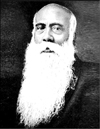
Brajendranath Seal was a renowned Bengali humanist-philosopher and a Brahmo-Samaj intellectual.
by Dr. S.N. Bhagirath
In 19th century Bengal, Sir Brajendranath Seal was responsible for the paradigm shift in Brahmo philosophy from liberal Theism to secular humanism. He was a true renaissance man and a polymath. He graduated from the University of Calcutta with a post-graduate degree in philosophy in 1884. He published his first major work “New Essays in Criticism” in 1907. In 1915, Calcutta University conferred a doctorate degree on him for his thesis “The Positive Sciences of the Ancient Hindus.” He taught in several institutions like City College – Calcutta, Morris College – Nagpur, Krishnanath College – Berhampur and Victoria College – Cooch Behar. In 1906, he was invited to address the ‘International Congress of Orientalists’ in Rome. In 1911, he went as a delegate from India for the first ‘Universal Race Congress’ in London.
In 1913, he was offered the King George V Professorship of Philosophy at the University of Calcutta. He also collaborated with Nobel Laureate Rabindranath Tagore in establishing Vishwa Bharati University at Shantinikethan. He was also appointed by national poet Rabindranath Tagore as the first Vice-Chancellor of Vishwa Bharati University. He was at the helm of Mysore University as a Vice-Chancellor for nearly 10 years from 1920 to 1930 and he quit this post because of ill health.
In 1926, the British Government in India honoured him with a Knighthood. During his stay in Mysuru, Sir Brajendranath Seal authored a textbook on Indian philosophy and a definitive biography of Raja Ram Mohan Roy. His further studies on ancient Hindu scientific philosophy led him to contribute a chapter in Prafulla Chandra Roy’s “History of Chemistry in Ancient India.” His publications were noticed abroad and in 1902, his candidacy was seriously considered for a professorship in philosophy at the University of Cambridge.
In 1936, Sir Brajendranath Seal who was bed-ridden and almost blind completed his magnum-opus “Quest Eternal.”
When he was a student at Scottish Church College, Narendra Dutta [Swami Vivekananda] was also pursuing his higher studies there at that time. Sir Brajendranath Seal describes the future Swami Vivekananda as:
“Undeniably a gifted youth, sociable, free and unconventional in manners, a sweet singer, the soul of social circles, a brilliant conversationalist, somewhat bitter and caustic… an inspired Bohemian but possessing what Bohemians lack, an iron will”
On 8th August 1927, Sir Brajendranath Seal laid the foundation stone of Intermediate College, Mysuru. Later this College came to be known as Yuvaraja’s College (under University of Mysore) offering Science courses. This historic occasion was graced by Sir Mirza Ismail, the then Divan of Mysuru State. The most surprising coincidence on this occasion was the presence of Motilal Nehru and Mahamahopadyaya Sidhanti Shivashankar Shastry. Sri Nalwadi Krishnaraja Wadiyar, the Maharaja of Mysuru, conferred upon Sir Brajendranath Seal the title of “Rajatantra Praveena.”
Sir Michael Sadler, former Vice-Chancellor of University of Leeds, declined the Vice-Chancellorship of Mysore University in 1920, but he strongly recommended the name of Sir Brajendranath Seal as a suitable candidate by writing these words:
“I know of no one in respect of the range and depth of scholarship and originality of mind, who can be equal to Brajendranath Seal either in the East or in the West.”
Brajendranath Seal worked very hard for the development of University of Mysore. His health deteriorated and he suffered a paralytic stroke in 1930. He went back to Calcutta to live in retirement. He died in Calcutta on 3rd December 1938. It is only befitting that we remember him in the Centenary year of University of Mysore.
[email: bugs2beatles@gmail.com]
source: http://www.starofmysore.com / Star of Mysore / Home> Feature Articles / May 09th, 2016
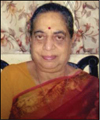
City’s senior Obstetrician and Gynaecologist and former Professor & Head, Dept. of OBG, JSS Medical College, Dr. G.S. Nirmala (85), daughter of late G. Shankar Chetty, a Public Prosecutor during the old Mysore State and a resident of V.V. Puram, passed away early this morning at Aaditya Hospital following brief illness. Incidentally, today is her 85th birthday.
A spinster, Dr. Nirmala leaves behind a sister, brother and a host of relatives and friends.
Dr. Nirmala was a popular figure in city and was often seen in her vintage black Fiat car.
Dr. S. Sudhir, Senior Surgeon, JSS Hospital, Dr. Mahesh Kumar and Dr. Chitralekha of Chitra Hospital were among those who paid their last respects to the departed soul.
Last rites were performed at the foot of Chamundi Hill in city this afternoon, according to family sources.
source: http://www.starofmysore.com / Star of Mysore / Home> General News / May 09th, 2016