All posts by admin

Mansion’s Forgotten its Manikyavelu

The old bungalow is marked by a British colonial architectural style, with a touch of Indian influence  Jithendra M

Bengaluru :

Plaques detail the contributions of the three Tagores — Abanindranath, Gaganendranath, Rabindranath — and various art movements in the country at National Gallery of Modern Art on Palace Road. But no boards speak of the significance of the heritage structure that houses the collections of rare paintings — Manikyavelu Mansion.

A document in NGMA’s official files, titled Excerpts from Karnataka Government Gazetteer and signed by its former owner Vilum Manickavelu Mudaliar’s granddaughter Vitto Bai, tells you that this once belonged to the Yuvaraja of Mysore.

Mudaliar, it reads, was the third son of a poor family. He married into an aristocratic family and became a successful ‘business magnate’ after taking manganese and chrome mines on lease. He acquired this building, the document says, ‘during his early years’, and called it Manickavelu House. While reliable history books say it was sold to him, the record of the sale perhaps remains unknown, says historian and researcher Arun Prasad.

Officials in the NGMA say Mudaliar and his family lived in the mansion for some years. “But due to a domestic problem, they defaulted payments either to a bank or the government, and the house was put on auction,” says an official. It was acquired by the City Improvement Trust Board, the erstwhile BDA, and then transferred to the Housing Board in the 1960s. The Ministry of Kannada and Culture, which has taken it on lease, sub-leased it to the Ministry of Culture in 2000, when it became the chosen location for NGMA’s southern centre.

As for when the mansion was built, again records are elusive. “It’s neighboured by several century-old colonial bungalows, including the Balabrooie Guest House,” says Prasad. Hence, it’s probably safe to assume ManiIf you wander in its 3.5-acre campus, and look beyond the official records, you might catch snatches of a fascinating oral history account: Mudaliar, on a visit to Bengaluru, stumbled upon the colonial-style house when it belonged to the Yuvaraja of Mysore. Impressed, he sought entry and was refused until he greased some palms. After a tour around the mansion, he vowed he would one day come to own it.kyavelu Mansion dates back to that time, he adds.
Mansion02BF26feb2016


If you wander in its 3.5-acre campus, and look beyond the official records, you might catch snatches of a fascinating oral history account: Mudaliar, on a visit to Bengaluru, stumbled upon the colonial-style house when it belonged to the Yuvaraja of Mysore. Impressed, he sought entry and was refused until he greased some palms. After a tour around the mansion, he vowed he would one day come to own it.

Indra Rajaa, daughter of Mudaliar’s granddaughter Vitto Bai, says her generation, brought up in Madhya Pradesh, is rather removed from their Bengaluru connection. “My maternal mother, Manickavelu’s only daughter, moved to Kotagiri after marriage,” she says. “She died a month after giving birth to my mother, who was brought up by her paternal uncle and his wife. My mother thought they were her parents till she got married.”

In 2003, the year she passed away, 67-year-old Vitto Bai visited the mansion with her husband. “She said she got a royal reception by the officials there, and was very happy,” her daughter says. Rajaa tried locating the house when she was last in the city. “I asked for Manickavelu’s mansion, but no one seemed to know where it was,” she says.

The Chennai-based chartered accountant recalls that an ‘uncle’, one of her clients who had met Mudaliar, had told her that great grandfather was a ‘generous man’. She quotes him: “He would willingly feed any number of people, but would refuse loans.”

But Mudaliar’s descendants are scattered across the city, says architect Naresh Narasimhan of Venkatramanan Associates, involved with the restoration and design of the new wings. “It is said he lived atop a hill in Rajajinagar, next to the one Iscon is on. He owned a lot of land in Mahalaxmi Layout, named after his daughter,” he says.

He says although the house is prominently British colonial in architecture, it features some Indian decorative elements on the outside.

When Narasimhan began visiting the site, what he calls the biggest bungalow in Bengaluru had a kitchen in the back. “It was in ruins, so we took it out and built the new galleries there,” he says.

In 2003, when restoration and construction began, the heritage building needed plugging of leaks, to say the least. “Water used to seep in,” says Rehana Shah, currently Bengaluru NGMA’s curator, who was posted here from the headquarters in Delhi to oversee the work. “The entire building was built with brick, with mud plastering,” says Narasimhan, adding that most structures back then were not constructed to last.

The auditorium too, built – according to Narasimhan – when  the property was with a UN body before it was acquired by the government, also required work. “We replaced the roof,” Shah says. “And extended the stage, originally designed for talks,” he adds. The first couple of rows of seats were taken off to make room for this, and the hall now accommodates 168 people.

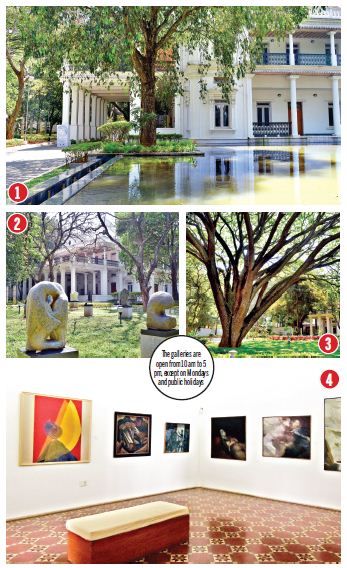
So the heritage building is like a central diamond, with the new additions – two galleries a museum shop and the cafeteria – like the ring around it, Narasimhan says. “That’s why there’s a pool next to the old mansion. Together with its reflection, the mansion forms a spectacular image in the evenings. The pool’s pump keeps its water moving, cleaning out fallen leaves.”

Tree Treasure

During the restoration and construction, the team of architects and Central Public Works Department officials took care to retain all the tress. “Next to the cafeteria stands the biggest, and probably the oldest rubber tree I’ve seen,” says Narasimhan.

The trees probably have their own stories to tell, says Prasad, for many of them have been around since the bungalow was built. Tree walks are conducted here regularly, and a part of the city’s tree festival, Neralu, was also held here.

“The trees here are truly grand,” says Janani Eswar, who conducted one of the festival’s sessions. “They have been allowed to grow undisturbed as they would be in a rain forest. Finding a spot like this in the city is very rare.” Visitors must not miss the nearly 150-ft tall banayan the back corner and a huge raintree in front, she says.

The Gallery and Museum

“As early as 1989, the state government proposed that the bungalow should be converted into a museum,” says historian Arun Prasad. “And the Centre agreed.”

In 2000, the Ministry of Culture took over the building for the National Gallery of Modern Art (NGMA) and the foundation stone for the new structure was laid in 2001, during S M Krishna’s government. Work began in 2003 and continued right up to 2008.  A 1, 260 sq metre gallery block, where exhibitions are organised, was added to the 1,551 sq metre art museum in the heritage building on the walls of which hang works of unknown artists alongside greats like Raja Ravi Varma, Jaimini Roy and Amrita Sher Gil. “This is perhaps the only colonial structure, located in such an aesthetic setting, that has been aptly converted into a museum – a museum with a collection no other in South India has,” says Prasad. “The extension has been made without damaging the original structure. Even the wooden panel flooring and the ornamental windows have been retained.”

source: http://www.newindianexpress.com / The New Indian Express / Home> Cities> Bengaluru / by Chetana Divya Vasudev / February 25th, 2016

Science and engineering fair

Over 40 models on sustainability in water energy related to the traditional knowledge will be on display at the two-day Science and Engineering Fair 2016 titled ‘Anveshana’ from Thursday. It will be held at Visvesvaraya Industrial and Technological Museum on Kasturba Road.

Speaking to presspersons here on Tuesday, foundation’s senior manager and coordinator of anveshana, Suresh T.S. said the fair is an initiative to bridge the knowledge gaps between schools and engineering colleges. He said prize money worth Rs. 1.25 lakh would be distributed among the top 10 teams.

source: http://www.thehindu.com / The Hindu / Home> News> Cities> Bengaluru / Staff Correspondent / Bengaluru – February 24th, 2016

Where ideas for social enterprise take wing

Manas Nanda, founder of Harvest Wild which offers livelihood to people living in remote forest areas

Bengaluru :

A graduate from Oxford University, Manas Nanda’s dream was to make a social change. He found his way back to his roots by starting ‘Harvest Wild’, a social enterprise, with an aim to create livelihood opportunities for people living in remote forest areas in India. It was at IIM-Bangalore’s incubation cell, NS Raghavan Centre for Entrepreneurial Learning (NSRCEL), where his idea of bubble nut wash was mentored.

“I launched the pilot project at my hometown in Odisha in January 2015. I got sackful of soap nuts from nearby villages and did a few trials on how we can present them in a format to be used as laundry detergents. The product is now available in organic stores in Bengaluru. We are also taking online orders from across India and the UK,” Manas, 40, says.

His first task was to identify his role as a bridge between rural communities and health and environment-conscious urban consumers. “I was fascinated by the fact that we could make a dual impact—create livelihood in rural India and reduce use of toxic chemicals in modern detergents that affect people’s health and water bodies. I would travel to forest areas to see if some of the fruits and berries can be processed into marketable products that urban consumers would value,” he adds.

His proposal was chosen from hundreds of early pre-product entrepreneurial ideas that NSRCEL, one of the oldest incubation cells across all IIMs, receive every year. Such ideas go through several mentoring sessions by screening committees before emerging as market ready.

“Today, the scenario has changed from what it was some 15 years ago and the market is full of incubators. Our first challenge is to distinguish ourselves from the clutter. At NSRCEL, we are working with enterprises which have nothing more than a slide deck and a team. We help them acquire customers and build capital in 12 months. We look for impact-making ideas; the process starts after the entrepreneur presents his/her business plan to the committee. The possibility of incubation is informed to the entrepreneur in two days. During incubation, there are a number of review meetings with NSRCEL team to monitor the progress the company makes while incubating at the centre,” said NSRCEL chairperson Prof. G Sabarinathan.

According to him, the biggest strength of NSRCEL is its mentors who guide and mentor the incubates and play a major role in shaping up the new ideas.

Women top ideators

Annually, NSRCEL considers 80 ideas, promoted by teams comprising five members each. The maximum number of ideas are floated by women.

Chippersage, incubated at NSRCEL in 2012, was founded by Latha Srinivasan, a former software engineer. The software, which promotes English teaching in a fun way, is being used by schools in and around Bengaluru. Chippersage has developed a product to kickstart reading independence among children.

Alma Nourisher, a child nutrition and wellness firm, which aims to bridge nutrition gap in preschool/school segment with an analytic platform, is founded by Priyamvada Chandramouli. The wellness portal helps parents track their child’s nutrition levels and contribute to prevention of lifestyle diseases like obesity, cardiac ailments and diabetes.

The market winners

The past incubatees at NSRCEL include companies like JustBooks, Amagi, Milap, MeshLabs, Alma Nourisher, Brizz Tv that have made an impact or even redefined the markets they serve.

source: http://www.timesofindia.indiatimes.com / The Times of India / News Home> City> Bangalore / by Shilpa Baburaj, TNN / February 23rd, 2016

They serve Mysore well…: Professionals and Businessmen of Yesteryears : A Tribute

ChandraPrakashBF22feb2016

by R.Chandra Prakash

An individual is mortal, but a city has a life of continuity. A city is enriched or ravaged by the type of residents it has had. Mysore has earned several epithets such as heritage city, educational centre and even a cultural city. In giving Mysore these shades of importance, apart from the Royal family of the city, many professionals, business houses and businessmen have contributed their mite. It is an attempt here to recall some of them and pay them a tribute for their role in making Mysore a unique and distinct city in the State and the country as such.

At the outset it should be mentioned that this is not a researched record. It is based on the observation of the author during his growing up years between the forties and early sixties in the then beautiful Mysore. Therefore, there is every chance that many names of people with similar importance or even greater importance might not find place here.

Businessmen and Builders: Let me start with C. Perumal Chetty & Sons, with the famous acronym of CPC. They were one among the few who ran a fleet of bus services in Mysore District. As per Mysore Gazetteer, there were 25 Jutkas in Mysore District in 1917-18, but “in Mysore it was CPC Motor transport which started town services.” That was a period when Mysore was a very compact town and Jutkas were in vogue. Obviously running a town service at that time should have been only a labour of love and could not have been for profit at all.

CPC Polytechnic, the building they donated for the cause of education in Mysore, further stands testimony to that. The Maharaja of the time had bestowed on CPC the honour of Dharmarathnakara, which meant a great philanthropist. The building besides Prabha Talkies at Gandhi Square was called CPC Building. Its architecture with very high walls and tall brown windows were similar to that of Wesley Press and Victoria School. The building where at present Hotel Sandesh is run was CPC’s residence. When a young son of the family, known for his racy living style and motor bikes, was killed in a motor-cycle accident at the turning of Belagola village, the entire Mysore city stood in lines late at night to pay homage. CPCs were a very charitable family indeed.

Yelakappa Chari was connected with the Palace buildings. He went on to build a Choultry on Irwin Road, Yelakappa Chari Choultry, which even today stands testimony to his royal days. He subsequently built and owned Chamundeshwari Talkies on Sayyaji Rao road, and pro- bably even the Gayatri Talkies on Chamaraja Double road.

How can one forget the name of Boraiah and Basavaiah [B.B&Sons] of Mysore? They were big builders who are said to have taken part in the construction of Sharavati Hydel Project and Vidhana Soudha. Their residence was in the building which later on became the house of famous fruit merchant Kareem and later on Sujata Hotel at the opposite corner of Idgah Maidan. These three builders carried on their businesses with ethics and charity. They were known for adherence to quality standards.

Dharmarathnakara Banumaiah was yet another of the businessmen, who not only made good in the business but also helped the cause of developing Mysore. D. Banumaiah’s Educational Institutions stand testimony to this. Like CPC, Banumaiah was also bestowed with the title of Dharmarathnakara by the then Maharaja.

Doctors and Dentists: Among the Doctors one cannot forget the roly-poly and Peta-wearing ever jovial Dr. Annajappa. He had his shop just beside the Devaraja Market’s northern gate on Dhanvantri road. There was also an entrance to his consultancy from the vestibule of Market gate. He was a huge person with very wide belly. But he was always immaculately dressed in three-piece suits, a tie and galleys to support his huge pants. A shining Mysore Peta with a golden tapestry was always there. He gave house calls only in his car. Obviously, he might have come from a rich family and patients from a rich family were his frequent visitors. His jovial mannerisms automatically reduced the pains and diseases of his patients. I never seem to have seen him grim, angry or serious.

On the other side of this gate was another doctor, entirely opposite in demeanour, Dr. Venkatadasappa. A Gandhian, always attired in Khadi coat, shirt and pants; very humble and soft in his manners. He spoke very few words, but he had high degree of commitment in attending to patients. Dr. Venkatadasappa moved around on a very old bicycle, with his worn-out brown doctor’s kit on cycle carrier at the back. He prepared his medicine in the shop itself, so he was also a Chemist and Druggist. His charges were either waived or pittance.

Dr. Srinivasa Murthy had his clinic on Sayyajji Rao road, where the present Dr. C.D. Srinivas Murthy practices. Dr. Murthy was a very refined person and a modern; well-dressed always with a suit and tie. He too was considerate to his poor patients. Long after his demise, his son became a medical practitioner in this very shop.

Then there was Dr. Dattu Rao, whose shop was a part of present Bata Shop on Sayyaji Rao road. Mysore Medical Hall on this road was also popular. Bang opposite this was Dr. Mariswamy, very popular among the villagers around the city. Very soft and patient in nature made him into a perfect doctor and human being. In the later years, Dr.Gopal Rajan went on to become a doyen of a surgeon in KR Hospital followed by physicians Dr. K.G Das and Dr. N.A. Jadhav.

Among the dentists we had Dr.Eapen, who practiced beside Abid’s Shop opposite Town Hall. And, of course, the Sheriff Brothers Dr. Kamal Sheriff and Dr.Siddiqui Shariff. Their clinic was on Harsha Road; a white bungalow between Opera Talkies and KEB office. It seems their father was dentist to the Maharaja of Mysore and this building was gifted to him by the Maharaja. These doctors and dentists provided yeomen service to Mysoreans at a time when Mysore was mostly confined to present city centre.

Hotels: In keeping with the British influence on Mysore, there were four hotels to cater to requirements of Europeans. Garden Hotel was located in a very large area in the very place where presently Sangam Talkies is located. It had a large compound and garden with a fountain in the middle. Then there was Carlton Hotel behind the Wellington Lodge. Hotel Ritz was located beside Ranjit Talkies. The Metropole Hotel in the city and in the KR Sagar were Maharaja’s Guest Houses for the British visitors.

Mysoreans were pampered with northern culinary delights to build up entirely new food habits by entrepreneurs from North India. Among them was Krishna Bhavan Hotel, which was located where at present Canara Bank building is located in K.R Circle, opposite Dufferin Clock Tower. At one time, owner of Krishna Bhavan, Munshi Lal, owned several hotels, including Gayathri Bhavan Hotel on Dhanvantri Road, Chamundi Hotel in Shivarampet and some hotels in the then Madras State. Then, Bombay Anand Bhavan (1921), Bombay Indra Bhavan (1936), Indra Bhavan Boarding and Lodging on Dhanvantri Road, Anand Bhavan on KRS Road, Dasaprakash Hotel, Welcome Hotel, Raju Hotel in Agrahara served palates of Mysoreans to their delight. These eateries went on to shape up the living styles of people, apart from expanding the economy of Mysore. It was only later on that Madhu Nivas, Vyasa Bhavan and some others came on to the scene.

However, Gayland cannot be missed among new generation of hotels. Located at the beginning of Harsha Road, just before Opera Talkies, Gayland was a rage among young and student types during early sixties. It’s dark inside with minimal lighting, a Juke Box at a corner and uniformed serving staff were all new things for hotel-going population of Mysore. This was a period of revolution in cinema — great music and great songs. Those people who loved to hear their favourite songs thronged Gayland. People put money into the slot of the Juke Box, selected song/s of their choice and just enjoyed them with their coffee and eats. Some simply sat through sipping coffee/tea to hear songs chosen by other customers.

Indian Coffee House, beside Prabha Talkies, is yet another place where young and intellectual types visited and spent time over cups of coffee, omelets and toasts. And, a lot of discussion on politics and cinema. Coffee House shaped up the life of many teachers, professors and politicians. Those were the slow moving days in Mysore.

Shops and Stores: Among shops and stores which sold groceries and other household requirements, one cannot forget Krishna Bhavan Stores, Indra Bhavan Stores, Nandi Stores of Nandibasappa, Bombay Anand Bhavan Stores, Srinivasa Stores. Govind Raj Shetty’s Pansari shop was a small country-tiled outlet opposite Dufferin Clock Tower but with wealth of materials — from Puja materials to Ayurvedic herbs, oils and grasses. Lucky for Mysoreans that this traditional shop is continued to the day by his next two generations. The shop is now located on D. Devaraja Urs Road.

Abdul Ravoof Pansari in Mandi Mohalla was always buzzing with business as he sold imported items from the dry fruits, kesar to badam oil. Rama Shetty of Laxmivilas went on to become famous for his sari shop, his brother Shankar Shetty for Jewellery shop; Sharma from Punjab for Sharma Sports shop, Kareem for fruit shop, Shivanna for his Nanjangud Banana (so much so he was called Balehannu Shivanna) both in Devaraja Market; Lalbhai for tiles and taps; and, Salar Masood for Hardware. These business houses served Mysore well.

Stationers & Book Depots: Since Mysore was also an educational centre, there were several stationery and book stores. Among them one cannot forget R. Krishnaswamy and Son on Sayyaji Rao Road. A statuette of a very old man with a casual cloth turban and wrinkled body was kept on the top of the shop. So also a very long model of Waterman Pen was hung onto the roof. These two made permanent impressions of the visitors of the shop. J.Nanumal and Sons; Kodandaramaiah and Sons, Gowrishankar Book Depot, Ramachandra Book Depot opposite Dufferin Clock Tower, were the usual book depots for the parents and students to go and get their stationeries and text books.

Renuka Pen Corner on Old Bank Road, very near Prabha Talkies, was a specialised shop in ink pens and later on jotter pens. Pilot brand pens and jotters were displayed in special packages and costs high. Among the ink pens Black Bird, Schaeffer and Parker were highly priced. The owner took the pains to explain the quality of each one of them, demonstrate the uniqueness of fillers, nibs and caps. Before the arrival of jotters, ink pens and ink-pots were popular. Quinck was popular brand to be felled later on by Chelpark and Iris ink. One would ask for Royal Blue ink or Black ink. Rarely Red ink was also bought. Renuka Pen Corner was a must visit for serious types of students for whom a right pen was a right way to right learning.

Cinema Theatres: Krishna Cinema Theatre, located on first floor of Kaveripattnam building in Gandhi Square was active during forties and early fifties. I remember to have been taken to this theatre somewhere during late forties. But it closed down thereafter. Olympia Talkies and Prabha Talkies were the main theatres screening mostly Hindi movies. Ranjit Talkies is where I seem to have seen Anaari and Mother India at Woodlands. I remember that Kalinga Rao’s melodious voice vibrated at Woodlands as soon as lights went out to announce the beginning of the screening of preliminaries. Opera mostly screened Kannada movies or some times Tamil movies. So also Lakshmi Talkies.

However, it was Gayathri Talkies and now defunct Ganesha Talkies which were class by them, because they screened only English movies. A must visit places for college-going students and, of course, the discerning class of the city. Anglo Indian ladies used to issue tickets for the balcony class at Gayathri Talkies. There was a box class in these two cinema houses which were the preferred places for “couples” for obvious reasons! The audience on the top row of the balcony preened backward and forwards for extra pleasure in these theatres. I remember to have seen screening of Queen Elizabeth’s coronation in Gayathri Talkies sometime in fifties. Going to Gayathri and Ganesha theatres were our afternoon escapades from some boring classes at the college. I remember seeing 20,000 Leagues Under the Sea and many Alfred Hitchcock’s movies like Psycho, Birds, North by North West.

Wonderful years in Wonderful environment: One has to concede that everyone is influenced by his or her growing years and may remember all those moments mostly in positive sense. However, even if I am accused of a myopic vision or fixated view of life, I will hold my opinion that the years in Mysore I grew up in and the individuals and institutions that made up the environment were best. Best for the very reason that Mysore was a well-managed city, with beautiful environment and was inhabited by people with high values and virtues. And above all the slow moving time-frame not only enhanced the value of all these but also made life worth living. Hence, this small tribute to the people and places of that period.

source: http://www.starofmysore.com / Star of Mysore / Home> Feature Articles / February 22nd, 2016

It was an event to feel, savour and be Japanese

Japan Habba

JapanHabbaBF22feb2016

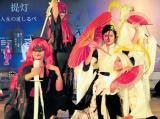
An array of Japanese cultural events and stalls offering delicacies from that nation were some of the highlights of the 12th edition of Japan Habba that was held at the Jnana Jyothi Auditorium on the Central College campus in the City on Sunday.

Jyunichi Kawaue, Consul and Head of the Consulate, Consulate of Japan, Bengaluru, inaugurated the annual festival that is held with the aim of promoting Indo-Japanese relations and creating an opportunity for people to know more about Japanese culture.

The theme of the day-long event this year was ‘Chouchin’- the traditional Japanese lantern which embodies festival in Japan- and these were also available for sale at the venue. The main attraction of the cultural programme was the song and dance of ‘Sawara Bayashi’ (festival song and dance of the city Sawara in Chiba prefecture near Tokyo) performed by both Japanese and Indian enthusiasts using the ‘Chouchin’.

Japanese expatriate Kazumasa Kuboki’s performance of the Kannada song ‘Prema Chandrama’ stole the show. Other highlights included a Bollywood dance by Japanese women and children, performances of Japanese songs and dances by Indians and Japanese and performances of traditional Indian classical and folk dance.

Several interesting events in the gallery also kept many visitors engaged. There was a tea ceremony demonstration where visitors could see how a traditional Japanese tea ceremony (sado) is performed and try out ‘ocha’ (green tea) and sweets. A large area was also dedicated to the ‘Yukata’ trial where people could wear the Japanese summer kimono (garment) called ‘yukata’ and take pictures.

Many were also seen writing Japanese letters (kanji) in calligraphy style. Other popular attractions included a traditional Japanese toy corner and display of crafts like ‘origami’, ‘kirigami’ and ‘Ikebana’.

There were a few food and refreshment stalls as well where people were seen savouring some authentic Japanese cuisine set out by restaurants in the City, besides Indian snacks. In all, the event offered a good insight into Japanese culture and traditions and an enjoyable day out.

The event was organised by the recently formed Japan Habba Trust. Prof K N Ninge Gowda, Registrar (Evaluation), Bangalore University, presided over the programme. The guests of honour on the occasion were Yoichi Yasui, chairman, Japanese Association of Bangalore and P N Karanth, honorary secretary, Indo-Japanese Chamber of Commerce and Industry-Karnataka.

source: http://www.deccanherald.com / Deccan Herald / Home> City / DHNS – Bengaluru, February 22nd, 2016

London-based Bengaluru girl gets highest score in Mensa test

Saanya Verma, 11, the youngest to get the maximum possible score of 162 in Mensa IQ test, with parents

Bengaluru:

When Saanya Verma took the Mensa IQ challenge, her aim was to win a bet of 10 pounds with her father. The 11-year-old from Bengaluru went on to crack the toughest test and bag the maximum score of 162.

 People of all age groups participate in this IQ competition; it can be taken by people over the age of 10 and half years.
Her mother Sunita Verma said Saanya has always been eager to take part in competitive exams. She had challenged her father Sunil Verma of cracking the Mensa IQ test to get 10 pounds, she recalled.

Saanya, who was born in Bengaluru, is a class VII student in London. Sunita, an HR professional, and Sunil, a banker, shifted to London a decade ago. “I want to participate in as many competitions as possible,” said an elated Saanya.

“Saanya has won public speaking, robotics and many other competitions at the school level. She is gearing up for a regional-level French spelling competition in London. I think very few children have cracked the test in the world,” Sunita added.

source: http://www.timesofindia.indiatimes.com / The Times of India / News Home> City> Bangalore / Pavan M V,  TNN / February 19th, 2016

Artist honoured with award

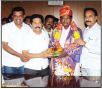
Artist Basavaraj S. Musavalagi being presented the Dhrushya Bhushana Award in Kalaburagi on Friday. —Photo: Arun Kulkarni

Artist Basavaraj S. Musavalagi was presented the Dhrushya Bhushana Award instituted by the Ideal Fine Arts Trust here on Friday.

The award, carrying a purse of Rs. 10,000, a commendation certificate and a shawl was presented to Mr. Musavalagi by the former Vice-Chancellor of Karnataka Law University J.S. Patil. The former chairman of the Karnataka Sahitya Academy Giraddi govindaraj, art critic K.V. Subramanyam, Veeranna Dande and senior artist and the former chairman of the Karnataka Lalitkala Academy V.G. Andani were present. Mr. Musavalagi, who is dean at the Government Dhrusya Kala Mahavidyalaya in Mysuru, popularly known as KAVA, has exhibited his works in different parts of the country and many of his works adorn the walls of prestigious museums, corporate offices and private collectors.

He is an alumnus of MMK Fine Arts College in Kalaburagi.

Prof. Patil said that it was misnomer to call the Hyderabad Karnataka region as backward as it had produced artists, legal luminaries and experts in many fields.

The autobiography of Dr. Andani was released by Dr. Giraddi Govindaraj.

source: http://www.thehindu.com / The Hindu / Home> National> Karnataka / by Special Correspondent / Kalaburagi – February 20th, 2016

Pages from History : South Indian Coinage

by Prof. A.V. Narasimha Murthy, former Head, Department of Ancient History & Archaeology, University of Mysore

I had the good fortune of serving the Numismatic Society of India, Varanasi, as its President, Secretary and Editor. I used to attend the annual conferences of this Society regularly. I once noticed that scholars attending the Varanasi Conference from South India could be counted on finger tips. The reason, I learnt, was that North India was very far and travel would be difficult and many scholars suggested ‘Why not a South Indian Coin (Numismatic) Society be started?’ It was a good suggestion and I contacted Dr. R. Krishnamurthy, Editor of Dinamalar (Tamil Daily) from Chennai and he welcomed the idea but told me that his business as the Editor of a Daily would not allow him to devote full time and energy for this. But he hastened to add, ‘If you can take that responsibility, my full support to you is there.’

Prof. K.V. Raman of Chennai gave me his support. The Head of the publication of New Era, Dr. Srinivasan Srinivasan agreed to print and publish the Journal of the Society on the condition ‘I should be its Editor.’ I agreed and South Indian Numismatic Society came into existence in 1990. So far it has conducted 26 conferences at different centres in Karnataka, Andhra, Tamil Nadu, Kerala. This time it met at Thiruvananthapuram in Jan. 2016. About 150 Numismatists attended.

It was our good fortune that it was hosted by the Centre for Heritage Studies under the Cultural Affairs Department of Kerala. K.C. Joseph, Minister for Rural Development, Culture and Planning, who inaugurated the conference, extended full cooperation to this conference which was a success.

There was a time when barter was the system of trade. People realised its limitation and began using coins. Coins as such have not been noticed in the Indus Valley Culture. However, Rig Veda mentions coins like Nishka, Rukma, Khadi, in the sense of coins. But actually Nishka means a necklace and hence, it has been taken as a necklace made of gold coins (kasinasara). Anyway, that is the earliest coin of our country.

South India had a period which is generally referred to as Sangam age and it was considered as a literary imagination or even bunkum. Suddenly, Dinamalar Krishnamurthy discovered a coin belonging to a Sangam King called Peruvalathi. For the present, this is considered to be the earliest coin of South India. Barring this, the Satavahana (Andhra) coins are the earliest coins of Deccan and South India.

However, we have had uninscribed punch marked coins all over the country including South India and Karnataka. These silver coins had 5 symbols punched on them and one of them represented the government or the king. At this time, Roman merchants came to South India and gave their gold and silver coins and purchased our spices, especially black pepper, which was considered as an antidote for malaria. Thus the large number of Roman coins gave an impetus for the minting of coins in South India.

Kadambas of Banavasi are considered to the actual inaugurators of coinage in Karnataka. They issued what are called Padmatanka coins. A Padmatanka is a gold piece which has a central punch of a lotus or Padma with some symbols and letters like ‘Sri’ with or without the name of the issuer. The Pallavas of Kanchi issued their own coins in gold and copper. This system was continued by the Cholas of Thanjavur. They minted the portrayal of the king with Nagari or Tamil legends. Chola coins have been discovered in plenty as to fill up them, in gunny bags. In Andhra area, Vishnukundins minted coins. In Karnataka, the Chalukyas minted coins and their most popular coin is called Varaha. This word survives even today in traditional parlance. In fact, the coin name Varaha is a contribution of Karnataka in general and that of the Chalukyas in particular.

The Western Gangas of Talakad minted gold and copper coins with elephant as the important symbol. Unfortunately, Rashtrakuta coins have not been discovered in plenty. Later, Chalukya coins have been found in plenty. The Hoysalas minted coins in gold and copper. Vishnuvardhana minted coins with lion and the legend Talakadugonda symbolising the defeat of the Cholas. One interesting coin is the one which has a portrait of Saint Ramanujacharya. The Sevunas or the Yadava coins include those of Bhillama, Singhana and Ramachandra.

Kings of Vijayanagara introduced innovation in coinage. It is not only a golden age but a golden period for Karnataka coinage. Their coinage has been praised by foreign travellers also. They introduced legends in Kannada and Nagari. The most important coin of Krishnadevaraya are the coins representing Lord Venkateswara of Tirumala and Sri Krishna holding a lump of butter in his hands. Krishnadevaraya performed Kanakabhisheka to Balaji of Tirupati by minting gold coins which had the representation of Venkateswara with Sridevi and Bhudevi and his name in Kannada or Nagari. Nayakas of Madura imitated the coinage of Vijayanagara. Their coins contain legends in Kannada and Tamil.

We may turn our attention to the coinage of Muslim kings — the Bahamani dynasty, Adil Shahi dynasty and Barid Shahi Sultans. They minted coins with legends in Arabic and Persian on both sides. Hyder Ali and Tipu Sultan occupy an important place in Karnataka history. Tipu’s innovation in coinage is amazing. He established seventeen mints in different parts of South India and minted coins in gold, silver and copper. He gave each coin a name after the Islamic Saints. His gold coins contain the Persian legend ‘The religion of Ahmad is illumined in the world by the victory of Hyder.’ The reverse has the legend ‘He is the Sultan, the unique, the just, the third of Bahari, cyclic year Azal 2.’

The Wadiyars of Mysore (now Mysuru) began issuing coins with legends. The representation of Hindu Gods by Krishnaraja Wadiyar is unique. They also minted coins with portrayals of lion and elephant with legends in Roman, Kannada and Persian. Once the British took over, they began to follow the British coinage. After independence, the entire country, including South India, is following the system which we are now seeing. Thus, South India followed a unique system of coinage which has a history of over 2,000 years.

source: http://www.starofmysore.com / Star of Mysore / Home> Feature Articles / February 21st, 2016

MCC greets Singapore-Bound Pournamika Leader

Mysuru :

MLA M.K. Somashekar, Mayor B.L. Bhyrappa and other officials yesterday felicitated Pourakarmika leader Mara who left for Singapore.

PournamikaBF20feb2016

Somashekar, speaking on the occasion, lauded the role of Pourakarmikas in Mysuru being named ‘Cleanest City in India’ for second time in a row and added that all efforts would be made to provide them with benefits. Corporators Sunil Kumar and J.S. Jagadish and others were present.

source: http://www.starofmysore.com / Star of Mysore / Home> General News / February 19th, 2016

From Child Artiste to Woman Activist …

Her journey towards ‘Swach’ Bharat had begun before Modi’s Mission

From Reel life to Real lIfe: Rekha during one of her lec-dems at an apartment in city.

Giving up was never an option for this ebullient woman, who was a child actor once and was known by the name of Baby Rekha. She has acted in more than 70 films in Kannada, Tamil and Telugu like Bhakta Siriyala, Tulasi Dalam, Madhura Sangama, Simhada Mari Sainya to name a few.

by Sujata Rajpal

Long before our Prime Minister Narendra Modi’s Swachh Bharat Mission was launched across India, a woman in Mysuru had already started working towards it slowly and steadily. Unaware of Modi’s plan, she had named her organisation SWACH (Segregation of Waste And Composting at Home).

Started in 2013 as a one-woman army, Rekha Rohit visits people’s houses, ladies clubs and apartment complexes (on invitation, of course) to educate residents on how to manage household wastes. Apart from organising awareness sessions on cleanliness, Rekha also trains people on how to segregate waste in various categories and disposing it off accordingly. Besides segregation of waste, she also teaches children and destitute women how to make paper bags.

“I got inclined towards this cause many years ago when I used to travel a lot by train taking my children for various table tennis tournaments across the country. The second class compartments were an eyesore. Dirty wash-rooms, trash strewn all over, passengers spitting anywhere — it was stink and filth all around on the platforms and stations. That instigated me to create awareness about the need for better civic sense,” says Rekha.

Why people in India can’t treat the public property just the way they regard their houses? Is it the lack of civic sense or plain disregard towards one’s surroundings? There is nothing wrong with people but obviously something is not right with the system. Indians lack civic sense only on their motherland. When they go abroad, like everyone else there, they dutifully throw trash in the trash bins and in the absence of a trash bin in the vicinity, they save the wrappers of chips and used paper napkins in the outside pocket of their bag until they can spot a dustbin for depositing the waste where it rightfully belongs. But the moment they land on Indian soil, there is total reversal of behaviour. The civic sense goes for a walk in the woods and these very people litter everywhere.

Come to think of it, each household adds 365 plastic bags to the total waste. Multiply 365 by the number of households in Mysuru and you will be shocked by the amount of waste that only one Tier-2 city is producing. Can such a huge quantity of waste be decomposed naturally?

How is the response to your campaign? I am curious to know.

“When I started, the response used to be very disappointing; women would come up with puerile reasons for not segregating the waste like there is no place in the house to keep two dustbins, the maid servant doesn’t know how to segregate the waste etc. There were days when I used to cry because people shrugged me off wherever I went.”

Despite the cold response, Rekha stayed steadfast in her mission. “The response is much better now, people are aware and understand how important it is to reduce the total amount of waste that we produce,” Rekha says with a glint of hope in her eyes.

She received a lot of encouragement from Dr. M.R. Ravi, former MCC Commissioner, who advised her to continue in her mission despite innumerable road-blocks.

“What I am doing is a very tiny step. If the government sees the waste management as a mammoth problem in future then there is only one solution. Make it mandatory to segregate trash into wet and dry categories, the way it is done in the developed countries. Don’t you see now two-wheeler riders are wearing helmets because it is either wear helmet or pay fine,” says the woman with a contagious smile.

Rekha is now ably supported by K. Sowmya (Gynaecologist and Assistant Professor at JSS Hospital) and K.P. Ganga (Vice-Principal at Queens Institute for Fashion Designing) and, loads of well-wishers from Rotary East who were her backbone in the initial stage of bringing SWACH into action. The organisation has a team of 15 volunteers but many more hands are required to spread the message.

Rekha believes in driving this mission through children. She regularly conducts awareness sessions on cleanliness and waste management for the students of Kalalavadi School in rural Mysuru. If the initiative is taken through children, it is always long lasting. Now children of Kalalavadi School ensure that their village is kept clean.

Giving up was never an option for this ebullient woman who was a child actor once and was known by the name of Baby Rekha. She has acted in more than 70 films in Kannada, Tamil and Telugu. To name a few Bhakta Siriyala, Tulasi Dalam, Madhura Sangama, Simhada Mari Sainya.

“I take it as my duty and contribution to the society. Even if people don’t respond, I feel satisfied that I am doing my tiny bit to make this world a better place for the coming generation,” says Rekha humbly.

“I am nothing without my family,” she says when asked about the family support. “The name SWACH was suggested by my husband,” she says shyly.

Rekha and R. Rohit couple, residents of Chamundipuram, is blessed with two lovely daughters — Ridhi Rohit, who is studying Physiotherapy at JSS Institute and Ruthu Rohit is in 9th at Vidyavardhaka school.

source: http://www.starofmysore.com / Star of Mysore / Home> Feature Articles / February 19th, 2016