Veteran Yakshagana artiste Arate Manjunatha passed away at his house in Gavali village after prolonged illness near Kundapur on Friday. He was 73. He is survived by his wife, a son and two daughters.
Majunatha was regarded as one of the finest artistes donning the roles of women characters in both Tenku and Badagu thittu schools of Yakshagana. He was a natural at these roles. Besides a good voice, he was a graceful dancer, known for his acting prowess and powerful dialogue delivery.
Born in Gulvady village of Kundapur taluk in 1942, his formal education ended at class four. He was attracted to Yakshagana at a young age of 13 years and learnt its basics under the tutelage of Matapady Srinivas Nayak and Veerabhadra Nayak.
In a career spanning five and a half decades, he worked in various Yakshagana melas including Saligrama, Mandarti, Maranakatte, Kamalashile, Keremane, Rajarajeshwari, Surathkal, Mulki, Kollur, Pollali and Kundavu melas.
He had deep knowledge of women characters coming in the Puranas and epics. He donned the roles of women characters such as Ambe, Damayanti, Shashiprabhe, Dakshayini, Chandramati, Subhadra, Sita, Meenakshi, Mohini, Prabhavati, Sridevi with aplomb. He also donned the role of male characters including Krishna and Ashwathama.
As founder of Ganesha Pravasi Yakshagana Samsthe, he recognised the services of senior Yakshagana artistes and provided guidance to junior Yakshagana artistes.
He also served as the member of Karnataka Janapada and Yakshagana Academy. Several awards came in search of this versatile artiste including Karnataka Rajya Prashasti, Karnataka Sahitya Parishath Prashasti, B.V. Acharya Award, Bhojappa Suvarna Award and Ramavittala Award.
Vinay Kumar Sorake, Urban Development Minister, and the Yakshagana Kalaranga organisation, have condoled the death of Manjunatha.
source: http://www.thehindu.com / The Hindu / Home> News> National> Karnataka / by Ganesh Prabhu / Udupi – January 30th, 2015
With a space to exhibit their works. Photo: Sampath Kumar. G. P / The Hindu
Her passion for art led Bindu P.V. to quit the IT industry and start an art gallery on her terrace
Bindu P.V. is an artist. But, that’s not how she started.
Her whole family was into the IT industry and she too mindlessly followed that trail till she realised that she wanted to do something different.
Her passion for the canvas, oils and paints led her to take up a crash course in painting. She started with three traditional arts forms — Mysore paintings, Tanjore paintings and traditional mural art from Kerala.
“Once I started with the traditional arts I met a girl who was into abstract paintings. I realised that in traditional art you tend to copy a set pattern, even when it comes to designs and themes. Everyone keeps doing the same thing. With her I learnt to explore more about abstract art,” says Bindu, who then adds that she went on to complete her MFA.
“I learnt that I work better with single or double tones. I seem to have a difficulty with more colours. Though I have quit the IT industry, it does not seem to leave me as most of my themes are IT-related,” she laughs and adds that it was during this time that she came in contact with many other artists.
“One common thing that I found was that most of them struggled for gallery space, or to sell their art. I also met a physically challenged girl, struggling to sell her works. I tried to help her and realised how difficult it was to sell her works, especially when one can not afford either to exhibit in a gallery or even have access to social networking sites. Then we both tried to sell her work at Chitra Sante and found that art works are sold for a meagre Rs. 100. That was shocking and heartbreaking to see as some artists work anywhere from three hours to a month on each work. This struggle is what triggered off the birth of my art gallery — White Sanctum Art Gallery in Dodda Anekundi.”
She has built this gallery on the terrace of her home with ample space for art shows and to conduct workshops.
“It’s a platform to help popularise art by conducting workshops and introducing the common man to various kinds of arts, and to host exhibitions of artists who have absolutely no backing.”
The gallery offers a 1,200 sq. ft. area of exhibition space. “It’s a very simple gallery, which aims to provide an equal platform for any artist. The paintings here are priced at Rs. 4,000 and go up to over a lakh. We have works of budding artists and Academy Award winners too.”
Right from oil paintings to water colours, Bindu promises you’ll get something that will suit your style and budget.
“The art is priced like this so that even the middle class can afford it.” White Sanctum Art gallery was inaugurated on January 18.
“We have enquiries for workshops, especially from people from working in the IT sector. So we plan to start with water-colour workshops and then take one step at a time.”
Bindu, who has had several solo shows in Baroda, Delhi, and Kerala, now plans to exhibit her works here too.
She has also done a thesis on Ravi Varma’s life and an analysis on his work and its effect on social change, specially in Kerala.
“His works have brought a silent change in society — be it in the caste system, or in education. His works speak volumes about changes one should expect in a society. Like he would decpict a boy reading a newspaper and so spread the idea of literacy in Kerala. Artists were not allowed to sign their works and he started signing his works. My thesis focussed on the effect of his works on the minds of ordinary people,” she adds.
She talks of upsetting it is, the way society still look at artists.
“Films depict them as drug addicts or dressed shabbily. Stop treating artists as good-for-nothing kind of people. We are not prodigals who have lost our way. We too have opportunities now with animation and art shows and can generate revenue and support ourselves through our works. Artists are ordinary people who just think extraordinarily.”
White Sanctum currently has a group show, which will be on till February 15 from 11 a.m. to 8 p.m.
For details call 65687209 or email bindu.vee@gmail.com
source: http://www.thehindu.com / The Hindu / Home> Features> Friday Review> Art / by Shilpa Sebastian R / January 28th, 2015
Expo of clocks open to public till Jan.26 between 9 am and 4 pm
Mysuru :
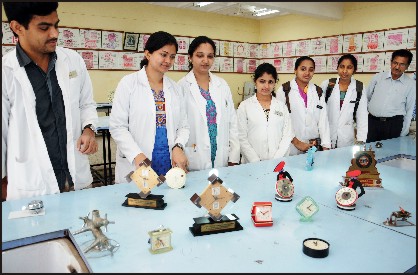
The Department of Anatomy, JSS Medical College, Shivarathreeshwaranagar, had organised a presentation on ‘Time Management’ by M.S. Chandrashekar Iyer, city’s well-known horologist, at its premises this morning.
During his presentation, Chandrashekar Iyer explained about mechanism and accuracy of various types of clocks — digital, mechanical, analog and atomic clocks.Dr. N.M. Shama Sundar, Professor and Head, Department of Anatomy, JSS Medical College, Mysuru, speaking to Star of Mysore, said, “Chandrashekar Iyer’s Grandfather K.S. Lakshmana Iyer, was the first person to start a watch repair shop in Mysuru. The shop was started under the name ‘Lakshmana Iyer Watch Company’ on Ashoka Road in city in the year 1912.”
He further said that Chandrashekar Iyer started repairing watches at the age of 10 years and has over 70 years of experience in repairing watches.
Speaking about the purpose of conducting the presentation, Shama Sundar said that it was organised to make the Medical Students understand the value of time. He noted that time management is very important for doctors because during emergencies, even seconds matter in saving the life of patients.
On the occasion, an exhibition featuring wrist watches, wall clocks, alarm clocks, time pieces, cells, batteries, engravers, programmable time switches, bells, sirens, cardiac pacemakers, digital diaries, thermometers, hygrometers, barometers, mobile phones, calculators, lactometers, digital calendars, telephones and other time-related instruments, was inaugurated by Chandrashekar Iyer at the College’s Histology Lab.
The exhibition will be open till Jan.26 between 9 am and 4 pm. High School students can attend the exhibition.
The exhibition is dedicated to late Dr. K.H. Basavaraj, Senior Professor of Dermatology, JSS Hospital, Mysuru.
source: http://www.starofmysore.com / Star of Mysore / Home> General News / Saturday, January 24th, 2015
Okinawa Karate-Do Shorin Ryu Shorin Kai Association India had organised 12th Shorin Kai National Karate Championship-2015 on Jan. 10 and 11 at Nanjaraja Bahaddur Choultry in city. In all, 643 Karatekas from Kerala, Tamil Nadu, Andhra Pradesh and different parts of Karnataka (Begaluru, Mysuru, Hassan districts participated.
The chief referees of the tournament were Sensei E. S. Kumar (Black Belt 7th Dan), Renshi. N. Santana Krishnan (Referee – KAI, Judge- AKF) and Sensei Sudhakar (Black Belt 5th Dan) from Chennai.
The tournament was held for three separate groups — white and yellow belt, Blue, Purple and green belts and Brown and Black belts.
Bangalore team won the highest number of medals in white and yellow belt categories and also won the white and yellow belt trophy.
The overall championship was won by Mysuru team and the first runners of the tournament were H.D Kote and Nanjangud team under the leadership of Sensei B. Rajesh and the second runners were Periyapatna and Kudligi team headed by Sempai S. Eshwar, according to a press release from the tournament organiser Shihan S. Sunil Kumar.
source: http://www.starofmysore.com / Star of Mysore / Home> Sports News / January 23rd, 2015
‘We should ask ourselves what we have done to attract youngsters to history’
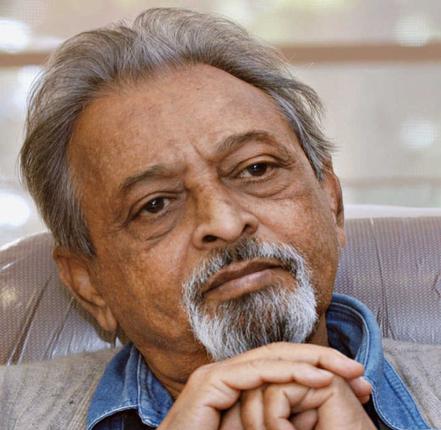
80-year-old S. Settar has spent half a century researching Indian archaeology, art history, history of religions and philosophy and classical literature.
There are no signs of fatigue or ennui, as he continues to dig deep into history to come up with new gems, with his new area of focus being history of language, script and literature.
As his friends, admirers and students get together to celebrate his life and work on January 29, Prof. Settar is himself busy with three ambitious projects that he hopes will make history accessible to young readers.
The eminent historian, who has held several teaching and non-teaching posts, including Chairman of the Indian Council of Historical Research, and Emeritus Professor at National Institute of Advanced Studies (NIAS) at present, spoke to The Hindu .
Excerpts:
Q. What motivates you to keep at research?
A. There is so much wonderful source material that interests and excites me. I also feel ashamed that it is not being explored. Our conventional ways of reading history has made us ignore much of the rich material.
What historical material have we missed?
We have, for instance, not explored literary classics as tools of reading history and culture, beyond their literary value. The history of the evolution of language and script is another fascinating area that has largely remained unexplored.
What should be the focus of historians?
We should stop advising others and complaining about young people not being interested in history. Instead, we should ask ourselves what we have done to attract the younger generation to history. Much has been done, for example, to make Shakespeare or Socrates accessible to the young, which we have not done.
source: http://www.thehindu.com / The Hindu / Home> News> Cities> Bengaluru / by Bageshree S / Bengaluru – January 29th, 2015
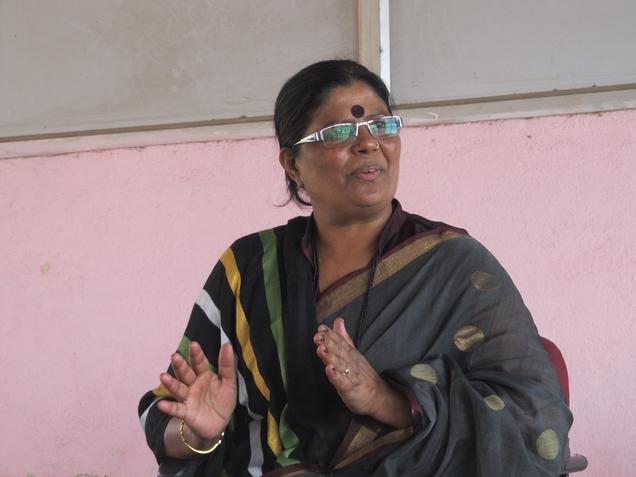
Jalaja Naik, the Chairperson, Karnataka Tanda Development Corporation (KTDC) addressing presspersons in Vijayapura on Tuesday. / The Hindu
Admitting that there was a high incidence of migration for better livelihoods in the Lambani community, Jalaja Naik, Chairperson, Karnataka Tanda Development Corporation (KTDC), has said that the Corporation has decided to encourage self-employment programmes for people of the community to prevent their migration.
Addressing presspersons here on Tuesday, she said that the Corporation was contemplating to give cows to the people of the community so they could involve in dairy activity.
She said dairy farming would bring additional revenue to families, which could prevent them from migrating to other States for earning a livelihood.
Lamenting that the traditional art of the Lambani community has not gained enough popularity in handicraft sector, Ms. Naik said that the Corporation would like to set up at least 12 handicraft centres to promote cottage industry among Lambanis.
She said, “These centres would purchase the handicraft materials from the community and sell to buyers. This will have a twin objective. While it brings extra money to the community, it also popularises traditional arts”.
Ms. Naik said that since the community has many women who have not completed SSLC, the Corporation would offer tailoring training to them to help them become self-employed.
“During the training, the women will be given a stipend of Rs. 1,500. A decision will later be taken on supplying sewing machines as it needs government approval”, she said.
She said that the government has allocated an amount of Rs. 56 crore annual budget to the Corporation, and said that she has urged the Chief Minister, Siddaramaiah to augment to at least Rs. 200 in the coming budget. eom
source: http://www.thehindu.com / The Hindu / Home> News> National> Karnataka / by Firoz Rozindar / Vijayapura – January 28th, 2015
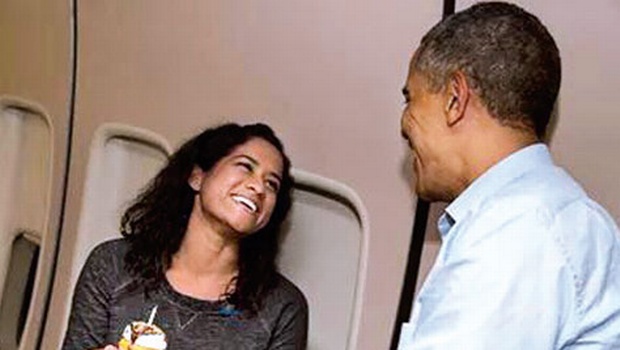
A file phot of Shilpa Hegde, senior assistant staff secretary in the White House with President Barack Obama
Mangaluru :
The reach of Mangaluru origin people has touched the White House, the official residence and principal workplace of the President of the United States of America. Shilpa Hegde, an Indian American, is now senior assistant staff secretary in President Barack Obama’s office.
She belongs to Belinje family of Perdoor, an obscure hilly town in Udupi taluk. Her parents Vidya and Sadananda Hegde are well respected Medical practitioners in the US. Shilpa, however, had joined politics and worked in Obama’s campaign of in 2008 in North Carolina. In 2009, she worked as a research analyst at Atlas project and in the following year, she was appointed as the assistant director of the White House. She was later promoted as the senior assistant staff secretary there.
“Her entire family is in the medical field. Her father Sadananda Hegde is a well-known cardiologist in Lumberton town situated on Highway 99 and mother looks after the clinic. Her brother Akhil Hegde specialises in Nephrology in the US. We still are wondering what made Shilpa take up Law when she joined the Democratic party and became the field organiser of campaign in North Carolina during the first run of Obama to the office. She was just 18 then. Later, when she was appointed at the White House she had to give up her Law education. The university there allowed her, but she still have to attend the university if she wanted to complete her Law graduation,” her aunt Dr B Vasanthi Shetty told Express.
Her uncle Dr Subhashchandra Shetty said, “She loves Tulu language and I am sure she will learn Tulu one day. She still visits her ancestral house in Perdoor and loves coastal food.”
source: http://www.newindianexpress.com / The New Indian Express / Home> States> Karnataka / by Express News Service / January 28th, 2015
Researchers at Indian Institute of Science (IISc) have developed a novel, controllable, extremely tiny vehicle to safely deliver genes into biological cells. The new vehicle, derived from a ‘lipopolymer’, is an improvement on known vehicles; it is more efficient and less toxic. Its unique structure also allows researchers to control the timing and site of gene delivery. Delivering specific genes inside cells to supplement missing and faulty genes or to silence disease-causing genes is a powerful tool in gene therapy.
Lipopolymers , as the name indicates, contain complex assemblies of fats and repeating chemical compounds. Prof Santanu Bhattacharya’s (chairman, Department of Organic Chemistry, IISc) group created the new vehicle by attaching ferrocene, a metallic compound that can switch between two chemical states, to a branched polyethylenimine (BPEI). This was then mixed with a ‘helper molecule’ – a naturally occurring lipid called 1,2-dioleoyl phosphatidyl ethanolamine (DOPE). Controlling ferrocene’s state allowed the researchers to control the vector’s structure, and in turn gene delivery. When they oxidised ferrocene, the vector’s structure became loosely packed and gene uptake by cells dropped dramatically. When they reduced ferrocenium by adding ascorbic acid (Vitamin C) to the cell culture, the vector became more compact and gene uptake by cells retained its original efficacy. This type of controlled ‘switch’ would allow researchers to pinpoint which population of cells should take up the desired gene, and when, by tweaking ferrocene’s oxidation state as needed.
“We could potentially deliver any therapeutic gene or molecule to the desired population of cells siRNA to silence mutations or p53 to stimulate cell death in cancer cells, for example,” explained Krishan Kumar and V Gururaja, IISc PhD students and joint first authors of the upcoming Journal of Materials Chemistry B paper.
Modified viruses are the most popular vectors, but they are not only expensive but also highly toxic to living cells. Recently, non-viral vectors have become popular, particularly lipopolymers. Lipopolymers are more stable, less harmful and cheaper to scale up than viral vectors. Such vectors may also be useful for gene transfer in agriculture or veterinary science, said Santanu Bhattacharya, senior author of the paper.
source: http://www.bangaloremirror.com / Bangalore Mirror / Home> Bangalore> Others / Bangalore Mirror Bureau / January 27th, 2015
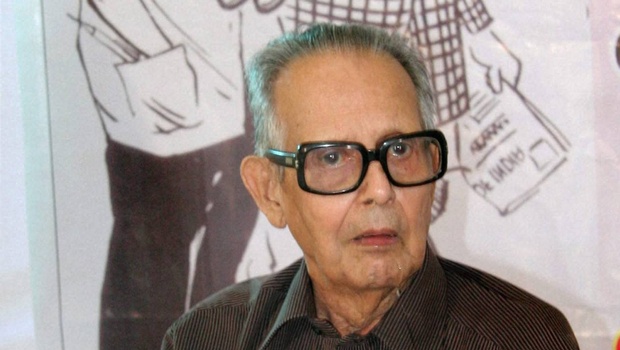
A story in the media goes that one day a few decades ago, The Times Of India (ToI) cartoonist and creator of The Common Man, R.K. Laxman, retired. The following day, the legend’s cartoon was not to be found as readers rubbed their disbelieving eyes over their morning cuppa.
Sustained letters and calls to the ToI offices from the loyal and casual readers finally led to Laxman being dragged out of retirement and reinstating the uncommon, signature cartoons to their dedicated slot on Page 1.
That was the command Laxman’s Common Man in “You Said It” pocket cartoons held over masses, having regaled several generations of ToI readers in Mumbai and elsewhere in the country, for decades.
ToI management rewarded Laxman with lifetime employment, while his son Srinivas Laxman, considered India’s only journalist specializing in space reporting, retired in 2009.
“He continued as a regular fulltime employee and drew his salary till the end…” Laxman’s wife Kamala told IANS.
After a rich life, the creator of the man with a bushy moustache, tufts of hair on the rim of a balding head and perenially donning a chequered coat with patch-work – The Common Man, immortalised as a statue in front of an educational institute in Pune, died Monday at the age of 94.
Born Oct 24, 1921, in Mysore, Rasipuram Krishnaswamy Iyer Laxman and his brother R.K. Narayan, who later became a leading Indian English writer – besides four other brothers – had an ordinary childhood, as evidenced from Narayan’s books, “The Malgudi Days”.
Laxman loved drawing, painting, and even writing a bit, grabbed all opportunities to practice his talents – be they books, tables, floors or walls.
At an early age, he lost his father, a school headmaster, his elder brothers took up the responsibility for managing the house while Laxman completed schooling.
He applied to Mumbai’s famed Sir J.J. School of Arts, but was rejected – his drawings failed the high expectations of the renowned institution.
Disappointed but not disheartened, Laxman joined Maharaja College, Mysore, and earned his B.A. degree from the University of Mysore, and came to Mumbai for a living.
Alongside academics, he pursued drawing, first with freelance contributions to local publications, ‘Swarajya’, ‘Swatantra’, and later sketched cartoons for brother R.K. Narayan’s stories published in ‘The Hindu’ and other newspapers.
His earliest works with Mumbai media were a stint with the defunct Blitz, and then to the leading newspaper of that era, The Free Press Journal, as a staff cartoonist.
At that time, Laxman’s colleague was one soft-spoken gent, Bal Thackeray – who later became a commanding political force in Maharashtra – and they remained dear friends till Thackeray’s death Nov 17, 2012.
Laxman later got an offer with the ToI – which proved to be the turning point in his career and made him a living legend.
As the ToI’s cartoonist, Laxman had a field day – always taking a bit cynical, humorous, and hapless, view of the country rising from the ruins of the so-called jewel in the crown of the British Empire into a force to reckon with in the global arena – through the eyes of The Common Man, his vocational trademark.
Laxman had an uncanny knack of caricaturing all humans – politicians, film stars, celebs or criminals – highlighting some or the other of their features and characteristics, which bestowed upon them an instant identity.
The antics of all his powerful subjects – who became equal under Laxman’s brutal pen and brush – were reduced to ordinary jokes or public buffoonery.
It was the bald head of the late prime minister Jawaharlal Nehru, who was rarely seen without the Gandhi cap, while it was the long pointed nose and narrow eyes for his daughter, Indira Gandhi.
Rajiv Gandhi was depicted as a confused, cherubic baby-faced youth, while younger brother Sanjay Gandhi was the naughty, enfant terrible of Indian politics, and Morarji Desai was one tall thin, grim man, standing ramrod, both in Laxman’s creations and in real life.
Who can forget the short and roly-poly perpetually grinning image of former deputy prime minister Jagjivan Ram or the potbellied S.B. Chavan with a stern, headmaster expression always on.
Once Laxman said at an informal gathering that politicians of every genre used to approach him and begged of him to make their caricatures, that would make them famous and ‘noticeable’.
But, he would politely shoo them off, saying ‘when your time comes, I will make you a cartoon…’ – and mercilessly chronicled all the good, sad, grim and ugly historic events during his more than six decades of caricaturing.
His severe criticism of successive governments at the states and the centre, always highlighting their glaring acts of omission and commission in his typical wry humour, earned him fans and admirers even among his worst detractors.
Later, his works were compiled into a whopping nine volumes of pocket cartoons and a book of select political cartoons, “The Eloquent Brush” featuring his best commentaries from the Nehru to Rajiv Gandhi eras.
Laxman was invited by various organisations and governments to travel around and write and illustrate his memoirs – in the form of short stories or travelogues – as he did for Madhya Pradesh, West Bengal and also Australia.
However, the government mandarins and politicians whom he slaughtered with his pen and brush, proved a forgiving lot when they honoured him with top civilian awards like Padma Shri and Padma Bhushan, and on the international stage, he bagged the Magsaysay Award.
Laxman also wrote a few novels, many short stories and directed a movie “Wagle Ki Duniya” for the national television, his autobiography “The Tunnel Of Time” and later, a tele-serial based on his works was also launched.
Doted by his writer wife Kamala, son Srinivas, and daughter-in-law Usha, Laxman preferred to discard his home in the posh Malabar Hill, south Mumbai, to live in the quiet environs of Pune, just a couple of hours’ drive away.
source: http://www.newindianexpress.com / The New Indian Express / Home> Nation / by IANS / January 27th, 2015