Feeding America, a unique food bank initiative that has redefined food donation and feeding the underprivileged, has been replicated in Bangalore.
Bangalore Food Bank (BFB) was launched in the city on Thursday to coincide with the World Food Day. Supported by Griffith Laboratories Private Ltd and a handful of individuals, the initiative kicked off with Griffith Laboratories making the first donation of ready-to- cook ‘khichdhi’ packets to feed 5,000 people through its NGO feeding partners.
According to BFB director (operations) Meher S Dasondi, food banking is a system that moves food from donors to the needy and is a non-profit distribution enterprise that serves the community through institutional feeding programmes. A food bank acquires donated food in the form of food grains, pulses, oils spices etc, and works as a facilitator between those who have surplus and those who need food. Only dry food can be donated as cooked food has limited shelf life.
Nearly 28 NGOs have partnered with BFB including Auto Raja’s Home of Hope, Mitra Jyothi School for the Blind, and Vathsala Charitable Trust. Individuals and firms interested in food donation can contact Dasondi on 9538035252.
source: http://www.bangaloremirror.com / Bangalore Mirror / Home> Bangalore> Others / Bangalore Mirror Bureau / October 17th, 2014
Sukkanya Ramgopal is India’s first woman ghatam artiste.She learnt from the legendary Vikku Vinayakaram who gave India its first ‘Ghatam Grammy’.She’s the first to create the unique concept of Ghata Tharang playing six ghatams at the same time.And the first to set up Bangalore’s all-woman Carnatic ensemble.
Sukkanya Ramgopal
Sukkanya,who has been invited to perform at the prestigious Madras Music Academy festival with the ensemble the ultimate accolade in the Carnatic domain shares her thoughts on women,ghatam and Carnatic music.Excerpts from an interview:
Tell us about the place of the ghatam in Carnatic music today.
Her guru Vikku Vinayakaram
Things changed for the ghatam after Vikku Vinayakaram.He has given it a place no one has,got it the right attention.Vikku has also made the ghatam internationally popular he’s played with an African ensemble that won him the Grammy,the only ghatam artiste to do so.Thanks to him,ghatam artistes can travel abroad today,which was once unthinkable.Ghatam is number five in Carnatic music vocals,violin,mridangan,khanjira and then ghatam.But,if it is taken more seriously than it was a decade or two ago,it means Vikku made the difference.
Why are there so few women ghatam artistes
It is very difficult to produce sounds from the ghatam.Even men find it difficult! It’s still seen as a ‘masculine’ instrument.Parents have to be convinced there is a future in the ghatam and that women and ghatam go together.
How did you get into it
I started on the violin,then learnt the mridangam.I then heard of Vikku and began to go to his concerts.I was awestruck.I asked him to take me as his student.He said,It is difficult for a girl to produce sounds on the ghatam.You are playing mridangam nicely,why not continue with that At that point,his father intervened.There is no difference between a boy and a girl for the ghatam.Teach her.She’s very hardworking. Vikku’s magic and his father’s perception of me made me his student.
And your family’s reaction
My mother was very encouraging.My father didn’t like it.He didn’t come for the first few concerts.A while later,he got interested and began accompanying me.Gradually,my entire family liked it and backed me all the way.
How do other musicians perceive you,a woman as a ghatam artiste
Generally,musicians are not very happy with women accompanists.It’s a long-held feeling and it’s still there.Even organizers are careful in engaging artistes.That’s why it becomes difficult for me to play with a stalwart like U Srinivas.And where musicians allow me to accompany them,I find the mike won’t be set right! It’s strange there is accommodation but not accommodation in entirety on stage.Shouldn’t all of us be one in a concert
How accepted do you feel in the music world
I do feel accepted.I have the highest ranking on All India Radio and musicians are comfortable with me.I perform at the Ramaseva Mandali at Chamarajpet and Seshadripuram every year.I go abroad too.This apart,I am saying the comfort factor for the woman ghatam artiste in a concert should be complete,no different from the comfort factor other artistes enjoy within the ensemble.
Is that why the all-women ensemble came about
Partly.The stage just had to be more accommodative or I had to find a way out.I found it an allwomen ensemble,the Stree Taal Tharang,was born.We found women for everything mridangam,veena,violin,morching and ghatam.While we do perform in Bangalore,performing at the forthcoming Madras Music Academy festival will be an honour.
How else did you innovate to ensure that ghatam’s up front
The most difficult thing in a Carnatic concert is to make people sit and listen to laya vinayasam.When it is the turn of the mridangam and ghatam,people walk out.I had to find a way out to make them stay,had to innovate.I brought six ghatams together and started playing melody on them at one go.Ghata Tharang is what I call it.It made a difference.People began to sit and listen.It is a first in percussion.No one plays melody on the ghatam.I had promised myself to move the ghatam from number five to number one.I am on the way to do that.Ghatam cannot and will not remain on the margins.
You are a Mathematics degree holder.How does it figure in music
Lekkachara is always fun even if it’s integral to music.What’s better than indulging in permutations and combinations to make phrases I enjoy making korvais thoroughly.
What’s your advice to students
Work hard.There is no alternative.
Do you have a woman student
Interesting you should ask.Very recently,I got my first woman student,the first in my 30 years of playing the ghatam.
Does it say something about women and ghatam
I am happy she has taken up the ghatam.But I’m aware there are very few women who do it.That’s precisely the odds.Braving that speaks for character and conviction.The impression that ghatam is masculine is very fundamental and changing it will be the challenge.
toiblr.reporter@timesgroup.com
source: http://www.mobiletoi.timesofindia.com / E-Paper / The Times of India / Home> Times of India / Prashanth G. N, TNN / August 03rd, 2009
V.K. Jagadish Babu is seen receiving the honour from University President Prof. Dr. Marco E. Grappegia during the convocation of Universita Popolare Degli Studi Di Milano.
City’s V.K. Jagadish Babu, Chairman and Managing Director (CMD) of Sankalp Group and President-Elect of CREDAI (Confederation of Real Estate Developers Association of India), Karnataka, was conferred the Degree of Honorius Causa – Doctor of Philosophy (Honorary Doctorate) in Civil Engineering for his achievements and contributions in the field of Construction Science recently by Universita Popolare Degli Studi Di Milano, Milano, Italy, a top ranking European University.
He is seen receiving the honour from University President Prof. Dr. Marco E. Grappegia during the convocation of Universita Popolare Degli Studi Di Milano.
source: http://www.starofmysore.com / Star of Mysore / Home>General News / Saturday, October 11th, 2014
Artisans from across India have set up stalls in the mela Green Mela to be held bimonthly from December
Mysore :
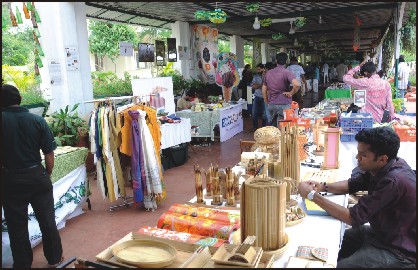
A three-day organic products fair ‘Green Mela,’ organised by The Green Hotel on Hunsur Road began at its premises here yesterday.
The mela was inaugurated by Prof.U.N.Ravikumar, who is well-known in the field of conserving lakes, rain water harvesting and sustainable development.
Speaking to SOM, Prof.Ravikumar said “If rural India has to go on a greener path, urban Indians should lead the path by showing them non-wasteful consumption methods.”
General Manager of the Hotel Mithun said, “I am thrilled by the overwhelming response by the public who are thronging the mela.” He also said that artisans from across India have set up their stalls in the mela and from December onwards the Green Hotel will conduct Green Mela bimonthly.
The products which are on display and for sale at the mela include Avocado pickles, Bamboo pens, Bamboo lamp shades, Coir pots, Natural ice-creams, Organic coffee powder from Madikeri, various types of handmade soaps, Pashmina Shawls, Silk Scarves, Singing Bowls, drumstick tambli – a special drink from coastal region which is said to have medicinal values, Audio CD’s of the songs of Adivasis from Adivasi Munnetra Sangam, Gudlur, Tamil Nadu and other items.
The major attraction at the mela is the Pottery workshop in which public can try and experience making pottery using natural clay. The pottery workshop has programmes like ‘Make your own diya’ and ‘Make your own Ganesha.’
Different varieties of organic authentic teas imported from United Kingdom are also available at the mela which include Peppermint tea, Night time tea – an organic oat flower, lavender and limeflower tea for peaceful sleep, Vanilla chai and others.
There is a very special kind of tea at the Mela called ‘Love Tea’ , which has a tagline ‘a tea to warm your heart’. It is made from organic roses, chamomile and lavender.
The mela is open for public from 11 am to 8 pm daily and will conclude on Oct. 12.
source: http://www.starofmysore.com / Star of Mysore / Home>General News / Saturday, October 11th, 2014
Forty-four year old D.K. Gopal (Left in the picture) is chosen for the prestigious Sri Kalajyothi Award of the Gayana Samaja and would receive it during the Sangeetha Sammelana on October 19. Photo: Special Arrangement / The Hindu
Even as serene Devanahalli may boast of its glamorous international airport, the modest town, located 40 kms north-east of Bangalore, is grounded with an inbuilt pride. The area’s speciality mud has helped carry forward a hoary tradition, the making of the percussion instrument ‘Ghata.’ Devanahalli’s mud is said to possess a composition most suited for pots. And Ghata-making is a 100-year-old vocation being pursued by 44-year-old D.K. Gopal, the only family in Bangalore that has hands-on contact with the clay for making the musical instrument. Nearly 60 pieces are sold in a month and exported too.
Gopal’s family belonging to the Kumbara Beedi of Maralu Baagilu in Devanahalli has always lived alongside the pot-makers of the area, but it is the bond with music that led his forefathers to lay their hands on Ghata-making. “My grand-father Munishyamappa conducted bhajans at the nearby Kumbeshwara Temple every Saturday,” recalls Gopal, who has learnt 20 varnas and 40 kritis and passed exams in music. Gopal’s family even includes violinists, vocalists, tabla-and harmonium players. “My vocal knowledge helps me immensely as we make a variety of Ghatas to suit every shruti,” he says. “My father Krishnappa had specially made a Ghata for the veteran K.S. Manjunath, and later on for Bangalore K. Venkatram too on personal requests,” says Gopal. “One of his deft creations remains showcased in the Government Museum on Kasturba Road even today,” says Gopal.
Just as Manamadurai in interior Tamil Nadu where the musical Ghatas are made, Devanahalli’s pot is a mixture of three varieties of mud gathered from in and around the three lakes of the area for the perfect blend – the Devanahalli kere’s red clay for the sheen, the Bhuvanahalli kere’s dark-toned clay for the conch-like naada, and the Venkatagiri kere’s mix of shades that not only balances the sound, but makes the Ghata strong. “While we mix the three varieties with water, it is in the singularly unique kneading with hands and foot and the addition of metals that makes it compatible for melodic tapping,” explain Gopal and his son G. Mahesh. These craftsmen tap nearly a thousand times on their “sacred pots” with special tools for the “right thickness that brings in the required shruti.” They are meticulously sun-and-shade dried, and then burnt in natural coconut-husk furnaces. It takes 25 days to make a single pot, and they cost anywhere between Rs. 850 to Rs. 2000 a piece.
Gopal and Mahesh explain that Ghata is an instrument purely made from the five elements of Nature. “We start work with a prayer to Lord Kumbeshwara. The Ghata’s resonances – Akaara, Ukaara, Makaara and Omkaara – are considered comprehensive. Most saint-poets as Basavanna, Sarvagna and Kabirdas referred to the ‘Ghata’ as a metaphor to human body in their poems,” explains Gopal.
With the international airport at Devanahalli now, furnaces for baking the pots are not allowed as the process emanates smoke. So Gopal is exploring newer technologies in controlled environment, with a marketing unit set up at Byatarayanapura.
The research
Sumana Chandrashekar, Programme Executive, India Foundation for the Arts, has done a research study on ghata. Sumana, a student of Sukanya Ramgopal says, the Devanahalli Ghata is a lighter one when compared to the Manamadurai instrument. “While both have their unique tonal effects and are equally used in Carnatic music, the Devanahalli Ghata is easier to carry and play on, while the Manamadurai pot is a heavier version that can withstand intense thumps,” she says. Actually, the technique for playing both these instruments have evolved over the years in response to the way these instruments have included their material composition, she added.
Sukanya Ramgopal. File Photo: V.V. Krishnan / The Hindu
First lady ghata player
The first girl to hold the Ghata on her lap in the world of percussion was the 12-year-old Sukanya Ramgopal, a student of the veteran Vikku Vinayakram. Originally from Tamil Nadu, the 57-year-old Bangalore-based Ghata artiste has had to boldly tackle the gender discrimination she witnessed quite often on stage. “My guru nurtured and guided me into the Vinayakram schooling, as well as helped me get used to the heavy Manamadurai Ghata. Today I take part in several percussion festivals across the globe,” she says. Sukanya’s four decade career has helped her lead an all-women ensemble, Sthree Thaal Tharang, where she handles six Ghatas at a time, making them fundamental to the concert.
The Devanahalli Ghata
My father used the Devanahalli Ghata for nearly six decades, says V. Krishna, mridangist, son of the Ghata-ace (Late) Bangalore K. Venkatram. Venkatram, who had one specially made from Krishnappa of the Devanahalli family in the early 1960s, is said to have preferred the Ghata to have an easier entry to performing on stage when there was a dearth of Ghata players and a surfeit of mridangists. Venkatram loved the Devanahalli Ghata as its not-so-thick composition produced defined modulations even with feather-soft touches. Venkatram’s percussion ensemble, Laya Vrushti too helped discover the potential of Indian percussive instruments. His deep study of the Ghata had him once showcase the exceptionally rare low-pitched beats when he accompanied Chembai Vaidyanatha Bhagavatar who had reacted in wonder to say, “This is Ghatoth Ghata.”
source: http://www.thehindu.com / The Hindu / Home> News> Cities> Bangalore / by Ranjani Govind / Bangalore – October 14th, 2014
Gandhi Jayanthi was celebrated at MYRA School of Business, Yelwal, in a befitting manner with a special Interactive Session and discussion with Will Poole, a Social Entrepreneur recently.
Will Poole, a Brown University graduate in Computer Science who Co-founded the Unitus Seed Fund (Bangalore & Seattle) in 2012 with the mission of accelerating BOP start-ups, conducted an interactive session on ‘5 ways to open a VC’s wallet and 3 ways to snap it shut’.
Will Poole inspired the young minds at MYRA to think about becoming social entrepreneurs and starting enterprises that serve the underprivileged. “5 ways to open a VC’s wallet and 3 ways to snap it shut” with a captivating title fired the people’s imagination and attracted a huge audience.
Will Poole showcased how Unitus works towards achieving sustainable and scalable impact that the world needs today. Impact investing, in general, and Unitus in particular, places financial returns on par with, if not above, social impact. However, impact investors differ with the way they approach it – “Finance First” or “Social Impact First”.
It was clear from his talk that entrepreneurs with an unrealistic or overly complex business plan; who lack a team approach and have a disproportionate focus on valuation versus fundamentals are not in his pipeline.
Later the audience shared their views on which Business ideas were great, whose business model was better, and which entrepreneur was more passionate.
The audience comprised BEML officers, Panchayat members from Mydanahalli village, Trustees, governing members, faculty, staff and students of MYRA school.
source: http://www.starofmysore.com / Star of Mysore / Home>General News / Thursday , October 09th, 2014
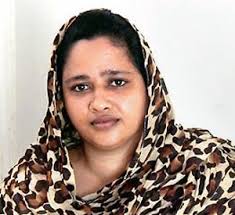
Tabassum faced tough opposition from family and society when she decided to work with the children
Breaking the HIV taboo is a challenging task. The moment a case is diagnosed, some families choose to distance themselves from the victims. About ten years ago, when a close friend of Tabassum died just two days after the doctors told her that she was suffering from HIV, Tabassum saw that none of her friend’s family even wanted to touch her. At this point, Tabassum was left alone to perform her last rites. That was when she decided to dedicate her life for the sake of HIV positive children. Until then, her job with an NGO was nothing more than a source of income.
Speaking to Bangalore Mirror, Tabassum said, “For the past 14 years, I have been working for HIV positive children and pregnant women. My outlook changed after this incident.” Recollecting her past, she said, “I hail from a very poor family. I secured a distinction in SSLC and wanted to study further, but my family could not afford to support my studies. I somehow managed to go up to PUC, but by then, my family got me married. After marriage, I did not want to stay at home and went on to do my degree, after which I took up a job with an NGO for the sake of a living. It is never easy for a Muslim woman to come forward and work, specially with an NGO where you deal all kinds of people. I somehow fought opposition from family and went ahead. I continue to work at the NGO even today, and at the same time since I enjoy working with kids, I took it up as a challenge and went ahead to set up my own protection care centre called ‘Snehadeep’ about two years ago,” she said.
“Strangely, I received lot of opposition; some even said it was not right for a Muslim lady to take up this responsibility. I can proudly say that at Snehadeep, I look after 14 girls in the 7-12 years age group and all of them are Hindus. There is no religion once these children fall sick. Often, their families prefers to distance themselves from the children. More than their physical health, these children suffer from psychological pain or want of company. The bigger children scan through newspapers everyday looking for any new medicine that can cure them. They know that they will die soon. At times, convincing them to study is also difficult. When these kids are at their last stage and are shifted to the hospital, nobody from their family wants to associate with the child. Often, they are left to die alone. I try my best to be there with them during their last stage though it is very painful and perform their last rites in the best way I can. With every death, I only pray and hope that this is last child dying before me. The initial days were a struggle. I used to go door-to-door on a Sunday asking people for help. Even a packet of biscuits for kids would make a difference. Getting funds for food is always a big task,” she said.
For Tabassum, spending time with the kids provides peace of mind. “Recently, I was very happy when a child received 92 percent in PUC. ”
source: http://www.bangaloremirror.com / Bangalore Mirror / Home> Bangalore> Others / by Deepthi Sanjiv / Bangalore Mirror Bureau / October 15th, 2014
For a long time, Ajay Jayaram was known for losing out on an Olympic berth to Parupalli Kashyap during the 2012 India Open. It seemed as if Jayaram had all but sealed the spot with some good performances round the year, but Kashyap pipped him courtesy a lucky break as the then World No. 4 Chen Jin gave the latter a walkover in the quarter-finals that eventually proved decisive.
Jayaram was crestfallen and since then has been trying hard to bounce back. He enjoyed a decent run but not as much he would have liked. To add to his woes, a shoulder injury during the Hong Kong Open in January this year put him out of action for more than six months.
Jayaram underwent a surgery and did the necessary rehabilitation. But at only his fourth tournament back, the Mumbai shuttler won the biggest event of his career when he clinched the Dutch Open Grand Prix on Sunday.
Ajay Jayaram wins the Dutch Open
“Definitely it has surprised me. I played some good attacking badminton. I need to maintain this level of focus and discipline in the coming tournaments. That will be the key to getting good results,” Jayaram told MAIL TODAY.
“I am elated. It has been a tough few months. Even after I resumed playing, it wasn’t easy to find my rhythm. It took me a while to get back the match temperament and touch. But I am happy I managed to dig deep and get the muchneeded win which also happens to be my first Grand Prix title. I couldn’t have asked for a better comeback,” he said.
The manner of his win, coming against a tough field, should give Jayaram immense confidence. Beating the likes of third seed Dionysius Hayom Rumbaka (World No. 26) of Indonesia and top seed Rajiv Ouseph (World No. 29) of England would do him a world of good.
“With higher-ranked players like Ouseph and Rumbaka in my half, it wasn’t going to be easy. I secured convincing wins against both. The final was against an upcoming Indonesian (Ihsan Maulana Mustofa). It was a hard fought five-game battle which swung both ways. I had to dig deep and bring all my focus into play in the fifth game where I was 1-5 down. But I played well and was positive when it mattered.”
Coming back from the shoulder injury was never going to be easy and Jayaram admitted that he was often frustrated. “The first few tournaments were quite hard to adapt to. But I knew it was a matter of perseverance. There were trying moments when frustration set in. But I had to keep my chin up and keep working.” Now Jayaram has got a feel of the new scoring system that is being introduced at the Grand Prix level on an experimental basis. The 11-points best-of-five games scoring format has been criticised by many top players. “Although the game gets shorter, most of the match is played under more pressure which requires more focus. Hard to say if it is the way to go for badminton, but I’m glad I was able to adjust to it and do well.” Jayaram, who was ranked as high as 21st in early 2013, has now fallen to 66th, and with many Indian players going past him, he was not part of the Asian Games squad. Getting back to the national team is his priority.
“If I am able to maintain the same positive tempo, I’m sure I will regain my place in the core group,” he said.
source: http://www.indiatoday.intoday.in / IndiaToday.in / Home> Sports / by Avishek Roy / New Delhi – October 14th, 2014
The Gateway Hotel on Residency Road in Bangalore, an iconic hotel located in the heart of the city, turned 25 on October 10.
Catering to the needs of the ‘urban nomad’, the hotel is designed with a ‘green’ theme keeping with the changing trends. As a part of its silver jubilee anniversary celebrations, the hotel has lined up various interactive events and activities for the next 25 days. Ranging from eye-catching rare images of the hotel in the archival corridor to retro music tributes, from classical dance performances to an interactive workshop on movies, the Gateway Hotel celebrates the true essence of the city of Bangalore. Guests will also be treated to an extensive culinary journey featuring the 25 years special celebration menu crafted by Chef Naren Thimmaih which pays ode to the city of Bangalore.
Speaking on the milestone, Prabhat Verma, COO, The Gateway Hotels and Resorts said, “The Gateway Hotels and Resorts are full service upscale hotels and resorts in the South Asia offering consistent, quick and crisp service for travelers seeking contemporary experiences. From 1989 to today, the hotel has gone through a host of changes while remaining true to the spirit of the brand Gateway by delivering the brand promise of welcome perfection.
“As an iconic landmark in the cultural hub of the city, it is a property which has grown along with Bangalore, playing host to numerous dignitaries, film thespians and artists. Needless to say, we remain grateful to the support we have received from our guests and patrons and look forward to a brighter future,” said Albert Rebello, general manager, The Gateway Hotel.
source: http://www.timesofindia.indiatimes.com / The Times of India / Bangalore / by Saswati Mukherjee, TNN / October 10th, 2014
It seems a tale out of RK Narayan’s fictional world. When an activist trying to promote voting in Mysore’s Yadavgiri went to the legendary novelist’s bungalow, he wasn’t sure of the likely response. As the writer emerged from his two-storey house, he asked the activist the reason for his visit. The activist, who had seen Narayan while growing up in the locality, asked him whether he had enrolled himself as a voter. The writer, who had just completed his term at the Rajya Sabha, explained to him the politics of politics.
Narayan told the activist he was proud of the Indian democracy, but was sore about the way it was handled. “The writer told me people hardly have any choices,” the activist, who didn’t want to be identified, recollected. “I was afraid of approaching him as we in the neighborhood knew he didn’t like to be disturbed. But he talked to me at length about the Indian political system and offered me a cup of coffee,” he told TOI.
The novelist, who popularized Indian writing in English and is admired by many well-known authors such as Alexander McCall Smith, was often reclusive, says KC Belliappa, former vice-chancellor of the Rajiv Gandhi University in Arunachal Pradesh. But he loved to walk around in Mysore, when he would talk to ordinary people.
“I remember my guru C D Narasimhaiah telling me that Narayan looks for his characters while walking on the roads. That’s what Narayan had confided in him once,” Belliappa, who taught English literature at the University of Mysore, explained. Narayan was close to a handful of people; CDN, a celebrated literary critic, was one of them.
Narayan’s favourite haunt was Sayyaji Rao Road just across the Mysore Palace. “I’ve heard that he liked to walk on Dhanvantri Road besides Yadavgiri and Vonti Koppal, which might have fed his imagination when he created the fictional town of Malgudi, where most of his stories are set. ,” says the English professor.
“Like Thomas Hardy who set his fiction in the semi-fictional region of Wessex, Narayan’s Malgudi was extremely well-conceived,” the retired V-C explains. The novelist situated many of his works in Mysore, where he built a home in 1952.
Delectable Tribute
Nagaraj Rajgopal, who has named his restaurant in Mysore after RK Narayan’s fictional town, offered a sweet discount on Friday to celebrate the writer’s 108th birth anniversary. “As a child, I was inspired by Narayan’s characters. When I conceived this project, I thought of designing it with the Malgudi motif,” explains Nagaraj Rajgopal.
***************
Renovation after talks
The bungalow in Yadavgiri where Narayan lived will be renovated soon. The bungalow, partially pulled down in September 2011, has been declared a heritage monument. “We’ve approached Narayan’s family about the renovation and work will start soon,” heritage commissioner C G Betsurmath told TOI. He said they would take over the property and start work after further talks with the family.
source: http://www.timesofindia.indiatimes.com / The Times of India / Home> City> Bangalore / by H M Aravind / October 11th, 2014