All posts by admin

‘ Adivasis are rulers of forests ‘

Mysore :

“Adivasis are rulers of forests But some of them and Tribals who caught up with modern civilisation are living under deplorable conditions,” opined writer Prof. Aravind Malagatti.

He was speaking after inaugurating a day long seminar on “The status of Adivasis and Tribals” organised jointly by Aranya Moola Adivasigala Hitarakshana Vedike (Forum of Original inhabitants of forests) and Karnataka Rajya Hindulida Vargagala Jagruta Vedike (Karnataka State Backward Classes Awareness Forum) at Maneyangala, Kalamandira on Hunsur road today.

Pointing out that the soul of Adivasis and Tribals lie in forests, Prof. Malagatti regretted that the onslaught of civilisation is hurting thei social structure.

Stressing that Adivasi culture, lifestyle and other social practises can never be linked with modernisation, he called upon the government for setting up of exclusive residential schools for Adivasis in urban areas.

Earlier, Adivasi troupes comprising mostly of children, presented a magnificent tribal dance, dancing to the tunes of music generated by using water drum, kerosene cans, oil tins and the like. Floral tributes were offered to the portrait of tribal leader Birsa Munda.

Litterateur Prof. Neelagiri Talwar, journalist Rajashekar Koti, Backward Classes Forum office-bearers K.S. Shivaramu, C. Naganna, Adivasi Forum President Gopal Poojar, Adivasi leader P. Basavaraj and others were present.

source: http://www.starofmysore.com / Star of Mysore / Home> General News  / August 27th,  2014

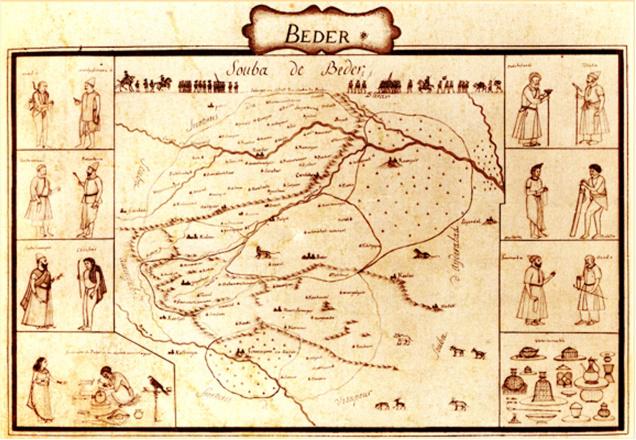
LINK TO THE PAST – Ancient map of Bidar unearthed in London

Historian and painter Rehman Patel says illustrations on the political and social history of India are included on either side of the map. / The Hindu

The map is included in an atlas produced by Colonel Jean Baptiste Gentil, Military Adviser to the Nawab of Awadh Shuja-ud-Daula

In exciting news for historians, an ancient atlas, which includes a map of Bidar, prepared by French officer Colonel Jean Baptiste Gentil, Military Adviser to the Nawab of Awadh Shuja-ud-Daula (1763 to 75), was found tucked away in the India Office Library at London. The map shows Bidar, which was once a capital city of the Bahamani Kingdom and an educational centre with historical importance.

Historian and painter Rehman Patel, who reproduced the map, said that in the interests of preserving the historic post and throwing more light about the history of the Bidar and its cultural heritage, the State government should put pressure on the Union government to bring it back to India and place it in Bidar.

Illustrations

He added that Col. Gentil had utilised the services of local artists to produce a series of illustrations on the political and social history of India.

Dr. Patel pointed out that illustrations were included on either side of the map. They reveal the representatives of different Sufi orders and thick forests with drawings of wild animals. These drawings also include Bidri craftsman and the different wares that were produced in Bidar. The bespectacled artisan at the bottom left of the page is portrayed as engraving a floral pattern on the side of a globular huqqa, with his wife and pet parrot looking on.

The illustration is reinforced by having a caption: ‘Fabrique de Beder ou on incruste en or et argent’ (Beder workshop for inlaying in gold and silver).

At the bottom right corner, there is a drawing of the types of wares produced: ‘vases incrustes’, or ‘inlaid vessels’. These include a globular huqqua on a stand, a bell-shaped huqqua, spittoons, boxes, a ewer and wash basin.

Reference to Bidriware

Dr. Patel said so far, the earliest unambiguous reference to Bidriware was in the Chahar Gulshan, written in Persian in 1759 AD. This includes a statistical account taken, on internal evidence, from an earlier compilation of about 1720 AD.

Book II of the Chahar Gulshan is ‘an account of five Subhas (administrative divisions) of Deccan’, one of the five being Bidar, referred to by its Bahmani and Mughal names. A manuscript in the British Library has the following passage: ‘The subah of Mohammadabad called Zafarabad (Bidar).

Bidar was also known from an illustration in an atlas produced in Faizabad, Uttar Pradesh in (1770 AD) under the Nawab of Awadh (Oudh) Shuja-ud-Daula, who ruled from 1754-75 AD. During this period, Bidar was under the control of Muhammad Ghauth Saif-ud-Daula, but he died shortly after his appointment, and his brother Saif Jang Najm-ud-Daula Bahadur became the governor in his place.

Dr. Patel said that enquiries at the office of the Deputy Commissioner in Bidar revealed that the district administration did not have a copy of the manuscript and the atlas produced by Col. Gentil.

source: http://www.thehindu.com / The Hindu / Home> News> National> Karnataka / by T. V. Sivanandan / Gulbarga – September 01st, 2014

Jawa and Yezdi ride to Hampi to promote road safety

Bangalore :

The first all-India Jawa and Yezdi Ride to Hampi will be held between August 15 and 17 in support of the Federation of Motor Sports Clubs of India’s (FMSCI) Action for Road Safety campaign.

Organised by the Jawa and Yezdi Club of Hyderabad (JAYCOH), close to 60 riders from across the country have confirmed participation for the ride to the ruins of the Vijayanagara Empire in northern Karnataka on Independence Day.

The motorcyclists from Hyderabad, Bangalore, Pune, Mumbai, Thiruvananthapuram and Nasik on their vintage machines will ride out of their respective cities on the morning of August 15 and reach Hampi by the evening.

Pune has the most participants at 24, followed by Hyderabad at 16.

“It is a very encouraging sign when motorcycle clubs and independent groups take the initiative to promote road safety,” FMSCI President J Prithiviraj said.

“India has the world’s largest number of road accident casualties. We need to work towards improving road safety awareness in the country,”Prithiviraj added.

The FIA (Federation Internationale de L’Automobile) had launched its Action for Road Safety global campaign in support of the United Nations’ Decade of Action for Road Safety. The FIA’s initiative aims to lower the alarming figures associated with global road accidents and to spread the safer motoring message.

The FMSCI has adopted and is implementing FIA’s Action for Road Satefy global campaign.

All participating vehicles will carry FIA Road Safety Campaign sticker to create awareness on the importance of road safety. The riders will distribute pamphlets propagating road safety and take the FIA Road Safety pledge – 10 Golden Rules – in front the Queen’s Bath, a World Heritage monument in Hampi.

“We thank the FMSCI and Hosepet Round Table 231 for being associated with this ride to promote road safety awareness,” said P Jaiveer Rao of JAYCOH. “Our Jawas and Yezdis being vintage motorcycles, we felt the a World Heritage site like Hampi.

source: http://ww.timesofindia.indiatimes.com / The Times of India / Home> Sports> More Sports> Others / by Sunil Subbaiah, TNN / August 14th, 2014

Vijendra wins inter-district Chess Championship

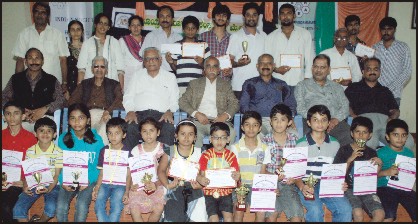
 The winners in the Inter-District chess championship conducted jointly by the Mysore District Chess Association jointly with Hoysala Karnataka Sangha seen with their prizes and certificates along with the guests. (Sitting from left) M M Biddappa (Vice-President, MDCA), Prof. S K. Ananda Thirtha (President, MDCA), P Baradwaj (President,Hoysala Karnataka Sangha), S Vijay Prakash (Former State Ranji cricketer), H T Raviprakash (Treasurer, MDCA) and M Nagendra (Hon. Secretary, MDCA).
The winners in the Inter-District chess championship conducted jointly by the Mysore District Chess Association jointly with Hoysala Karnataka Sangha seen with their prizes and certificates along with the guests. (Sitting from left) M M Biddappa (Vice-President, MDCA), Prof. S K. Ananda Thirtha (President, MDCA), P Baradwaj (President,Hoysala Karnataka Sangha), S Vijay Prakash (Former State Ranji cricketer), H T Raviprakash (Treasurer, MDCA) and M Nagendra (Hon. Secretary, MDCA).

Mysore :

Former State Champion Y.G. Vijendra of Mysore with 7 points from eight rounds clinched the Inter-District chess championship title in the tournament conducted jointly by the Mysore District Chess Association (MDCA), jointly with Hoysala Karnataka Sangha, here on Sunday.

V.P.S. Darshan of Mandya, S.N. Jatin (JSS HS, SJCE Complex) and D. Arun tied with 6.5 points, but based on their tie-break scores secured the places from second to fourth respectively. Seven players tied with 6 points each and took the places from fifth to eleventh respectively. The prizes to the winners were given away by S. Vijay Prakash, Former Karnataka Ranji Trophy player. MDCA President, Prof. S.K. Ananda Thirtha, M. Nagendra , Hon. Secretary, MDCA and other office-bearers of MDCA and Hoysala Karnataka Sangha were also present.

Final Placings: 1. Y.G. Vijendra (8 pts); 2. V.P.S. Darshan (6.5 pts- 32); 3. S.N. Jatin (6.5 pts-31.5); 4. D. Arun (6.5 pts-29); 5. L.Vivekananda (6 pts-33.5); 6. M.P.Ajith (6 pts-33); 7. H.R .Manasa (6 pts-32.5); 8. C. Pavan (6 pts-30); 9. R. Sharan Setty (6 pts-29) 10. M. Bharath (6 pts-24.5); 11. Venkatesh Babu N (6 pts-22.5).

source: http://www.starofmysore.com / Star of Mysore / Home> Sports News  / August 26th,  2014

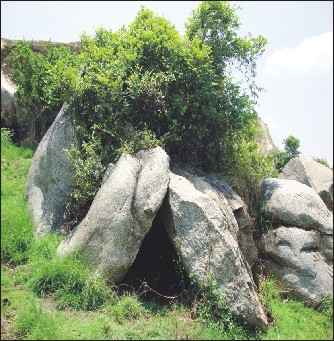
A rare discovery of ‘ Stone Hut ‘ at Kunti Betta

StoneHutBF01sept2014

Kunti Betta is a hillock near Pandavapura Taluk head quarters in Mandya District. It is a mine of ancient archaeological site of importance for the researchers. Situated at about 2882 ft above the sea level it has the evidences of Megalithic culture. Stone hut of the Stone Age man was discovered at this place, which is a rare and a unique discovery in the subcontinent.

Dr. S.G. Ramadasa Reddy, HoD of History and NSS officer of Govt. First Grade College, Kuvempunagar, Mysore, along with Prof. B.S. Manjunatha, D. Banumaih’s College, Mysore and NSS volunteers, conducted field survey of Kunti Betta and were successful in tracing the rare stone hut of Stone Age man.

At the outset, the stone hut appears triangular in shape and seem to be constructed by the ancient man. It appears that they must have cut stone rocks and inclined in a triangular shape with a supporting heavy rock at the back, and stone slabs fixed to the floor. The door of the hut is of 5.7 ft width and 6.5 ft height. The inside dimension is 8 ft wide, 6.5 ft width in the middle and 8.2 ft width at the back. Considering all these details, one may come to the conclusion, that the ancient man must have used this stone hut for living purpose.

Similar stone huts have been discovered in various parts of the world but is the first of its kind in India. For instance American Research and Preservation Department has discovered four stone huts in Colorado. There is a marked similarity between them and the stone hut discovered at Kunti Betta.

Similar stone hut has been found at Terra Amite in Mount boron in nice in France. This is the first discovery of the stone hut of the old Paleolithic man. Upper Paleolithic man hut was found in Israel’s Bahalo II.

Huts made out of the bones of the mammoth animals, were also discovered at Chi Chu Bu in Japan, Sub Sahara of South Africa and South Russia. The hut at Ukraine is a mammoth animal bone hut in the shape of a room of 8 ft space. Similar hut is also found at Kostenski Bershevo in Malt and Berlet sites near Masco.

Kunti Betta with all such rare evidences of ancient culture and civilisation richly deserves to be taken note of by the concerned departments so as to shed new light on the history of Ancient India by excavation, research and conservation.

[e-mail:ramadasareddysg@yahoo.in]

source: http://www.starofmysore.com / Star of Mysore / Home> Feature Articles / August 26th,  2014

D.Litt for Prof. Nagapathi

ProfNagapathiBF01sept2014

Mysore :

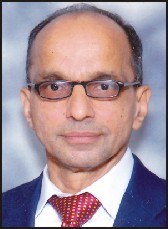
Prof. K.S. Nagapathi, Director of Mahajana Tourism Development Institute, Mysore, has been awarded D.Litt. (Doctor of Letters) degree by Rani Channamma University, Belgaum, for his thesis ‘Karnataka – A delight for tourists.’

He has been instrumental in procuring funding for the establishment of the Institute from Govt. of Karnataka. With assistance from Dept. of Tourism, he has also helped to start one year Diploma in Hotel Management and several short duration courses in tourism and Hospitality for the benefit of economically weaker sections of the society.

From current academic year, the Institution is starting a Masters program in Tourism and Air Travel Management.

Prior to joining Mahajana FGC in 2005, the Prof. Nagapathi retired as Professor and HoD of Commerce from D. Banumaiah’s College of Commerce and Arts, Mysore. Prof. Nagapathi has authored the following books: Management Accounting; The Art of Entrepreneurship; Tourism Development – A new Approach (Both in English & Kannada); Mysore Guide- Edited; Karnataka – A Delight for Tourists; Tourism and World Heritage (Hand book) and Samskruthi (a hand book on heritage and cultural tourism).

source: http://www.starofmysore.com / Star of Mysore / Home> General News / August 26th,  2014

Adoption of tigress Manya and her son Shaurya renewed

Zoo Executive Director B.P. Ravi is seen presenting a memento to the representatives of Kumar Organic Products Ltd., Bangalore, which renewed the adoption of Tigress ‘Manya’ for the 6th time and her son ‘Shaurya’ for 4th time consecutively.

Mysore :

Kumar Organic Products Ltd., Bangalore, has renewed the adoption of Tigress ‘Manya’ f or the 6th time and her son ‘Shaurya’ for 4th time consecutively by making a payment of Rs. 2 lakhs for a period of one more year ending up to 24.8.2015 and 28.9.2015 respectively for both mother and son.

Mysore Zoo, has in a press release, expressed its gratitude to Kumar Organic Products for their support and involvement in conservation efforts.

“We hope that their continued support inspires other Corporates / Institutions to take up the cause of conservation,” said the release and added, “There is overwhelming response from the sponsors towards adoption and till date the total amount collected towards adoption is Rs. 17,18,393 compared to Rs.16,65,393 collected during the last year on the same date.”

Adoption of Animals

The II PU students of Maharshi PU College have adopted a Love Bird of the Zoo for a period of one year from 22.8.2014 to 21.8.2015 under ‘Adoption of Animals’ scheme by paying Rs.1,000 as adoption fee.

The following persons have also adopted the animals under the scheme: Shivu (Kajani), Mysore – Indian Cobra (Rs.2,000); Vikrant Yadav, New Delhi – Love Bird (Rs.1,000).

source: http://www.starofmysore.com / Star of Mysore / Home> General News / August 26th,  2014

Wakefield firm praised by Clegg for Indian office expansion

DEPUTY Prime Minister Nick Clegg praised the drive and innovation of a Wakefield firm as he opened its base in India.

The Sheffield Hallam MP held up Group Rhodes’ new purpose-built facility in the country’s hich-tech capital Bangalore, as a shining example of special relationship between UK and Indian companies.

Around 50 to 60 UK jobs are expected to be created with the facility, a 30,000 sq ft joint venture south of Bangalore with Indian firm, MEU Engineering, which makes cutting tools for the aerospace sector.

In recent years, the company has secured a number of lucrative contracts, including a deal to supply forging presses to Asia and around a third of the company’s £20m turnover, is linked to international markets.

It hopes to secure other work in the Indian aerospace sector.

Mr Clegg, who unveiled the base during a three-day trade visit to India, said: “India is at a major crossroads in its economic destiny, and Bangalore is a shining example of how technological expertise can be harnessed to create a powerhouse for growth.

“This city is among the top ten preferred locations for entrepreneurs in the world, and home to more start-ups than any other city in India.

“What I see in Bangalore is that India’s prowess in aerospace and hi-tech is growing fast. This is fertile ground for UK and Indian firms to do business, and that’s been proven by the deals done today by UK companies setting up shop here in India.”

Group Rhodes is one of Europe’s largest manufacturers of special purpose machinery for advanced applications in sectors such as aerospace, metalforming, heavy ceramics, composites, environmental and deep-sea oil and gas.

Group Rhodes managing director, Mark Ridgway, said: “It is a great honour that the Deputy Prime Minister has agreed to inaugurate the Rhodes India facility. The Government has been very supportive of the advanced engineering sector in the UK.

source: http://www.yorkshireeveningpost.co.uk / Yorkshire Evening Post / Home> Business News / August 28th, 2014

When the saints come marching in

Through powerful staccatos and crescendos. / The Hindu

Old and new favourites were rendered pitch perfectly at The Bangalore Choir Festival.

A choir performing in the city may be a regular sight. But having various choirs coming together and singing as one is something else. The Bangalore Choir Festival, held recently in Goodwill School campus, did just that. Presenting an evening of choral and orchestral music featuring an augmented choir from seven churches, the festival was a musical extravaganza. Pavanasar Lutheran Church, St. Paul’s Church, Memorial Church, Jesus the Saviour Church, Wesley Tamil Church (Haines Road), Wesley Tamil Church (Ashok Nagar) and Holy Trinity Church formed the set list.

Projected under the theme ‘We Are One’, the festival’s concept was an attempt to unite churches across denominational divides through music.

After the National Anthem to which the crowd diligently stood in attention, an octet of singers from the main choir stepped forward to render a beautiful accapella version of the famous Caribbean reggae song ‘By The Rivers of Babylon’, which was popularised by the pop group Boney M.

With an eight-member violin group on one side, a band on the other and the choir taking centre-stage, they did a frenzied musical rendition of the popular Chris Tomlin song ‘Indescribable’. Conducted by Jeremiah Joseph, the choir sang through powerful staccatos and crescendos.

Conductor Timothy Thomas took over for a softer and more melodic ‘Why Should The Father Love Us?’ by the legendary Gospel band Petra that flowed with amazing clarity by the vocals and flamboyant tonalities of the star-studded violin ensemble.

Not leaving the other languages behind, the choir rendered mellifluous compositions by regional composers, much to the delight of the multi-lingual audience. The regional songs comprised a few original compositions as well as familiar choral hymns.

A crowd favourite was the gothic Gregorian chant-based composition ‘Let The Veil Down’, sung in perfect synch with the track and polished off with a moving flourish by the dynamic choir. The ancient hymn ‘Count Your Blessings’, recreated in their own arrangement was a foot-tapping lively composition that had the audience cheering for more.

Accompanied by two classical dance sequences, the festival moved into second half with the country swing song ‘I’m Gonna Let The Glory Roll’ before finishing with the title song, The Lion King’s anthemic ‘We Are One’. For cheers of encore, the choir went on to do another orchestral-led arrangement of the song ‘He’s Turned My Mourning Into Dancing’.

Talking about the project, Jeremiah Joseph, said it was quite a task to bring different choirs together. “We needed to harmonise their minds before we could harmonise their voices. It was a wonderful experience to score the accompaniment for the songs as the choir was accompanied by some of the stellar musicians in the city like Geoffrey Martin, Reuben James and Noel Gerrard. It was fantastic to have Peter Appaji who led the eight-member string orchestra and a band of young musicians who set the stage ablaze. The task was achieved towards the end and hopefully this will grow bigger and we’ll have more churches across denominations uniting to make music together.”

Philip Devadass, BCF’s general secretary and co-founder, says it began as a vision to unite churches through music. “The choral scene in Bangalore is a big movement and each choir has its own niche performance and following but none of them have really come together to perform as one. That is what inspired us to bring various choirs together. Through this initiative, we hope to have greater collaborations and support various other projects as well. It’s the beginning of greater things to come.”

source: http://www.thehindu.com / The Hindu / Home> Features> Friday Review> Music / by Allan Moses Rodricks / August 27th, 2014

Bangalore’s sacrifices

Peace-loving Bangaloreans even planted bombs, burnt police stations and post-offices and threw stones at the men in Khaki. When Britons used cavalry, Bangaloreans strewed ragi (millet) on the roads to make the horses trip.

Bangalore City has geared up to celebrate 60th Independence Day. Sale of the Tricolour was brisk. Manekshaw parade ground will witness a colourful march-past and cultural show by various contingents and schoolchildren. Politicians will unfurl the Indian flag, while busy bees have a holiday this week.

On this occasion, Deccan Herald dug into the past to explore the role played by the city in the freedom movement. Getting the information was a tough task. However, H Sreenivasaiah, a freedom fighter, who is a ready reckoner when it comes to giving the history of the freedom struggle, offered a lot of details to this paper.

It is amusing to imagine the ‘cosmo city’ in swadeshi mode, when khadi was the dress code (unofficial) and Vande Mataram was the hit song. Peace-loving Bangaloreans even planted bombs, burnt police stations and post-offices and threw stones at the men in Khaki. When Britons used cavalry, Bangaloreans strewed ragi (millet) on the roads to make the horses trip.

Some freedom fighters brought out underground newspapers. Interestingly, the newspaper was typed at a Commerce Institute that was right above the police station in Malleswaram and the police, unknowingly, guarded the publication office. Students used to drop the newspapers in houses after 11 pm to ensure that they were not caught by the police. Law provided for three years’ rigorous imprisonment if caught for the offence, says Sreenivasaiah, who brought out underground newspapers.

Some students, who worked in government offices as temporary clerks, stole rubber stamps from the offices to dispatch the newspaper to government offices. 
The freedom fighters also had their own underground radio station in a village near Kengeri. Some engineers, who worked at Government radio stations, had helped to set it up and operate. Mahatma Gandhi’s call for non co-operation in 1920 had received good response. Schools and factories started by British were closed.
Mr Sreenivasaiah, who is also Chairman of Karnataka Gandhi Smaraka Nidhi, recalled that National college, Basavanagudi, was started as a swadeshi college.

During Quit India Movement (1942), when most of the senior leaders were put behind the bars, students held the reins. Bangalore was no exception. Students and labourers held rallies, processions and public meetings.
Chikkalalbagh (Tulsi Tota), Bannappa Park, Malleswaram Grounds and a school compound in Ulsoor were the usual meeting places for the young feedom fighters, recalls C N Narasimhaiah, another freedom fighter.

K Hanumanthaiah, H S Doreswamy, Vasanthaiah, Kunthala, K S Krishna Iyer and many more came forward to lead the movement. Students used to gather at Central College (near the Tower) in the presence of the police and used to sing Vande Mataram and other patriotic songs. Today’s Bangalore Education Society (school in Malleswaram) was among the usual places for flag hoisting. There was a tall flag pole at today’s KSRTC Bus Station at Majestic (then Dharmambudi Tank and later Subhashnagar), says N Kasturi Rangan (Neelathahalli Kasturi), a freedom fighter.

Firings and lathi charges were common scenes during those days. Many went to jail and many sacrificed their lives. The freedom movement gained the momentum in Bangalore after the police firing at Binny Mill, killing four workers in 1926, freedom fighter M Somashekaraiah recalls.

Many leaders including Mahatma Gandhi, Sardar Patel, Acharya Kriplani, Ashok Mehta and Rajendra Prasad visited Bangalore. Mahatma had come to the city 14 times. In 1934, Mahatma Gandhi was on ‘Harijan Tour’ to mobilise funds. At Malleswaram ladies club, he just touched his ears, nose and hands, when ladies touched his feet. And, in response to it, all the ladies, removed their jewellery and donated them to him. Kumara Park was Gandhi’s prayer meeting venue and today’s Gandhi Bhavan was the place where he used to take a walk. He stayed at Nandi Hills for over two months and at Kumara Krupa Guest House for over a month.

Gandhi Jayanti was celebrated in a big way in 1942 at Bangalore and unspent Rs 125 was used for setting up Gandhi Sahitya Sangha with 25 books. It has 10,000 books on Gandhian and national literature today, Mr Sreenivasaiah says.

AT A GLANCE
According to Karnataka State gazetteer, 10 people died in police firings at City post office, Balepet circle and Cottonpet in 1942. Tippaiah (15), Appaiah (16), H R Srinivasan (16), Narayanachar or Narayana Das (35), Subbasing Ramasingh (25), Ponnuswamy (16) and four others died in the incident.

In another firing, Thimmanna Das died near Mysore Bank Square. According to freedom fighters still alive, there were many more deaths in Bangalore during the freedom struggle. But most of them were not recorded.

source: http://www.archives.deccanherald.com / Deccan Herald / Home> City> Detailed Story / Wednesday – August 15th, 2014