All posts by admin

City lad Sagar to officiate in Wimbeldon championships

Mysore :

City lad Sagar G. Kashyap, has done every Mysorean proud with his feat of being selected to officiate in the Wimbeldon Grand Slam tennis championships 2014.

Sagar, a resident at Gokulam in Mysore, will be officiating in the qualifying rounds of the championships which begin from June 16th 2014. A former tennis player from Mysore Tennis Club, Mysore and B.E. graduate from Vidya Vikas College of Engineering, Sagar took up to officiating and has been an ITF referee and has officiated in ITF tournaments World over.

He will also be officiating in the main draw which will begin from June 23rd and he will officiate till the finals. This is the sixth consecutive time he will be officiating in the Wimbledon championships and he is the only Karnataka referee to be selected to represent the country in the championships.

source: http://www.starofmysore.com / Star of Mysore / Home> Sports  News / June 16th, 2014

Elected as Chairman of South Asia

Mysore :

MShabeerMPOs21jun2014Mohammed Shabeer Ahmed, Advocate, Mysore and International Council Member of International Association for Religious Freedom (IARF), Osaka (Japan) and London (UK) has been elected as the Chairman of South Asia Co-ordinating Council (SACC) of IARF during the SACC Board Meeting held on June 7 at Mysore.

India, Pakistan, Bangladesh, Sri Lanka and Nepal come under SACC. The term of the office of SACC is four years.

The objects of SACC-IARF is to promote international freedom, organise socio-economic, spiritual and cultural activities, promote inter-faith, work for religious, communal harmony and peace among the people.

Mohammed Shabeer Ahmed is also serving as Member of Vidyavardhaka Sangha, Mysore and Chairman of Youth Hostels Association of India, Mysore Unit.

He will be attending International Council Meeting IARF on Aug. 23, 24 and 25, to be held at Birmingham, UK.

source: http://www.starofmysore.com / Star of Mysore / Home> General News / June 16th, 2014

Paper Subbanna, a legend in his own rights !

PaperSubbanaBF20jun2014

by  H.P. Naveen Kumar

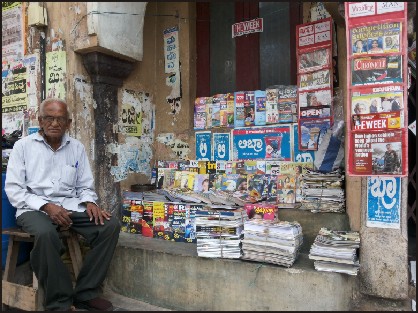
During the days when newspaper sellers are rarely recognised, here is an aging M.R. Subramanya, popularly called by his admirers as ‘Paper Subbanna,’ who is dedicated to journalism in his own kind by selling newspapers for the past five decades in the heritage city, thus justifying the title given to him.

Born in Mysore, Subbanna, who passed SSLC from Dalvoy School in city, took to distribution of newspapers and has been rendering a yeomen service to the field of journalism for the past 50 years.

His tryst with print: After unsuccessfully launching ‘Chitralaya,’ a tabloid devoted to film industry in Bangalore in 1963, Subbanna is now busy distributing newspapers, periodicals and books related to competitive examinations in all languages.

Later, lured by film journalism, Subbanna established an institution named Film Premier Association along with his friends and served as a reporter, critic, publisher and launched many programmes for the development of journalism.

After the collapse of the Lansdowne building, Subbanna now runs a shop opposite Merchants’ Co-operative Bank on Jaganmohan Palace road in city selling newspapers of all languages including Rajasthani, Hindi, Telugu, Tamil, Malayalam, etc.

Subbanna as a Publisher: After failing to achieve the desired results through his tabloid, Subbanna published many novels under the banner of ‘Sahitya Gangotri’ and created awareness on reading Kannada books and also achieved the distinction of publishing ‘Jenugudu’ scripted by celebrated Tamil writer Shantha through which he became a household name after being recognised by the Union Government.

Joined Kannada Chaluvali: Subbanna plunged into Kannada Chaluvali in his fight for propagation of Kannada and played a major role in the agitation against dubbing of Kannada films into other languages in the company of A.N. Krishna Rao, M. Rama Murthy, T.R. Subba Rao, Beechi, Sheshagiri Rao, Veerakesari, Seetharama Shastry among others.

Felicitations: Besides being felicitated for his contributions to Kannada language, Subbanna was honoured by the Dasara Exhibition Committee in 1992, Ambarish Award in 1995 by Ambarish Fans’ Association and also honoured in 2006 by a group of litterateurs from K.R. Nagar Taluk.

Paper Subbanna, who lost all his earnings after trying his luck in the film industry, is still well-known for his generosity towards visitors who come in search of him.

“I am happy with my profession and I am contented in life. The advent of TV has led a steep fall in newspaper readership which is regrettable but reading a newspaper over a cup of tea is itself a different and a wholesome experience,” says Subbanna.

Let us hope that the Government will take note of the contributions of Subbanna to the field of journalism and reward him appropriately.

After the demise of his wife Kamalamma six years ago, Subbanna is being looked after by daughter M.S. Nagashree and son M.S. Nagendra.

source: http://www.starofmysore.com / Star of Mysore / Home> Feature Articles / June 15th, 2014

Pilikula chirps with artificially hatched birds

A Moscovy duck born after being artificially hatched in an incubator at Pilikula Biological Park. — PHOTO: RAVIPRASAD KAMILA / The Hindu

More than 25 birds in Pilikula Biological Park born out of incubators

If you spot jungle fowls Moscovy ducks or yellow and red pheasants chirping in Pilikula Biological Park, they could have been born through artificial hatching of eggs.

The park has gone a step forward after the success of captive breeding of animals. It took up artificial hatching of eggs of some birds under controlled environment a year ago. As a result, more than 25 birds have born in this fashion, according to its director H. Jayaprakash Bhandary.

The park took to artificial hatching as some birds in captivity (in aviary) got disturbed by the movement of visitors and some birds did not sit on eggs for hatching. As a result success rate was less, he told The Hindu.

Thus, some grey and red jungle fowl, Moscovy ducks and yellow and red pheasants have born out of hatching in a controlled environment, he said.

Mr. Bhandary said that eggs were first put in an incubator for the hatching process under a controlled environment. Once the young ones came out of eggs they would be shifted to a brooder for a few days.

Then the young ones would be shifted to a mini cage and once they grew up, they are moved to the aviary. The entire process of artificial hatching would take between 21 days and 24 days.

source: http://www.thehindu.com / The Hindu / Home> News> Cities> Mangalore / by Ramprasad Kamila / Mangalore – June 19th, 2014

Cricket Talk ……..: Manish, the smashing Pandey

by R. S. Krishnaswamy

Manish Pandey is probably one of the fearless, carefree, swashbuckling batsman in Indian cricket. These qualities are the basics of any T-20 player, but Manish plays in the same fashion in all forms of the game.

The lucky aspect is that Manish Pandey plays for Karnataka and lives in Bangalore. He can literally go wild with hitting as the game progresses. I still vaguely remember that a few years ago, in a game against Punjab in a quarter-final of the Ranji Trophy, with Karnataka 28 runs short, Manish suddenly went haywire to get the first innings lead for Karnataka. But this sort of approach has been seen from Manish right from the beginning keeping the captain in tenter-hooks.

Because of an illness in 2011 this guy missed his cricket. But when he returned he was as adventurous as ever. This devil-may-care batting is criticised by the older generation but they silently applaud him because he scores centuries after centuries.

Manish came to Bangalore as an army brat when he was only seven-years-old and even at that age he loved to bat and bat wildly. His father was transferred out of Bangalore but this lad continued to stay in Bangalore with his mother and continued to play. He made a name for himself in Under-15 cricket. The seniors were angry at him for his wildness and also loved him at the same time, because of his consistent scores. He played for India Under-19 with Virat Kohli but from then, it has been an up and down route for him.

However this year he was picked very intelligently by Gautham Gambhir for KKR who placed him at No. 3 while the innings was opened by another Karnataka hitter, Robin Uttappa.

Manish can never be controlled in cricket. He has a collection of cars which includes an Audi and a two-seater Mercedes. His team- mates shudder to sit with him when he drives because he drives as he bats, aggressive and taking chances all the time. I am fairly certain that at this point of time, this “wild one” will fit into the Indian team particularly the shorter forms of the game. In this process the good news is that he has also become a fantastic fielder. Good luck Manish.

MANKADING!!??

This Mankading is something which is named after a great Indian all-rounder Vinu Mankad who dismissed the Australian batsman Brown in 1948 by running him out from the bowler’s end because the batsman

Initially it became a controversy and even today it remains a controversy as to the method of dismissal of a batsman. However if you analyse it carefully it is absolutely non controversial and is a convenient method for an intelligent spin-bowler to dismiss a batsman who wants to backup for a run too early. I don’t see any reason why as mentioned in few instances a runner should be initially warned by the umpire not to leave his crease before the ball is bowled.

Lately another left arm spinner has repeated Mankading and that is Murali Karthik. According to ICC Law 42.15, “The bowler is permitted before releasing the ball to attempt to run-out the non striker.” As such it is meaningless to make it a controversy. It is a bowler’s weapon especially an intelligent left-arm spinner who can be watching the runner’s feet more easily. Long live Mankading!!!

source: http://www.starofmysore.com / Star of Mysore / Home> Sports  News / June 14th, 2014

When passion swirls to reality …..

ChaiPatheBF19jun2014

Mysore :

You can always trust women to do things unique and differently as women and multi-tasking are two words that have always gone hand-in-hand. Their dynamic ability to juggle between altered roles at a time is one quality that helps them find themselves in great places.

Today, we will take you through the story of two such dynamic ladies who have been successfully juggling between three different interesting roles each of which hold a unique place in their lives.

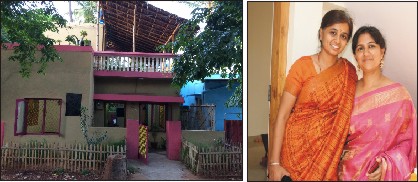
Meet Nandita Nagaraj and Deepha Chengapa. This energetic duo has chosen three different things do. One for passion, one for soul and another for living.

Their passion has given birth to a very uniquely functioning café called Chai Patthe; they teach English to little children at a government school to please their souls and for a living, the ladies are into setting up solar power plants which they have already done for several buildings across the country.

Let’s talk about Chai Patthe. A one-year-plus-old eatery with a very different touch to it for the way it functions. Chai Patthe is Nandita and Deepha’s dream-child, prepared and sold where are a whopping 70 different varieties of Tea along with some very interesting items to munch on. And all that’s available at the place is all the more special, for everything prepared there is made by no cooks but Nandita and Deepha themselves.

Walk into this cosy home with bean bags and cane seats within the rooms, relaxing upon which anyone can relish a simple Maggi to pasta and burgers or sandwich to cookies and brownies, in a very homely atmosphere. What’s more, top them up with some delicious varieties of tea which gets served to you in attractive earthen cutlery, and chances are, you’ll end up spending more than half a day at the place relaxing.

That’s not all. The place has much more than these to keep you at it. Book lovers visiting Chai Patthe can feast reading books from a mini library that’s maintained at the place, with a few but interesting books of varied genres. Those of who love playing games can enjoy playing uno, ludo, chess or crosswords with friends while their food and drink orders are being taken care of by the hosts.

“Our intention of starting Chai Patthe was not just for profit but to provide the visitors a nice and homely atmosphere where they could relax and enjoy a few simple and peaceful moments. Hence, we do not run it like a hotel. All things done and sold here are home-like,” explains Deepha, adding, “We also have a thatched roof seating where people are free to come over and celebrate their special days, read books, paint an art piece, write college records or even do school home works. We are glad we have such visitors too.”

The place which is open between 10.30 am and 7.30 pm daily, remains closed on the days when the ladies are busy with their power plant works for which they tend to travel outside the city. And before 10.30 am each day, Nandita and Deepha are in the Government School, where they teach the children.

“We do not bother if we have to close the cafe at times as our customers who are regular know the way we function. We are very happy working this way and have no plans to expand, as we are into it just out of passion,” says Nandita.

They so prove that they started Chai Patthe for just passion that they have never advertised about the cafe anywhere till date. All the popularity they have gained is by just word of mouth.

Chai Patthe is a non-smoking, wi-fi enabled zone and is one lovely place where any visitor can walk-in directly to the kitchen. “And as our customers, most of whom are acquaintances, know it is just the two of us who cook, they wait patiently until their orders are placed,” says Deepha. “And it is lovely when some of our friends who visit us even help us in the kitchen,” she gushes, who freshly makes the home-baked cakes served at Chai Patthe at her home daily. And all the health conscious ones will love the cooking here as the women use nothing but brown breads and buns and only olive oil to cook dishes and believe in keeping the place plastic-free. Everything here is served in earthen containers, porcelain and glassware. We indeed need to applaud the women for so successfully juggling between so many things at one time. Chai Patthe is located at Jayalakshmipuram [0821-4195033].— AN

source: http://www.starofmysore.com / Star of Mysore / Home> General  News / June 14th, 2014

Pages from history : Kanakagiri hill and its Saints

by  Prof. A.V. Narasimha Murthy, former Head, Department of Ancient History & Archaeology, University of Mysore

Two years ago, I was introduced to the respected Swamiji of famous Kanakagiri (Hill of Gold) Mutt by Dr. Gopal, Director of Archaeology and Museums in Karnataka. The Swamiji invited me to visit the holy Kanakagiri and write a book if possible. I could not take up the assignment but suggested Swamiji to write a book himself. In the meantime a small informative brochure has been published giving the salient features of Kanakagiri.

Kanakagiri is situated in Chamarajanagar district near Maleyur, in a thick forest area, famous for sandalwood. Thus it is not only a picturesque place but also an important place for forest products. Ancient saints and sages of different religious denominations deliberately selected such forests for their dwelling and built mutts or Ashramas or monasteries, so that the disturbance of urban life would not detract them and provide serene atmosphere suited for religious penance. From this point of view, Kanakagiri is an ideal place.

Kanakagiri has a hoary antiquity going back to the early centuries of the Christian era. That Jainism entered into Karnataka quite early is attested to by records. According to legends Maurya King, Chandragupta, came to Karnataka, accompanied by his teacher Bhadrabahu who established Jaina Centre of which Shravanabelagola was the most important one. Perhaps Kanakagiri also had its origin as a Jaina Centre during that period. Anyway it has a great antiquity. It is mentioned in ancient literary works and also in epigraphs. It also has the stone footprints of Jaina saints, mandapas for penance and memorial stones called ‘Nisidi stones.’ All these are built on a huge but broad rocky boulder giving the impression of an ancient township.

Though hundreds of Jaina saints lived and preached here, the records mention the names of Supratishta of Suryapura and Jnanachandradeva. They preached hundreds of students at this place the principles of Jainism. An interesting anecdotes is narrated in this connection. The Jaina teacher, addressing his students, told, when all of us are engaged in the discussion on non-violence (ahimsa) here, a robber arrives on the scene. What will you do? Most of the students said that they will run away without harming the robber because they have been taught ahimsa. Immediately the teacher said non-violence is not cowardice; it is to make all efforts to convince the robber of non-violence and make him act accordingly. In course of time, Jnanachandradeva died and became a great saint in hierarchy. The latter is said to have travelled throughout the country preaching Jainism and attained knowledge at the confluence of Gandhakuti.

Finally at his ripe old age, he returned to Kanakagiri and took up serious penance and cast off his body here and Kanakagiri became famous as Siddhakshetra or a pilgrimage centre.

Another great Jaina saint who lived here was Pujyapada. Fortunately inscriptions refer to him while describing his exalted place in Jainism, from which we can understand his life and achievements. Historians have considered him to be a Kannadiga as he was in the court of Ganga King Durvinita (529-79 BC). Actually Pujyapada was Durvinita’s Guru. Pujyapada was named so because his feet were worshipped by the Gods; and his original name Devanandi faded into background. He was a great scholar. An inscription gives the following details of Pujyapada. “Then came Pujyapada, so called because his feet were worshipped by Gods;who had originally the name Devanandi and because of his towering intellect got the name Jinendrabuddhi. His unequalled knowledge in grammar is proclaimed by his Jinendra Vyakarana; his proficiency in philosophy is attested by his great work Sarvarthasiddhi; his poetical talent and knowledge of prosody is attested by his work Samadhi Shataka. Such is the greatness of Pujyamuni who is worthy of being honoured by groups of saints and sages.” Another record refers to his achievement as the conqueror of heretic faiths and states that he had the power of healing and people used to flock to him for getting cured from the diseases. In an exaggerated way the record states that his body was purified by a visit to the respected Jina at Videha country and the water used to wash his feet had the power of converting iron into gold. Finally, it states that his feet are worthy of being washed by Sri (Lakshmi) and he is Sripujyapada and not simply Pujyapada. Though he flourished in the early centuries of Christian era, he had attained eminence as a great saint by sixth century AD. Kanakagiri became important because Pujyapada lived here. Thus Kanakagiri gave the great saint Pujyapada to South Indian in general and Karnataka Jainism in particular. This is another contribution of Kanakagiri.

Another equally great and distinguished Jaina saint of the ancient period was Umasvati. He was also a highly respected Jaina saint of South India. Whether he visited Kanakagiri or not is a point of difference among scholars. However some historians have argued that Umasvati visited Kanakagiri because of its sacred nature and stayed there for sometime. Umasvati is respected next only to the highly distinguished Kunda Kundacharya, the most venerated Jaina saint in South India. Fortunately there are many records which throw historical light on saint Umasvati. The latter belonged to the lineage of Kunda Kundacharya but flourished some time later. Umasvati is described as the one who wrote the work (sutras) on the Jaina texts and helped the devotees to undertake the path of salvation. Though early records of Umasvati have not been discovered, he is considered to have lived during the early centuries of Christian era but later than the date of Kundakunda. Thus South Indian Jainism had three great saints — Kunda Kundacharya, Pujyapada and Umasvati.

The name and fame of Kanakagiri as a great Jaina Centre in South India spread easily. Many Jaina saints who had distinguished themselves, thought that Kanakagiri is worthy of being chosen as the last abode of their life to cast off their body. In fact the Jainas believed that casting off this body as per the rules enunciated in Jaina texts would bring in religious merit by which one can merge with Jina, the conqueror. Hence many Jaina saints visited Kanakagiri to cast off their body, as per the Jaina rites. Some of the saints are Ajayamuni, Chandrasenacharya, Chandrakeerti, Siddhanthadeva, Vidyananwwda, etc.

Kanakagiri and its saints were patronised by successive ruling dynasties of Karnataka starting from the Gangas of Talkad, Hoysalas, Vijayanagara kings and Wadiyars of Mysore. Thus it has a continuous history till today.

In recent times it became famous by the presence of Sri Chandrasagaramuni who attained Samadhi in 1986. He took great interest in developing this place and built 24 Jinakutas and constructed steps to the hill. Because of him, many philanthropists gave donations for creating modern amenities for the devotees. In 1997, Swasthi Sri Bhuvanaika Bhattaraka Swamiji was consecrated as the head of this Mutt and he has been taking great interest in improving this Jaina Centre. Even for non-Jainas, a visit to Kanakagiri hill will be a highly rewarding experience.

source: http://www.starofmysore.com / Star of Mysore / Home> General  News / June 14th, 2014

Former Acting Director of CFTRI Dr. G. Venkateswara Rao passes away

VenkateswaraRaoBF19jun2014

Mysore :

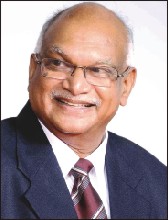
Dr. G. Venkateswara Rao (63), former Acting Director of CFTRI, passed away on June 11 at JSS Hospital in city following a cardiac arrest. A resident of CFTRI Layout in Bogadi, he leaves behind his wife and two sons.

Born on Feb. 19, 1951, Dr. Rao obtained his M.Sc in Chemistry from Andhra University in 1973 and Ph. D in Food Science from University of Mysore in 1983.

Dr. Rao joined Flour Milling Baking and Confectionery Technology, CSIR-Central Food Technological Research Institute (CFTRI) in 1974. He pursued research in the area of wheat science and technology for over 39 years.

He superannuated on February 2013 after holding the position of Acting Director, CFTRI for one-and-half years.

Dr. Venkateswara is a recipient of German Academic Exchange Service Fellowship during 1978 to 1980 and worked at Federal Research Institute for Cereal and Potato Processing, Detmold, Germany. He has visited Sultanate of Oman on the invitation of the Government to conduct study on Food Processing in that country.

source: http://www.starofmysore.com / Star of Mysore / Home> General  News / June 14th, 2014
MDJA’S floral tributes to two senior journalists of city

JournalistsBF19jun2014

Mysore :

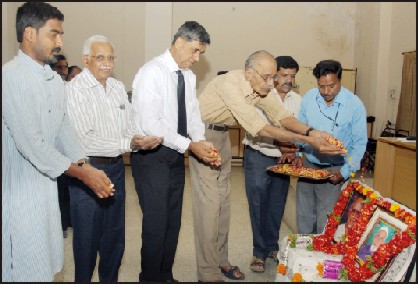
A condolence meeting to mourn the demise of senior journalists S. Pattabhiraman and Khaleel Bebak was held at Mysore District Journalists Association (MDJA) office on Thyagaraja road in city this morning.

Senior Journalist Krishna Vattam, former VC of Yenepoya University (Mangalore) Prof. Syed Akheel Ahmed, Retired Professor R.N. Padmanabha, MDJA President C.K. Mahendra, Vice-President Pragathi Gopalakrishna, General Secretary K. Deepak and others offered floral tributes to the portraits of the two departed journalists.

Speaking on the occasion, Vattam said the demise of the two veteran journalists has saddened the press fraternity.

Recalling the services of the two journalists, he pointed out that Pattabhiraman reached out to the readers through his innovative style of reporting.

Prof. Syed Akheel Ahmed said that boldness, impartiality and an open mind formed the basic qualities of a journalist and he saw all these qualities in both Pattabhiraman and Bebak.

The meeting also observed a one-minute silence as a mark of respect to the two .

source: http://www.starofmysore.com / Star of Mysore / Home> General  News / June 14th, 2014