All posts by admin

TRAVELOGUE…: 14,000 feet to heaven

Scaling the Saurkundi Pass-1

Trekking through snow is an unforgettable experience for the simple reason, there is no path or trail waiting for you; you have to create your own path, where even a small miscalculated step can be your last, says Aishwarya Sunaad, Trekker, International Academy of Mountaineering and Allied Sports, Mysore.

by Aishwarya Sunaad

As the IAMAS (International Academy of Mountaineering and Allied Sports) team bid good bye to Mysore on the evening of 30th April, nobody could anticipate the adventure that awaited us 3000 kilometres away. We were 47 of us, of all ages and sizes, from 3 different States, making our way to conquer (as we would later learn) one of the toughest expeditions in the past 6 years.
SaurkaundipassBF11jun2014

Our journey took us backpacking through 5 States and several cities before we could officially start our endeavour up the mountains from Manali. There is a certain unexplored joy in visiting a new city everyday and as our team wound its way through each of these new places, it was like unravelling a different world. New people, new cultures, new experiences, new stories.

The star highlights of our backpacking being an exclusive visit to the Rashtrapati Bhavan in Delhi; reliving history in Agra and Mathura, experiencing sanctity at the Golden Temple in Amritsar, reliving the stories of partition at the Wagah Border with Pakistan at touching distance, 14 kilometres of White Water Rafting amidst class 6 rapids in the Ganga at Rishikesh and a VIP visit to the prestigious Indian Military Academy at Dehradun, to name a few.

After these indelible experiences, we arrived at our Base Camp in Manali on the 8th of May. Set in the Beas River Valley in the Kullu district of Himachal Pradesh, Manali is a treat to ardent trekkers and tourists alike. Our base camp, set amidst apple orchards with snowcapped mountains and pine forests on all sides marked the beginning of one of the greatest adventures we could experience. After acclimatising to the cold of Manali from the heat of the plains with some thrilling rappelling and river crossing, we started our trek officially on the 11th of May to Segli, our first camp.

The team descended down to a landmark point called ‘15 Mile’ before beginning the 12-kilometer ascend to Segli, at a height of 7,100 feet. The trail wound through small villages and dense vegetation, with the Dhauladhar mountain ranges surrounding us. Just as the team halted for lunch, we were greeted by the first spells of heavy showers. With raincoats and ponchos and an undying spirit, we trekked through the rain and reached the camp site by evening. Sipping some hot tea to combat the chill, we geared up for the next day.

The rain had subsided as we wound upwards towards the camp of Haura Thatch, at 10,700 feet on May 12; ‘Thatch’ means ‘plateau like land.’ Our camp site was actually on a Plateau up a Mountain! This goes to say, nature has her own mysterious ways. We trekked about 10 kilometres through dense green forests and gurgling streams with occasional glimpses of the mountains through the canopies. The sights that we saw and the scenes that we experienced are beyond description.

Trees, flowers, leaves, mosses, birds, insects and all other wonders of nature of all shapes and sizes ! It was paradise. As we were taking in the surroundings, we were greeted by rain, heavier than before. We couldn’t stop. With the rain and hail pounding, we continued upwards. It was getting cold and we were drenched to the bone. At one point, it seemed impossible to go any further when we reached a clearing that seemed suitable to camp. Tents were pitched and a fire was lit under a rock. After vain attempts to dry ourselves we retired to our tents. It rained the entire night and the next morning of 13th, the weather was so ruthless we couldn’t move camp. It was a truly chilling experience. By evening, on the 13th, the weather cleared and the sun peeped out. As we saw the first rays of sun in 2 days, the world seemed magical. We had set up camp near a small stream in an evergreen forest with pine trees on the fringes. There were colours even our cameras couldn’t capture!

But now, there was a crisis. Before starting the trek, we had already decided to forego our fourth camp at Dohra because of extreme snow conditions. Now we were lagging behind yet another day as we could not trek to Camp 3, Maylee, because of the rain. To make up the distance and keep the time schedule, a bold decision was taken. A decision of risk and daring. A decision that would test our courage and endurance, our mental strength and will power. A decision of ultimate adventure. A decision to cover the entire distance to Saurkundi Pass Summit in one day!

We started on the trail at 4 am in the morning on May 14. With torches in our hands and adventure in our hearts, we continued upwards. We encountered the first patches of snow and the first rays of light around 5.30 am. It was breathtaking. By 6.15 am, we had hit the snow.

[ Part 01…To be continued]


TRAVELOGUE…: SCALING SAURKUNDI PASS-2 
Aishwarya Sunaad
Aishwarya Sunaad

Trekking through snow is an unforgettable experience for the simple reason, there is no path or trail waiting for you; you have to create your own path, where even a small miscalculated step can be your last. The temperature kept dropping to subzero values and the sun shone harsher. It was maddeningly white everywhere and without goggles one could go blind. The snow seemed never ending and the summit was nowhere in sight. It was getting colder and colder.

There was snow in our shoes and pants, our feet were going numb and we couldn’t feel our fingers. We had walked for nearly 6 hours up the mountain without stopping and still there was no sign of the Summit. Finally, at around 11.06 am, after a grueling walk, we reached the Saurkundi Pass. The snow was about 3 feet deep and it was snowing heavily.

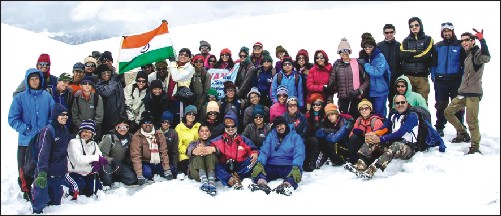
Despite this, we crossed the Pass and summited, at a height of 13,500 feet. There is no greater feeling than having successfully summited an expedition. You are literally and figuratively on top of the world. We had the frozen Saurkundi Lake on one side and never ending ranges of mountains on all sides. We could almost touch the clouds.

By this time, our feet were frozen and our fingers non-existent. That was the day we realised that cold is the most unforgiving condition you can experience. But the joy of having summited one of the most difficult treks, however easy I may make it look, overshadowed everything else.

The 20 minutes we spent on the summit with the Indian flag and the IAMAS banner fluttering proudly in the wind, I can guarantee, will be the most important moments of our lives. But it did not end there. What we thought was difficult while climbing up was nothing compared to what we encountered while descending.

The snow was falling heavily and there was no route we could follow. We were numb and hungry but had to soldier on. We had no choice but to slide down the slopes ! Slide down with no equipment apart from a rope, which we used occasionally.

That was real adventure and the adrenaline rush was simply superb. With everything at stake, we made it down to the tree line by around 4 pm. We had trekked through the most extreme conditions for 12 hours. We finally reached our campsite at Longa Thatch by 6 pm after 14 hours of ascending and descending. We had done it with zero casualties! It was the most satisfying feeling one can feel.

After a good night’s sleep and merry making, we set off for base camp. The weather was sunny with the city of Manali, which looked like the Map of India from that height, sprawling beneath us. We descended down to Lekhni on May 15. The sights were like a poem. After staying at an authentic log hut that night, we finished our expedition on the 16th of May 2014 after successfully reaching Base Camp.

The next few days saw us exploring the city of Manali and seeking some more adventure while rafting in the Beas River. The team left for Delhi on the evening of 18th, where a privileged visit to the Parliament House added another feather to our caps. We caught the Duronto Express back home on the 19th with truckloads of memories and made it home on the 21st of May 2014, successfully.

Every expedition brings your best side to the forefront because it is the ultimate challenge one can face alone. And if you are an adventurous person and need the adrenaline, it is the call of the mountains you must answer. And finally, if you want to test your daring and mettle, it is the Saurkundi Pass you must conquer. For, if there is a paradise, it is this, it is this, it is this.

[Concluded]

Part 01:

source: http://www.starofmysore.com / Star of Mysore / Home> Feature Articles  /by Aishwarya Sunaad / June 06th, 2014

Part 02:

source: http://www.starofmysore.com / Star of Mysore / Home> Feature Articles  /by Aishwarya Sunaad / June 07th, 2014

Over a cup of evening tea : A most ordinary but unusual man

Rangaswamy
Rangaswamy

by  Dr. K. Javeed Nayeem, MD

Yesterday morning I had a most unexpected visitor, Rangaswamy, at my consulting room. He had come all the way from his native place, Banavara near Arsikere to see me with his young son who had not been feeling too well for the past few weeks. This very small built, ever-smiling man is an itinerant seller of kitchen utensils who goes about from village to village on his rickety and always over-loaded moped from dawn to dusk. But that is not his main job and what he is good at most. It is what he does when he is not selling utensils that makes him unusual.

Rangaswamy is a professional monkey-catcher, much in demand and it is in this unusual calling that his talents and ability stand out most. I first met him nearly two decades ago when he became a sensation with his skills in the town of Kollegal where I used to then practice. I still have a weekly outreach clinic there. The town used to be plagued by a herd of more than a hundred monkeys that used to pillage and plunder the crop in all the coconut and fruit trees in addition to harassing citizens on the streets by jumping on them and snatching away anything edible.

No child could walk home from the neighbourhood shop with an ice-cream stick or a packet of chips and no housewife could walk home safely with her daily purchase of vegetables or groceries. And, because the monkeys loved to play with all the clothes that used to be put out for drying I am not too sure whether the womenfolk there had evolved a laundry sorting service in their respective neighbourhoods, not unlike the postal department, to exchange their misplaced and interchanged clothes! I do not know who gave them the idea but one day the town municipal authorities who were under tremendous pressure to do something about the problem decided to rope in Rangaswamy.

He arrived on the scene with his wife and started a two-day survey of the town and the magnitude of its problem before getting down to work. And when he got down to work it was all child’s play for him. In just a week’s time he had all the rouges, big and small, dancing and prancing to his tunes but now safely behind the bars of a large cage from where they could do no harm. The much relieved municipal authorities would then pack their tormentors off in batches by truck to be let off in the distant forests of Malai Mahadeshwara Hills. Since Rangaswamy used to always be on the rooftops with his magic traps while at work, I could not see his handiwork at close quarters although I was tempted at times to follow him and learn the basics of his art.

Strangely, I have always been and I still am fascinated by anything that can be called ‘monkey business’! But on the terraces and rooftops, Rangaswamy seemed as agile as any monkey and unfortunately this was not my forte. But I used to always discuss his exploits and achievements at his every visit to my clinic and he would tell me all about himself and his art with great enthusiasm. I would always tease him that the monkeys were attracted to him because he looked exactly like one of them which is what made his job easy for him. He would say “Yaay hoogi swamy, neevu sari” and break into a shy grin.

But very strangely, yesterday, although I tried very hard I could not get my friend to smile for his photograph. If you happen to see even a wee bit of a smile on his face here it is largely due to your imagination. I would get to spend some time with him unfailingly at the end of each day of his stay in Kollegal because his newly married wife happened to be a bit hypochondriac and he happened to be a very caring and affectionate husband, not unlike me.

He would wait patiently for the crowd of patients to melt away before bringing her into my consulting room. She would have some complaint or the other for which I would prescribe a new and different looking placebo that would satisfy both husband and wife immensely but just for the next twenty-four hours. The next evening they would be back and the lady would narrate a different set of symptoms for which I would evolve a different remedy.

But taking pity on the poor and hapless man I decided to cure her permanently before they left Kollegal. And, I did it too by resorting to a rather drastic but ridiculously simple trick for which Rangaswamy pledged his lifetime gratitude before leaving. I told her that she would soon find her husband going in for a second wife if she did not stop complaining about her minor aches and pains and this unusual treatment seems to have worked wonders. Rangaswamy yesterday told me that his wife who has borne him two sons after our last meeting now dreads going to doctors and that is why this time he had come to see me without her! In case you have a monkey problem, you can contact Rangaswamy on Mob: 9972146839. And, in case you have a hypochondriac wife, you can contact me!

e-mail: kjnmysore@rediffmail.com

source: http://www.starofmysore.com / Star of Mysore / Home> Feature Articles  / by  Dr. K. Javeed Nayeem, MD  June 06th, 2014

19-year-old Boy undergoes stenting for Aortoarteritis at JSS

StentingBF11jun2014

Mysore :

A 19- year-old boy from Mandya district underwent a rare surgery at JSS Hospital in city recently. The surgery was performed by Dr. Arun Srinivas and Dr. H.P. Guruprasad, Senior Interventional Cardiologists of JSS Hospital here.

He had stents implanted in his abdominal aorta and kidney arteries for a rare disease called Aortoarteritis, also called Takayasu’s disease in which major arteries supplying blood to the arms, brain, intestine, kidneys and legs can get blocked and can cause severe complications in young adults.

According to Dr. Arun Srinivas, this is a rare disease and the first time such a treatment has been performed in Mysore. The patient made an excellent recovery after the procedure and was discharged with good recovery of his kidney function.

Stents and treatment were given free of cost as he was a poor patient and was a beneficiary Below Poverty Line (BPL) card.

Dr. Arun Srinivas also stated that all heart diseases including heart attack and emergency care are provided free of cost at JSS Hospital Cardiovascular Services for poor patients with BPL card.

source: http://www.starofmysore.com / Star of Mysore / Home> General News / June 06th, 2014

Dr. A. Ramalingam passes away

RamalingamBF11jun2014

Mysore :

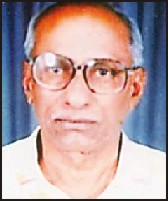
Dr. A. Ramalingam (78), retd. Professor of Botany, Karnataka University, Dharwad, passed away at his residence in Vijayanagar II stage here in the early hours of today.

He leaves behind his wife and daughter Vijaya Narasimham, Principal, Bharatiya Vidya Bhavan School, Mysore.

Prof. Ramalingam had established Ajay Memorial Water Drinking Foundation in the memory of his son who had died at young age and through this Foundation, he tried to serve the society by organising annual lectures and also providing timely help when people faced water crisis.

Body donated: As per his last wish, the body was donated to JSS Medical College in city.

source: http://www.starofmysore.com / Star of Mysore / Home> General News / June 06th, 2014

‘Knights in Khaki’ honour to 8 Police Constables


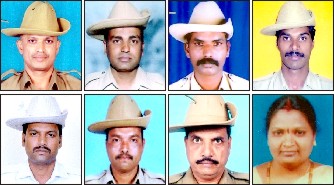
S.J. Manjunath, Nayeem, Ramesh, R.R. Manjunath, Mallesh, Purushotham, Nagaraju, Gayathri

Mysore :

Mysore Round Table-21 and Mysore Ladies Circle-9 will be felicitating deserving Police Constables in its 42nd annual event ‘Knights in Khaki’ today at 4.30 pm at Hotel Olive Garden.

Eight Constables including one lady Constable from Mysore City and District from the categories of Crime, Traffic, Law and Order, Women’s Police Wing will be felicitated during the event.

Police Commissioner Dr. M. A. Saleem will be the chief guest. Tr. Anand Ramu, Chairman, Area 6, Cr. Namratha Shenoy, National Editor, Ladies Circle India, will be the guests of honour.

‘Knights in Khaki’ honours the unsung heroes — the Police Constables — who do the real legwork in the Police Force and receive very little in terms of recognition. The Police Constables selected for this year’s awards are: Mysore City Police- R. Manjunath, CPC34-Metagalli Police Station, M.P. Purushothama, CPC299-Udayagiri Police Station, N.M. Mallesh, CPC450 -KR Traffic Police Station, Gayathri, MPC91-Mahila Police Station. Mysore District Police: P. Ramesh, CPC 491, S. J. Manjunath, CPC 484, Nayeem Ahmed CPC 548 and T. Nagaraju, AHC80.

The awardees will be presented with a rolling shield, a memento, a certificate and gifts donated by the sponsors.

For details contact Convenor Tr.Manish Salian- 9845227249.

source: http://www.starofmysore.com / Star of Mysore / Home> General News / June 06th, 2014

Prime Minister’s Office Extends Tenure of Three Top B’lore Aerospace Scientists

Bangalore :

Three top-ranking scientists closely associated with ongoing aeronautical projects in Bangalore have just received tenure extensions.

Military sources confirmed to Express that the Prime Minister’s Office (PMO) approved two extensions late on Friday night. One had been approved earlier.

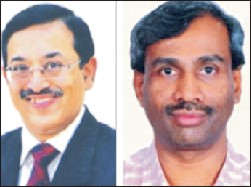
P S Subramanyam, director, Aeronautical Development Agency (ADA), Dr K Tamilmani, director-general (Aero), Defence Research and Development Organisation (DRDO), and Shyam Chetty, director, National Aerospace Laboratories (NAL), will continue working on their projects from Bangalore. The government had to act swiftly as the tenure of Dr Tamilmani and Shyam were to end on Saturday. The PMO favours continuity in national projects. “It was of the opinion that ongoing defence projects should not be affected by the exit of senior scientists,” a Ministry of Defence (MoD) official said.

The decision gives Subramanyam (64) another year in office while Dr Tamilmani (62) and Shyam (60) get two years each.

All three scientists are working towards final operational clearance for the Tejas light combat aircraft. “This worked in favour of Subramanyam, associated with the project since 1986,” a DRDO official said.

The DRDO was backing Dr Tamilmani to tackle the aircraft’s certification challenges. “His expertise is not only critical for Tejas, but also for UAV (unmanned aerial vehicle) and engine projects,” the official said.

For Shyam, the extension came in mainly because of his involvement with the National Civil Aircraft programme. “He has to lead the NAL team for this project. HAL has been given the mandate to undertake the design, development and manufacture of a 70 to 100-seat aircraft. NAL will play a critical role here,” the official said.

source: http://www.newindianexpress.com / The New Indian Express / Home> States> Karnataka / by Anantha Krishnan M / June  01st, 2014

A Gandhi who studied in Mysore

by  M. S. Diwakar

A few days ago, I read with interest a news item in several newspapers about Dr. Shanti Gandhi, a descendent of Mahatma Gandhi, contesting and winning a seat in an Assembly district in the United States.

Dr. Shanti Gandhi, son of Kantilal Gandhi and Saraswathi Gandhi, had stood for election on a Republican ticket and he defeated his Democratic rival, Theodore Ensley in the elections held in Kansas’ State. Dr. Shanti Gandhi, a cardio vascular surgeon, had contested for the 52nd Assembly district. He arrived in the United States in 1967 as a medical graduate from Bombay.

This news item immediately triggered my memory and I soon realised that Shanti Gandhi’s father, Kantilal Gandhi, had studied medicine in Mysore.

Both Kantilal and his wife Saraswathi had spent several years in Mysore when Kantilal was studying medicine. They had stayed on in separate houses but would meet both during the day and in the evenings and spend time together and join their neighbours in participating in Gandhian activities, including singing Ram bhajans, debates and discussions.

Kantilal Gandhi’s father was Harilal Gandhi, the eldest son of Mahatma Gandhi. Harilal had always dreamt of making Kantilal a doctor. Kantilal passed matriculate when he was 20 years of age and despite disapproval from the Mahatma, his grandfather, he decided to study medicine in Mysore.

The credit for ensuring that Kantilal chose Mysore to study goes to Sir Mirza Ismail, the then Dewan of Mysore State. Mysore was under the Wadiyars and it was steadily making progress in all the fields. It was also one of the most progressive Princely States in India and Gandhi had a fairly good acquaintance with the then Maharaja and Dewan.

Kantilal settled down in Mysore with his wife. They spent several years in Mysore before Harilal came to see them. Harilal stayed with them for several weeks and enjoyed the company of his family. Mahatma Gandhi too was pleased that Harilal had settled down with his family and wrote to Saraswathi about it.

Mahatma Gandhi also addressed several letters to Kantilal, affectionately calling him Kanti. He affectionately called Saraswathi “Saru.” In one of his letters, he says Mysore is a good choice for him to study as it has produced some brilliant people.

Kanti called his wife Saru. By accounts, Kantilal and Saraswathi led a happy life in Mysore. While Harilal (born in 1888) died in 1948, Kantilal died in 1983. His wife Saraswathi died in Tiruvananthapuram, Kerala, on December 15, 2008.

Dr. Shanti Gandhi happens to be the son of this illustrious couple.

A book, Mahatma Versus Gandhi by Dinakara Joshi and letters by Gandhi to Harilal Gandhi and Kantilal Gandhi will give more details on these aspects.

[M.S.Diwakar of Bangalore can be contacted on Mob: 9880046397]

source: http://www.starofmysore.com / Star of Mysore / Home> General News / June 03rd, 2014

Dornahalli fest from June 4

Mysore :

The annual fest of St. Anthony’s Shrine at Dornahalli in K.R. Nagar taluk will be held from June 4 to 13.

Addressing a press conference here recently, Rev. Fr. Gilbert D’Silva, Rector, St. Anthony’s Shrine said that the nine-day festival will be inaugurated at 6 am by hoisting the flag at the shrine on June 4. About the Shrine:The Miraculous Statue of St.Anthony has an authentic history now covering a period over two hundred years. A humble peasant, while ploughing his ragi field suddenly came across a small wooden statue; and thinking it for a ‘doll’, he gave it to his children to play with.

One night he had a dream in which a friar wearing the same dress as that of the statue appeared to him and told him that the object turned up by his plough was not a ‘doll’, as he thought; but a statue of a revered catholic saint, known all over the world as Wonder-Worker, that he would like to have a special Shrine in his honour in that place of discovery and that he and his family would be blessed. But the farmer, however, turned a deaf ear to this admonition and in the course of a week his bullocks died and two untimely deaths of his children occurred, which he attributed to his negligence to carry out the instructions received in the dream.

A catholic priest who used to come from Pondicherry to visit Bangalore and Mysore once a year recognised the statue as that of St.Anthony of Padua and urged the farmer to carry out the instructions received in his dream. The farmer erected a little shrine in the field where he had found the statue.

Thereafter the farmer began to prosper well and the news spread. The Shrine became the centre of devotion in spite of various obstacles and hardships. People began to flock to the shrine to seek the saint’s intercession in their distress and sorrows. The fame of the Shrine grew fast and soon a catholic village grew up in the environs of the shrine.

Rt. Rev. Msgr. I.H.Lobo, the former parish priest of Dornahalli, began the construction of a new church in 1964. On 13th June, the same year the foundation stone of this huge church was laid by the Bishop of Mysore. On 13th June, 1969 the new Church was consecrated by the Bishop of Mysore.

source: http: //www.starofmysore.com / Star of Mysore / Home> General News / June 02nd, 2014

MELANGE: HIDDEN HISTORIES – The original take one

BRV Theatre has donned many roles from armoury to theatre to defence services canteen. /  Photo: K. Murali Kumar / The Hindu
BRV Theatre has donned many roles from armoury to theatre to defence services canteen. / Photo: K. Murali Kumar / The Hindu

The vintage cinema haunt of Bangalore’s movie buffs, B.R.V. Theatre nurtures memories of a bygone era

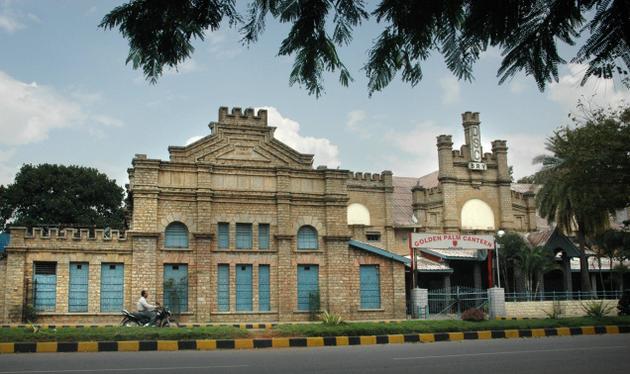
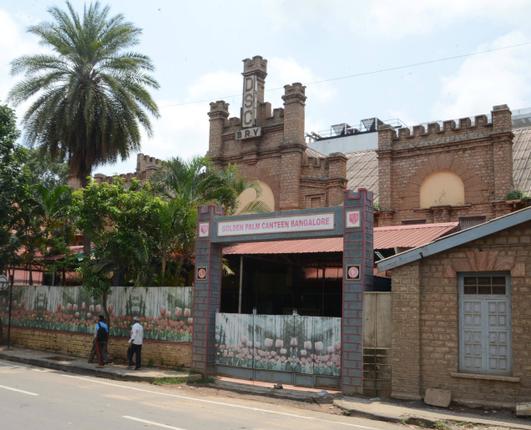
You may have passed by this building almost every day if you have to go through Shivajinagar and yet, the quaint B.R.V. Theatre may have easily slipped your attention. Located at the entrance of Central Street, the present Golden Palm Army Canteen has a legacy that goes back to over a century. While many may know it now as a canteen and Bangalore’s older residents remember it fondly as a theatre, B.R.V. was initially started as canteen/store and armoury of the Bangalore Rifle Volunteers denoting the abbreviation.

The B.R.V was part of the Madras Army and formed on November 21, 1884 and stationed in KGF, Mysore and Whitefield. The unit was later merged Coorg and Mysore Rifles on April 1, 1917 to become the sixth Bangalore, Coorg and Mysore Batallion.

The original building demolished in 1905 and rebuilt to the present tiled-roof stone-covered structure in 1912. Housing a billiards room, reading room, ladies room and a bar on the ground floor and the regimental offices, stores and other rooms on the first floor, the B.R.V. was famous for its main gallery which is 120 feet long and 60 feet wide and easily accommodates 1,000 people.

It’s all in memory The place has donned many roles from armoury to theatre to defence services canteen / Photo: Bhagya Prakash K. / The Hindu

The place has donned many roles from armoury to theatre to defence services canteen. But one of the fondest memories people had of the building before its theatre avatar was the grand balls organised by the YWCA in its initial days on its grooved teakwood floored gallery.

Later, B.R.V. was the place Bangaloreans hung out if they wanted to see the latest English movies in town. A. Premchand, whose father V. Anand was the manager of the theatre from 1960, says the silver screen came to B.R.V. as part of the defence services cinema. “B.R.V. was one of 22 such entertainment hotspots open across India at that time. The first film to be screened here was Ujala in 1959 starring Shammi Kapoor. Opened for public viewing, the city theatre was soon converted into an English movie joint and in 1960, The Captain’s Table, a British comedy film, was the first English movie to be screened here. This was followed up by a David Niven starrer Happy Anniversary, Marilyn Monroe’sThe Apartment and Some Like It HotThe Good, The Bad And The Ugly, the Beatles movies A Hard Day’s Night and Help, the Pink Panther series and The Great Escape were some of the most memorable movies that ran for many months here.”

Prem adds that B.R.V. was the only theatre in those days that was strict about not letting anyone below 18 for adult films. “After dad’s transfer to Madras, the management started to struggle with the film joint and movies were doing well in other theatres like Lido. The theatre eventually shut down and the last movie to be screened was Sean Connery’s James Bond thriller You Only Live Twice.”

Built in the Tudor style of architecture, the building’s gabled entrance-porch and conspicuous battlements is also synonymous with the designs of the Bible Society group of buildings (at the junction of St. Mark’s and Kasturba Roads) and gives Bangalore a very medieval look even today. While the building may have lost their prime status and importance, the legacy and fond memories attached to it will endure in the hearts of the city’s residents.

source: http://www.thehindu.com / The Hindu / Home> Features> MetroPlus> Melange – Hidden Stories / by Allan Moses Rodricks / Bangalore – June 06th, 2014

BR Shetty’s plans for Travelex after Dh6.15bn acquisition

BRShettyBF05jun2014

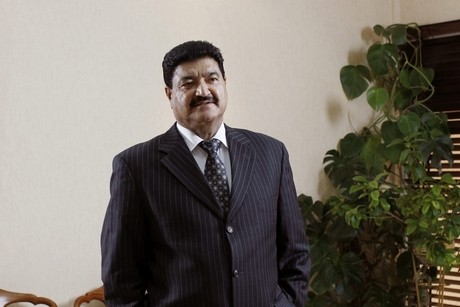
B R Shetty, the Indian businessman and philanthropist who recently bought Travelex for a reported £1 billion (Dh6.15bn), says he is likely to open new stores and may restart Travelex’s remittances business.

“We plan to be in 50 countries in two years’ time,” said Mr Shetty, who is also the chief executive of UAE Exchange. “We’re mainly expecting to expand to richer countries in Asia and Africa.”

Travelex currently has branches in 32 countries, as well as 1,500 outlets.

The two exchange organisations will “not immediately” merge and “will be run independently”, he said. Mr Shetty said he would “not remove anyone at Travelex management”. But he did say there would probably be “opportunities for both businesses to work more closely together”.

Travelex currently has branches in 32 countries, as well as 1,500 outlets.

The two exchange organisations will “not immediately” merge and “will be run independently”, he said. Mr Shetty said he would “not remove anyone at Travelex management”. But he did say there would probably be “opportunities for both businesses to work more closely together”.

He also said the two had different target markets. “UAE Exchange caters for lower and middle-class customers – Travelex is for middle-class and upper-class customers.

“I bought it to expand it, not to reap a short-term reward from it,” he adds. “I’m a long-term investor – I’m not a private equity company. I bought Travelex to expand and nurture the company.”

Travelex recorded an annual loss of £186.4 million, against revenues of £695m at the end of 2013. The company’s financial statements said that was largely due to the debt loaded on to the company when it was acquired by the private equity company Apax.

Mr Shetty’s acquisition was supported by Centurion Investments, the Abu Dhabi investment firm, which contributed funding. Mr Shetty said Centurion’s role was “mainly financial”, but that he would “take advantage of the advisory services that they have to offer”. Mr Shetty was advised in the transaction by Standard Chartered Bank, Evercore, Mena Financial Partners and Linklaters.

An independent public offering for UAE Exchange would be delayed for at least two years, Mr Shetty said.

“We’re still planning to operate the IPO … but we don’t need cash – we have enough cash to sustain the business. Whenever we want to expand further, we’ll go to an IPO,” he said.

Centurion is owned and controlled by Saeed bin Butti Al Qubaisi. The company owns a 40 per cent stake in NMC Healthcare, which Mr Shetty founded. NMC was floated in London in 2012 at a market valuation of £117m. It currently has a market capitalisation of £899m. Mr Shetty retains a 20.3 per cent stake in the business.

The remittances industry is expanding at a fast clip, with total remittances expected to grow at 9 per cent per year, rising from US$414bn in 2013 to $540bn in 2016, according to the World Bank.

New technologies are changing how remittances companies do business. Facebook recently acquired the British start-up Transferwise, started by two Estonian immigrants to the UK, which partners local senders and receivers of currency instead of transferring money abroad. With 100 million Facebook users in India, the company could draw on a large pool of customers for any new money transfer business.

But Mr Shetty is confident that technology will help his remittances business. He points to instant money transfer services as an example of how innovation has benefited his business.

“We have our own innovations,” he said. “New technologies can only benefit the transfer industry.”

abouyamourn@thenational.ae

source: http://www.thenational.ae / The National / Home> Business> Industry Insights> Finance / by Adam Bouyamourn / May 31st, 2014