|
||
|
||

Bangalore:
There are many successful mother-daughter duo in the business fraternity, but what makes Padmini and Kavya Chandra stand apart is their sense of client management.
A conversation with the duo would make you wonder whether you are just another client or a family member. That’s their USP and that’s why they have managed to run the show for more than 15 years. With a new store Soulful Hues; opening in Indiranagar they are going places with their impeccable sense of fashion.
“When I started the brand Vikramaditya and Padmini, 15 years back I just wanted to try my luck at something new,” begins Padmini. With a background in textile designing, she kicked off a silk route with her intricately designed embroidery. Thus was born a brand, which specialised in contemporary design and fabrics, which also got her daughter Kavya, involved.
“Growing up in the factory, becoming a designer has always been there though, I was doing a bit of this and that before getting into fashion,” begins Kavya. She credits every bit of her fashion statements to her mother.
“We usually launch collections every three to four months and ensure that we stick to customised pieces.” explains Padmini. For Kavya however, everything has been a learning experience off the shelf.
“Though I have been shadowing my mom when she makes the patterns and styling, some sort of technical expertise is required to get into any field. I am currently undertaking pattern making classes and also a few tailoring lessons.”
Travelling for fabrics all over the country, Kavya says, “We pick up our fabrics from Banaras, Lucknow, Jaipur and other parts of the country. However, we owe our growth to Bengaluru because if not here we would not have had the kind of response anywhere else.”
Apart from designing and managing the company, both these women love travelling. Known to be an avid yoga buff Kavya smiles, “I love to unwind as I manage a stressful life and I am quite busy all the time. Yoga is the best for that,” while Padmini opts for travel and quality time with family.
source: http://www.deccanchronicle.com / Deccan Chronicle / Home> Lifestyle> Fashion-Beauty / DC / by Nuvena Rajendran / February 28th, 2014
Models or prototypes of biofuels developed six years ago by the Karnataka State Biofuel Development Board (KSBDB) are being adopted by certain African nations under a programme by the United Nations through the World Agroforestry Council (WAC).
The models are aimed at empowering farmers.
State government, however, is lending minimal support to the models. Speaking at a press conference here to announce the national conference on Accelerating Biofuel Programmes in India on February 22, A K Monnappa, Managing Director of KSBDB, said: “It has been observed that similar agricultural situations prevail in Asia and Africa. Some African countries such as Mozambique have decided to espouse the multi-species cultivation approach model, unlike the Karnataka government, which promotes the single-species cultivation approach.”
Fuel crops
“The Hasiru Honnu and Baradu Bangara models, which are already in use, encourage farmers to grow oil seeds along the borders of farmlands and wastelands. They also ask them to cultivate fuel crops in addition to agricultural crops. These seeds are then collected and sold at standardised rates,” he said, while pointing out that the recent budget had made provisions for 10 per cent biofuel to be blended in automobiles, compared with the earlier five per cent.
MoU to be signed
The KSBDB and the WAC will soon sign a memorandum of understanding (MoU) in this regard. African nations will set up information and infrastructure development organisations, which will have a capacity to generate 100 litres of biodiesel a day.
Asked about the slow growth of biofuel in India, Divakar Rao of Vision Group on Biotechnology, Government of Karnataka, said: “The KSBDB is only a facilitator. The board functions through NGOs. The mindset of the people and lack of adequate funding from the government have delayed the implementation of various models. Recommendations from the national conference will be sent to the Government of India for implementation.”
Meanwhile, the KSBDB is striving to increase production of oil seeds in the State by encouraging farmers, especially in the districts of Bijapur, Bagalkot, Davangere, Chitradurga and Tumkur. The board would also seek the help of the Indian Railways.
source: http://www.deccanherald.com / Deccan Herald / Home> City / DHNS / Bangalore – February 19th, 2014
Mysore :
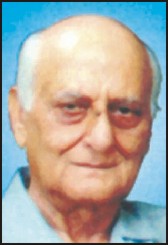
Umraomal Purohit, President of All India Railwaymen’s Federation (AIRF), General Secretary of Hind Mazdoor Sabha (HMS) and leader of International Transportworkers’ Federation (ITF) passed away this morning at his residence in Mumbai.
Purohit who joined as a Station Master in 1946 became the General Secretary of Western Railway Employees Union in 1958 and in 1962, he was elected as the Assistant General Secretary of AIRF and was serving as its President since 1980. He played an important role in the implementation of many pay commissions for the Central Government employees.
The members of The South Western Railway Mazdoor Union, Central Railway Workshop, Mysore South Branch, in a press release have condoled the death of Purohit and said that the demise of Purohit is a great loss to the trade union movement in India and to Railwaymen in particular.
source: http://www.starofmysore.com / Star of Mysore / Home> General News / February 28th, 2014
Mysore :
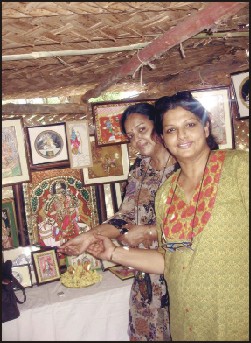
It is wonderful to possess artistic skills within oneself. But it is all the more wonderful when one gets a chance to turn inventive with a creative sibling alongside. The sisters we are going to introduce to you today are such. From learning to creating and promoting paintings of many varieties that they create, Shubha Alva and Sonia Adappa have done them all together and for almost over a decade now.
Shubha and Sonia are siblings in city for whom art means their world. And so much so that they are trained in and create not just one but many different forms of paintings with ease. Attending classes and art workshops organised by adept artists at various places in Mysore is how they have trained themselves but the instinct actually comes from the family itself where they saw their own mother being a talented artist, say the duo, adding: “Our mother Vimala Rai is an artist too. She used to do oil paintings which was always interesting to watch and seemed inspiring as well. That is where our artistic instincts probably first developed.”
While Shubha is trained in creating the Mysore, Tanjore, Warli, Madubani,Gajifa and Kinhala art forms, Sonia is mostly into painting Madubani and Tanjore arts. “I learnt the Mysore painting by the renowned artist late Ramanarasaiah,”explains Shubha, “after which I attended classed on Ganjifa conducted by his daughter Chandrika followed by classes from well-known artist Ganjifa Raghupati Bhat. He conducted a training programme exclusively for women under a project called Yashaswini where I picked up on my skills of Ganjifa really well and began practicing it. Further, I attended several training classes in art forms like Madhubani, Kinhala and Warli at the Indira Gandhi Rashtirya Manav Sangrahalaya (IGRMS). And I myself taught the Mysore style painting to my sister.”
And having been painting art pieces in all the above mentioned art forms, the ladies say the work keeps them busy all day long. “Whether we have orders or not, dyeing the canvas is what we always do as we love painting to keep ourselves busy and also perfect our skills,” Shubha and Sonia say and Shubha adds, “currently I am working on a Tanjore piece on Yashoda and Lord Krishna, jut to perfect my skills.”
Ask them as to how they manage working on so many varieties and pat comes the reply from Shubha, “It is only when you practice constantly that you can perfect your skills and get more creative. And hence, we are painting something or the other in one or the art forms we know.That helps us master every form.”
The ladies have not stopped at that. Their love for art has also given birth to a boutique, available where are interior décor items, clothes and also the paintings by the siblings. Shubha who has studied interiors concentrates on the interior décor items for home while Sonia gets hand woven sarees from places across India to their boutique in city. “And if the people we meet here are art lovers, they’ll want us to create exclusive art pieces for them too. And we love meeting interesting people that way. Things like that keep us occupied,” the sisters say.
The ladies can be contacted on Mob: 99163-10898.-AN
source: http://www.starofmysore.com / Star of Mysore / Home> Feature Articles / February 27th, 2014
Embark on an adventure with Pheroze Kharegat as he takes us to a place steeped in history and conspiracy. Bara Kaman in Bijapur mesmerises and captivates anyone who looks upon it…

With an overwhelming number of Mughal monuments in India, we tend to forget that, down South, in Bijapur,Karnataka has a great treasure house of Islamic architecture. Peep into the annals of history and you will be intrigued to know how this obscure little town in northern Karnataka attracted countless dynasties in its brief thousand years of existence.
Dynasty rules
The mighty Chalukyas led the pack, followed by the Khiljis, the Bahamanis and the Adil Shahis. Bijapur’s ancestry rattles off the veritable who’s who of medieval India. They came here to rule and left their imprints in stone – the Gol Gumbaz unparalleled anywhere in the world, the sombre mausoleums and the lavish mahals.
Of all these, the most mystifying in the unfinished edifice is known as the Bara Kaman, or twelve arches. Arches that are silently crumbling, yet graceful. The unfinished tomb of Ali Adil Shah lies a short distance to the north of the citadel and the Gagan Mahal. The great high basement upon which the building stands is 215 feet square.
The most peculiar characteristic of the building are its arches. They are purely Gothic in outline, being struck from two centres with the curves continued up to the crown. On a raised platform, in the inner enclosure is the tomb of Ali Adil Shah. Standing at a dead end of a lane, located a few km from the present day Bijapur town, the Bara Kaman — as this mausoleum was called, stands in ruins.
There are no domes or pillars; just towering stone walls that curve into arches, built to represent death and immortality, as they tried to reach out to each other. The original plan was to build an edifice of 12 arches arranged both horizontally and vertically around the tomb of the king and his queens. However, barely a couple of arches completed the picture, while the rest of them seemed to have been left undone.
This is the incomplete mausoleum of Ali Adil Shah, Sultan of Bijapur, who ruled from 1656 to 1686. This building is also called as Ali Roza. This is located near to the Bijapur main market.
Family politics
Built in 1672 A D, it was the burial place of Ali Adil Shah II and his queens and members of royalty. But the planning of such a grand monument spelt death for the prince.
Ali Adil Shah was murdered by his father Ibrahim Adil Shah to prevent him from completing Bara kaman. Ibrahim Adil Shah feared that Bara kaman would lessen the popularity of Gol Gumbaz that he had gotten constructed. Bara Kaman has the tombs of Ali Adil Shah, his wife Chand Bibi, his mistress and his daughters.
The architect Malik Sandal, initially raised solid walls in the form of concentric arches and once the entire wall was erected, the inner arches were toppled off and only the outermost arch was left intact. Also iron rings were used to hold the stones in place. They weren’t cemented together.
If the mausoleum had been completed, it would have definitely rivalled the Gol Gumbaz in Bijapur.
As a visitor enters the place, he is bound to be impressed by the huge symmetrical arches. The pillars are built of stone and stand tall. The architectural skill of those who designed and constructed this monument is noteworthy.
It is a fine example of Islamic architecture which is synonymous with grace, beauty and opulence. There is no roof over the structure, a clear indication that work had to be stopped due to unknown reasons.
Massive pillars, with large stones nicely held together, support the arches, which soar to the sky. The arches are interlinked giving a picture of continuity.
The tombs are simple with no decoration and a hemispherical smooth top. Two of the arches are located on a tiered high platform, at a distance from each other, and have an austere look.
A wall at the back of the monument has a small arched opening as a lookout. The entire monument is bereft of any embellishment.
The garden in front is well maintained and the Archaeological Survey of India is looking after the upkeep of the monument, though no entry fee is charged.
It was rather late in the evening, and the sun’s rays filtered through the towering arches, radiating a soft glow. The cenotaph just stood there throwing no clues as to why it was incomplete.
The only motive available in history is pride that came between the father and the son. They both tried to surpass each other in terms of massive mausoleums.
source: http://www.deccanherald.com / Deccan Herald / Home> Supplements> Spectrum / Maharaja Features / March 04th, 2014
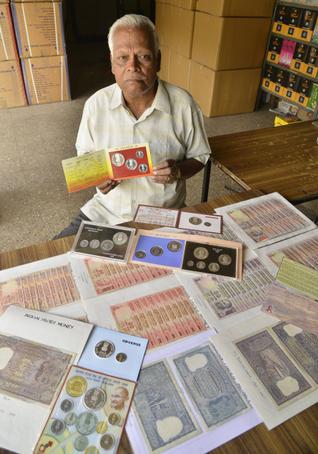
At the 5th National Numismatic Exhibition that concluded in the city recently, Bangalorean P. Subramanyam Setty, the veteran coin and note collector, was honoured for his impressive collection over the years. At his Vijayanagar residence, heaps of albums with the rarest of notes and coins are neatly arranged and placed in a room that attracts anyone to take a closer look. “At the outset I want you to see the Fancy Number series in my note collection, they are thrilling,” says the septuagenarian, a member of the Karnataka Numismatic Society. The fancy is in the Mahatma Gandhi note series where the denominations from Rs. 1,000 to Rs. 10 bear the numbers 111111 to 999999 and from 100000 – 1000000, — 19 notes in all.
Out of the 136 Star Notes issued by the Reserve Bank of India, Setty has 130 out of them in Rs. 10, 20, 50 and 100. “Star Notes are currency notes issued by RBI for replacement of defectively printed bank notes bearing the star in the number panel for indication. Issued between 2006 and 2014, the present RBI Governor Raghuram Rajan too has issued three Star Notes of Rs.10, and I have many of them issued by former governors, Dr. Y.V. Reddy and D. Subba Rao too,” he explains. Going back to pre-Independence British India Series-1, with a profile portrait of King George VI on the first series of RBI notes issued in 1938 is what Setty cherishes, while his post-Independence Republic India Series – II has a Rs.1000 note issued in 1954 with the Brihadeeshwara Temple of Tanjore depicted on the reverse. “Look at the size, it’s a huge 20 x 13 cms!” exclaims Setty.
“My collection is the rarest. Each of the old and exceptional of the notes costs in thousands to get hold of them. On many occasions we have travelled to the nook and corners to meet people who possess them, and we pay a premium,” says Setty. The Republic of India Ashoka Pillar series with the Chakra depicting the wheel motif of the Konarak Sun Temple issued in 1975 and the Mahatma Gandhi Series issued from 1996 are all available with him. “The one rupee Gandhi series of 1969 and the Rs.2. 5 and 10 issued between 1957 and 1970 stands out in my collection as the RBI stopped one and two rupees in 1995,” he says, the nearly 200 staggering variety with different signatures making up his note collection.
Subramanyam Setty also has an astounding 71 varieties of ‘Commemorative Coins’ up-to-date, issued by the government since 1964. “They are referred to as the uncirculated proof-sets,” he says. While most of these coins are in memory of events or renowned personalities of the country which are mostly in quaternary alloy with 50 per cent of silver along with copper, nickel and zinc, the thousand years of the Brihadeeshwara Temple in Thanjavur is commemorated with a 44 mm thousand rupee coin with 80 per cent of silver in its make-up!
The Platinum Jubilee dedicatory coin of the RBI released in 2010 is a Rs.75 denomination with the RBI monogram of the Tiger. “I am still waiting for the Motilal Nehru and Sant Tukaram coins, it takes six months to one year and we book a year in advance,” says Setty. “I also treasure the Mahatma Basaveshwara coin that I possess.” Born in Andhra Pradesh and settled in Bangalore with an agarbathi business, Setty’s son Sharath Babu and daughter Sharmila are captivated to be part of the note and coin fold, while his other son Varaprasad, a central excise employee, has received several awards for his postal stamp collection.
source: http://www.thehindu.com / The Hindu / Home> Features> MetroPlus> Society / by Ranjani Govind / Bangalore – March 03rd, 2014
CIIL to document these languages; Dictionaries to be brought out and ethnic knowledge system to be recorded.

Mysore :
Anthropological Survey of India (ASI) in collaboration with Central Institute of Indian Languages (CIIL) has organised a two-day workshop on ‘Endangered tribal languages in South India’ at ASI’s Manav Bhavan in Bogadi II Stage here since yesterday.
CIIL will take up a mega project under which it will document nearly 500 endangered languages in the country, each spoken by less than 10,000 people. The project has got its nod in principle by the Ministry of HRD and CIIL will collaborate with Universities and Institutes in carrying out the project.
Speaking to media persons, L. Rama- moorthy, Head, Linguistic Data Consortium for Indian Languages, CIIL, said that the work would be taken up under a scheme to preserve and protect endangered languages.
“The objective is to bring out dictionaries and also document and preserve the ethnic knowledge system enshrined in the languages, including folklore. It would also extend to frame grammar rules. Also, experts would give suggestions for revitalisation of these languages. The project would be carried out phase-wise. About 70 languages from different parts of the country would be studied in the first phase and 500 words would be taken up in a span of 10 years,” said Ramamoorthy and added that the study and documentation of each language would cost Rs. 6 lakh to Rs. 8 lakh.
Earlier, P.K. Misra, President, Anthropological Association, Mysore, inaugurated the workshop on ‘Endangered tribal languages-Initiatives from CIIL.’ Speaking on the occasion, he said “Language is embedded in society and culture. It is an important tool to identify people belonging to different communities. The region, inhabited by Jenu Kuruba community, is also home to other communities like Betta Kuruba, Soliga, Yerawa and others,” and added, “The status of language should be understood in the context of society and culture which were not static but under constant change. Even the changing external environmental factors have affected the traditional lifestyle of the tribal people.”
Ramamoorthy, during the workshop, quoting a survey, said that there was no consensus on the status of endangered languages. “While the Census of India 2001 fixed the number as 122, Anthropological Survey of India put it at 323, while a UNESCO report said 196 Indian languages were endangered,” he said and added, “Language is a complex phenomenon and its use is also complex due to the onset of globalisation. We get to know one’s culture through the clan’s name of the community to which they belong. In fact, many languages are known through their communities.” He hoped that the workshop could work out parameters and tools to identify an endangered language.
Lawrence Surendra, Senior Fellow, Indian Council of Social Science Research (ICSSR), who delivered a special lecture on ‘Endangered tribal languages and cultures’ said, “There is a link between language and bio-diversity as they reinforce each other. Language represents knowledge. Endangerment of language is far more serious than that of culture because with the extinction of language, the entire encyclopaedia of knowledge enshrined in that language would be lost forever.”
C.R. Satyanarayana, Deputy Director & Head, Anthropological Survey of India, Southern Regional Centre, subject experts from different Universities and Institutes are attending the workshop which concludes today.
source: http://www.starofmysore.com / Star of Mysore / Home> General News / February 25th, 2014

Mysore :
“R.S. Naidu was a multi-faceted person excelling in every field,” opined Prof. M.G. Krishnan, Vice-Chancellor, Karnataka State Open University (KSOU).
He was speaking after inaugurating a programme organised by R.S. Naidu Art and Cultural Welfare Trust at Nadabrahma Sangeetha Sabha on JLB Road here yesterday to mark the 28th death anniversary of Freedom Fighter and Sculptor R.S. Naidu.
Krishnan said that Naidu joined Youth Congress and worked for its unification. He added that Naidu was also an art patron and a good sculptor.
On the occasion, RSN Memorial award was presented to Senior Advocate M.A. Sampath Iyengar, Sri Kumara Nijaguna Swamiji of Kollegal and Star of Mysore Editor-in-Chief K.B. Ganapathy.
Addressing the gathering, Ganapathy said that Naidu after having worked hard for the society turned a loner towards the end probably upset over the value deficit in society.
He said that though many leaders fought for nation’s freedom only a few are being remembered. Sardar Vallabhbhai Patel, for example, is hardly remembered despite his great contribution for country’s unity. He also lauded the services of R.S. Naidu Trust.
Mysore Art Gallery President and sculptor L. Shivalingappa presided. District Kannada Sahitya Parishat President M. Chandrashekar was present.
Later, a cultural programme was presented by Mahathi Orchestra and M-Modal troupe.
source: http://www.starofmysore.com / Star of Mysore / Home> General News / February 25th, 2014
Litterateurs go in search of a story while stories come directly to medical litterateurs (Vaidya Sahitis), said noted litterateur Na D’Souza.
After inaugurating a state-level medical litterateurs conference organised jointly by the Kannada Vaidya Sahitya Parishat and Indian Medical Association, Shimoga branch on Sunday, litterateur Na D’Souza said not many litterateurs have the opportunity to look at life closely like doctors. The experience as a doctor is enough for literary activities, he said.
“Literature brings recognition to the writer through the reader. Medicine is a profession while literature is a hobby. Doctors who enjoy both will become a litterateur in their own field,” he said. D’Souza stressed the need to record daily activities and experiences that would help in preserving ideas and knowledge of a medical profession which in the later years might help in the formation of a literary work.
Litterateur cum doctor K A Ashok Pai said more than 300 doctors in the state have contributed to the literary field and Shimoga district stands differently as it has produced more number of doctors cum litterateurs.
Presiding over the function, president of Shimoga branch of Kannada Vaidya Sahitya Parishat C G Keshavamurthy felt the need for the construction of a building for Kannada Vaidya Sahitya Parishat either at Bangalore or at Shimoga .
source: http://www.newindianexpress.com / The New Indian Express / Home> States> Karnataka / by Express News Service – Shimoga / February 24th, 2014