Mysore gives you a sense of rootedness in the largely soulless world you find yourself adrift in. It provides you that much needed anchor and gives you a sense of belongingness. The Mysore-sensibility is inherent, indescribable and distinctive.”

by Nandini Srinivasan
It’s said “Go where you are celebrated — not tolerated.” If they can’t see the real value of you, it’s time for a new start.
Not everyone gets to be celebrated wherever he goes and gets a chance for a new start, though valued amply in the fields he has worked in.
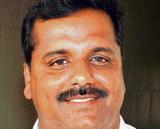
Chetan Krishnaswamy, Country Head – Public Policy, Google India, fits the bill perfectly, moving from being a leading Journalist, to a decision-maker in the world’s most exciting company — Google!
Chetan was earlier the Director – Corporate Affairs at Dell India (2008-2013) and prior to that, was with Intel from 2003. Now, at Google, he steers the company’s initiatives and campaigns in the public policy space and works towards ensuring that Internet penetration grows in India, without regulatory impediments or encumbrances.
Based out of Delhi, Chetan also oversees the company’s range of engagements across key industry associations, think tanks and civil society on issues of relevance. “The Internet is a vibrant mosaic of free expression and enterprise and it is important that it is kept open. All of us have a stake in ensuring that the medium remains that way…” says Chetan.
A Mysorean who enjoys his walks along the Kukkarahalli bund as much as he basks in the soulful tunes of P.B. Srinivas from old Kannada films, Chetan, an alumni of Mysore Maharaja’s College (He won a gold medal in BA and a scholarship. He also met his future wife Rajeshwari Jagtap, who was also doing journalism at Maharajas.) won several accolades in the field of journalism at a very young age, before he got hooked on to the IT bandwagon. His stint with journalism began with Star of Mysore, with his weekly column titled ‘Ordinary People’ which tugged at the hearts of the readers, as it focussed on people in mundane professions — from the morgue-keeper to the newspaper vendor.
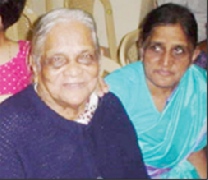
In the early days, despite the family legacy and being among ‘The’ men of letters (Chetan is the grandnephew of renowned novelist R.K. Narayan and cartoonist R.K. Laxman), Chetan never did think of writing as a career. He says, “in spite of all the literary credentials within the family, I too had plans to become an engineer which was the most obvious path you took those days. A trip to Mysore changed my thinking. Working for a short stint in a local newspaper like Star of Mysore was the turning point. During those two months of vacation, I stayed at my grandparents place and worked as an intern in SOM and learnt the everyday rudiments of producing a paper, gathering news etc., and this was when I knew there was an obvious affinity towards journalism and probably I should take this up as a career,’’ and adds that this short stint gave him direction to pursue journalism and that’s when he got into a journalism course.
Chetan admits that the Fourth Estate may not be as paying as a MNC job, but it does have its moments of glory, several of them in fact, if you have a flair with words. And he says, working for a leading publication in a small town like Mysore has its own advantage. “Working for a publication in a city like Mysore sustains your interest because the feedback is instant. People recognise you for your writing and the appreciation that comes your way keeps you going. That’s why Mysore has been able to spawn so many journalists. This kind of instant feedback is missing in larger cities,” says Chetan.
That’s some consolation to a Mysorean, who always hears of how the town doesn’t have much to offer to youngsters to build their career. But what is true is that it has a limited set of opportunities and exposure. Chetan does agree. “I agree the Internet has shrunk the world and has opened up more opportunities; but then, in today’s competitive milieu there is a need to mix and deploy your skills in various environments. Maybe for this, Mysore is not the most conducive of places. It just does not offer that range and variety,” but the passionate Mysorean in him is quick to add “having said that it is true that a city like Mysore gives you a sense of rootedness in the largely soulless world you find yourself adrift in. It provides you that much needed anchor and gives you a sense of belongingness. The Mysore-sensibility is inherent, indescribable and distinctive.”
From 1993 to 2003, Chetan worked as a journalist for some of India’s renowned publications, including The Times of India, Frontline magazine and The Week.
In Frontline, as a young cub reporter, he got his cover story in the first six months of his job and was promoted in due course. While covering a string of stories for The Week, he was awarded the magazine’s best reporter award in 1998. And, as a young 28-year-old, he became the Assistant Editor and Head of ‘The Times Technology’ Bureau, the first to be constituted by any newspaper in the country. He wrote a regular column ‘Mousetrap’ on tech-related issues. Chetan also did research for the reputed Fortune magazine and extensively interacted with its contributing writers.
But what made him retreat from a field he was excelling himself in? “Sheer boredom,” says Chetan! “Frankly, I had reached a point where I thought there was nothing new happening. I had written on every conceivable subject and I was getting restless. Seeing my name in print didn’t give me a rush of adrenaline anymore and it was quite surprising because it came at a stage when I was doing very well for myself in the field…”
To get over the phase of listlessness, Chetan started teaching Business Journalism once a week in a local college in Bangalore. “I enjoyed lecturing to this young bunch but also ensured that my cynicism didn’t surface and destroy their idealistic notion of journalism,” says Chetan. “TOI also encouraged me to edit and release two hard bound books on technology which kept me going for some more time.”
Chetan was also recommended by The Times Bangalore management to be part of a ‘think tank’ team headed by Times of India’s reclusive proprietor Sameer Jain. “I was quite keen and enthusiastic to be part of this team. The Times of India flew me into Delhi to meet Sameer Jain, which I did. But due to a host of reasons, I was disappointed when nothing materialised.”
Speaking of his jump from journalism he says, “Later I heard Intel was looking for a person to drive its public affairs division and thought I’ll give it a try.” He says however he was very sure he didn’t want to do media Public Relations. “Just the thought of approaching friends, who were reporting into me previously, to place articles didn’t appeal to me,” says Chetan.
After several rounds of negotiation, I decided to change lanes and got into the corporate world in 2003. My friends wrote me off saying that I would come back to what I did best within a year. I did prove them wrong though.
“It was a totally new world compared to journalism which is so spontaneous, free wheeling and free thinking. As a journalist you enjoy a vantage point of sorts and you do speak from a strength of position. But the new world that I had entered was so dynamic, so different. In the corporate milieu, I had to unlearn and reorient my attitude because here everything was process driven.’’ Transitioning from a vibrant, creative field to a ‘sterile’ corporate environment was a trifle discomfort but not entirely insurmountable. Furthering this point, he recalls, “My boss at Intel, Anjan Ghosh had once told me that if you fail in an assignment even after sticking to the process it’s okay. You will be excused. But if you fail without adhering to the established process then you are mincemeat. I will not be able to save you.”
Chetan’s five-year stint at Intel as Head- Public Affairs and Executive Assistant to Intel India President was marked by several awards and accolades. The change of field was no deterrent as he went on to prove that the hand that wields the pen, can also articulate his thoughts perfectly well verbally as to influence policy makers! Chetan was responsible for all of Intel India’s policy engagements in India and parts of South Asia. Chetan won the prestigious ‘Intel Achievement Award,’ the company’s highest award for driving an industry-wide initiative to influence the Central government in reducing tariffs on PCs in 2004. Hailed as a “role model,” he received the award from the then Chairman Craig Barrett (Less than 1% of Intel employees win this award.)
Chetan then moved to Google and says the company excites as much as it does any youngster and speaking of his work, he says, “Today, there is a constant dialogue happening between the policy makers and the industry and that’s where I come in, the internet as a medium is dynamic and Google is in constant talk with the policy makers to ensure that this medium thrives unhindered.’’
He is excited about Google launching a portal for the general elections. “The portal will assist voters in India. Our intent is to empower voters with all the information they need at a single destination for the upcoming polls. Over time we will add more functionality to enable users to interact and engage with the candidates, so that they are not simply watching from afar, but participating in, engaging with and shaping the political process in a democratic way,” says Chetan.
Chetan has been an active part of both the pre-internet and post-internet era of Journalism. Does he feel the media has seen a dramatic makeover?
“The era of poster boys in journalism is over I think. For good or bad, social media has resulted in the democratisation or flattening of news. Information or news is being generated and thrown up through unconventional modes and methods. In this era of ‘citizen journalists’ you need to develop your own discerning measure to gauge what is relevant to you. Undoubtedly, the sanctity and credibility that you attached to traditional news formats is undergoing a dramatic change. But good and creative journalism will always find a place in a crazy democracy like ours,” says Chetan.
A person who himself was not too sure of which path he needed to take during his formative years, Chetan doesn’t want to sound preachy! But he does have a piece of suggestion for those youngsters who are at the crossroads and for those who feel apprehensive to step out of their comfort zone! “It is very easy to simply say pursue what gives you happiness, which is what it should be, I agree. But, there is a need to be adaptable in this ever-changing world. You need to at times take rational and commonsensical decisions and not get swept away by romantic notions of what life is all about. You need to ruthlessly prioritise to survive in this competitive world whichever field you choose. In fact today, the corporates are more appreciative of individual capabilities and give him/ her the space to experiment and try out their passions. Your professional trajectory needs not be at the cost of your passion.’’
Chetan’s love for Mysore surfaces once too often as he goes on to add, “It is here that cities like Mysore will help you retain your sanity and help you take out time for doing very simple things that you did all your life. Listen to music, go for a walk or just laze around doing nothing.’’
source: http://www.starofmysore.com / Star of Mysore / Home> General News / January 11th, 2014