Category Archives: Uncategorized

Aashayein makes a difference to learning

AashayeinBF11mar2013

Bengaluru:

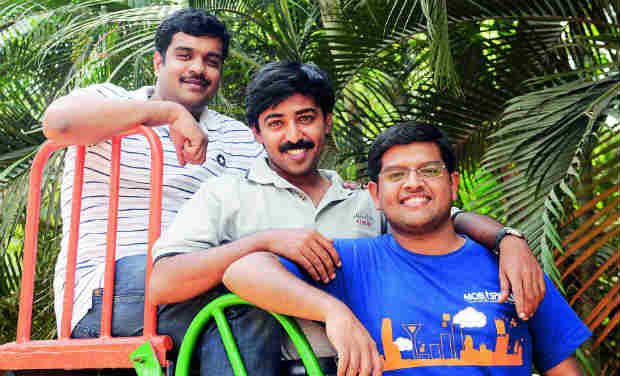
The Aashayein Foun­dation, a completely volu­nteer— run organisation has reached out to thousands of children since it was first formed in 2007. Chandan Raj, Ashwin B.M., Sunil Kumar, Somaiah M.P. and Ashish are software engineers brought together by an indomitable altruism. They bicker and laugh with each other as we talk in their ‘official’ meeting place, which doubles as a storage area, stacked with notebooks and whiteboards. With over 2000 volunteers in their network now, the Aashayein Foundation is a refreshingly low key, extremely driven organisation.

The foundation, which was registered as an NGO in mid 2007, runs four major programmes. Access to education is the primary focus, addressed by the Bachhe Mann ke Sachhe project. Pustaka Abhiyana creates an environment conducive for lea­r­ning by improving infrastructure in schools and providing children with basic needs like notebooks. The third programme, Shikshana Abhiyana has had the widest reach and focuses on the quality of education through spoken English classes and extra curricular activities.

Aashayein began with a New Year resolution made for 2007. “We were all just out of college, earning money for the first time and we thought we might as well be responsible about it,” said Chandan. So in the first week of January that year, they did what would become the first prong of the Aashayein Foundation — serve breakfast at the Karnataka Association for the Blind.
“Sunil’s uncle was serving breakfast on the street and we thought we’d go to an orphanage or blind school instead,” said Chandran. That Sunday morning proved so immensely satisfying that they decided to do it every week, roping in 150 volunteers in a little under two months.

A few weeks later, it was clear that serving breakfast wasn’t enough. “We wanted something that would have a greater impact,” said Sunil Kumar. The problems in India are many — health, sanitation, nutrition — that social workers are usually spoilt for choice.

Education, however, seemed the key to turning society around. “Even with education, there was plenty to deal with; we didn’t want to flounder in that ocean,” said Somaiah, who works at Cisco. Access to education was clearly the fundamental issue. “Our first project was bringing kids to schools,” he said. “It meant identifying kids who didn’t go to schools and enrolling them.”

The erstwhile Shivajina­gar slum, Jayanagar, Koramangala and later Whitefield became the haunts for the Aashayein Foundation where they encountered all sorts of issues. There are parents who can’t afford to send heir kids to school, but would like to. Sometimes the kids and the parents simply aren’t interested and “in these cases, we don’t force them,” interjected Chandan, “They are happy with the fifty rupees a day the children bring home.”

School fees are taken care of for the children who do enrol — the foundation has a budget of Rs 2,500 per child. “We pay 75% of the cost and ask the parents to contribute the rest, so that the whole family feels involved and committed,” said Somaiah.

This programme was limited to urban schools, but the scope was later widen­ed. Rural government-run schools became the new focus. “Logistics were a huge problem for us,” said Somaiah. That’s how the Gift your Village programme was born, to take advantage of the vast influx into Bengaluru from the rural parts of the state. “We ask people to conduct surveys in their own villages. Then we make them project coordinators for the work we do there.”

An official MoU is signed with the government and the foundation sets about providing the schools with infrastructure. There are currently 24 developmental programmes running in rural schools.
The pitiful state of so many government run schools runs far deeper than physical infrastructure. Teachers slack off, and many are not equipped with the skills to handle or teach a class of children. “This is where our volunteer programme took off,” said Sunil. Shikshana Abhiyana runs special classes on Saturdays — ranging from spoken English lessons to creating awareness on issues like cruelty to animals. This extends to summer camps, where the children get yoga, dance, music and even cooking lessons, all run by volunteers.

The Sunday breakfast serving programme, whi­ch started it all, remains the hallmark of the foundation. It is used as a way to initiate volunteers, so they see first hand the philosophy of the Aashayein Foun­dation. “We exist on commitment,” said Ashwin, one of the quieter members of the group. The volunteers are not paid and they don’t have to pay to volunteer, either.
Word-of-mouth has proved immensely successful for the organisation and an annual walkathon is their major fundraising event. Is that enough? “We get about 700 people who actually walk with us,” said Ashwin, “along with about 2000 ticket sales.” This is ample, they say.

A wonderfully simple method — an unshakeable faith in the innate goodness of humanity, has done wonders for the less privileged. Many, myself included, might raise a sceptical eyebrow at this very lofty notion, but the Aashayein Foundation seems to have hit upon something. “What has really changed is our perception of people,” said Somaiah. “We thought we would have to convince them to volunteer, but it turns out, we just had to give them a chance to do something they were only too happy to do!”

source:  http://www.DeccanChronicle.com / Home> News> Current Affairs / March 11th, 2013
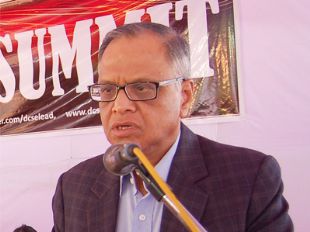
Narayana Murthy, Kiran Mazumdar Shaw form BPAC to improve quality of life in Bangalore

Bangalore :

India’s only political action group formed by corporate heavyweights has begun its hunt for candidates to field in the assembly election due this year in Karnataka, an unprecedented effort by the business elite to influence politics.

Headed by the likes of Kiran Mazumdar-Shaw and Mohandas Pai and backed by NR Narayana Murthy, the Bangalore Political Action Committee, or BPAC, was formed to improve governance and the quality of life of citizens in the technology capital of India by growing, and then, flexing some political muscle.

Headed by the likes of  Kiran Mazumdar-Shaw  and Mohandas Pai and backed by NR Narayana Murthy, the  Bangalore Political Action Committee , or BPAC, was formed to improve governance and the quality of life of citizens in the technology capital of India by growing, and then, flexing some political muscle.

BPAC, which launched its charter and agenda on Sunday at the hands of Murthy, said it has invited nominations from political parties and independent groups to identify suitable candidates for the election, due latest in May. Murthy, the chairman emeritus of  Infosys  , said he was hopeful that for the first time in his life he sees confidence that India can indeed solve its problems .

“I don’t see the same kind of helplessness that I saw when I was in my twenties. Therefore, I believe this is the right time to wake up, build an aspirational dream and an action plan,” he said. Murthy who has been an influential voice on economic and political developments in the country, urged political parties to publish their lists of candidates at least 60 days ahead of elections so that there is enough time to verify their backgrounds.

A Lobby for Urban Dwellers

The beginnings of the group can be traced last year when Biocon  founder Shaw, Pai, and other eminent citizens of Bangalore came together to form a pressure group as mounds of garbage started piling up on Bangalore’s streets when the municipal body could not collect trash from the city.

“Sixty six years after independence , the educated class in India seems to have distanced itself from politics due to corruption and bad governance . We needed to create a lobby for educated, urban dwellers and our fight for a better Bangalore starts from here,” said Pai, vice-president of BPAC and a former director of Infosys.

Pai, who headed finance and human resources at Infosys, said BPAC would spend between Rs 1 crore and 2 crore on the upcoming elections and its yearly running expenses are estimated to be in the range of Rs 25 lakh to Rs 50 lakh. He said the expenses will be borne by the members and contributions from the public. The group, which also has other prominent Bangaloreans like retired IAS officer  K Jairaj, athlete Ashwini Nachappa , civil society activist Ashwin Mahesh and entrepreneur RK Mishra among others, said its first phase of work will begin by encouraging voter registration efforts to maximise people’s participation in the elections.

“A lot of the problems happen because we as citizens are apathetic. Starting from Bangalore , we want to hold a candle for the rest  of the country,” said Shaw, chairman and managing director of biotechnology firm Biocon and an active commentator on civic issues. She said BPAC has already received queries from groups in Patna and  Kolkat  to set up similar networks.

Bangalore contributes over 60% of the state’s gross domestic product  but of the 224 seats in the Karnataka assembly, only 28 are allotted to the city. BPAC members said they do not have candidates in mind as of now. “We will first find a candidate for the assembly elections , and later for the Parliament as well as municipal body elections,” said Jairaj.

Shaw said BPAC aims to be an apolitical group, meaning its individual members have no interest in joining politics, but the group wants to be political in the governance it offers. The primary aim of the group is to curb corruption by financially supporting qualified candidates, irrespective of their party allegiance.

By targeting corrupt politicians and bad governance, Jairaj said the group is aware that its agenda may rub the political class in the wrong way. “We have a clear agenda that could change the face of urban governance. Let the political class react,” he said.

source: http://www.economictimes.indiatimes.com /Home> News> News by Company> Corporate Trends /by Indu NandaKumar, ET Bureau / February 04th, 2013


Padma Bhushan for Rajesh Khanna, Rahul Dravid

Noted physicist Yash Pal and space scientist Roddam Narasimha were named for the Padma Vibhushan awards Friday, with 106 other Padma awardees, including actors Sharmila Tagore, Sridevi, the late Rajesh Khanna, late satirist Jaspal Bhatti and Olympic medallists Mary Kom, Yogeshwar Dutt and Vijay Kumar.

Sculptor Raghunath Mohapatra and painter S Haider Raza were among the four chosen for the second highest civilian award, the Padma Vibhushan. Nobody was named for the Bharat Ratna for this year too.

Cricketer Rahul Dravid made the 24-strong list for the Padma Bhushan . List of Padma Awardees

Joining him was Godrej group chairman Adi Godrej and missile scientist A Sivathanu Pillai. The awards will be presented in March and April.

Kom, silver medallist at the London Games, is the only Olympian in the Padma Bhushan list. India’s other two Olympic heroes, wrestler Yogeshwar Dutt and shooter Vijay Kumar, were named for the Padma Shri, along with actors Sridevi and Nana Patekar, filmmaker Ramesh Sippy and fashion designer Ritu Kumar.

Rajendra Achyut Badwe, director of Mumbai’s Tata Memorial Centre, oncologist Pramod Kumar Jhulka of AIIMS, homeopath Vishnu Kumar Gupta and sculptor Rajendra Tikku were named for the Padma Shri.

Four more sportspersons were named for the Padma Shri — mountaineer Premlata Agrawal, para athlete Hosanagara Nagarajegowda Girisha, boxer Ngangom Dingko Singh and rower Bajrang Lal Takhar.

source: http://www.HindustanTimes.com / Home> North India> New Delhi / by HT Correspondent, Hindustan Times / New Delhi, January 26th, 2013

Bangalorean helped physicist calculate a second

Bangalore :

American physicist David J Wineland, who along with French scientist Serge Haroche won the 2012 Nobel Prize for his works in quantum physics, has a Bangalore connection. This link, incidentally, contributed significantly to the works that eventually got the physicist the honour.

Dr Bhanu Pratap Das, the top boss of the city’s Indian Institute of Astrophysics, has known Dr Wineland since 1984 when both were involved in academic works in the National Institute of Standards and Technology (NIST) at Colorado, US.

The scientists share a common interest: developing extremely precise clocks. They kept in touch after Das moved back to India.

According to Das, Cesium ions were used to measure time accurately until scientists like Wineland started using aluminum ions which got better results. “The time taken by a Cesium ion to give out a frequency of 9192631770 Hz was considered the most accurate calculation for a second,” he said, “until the scientists started experimenting with aluminum ions.”

In 2010, Wineland asked Das to reduce the error in calculating time. “He was not very sure whether the black body radiation figures which are instrumental in calculating a second were correct or not,” Das said. Blackbody radiation refers to an object or system which absorbs all radiation incidents upon it and re-radiates energy.

Das, his former students, HS Nataraj and BK Sahoo, and their two foreign research collaborators, Lucas Visscher and Mihaly Kallay, concluded their theoretical experiments in less than a year. “Our Blackbody Radiation Shift calculation had reduced the systematic error by about 28%,” said Das.

Das’s work was published in a journal in March 2011. The next year, Wineland’s work based on conclusions of Das, fetched the American physicist the Nobel for ‘ground-breaking experimental methods which enable measuring and manipulation of individual quantum systems’.

What was the Nobel for

Wineland’s finding has enabled scientists take the “first steps towards building a new type of super fast computer based on quantum physics. Perhaps the quantum computer will change our everyday lives in this century in the same radical way as the classical computer did in the last century. The research has also led to the construction of extremely precise clocks that could become the future basis for a new standard of time, with more than hundred-fold greater precision than present-day caesium clocks”, the Royal Swedish Academy of Sciences said.

source: http://www.articles.timesofindia.indiatimes.com / Home> City> Bangalore> Physicist / TNN / January 02nd, 2013

Dr Devi Shetty recognised as Indian of the Year

Dr Devi Shetty, who runs most economical heart care and healthcare institute, Narayana Hrudayalaya in Jamshedpur, was recognised by CNN-IBN as Indian of the Year 2012. At a star-studded awards ceremony held in New Delhi, winners across politics, sports, entertainment, business and public service categories were announced.

Over years, these awards have achieved prestige and credibility unmatched by awards instituted by other media organisations.  The awards adhere  to a transparent and unique four-tier selection process  that includes the IBN Editorial Board drawing a list of nominees, which are authorised by the Jury, followed by voting by Electoral College and India’s citizens.
http://www.dailypioneer.com / Home> PNS> Jamshedpur / Friday, December 21st, 2012

From vinyl neglect to virtual safety

Vikram Sampath with his prized collection

Vikram Sampath’s book My name is Gauhar Jaan recounts the dramatic life-story of celebrated courtesan Gauhar Jaan, who was also India’s first singer to record on the gramophone. It was during the research for this book that Vikram’s penchant and passion for gramophone recordings was stirred.

“Gauhar had cut close to 600 records in her lifetime and I ended up collecting over 150 records of hers alone from the grey markets in Kolkata, Delhi and Mumbai,” he says. “In the process, I also stumbled upon priceless recordings of several of her contemporaries in the north and south of India, all tucked away in unknown quarters of the country.”

In 2010, after the book was published, Vikram went to Berlin on a visiting fellowship and came upon a treasure of recordings by Indian artistes at sound archives across Europe. “The constant refrain everywhere was, ‘Why doesn’t India have a national sound archive?’” says Vikram, the BITS Pilani alumni, who is a banker.

In the course of a conversation with Congress president Sonia Gandhi, who invited him for a tete a tete, after reading the book, Vikram brought to her attention a need for an archive. “It was a revelation to see her speak so knowledgeably and passionately about classical music,” says Vikram. “I brought up the archive idea with her and she was excited about it and immediately made connections with several government agencies.”

With a recommendation from such a high level, one would have thought the project was a done deal. But Vikram sighs, and says, “The proposal just kept moving across departments and academies, which gave empty promises.”

But the archive project survived. Help came from T V Mohandas Pai, who was then with Infosys and is now chairman of the Manipal Global Education. “He readily and generously funded the project with seed capital that helped to import state-of-the-art equipment that meets international standards,” he says.

The Manipal University also came forward to host the archive at their premises in Bangalore. A grant from the India Foundation for the Arts (IFA) has also helped Vikram to put together important research material around this era. “The Archive of Indian Music (AIM), which I have set up, has several trustees from across the country,” he says.

A not-for-profit trust, AIM will seek to digitise, preserve and disseminate an important slice of the musical and cultural history of our land. “The range of recordings to be covered would not be restricted to Hindustani and Carnatic classical music alone, but also theatre, early cinema, folk music recordings in all languages as also voices and speeches of great personalities like Mahatma Gandhi, Rabindranath Tagore, Jawaharlal Nehru and others,” he says.

AIM now has 10,000 records—both 78 RPM shellacs and vinyls—already collected from several places; a few donations, and others purchased from the kabadiwalas! “The trustees would help us source these records from their region and send them to Bangalore where my technician Chethan Kumar digitises these records and catalogues them on a daily basis,” says Vikram. “But the archive is going to be a virtual one.”

The website, www.archiveofindianmusic.org, is in its final stage of development in association with Vikram’s partners, Gaurav Vaz, and his company ‘The Random Lines’. It is expected to go live by end October 2012 with about 1,000 clips in the first round. “All these clips will be uploaded there and made available to people on free registration, for listening through streaming audio alone and not for download,” he informs.

Vikram says it is a shame that in a nation where music is so ubiquitous there is no central repository for all kinds of music of our country. “What better way than the arts to achieve a sense of national integration in these troubled times?” he says. “But it’s an endemic problem because as a country we have very little regard for our history and for documentation. Just see the kind of preservation done for even houses of musicians like Beethoven or Mozart, while a Thyagaraja’s house in Tiruvayyaru is broken down to have a garish renovation! ”

Of course there are government bodies, academies and archives. “But they need to make a reality check about whether their holdings are reaching out to anyone, especially in today’s day of technology and the internet with everything being so accessible,” he says.

source: http://www.newindianexpress.com / The New Indian Express / Home> Magazine / by Sandhya Iyer / December 02nd, 2012

Workshop for ASHA workers, mentors on bleeding disorders tomorrow

Manipal :

Kasturba Hospital, Manipal and Manipal Haemophilia Society is organizing a one-day training program for ASHA workers and ASHA mentors for identifying persons with bleeding disorders in four districts of Karnataka at community health centre (CHC) , Kota in Udupi district on Thursday. Dr Ramachandra Bairy, district health and family welfare officer, Udupi will inaugurate the programme at the Kota CHC.

Kasturba Hospital, Manipal Haemophilia Society and Manipal University have initiated a project ‘IDEEA’ (Identification, diagnosis, education and empowerment for action) which is funded by Nova Nordisk Hemophilia Foundation, Switzerland. The project IDEEA aims at identification and diagnosis of all cases of bleeding disorders in the four districts of the state namely – Udupi, Dakshina Kannada, Chikmagalur and Shimoga.

Lecture cum discussion will be organised to train ASHA workers on bleeding disorders. After the training, ASHA workers are expected to do house to house survey and identify persons with bleeding disorders at the earliest stage. All suspected persons with such disorders will be referred to the Hospital for further evaluation and treatment at a subsidized cost. Around 3,000 ASHA workers from neighbouring districts will be trained as a part of this project.

The authorities plan to cover a population of 56 lakh spread  over four districts. Manipal Haemophilia Society is a registered chapter of Haemophilia Foundation of India, New Delhi and affiliated to World federation of Haemophilia, Canada. It functions from Kasturba Hospital here. Manipal Hemophilia Society is involved in identification, diagnosing and providing comprehensive care to persons with haemophilia and von Willebrand disease.

source: http://www.timesofindia.indiatimes.com / Home> City> Mangalore / by Jaideep Shenoy, TNN / December 12th, 2012

Doctors deliver hope to rural pregnant women

Hubli:

Rural pregnant women  face several disadvantages compared to their urban counterparts. They are more likely to receive delayed or inadequate parental care, factors that contribute to higher infant mortality. In Dharwad, a group of gynecologists hope to better their lot by voluntarily offering their services.

Karnataka State Obstetrics and Gynecological Association , which also includes doctors of Hubli’s Karnataka Institute of Medical Sciences (KIMS) hospital, has initiated a unique pilot programme. The three-month programme ensures obstetrical care in rural areas, and enables healthy and full-term pregnancies for rural women in Dharwad district.

Apart from high infant mortality, many districts in north Karnataka have also registered high number of malnourished children. The region has also witnessed high incidence of deaths of women who have given birth to malnourished babies in Gulbarga, Bidar, Koppal, Raichur and other parts of North-Karnataka and Hyderabad-Karnatak region. In Dharwad district, around 25 such postnatal maternal deaths have been recorded since January.

To educate mothers on how to take care of their yet-to-be-born child and themselves during pregnancy, teams of gynecologists have decided to tour all primary health centres (PHC) of the district. Each team will take turns for the visits on the first and third Thursday of every month, without depending on any aid or benefit from the government.

“Around 150 gynecologists from Hubli and Dharwad are members of the association, and we have chosen 25 specialist doctors from twin cities to visit 33 PHCs of Dharwad district. From January 3 we will initiate this programme in the entire state. Despite several attempts of the government, the number of maternal deaths has not come down. So we decided to do something,” said Dr M G Hiremath, state president of the Karnataka State Obstetrics and Gynecological Association.

FIRST TIME IN STATE

Dr N M Angadi, district health officer, Dharwad, said that there is only one specialist gynecologist for district hospitals. One doctor can’t manage the line of deliveries that come up and can’t visit every PHC of the district. Dharwad district association of obstetrics and gynecologists has come forward to help the pregnant women in the district’s villages. This is the first time in the state that any association of doctors has come forward to join the hands of government hospitals, he added.

source:  http://www.timesofindia.indiatimes.com / Home> City> Hubli / by J Abbas Mulla, TNN / December 11th, 2012

Kudubi tribals to meet at World Konkani Centre from Saturday

Mangalore :

Leaders and representatives from 84 villages or ‘Vaalya’s of Kudubi tribe will meet to take stock of elements of their intangible cultural heritage such as traditional knowledge, skills and expressive culture that embody their Identity in a two-day workshop at World Konkani Centre, Shaktinagar from Saturday.

Organized by Karnataka Rajya Kudubi Samaja Sangha, Kudubi Koodukattugala Okkoota, Dakshina Kannada Zilla Kudubi Seva Sangha, Kompadavu and Kudubi Samajoddhara Sangha, Udupi district, the workshop will also focus on preparing a developmental roadmap for the community for the next five years.

The workshop is supported by World Konkani Centre in tune with the  Unesco  convention on safeguarding Intangible cultural heritage (ICH) which encourages widest possible participation of the community in all levels of Safeguarding of ICH of a particular community.

The Workshop is also part of KONTACH an initiative under Vision TVM of World Konkani Centre which aims at empowering Konkani speaking communities by helping them prepare roadmap for integrated development of the community and at the same time encouraging them to safeguard elements of their intangible cultural heritage.

source: http://www.articles.timesofindia.indiatimes.com / Home> City> Mangalore / by Jaideep Shetty, TNN / December 06th, 2012

Two govt teachers to learn more from Belgium

Bangalore:

How often have you heard of government teachers getting to go abroad? Two such teachers working in Davanagere and Dharwad schools have been selected to visit the University College of Arteveldehoge School, Ghent, in Belgium.

The offer is part of Gurupuraskar, an initiative by Shikshana Foundation. The teachers – Shivappa Badiger from Halumagulu in Davanagere, and  Somashekhar Kumtakar from Madhihonnalli – will get an opportunity to interact and exchange ideas with their counterparts for 15 days.

Last year, teachers from Belgium were hosted by Sikshana in Kanakapura taluk. They were impressed by the Nali Kali programme being implemented in state schools. In a return gesture, Belgium invited Karnataka teachers to share information about their educational system.

“I love teaching, especially in villages. There are no labs in our schools to teach Science. In mine, we have divided the classroom to make space for a lab too. During summer camps, we make low-cost models. I enjoy working with children,” said Somashekhar, who teaches Maths and Science.

“We will try to understand the techniques being used in Belgium and give suggestions to the department here for their implementation. They have one of the best education systems in the world,” said Shivappa, a  Kannada teacher.

“One of the things I’d like to focus on is techniques to explain difficult concepts to children,” added Somashekhar. The teachers will leave for Belgium on Thursday.

source: http://www.timesofindia.indiatimes.com / Home> City> Bangalore / TNN / October 12th, 2012