Category Archives: Uncategorized

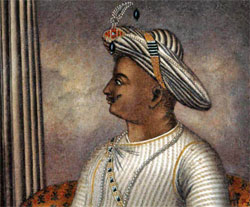
Rare literature on Islam, Hinduism in Tipu’s collection

A rare Persian translation of Mahabharat prepared on the order of Emperor Akbar, religious literature both on Islam and Hinduism and manuscripts from the huge collection of Tipu Sultan’s library are some of the items which have been catalogued for future generations.

The National Archives of India has catalogued these manuscripts for the use of academicians and scholars and seven volumes of the acquired documents will be released by Vice President Hamid Ansari tomorrow.

The catalogues from Persian were translated into English with the help of the Iran Culture House which extended its technical support regarding digitisation of the manuscriptsThese catalogues have also been translated by them in Persian and published in English as well as in Persian.

The descriptive catalogue comprises of more than 190 manuscripts which throws light on the Oriental life and culture, covering different faiths and religions, manners, arts, custom and philosophy practiced in the world.

The catalogue has been classified in five groups — Religion, History, Language, Literature and General. The first group of the catalogue deals with religious and Sufi literature, both on Islam and Hinduism and a copy of the Persian translation of Mahabharata, prepared on the order of emperor Akbar under the supervision of Abul Fazal.

Besides, Su’ al-o- Jawab-i-Dara Shikoh Wa Baba Lal, a treatise containing the conversation between Prince Dara Shikoh and Baba Lal Das of Kaithal on the life and doctrines of Hindu Faqirs and Kashf al-Mahjub, the oldest systematic work on the theoretical and practical doctrines of Sufism by Abul Hasan Ali bin Uthman bin Ali al-Hujwiri are some of the highlights of the catalogue.

The history group covers outstanding works of historians and litterateurs including works on India like Tawarikh-i-Firuz Shahi by Shams-i-Siraj Afif, Akbarnama and Ain-I Akbari by Abul Fazal, Majmu’a-i-Khuwrrami and Shah Jahan Nama by Bahadur Singh. 

The accounts of the neighbouring countries of Iran and Afghanistan and the European people have also been covered in the group and Tarikh–i-Alam Ara–Ara-i-Abbasi, a history of the life and region of Abbas of Safawi dynasty of Iran by Iskandar is very important work of the period. 

The catalogue of Manuscripts of the Fort William College Collection in the National Archives of India comprises several rich manuscripts, including a large number of invaluable books and rare manuscripts from the plunder of the huge collection of Tipu Sultan’s rich library. 

The collection was brought to Calcutta in 1799, following his defeat and death at Srirangapatnam. 

This rich collection has 8 sections which contain 17 sub-sections, ranging from eastern and western religions, language, literature, history, medicine, animal husbandry, astrology etc. 

In this catalogue, only Persian and Arabic manuscripts have been included although manuscripts in Bangla, Hindi, Sanskrit, Urdu are also available in the collection.
Besides, these publications, the Iran Culture House would hand over digital copies of 400 Arabic and Persian Manuscripts in the C.D. form to National Archives of India during the book release function.
source: http://www.DeccanHerald.com / Home> National /New Delhi, Feb 15, 2012, (PTI):

Varsity Asst. Professor bags DBT- CREST Award

Mysore, Feb. 11-

Dr. K.N. Amruthesh, Senior Lecturer, Assistant Professor & Principal Investigator, at the Department of Studies in Botany, University of Mysore, has been given the prestigious “Government of India- DBT- CREST Award” (Department of Biotechnology- Cutting Edge Research Enhancement and Scientific Training Award) for 2010-11.

This award will provide him an opportunity to have advanced research training in foreign laboratory/ University — University of North Texas (UNT), Denton, Texas, USA, in the field of “Life Sciences- Plant- Microbe Interactions (Plant and Agricultural Biotechnology)” for one year for enhancement of his contributions towards the development of Biotechnology in the country.


This prestigious award, which aims to promote capacity building in cutting-edge areas of Biotechnology and Life Sciences and also will promote and support Indian Young Scientists of highest merit in their pursuit of skill enhancement in scientific research in any of the foreign Institutions/ Laboratories abroad and interact with Scientists there

Dr. Amruthesh is also the recipient of “ISCA & DST- Young Scientists Awards” and currently guiding nine Ph.D. candidates; has undertaken three important research projects on Agricultural Crop disease management funded by DST, UGC and MHRD/ UGC-UOM- IOE, Government of India.

He has successfully organised two national conferences at the Department and published more than 40 research articles in reputed national and international journals.

source: http://www.StarofMysore.com / General News / February 11th, 2012

‘At 10, I was an orphan; at 12, I won the state award’

Living out loud with Manjunath (23), Lifeskills Coordinator
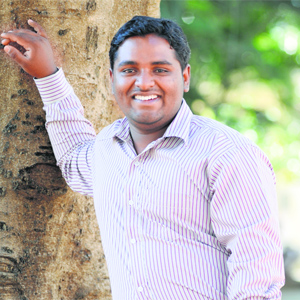
He essayed the role of Nandita Das’s brother in the award-winning film Deveeri. You don’t get to choose your parents or the events in your childhood. But you get to choose how you want to live your life as an adult. Just like this young man.

One day my parents had a fight over something trivial and my father walked out of the house. Forever! I was six years old.

My maternal grandfather was ailing. Mother couldn’t ask him for help. So, it was just mom and I against the whole world. My mother loved acting so she began acting in natakas (dramas), but the money wasn’t  sufficient. Within a year we were thrown out of our home because we couldn’t afford the rent. I dropped out of school in the third standard. I  was seven years old.
There’s only so much my mother could take. In the next couple of years, she became weak and sick. Today, I know the name of what she was suffering from– extreme depression. We were living on the pavement near the railway station. I began to work as a coolie and would make Rs 60-70 per day. I was nine years old.
The police barred me from working. “Child labour is not allowed,” they said. We could barely make ends meet. I’d sneak into the station and try to get some work. During one such  operation, I met Shanthi from Bosco Mane. She asked me to visit their open shelter in Gandhi Nagar. I was desperate. So, I went.
The folks in Bosco got medical help for my mother. She was admitted to a hospital. For about three months I visited the open shelter. Later I went to live at Bosco Mane in Chamarajpet.  I hardly visited my mother at the hospital; I couldn’t bear to see her frail, sickly and dying. The Fathers at Bosco and my counsellor, Sr Sheba, urged me to study. But I resisted. Instead, I opted for vocational training. I wanted to earn to take care of my mother.
One day director Kavita Lankesh came to Bosco Mane. She took pictures of a few kids including me and when she came back a week later, she asked me if I was interested in acting. I said yes. I now got a chance to do what my mother loved doing– acting. After a week’s training, we began shooting for Deveeri. I didn’t know it was a film shooting,I thought it was a documentary or a television serial. I was enjoying myself. One afternoon I was told that my mother had died. I was 10 years old.
I was devastated. I knew she was going to die, but not so soon. I was doing all this for my mother and now she was gone. I wept.  She was only thirty years old.
I had a vague memory of my grandfather’s house. I went to his place, along with members of Bosco Mane. Grandfather didn’t say much. I guess he was sad too. I  performed my mother’s last rites. My estranged father was watching me from the sidelines. He was married and had two children. Somebody, from Bosco must’ve informed him. I didn’t know. I didn’t care.
A week later, I was back to complete the shooting. Deveeri became a hit and received many awards. My proudest moment was when I received the state award from the governor. I felt sad that my mother was not there to see it.
By now I had come to a decision that I will pursue academics. I began studying in a Kannada medium school. I was a good student; topped my class; excelled in sports,especially cricket. I was the school topper in the seventh standard board exams. I requested the Fathers to send me to an English medium. They did. I went to St Joseph’s Boys High School, the first kid from Bosco Mane to attend an English school. It was a struggle. The English language frustrated me. But I persisted. I began conversing with the foreigners who volunteered at Bosco. I read newspapers… I passed my tenth and later PUC with a first class. It was now time to earn a living. I began working as a Field Coordinator at Dream A Dream Foundation. I was elated. I had also progressed to playing league matches in cricket. Life was looking up.
When I was living in Bosco Mane, my father visited me a couple of times. I hated him. I was angry at him for turning his back against his wife and child. When I started working, he visited me again. He was diabetic. He looked frail and ill. He also had family problems. Father apologised for abandoning me. I couldn’t be angry with him anymore. A month later I heard he had died. I watched his son perform the last rites. Father was forty-five years old.
Life goes on. I don’t have excessive emotional attachments to anyone. But I thank God that in every phase of my life there was someone to help me. Even today when I see a mother and child, my heart grips me with pain. I lock myself in my room and weep. Once the tears dry up, I tell myself, “Man, don’t cry. Go do something worthwhile.” When life becomes difficult, I tell myself -this too shall pass. After all, I survived my past, didn’t  I? Playing cricket helps me deal with sadness and pain.
Last year I applied for a passport because it’s been my dream to see the world. I got the little blue book in August. In September, I applied for a scholarship in Germany and got it in January. In April I will be going to Hamburg for a year. I am twenty-three years old.
Sometimes, I feel that I do have a guardian angel looking after me. Or is it just mother?

—As told to Jayanthi Madhukar
source: http://www.BangaloreMirror.com / Home> Sunday Read> Special /by Jayanthi Madhukar / January 29th, 2012
 

Treasure trove of manuscripts

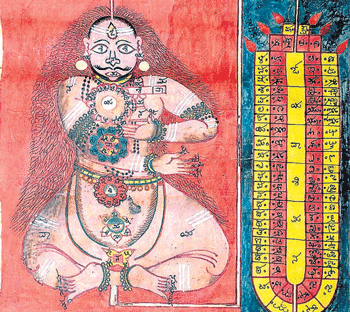
For historians and research scholars, the ‘Hastaprati Bhandar’, a treasure trove of manuscripts, at the Institute of Kannada Studies of Gulbarga University is a paradise of sorts.

Housing over 6,000 manuscripts including the rarest ones, called ‘Uddharani’, each one of them tells its own story.

‘Uddharani’ is a form of pictorial manuscript explaining different philosophies. It is four to five meters long and can be conveniently rolled, like a scroll. It is very difficult to decipher the language in which the works are scripted. Colourful handdrawn pictures are pasted on a cloth.

According to experts, most of the ‘uddharanis’ are connected to ‘kaalajnana’ (futurology).

The laborious drawings in original colours are stunning. Traditional palm leaf manuscripts are the other important components of the collections. The earliest palm leaf manuscript is the work ‘Shivayoganga Bhushana’ and ‘Sadguru Rahasya’ by unknown authors (dated 22.2.1799). The works may be of an earlier period, but the manuscript is at least 210 years old.

Palm leaf manuscripts are said to have a longer shelf life, lasting even up to 600 years. The collection also contains some of the works of poet Nagavarma of the ninth-tenth century. Another important possession of the Institute is ‘Namalinganushasana’, popularly known as ‘Amarakosha’, written by Amara Simha of the 13th century. There are 180 palm leaf manuscripts running in to tens and hundreds of pages. The Institute also has over 4,000 paper manuscripts with the earliest one dating back to the 18th century.

All these manuscripts including the ‘uddharanis’ have been collected mostly from the Hyderabad-Karnataka region. They usually pertain to Veerashaiva philosophy, Sharana Sahitya and Vachana Sahitya. They are found in different literary forms including prose, poetry, drama, folk songs, folk tales, astrology, futurology, philosophy, bayalata (a form of performing theatre unique to North Karnataka), and medical literature. Though Kannada manuscripts outnumber the others, there are also scripts in Sanskrit and Telugu. The University has so far published two books from among the manuscripts.

They are ‘Kumar Vijaya Vilasa’, a work written in the 17th century, and ‘Yayathi’, a rare work on folk drama of bayalata form. The University is planning to bring out two more works based on these manuscripts as part of the ongoing Kannada Language Development Scheme of the State government.

It is only from the last one year that the priceless manuscripts, dumped in a room, have been opened and stored scientifically.  K G Narayan Prasad, formerly with the Osmania University and now visiting professor of Gulbarga University, is busy giving a definite shape to the manuscripts. Cataloguing has also been going on. Prasad said the first volume will be ready in a couple of months.

All the manuscripts are being scanned and will be stored electronically, said Chairman of Institute of Kannada Studies D Nagabai Bulla.

The collection of manuscripts was undertaken in 1985-86 under a scheme sanctioned by the National Archives for five years. It was discontinued after three years as the University failed to submit proper accounts to the National Archives. “There is a dire need to collect the archives and establish an Archives of Manuscripts which can be made use of by scholars from all over India,’’ suggests Narayana Prasad.

source: http://www.DeccanHerald.com / Home> Supplements> Spectrum / by Srinivas Sirnoorkar / February 14th, 2012


Antiques on Display at Farmers Convention

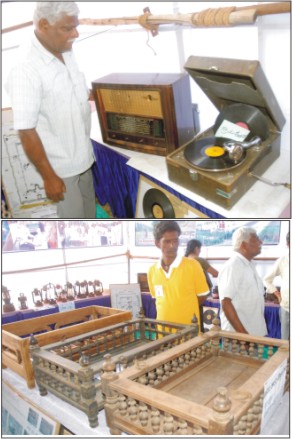
Caption: N.J. Ramakrishna seen with his gramophone player and radio. Picture right shows lanterns & rare wooden cradles.

Mysore, Feb. 4:

Thousands of farmers who have assembled at the the Dasara Expo in connection with the ongoing farmers convention have an opportunity to witness a rare exhibition of antiques like old radio sets weighing more than a present day TV in working condition, a gramo-phone player, primitive models of rifles used for hunting during British times, stone cannonballs etc.

These are only some of the numerous other items, which are on display at the expo by N. J. Ramakrishna, a former Councilor of Nagamangala in Mandya district, who is a professional collector of antique items. His collection includes old lamps that are hard to come by even in rural areas, a large pot filled with rice called Kanaja in Kannada.

Ramakrishna, who claimed that he is a collector of antiques for decades, added that he helped Dharamsthala Manjunatheswara Trust in augmenting the collection. He has also put up his personal collection of Kannada newspapers since 1949 and a visitor is greeted with the headline of the newspaper of 1950 which indicated a hike in rail fare saying ‘Railu dara dubari’ and another newspaper documenting the resignation of D. Devaraj Urs as Chief Minister with inside pages having photographs of litterateur Ha.Ma. Nayak, which can be instantly recognised.

He also has displayed a few copies of Kannada magazine Prajamatha which was sold for three annas in 1951.

Adding to this, an expo of old coins by a retired teacher, Thimmashetty Gowda, has also been put on display. These coins are those of the Vijayanagar rulers which had been supplemented by the coins issued by East India Company and the British.

Thimmashetty said that he achieves satisfaction by understanding history of the age which had inspired him to involve in collection of rare coins.

These antiques have been put on show at the building of the Archaeology Department at the Dasara Exhibition Grounds.

source: http://www.StarofMysore.com / General News / February 04th, 2012


Wipro awarded US patent

Bangalore, JAN 30:

Wipro Technologies has been granted a patent by the United States Patent and Trademark Office for its Statistics Operations Research Matrix (StORM) methodology.

StORM, a system and method for software test suite optimisation, increases the effectiveness of the testing process while reducing the number of test cases.

The company said that StORM can reduce the software test suite by around 30 per cent.

source: http://www.TheHinduBusinessLine.com / Industry & Economy> Info-Tech / Our Bureau / January 30th, 2012

Students generate funds for the needy

Bangalore:

The world probably first took notice of the underprivileged when a princess got her hands and feet dirty while working towards aiding those who required her help, almost three decades ago. The ripple effect of which is felt when 57 students from the Richard Ivey School of Business recently donated $47,000 to the Dream School Foundation (DSF), a NGO that works in the improving the educational facilities for the underprivileged students.

The batch of 2012 of Ivey Executive MBA (EMBA) raised the funds through numerous fundraising events, including sporting tournaments, silent auctions and raffles, marathons, etc.

Brigit Rameseder, one of the students who took part in the initiative said that though she and her batch-mates had regularly worked for such causes in Canada, this was the first time they have raised funds to help someone from another country all together. “We have never done something like this on such a large scale. When we got this opportunity, we decided to make the most of it. We wanted to set an example and leave a legacy behind for other students who came to the school,” informed Rameseder.

She also said that apart from the ‘feel good factor’, the exercises also taught them a lot. “When we visited the government school here I was surprised to see that education here is imparted in so many different languages. I had no idea that the curriculum in India inculcated the use of different languages,” she said.

Though the batch would finish their school within a week’s time, most of them hope to keep in touch with the organisation in some way or the other, she added.

Maitreyee Kumar from DSF said that the money will ensure that 80 students can pursue dreams. “We want to fund education for these children beyond their tenth standard and the aid we have received from the School will greatly help. The first batch of students have already been enrolled in vocational and professional colleges,” said Kumar. She also informed that while professional courses were usually taken in Government colleges, a few students have performed exceedingly well in their academics and have landed themselves in private institutions as well. “Depending on the child’s aptitude and scores, a professional career counsellor suggest options that might interest the students. Once the choice was made by the students, we help them get into their respective colleges,” she said

Kumar also mentioned that the funds provided by the school will see the students through their education for the next two years.

source: http://www.ibnlive.in.com / South> Bangalore / Express News Service/ The New Indian Express / January 24th, 2012

City’s NISHAT BAGH all set to become a Tourist spot

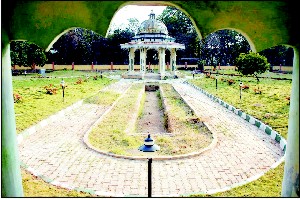
Gazebo (pavilion) also known as the Band Stand with a painted glass dome is the main attraction of Nishat Bagh.

Nishat Bagh, popularly known as Sunnada Kuppanna Park in Nazarbad in city, is all set to attract tourists, visitors and general public as the park is being renovated to make it a tourist destination.

The Bagh is yet another regal place in Mysore that is seeing hard times. Nishat Bagh — that is its original name — was conceived by the illustrious of all the Maharajas of Mysore — Krishna-raja Wadiyar IV. His visit to the Mughal garden of the same name on the sides of Dal Lake in Srinagar was his inspiration. The Maharaja wanted one such in Mysore too.

The park is an example for late King Krishnaraja Wadiyar IV’s love of parks and gardens.

Earlier, Nishat Bagh was a sprawling park, but modernisation eventually took its toll. Expansion of roads, a sewage canal, a bus stop in the corner, all chopped the park to its present size. Even then, it is a big park covering about 10 acres. Somewhere down the line, the park came be called as Kuppanna Park.

Three other parks are very close to Nishad Bagh. They are, People’s Park towards its north-west, Gandhi Vana (Horticulture / Horticultural Park) towards its south and Curzon Park towards its west. The Nishat Bagh has been encircled by hotels in ‘L-shape’ on two of its sides.

The main attraction of Nishat Bagh is the gazebo (pavilion) with a painted glass dome. This is also known as the Band Stand because the Police Band used to perform there. The painted glass dome that one sees today, used to be the old glass dome of the Palace if one is to go by the then Palace Executive Engineer H.F.Marker’s letter dated September 23, 1918.

It is learnt that the glass dome of the Band Stand was adorned with classic paintings which was redecorated by artist Srihari, the grandson of the artist who had given the classical touch earlier. The paintings on the glass dome depict mythical themes. The ornamental works for the pillar were designed by E.W. Fritchley, who also designed Lalitha Mahal Palace.

The park is now being given a face-lift. The developmental works of the park which began in the year 2009 and moving in a snail’s pace, will be completed soon. The park is being developed at a cost of Rs.100 crore from the Chief Minister’s Fund.

A rock garden, an amphitheatre, a restaurant and a musical fountain is coming up in Nishat Bagh. The developmental works of the park is taken up by B.G.E. Associates, Bangalore, at a cost of Rs.89 lakh. Trees and ornamental plants have already been planted. Works on the rock garden is going on. Walking path and stone benches have been constructed.

A musical fountain at the cost of Rs. 43 lakh has been installed and the trial run completed. Three high mast lamps have been erected to illuminate the park attractively during night. Entry fee to the park has been fixed and ticket counters constructed. The developmental works is in its last stages and the park will be opened to the public soon. Nishat Bagh, once renovated, will be the ‘Jewel in the crown’ of the heritage city, Mysore.

All attempts to reach the concerned officials over phone proved futile as those who could be contacted passed the buck to other officials who did not respond.

source: http://www.StarofMysore.com / Feature Articles / by S. Kenneth Shishir / January 16th, 2012

Good-old temple wedding

Nobody who’s grown up on a steady diet of Hindi films from the ’80s and ’90s can be completely immune to the romance of a temple wedding. A young runaway couple, an ancient pile of stone and exquisite sculpture, black clouds lowering in the sky, some vermilion to mark the bride as one’s own (blood will do), and a genial temple priest (actually even that’s not strictly on the list; in some cases the weddings are refreshingly DIY)…

Many young couples today are opting for exactly that – minus all the drama. They want to get married in a place that has more character and charm than a hotel ballroom can provide in a thousand years, and they are willing to brave a few logistical issues to get just such a wedding.

Take for instance the Bhoganandishwara temple. Situated on the foothills of Nandi Hills and at a very convenient distance of some 50-odd km from Bangalore, this ninth century temple is increasingly a niche wedding venue that remains a closely guarded secret among a few people. Bangaloreans who regularly drive down to Nandi Hills to get away from the city may have noticed a turn that marks the way to the temple, but few actually visit it.

The temple was built around 810AD, according to an ASI board on the premises. It has an unusual mixture of different architectural styles, including those used mainly during the Chola, Hoysala and Vijayanagara periods. Legend says the temple was commissioned by Queen Manikabbe, also known as Ratnavalli, who was the consort of the Bana King Vidhyadhara. There are three main shrines in the temple dedicated to the deities Bhoganandishwara, Arunachaleshwara and Umamaheshwara. Attached to the small shrine of Umamaheshwara is the kalyanamantapa, where most modern weddings are held. The temple is a ‘live’ one, which means besides being of considerable historic and architectural interest, it is used for actual worship.

The temple pond is a beautiful sunken structure surrounded by shallow steps that lead down to it. All around are gorgeous carved pillars, small shrines and covered awnings. There are plenty of open spaces within the temple to host a decent-sized wedding, but since there are no overnight stay options at the temple it has to be vacated by evening.

Contact: Sri Bhoganandishwara Swami Devalaya Nandigrama, Nandi Village, Chikkaballapur.

Trek and get married

The trend of choosing unusual and historic locations for weddings is catching on. Everyone wants a memorable, unusual wedding and a considerable number of people are rejecting the hotel ballroom or lawn kind of venues that are generic and have nothing unique to offer. In and around Bangalore, venues such as The Tamarind Tree, Temple Tree, Ganjam Mantapa and the Bhoganandishwara Temple are becoming more popular. Even though this temple can be considered out of the way, and doesn’t have much to offer in terms of modern conveniences, it is ideal for those who are willing to make that trek for a wedding venue that has so much beauty and character.

source: http://www.timesofindia.indiatimes.com / City> Bangalore / Home> City> Bangalore / TNN / by Shrabonti Bagchi / January 15th, 2012

Joyous celebration of diversity in unity

When Gen Y from across India congregates at Mangala Stadium here for the 17th National Youth Festival which kicks off on Thursday, they will see why chief minister D V Sadananda Gowda reposed such faith in the Dakshina Kannada district administration to pull off such a mega event. For, no stone has been left unturned to make the five-day event a grand success.

While the city wears a festive look with lights and decorations, citizens are getting ready to savour the rich cultural diversity of Karnataka as well as the rest of the country during NYF 2012, which starts with a 4-km procession at 3pm. They’ll also get a taste of India during the ceremony.

NYF, which began in 1995 as a major activity under the National Integration Camp (NIC), propagates national integration, communal harmony, brotherhood, courage and adventure among the youth. NYF 2012 has a mix of competitive, non-competitive and performances and shows and events are aimed at fostering teamwork, leadership, etc. among participants.

K Jairaj, additional chief secretary, says the state will showcase the strength of Karavali as a centre for learning, youth and a place of unity in diversity. Asked ‘Why Mangalore?’, Jairaj quipped, “Why not Mangalore?” He added, “It’s the Gateway to Karnataka. The state capital has had enough and more exposure. The last edition of NYF was at Udaipur and the same logic is at work here.”

While Udaipur NYF’s mascot was Teengur, the tiger which represented enthusiasm and excitement of youth, this festival’s mascot Yakshi conveys unity, diversity, strength, love and social nature.

It’s a fun-loving elephant sporting Yakshagana headgear. While last year’s theme was Sabse Pehle Bharat striving to generate the right attitude among the youth, the theme this year is ‘Celebrating Diversity In Unity’.

Mohan Alva, procession and stage in-charge, said the inaugural procession will be a knock-out. “Whatever Mangaloreans have heard or seen on a small scale will be amplified here. Various cultural aspects of the state like Kombu, Chende, Dholu, Huli Vesha, Keelu Kudure, Karaga Nritya, Yakshagana, both Tenkathittu and Badagathittu varieties, Veerabhadra Kunita, Aati Kalenja, Kamsale, Kalladka dolls, Kerala Chende, Kangeelu Kunita, Suggi Kunitha, Goravara kunita, Veeragase, Patada kunita, Tashe, band sets from Chitradurga, Honnavara, Alike, Daff, Mara kaalu kunita, Dudi kunita, will be part of the procession,” he said.

The procession starts from AB Shetty Circle and after traversing through the thoroughfares via KS Rao Road and PVS, it’ll reach Mangala Stadium where delegates will join in.

source: http://www.articles.timesofindia.indiatimes.com / City> Mangalore/ Home> Collections>  Cultural Diversity / TNN / by Stanley Pinto & Jaideep Shenoy / January 12th, 2012