“Preservation means maintaining the fabric of a place in its existing state and retarding deterioration”
— Article.1.6, Burra Charter, 1979.
Established by the farsighted British under the British archaeologist Alexander Cunningham in 1861, the Archaeological Survey of India (ASI) has been working towards the protection and preservation of the ancient monuments and antiquities which abounds in our vast country. Since its inception, it has been digging and discovering precious historical sites and deciphering and describing thousands of important inscriptions. The work done by ASI has received praise from foreign governments which have invited ASI for the conservation of their monuments. In this Weekend Star Supplement, Star of Mysore offers a peek into the works of ASI, which is now in its sesquicentennial year. 150 years of digging, deciphering and protecting history
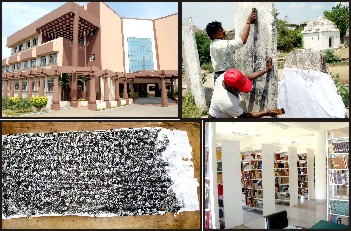
Caption: 1) The Puratatva Bhavan in Hebbal II stage in city which houses the Headquarters for the Directorate of Epigraphy (Sanskrit & Dravidian inscriptions and coins) of ASI. 2) Field photo of ASI staff copying inscription and taking estampage. 3) Ratanpurva Asokan Edict. 4) Library at ASI, Mysore.
Archaeological Survey of India (ASI), under the Ministry of Culture, was set up for archae-ological researches and protection of cultural heritage of India. For the maintenance of ancient monuments and archaeological sites and remains of national importance the country is divided into 24 Circles. ASI, which is primarily responsible for the antiquities of our country, has many branches like Conservation, Pre-history, Excavation, Science (conse-rvation and chemical treatment), Horticulture and Epig-raphy. The Mysore centre located at “Puratatva Bhavan” in Hebbal II Stage is the Headquarters for the Directorate of Epigraphy (Sanskrit & Dravidian inscriptions and coins) and was started in 1967. The Headquarters for Arabic & Persian inscriptions and coins is located at Nagpur. The Mysore centre also houses branches like Excavation, Horticulture, Science and Conservation.
Directorate of Epigraphy for Dravidian and Sanskrit inscriptions
Established by the pioneering British savants, the city branch renders service in tracking down a large number of inscriptions. So far this branch has copied nearly one lakh inscriptions from across the country and more than one third of them have been published by it.
Inscriptions are the main source materials for reconstructing the history of our vast country as they describe contemporary events, thereby imparting authenticity to the history based on them. Perhaps there is no subject which these records have not covered. Inscriptions throw light on political, religious and commercial compacts, law and justice, trade and commerce, construction of temples, installation of images and excavation of wells, tanks, rivers, etc.
In common parlance, epigraphy is the study of writings engraved on stone, metal and other materials known as inscriptions or epigraphs. India is very rich in epigraphical wealth and inscriptions are available from Kanyakumari in the south to Kashmir in the north. The annual collections of all their inscriptions are brought out in the centre’s Annual Report. Some important inscriptions are critically edited in a research journal called Epigraphia Indica. Besides these two, the texts of inscriptions are printed in vernacular languages in yet another departmental publication called South Indian Inscriptions. Besides these, Sanskrit inscriptions of some of dynasties that ruled over North India are published in another publication Corpus Inscriptionum Indicarum.
In addition to these publications, the department is conducting awareness programmes to kindle awareness about the importance of inscriptions by conducting exhibitions. Staff members also visit schools and colleges and deliver lectures about the importance of inscriptions and the need to preserve them for posterity. The Epigraphy Office has also a big library with rich collections of rare books totaling to over 26,000.
Importance of Epigraphy
Several dynasties ruled over large territories of the Indian sub-continent, from imperial Mauryan dynasty to Vijayanagara and post-Vijayanagara dynasties and they have left a rich legacy of inscriptions to us. Indian history would have been veiled in obscurity but for these inscriptions. In fact, Indian history sans epigraphy is nothing short of fairy tales. They are found engraved on rocks and boulders, temple walls, on coins, vessels, shells, copper-plates, pots, bricks, wooden pillars, tablets and other objects.
Some of important dynasties that ruled over North India are the Mauryans, Sungas, Kshatra-pas, Guptas and south India dynasties like Kadma-bas, Chalukyas, Rashtrakutas, Hoysalas, Cholas left behind a huge corpus of inscriptions both in stone and in copper-plates. Karnataka alone can boast of Asokan edicts at Maski (Raichur), Sannathi (Gulbarga), Gavimatha (Koppal), Siddapura, Nittur (Bellary) and Jatingaramesvara. We know the name of the Mauryan emperor Asoka only from Maski, Nittur and Odegolam.
We know that Karnataka was a part and parcel of the great Mauryan Empire only by the availability of these edicts. Today if we know about the great Asoka conquests, political career, pious nature, encouragement to Buddhism and his philanthropic activities, it is because of his edicts which were engraved on rocks and pillars throughout this country. Again the golden age of north India under the Gupta rulers are known only from the inscriptions left behind by them. We would have drawn blank the history of the Kadambas, another ancient dynasty which ruled over Banavasi but for these inscriptions. Chalukyan ruler Vikramditya II’s inscription at Kanchipuram reveals that he defeated the Pallavas and captured the city of Kanchipuram and he was magnanimous enough to donate all the wealth which he pillaged in the city back to the God of the Kailasantha temple at Kanchipuram.
Harsha’s defeat at the hands of the Chalukya Pulekesi II is known from inscription. Many times boundaries of an empire are determined by the availability of the inscriptions of the ruler of the empire. The Chola’s conquest of South Karnataka is known from inscriptions that are found in Kolar district. The great Vijayanagara ruler Krishnadevaraya’s conquests and achievements are recorded only in inscriptions. His special devotion to the God of Tirupati and his generous gifts of valuable ornaments again are known from inscriptions.
Likewise the Talagunda inscription sketches the early history of the family Kadambas. The Aihole prasasti of Pulakesin II which narrates in detail the political career of this Chalukyan king refers itself to the composer of the record Ravikirti, a Jaina poet, who claims equal fame to that of Kalidasa and Bharavi the legendary poets. The Uttiramerur inscription of Parantaka Chola describes the qualifications prescribed for the aspiring persons who wished to serve in the local committees, mode of elections, qualifications, disqualifications and other details elaborately.
In a Vijayanagara inscription there is a graphic account of how learned scholars in all branches of sacred studies assembled and signed a document which forbade Kanyasulka and Varadakshina in any marriage arrangement and threatened punishment by the king and social exclusion from the community for parties receiving either. Another inscription of the same period records that the emperor settled the disputes between a Vaisnava Jeer and a Jain teacher by making them agree to be friends and raise no points of dispute.
Inscriptions do not deal with mere conquests and annexations of territories. They are much more than that. The famous Tirumukkudal (Tamil Nadu) inscription of Virarajendra refers to a Vedic college and the subjects studied therein, teachers and their remuneration. So also, Ennayiram inscription of Rajendra I which gives a detailed list of subjects that were taught, teacher’s qualifications and allowances received by them. Salotagi inscription of Krishna III records the constr-uction of a shala (college) by his minister Narayana. The record states that the shala attracted students from all over India to pursue their studies.
Recent findings: Inscriptions continue to come to light from all quarters and new inscriptions are discovered every day. Recently a very big copper-plate of the Chola ruler Rajadhiraja I from a place called Indalur in Tamil Nadu came to light. It is the biggest copper plate ever discovered and contains 86 copper sheets and runs into 1,700 lines. It records that the Chola ruler Rajadhiraja (1018 1054 A.D.) granted villages to the Brahmanas to create settlement. He then went to the battlefield to fight with the western Chalukyan king Ahavamalla in the Battle of Koppam. He was killed and his brother Rajendra defeated the Chalukayn army and returned home triumphantly. He then ratified the land grant made by his brother. It contains enormous details about land transactions and revenue administration of the Cholas. The 11th century Sanskrit inscription discovered at Mallapuram district in Kerala throws light on the rulers of Kerala of the times.
Brahmi script: Inscriptions are available not only in our vast sub-continent but also in countries like Sri Lanka, Burma, Thailand, Borneo, Nepal, Java, Tibet, Afghanistan and Pakistan which once formed parts of Greater India. It is interesting to note that the scripts used in the inscriptions found in these countries were evolved from the Brahmi script. These inscriptions are found engraved in different languages and script. The earliest script (300BC-300 AD) that is found employed inscriptions in Brahmi script and are in Prakrit language. Brahmi is the mother of all scripts. From this script all the other scripts of both North and South India evolved. Archaic inscriptions that are engraved in Brahmi scripts are available in the caves of Tamil Nadu and most of Asokan records are engraved in Brahmi scripts.
Although Sanskrit is the oldest language of India as found in Vedic literature, the language of the earlier written records is Prakrit. After the period of Asoka, the use of the Prakrit language continued in inscriptions for a few more centuries. In North India Prakrit was replaced by Sanskrit by the end of 3rd century AD. Sanskrit continued to be employed in the inscriptions of all parts of India along with regional languages in the subsequent centuries. At the same time different regional languages began to appear in the inscriptions from different regions in different periods. The copper-plate charters of the Pallavas, Chalukyas, Pandyas and Cholas are written in both Sanskrit and their regional languages. Inscriptions that are found abroad are in Sanskrit language.
Excavation Branch
The Excavation Branch – VI, Mysore, of ASI was established in 2001 with the positing of Dr.J. Varaprasada Rao, Deputy Superintending Archaeologist. Later Dr. Jitendra Das, Superintending Archaeologist, was posted as Head of Office and functioned from Bangalore for a few years. Though it was established in 2001 it started functioning with a few administrative staff posted in September 2009 and after the allotment of funds for the financial year 2009-10 in Nov. 2010. With minimum staff posted to this branch headed by M. Mahadevaiah, Superintending Archaeologist, explorations were conducted from 2010 in South India.
Sites located on the Bhima valley include Ranamandala, Gurusanagi, Hadigimadra in Gulbarga district, Kurgodu, Badanahalli & Lakshmipura in Bellary district and Periyakadambanur in Thanjavur district. Archaeological finds found from these sites ranges from prehistoric to medieval period.
This branch has conducted excavation at Kurugodu, Bellary District during 2010-11 and submitted a brief report on the same to the Directorate and the excavation for the current season has started from January 2011. Exploration conducted at Kurugodu has brought to light Palaeolithic hand axe for the first time from this site and Iron Age megalithic habitation at the excavated site. The important finds from Kurugodu include terracotta figurines of human and animals, microliths, steatite and shell beads in large number, copper and iron objects etc.
Horticulture Branch
The Garden branch of the Archaeological Survey of India is a specialised branch responsible for conservation of archaeological gardens and environment around the centrally protected monuments. It is not only monuments which show the civilisations but the heritage garden is also an expression which is the result of human relationship with nature reflecting various civilisations.
The Garden branch of ASI is maintaining gardens of various styles from sacred grooves to orchards, courtyard gardens of Havelies to Palaces, Fort and Tomb gardens.
Another important point is that several heritage gardens have exclusive important old plant material, which is not found in local areas. It proves the import of plant material from different parts of world by the builders of these gardens. These areas are also a part of heritage to be preserved along with monument to avoid extinction.
The Horticulture Branch is maintaining 504 gardens at present, including gardens around the world heritage monuments. There are over 3,684 centrally protected monuments and sites in the country and so far environmental conservation of around 504 monuments have been done.
History of Horticulture Branch: The Horticulture Branch was created in Archaeological Survey of India in 1950. Before the creation of this branch, the gardens around the monuments of Delhi and Agra were maintained by CPWD/PWD and State Horticulture Department of Uttar Pradesh on deposit basis. However, these departments were not maintaining the gardens according to Archaeological principles.
As a result, a proposal to have an independent garden branch in the Survey was mooted by Sir Mortimer Wheeler, the then Director General of the Survey. Later on, this resolution was also endorsed in the Central Cabinet represented by Maulana Azad, the then Education Minister (when ASI was under the Ministry of Education-1949). On the approval of this proposal, the garden branch came into existence in 1950. The branch started with eight gardens around the monuments of Delhi and Agra. Consequently, two separate garden zones were carved out with their Head Quarters at Delhi and Agra in 1958.
In 1963, a separate zone with head quarters at Mysore was created for the gardens in South India. In 1982 the Zonal Office was elevated with the Deputy Superintending Horticulturist in addition to Assistant Superintending Horticulturist. Later, a separate Division was created with Head Quarters at Bhubaneswar, for the gardens in States of Orissa, Bihar, West Bengal and North East region.
Activities: Horticulture Division No-III, Mysore, has 26 sub-divisions and 126 gardens are being maintained under this division spread over the entire South India. Out of these, 22 gardens are at World Heritage sites in three States — Goa, Karnataka, Tamil Nadu.
Science Branch
The Mysore zone of Science Branch was established in 1976 for giving greater impetus to about 518 centrally prote-cted monuments, paint-ings, archaeological museum objects, excavated objects etc., under the jurisdiction of Bangalore Circle (218 monuments) and Dharwad circle (300 monuments) in Karnataka. This Zonal office has executed many important scientific conservation works in two world heritage sites at Hampi and Pattadakkal and also in places like Belur, Nanjangud, Shravanabelagola, Srirangapatna, Halebeed, Aihole, Karkala, Bidar, Shimoga, Melukote, Nagamangala, Mullur, Marehalli, Thonnur, Hale Alur, etc.
To cover more monuments, a new Science wing has been functioning at Dharwar since 2008.
The unique symbols of our civilisation are preserved with as little intervention as possible and without altering or modifying in any way the authenticity of their original charter. Scientific research is carried out to ensure the stability as well as the proper conservation of cultural heritage.
The conservation techniques adopted depend on the preliminary investigation which includes the knowledge of the physical nature of the object, constituent of the materials, Architectural characteristics, production techniques, state of decay and the factors that induce or could induce decay.
Conservation Branch
The chemical treatment given by the members of the Conservation wing to the Hindu temple at Angor Wat and of Buddha statues at Bamiyan near Kabul (since vandalised by the Talibans) are shining examples of the work executed by the Conservation Wing of the Survey. It has taken up important excavations at sites such as Kusinagara which provided an archaeological basis for Buddhist history. It recovered Lion Capital at Sarnath, which has become a part of National Emblem. It unearthed key evidence at urn burial site at Adichchanallur which highlighted the unique features of the Iron Age in south India. One of the greatest work in ASI’s history was the 1921 discovery of Indus valley sites at Harappa (by Daya Ram Sahni) and at Mohenjodaro (by R.D.Banerji).
The 150th anniversary of ASI at Mysore will be held on Feb. 13 at 11 am at Panchavati, Gymkhana Auditorium on Bogadi Road.
Director’s Corner
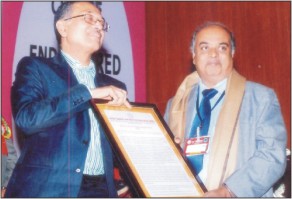
Director Dr. T.S. Ravishankar obtained MA (Sanskrit), MA (Ancient History and Architecture) and Ph.D from the University of Mysore. Having joined the Epigraphy Branch of the ASI as an Epigraphical Assistant, he has served for more than three decades in different positions and is presently the Director of Epigraphy (I/c).
Dr. Ravishankar has established his expertise in deciphering Sanskrit inscriptions and also early coins. He has worked as an expert Numismatist from Archaeological Survey of India at Delhi customs office to examine the coins. He has participated in many important archaeological excavations at different places, an important one being that at Ayodhya.
Speaking to Star of Mysore, Dr. Ravishankar said that although the Mysore branch was started in 1967, it was shifted to its present building around three-and-half years back. The Centre, apart from research also concentrates on teaching, focusing on PG and Ph.D students who wish to take up research at ASI. “We have a vast library and original copies of inscriptions totaling to over one lakh which the students can refer to. Also the staff will guide them in their respective subjects when needed,” he said.
source: http://www.Starof Mysore.com / Feature Articles / February 11th, 2012