Category Archives: Science & Technology

Rs 100 Crore Biotech Park to Be Set Up in Mysore

A Rs 100 crore neutri/neutraceutical and phytopharmaceutical (N2P2) project would be developed in Mysore, according to a key government official. 

The Vision Group on Biotechnology headed by Dr. Kiran Mazumdar-Shaw has recommended sector-specific biotech parks to be set up in tier 2/3 cities of the State and this project is one such to be developed in Mysore, Principal Secretary in the Department of Information Technology, Biotechnology and Science and Technology, M N Vidyashankar told PTI here.

The private partner for development of this project has been selected following a tender process. The state Cabinet has given its clearance. The State Government’s major role in the project is to develop the R & D zone.

“M/s. JSS Mahavidyapeetha are the successful bidders for the project, estimated to cost about Rs 100 crore,” Vidyashankar said.

He said the biotech sector faces talent shortage and to address this, the State Government has initiated the BT Finishing Schools project. As many as 12 educational institutions have been selected by a Committee headed by Dr G Padmanaban to establish such schools, covering Bangalore, Mysore, Manipal, Mangalore and Gulbarga.

“The BT Finishing School concept involves academics for six months and industry internship for six months. The students are assured of a job after they clear the one year Diploma course,” Vidyashankar said.

The students for BT Finishing Schools have been selected through an entrance test and interview conducted by the educational institutions.The course has commenced in September 2011.Regular monitoring is done by a High Level Committee headed by Principal Secretary – Information Technology, Biotechnology and Science and Technology,and Prof G Padmanaban.

The courses and other day-to-day matters are steered by another Committee comprising the educational institutions, it was stated.

source: http://www.news.outlookindia.com / Home> Science & Technology> Mysore / PTI / December 22nd, 2011

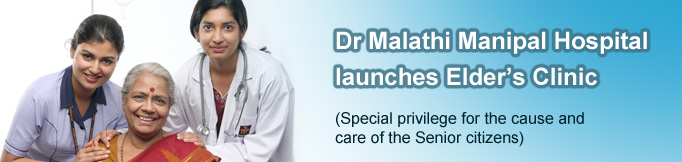
Dr Malathi Manipal Hospital launches Elder’s Clinic

(Special privilege for the cause and care of the Senior citizens)

Senior citizens of Bangalore will now get special privileges during their next visit to Dr Malathi Manipal Hospital


Dr Malathi Manipal Hospital, a unit of Manipal Health Enterprises today launched a unique service, “Elder’s Clinic”, dedicated to the cause and care of the senior citizens. Every senior citizen of Bangalore would be enjoying these benefits through their association with Dr Malathi Manipal Hospital’s Elder’s Clinic. The “Elder’s Clinic” will be open onAll the days* (except Saturday and Monday), where the priority will be given to the elders for appointments and consultation. Apart from many other privileges, there will be special discounts on consultation & pharmacy along with a free Manipal Registration Card given to the senior citizens.

The benefits under “Elder’s Clinic” would be as follows –

  • Package of 5 Consultations at discounted price

( For Men -Gen. Medicine, Ortho, Dental, Urology , Opthal ) (For Women –Gen. Medicine, Ortho, Dental, OBG, Opthal )

  • Special discounts on Consultation & Pharmacy
  • Option to select the days and time of consultation (all days except Saturday and Monday)
  • Consultation benefit is valid for max. 30 days from the date of registration
  • Focused diagnostic packages as discounted tariff
  • The Senior citizens card will be issued for all who are consulting the Doc. for Elder’s Clinic

These consultations can be availed on any Day (except Saturday and Monday) with prior appointments only. All the benefits of Elder’s clinic are valid till 31st March 2012.
for any assistance please call: +91 9632775666/+91 80 40091000

source: http://www.manipalhospitals.in

Bangalore school wins national competition

BANGALORE:

For the team of four that travelled from DAV Public School to Secunderabad, winning Upakaran 2011, the National Level Science Project Competition organised by M S Ramaiah Institute of Technology in Bangalore was thrilling to say the least.

Their project titled- ‘Generation of energy from speed breaker’, focused on generating electricity every time when a vehicle passes a speed breaker.

“We were pitted against participants from pre-university colleges in Bangalore and our project was really simple. But we think our project is a multi-purpose one, and we would definitely like to apply it in the future,” said Bhoja Ramakrishna, one of the winner, a class eleven student at DAV Public School, Secunderabad.

Using a copper coil, a magnet and a galvanometer, the team explained the viability and potential of the project to the judges.

Deepthi, Nanda, Harshitha and Yogapriya from Sri Kumarans Home Composite College shared the second place with Srinivas K N and Charitha T of PES PU College, Bangalore.

Judged by Dr Bhanuprashant, Professor, BNMIT, Prof Srinivas, MSRIT, and Dr. Venkatesh, MSRIT, winners were awarded with Rs 25,000 and Rs 15000 cash prizes.

source: http://www.ibnlive.in.com / Bangalore, posted December 17th, 2011 / Express News Service / The New Indian Expres


Ugandan children recieve heart surgery in India

Kampala, Uganda:

Six Ugandan children will receive life-saving heart surgeries at the Narayana hospital in Bangalore India last week.


Chairman of the Indian Association of Uganda (IAU) Shalendra Kundra said the operations will be conducted by Dr. Devi Shetty a cardiologist.
“The operation has been made possible by IAU through donations from the Indian community that totaled to Ushs 200 million as charity,” said Shalendra.
Before the first decision to take the children to India, there was a possibility for the surgery to be conducted in Uganda at a lower cost but experts discovered that the facilities were insufficient to carry out such a complicated operation.
The Indian High Commissioner to Uganda S.N Ray said that the move by the Indian society in Uganda is part of the commitment to help Uganda’s vulnerable children.
“Many parents cannot afford the high costs of medication and facilitation to India for the operation and so the association resolved to give a helping hand,” Ray said.
Ray referred to the 19 year old Arinaitwe Emily who had been struggling with the heart problem for such a long time since birth because the patients could not afford the high charges.
Arinaitwe had to forego UACE exams for the surgery because it was scheduled during the same time. Shalendra added that they have embarked on consultation with the heart consultants in India to extend the screening services to Uganda.
“Screening will ease selection of worst conditioned patients because there were over 400 applications which made selection costly,” Shalendra added.
Veronica Busingye a parent of Lukuba Jeremiah aged three is optimistic that the surgery will improve the health of her child that has been complicated over the years.
The association has helped over 20 heart patients undergo heart surgery since the initiation of the project in 2008.
The surgeries that are expected to run for a month will see the patients accompanied by their guardians.

source: http://www.busiweek.com / East African Business Week / Home> Science & Technology> Health / by Eriosi Nantaba / Sunday, December 04th, 2011

Cisco’s New Healthpresence Focuses on Rural India


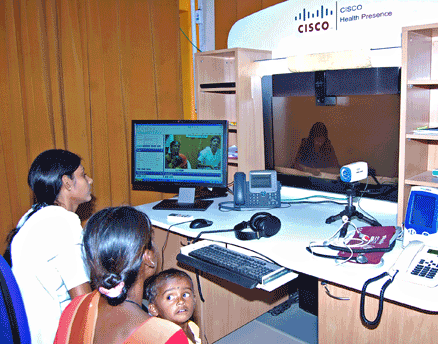
A village woman in K’taka is shown using Cisco’s HealthPresence. (photo courtesy of Cisco)

U.S. technology giant Cisco Nov. 14 unveiled the second generation of its platform for telemedicine, known as Healthpresence, focusing its efforts on India where at least 175 million rural dwellers lack access to any health care services.

Healthpresence allows physicians in several countries to remotely conduct consultations with patients who may be hundreds of miles away. In India, private hospitals, the defense sector and state governments in Karnataka and Madhya Pradesh have signed on to use Healthpresence; the service is already available in 11 districts and can be accessed by up to one million people.

“In India, there’s a huge mismatch between the availability of doctors and where they’re needed,” Vishal Gupta, vice president and general manager of Cisco Global Healthcare Solutions, told India-West by teleconference from Bangalore, where he is based. Patients must often travel hundreds of miles to see a physician, he said, noting that the need for doctors and specialists is most acute in rural India.

“We want to be the ATM of healthcare services,” said Gupta, envisioning Healthpresence kiosks in a variety of rural and semi-urban settings, such as malls.

An earlier version of the product, which was released two years ago, required Cisco’s Telepresence, a high bandwidth platform. But the version of Healthpresence rolled out by Cisco last week can be used on low bandwidth platforms, including desktop computers.

Healthpresence 2.0 features the flexibility to be used across several platforms, from a high-end Telepresence-based system, to a low bandwidth version which is portable and can be used in a mobile medicine van, said Gupta, noting that bandwidth is still an issue in many remote parts of India.

The new version of Healthpresence can be maintained on a server by a service provider who provides repairs and updates to the system, eliminating the need for an in-house IT specialist and lowering the overall cost, said Gupta.

Healthpresence patients sit in a special consulting room – known as a primary health care center – which has a screen allowing them to see their doctor, and specialized diagnostic equipment including a digitized stethoscope which allows a doctor to listen to his patient’s heart and lungs remotely.

A digitized torch and otoscope allow the physician to remotely examine a patient’s ears, nose and throat.

Healthpresence can also be used by specialists.

Sunita Maheshwari, a Bangalore-based pediatric cardiologist and founder of RxDx, which uses Healthpresence to connect to patients in the low-income district of Raichur in northen Karnataka, said Cisco’s product works very well in telemedicine.

“We were skeptical at first, wondering will rural India’s villages accept such technology. But they’re really thrilled because they have a doctor out there for the first time,” the Indian American Maheshwari, who was trained at Yale, told India-West.

RxDx remote clinics provide primary care doctors from 9 a.m. to 5 p.m. on a walk-in basis, and appointments can be made for consultations with specialists. The clinic has a staff of 70 physicians, with a mix of specialties, including pediatrics, and serves about 600 patients a month in Raichur, which is an overnight train journey from Bangalore.

Maheshwari – dubbed the “Queen of Hearts” by India Today magazine – said she hopes to next hook up with practices in remote states such as Bihar to provide Healthpresence services there. She estimated that one-quarter of India’s 700 million village dwellers – 175 million people – currently lack access to any healthcare services.

The Osmania University alumnus said the desktop version of Healthpresence was very scalable and could be used anywhere. “I could be sitting anywhere and treating patients not just in Raichur, but also in Tanzania,” she asserted.

The need for access to healthcare in India has gone up phenomenally with the advent of chronic diseases in the population. The country accounts for 60 percent of the world’s heart disease patients, according to data released last year by the World Health Organization, and is home to 35 million diabetics, the largest number on the globe.

Cancer is also on the rise with almost 400,000 people in India dying each year from various types of the disease. The overall oncology market is growing at about 20 percent per annum, Pradeep Jaisingh, founder and CEO of New Delhi-based International Oncology, told India-West in June.

Gupta stated that the Indian government has shown its commitment to telemedicine, promising to increase funding to public health care.

And in September, Sachin Pilot, India’s young Minister of Communications and Information Technology, unveiled a plan that would lay out 500,000 miles of optical fibre throughout the country, bringing high-speed connectivity to every remote area of India within the next two years.

source: http://www.indiawest.com / News> US Indian / by Sunita Sohrabji, Staff Reporter / December 01st, 2011

KIMS – the First Hospital to do Robotic Colorectal Surgery in India

Though there are four Robos in India (Delhi, Mumbai, Bangalore and Hyderabad), KIMS is the first in the country to use robotics help to do surgery.

Surgeons at KIMS performed a rare surgery called robotic colorectal surgery, for the first time in India. The surgical team comprised Dr Surya Nalamati, Senior Surgeon, Henry Ford Hospital, Detroit US; Dr M BV Prasad, Consultant Surgical Gastro Enterologist; Dr Ravichander, Surgical Oncologist; Dr Lakshmikanth, Surgical Gastro Enterologist of KIMS Hospital. The procedures were of two to three hours duration.

Robotic colorectal surgery benefits the patient immensely. They benefit from a much smaller surgical incision, which leads to less pain and a shorter recovery time. Most common patient benefits include: significantly less pain during recovery, less blood loss during surgery, less complications during surgery, less scarring after surgery, shorter hospital stay, a quicker return to work and daily activities, often better clinical outcomes, preserves sexual function, preserves bladder control and higher quality of life after surgery. Thus, robotic colorectal surgery is the most upcoming branch in the medical treatment. More than 10,000 procedures have been reported across the globe in the last 10 years, since robotic assisted surgeries were introduced.

Robotics-assisted surgery has several advantages. One of the most important advantage is that the incisions made during surgery are tiny and hence the recovery from surgery is extremely quick. Fast healing time is a hallmark of this surgery. Rapid recovery from surgery is not only better for the patient, but it is also less expensive for society. Some other advantages of robotic surgery are precision, miniaturisation, decreased blood loss, less pain and lesser hospital stay. The surgery can be conducted quickly and safely with negligible blood loss.

KIMS had initiated a drive in June 2011 urging the use of robot-assisted technology, in a bid to help and save patients suffering from plethora of problems like urology (prostate, kidney, and urinary bladder) and gynaecology surgeries. They had also recommended it for other specialties such as ENT, cardiac surgery, gastro intestinal surgery and liver resections.

EH News Bureau

source: http://www.expresshealthcare.in / Home> Market> Article / November 2011


‘I SALUTE YOU SIR’ book on Pharma Science released


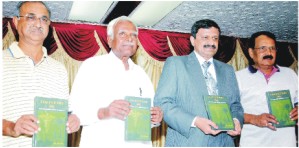
Jayadeva Institute of Cardiology Director Dr. C.N. Manjunath releasing the book ‘I Salute You Sir’ at The Paradise in Yadavagiri on Sunday. Andolana Editor Rajashekar Koti, former Assembly Speaker Krishna and author of the book Dr. Basappa are seen.

Mysore, Oct. 25 (KCU)

– A book on the history of phamaceutical science ‘I Salute You Sir,’ which also throws light on the effort of scientists in discovering medicines, written by Dr. Basappa, Consultant Doctor at Apollo BGS Hospital, was released at The Paradise hotel in Yadavagiri on Sunday by Dr. C.N. Manjunath, Director, Jayadeva Institute of Cardiology, Bangalore.

Speaking on the occasion, Dr. Manjunath lauded Dr. Basappa for throwing light on the invaluable service of scientists to society and pointed out that the book would motivate doctors and medical students to pursue research in medicine.

Andolana Editor Rajashekar Koti, who unveiled a portrait of Louis Pasteur, opined that medical profession was truly dedicated to society and suggested to publish the book in Kannada also.

Presiding over the programme, former Assembly Speaker Kris-hna pointed out that scientists toiled almost their whole lives pursuing research in medicine at the cost of their personal comforts. Contrary to that, a few doctors were more engrossed in making money with no humanity, he regretted.

Dr. Basappa observed that se-veral scientists had entered into deep depression and ended their lives while being deeply engrossed in research work foregoing social life. He pointed out that his book showcased the usage of scientist’s invaluable inventions in society and the struggle and sacrifice behind that.

Dr. Lakshman welcomed. Arun proposed a vote of thanks.

source: http://www.starofmysore.com / General News / October 25th, 2011


Azim Premji: The bare-bones billionaire

True to form, Azim Premji has an austere meal in front of him.

It’s not for lack of choice. His company, Wipro Ltd., has laid out an array of decadent pastries, hot drinks and a rainbow platter of fruit for our interview at his new Canadian office. Mr. Premji, India’s third-richest man, has selected seven strawberries and a cup of tea.

Mr. Premji is not like other billionaires. He built his father’s vegetable oil company into a global software empire with operations in dozens of countries, yet he still flies economy class. He walks to work. He does not own a yacht. And in December, he was responsible for the largest lump-sum donation in his country’s history, pledging $2-billion (U.S.) to support rural schools in India.

That generosity is one of the reasons Western media have dubbed him India’s Bill Gates, the Microsoft founder who shares a technological bent and who, like Mr. Premji, dropped out of school. But Mr. Premji is different. For one, he returned to finish his degree in electrical engineering at Stanford University three decades later, a feat he’s quite proud of. For another, his vibe is more professorial than tech nerd.

Mr. Premji has long focused his attention on the developing world, seeing huge potential in major growth markets such as India, China and the Middle East. On this day, dressed in a dapper grey suit and burgundy tie, he is sitting in an office in an industrial area of Mississauga, talking about why Canada now plays such a key role in his company’s growth plans.

Sales here more than doubled in the past year, even before the company ramped up plans and decided to set up the Mississauga headquarters. Wipro aims to double revenue again in the next year. “It’s a reasonably large market. It’s English-speaking. We think it is a country which is economically very stable, growing, and it produces oil, which helps today in terms of having solid growth. And we have underinvested in it,” he says. “We’re taking it seriously now.”

Wipro now has 2,100 workers supporting its Canadian operations in business services, of which 300 are in Canada. It will add at least 100 more jobs in the country this year with its eco-energy division, which aims to manage energy reductions and cut companies’ carbon footprints. It will also branch out into servicing financial, retail and telecom firms in areas such as billings.

Mr. Premji is a journalist’s dream interview: his answers are succinct. He does not stray alarmingly off-topic. He remembers meeting you the year before. He doesn’t pepper his language with jargon.

His business background began with a lurch. At age 21, while studying at Stanford, he got a phone call informing him that his 51-year-old father had died of a heart attack. Azim would have to take over the family’s business – then called Western India Vegetable Products – with annual sales of about $2-million.

At his first shareholders’ meeting, he remembers someone telling him to sell his shares to an older colleague because he couldn’t run such a complex company. Instead, he bought business textbooks and studied them at night. He turned the cooking fat firm into a consumer products company that produced laundry soap and light bulbs. He diversified into information technology – printers and personal computers – and then into global outsourcing.

Today, Bangalore-based Wipro is India’s third-largest information technology exporter. It operates in 55 countries with more than 108,000 employees and sales of about $6-billion. Its businesses range from software and green energy services to consulting and outsourcing. Mr. Premji has a net worth of $16.8-billion, Forbes said this week.

The growth hasn’t come without setbacks. “Many things have failed,” he says. In the mid-1990s, he branched into financial services. “We didn’t understand the depth or the intricacy of the business. And we finally backed off. And we paid an expensive price for that.” What did he learn? “You cannot get into business for the fashion of it,” he says. You need a commitment which is long term and a commitment to leadership, because that’s the only way you build excellence.”

In a country plagued with corruption problems, he has made a public point of never paying bribes. “You can do clean business in India,” he says. “We have found we get better employees because of it, with more pride and more character. We get better partners, because they trust us. And we get more trusting customers because of it.”

Global challenges remain. Inflation is a broad concern – while he doesn’t see hyper-inflation, he is worried about rising prices in emerging markets.

“Messy consequences” from unrest in the Middle East is another worry. Everyone aspires to democracy, to a degree of control over their lives, he says. But in the process, there will be “uncertainty and major stumbling.

“And major frustrations expressed by people over what they’ve inherited.”

Economic clout is tilting towards emerging markets and away from advanced economies, he said in a recent speech at the Davos World Economic Forum. In the next decade, he expects emerging countries will have a $20-trillion economy – much larger than the $15-trillion U.S. economy. That means multinational companies will have to develop affordable products to suit local needs, he believes.

Much of his own attention is shifting. On Dec. 1, Mr. Premji said he plans to transfer $1.95-billion worth of shares to a trust that will fund social initiatives, particularly elementary education in rural India. He now spends 10 per cent of his time on the foundation, and he expects that will grow to a quarter of his time in the next few years.

Mr. Premji won’t say whether he plans to give away all his money, à la Warren Buffett. But he has said the trust is expected to expand “significantly” in the coming years. He sees this as the single best way of improving his country.

Much of Mr. Premji’s efforts are focused on girls – keep them in school, give them a basic education, ensure teachers show up for work, empower female leaders at the village level and you will see better health outcomes and smaller families. “How can you contribute towards building the Indian society and the Indian nation? No better way than to upgrade the quality of young people in school, particularly the schools which are run by the state government in the villages.”

Then, there is the matter of Mr. Premji’s frugality. He has made some concessions in recent years – he now flies business class on long-haul flights, and economy domestically. He used to drive a Ford Escort, then a Toyota Corolla. These days it’s a Volkswagen Skoda Laura. He is still arrives at the office at 6 a.m., works until almost 7 p.m. and toils after dinner and on weekends. He treks in the countryside, alone or with companions, on the weekends to clear his head.

His sister lives in Halifax with her children. Mr. Premji appears to genuinely like Canada – and is impressed with the Indo-Canadian community, which numbers close to a million people and has potential to help strengthen trade ties between the two countries.

“The Indian community in Canada has integrated much better than the Indian community in United States. They’ve become really Canadian at the same time as keeping all their Indian characters and customs and social groups. It’s a very unique blend, I’ve not seen it in this intensity anywhere else. And they’re doing well.”

source: http://www.theglobeandmail.com / by Tavia Grant / for Saturday Globe and Mail / Mar 11th, 2011
99th Indian Science Congress to be hosted at KIIT University Bhubaneshwar

New Delhi:

The 99th Indian Science Congress (ISC), the largest national science event with thousands of delegates participating, exploring, understanding, analyzing and interacting on matters of science, was announced by Prof.Geetha Bali, General President of 99 Indian Science Congress, at New Delhi. The highly prestigious Indian Science Congress (ISC) is scheduled to be organized from 03 – 07 January 2012 at KIIT University, Bhubaneswar, Orissa. The industry meet was attended by captains of industry, policy makers in science & technology, senior scientists from R&D institutions and corporates.

As per tradition the Science Congress will be inaugurated by Hon’ble Prime Minister of India, Shri Manmohan Singh. The event is likely to be attended by around 10,000 participants including Nobel laureates and several eminent scientists from India and abroad, besides lakhs of students and general public.

The focal theme of 99th Indian Science Congress would be “Science and Technology for Inclusive Innovation – Role of Women.” The Congress aims to salutes the transition displayed by women and their emergence as true epitomes of power and courage. Special emphasis will be laid on bridging the divide in our society using Science and Technology to achieve inclusive development – be it economic, geographical or gender based biases.

The 99th Indian Science Congress will have different sections and forums on Food & Nutrition, Rural Technology, Atmospheric Sciences, Nanotechnology, Agriculture, Green Building Technologies and Alternate Building Materials, Biodiversity, Biotechnology, Energy System, NBC Technologies for Armed Forces and Civilians, Environment & Forest, Medical Sciences, Climate Change, Space Science and Technology, Pharmaceutical Sciences, Transportation, Maternal & Child Health Care, Water Management, Technologies for Differently Abled, Science Education for Women etc.

Announcing this significant event, Prof. Geetha Bali, General President, 99th Indian Science Congress, Vice chancellor Karnataka State Women’s University, Bijapur said, “From a humble beginning Indian Science Congress has today emerged as one of the most awaited events on the science and technology calendar across the globe. The event will witness participation from some of the brightest minds in the realm of science from across the globe.”

Dr. Achyuta Samanta, Founder KIIT remarked, “We are proud to host this prestigious and mega Science Congress that will provide us an opportunity to get insight into the most brilliant minds from across the globe. The entire team at KIIT is working towards making this event a huge success.”

Mr. Ravi Boratkar, MD MM Activ Sci – Tech Communications Pvt. Ltd., “Over the years ISC has emerged as a milestone event to promote the cause of science in India. The 99th Indian Science Congress will showcase cutting-edge technologies, leading scientific products and services, path breaking R&D initiatives and achievements of India’s foremost and leading public and private sector organizations, government departments, research labs, educational institutions and defence services.”

The five day event will comprise Technical Sessions, Plenary Sessions, Vision Talks, Panel Discussions, Vigyan Sancharak Sammelan, Public Lectures, Pride of India Expo, Children Science Congress, Women Science Congress, Genesis- XI Symposium, Cultural Programme, Valedictory Function and Vigyan Jyot.

There will be special pavilions like “World of Women” (Wow)“Edu Vision”, “Hall of Pride” (HoP) etc. WoW will be depicting women in science and science for women, whereas Edu Vision will showcase innovative models by leading educational institutions. HoP shall be a dedicated section designed to raise a toast to the life and works of a prominent scientist and philanthropist.

Concurrent to the 99th ISC, Genesis-XI, a one day symposium will also be organized. The theme will be “Role of Women in India’s March as an Emerging Economy – Science / Health / Education / Empowerment“. Genesis has emerged as an important forum where best of minds from Industry, Scientific Fraternity, Policy Makers and Academia come together on a common platform and delves on the issues related to science and technology of national importance.

Another attraction of Science Congress will be Vigyan Jyot (Flame of Knowledge), which aims to spread the message of science and associated benefits to billions of people in India. This time Vigyan Jyot will travel from Delhi to Bhubaneswar and will remain lit at the venue throughout the event.

source: http://www.indiaprwire.com/pressrelease/information-technology/2011082595868.htm / Aug 25th, 2011

India’s Rural Poor Give up on Power Grid, Go Solar

India's rural poor give up on power grid, go solar

<p>In this May 24, 2011 photograph, Pushpa Gowda, center, laughs with her family and neighbors on the evening after they installed solar-powered light in her house in Nada village on the outskirts of Mangalore, India. Across India, thousands of homes are receiving their first light through small companies and aid programs that are bypassing the central electricity grid to deliver solar panels to the rural poor. Those customers could provide the human energy that advocates of solar power have been looking for to fuel a boom in the next decade. (AP Photo/Rafiq Maqbool)</p>

source: http://www.journaltimes.com / by Rariq Maqbool / Home >News> Science > Science>  Image / Sunday , Jul 03rd, 2011