The Indian Council of Medical Research (ICMR) has authorised a private lab in Bengaluru to test coronavirus samples.
The approval comes as government labs struggle to test the increasing number of samples. Amid the surging cases of Covid-19, the disease caused by the coronavirus, the government last week said it would bring in about 50 private labs and spruce up diagnostic infrastructure.
ICMR sources said the Neuberg Anand Reference Laboratory is Karnataka’s first private lab to get government approval for Covid-19 testing. Capable of testing 100 samples a day, the lab hopes to be ready by Tuesday evening to start testing the samples.
As per the ICMR guidelines, the lab will not charge more than Rs 4,500 per test: Rs 1,500 for screening assay and Rs 3,000 for confirmatory assay.
“As I understand, the ICMR won’t (directly) be sending samples,” Dr Sujay Prasad, Medical Director, Neuberg Anand Reference Laboratory, told DH. “Nursing homes and hospitals interested in getting the Covid-19 samples tested and walk-in patients falling in the criteria set by the ICMR will be tested here.”
Reiterating that the lab is bound by ICMR guidelines, Dr Prasad said if the patient has no travel history but has been in hospital with symptoms of respiratory illness like pneumonia, he or she can be tested.
source: http://www.deccanherald.com / Deccan Herald / Home> City> Top Bengaluru Stories / by Suraksha P / DHNS, Bengaluru / March 24th, 2020
A benchtop test setup of a ventilator prototype being built by IISc scientists and volunteers at IISc’s High-Speed Wind Tunnel Complex.The prototype is created out of components from the Indian automotive and RO filter industry. The white canisters contain air and o2, which are mixed in the blue cylinder. The control circuitry is composed of PCL board and Raspberry Pi. The medical test lung is for experimentation testing only. (Photo courtesy IISc Project Praana Team)
As the clamour for medical ventilators reaches a fevered pitch amid the escalating COVID-19 crisis, a group of IISc scientists and students have been working night and day to develop a high-quality indigenous ventilator which makes use of sensors and parts sourced from the local automotive and RO water filter industries.
“The idea is to circumvent a shortfall of internationally imported components which are holding up the mass manufacture of ventilators in the country,” said Associate Professor Gaurab Banerjee of the Indian Institute of Science’s (IISc) Electrical Communication Engineering Department, a brainchild behind the invention.
“In a worst-case scenario, about 0.006% of COVID-19 cases will require critical care with access to ventilators. For a population of 130 crores, this translates to about 70,000 patients,” he added.
The prototype is designed to make use of materials which are readily available in India and in large numbers such as pressure sensors used in cars and solenoid filter valves in Reverse Osmosis (RO) water filters.
According to the team, the plan is to take a pressurised mixture of medical-grade oxygen and compressed air, and mix it using food-grade containers and tubing found in domestic RO water filters. A programmable logic controller (PLC) board and a Raspberry Pi computer will control the air pressure, the oxygen composition and flow characteristics.
The challenges have been steep. At the heart of ventilator technologies are mass-flow sensors and controllers which accurately tell you (and control) how much oxygen is flowing through and what volume of oxygen the patient is inhaling in one breath. These are commonly imported from Switzerland.
The team said it has now duplicated that technology using automotive-grade sensors and solenoid valves by using basic principles of fluid mechanics and gas dynamics and has verified the results experimentally.
“By using these checks, we are able to work out what this oxygen concentration should be and what the flow rates are,” explained Associate Professor Duvvuri Subrahmanyam, of IISc’s Department of Aerospace Engineering who said that similar flow physics is at play in high-speed flight and rocketry.
The prototype, which has been in development for 14 days, is expected to be completed by the end of April. Professor Banerjee explained that the team has set itself five milestones before the prototype can be deemed complete.
“On Friday, we completed the second milestone, which was to combine pneumatics and an industrial controller to time-cycle air-flow,” he said.
Among those reportedly evincing interest in mass manufacturing the prototype is Bharat Heavy Electricals Limited (BHEL). The team clarified that they were ready to transfer the technology free of cost to any interested parties.
source: http://www.deccanherald.com / Deccan Herald / Home> City> Top Bengaluru Stories / by Akhil Kadidal / DHNS, Bengaluru / March 30th, 2020
Around 200 participants battled it out to build solutions to drive – Language Equality on the Indian Internet. The event was won by team “got_r00t” and “PMRY”. Read on to know more…
The main objective of the event was to build an ecosystem to drive language equality on the Indian Internet space. (Representational image)(HT file)
The Silicon Valley of India – Bengaluru on Saturday hosted RevHack 2020 – first Indian language based hackathon.
Around 200 participants battled it out to build solutions to drive – Language Equality on the Indian Internet. The event was won by team “got_r00t” and “PMRY”.
The hackathon was organised by Reverie Language Technologies and NASSCOM. The main objective of the event was to build an ecosystem to drive language equality on the Indian Internet space.
“India has a literacy rate of 69.1 per cent and only .01 per cent of Indic content is available on the Internet for consumption. While there will be 536 million language first digital users in India by 2021, there still is a long way to go for achieving ‘Language Equality on the Internet’,” said Arvind Pani, CEO and Co-founder of Reverie Language Technologies.
“With the first edition of #RevHack we look forward to inspiring coders, developers, and the student community to create innovative Indic language technology-based solutions so that the Internet can be truly accessible for all. Our regional language users can progress beyond browsing and India can realize the potential of the next 500 million users.”, he added.
source: http://www.hindustantimes.com / Hindustan Times / Home> Education / by Indo Asian News Service – Bengaluru (Karnataka) / January 19th, 2020
A SpiceJet flight lands on the south runway at Kempegowda International Airport in Bengaluru on Thursday.
The much-awaited second runway, New South Parallel Runway (NSPR), at Kempegowda International Airport (KIA), saw its first landing on Thursday, March 20. According to a release by Bangalore International Airport Limited (BIAL), SpiceJet Flight SG497 landed on the newly built run way at 9:41 am on Thursday.
“With regulatory clearances, the south runway is now equipped to handle both arrivals and departures. BIAL is working with various stakeholders to commence rehabilitation project of the North Runway (old runway),” a BIAL spokesperson said.
In the first week of December 2019, the new runway became operational after an Indigo flight took off. However, the KIA did not get clearance from DGCA and other agencies to use the runway for landing as some compliances were pending.
The new runway is 4,000 m in length and 45 m in width, powered with LED airfield lighting, which is a is part of the KIA’s ₹13,000-crore expansion project. Once the operation on the new runway stabilises, the existing old runway will be upgraded.
BIAL had said that the new runway would be operated as per CAT I specifications and later would progressively evolve to CAT III B specifications, which would operate flights even in inclement weather, fog and low visibility.
source: http://www.thehindu.com / The Hindu / Home> States> Karnataka / by Staff Reporter / Bengaluru – March 20th, 2020
K A Muthana (Retd), Chief Test Flying (Fixed Wing), the aircraft took-off from HAL Airport at around 1230 hours, the Bengaluru-headquartered defence PSU said in a statement.
LCA Tejas. (File | EPS)
Bengaluru :
Tejas, the first Light Combat Aircraft in Final Operational Clearance-standard (SP-21) took to the skies for its maiden flight here on Tuesday, the Hindustan Aeronautics Limited said.
Piloted by Air Cmde. K A Muthana (Retd), Chief Test Flying (Fixed Wing), the aircraft took-off from HAL Airport at around 1230 hours, the Bengaluru-headquartered defence PSU said in a statement.
It was airborne for 40 minutes.
This flight signifies exemplary teamwork between various stakeholders of the LCA Tejas programme such as HAL, Directorate General of Aeronautical Quality Assurance, Centre for Military Airworthiness and Certification, Indian Air Force and Aeronautical Development Agency, HAL CMD, R Madhavan said.
“HAL achieved the momentous feat within a record time of 12 months after the release of Drawing Applicability List (DAL) and SOP (Standard Operating Procedure) by CEMILAC”, the statement said.
“This would pave the way for the production of remaining 15 fighters from FOC (Final Operational Clearance) block, which are planned to be delivered during the next financial year”, it said.
The FOC aircraft are equipped with advanced features such as Air-to-Air refuelling and Beyond Visual Range (BVR) missile system.
“It imbibes a lot of manufacturing improvements which were based on the operational feedback of LCA IOC (Initial Operational Clearance) fleet with IAF”, HAL said.
source: http://www.newindianexpress.com / The New Indian Express / Home> Nation / by PTI / March 17th, 2020
The Indian Space Research Organisation (ISRO) has shortlisted 358 high school students from across the country to be part of its second annual ‘catch them young’ programme, YuViKa.
The provisional list has 10 local students in the Overseas Citizen of India (OCI) category. The final pool of over 100 ‘budding scientists’ from class 9 will be selected by March 31 and they will take part in a two-week residential awareness programme to be held in different ISRO centres from May 11 to 22, ISRO said.
The online selection process began in February with priority to applicants from government or aided schools in rural areas. The five girls and five boys shortlisted from Karnataka are from schools in Nipani, Challakere, Baindur, Holenarsipur, Bangarpet, and rural Mysuru.
Finally, three students from each State or UT and studying in CBSE, ICSE, and State streams will join the Yuva Vigyani Karyakram. Five additional seats are for pupils in the OCI category.
The programme includes invited talks, sharing of experiences by eminent scientists, visits to ISRO facilities and laboratories, discussions with experts, practical and feedback sessions.
Log into yuvika2020@isro.gov.infor details. YuViKa secretariat (Respond & AI) can be reached on 080 2217 2269.
source: http://www.thehindu.com / The Hindu / Home> News> States> Karnataka / by Special Correspondent / March 11th, 2020
Speaking about the challenging task, firefighter Priyadarshini B emphasised that while the field has always been male-dominated, the training provided to them was on equal grounds.
Bengaluru :
With International Women’s Day around the corner, Bangalore International Airport Limited (BIAL) – operator of Kempegowda International Airport – marked the occasion by celebrating its women firefighters. On Tuesday, the 14-member women firefighting team who underwent certified training at the Airports Authority of India Fire Service Training in Kolkata, demonstrated their learnings and emergency response skills in a mock fire drill held in the premises of the airport. The 14 women, who are a larger part of the Aircraft Rescue and Firefighting (ARFF) unit, were recruited from across Karnataka, showcased their strength and resilience while performing their duties while operating the Austrian-made Rosenbauer Panther 6×6, a rescue vehicle exclusively designed for airport emergency operations.
Speaking about the challenging task, firefighter Priyadarshini B emphasised that while the field has always been male-dominated, the training provided to them was on equal grounds. “Everyone says women are not the right fit for this job but we took it as a challenge and aimed to achieve success instead. My family was convinced that it is a field role, which is quite unique and motivated me to achieve my goal. While the first month of our training was hectic, gradually the team pushed themselves, including helping each other in their highs and lows,” said Priyadarshini, adding that going forward she would like to see more women joining the field of firefighting.
Another firefighter Lakshmi P V emphasised that the four-month training in Kolkata was followed by a two-month training in Bengaluru and additional on-the-job training which she claims as rigorous but fruitful. She added, “We are proud to be the first batch of all-women firefighter group in Asia and we have been entrusted with saving lives during emergencies. It’s a known fact that the fire department, including civil and aviation, was male-dominated but that has now changed with the training on equal grounds. This maintains the gender neutrality in the field.”
While BIAL works towards increasing the ratio of women in the organisation, which currently stands at 15 per cent, Thomas Hoff Anderson, Chief Operating Officer, BIAL, said they have set an example by creating a path for women to break into what has been a male-dominated bastion. “Training and practising is a part of everyday life for a firefighter especially at an airport and we do various drills to be prepared for emergencies. What we have seen from the women’s team ascertains that there is nothing a male can do that a female cannot do, that is an important statement.”
Rosenbauer Panther 6×6
120 KMPHTop Speed
12,500 Litres Water Tank 9000 LMP
Pump Output 1,500 Litres
Foam
Tank 70 metres Throw
source: http://www.newindianexpress.com / The New Indian Express / Home> Cities> Bengaluru / by Express News Service / March 04th, 2020
Established in 1921, it is one of the oldest in India and Asia
The Department of Biochemistry of the Indian Institute of Science (IISc.) stepped into its centenary year in 2020. Established in 1921, it is said to be one of the oldest departments not only in India, but in all of Asia. Around 850 students have graduated from the department so far.
P.N. Rangarajan, Chairperson, Department of Biochemistry, told The Hindu that the major achievement has been its students, many of who are now leaders in industry and academia. “One of them J. Padmanabhan – alumni and faculty – became the director of IISc. M.R.S. Rao went on to become the president of the Jawaharlal Nehru Centre for Advanced Scientific Research, and Ram Rajasekharan became the Director of CFTRI-Mysuru,” he said.
The department has planned a major conference and alumni reunion in December, as well as a centenary lecture series that will be held almost every month. On the IISc.’s Open Day on Saturday, it is organising an exhibition highlighting its past and current activities.
Prof. Rangarajan’s own research has led to the development of the hepatitis B vaccine. “At least four vaccines are currently in the market. The hepatitis B component in these vaccines came from the lab of the Department of Biochemistry,” he added.
In a recent issue of the journal Current Science, Prof. Rangarajan lists out the progression of research in the department. This includes ‘research of societal relevance’ in the early years which resulted in the development of methods for conversion of municipal waste into organic manure and fluoride removal from drinking water, to name a few.
The article makes note of key contributions in basic research such as the identification of yeast chromosomes and nuclear membrane.
Ongoing research
At present, a novel drug combination for extremely drug resistant and multi-drug resistant TB, as well as new blood-based biomarker signatures of host genes for diagnosis of tuberculosis and for detecting response to anti-tubercular therapy are being developed, he told The Hindu. “A novel inhibitor of DNA repair enzyme called SCR7 has also been developed in our laboratory. It has the potential to develop as a cancer drug,” said Prof. Rangarajan.
source: http://www.thehindu.com / The Hindu / Home> News> Cities> Bengaluru / by K.C. Deepika / February 28th, 2020
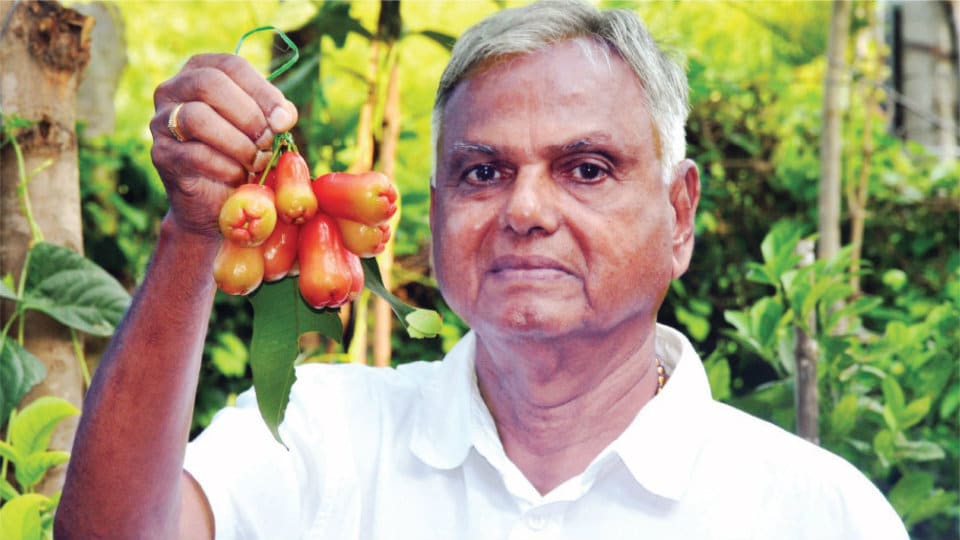
Dr. C.N. Mruthyunjayappa (75), fondly known as Sargur Doctor, passed away at his residence #72, ‘Santrupti,’ Shantala Marga, Srirampura, here yesterday afternoon following a cardiac arrest.
He leaves behind his wife Sudha, sons Rajendra, Shailendra and Sharashchandra and a host of relatives and friends.
The body was kept for public viewing at his Sargur residence today from 6 am to 9 am. Last rites were performed at Chikkebagilu village in Malavalli taluk at 3 pm today.
Profile: Dr. C.N. Mruthyunjayappa was a doctor (MBBS) by profession with a Bachelor’s degree in B.Sc (Botany). He started the clinic in Sargur, the most backward area in H.D. Kote taluk and served the people for more than 35 years and later shifted to Mysuru. He also served as a Medical Superintendent of JSS Hospital, Mysuru.
An environmentalist, plant grafting expert and philanthropist, during his medical career at Sargur, he treated poor patients free of cost. He was a Trustee / Member of many social service organisations. In Sargur he started ‘Vanasiri’ Trust (Founder-President) devoted for afforestation and wildlife protection and was responsible for creating tree belts around Sargur. After shifting to Mysuru (Srirampura), he was responsible for planting many trees in the locality. He received Vaidyarathna Award (2011) for his outstanding services as a medical doctor. His hobby was gardening and travelling abroad.
Recognising his contribution in conservation and sharing of Germplasm (fruits and other crops), Government of India (Ministry of Plant Varieties and Farmer’s Rights Authority, New Delhi), had awarded “Plant Genome Saviours Farmer Reward 2015” to Dr. Mruthyunjayappa. He was the second recipient of the Reward from Karnataka since it was instituted in 2012.
The couple have developed a unique type of garden at ‘Santrupti’ in Srirampura in an area of 120’ x 80’ plot of land, which encompasses matchless combination of ornamental, vegetable and fruit-bearing plants.
The philanthropist couple donated the entire prize money (Genome Saviour Reward, 2015) to a poor farmer (Rs. 1 lakh) and a social organisation (Rs. 0.5 lakh) last year.
source: http://www.starofmysore.com / Star of Mysore / Home> News / April 12th, 2018
Two vials showing stem cell modified Retinal Pigment Epithelium cells (which appear brown/black). The quantity of each vial is enough for five patients. PIC Courtesy: Dr Jogin Desai
A city-based medical science startup is gearing up to halt the progress of degenerative eye disease in Indians after trials in blind rats showed the creatures regaining their sight in a few months.
Age-Related Macular Degeneration (AMD) is a form of blindness that affects a segment of the adult population after they reach the age of 50. It accounts for 8.7% of all blindness worldwide. Retinitis Pigmentosa (RP), meanwhile, is a rare genetic disorder, which affects one child in 4,000.
Dr Jogin Desai
There is no known cure for the diseases. However, Dr Jogin Desai, whose startup, Eyestem, which has been under incubation by the government’s Centre for Cellular and Molecular Platforms (C-Camp) for the past three years, believes its work can halt the progression of the diseases by using genetically modified stem cells to restore the pigment epithelium in the cornea.
The pigment epithelium, which is only 1.5 mm thick, performs critical functions that support photoreceptor health and integrity. It was likened to the ‘foundation’ of a building. The therapy will also seek to restore the photoreceptor cells in the retina, which were likened to ‘buildings’. Phase 1 human clinical trials are set to start in 12 to 15 months.
Existing research postulates that using biodegradable ‘scaffolding’ upon which modified cells are stacked can help rebuild the pigment epithelium. However, Dr Desai said that current work delivering modified Eycyte-RPE (or Retinal Pigment Epithelium) cells, which are suspended in the liquid, is even more effective.
“We have found that cells delivered in this way automatically seek out their ‘body niche’ and assimilate into the system,” he said, adding that trials in blind lab rats had showed the animals regaining their vision over a two-month period.
‘Most discoveries fail’
Desai, however, cautioned that no amount of promise can legitimise an idea if its time has not yet come. “In fact, just one of 1,600 scientific discoveries made in research labs makes it into a fully fledged development where it can impact people’s lives,” he explained.
Most scientific discoveries are weeded out in exacting, three-phased clinical trials, based on the criteria of safety, scalability and effectiveness.
source: http://www.deccanherald.com / Deccan Herald / Home> City> Life in Bengaluru / by Akhil Kadidal / DHNS, Bengaluru / December 09th, 2019