Category Archives: Science & Technology

S. Venkatasubba Setty: A Hidden Figure in English Aviation History

Setty was likely unique in having the audacity to ignore financial worries and get involved in what was still a new and experimental field as an engineering student in Britain.

An Avro 504. Credit: TSRL/Wikimedia Commons, CC BY-SA 3.0

This wide-ranging column will take as its basis a discussion of a book every month on the history of science and technology, and relate it to a theme of current relevance. Read the other articles here.

On a recent visit to Manchester’s Museum of Science and Industry, a friend pointed out a small printed display next to a wooden model of an early Avro plane. It showed a man in suit and tie, sporting a drooping moustache and a white turban. The caption identified him as S.V. Setty (1879-1918), an “apprentice and unpaid draughtsman” at A.V. Roe and Company in 1912. It went on to declare: “India regards him as its first aircraft engineer”. This was intriguing; to the best of my knowledge Setty is not a household name in India. I set out to find out more.

Newspapers, websites and online forums have occasionally featured discussions on Setty, but the most detailed account we have of his life is contained in Kashi Viswanatha Setty’s slim volume, The First Indian Aviator: S.V. Setty, published by the Karnataka Arya Vysya Maha Sabha in 1984. Translated from the Kannada, the book gives a timeline of Setty’s life and includes some of his letters in an appendix.

Srirama Venkatasubba Setty (also known as Setti or Chetty) was born in Mysore in 1879 and earned a B.A. from the Maharaja’s College before enrolling in the Engineering College at Guindy, Madras. From Guindy, he transferred to the Thomason College, Roorkee, where he completed his engineering degree with high honours, but missed out on a prized appointment in the Indian Public Works Department (PWD) because he was above the age limit. He did get a job with the Mysore PWD, however. He served until 1909 before going on leave, having won from the Mysore government a scholarship to Faraday House, London, where he studied for a diploma in electrical engineering. This was a sandwich course , and Setty was soon gaining experience at firms in Rugby, Wolverhampton and London. During this time he also became an associate member of the Institution of Electrical Engineers.

Setty clearly had an appetite for learning. In England, he was attracted to flying and aeroplane design, which were newly in vogue (in the United States, the Wright brothers had made their first successful powered flight in 1903). Extending his leave and procuring loans from some wealthy patrons at home, he joined Avro in 1911 as a trainee pilot and draughtsman at the company’s Brooklands airfield in Surrey. The company, which was among the first aeroplane-makers in Britain, had only been a year old at this point.

At Brooklands, Setty regularly flew in various Avro planes, earning several mentions in Flight , the journal of the Aero Club in Britain. This was an experience few Indians would have had until the end of World War I. Flying took off in India in the 1910s but was mainly the preserve of wealthy princes. Setty was by no means alone in being an Indian engineering student in Britain – but he was probably unique in having the audacity to ignore financial worries and get involved in what was still a new and experimental field, offering little by way of career options in India. It couldn’t have been easy. For one thing, flying in the early days involved mortal danger. For another, he would have stuck out like a sore thumb at Brooklands. On one occasion, when he veered off course, Flight reported, “After two or three straight lines he turned off and ran into the sewage farm. He is a vegetarian, and it is thought that he may possibly have had some irresistible attraction for the cabbages which grow that way.” This may well have been good-natured ribbing but it would not be surprising if it felt like a barb at some level.

In addition to flying, Setty was involved in preparing drawings for various planes being designed at Avro in 1911-12. It is difficult to establish with certainty the exact nature of Setty’s contribution. Documentary evidence from his time at Brooklands is scarce, and Avro’s early records perished in a fire in the 1950s. (Setty’s great-grandson has collected some documents and a medallion awarded to his ancestor, though I have not had the opportunity to look at these in the original.) The most reasonable assessment I have found so far is in a note on Setty prepared by the Museum of Science and Industry, Manchester, and kindly made available to me by them. Considering various sources carefully, the note concludes that Setty “definitely worked on general arrangement drawings for the Avro Type F” (the first plane with an enclosed cockpit), and possibly “worked on drawings for the original [Avro] Type E”, a biplane – having wings in a double-decker arrangement – that formed the basis for the Avro 500 series. The Avro 504 would play a major part in World War I.

Having received a handsome certificate from Avro, Setty went back to his job in Mysore, leaving England in June 1912. There he was deputed as superintendent of the Mechanical Engineering School in Bangalore. He continued to have an interest in aviation, and with his year-long experience with Avro he was confident that he could build an aeroplane in India. He sought permission from the Mysore government and requested Rs 15,000 in funding. From the estimate of expenses that he enclosed with his request, it appears that he aimed to construct a biplane along the lines of the ones he had worked on in England. The dream was short-lived, however, as World War I broke out and the Government of India disallowed the flying of aircraft in its territory.

Why is Setty not better known? In his lifetime he was not shy of publicity. He was eulogised by the Calcutta-based Modern Review, sent photographs of himself with an Avro biplane to a professional journal and, upon his return to India in 1912, was honoured at gatherings in Erode, Bangalore, Madras, Coimbatore and Kollegal. But what fame he enjoyed was tied to his career in aviation, which had lasted all of one year, and which he had no way of continuing. Still, had Setty lived a long life, his reputation might have grown. But he was denied that privilege: the influenza pandemic of 1918 claimed him before he was forty.

Perhaps it is a mistake to focus exclusively on Setty’s exploits in the air, for he became a prominent citizen of Bangalore and continued to make an impact in other fields. He set up scholarships in his parents’ names; experimented with building a Kannada typewriter; was almost certainly a member of the Freemason Lodge in Bangalore; and was acting professor in the city’s engineering college (he was confirmed in the post shortly before his death).

Trying to identify firsts in the history of technology is often an unrewarding exercise – nor is it particularly useful to invoke individual genius in explaining technological developments. Personal courage, determination and imagination are by no means unimportant – and S.V. Setty had them in good measure – but we would do him a disservice if we saw him in isolation from the world in which he worked. A number of interesting questions beckon.

How did this Roorkee graduate develop an interest in electrical engineering, still a novel subject in the 1900s? In what circles did he move as a student in London, and how did aviation catch his fancy? To what extent did the munificence of the Mysore government and his acquaintances influence the direction of his career? Did Setty’s efforts have a long-term impact on aviation in India? It may have been a coincidence, but when aircraft manufacture eventually took root in India in the 1940s, it did so in Bangalore and with the support of the Mysore government. But that is a story for another day.

Aparajith Ramnath is a historian of modern science, technology and business.

source: http://www.thewire.in / The Wire / Home> History / by Aparajith Ramnath / May 15th, 2017
60 cities in 60 days in a solar-powered auto

SolarAuto01BF25jul2019

Meet this group that has travelled across 60 cities in 60 days on a solar-powered auto rickshaw

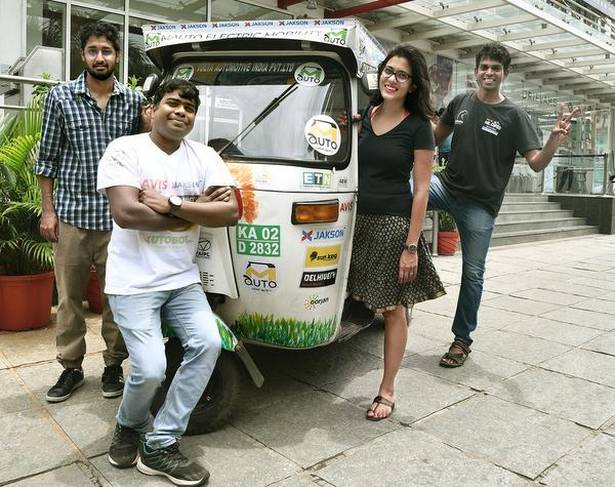
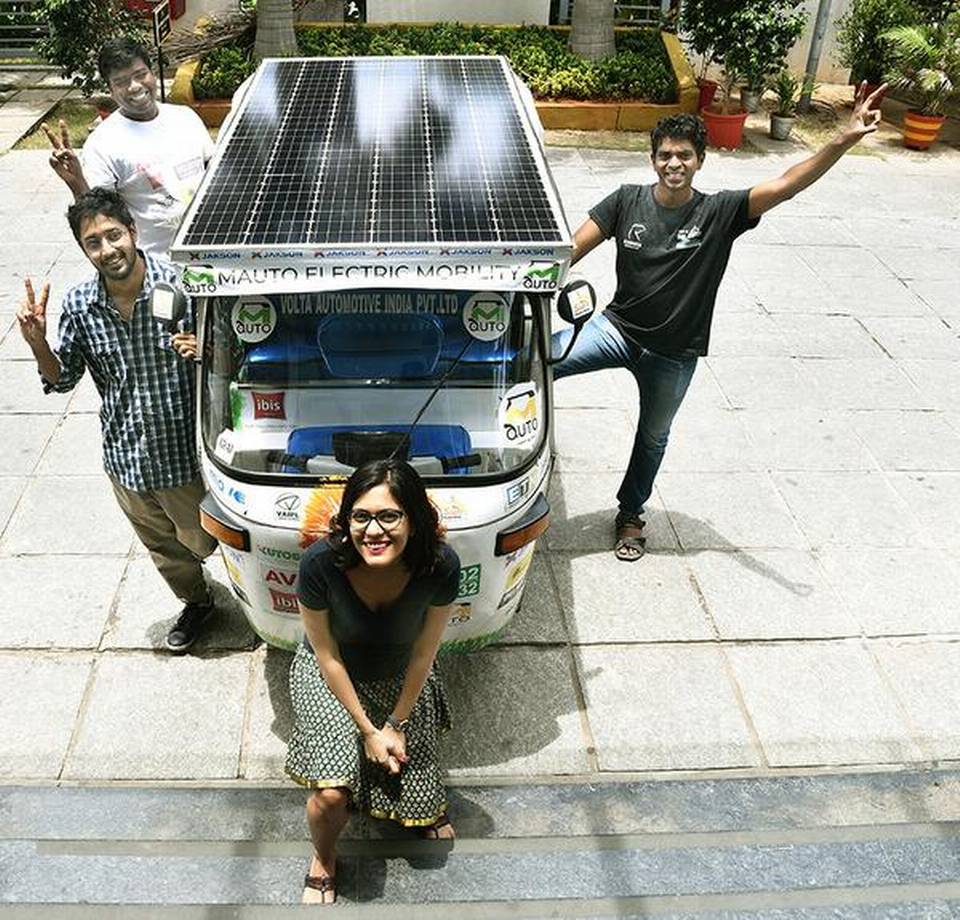
Many a hitch-hiker across the country has hopped on to this white auto rickshaw that is currently travelling across the country. “We picked up somebody along the way from Satara and dropped him in Pune. We also helped a couple whose car had broken down midway,” says Sushil Reddy, 30, who came up with the idea of a road trip in a tuk tuk. He is joined by Pallavi Siddhanta (27), Sudheer Lekkala (29) and Rutvick Arya (27) and together they have completed around 6,000 kilometres.

After making a pit stop in Chennai, they are now headed back to Bengaluru, where they started their journey from, on May 25. The 60-day trip covering as many cities is scheduled to end today. The team has covered Pune, Mumbai, Surat, Ahmedabad, Udaipur, Jaipur, Gurgaon, Delhi, Agra, Mathura, Lucknow, Kanpur, Benaras, Kolkata, Srikakulam, Visakhapatnam, Kakinada, Eluru, Vijaywada, Ongole, Nellore and Chennai among others.

Ray of hope

“Our project is called the Sun Pedal Ride. The idea is to spread awareness about solar energy,” says Sushil. Their auto rickshaw — provided by Volta Automotive, a Bengaluru-based company that manufactures and deals with green energy projects — is a solar-powered electric vehicle, with a solar panel fitted over head. The team believes there is relatively less noise pollution and it is more fuel efficient. “It is 50 paise per kilometre, while in other autos it’s four rupees per kilometre,” he adds. The battery in this auto is charged after every 120 kilometres. It takes four to five hours for it to be fully charged. Sushil and Sudheer both work in the solar sector, while Pallavi is a freelance communication and marketing professional and Rutvick is a software engineer.

For Sudheer, who is doing bulk of the driving, hitting the highways at a limited speed of 45 kilometre per hour gets frustrating sometimes. Given that an auto rickshaw is not the most comfortable vehicle, driving 150 kilometres a day takes a toll on his shoulders and back. “But I just listen to music and all of us make sure we keep ourselves hydrated with electrolyte water,” he smiles.

SolarAuto02BF25jul2019

While the trip sounds like fun, they have also had their share of challenges. The heat, being one. “We chose the summer months so we could utilise solar energy to the maximum,” says Sushil. The team has also fallen ill on many occassions. “Mostly stomach issues, considering we have been eating streetside food. Sometimes it’s the spicy local food that is the cause,” says Pallavi. “Then we quickly learnt that egg bhurji and roti are the safest to eat at most places,” says Rutvick.

Some of the accommodation they managed to get in few of the smaller towns and cities were far from luxurious. “We have seen flora and fauna of all kinds on our beds,” laughs Pallavi, adding, “So when we check into the Ibis hotels (the hospitality group is supporting this cause as part of their sustainability programme) in the bigger cities we know we are going to have a good night’s sleep.”

source: http://www.thehindu.com / The Hindu / Home> Life & Style> Travel / by Priyadarshini Paitandy / July 25th, 2019

SWR bags efficiency shield in civil engg

The South Western Railway (SWR) has bagged ‘Efficiency Shield in civil engineering’ for 2018-19.:

Hubballi :

The South Western Railway (SWR) has bagged ‘Efficiency Shield in civil engineering’ for 2018-19. The national level award is instituted by the Railway Board. The shield will be presented by Union Railway Minister Piyush Goyal at a function to be held in Mumbai in the third week of July.

In civil engineering construction, the SWR has done an outstanding job in completion of new projects. In the SWR, 227-km of railway track has been doubled in the last fiscal. The progress of doubling was much higher and faster compared to the national average, SWR chief public relation officer E Vijaya stated in a press release.

In 2018-19, the SWR has commissioned 27-km Wandal-Mulvad line and 32-km Jamnal-Minchnal track (both part of Hotgi-Kudagi-Gadag new railway track), 36-km Arsikere-Karadi (Arsikere-Tumakuru), 37-km Chikjajur-Tolahunse line (Hubballi – Chikjajur) and 36-km  Makalidurga-Devarapalli line (Yelahanka-Penukonda.

Of the 352-km Hosapete-Vasco line doubling project, 69-km has been completed between Devrayi-Shivathan, Koppal-Munirabad, Annigeri-Binkadakatti and Alnavar-Devrayi in the last year.  Vijaya said in terms of target, the SWR is the best among zonal railways to have achieved the highest percentage. The material management department, which procures and supplies all materials required for various activities across the zone in addition to the responsibility of sale of scrap, has also won efficiency shield.

source: http://www.newindianexpress.com / The New Indian Express / Home> States> Karnataka / by Express News Service / July 09th, 2019

Indo-German Start-Up Gets Prestigious Award

SmartiVateBF06jul2019

Mysuru:

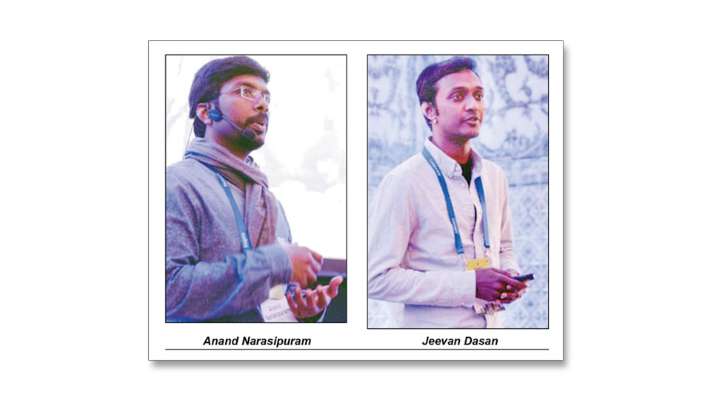
‘Smartivate,’ a Start-Up co-founded by two Indians — Anand Narasipuram and Jeevan Dasan — alumni of Karlsruhe Institute of Technology, Germany and the EIT Innoenergy Master School, located in Karlsruhe, Germany, has won the prestigious ‘Smart-Home Deutschland Award’ for the year 2019. The Award was given to the Start-Up for its product, ‘Configurator for plug and play smart home devices.’

Incidentally, Jeevan Dasan, an alumnus of the National Institute of Engineering (NIE), Mysuru, is the son of Dr. A.S. Dasan, Professor of English and Director, Shukrodaya’s Academy for HRD, Alanahalli Layout, Mysuru and Prof. Nalini Dasan.

‘Smartivate’ was one of the top three nominations shortlisted out of a large number of contestants from across Germany for the Award. The award ceremony, held last month in the historic ‘City Hall of Berlin,’ was hosted by ‘Smart-home Initiative, Germany eV’, a cross-industry federal association based in Berlin. Since 2012, the Association has been recognising commitment to technological excellence and quality of smart home products of companies, start-ups and student projects from across Europe.

‘Smartivate,’ a fine team-venture, actively involved in building a web-platform as one-stop-shop for smart home solutions, was launched one-and-a-half-years ago with a business start-up grant awarded by the Government of Germany.

source: http://www.starofmysore.com / Star of Mysore / Home> News / July 06th, 2019

Kidwai launches ‘eco-clinic’ with medicinal plants

Saplings being planted at the Kidwai Memorial Institute of Oncology. | Photo Credit: Handout E Mail

Aims to create an atmosphere of positivity, serenity and wellness for patients and their families

In order to create and enhance an atmosphere of positivity, serenity and wellness for patients and their families at Kidwai Memorial Institute of Oncology (KMIO), the hospital management, along with a few NGOs, on Friday planted around 240 species of tree saplings and around 400 species of herbs and shrubs. This green initiative will serve a dual purpose as most of the species are indigenous, medicinal ayurvedic plants.

KMIO had earlier planted around 2,000 tree saplings, shrubs and herbs in two phases. But this is the first time that they are predominantly using medicinal plants.

The species planted on Friday comprise Rudraksha, Ramphal, Brami, Bakula, Jamun, and Lakshman Phal. Flower and fruit-bearing trees have also been planted with the aim of getting more birds, butterflies and squirrels to the campus.

Dr. C. Ramachandra, Director of KMIO, said that such species would not only help the environment but also induce positivity and wellness in patients. “Greenery around the hospital will give relief to stressed cancer patients. We are noticing early positive signs in patients now. Many are happy and some have even volunteered to help in the maintenance work,” he said.

Raising concern over depleting tree cover in urban areas, environmentalist A.N. Yellappa Reddy of Bangalore Environment Trust said that such initiatives are the need of the hour. “This ‘eco-clinic’ increases the quality of air and gives comfort to patients and visitors,” he said.

The project is following the afforestation technique known as Miyawaki after the Japanese botanist Akira Miyawaki. G.S. Bhaskar, chairman of Eco Committee of Rotary Bangalore Midtown, which sponsored the samplings, told The Hindu that the Miyawaki method helps in speedy growth of flora even in urban areas which have turned into concrete jungles. “This method will definitely have a positive environmental impact,” he said.

source: http://www.thehindu.com / The Hindu / Home> News> Cities> Bengaluru / by Staff Reporter / July 15th, 2019

Class 10 student develops app to gauge malnutrition

Ayush Gharat
Ayush Gharat

The plight of malnourished and underprivileged children has moved this 15-year-old student who has developed an app to tackle the scourge.

The student, Ayush Gharat, has won worldwide appreciation for his app, mNutrition, and has been invited by the state Minister of Health and Family Welfare Shivananda Patil for a discussion to see how the idea could be implemented in the state.

Gharat is a certified Android developer was inspired to build the app when he saw the struggles of the underprivileged children during a school trip.

“I would be more than happy to hear your thoughts about eradicating malnutrition. I congratulate you on the development of this app and would be interested to see if we can collaborate,” Patil said.

mNutrition helps diagnose malnutrition in children below five years.

“The World Health Organisation (WHO) has laid down certain guideline for diagnosing malnutrition by comparing the height, weight and age of an individual,” Gharat told DH.

“It can be calculated minor, moderate and severe malnutrition.”

Since the WHO tables could be very complex for an Anganwadi workers and mNutrition can help cut down manual errors in calculation. “Sometimes there’re errors in entering numbers and sometimes the handwriting of those giving the data can’t be understood. mNutrition can eliminate all these,” he said

While malnutrition is affecting two in five children in urban areas, there is very little awareness about the issue, he said.

The class 10 student designed the app, while his parents did the proof-reading. Gharat is also among the participants from across the globe who took part in a competition organised by Google.

How mNutrition works

Anganwadi or Asha workers, who will find the app easy to use, can enter the data such as the child’s height, weight and age to get the level of malnutrition. Gharat hopes to improve the app further to offer solutions for a particular range of malnourishment.

source: http://www.deccanherald.com / Deccan Herald / Home> City / by Reshma Ravishanker / DH News Service, Bengaluru / May 27th, 2019

Bengaluru doctor Hema Divakar gets Global Asian award

Hema Divakar is spearheading a healthcare initiative for the overall well-being of women, with affordable and quality treatment.

Bengaluru-based medical doctor Hema Divakar (Photo | Hema Divakar Facebook)

Bengaluru :

Bengaluru-based medical doctor Hema Divakar was honoured with the ‘Global Asian of the Year 2018-19’ award in Dubai recently for her yeomen services and contributions to the women’s healthcare ecosystem, in India, said its organiser ‘Asia One’ magazine’s publisher on Tuesday.

Hema received the award at the Asian Business & Social Forum 2019 under the ‘In Service of the Society and the Nation’ category from UAE’s Trade Promotion Director Mohammed Naser Hamdan Al Zaabi.

“The award is conferred on those who stand out for vision, action and ingenuity and represent contemporary ideas to make global impact,” said the pan-Asian business and news publication in a statement here.

Hema is also spearheading a healthcare initiative for the overall well-being of women, with affordable and quality treatment.

“To be recognised with other achievers of Asia thrusts on me a greater responsibility and ownership to reform the women’s healthcare ecosystem in an innovative and impactful manner,” said Hema on the occasion.

source: http://www.newindianexpress.com / The New Indian Express / Home> Cities> Bengaluru / by IANS / May 22nd, 2019

Finally, IISc team confirms breakthrough in superconductivity at room temperature

When a material is cooled below the superconducting transition temperature in a magnetic field it expels magnetic flux thereby appearing to levitate.   | Photo Credit: AFP
When a material is cooled below the superconducting transition temperature in a magnetic field it expels magnetic flux thereby appearing to levitate. | Photo Credit: AFP

Superconductivity at ambient temperature has been a holy grail in physics for about a century.

Putting to rest all doubts and criticism, a team led by Prof. Anshu Pandey from the Indian Institute of Science (IISc), Bengaluru confirms that their material exhibits major properties of superconductivity at ambient temperature and pressure. A material is said to be a superconductor if it conducts electricity with nil resistance to the flow of electrons. Superconductors will help build very high efficient devices leading to huge energy savings. Till now, scientists have been able to make materials superconduct only at temperatures much below zero degree C and hence making practical utility very difficult.

Superconductivity at ambient temperature has been a holy grail in physics for about a century. This is where IISc’s work becomes particularly important. A revised article has been posted on May 21 in arXiv, a pre-print repository.

The material that exhibited superconductivity is in the form of nanosized films and pellets made of silver nanoparticles embedded in a gold matrix. Interestingly, silver and gold independently do not exhibit superconductivity.

The team examined 125 samples, of which 10 showed a drop in resistance signaling the onset of superconductivity. They attribute the unsuccessful results in the remaining 115 samples to oxygen exposure at the time of sample preparation and when the samples were taken for study.

“If this [result] is correct, it would be the greatest work done in India since the discovery of Raman effect,” says Prof. T.V Ramakrishnan, leading condensed matter physicist who is a distinguished Associate with the Department of Physics at IISc. “The material they have made is unbelievable — a tiny sphere of gold, placed 10-20 tinier spheres of silver inside it…This [material] they found shows a sharp drop in resistivity [reflecting superconducting state]. This is potentially amazing,” he adds.

Identical noise

The initial version posted in the repository on July 23, 2018 by a two-member team of Prof. Anshu Pandey and Dev Kumar Thapa attracted criticism, raising doubts about the data and hence the study. The reason: the presence of identical pattern of noise for two presumably independent measurements of the magnetic susceptibility. Noise, by its very virtue, will be random and so finding nearly identical noise in measurements made under different conditions is highly improbable. Dr. Brian Skinner, a physicist at the Massachusetts Institute of Technology, Boston was the first to notice this.

In one of his tweets in August 2018 Dr. Skinner said: “…They [IISc team] are really not backing down from their claims. They emphasize that they are focused on providing validation of their data…” And that is precisely what the IISc team has now done — provide validation of their data. On May 22, 2019, Dr. Skinner tweeted “…I am gratified, to say that least, that it is a scientific story now, and not a story about social scandal.”

Interestingly, the plots of magnetic susceptibility versus temperature in the new data still show the repeated “noise” in some instances. However, the researchers have clarified that the magnitude of the noise is well above instrumental resolution. “This suggests a possible physical origin related to the sample as opposed to instrument artefacts,” they write.

Referring to the “noise”, Prof. Arindam Ghosh from the Department of Physics at IISc and a co-author of the revised article says: “This is the data that we got. Further studies have to be done to understand this.”

The proof

“Two of the most important properties of superconductivity are dimagnetism and zero resistance. These two were seen in the material we studied. They seem to suggest that the material becomes superconducting below a certain temperature (286 K or 13°C). And it can go up to 70°C,” says Prof. Ghosh.

“At 286 K we have seen clear transition from a normal state to a superconducting state. This is more than anyone has reported,” Prof. Ghosh adds.

The revised version has provided the recipe for preparing the material, which was not included in the version post in July last year. The revised version also has plenty of data on the calibration of the setup. Besides retesting superconductivity, the authors tested it on another superconducting metal — lead. “[Unlike in the case of the original material] we did not see repeated noise,” Prof. Ghosh clarifies.

Researchers critically evaluating the revised version have raised some concerns. Prof. Pratap Raychaudhuri from the Superconductivity Lab at Tata Institute of Fundamental Research (TIFR) Mumbai has raised concerns that while the drop in mutual inductance is fairly sharp, it is at a lower temperature compared with resistance. “In superconductivity when the resistance goes to zero the diamagnetic drop should coincide with resistance drop. Here the resistance drops to zero at 175 K but the diamagnetic drop is at 165 K. This kind of difference [between resistance and diamagnetic drop] is unusual,” say Prof. Raychaudhuri.

Responding to Prof. Raychaudhuri’s observation on the sharpness of fall in mutual inductance Ghosh says: “We think there is long penetration depth (the depth to which the magnetic field penetrates inside the material) and so the change in mutual inductance can be very small.”

And about different temperature at which diamagnetic drops and resistance goes to zero, Prof. Ghosh explains: “We don’t have full clarity on this but there have organic superconductors where such discrepancies have been seen before.”

Soon after Dr. Skinner raised a red flag, there was criticism that authors were not sharing the samples with their peers for evaluation. “Our samples are extremely sensitive to environment. Samples degrade very rapidly and so measurements have to be made immediately after sample preparation,” Prof. Ghosh says, explaining why samples could not be shared with others. “We have now found a way of protecting the samples for a long time, which allowed us to do measurements over the last few months. Once we develop a protocol for better protection then we will be engaging and collaborating with other groups in India and abroad.”

Prof. G. Baskaran, a SERB Distinguished Fellow at The Institute of Mathematical Sciences, who works on the theory of superconductivity, was quick to provide a theory soon after the preprint was posted in 2018. In his theory, monovalent character of silver and gold and repulsion among electrons could produce room temperature superconductivity under certain restrictive conditions. Prof. Baskaran is excited that the Thapa-Pandey system precisely provides such conditions. “This looks like a case where granular superconductors play a role. I am excited that the key first step in this challenging field has been brought about by a systematic and detailed effort.”

The manuscript has been sent to a journal for publication and the first level of reviewing by editors has been completed. It is currently undergoing technical review by peer-reviewers. “We hope it will be published soon,” Prof. Ghosh says.

source: http://www.thehindu.com / The Hindu / Home> Sci-Tech> Science / by R. Prasad & Shubashree Desikan / May 25th, 2019

No fancy clinics, doctor couple achieves success through home visits

The couple now aims to start three more centres in other parts of the city, and bring in two nutritionists for patients facing dietary issues.

The team now comprises other doctors and many nurses and physiotherapists

Bengaluru :

It’s been five years since Dr Navneeth Motreja and his wife Nithya decided to do something meaningful with their MBBS degree. Realising that many patients, especially senior citizens, find it tough to travel to a hospital and then wait in a long queue for consultation, the doctor couple decided to launch a service to examine patients at their homes.

From just one or two appointments a day to 20,000 patients in the last five years, they have come a long way, and now have a team comprising eight doctors, six nurses and three physiotherapists. They later also launched two clinics, at Halasuru and Malleswaram, that work as a reporting centre for the staff.

“We have a centre in Frazer Town for call coordination. The coordinators receive calls from patients and inform the nearest clinic. In case the doctor cannot reach their house immediately during emergency cases, the coordinators check with the hospital nearest to the patient and get an ambulance free of cost,” Motreja said.

Celebrating the fifth anniversary of their joint venture, Care on Call, this Saturday, he said, “We found that it was difficult for the elderly, bed-ridden and the sick to get dressed and drive to the hospital. So we decided to go the old-fashioned way, and carry a tool-kit to the patient’s house. Care on Call now receives over 50 appointments a day.”

The venture is also getting popular with people visiting the city. “Many visitors do not know about nearby hospitals and would prefer to get treated at their hotel room. So we also started receiving calls from hotels to consult their guests,” Motreja told CE, adding that they provide 24×7 service. “Pharmacies are closed during the night and we provide basic medication. The fee is Rs 100 for a one-hour consultation if the area is within 5km of our clinics,” he added.

The couple now aims to start three more centres in other parts of the city, and bring in two nutritionists for patients facing dietary issues. “We may also expand to other cities if this goes well. This is the best way to ensure quality and affordable healthcare,” said Nithya.

source: http://www.newindianexpress.com / The New Indian Express / Home> Cities> Bengaluru / by Preeja Prasad / Express News Service / May 16th, 2019

Wipro acquires Filipino firm Splash

Wipro Consumer Care has acquired a Filipino personal care company, Splash, for an undisclosed sum, marking its entry into the east Asian market.

This is Wipro’s 11th acquisition in the consumer care space. Among the brands Splash owns are SkinWhite, Maxi-peel and Vitress. Wipro Consumer Care’s international portfolio formed 51% of its total revenues in fiscal 2019, and with this acquisition it is expected to grow to 54%.

The deal is expected to close by June this year. Splash clocked in a revenue of 4.1 billion pesos ($80 million) in calendar year 2018.

source: http://www.thehindu.com / The Hindu / Home> News> Cities> Bengaluru / by Special Correspondent / Bengaluru – April 30th, 2019