Somashankar, Sub-Inspector of Police, Fingerprints division at Superintendent of Police office in Kolar, has bagged the first prize at the national level for his achievement in the field.
He received the prize at the 19th national convention of forensic experts held at Madhuranagar in Telangana State on June 23 and 24.
Telangana Home Minister Nayani Narasimha Reddy gave a medal and ₹10,000 cash to Mr. Somashankar at the valedictory of the convention.
Telangana DGP Rajiv Trivedi, IGP M. Mahendra Reddy and National Crime Records Bureau (NCRB) director Ish Kumar were present.
DGP and IGP, Karnataka, Neelamani N. Raju, and Kolar SP Rohini Katoch have congratulated Mr. Somashamkar on his feat.
source: http://www.thehindu.com / The Hindu / Home> News> States> Karnataka / by Staff Reporter / Kolar – June 27th, 2018
Bengaluru-based deeptech startups Sensara Technologies and Lightmetrics Technologies have won Cycle 2 of the Qualcomm Design in India Challenge 2017 to take home prize money of $75,000 each
While Sensara is redefining how people interact with television and improving the experience through its AI and ML-powered products, Lightmetrics aims to make driving safer and more efficient by using Computer Vision (CV) and ML.
The second cycle of the Qualcomm Design in India Challenge, launched in August 2017, saw widespread participation from Indian product design and development startups. Speaking about the winners, Jim Cathey, Senior Vice President and President, Asia Pacific & India, Qualcomm International, said, “In this cycle of the Qualcomm Design in India Challenge 2017, we witnessed creative ideas for innovative products and services across sectors in Smart Cities, Med-Tech, Machine Learning, Fintech and Automotive. The two winners have created cutting-edge technologies and solutions addressing the needs of the present world.”
The two winning startups were among six which were shortlisted and incubated at the Qualcomm Innovation Lab in Bengaluru, and received mentorship and technical support from Qualcomm India, in addition to seed money of $10,000 each.
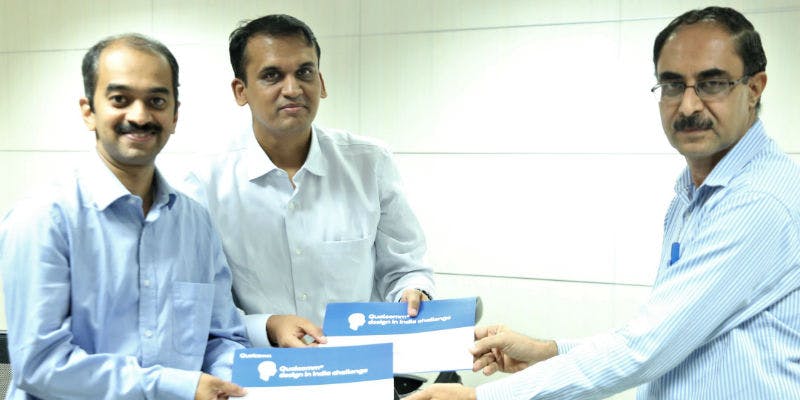
Winners of QDIC 2017 Cycle 2 and finalists for QDIC 2018 after receiving their certificates from Mr Ajay Prakash Sawhney, Secretary, MeitY, in New Delhi on June 20, 2018.
Launched in 2016, so far the accelerated design programme has incubated 24 startups with an overall investment of over USD 8.5 million. The Qualcomm Design in India Challenge supports fast design cycles and time to market, and leverages Qualcomm technologies to help Indian companies design and create products in the IoT space for global markets. Tagbox Solutions Pvt. Ltd. and Steradian Semiconductors Pvt. Ltd won Cycle I of Qualcomm Design in India Challenge 2017.
15 startups selected for 2018
Qualcomm has also announced the top 15 finalists for Qualcomm Design in India Challenge 2018. Three winning startups will be selected from these 15 shortlisted entries in early 2019.
Talking about what to expect in the 2018 programme, Rajen Vagadia, Country Manager, Business Development, Qualcomm India, said, “We are thrilled with the overwhelming response we received for the 2018 chapter, which marks an increased focus on putting startups on an accelerated path towards growth and development. Our shortlisted finalists come from all over India, representing a diverse range of products and applications across different spheres. Augmenting this diversity, we have three of our shortlisted startups run by women entrepreneurs.”
The 2018 programme has some new elements:
Prize money for the winners: At the end of the incubation period, the winner of two runners-up will be awarded with $100,000, $75,000 and $50,000 respectively.
Patent filing incentive: Qualcomm will provide each startup an amount up to $ 5,000 for patent applications, filed with either the US Patent and Trademark Office (PTO) or the Indian Patent Office during the incubation phase of the programme.
Access to accelerator programme services: Qualcomm, through its association with Anthill Ventures, will offer accelerator services to the 15 shortlisted startups at no additional cost, on various parameters such as series A and pre-series A pitch preparation, operations planning, industry connects, competitive landscape analysis, financials and cash flow and product management.
Meet the 15 companies that have been shortlisted for the Qualcomm Design in India Challenge 2018 edition:
Artificial Learning Systems, Bengaluru: An AI-enabled product that can detect diabetic retinopathy on handheld devices.
Avantari Technologies, Hyderabad: A wearable platform for keeping track of cardiac parameters combined with remote monitoring capabilities to predict cardiac abnormalities at an early stage.
Bioscan Research, Ahmedabad: A hand-held brain haemorrhage detector that is non-invasive and fully computerised.
Chigroo Labs, Bengaluru: A smart cradle, Cradlewise, for baby sleep management and health monitoring.
Dimension NXG, Thane: A platform that aims to decrease cost, time and errors involved in operations and training, using an Alternate Reality/Virtual Reality headset called ‘AjnaLens’.
Janitri Innovations, Bengaluru: An affordable, easy-to-use, wearable and portable fetal heart rate and uterine contraction monitoring device.
Lazy Design, Pune: A behavioural AI-powered smart ring that predicts and displays the right shortcuts for users and enables control with the swipe of a finger.
mBreath Technologies, Kharagpur: ‘SleepDoc’, the world’s first multi-person AI-driven wireless sleep assistant to non-intrusively monitor vital parameters.
MobiusWorks, Bengaluru: A smart wearable, ‘Wagr’ and a mobile app that helps keep your pets safe and fit.
Nearex Technologies, Bengaluru: An affordable 3G/4G payment terminal.
PiOctave Solutions, Bengaluru: A smart network video recorder (NVR) and gateway for the connected home.
Sensworx Systems India, Hyderabad: A cellular IOT-based smart water meter, which provides real-time water analytics and alerts on water leakage, health monitoring and performance.
Shellios Technolabs, New Delhi: A smart helmet that not only protects the head, but reduces the impact of pollution, heat and impaired communications on the rider.
TestRight Nanosystems, New Delhi: A portable and affordable visible light spectrophotometer to determine the optimum wavelength for study, and concentration and kinetics experiments.
Turtle Shell Technologies, Bengaluru: A non-contact, non-intrusive device that converts bed time into regular health check-up time for patients with chronic sleep disorders.
source: http://www.yourstory.com / Home> Qualcomm Brand Spotlight / by Team YS / June 22nd, 2018
A 14-year-old Class IX boy, Manaswith Shankar, has designed a smart chair to help techies suffering from phyical problems arising out of spending long hours before computer. His invention has also won him a prize at the INSEF Regional Science Fair in Rajkot last January.
The ‘smart’ chair
Manaswith’s ‘smart chair’ has a timer, DC motor (vibrator), buzzer and airblower. After two hours of continuous sitting, the buzzer gets on and after one-minute interval, the chair begins to vibrate and if you still refuse to get up, after one minute, the hot air blower is on forcing the person to get up from the seat. Still if the user refuses to get up, the monitor automatically shuts down.
Turbo pot
Manaswith has also developed a turbo pot prototype which fetched him a prize for ‘quick cooking’. Turbo pot is a high quality cookware that heats up twice as fast as regular cookware, saving time and LPG.
Other inventions
At 11, a tractor prototype, his first project, which runs on solar power. He has also developed a ‘armour’ a device for self-defence for women. The device has a GPS unit connected that can be monitored at nearby police station. This hand- held watch consists of retractable plug/knife/metal part which is hidden. It fits well on a wrist strap or in a purse or handbag.
Dangers of sitting long hours
Sitting for excessively long periods of time can even lead to early deaths, suggest many studies. Neck/back pain is a common problem among those who spend long hours sitting before computers. (photo for representation only)
source: http://www.economictimes.indiatimes.com / The Economic Times / Home> Business News> News> Science / June 20th, 2018
To work on cutting-edge tech that drives aerospace innovation
Bengaluru :
Boeing inaugurated its Boeing India Engineering and Technology Center (BIETC) in Bengaluru. The facility, spread across 150,000 square feet and eight floors, will double Boeing’s existing footprint of 160,000 square feet and will accommodate another 1,000 employees, who will work on cutting-edge technologies that will drive aerospace innovation from India, for India and the world.
While the new facility will incorporate software technologies into design, manufacturing and service offerings, Boeing will continue to scale up its aerospace, R&D and engineering activities at its existing facilities.
BIETC is recruiting and scaling up exponentially. The centre has increased its employee count from just 100 when it was inaugurated in early 2017, to over 1,000. And, as the centre grows over the next few years, it will develop into a team of over 2,500 employees in specialised fields of IT, engineering and R&D.
From an IT perspective, key focus would be on cutting-edge areas such as Product Lifecycle Management, Enterprise Resource Planning, Internet of Things, Blockchain, Data Analytics and Software Design for aerospace. BIETC is also continuing to build teams focused on advanced aerospace research in materials and manufacturing, aircraft structures and airplane health management.
Boeing’s engineering teams continue to excel and innovate in Digital Aviation, electrical, mechanical and systems design and providing support for lab and flight testing for aircraft.
“We see India as a hotbed for path-breaking software solutions that can redefine the way the world designs, operates and manages airplanes,” said Ted Colbert, Boeing’s chief information officer and senior vice president of Information Technology & Data Analytics, while inaugurating the new facility. “The IT talent and capabilities available in India will be an enabler for Boeing’s success across the world.”
The facility will contain an integrated lab for Internet of Things (IoT), Analytics and Mobility, a 3DX lab to develop 3D experiences, a Systems Integration Lab and a Proof of Concepts Lab. Over 25 Collaboration Areas in the facility will further enable teams to work together to develop, scale and deliver aerospace innovations with agility. The new facility will also enable driving strategic initiatives like Digital Transformation.
“We are excited about Boeing’s ever expanding footprint in India. The new engineering facility at BIETC reflects an agile and driven Boeing in India, one that inspires people to collaborate and accelerate step-change innovation,” said Pratyush Kumar, president, Boeing India.
“This centre brings together engineers from the fields of aerospace, computer science and mathematics, who will collaborate to achieve next-gen breakthroughs for aircraft design, manufacturing and maintenance,” he added.
In addition to developing engineering capabilities, Boeing is actively involved in developing skills across the aviation sector by partnering with Indian vocational training institutes and industrial training institutes to train workers for the aerospace industry.
source: http://www.thehindubusinessline.com / Business Line / Home> News> Special / by Anil Urs / Bengaluru – June 15th, 2018
Taski Ali’s brain surgery lasted for two hours, according to doctors
Bengaluru :
A 31-year-old Bangladeshi computer science engineer, who was operated for a rare neurological disorder in a city hospital two weeks ago, was strumming his guitar during the procedure.
Taskin Ali was suffering from guitarist’s dystonia, which rendered his left hand numb. The two-hour brain circuit surgery to tackle the disorder was performed in Bhagawan Mahaveer Jain Hospital on May 17.
Ali first noticed the problem in 2013 when he was playing guitar for no less than 10 hours a day. He worked in a company that developed video games and his job was to provide background music for the games.
“I used to find it difficult to move my left hand fingers while playing the guitar but that was my bread and butter. I thought I should practise more and increased it to 14 hours a day. But my condition only worsened. I was not able to play guitar at all,” Ali told TOI. Soon, his condition was diagnosed as Guitarist’s Dystonia in Dhaka but he was told that there was no treatment for the same.
In 2017, Ali read a Times of India report about a surgery conducted in Bengaluru on a guitarist suffering from the same disorder. He got in touch with Dr Sharan Srinivasan, consultant neurosurgeon at Jain hospital who had conducted the surgery. He also got in touch with the guitarist, Abhishek Prasad, who had undergone surgery.
Ali sold one of his guitars and other music equipment to raise money for the surgery that cost him Rs 2.25 lakh. Ali didn’t inform his parents too and landed in Bengaluru with his uncle on May 14.
Guitarist’s dystonia occurs due to abnormal and involuntary flexion of muscles because of rigorous use. “We usually do not extensively use the last two fingers of the hand, especially left. But that’s quintessential for the guitarists. No CT scan or MRI scan can show the problem,” says Dr Sharan.
Ali was put on local anaesthesia during the surgery. He played the guitar, Dr Sharan and and Dr Sanjiv CC, a movement disorder neurologist, operated on him.
“Through a 14 mm insertion to the brain, we burnt 9.3 cm of the ‘problematic’, ‘misbehaving’ circuit the brain. We made eight burns for 40 seconds each and parallelly checked the movement of the fingers in his left hand as he played the guitar. These extremely challenging surgeries improve the quality of life. Throughout the surgery a special MRI scanning was done and we used a software for precision,” Dr Sharan explained.
The disorder is said to affect one percent of musicians, especially guitarists. “For musicians suffering from this problem, fingers do not coordinate with each other. The problem is resistant to medical drugs and surgery is the only option,” said Dr Sanjiv.
Ali said he was conscious of his finger movements throughout the surgery. “I was unable to even hold a cup of coffee in my left hand or flip a coin. Now, I have to retrain my left hand fingers for my regular work,” he said.
Ali’s parents landed in Bengaluru on Wednesday. They were shocked to learn that their son had to undergo a brain surgery to fix the problem in his hand.
source: http://www.timesofindia.indiatimes.com / The Times of India / Home> News> City News> Bangalore News / by Sunitha Rao R / TNN / June 01st, 2018
In an unique initiative, Yenepoya (deemed to be university), has undertaken a comprehensive study of the mushrooms present on the Derlakatte campus.
The study, which was conducted over a period of six months, has yielded rich information on the macrofungal resources of the campus. About 60 species of mushrooms have been observed on the campus, out of which about 40 have been described in the book. Out of the 40 species published, 12 species are edible, 12 species are medicinal, two species ectomycorrhizal and one species is parasitic. Two species which are rare and known to be poisonous are also recorded.
The information was documented in a ready reference book titled ,‘Macrofungal resources of Yenepoya University’. Yenepoya chancellor Abdullah Kunhi released the book at a ceremony held on the campus on Tuesday, in the presence of vice-chancellor M Vijayakumar and registrar G Shreekumar Menon. The book is dedicated to M Abdul Rahiman, former vice-chancellor, Kannur and Calicut Universities.
Yenepoya is the first educational institution in the region to initiate such a study of mushrooms on the campus. Though mushrooms play a unique role in the ecosystem, importance is always given to only flora and fauna, said sources. Yenepoya has initiated other similar studies to document the flora and fauna of the campus too.
The study of macrofungal life on the campus was undertaken by a research team led by K R Sridhar, Dr N C Karun and Dr Bhagya B Sharma from June-November 2016.
Yenepoya has striven to make its 32 acre campus into an eco-friendly zone. The institution has undertaken various measures for greening the campus with different landscapes like lawns, arboretum, bamboo thickets, medicinal plant garden, areca plantation and acacia grove. The campus includes a large rainwater harvesting pond, roof water harvesting facilities, waste water treatment and recycling plant, vermicompost unit and solar power generation facility. The university carries out a regular environmental audit of the campus and has an eco club for students. It is hoped that these activities will inculcate a love for nature among the students who study here, and inspire them to act as brand ambassadors for nature conservation in their future life.
source: http://www.timesofindia.indiatimes.com / The Times of India / News> City News> Mangalore News / by Kevin Mendonsa / TNN / May 23rd, 2018
Department of Medical Genetics at Kasturba Medical College, Manipal collaborated with Institute of Medical Biology, A*STAR, Singapore and Istanbul University, Turkey to discover a new gene as a cause of human limb abnormalities or tetra amelia syndrome.
The Manipal team led by Dr Girish Katta, comprising Dr Anju Shukla and Dr Shalini S Nayak, along with the international teams found that mutations in RSPO2 gene as the cause of the condition.
“These doctors offer postnatal evaluation of fetuses as a routine clinical service. They came across a consanguineous family (parents who are close relatives) with three consecutive pregnancies affected by complete or partial absence of all four limbs along with agenesis of lungs and cleft lip and palate,” said Dr Pragna Rao, dean, KMC, Manipal while giving the details of the discovery. “The international collaboration then brought together more affected families and discovered the mechanism of disease”, she added.
Eleven affected individuals from five families from the different parts of the world were noted to have either complete absence or deficiency of upper and lower limbs along with small or absent lungs and cleft lip and cleft palate. The work has been now published in a highly reputed journal ‘Nature’ published by Nature Publishing Group.
Girish said, “The study not only identified the cause of human limb abnormalities or tetra amelia syndrome but also explains the mechanism of how exactly the defect in RSPO2 (R-spondin 2) gene leads to deficiencies in limb and lung growth by conducting several experiments on HEK293T and HEK293T-STF cell lines and animal models such as mouse and frog.” Girish added that the department of Science and Technology, New Delhi, India partially funded the work.
Dr H Vinod Bhat, vice chancellor of Manipal Academy of Higher Education appreciated the hard work done in identifying the genetic causes of human diseases. He added that a new neurodevelopmental disorder ‘Multiple mitochondrial dysfunction syndrome’ and a bone disease ‘Short rib thoracic dysplasia type 16’ were also identified by this team and these are already catalogued in Online Mendelian Inheritance in Man (OMIM). “MAHE is working towards becoming one of the best research centers globally,” Bhat said.
Dr Poornima Baliga, pro vice chancellor, (Health Sciences) and N Udupa, professor and Research Director (Health Sciences) congratulated the team for the discovery.
source: http://www.timeofindia.indiatimes.com / The Times of India / News> City News> Mysore News / by Kevin Mendonsa / TNN / May 17th, 2018
Farmer couple Shankar and Roopa have cultivated 13 different varieties of Ladies Finer at their land in Periyapatna taluk
Mysuru:
Organic farming is no longer just a buzzword that inspires those living in cities to leave their highly lucrative and conventional, ‘Nine to five’ jobs and return to the roots, and till the soil to reap the dividends of their labour. Tucked away in a small village in Periyapatna taluk, a farmer couple has successfully managed to cultivate 15 different varieties of ladies using organic means.
With the help of the city-based NGO Sahaja Samrudha, farmer couple Shankar and Roopa have managed to harvest a rich yield of ladies finger crop – all 15 varieties are of Indian origin – on their half acre plot in Hittnehebbagilu village in Periyapatna taluk. The NGO had organised Field Day on May 17 to encourage farmers to grow indigenous varieties of vegetables.
The seeds of the many varieties of ladies finger and other vegetables have been collected by Sahaja Seeds, an organisation that has gathered them at crop and agriculture fairs held across the country. It was from Sahaja Seeds that Shankar and Roopa managed to get the seeds for their plot.
Star okra from Odisha, red bhindi from Puducherry, Sri bhindi from Sri Lanka, besides breeds local to Karnataka are among those that have been cultivated by Shankar and Roopa, in what was an experiment to see if different breeds of ladies finger could be grown under the same climactic conditions.
The farmer couple planted 30 seeds of each variety in single beds, and have managed to reap a rich yield, with each plant bearing at least 25 ladies finger, much to their delight.
“I have not used chemical fertilisers or pesticides in my plot. I used a type of organic pesticide called Jeevamrutha, which has earthworm compost as one of its ingredients. Compared to growing other vegetables, cultivating these Indian varieties of ladies finger did not require as much money. The seeds will be processed further,” Shankar told TOI.
Asha of Sahaja Seeds, said that on Field Day, farmers were shown a wide assortment of seeds of ladies finger. “Farmers, who had years of experience, selected those varieties that promised a good yield. Women from the village, meanwhile, prepared dishes using the ladies finger, and we held tasting sessions throughout the day. Farmers have already chosen what varieties they want to cultivate,” she told TOI.
Assistant professor at the College of Horticulture JS Aravind Kumar said, “Organic breeds are rich in nutritional value, when compared to other vegetables. In the coming days, through participatory varietal selection, more farmers in Periyapatna will be able to grow different breeds of vegetables. Lately, there is a lot of buzz around organic food and health consciousness, and demand for ‘Desi’ ladies finger will be high on the market.”
source: http://www.timesofindia.indiatimes.com / The Times of India / News> City News> Mysore News / May 24th, 2018
Medlife, a fastest growing healthcare company and largest omni-channel pharmacy, has launched its first diagnostic lab in Bengaluru , as part of an aggressive plan to expand its offline footprint in India. The company has started off with Bengaluru and will gradually ramp up to other metro cities in the country.
As the largest e-pharmacy in India, covering over 80 percent of the country’s pin-code, Medlife offers customers both medicines, diagnostics and other healthcare facilities through its online portal, mobile application and customer care centres.
With scalable technology and deep analytics, Medlife, in a short span, has successfully created a strong distribution network and unparalleled delivery model that has made healthcare simple, accessible and affordable to people across India. It was, thus, time to leverage these capabilities and deep learning and create a world-class offline business that provides its customers with a seamless healthcare experience.
The company expects revenue of INR 200 million by the end of this financial year from the diagnostic vertical. Medlife has already invested INR 6 Million and is planning to invest another 43 Million within the next year, to set up 6 satellite labs in addition to the centralized lab launched in Bengaluru . The lab is undergoing ISO certification and will receive its NABH and NABL certification by FY 19-20. The diagnostic lab will operate under the name ‘Medlife Labs’. Medlife Labs also promises same day report delivery and free home sample collection to all their customers.
Tushar Kumar, CEO, Medlife said, “Our focus is to build a world-class infrastructure for healthcare. We, at Medlife, have constantly endeavoured to ensure quality healthcare services with affordable rates reach the maximum number of people in India. Through our innovative tech-enabled platform, we’re building customer touch points across online and offline platforms that can seamlessly integrate to provide a high-quality healthcare experience for our end-users. The launch of lab services is in line with this commitment and endeavour.”
“Around 70 per cent of treatment decisions in India are based on lab results. Needless to say then, diagnostic services constitute one of the most critical components of medical care in India. It also helps in building a preventive care ecosystem and better diagnosis of health problems. Thus, creating substantial impact on the continuum of care,” added Kumar.
The diagnostic laboratories industry in India is poised for strong growth because of rising demand for healthcare but lack of regulation remains a major concern, considering the risks it poses to patients. The diagnostic laboratories sector in India is highly fragmented with standalone centres accounting for ~ 70 percent of the market and organized ones having ~ 30 percent shares. India has around 100,000 diagnostic laboratories, which include pathology laboratories and radiology centres.
Since its inception as an e-pharmacy company in 2014, Medlife has diversified into 24X7 e-consultation, laboratory services, and app-based healthcare-related services. In a short span of just over two years post-launch, Medlife went on to create a customer base of one million unique customers. The company recently launched its own line of generic drugs in line with the Government of India’s recent efforts to encourage the use of affordable generic drugs in India. Apart from diagnostic labs, Medlife will also be launching offline stores across 50 cities this financial year.
Backed by promoters with credible experience in pharmaceutical and healthcare e-commerce businesses, Medlife is known for its best-in-class quality, 100 percent regulatory compliance and zero-delivery error. With a planned internal investment of $30 million to scale up operations, the company expects to earn revenue of Rs 900-1000 crores by financial year 2019. (Businesswire-India)
source: http://www.aninews.in / ANI / Businesswire India / May 28th, 2018
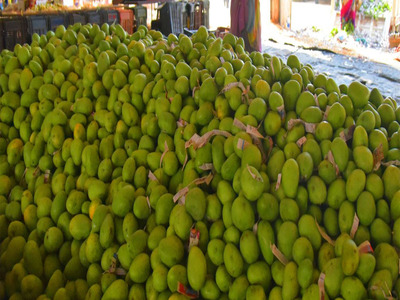
Mango cultivators in Hogalagere village of Kolar have reason to cheer. The yield has doubled as more than 600 mango trees can be grown within one acre of land as against the previous limit of 60.
Lavanya, project manager at the Kolar centre of excellence for mango cultivation and horticulture, said this has been possible only due to the partnership between India and Israel. “The tie-up has helped us get better yields since 2016,” added Lavanya. Earlier, it was possible to grow only 60 mango trees in an acre but employing the root stocking technique, where grafting is done to increase production, has upped the number to 600. “This method reduces the lifespan of trees. Normally, a mango trees lives for 100 years but the technology decreases it to 25 years,” explained Lavanya.
The partnership began with a project called Mashav, initiated by the Israeli foreign ministry, which is aimed at achieving sustainable development and ensuring food security. Under the project, work is on in four main sectors — agriculture and rural development, socio-economic development, rural and urban development and education. It began in 2008 was later extended.
At present, the Kolar centre is growing Mallika, a mango variety which is being sold at Rs 80 per kg. “The yield has been comparatively good. We use drip irrigation to water the trees and don’t depend on rain,” said Lavanya.
The Indo-Israel agricultural cooperation has benefited both the countries, said the deputy chief of mission, Embassy of Israel, Dana Krush. “The new Karnataka chief minister HD Kumaraswamy had visited Israel in August and wanted to send state farmers to the country to learn new technologies and implement them here,” said Krush.
source: http://www.timesofindia.indiatimes.com / The Times of India / News> City News> Bangalore News / TNN / May 25th, 2018