Category Archives: Science & Technology

NCBS researcher has a go at the paradox of the plankton

Modelling microbes: Soil microbiota, for example, pose many puzzles such as their diversity and stability. | Photo Credit: Mohammed_Yousuf

In their model, the waste secreted by one species becomes food for another

Microbe groups found in the soil, the gut, the tongue and many other places show many behavioural properties that are not clearly understood such as the reason for their diversity and stability. All microbial populations are not exactly alike, there are ‘core’ species which are always present in different samples and some ‘peripheral’ species which are seen only in some samples. A study published recently in the journal Physical Review Letters attempts to explain these features using a simple mathematical model.

There are many puzzles about the behaviour of microbes such as bacteria and archaea (which don’t have a membrane-bound nucleus). For instance, a naturally occurring microbial ecosystem seen in soils, wastewater or even the human gut consists of hundreds or even thousands of species coexisting stably within a small, microscopic area. Given that the food sources are relatively few, and that the microbes tend to grow in number exponentially, how is it that they do not destroy each other in their competition for survival? How does the ecosystem maintain its diversity of microbiota? This is known as the paradox of the plankton. This and the related questions are addressed in this model. Here, apart from existing sources of nutrition, secretions given off by one species of bacteria form the nutrition for other species of bacteria.

Akshit Goyal, a PhD student at the National Centre for Biological Sciences, Bengaluru, is the first author of the paper. He refers to the fact that there are a small number of species that are ‘core’ and many that were ‘peripheral’. While there are large numbers of bacteria of the peripheral and core species, there were few showing an intermediate degree of prevalence. “Hardly any species falls in between,” he adds. When the prevalence of species is plotted as a graph, it therefore gives rise to a U-shaped distribution. “Many microbial ecosystems show the same [U-shaped] pattern,” he says.

Food supply model

When microbes use resource molecules as food, they usually cannot convert them completely to energy — there’s always some waste which form the by-products. “These by-products can sometimes be used as a food source by another species,” says Goyal. Thus the waste given out by a core species becomes the food for a peripheral species. This can lead to increase in diversity. Goyal has done this work in collaboration with Sergei Maslow of University of Illinois, Urbana-Champaign, in the U.S.

The key finding of the study is regarding the existence of core and peripheral species and that such a simple model of the underlying process can explain this. Further the authors talk about the displacement of one species by another under conditions and when they share the propensity to consume the same resource, such a displacement is termed extinction.

Mukund Thattai, cell biologist from NCBS who was not involved in this research says, “A nice feature of this idea is that things which can be measured in a snapshot, for example, human tongue microbiome diversity, could potentially be explained by an ongoing evolutionary process.” Referring to other work on this problem, he adds, “Of course, this is only one of several theories that have been put forward to address the diversity question… The key to discriminating between these ideas would be to not rely on a snapshot, but to actually watch the diversity of a microbiome change over time,” says Prof. Thattai.

For example, the authors of this paper predict a certain rate at which large numbers of species would go extinct. “Such things are, given current technologies, measurable in principle and would go a long way to clarifying how diversity really arises in nature [in this context],” he adds.

source: http://www.thehindu.com / The Hindu / Home> Science / by Shubashree Desikan / April 14th, 2018
84 gold medals to be given away at RGUHS convocation

Those excelling in Ayurveda courses have been considered for gold medals

As many as 64 girls will receive gold medals out of a total of 84 gold medals that will be presented at the 20th convocation of the Rajiv Gandhi University of Health Sciences (RGUHS) on April 12.

RGUHS Vice-Chancellor M.K. Ramesh said on Tuesday that 26,469 candidates will receive degrees and prizes at the convocation. Among these, 6,111 will get degree under faculty of medicine, 3,095 under dentistry, 1,278 under Ayurveda, Unani, Naturopathy, and Yogic sciences, 177 under Homoeopathy, 2,931 under pharmacy and 11,423 under nursing. This year, 68 candidates will be awarded doctorate. For the first time, candidates who have excelled in Ayurveda courses have been considered for gold medals. Three will receive the medal this year. Consideration has been given only to those from colleges having 25 students and courses offered in at least five affiliated colleges.

In another first, the university has taken a decision to constitute gold medals for subjects in postgraduate courses where there are no prizes or medals constituted by donors. “Twenty-five gold medals have been added by the university,” said M.K. Ramesh, in-charge Vice-Chancellor of RGUHS.

Each gold medal weighs 5 gm and is of 22-carrat gold. RGUHS has set aside IRs. 5 crore for the gold medals. The total spend of the university this year for the gold medals is  IRs.16 lakh.

SwethaBF15apr2018

Swetha Sridhar from M.S. Ramaiah Medical College topped the university with two gold medals and one cash prize. She scored an aggregate of 80.5% in MBBS. The 24-year-old, who has always been a topper in college, said she wants to pursue MD in either general medicine, dermatology or psychiatry.

No honorary doctorate

It is for the first time in six years that RGUHS will not be conferring honorary doctorate during the annual convocation. Though the names were discussed in the Syndicate, it failed to constitute an expert panel to shortlist the names to be recommended to the Governor. Owing to the delay in the process, honorary doctorate will not be given this time, officials said.

source: http://www.thehindu.com / The Hindu / Home> News> States> Karnataka / by Staff Reporter / Bengaluru – April 10th, 2018

Genetic diversity can prevent rapid spread of infectious diseases

Choice of pandemic: The models are best suited to study airborne diseases such as H1N1, say Nagasuma Chandra (left) and Narmada Sambataru.

The team studied how susceptibility sub-populations affect the spread of the disease

An infectious disease can spread at different rates in different countries. This phenomenon has been observed in many cases, for instance in the 2009 H1N1 influenza pandemic. An International group of researchers including those at Indian Institute of Science (IISc), Bengaluru, and The Institute of Mathematical Sciences (IMSc), Chennai, looks at genetics as a way to explain this phenomenon. They find that the greater the genetic diversity in immune response, the stronger is the barrier to the spread of the disease. The results have recently been published in PLOS Computational Biology.

Nagasuma Chandra’s team at IISc chose to study H1N1 as modelling it had some advantages.

“There is a lot of work on H1N1 and a lot of data including clinical and epidemiological. These models are also best suited to study airborne diseases. As H1N1 spreads through air, choosing it made a lot of sense,” says Dr. Chandra.

Pandemic H1N1 virus

The pandemic H1N1 2009 influenza A virus was different from other influenza viruses encountered until then. According to the WHO, this is because it originated from animal influenza viruses and is unrelated to the human seasonal H1N1 viruses that have been in circulation among people formany years In fact, this virus is thought to have arisen from a mixture of two viruses: a North American virus that jumped from birds to swine and humans and a Eurasian swine virus that had circulated in pigs for about a decade before entering humans. Clinically also the virus’s effect was very different from that of other flu viruses in that younger people were more severely affected than older ones.

Narmada Sambataru and Sumanta Mukherjee who were at Dr Chandra’s lab, and Martin Lopez-Garcia from the University of Leeds, UK, spent nearly a year building up the model. Their research led them to establish how an individual’s genetic makeup can influence his or her susceptibility to the infection.

The immune system has both innate and adaptive response types to infections, in general. In the case of H1N1 infection, the adaptive immune system can recognise the presence of a virus within the cell and respond to it only if a molecule called the human leukocyte antigen (HLA) binds to some fragment of the viral protein (epitope) and ‘presents’ it to the environment outside the cell. Dr Chandra’s group has described the details of this aspect of H1N1 in an earlier paper published in the journal Clinical and Translational Immunology.

Immune response

“The main take-away from our work is that understanding how the immune response of different individuals leads to a spread of susceptibilities in a population is vital to figuring out how diseases spread,” says Gautam Menon of The Institute of Mathematical Sciences, a co-author of the paper. “This problem, of how to go from what we know about how individuals can vary in their susceptibility to understanding how epidemics spread across entire populations, has been identified recently as one of the major challenges in the study of epidemics.”

Having worked out how the genetic makeup of an individual can affect their susceptibility to the disease, the individuals can be grouped according to their susceptibility. Using a mathematical model called the SIR (Susceptible-Infected-Recovered) model, the researchers study how the presence of susceptibility sub-populations affect the spread of the disease. “In this model, individuals are initially susceptible but not infected.

“When an infection is introduced, individuals become infected at a rate determined by their estimated susceptibility to the pathogen, estimated using genetic information about the host as well as the pathogen. Infected individuals then proceed to recover,” says Dr Chandra.

Trends

The work captures the qualitative features of well-known trends of influenza spread in various parts of the world. “This work uses publicly available information about HLA class-I genes and their prevalence in populations around the world. Unfortunately, there is a significant shortage of this information for Indian populations,” she says.

The group is planning to propose a detailed study of this for Indian populations. “Once this information becomes available, we can do far more to predict disease spread in India. These predictions can be used to inform public policy and make better decisions. This is the real utility of such modeling methods, that we can explore different situations and ask what responses might be most effective in the context of specific diseases,” says Dr Menon.

source: http://www.thehindu.com / The Hindu / Home> Science / by Subashree Desikan / March 31st, 2018

E-waste industry comes together to streamline recycling process

Bengaluru generates around 1 lakh metric tonnes of e-waste annually. | Photo Credit: Handout_E_Mail

Very little of the estimated 18 lakh metric tonnes of e-waste that India generates per annum is recycled

Of an estimated 18 lakh metric tonnes of electronic waste (e-waste) that India generates per annum, less than 2 lakh tonnes reach licenced recyclers. The rest is either reaching the unorganised sector (such as scrap dealers), or ending up in landfills. Not only does this mean that potentially recyclable e-waste is being wasted, but also that unscientifically managed e-waste is a hazard that stands exposed.

Now, around 180 recyclers from across the country have joined hands to change the narrative and come together to form the All India e-Waste Recyclers’ Association. To be headquartered in Bengaluru, the association will look at streamlining the dismantling and recycling cycle of e-waste in the country.

Gururaj N., general secretary of the new association, told The Hindu that the dismantling and recycling industry is a nascent one, though e-waste itself is not.

“The e-waste quantum is calculated based on the sales that happened in the previous year, according to which the estimated e-waste generated is 18 lakh metric tonne per annum. Bengaluru generates around 1 lakh metric tonnes. The other big contributors are the National Capital Region, Mumbai, Chennai and now Hyderabad and Pune. Electronics is a component in many things — from laptops and air-conditioners to cars, which has 26% electronic component. The rate of progress in technology is a big key in e-waste,” he said.

In addition to what are called ‘white goods’, such as television, household e-waste that includes fans, lights and other essentials translates into 100 to 150 kg of electronic items in each house at any given point of time, which could eventually end up becoming e-waste. Despite all this, recyclers are running at 40 or 50% capacity as little waste is actually reaching them, said Mr. Gururaj.

Tackling the basics

The association is aiming at tackling the basics first: work with local municipal bodies to set up e-waste collection centres similar to the dry waste collection centres that are now being established in many cities. They also want to ensure that people find it convenient to make their e-waste reach recyclers. For this, they are planning to set up technology-driven drop boxes to enable people to put their waste and be paid back through e-wallets.

“It is not a business where people want to give away items for free. In addition, we want to ensure that the recycling process pushes urban mining, wherein dismantling and recycling brings out raw material such as gold, silver and copper (present in small units in many electronic items). There is already a scarcity of ore, and these metals have higher consumption, but the same production levels, which is why their prices have gone up,” he said.

source: http://www.thehindu.com / The Hindu / Home> News> Cities> Bengaluru / by K.C. Deepika / March 30th, 2018

‘Pesticide-free’ poly-houses are catching on

A farmer in Karnataka grows sensitive broccoli using biotechnologies for the first time in country

At a time when all things “organic” is the buzzword, poly-houses are becoming a cause for concern due to high pesticide residues in the produce following indiscriminate use of chemicals.

In fact, the sustainability of poly-house cultivation is facing a threat as a sizeable number of them have closed due to soil degradation and attack by nematodes — harmful soil bacteria — and fungi, which have resulted in massive devastation of crops.

The Indian Institute of Horticultural Research (IIHR) has now come out with a series of technologies and practices to reduce the use of chemicals in poly-house cultivation.

“The main focus is to turn the high-end poly-house cultivation into a sustainable farm and economic activity,” said M.S. Rao, head of IIHR’s Division of Entomology and Nematology.

“This will result in not only production of pesticide-free produce, but it will go a long way in improving the financial health of poly-houses,” he said, while indicating that closing down poly-houses would result in a loss of ₹900 crore.

What has come as a shot in the arm for the IIHR is that a 24-year-old farmer Raju in Doddaballapur taluk near Bengaluru has used this technology showing it is possible to grow broccoli, a crop highly susceptible to various pests and diseases, without pesticides.

It is the first time in the country that broccoli has been grown in a chemical-free manner in a poly-house.

Of course, the experiment is not completely organic as the farmer has used a certain amount of fertilizers. But, the produce has been selling like hot cakes to exporters at a premium price since it is pesticide-free.

Mr. Raju, who migrated to Karnataka from Andhra Pradesh, took up poly-house cultivation on about one acre of land in Doddaballapur, of which broccoli is grown on half an acre.

What has enthused scientists is that he has trounced the general perception that chemical-free farming and reduction in fertilizers would lead to drop in yield. The farmer’s yield has not only increased by about 30% by using the natural plant growth promoters as well as bio-fertilisers and bio-pesticides of IIHR, but the cost of cultivation too has dropped by about 30% as he has not used chemicals and pesticides. He was able to earn about ₹4.18 lakh in 90 days.

Dr. Rao said the farmer used bio fungicide, bio nematicide, bio bactericide, bio fertilizers, neem and pongamia soaps as well as plant growth promoters developed by the IIHR.

It has helped improve soil fertility and reduce soil-borne pathogens.

If a farmer uses these chemical-free and cost-effective applications for two to three years, there is no need for soil enrichment for the next five years, he said.

Biotechnologist-turned entrepreneur J. Gavaskar, who has taken licences from the IIHR to mass produce and also sell some of its biotechnologies, says the awareness among farmers is slowly increasing about such bioapplications. “Big farmers and some Farmer Producers’ Organisations from Pune, some cities in Andhra Pradesh, Tamil Nadu and Kerala are trying out these chemical-free applications,” he said.

Other successes

Dr. Rao said ICAR-IIHR has demonstrated similar success stories in capsicum, European cucumber, tomato, gerbera, carnations grown under protected conditions in various poly-houses and guava, pomegranate, tomato, okra, brinjal, tuberose grown under open field conditions in Karnataka, Tamil Nadu, Kerala, Andhra Pradesh, Madhya Pradesh, Punjab, Maharashtra, and Bengal.

Farmers can get details on such microbial applications and bio-pesticides from the IIHR by contacting its director or Prof. M. S. Rao Ph: 9480607571; email: msraobio45 @gmail.com s

ource: http://www.thehindu.com / The Hindu / Home> News> States> Karnataka / by B.S. Satish Kumar / Bengaluru – March 28th, 2018

BHEL gets ISRO tech to make Li-ion cells

Indian Space Research Organisation (ISRO) has signed a technology transfer agreement with Bharat Heavy Electricals Ltd. for the manufacture of space grade lithium ion (Li-ion) cells for the space programme and other national requirements.

BHEL said it would set up a facility at its Bengaluru unit to make the cells. It would use the technology developed by ISRO’s rocketry node, Vikram Sarabhai Space Centre, based in Thiruvananthapuram.

Li-ion batteries power various applications on satellites and launch vehicles. An ISRO spokesman said the requirement would go up as the number of space missions is increasing.

Currently, BHEL assembles Li-ion batteries using imported cells. “The technology can also be extended for use in the emerging areas of energy storage and e-mobility,” the public sector major said.

The agreement was signed by S. Somanath, VSSC Director, and S. Biswas, BHEL’s Director (Engg., R&D), at the headquarters of ISRO in Bengaluru last Thursday in the presence of ISRO Chairman K. Sivan and BHEL CMD Atul Sobti.

source: http://www.thehindu.com / The Hindu / Home> News> Cities> Bengaluru / by Special Correspondent / March 27th, 2018

Made-in-India dialysis unit undergoes trials in Mysuru

Bengaluru:

A team of city-based researchers have come up with a made-in-India dialysis machine, which is expected to reduce cost of the medical procedure.
Designed by Renalyx Health Systems, the machine, RxT17, started undergoing clinical trials at JSS Medical College Hospital, Mysuru, from March 2. A 40-year-old renal disorder patient was the first to undergo dialysis on the new machine.

Dialysis machines are now imported from Germany, Sweden and China at a cost of 10-11 lakh a piece. A dialysis session costs between 2,500 and 4,000. The new machine is likely to be priced at Rs 4 lakh and it could reduce the cost of dialysis to 1,000.

The machine is cloud-enabled and can be connected to a mobile app, so that nephrologists can monitor its functioning and the patient’s response from anywhere.

” There are only 1,400 nephrologists in India and only 200 in Karnataka. There is a need to bridge the gap between patients and doctors through technological intervention. We can take the new dialysis machine to rural areas too, given its ability to connect seamlessly and its capacity to run on solar power.

Such features are not available in dialysis machines imported from Japan, the US and Germany,” says Shyam Vasudev Rao, an Indian Institute of Science (IISc) alumnus and founder-chairman of Renalyx.

Work on the machine began in 2013, driven by the vision to “create innovative and inclusive solutions for comprehensive renal care.”

Dr Lloyd Vincent, a nephrologist and co-founder of Renalyx, said the objective was to reduce the cost. “We have a project monitoring committee with alumni from Bombay and Delhi IITs as well as AIIMS, Delhi. The clinical trials are going on successfully. The product has been funded by the department of science and technology, New Delhi,” he said

 The company has patents and active collaborations with premier institutions, including IIT Kharagpur, Jawaharlal Nehru Centre for Advanced Scientific Research (JNCASR) and PESIT in Bengaluru.

Given the rising cost of healthcare, any innovation which brings down expenses is a huge relief for patients and their families. The clinical trials of a new dialysis machine are currently under way and once available for wider use, they promise to bring down the cost of treatment by a big margin. Such innovative research should be encouraged by the government through subsidies and tax breaks so that these machines become available in smaller towns and cities too. Innovative low-cost medical equipment is the need of the hour.

source: http://www.timesofindia.indiatimes.com / The Times of India / News> City News> Bangalore News> Civic Issues / by Sunitha Rao R / TNN / March 11th, 2018

City-based innovator develops device to harness wave energy

InnovatorBF27mar2018

Acity-based ex-merchant navy captain and innovator has designed a device to harness energy from waves in the sea. The design of the device known as Wave Energy Converter (WEC) according to its innovator D Chandrasekar is a fresh approach to harness renewable energy from sea waves. “Ocean waves contain a lot of energy though not much work has been done to harness this energy,” said Chandrasekar.

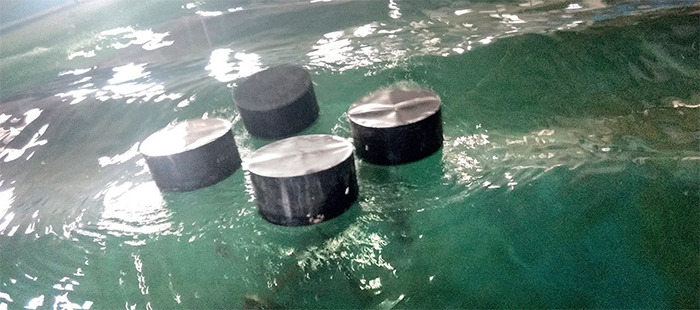
According to Chandrasekar, the WEC has a seabed unit and a surface unit of floats. The floats move as per the waves and transmit the power to the seabed unit that converts it into usable forms of energy.

Chandrasekar who started working on the WEC in 2016 had first developed a test tank in Bengaluru to test the initial design. Subsequently, a model was developed to be tested under controlled conditions at the IIT Chennai wave basin last month. The device was also tested on land before wave basin testing. Chandrasekar said that the test results were satisfactory.

The base unit of the WEC is about six meters long and three meters wide with a height of 1.5 meters.

The WEC project has also been supported by the Department of Scientific and Industrial Research with an R&D grant of Rs 8.7 lakh for realising prototype under Promoting Innovations in Individuals, Start-ups and MSME (PRISM) scheme.

Chandrasekhar said that the WEC model which was tested can generate 5 kw electricity and that a patent application for this design is under process.
“We will soon be approaching port authorities that can use this technology to light break waters at the ports,” he said.

That apart, the WEC can also be used to power buoys at sea, light unmanned oil platforms and small islands.

Explaining WEC’s features, Chandrasekar said that the system has the flexibility to be placed at various depths and that the floats can be quickly disconnected in case of an impending cyclone.

source: http://www.bangaloremirror.indiatimes.com / Bangalore Mirror / Home> Bangalore> Others / by Bangalore Mirror Bureau / March 27th, 2018

Karnataka’s first 4G tower of BSNL commissioned

Manoj Sinha, Union Minister of State for Communications and Railways, inaugurating Karnataka’s first 4G mobile tower of BSNL in Shivamogga on Saturday.   | Photo Credit: VAIDYA
Manoj Sinha, Union Minister of State for Communications and Railways, inaugurating Karnataka’s first 4G mobile tower of BSNL in Shivamogga on Saturday. | Photo Credit: VAIDYA

The first 4G mobile tower of the State-owned Bharat Sanchar Nigam Ltd. (BSNL) in Karnataka installed in Shivamogga city was commissioned by Manoj Sinha, Union Minister of State for Communications and Railways, at a programme held at Dr. B.R. Ambedkar Bhavan here on Saturday.

Mr. Sinha said that because of the dedicated efforts of its employees, BSNL has posted operational profits in the past three years. BSNL is upgrading its infrastructure and technology to extend quality service and has plans to install 534 more 4G mobile towers in Karnataka shortly, he added.

He said while there was a decline in the number of customers of private telecom companies after the entry of Reliance Jio into the market, there was a steady increase in the number of customers of BSNL.

On the progress achieved in providing high-speed Broadband to rural areas by laying optical fibre network under the BharatNet project, he said the network had been laid in 1.09 lakh gram panchayats by December 2017. The remaining 1.5 lakh GPs will be covered soon, he said, adding that access to Broadband services would bring about a comprehensive transformation in the social and economic life in rural areas, he said.

The Core System Integration (CSI) solution, an IT modernisation initiative, and the Digital Advancement of Rural Post Office for a New India(DARPAN) project for Karnataka circle of the Department of Posts was also rolled out by Mr. Sinha on the occasion. The DARPAN project aims at digitisation of rural post offices to upgrade the quality of services offered there. The CSI will bring all services of the Department of Posts, including mail handling, insurance, banking, retail operations, and administrative operations, on a single platform.

Senior officers of BSNL and the Department of Posts were present on the occasion.

source: http://www.thehindu.com / The Hindu / Home> News> States> Karnataka / by Staff Reporter / March 24th, 2018

Karnataka: Facebook group for farmers runs online agriculture manifesto

AgricultureFBmpos24mar2018

Puttur :

Ahead of the upcoming assembly elections in Karnataka some of the agriculturists in the state have started an online agriculture manifesto campaign through a Facebook group.

The Facebook group created by the agriculturists has 2.77 lakh active members across the world. According to Mahesh Pucchapadi , one of group’s admin, the group members include both Indians and NRIs.

Earlier, the group members were from the areas of Puttur and Sullia only, but now it has members from across the world, said Ramesh Delampadi, one of the group admin.

Manifesto for Farmers

It is said that the youths are not interested in agriculture but the recent trend has seen high salaried people too turning to agriculture sector. So with the technological advancement, the expectations of the agriculturists have risen. The admins say that they discuss the problems faced by the agriculturists in their Facebook group.

Following are the group’s demands for political parties and their election manifesto:

– 24 hours power supply for agriculture pump sets
– Market Price Declaration for agricultural products
– Support price announcement when price falls down for agri products
– Support for using modern technology

– Control of mediator

– Supporting educated people who enter the agriculture sector

– Hiring science graduates to village level of agriculture technological information

– Water refilling system to be made mandatory.

– Taluk level agriculture warehouses.

– Support for cattle farming and products selling

Read this story in Kannada

source: http://www.timesofindia.indiatimes.com / The Times of India / Home> City News> Bangalore News / by Vijay Karnataka / March 23rd, 2018