Category Archives: Science & Technology

Mangaluru professor Dr Anurag Bhargava makes app for TB patients

A professor from Mangaluru has developed a first-of-its-kind mobile application for tuberculosis patients ahead of World Tuberculosis Day on Saturday (March 24).

An Android-based application ‘N-TB’ was developed by Dr Anurag Bhargava, professor of medicine, Yenepoya Deemed to be University, Mangaluru in collaboration with McGill International TB Centre, Canada, to calculate the body mass index (BMI) of patients with tuberculosis.

According to doctors, TB often results in significant weight loss, which can exacerbate under-nutrition. Under-nutrition in TB patients points toward a consistent risk factor. Such patients are also at a higher risk of side-effects of drugs, poor absorption of drugs, reduced ability to return to work, and recurrence of the disease.

The application will tell the users their BMI and will counsel them on an appropriate diet regime which includes daily caloric and protein intake based on their BMI.

“The application is currently intended to help healthcare providers to quickly assess the body mass index of patients with TB and how severely undernourished the patient is so that they can be guided accordingly,” said Dr Bhargava.

He added that the TB cards currently record the weight alone and not the height to assess the nutritional status of the person, whereas the new application assesses the height and weight to calculate the BMI of the person.

He said the new N-TB mobile application specifies the weight and height and raises a red alert if it is below the desired weight.

The application was launched on Thursday (March 22) and is yet to be rolled out. It can currently be downloaded from Playstore free of cost.

“Certain aspects for the application such as analysing nutrition component, counselling are to be improvised,” said Dr Bhargava.

The application, endorsed by Revised National Tuberculosis Control Programme (RNTCP) and World Health Organisation (WHO), was included in the new initiatives unveiled by Prime Minister Narendra Modi, during the Delhi End TB Summit on March 13, 2018.

“We are glad that such as application was developed, but we are yet to receive information on the use and implementation of the application,” said Dr Ramachandra Bairy, Joint director, TB, Department of Health and Family Welfare, Karnataka.

source: http://www.deccanherald.com / Deccan Herald / Home> States / DH News Service, Bengaluru- Mangaluru / March 24th, 2018
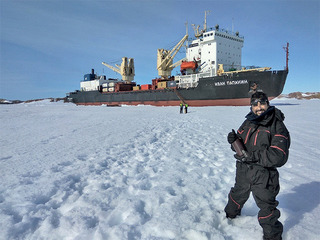
Karnataka : Manipal Professor’s tryst with Antartica

ManipalProfessorBF23mar2018

Balakrishna spent 95 days there as part of a research expedition

AManipal professor is back from Antarctica — what he calls a lifetime experience — where he spent 95 days at various Indian research bases such as Bharati and Maitri. Dr K Balakrishna, professor, Dept of Civil Engineering, was part of the 37th Indian Scientific Expedition to the coldest continent along with 40 other scientists from IMD, GSI, IIG, BARC, BSI, ISRO, NCAOR and logistics personnel from Army, Border Roads Organization and others.

He was the only scientist from a deemed private University for the expedition, organized by the National Centre for Antarctica and Ocean Research (NCAOR), a research institute of Ministry of Earth Sciences and based in Goa.

“The selection procedure was tough as it demanded not only research work but also physical fitness, including two weeks of snow acclimatization at the Mountain-eering and Skiing Institute of Indo-Tibetian Border Police in Auli, Uttarakhand. Acclimatization included mountaineering, trekking across the Himalayan terrains and rock-climbing,” Dr K Balakrishna said.

Describing the entire experience as thrilling and most unforgettable, Prof Balakrishna said, “It was a rewarding experience for me both professionally and personally. Though it was tough initially with temperature dipping -10 degrees, I acclimatized quickly and got down to my research.

The research was on obtaining a baseline of micro-pollutants like pharmaceuticals, personal care products and other naturally occurring metals in the seawater, sea-ice, lakes, sediments and soil of the region. He collected over 100 samples at different locations within a radius of 20 km from the Bharati station.

The samples are being analyzed at Manipal College of Pharmaceutical Sciences lab here.

Prof Krishnamurthy Bhat is the co-investigator of the project. The sampling was done by travelling across the region through skidoo (snow scooter) and helicopter. Bharati station has 24×7 broadband internet access with comfortable rooms, , library, Indian food and so on. The Indian expedition also used MV Ivan Papanin, an Indian ship chartered exclusively for the Antarctica expedition.

His study: Effect of micro-pollutants

The professor is measuring the level of micro-pollutants in seawater, sea-ice, lakes, sediments and soil of the region. Talking about the experiment, he said, “The environment in Antarctica is pristine with minimal pollution. However, in that region there are three stations – India, Russia and China.

Whenever we go on field trips, we use sunscreen lotions and other personal care products to prevent us from UV radiation. In the stations, we use several other products like soaps/detergents. All these contents have low amount of antibiotics. There are chances that these products including medicines we eat, may go in low doses to the sea water and may affect the sensitive eco-system. The fauna may not die, but there could be side-effects.

I am trying to get the current status of the micro-pollutants- pharmaceuticals. They may be in very low concentration, but this can affect the sensitive fauna. I am measuring the level of micro-pollutants in seawater or lakes and so on.”

source: http://www.bangaloremirror.indiatimes.com / Bangalore Mirror / Home> News> States / March 22nd, 2018

Here are innovators you wouldn’t want to miss in a science fair

Ramanagara GWPTR College student Arpita B(Ext. Left) and her friends displayed their Invention Bio- Electrical Body Fat Analyser, at the three day 'Engineering Fair', at Visvesvaraya Industrial and Technological Museum, in Bengaluru on Thursday. DH photo
Ramanagara GWPTR College student Arpita B(Ext. Left) and her friends displayed their Invention Bio- Electrical Body Fat Analyser, at the three day ‘Engineering Fair’, at Visvesvaraya Industrial and Technological Museum, in Bengaluru on Thursday. DH photo

Arpita B enthusiastically clamps the sensors to the wrist. With deft plucking of the keys, she feeds her subject’s age, gender and body weight.

Then, five pairs of eyes excitedly watch the display of the gadget as it flashes some numbers. “Here’s your body fat,” 18-year-old Arpita said with a smile.

Know your body fat

The group of five girls from GWPTR College in Ramanagaram, which Arpita is part of, are proud of their invention – bio-electrical body fat analyser.

The model was one of several exhibits at the three-day engineering fair at the Visvesvaraya Industrial and Technological Museum, which showed potential for future mass production.

The girls made this device in two months at Rs 15,500. “We’ve done successful tests on people and several doctors have verified the readings,” Arpita said.

Organised by the ministry of culture for industrial training students between the ages of 18 and 23, the fair displayed several simple innovations that had practical applicability.

Bomb-detection robot

Mohammed Nuhid’s bomb-detection robot is one such invention. The fourth-semester industrial training student from the Government ITI College came up with the solution as he was moved by the scenes of soldiers being ripped apart by IEDs and landmines.

The robot can detect metal, batteries and explosive substances from a distance, Nuhid said. The battery-operated device can crawl several miles, saving the user from harm. Nuhid put the device together in 10 days, spending Rs 4,000.

Wireless CNC tractor

The wireless CNC multi-purpose tractor was one more incredible piece of innovation that five boys from the MEI Polytechnic made for cash-strapped farmers.

“This tractor can perform multiple tasks like removing weeds, tilling land, and sowing and levelling the ground to prevent birds from eating the seeds,” said Dhanush S, who is part of the team that came up with the tractor.

“We designed this exhibit after learning about the troubles farmers go through to hire field hands. This will significantly cut down their labour cost,” Dhanush added.

The team tested the tractor, which they designed in a month and made with just Rs 17,500, at a farm in Hoskote.

Automated sericulture gadget

Three innovators proudly demonstrated the Sericulture and Automation Centre, which would allow farmers to double their silk produce while halving their workload. Works are automatically fed to the centre, where temperature and moisture are moderated. The farmer can monitor the progress on CCTVs or mobile phones.

Hemanth Kumar H A, co-inventor of the technology with fellow students of APS Polytechnic, said the model can also work well for poultry, livestock and pisciculture.

In all, the fair displayed 85 different models ranging from automated money transfers with debit/credit cards, accident safety chambers in aircraft (to ensure passengers do not die in crashes), laser-based thermocol cutters, mobile phone-based home-monitoring devices to automated helmet connector with motorbikes.

A special platform had been given to students from the Association of People with Disability.

source: http://www.deccanherald.com / Deccan Herald / Home> City / DH News Service / Bengaluru – March 16th, 2018

Indo-French centre of excellence

The Indo-French Centre of Excellence in Electricity Automation and Energy was inaugurated by French Minister of Higher Education, Research and Innovation Frédérique Vidal on Monday at the New Horizon College of Engineering.

According to a press release issued by the Consulate General of France, this was an initiative of French company Schneider Electric, which would impart technical training to future professionals. It would have a combination of theoretical knowledge with practical use of tools and equipment, the release added.

At the same event, the Minister also witnessed the signing of a partnership between New Horizon College of Engineering and CMQ3M of Rouen, France, which is an institute specialising in electrical engineering and efficiency.

The Minister was on a three day visit to India. On Monday, she also visited the ISRO Satellite Integration and test establishment, and had a collective meeting with French companies which have research and development centres in the city.

She visited the Indian Institute of Science to focus on Indo-French collaborations in the field of scientific research undertaken at IISc. She met French scholars and students on the campus.

source: http://www.thehindu.com / The Hindu / Home> News> Cities> Bengaluru / by Staff Reporter / March 12th, 2018

Xylem expands Indian operations, opens tech centre in Bengaluru

Bengaluru :

Xylem Inc, an NYSE listed global water technology company, has expanded its Indian operations by opening an India Technology and Customer Experience Centre in Bengaluru. Today’s launch will be followed by opening of a similar technology centre in Vadodara, Gujarat.

Xylem is bringing together a broad spectrum of competencies at these centres to accelerate the development of critical water and infrastructure solutions for its customers in India and around the world. The India Technology Centre in Bengaluru was opened by Mahendra Jain, Karnataka Additional Chief Secretary, Urban Development Department, and Patrick Decker, President and CEO of Xylem.

The centre in Bengaluru will develop products and solutions with a focus on software and advanced infrastructure analytics. The centre will ultimately have over 400 engineers creating smart, innovative solutions to treat, analyse, monitor and return water to the environment, and to address critical energy resource infrastructure needs.

source: http://www.thehindubusinessline.com / Business Line / Home> Specials / by Anil Urs / Bengaluru – March 06th, 2018

Mobile nanotweezers can pick, drop live bacteria

The work of Souvik Ghosh (right) and Ambarish Ghosh overcomes the earlier limitation of nanotweezers that were only able to trap and hold the molecules.

Can be used in microfluidics and in biomedicine.

A team from Indian Institute of Science, Bengaluru, has succeeded in designing a new class of mobile nanotweezers that can pick up, hold and move tiny cargo, the size of molecules, in a fluid. The work by Souvik Ghosh and Ambarish Ghosh of Centre for Nanoscience and Engineering, IISc, overcomes the earlier limitation of nanotweezers that were only able to trap and hold the molecules. Apart from nanoscale assembly – where tiny objects such as nanodiamonds or quantum dots need to be picked up and moved to a desired location — this has applications also in microfluidics, where live bacteria need to be manipulated and in biomedicine.

Limitations

Picking up and moving molecules suspended in a fluid, such as a colloid, is a busy area of research. Plasmonic nanotweezers — nanosized tweezers made of noble metals, which have been studied so far to trap cargo, have the limitation that they are fixed in position. When they are illuminated by light, they develop a ‘potential gradient’ around them. This is like a slope, and nearby particles get attracted to the potential’s minimum just as things roll down a slope. However, the limitation is that it can only capture particles that are within the range of the field.

In the new work, the robotic, mobile nanotweezer can pick up tiny particles and move them over a short distance when the microrobots are subjected to an external magnetic field. “We can tune our trapping and releasing mechanism by subsequently turning the incident illumination on and off. To move these nanotweezers, we use a rotating magnetic field which rotates the helix [of the nanotweezer] and [moves it] like a cork-screw,” says Souvik Ghosh, first author of the study published in Science Robotics.

Thermal fluctuations

The colloidal particles move due to thermal fluctuations, therefore it is very difficult to manipulate the nanoparticles. Also as the size of the particles decreases, so, too, does the trapping force. The researchers’ main challenge was to overcome this and generate sufficient trapping force using a small amount of laser power. To achieve this, small helical structures are grown on a pre-patterned substrate by electron beam evaporation of silicon dioxide (made of mostly glass). “The substrate is kept at an extreme angle to the incoming vapour flux and rotated slowly to achieve the helical shape. Apart from glass, we also combine silver (plasmonic properties) and iron (magnetic properties) nanostructures at appropriate places on the helical body,” explains Souvik Ghosh, in an email to The Hindu.

As a next step, the team is working on parallelising the process. Thus, a series of microrobots will work together like an assembly line. “This will allow us to scale up our technology and will surely have commercial impact, and initial results are promising,” says Mr Ghosh.

source: http://www.thehindu.com / The Hindu / Home> Science / by Shubashree Desika / March 03rd, 2018

JNCASR’s novel material to convert waste heat into electricity

Ongoing effort : We are now trying to increase the efficiency, says Kanishka Biswas (left) .

With nearly 65% of utilized energy wasted, the focus is on materials to mitigate this

A novel compound that exhibits poor thermal conductivity in the 25-425 degree C range but shows good electrical conductivity has been developed by a team of researchers led by Dr Kanishka Biswas from Bengaluru’s Jawaharlal Nehru Centre for Advanced Scientific Research (JNCASR). The compound, silver copper telluride (AgCuTe), shows promise as a thermoelectric material for converting waste heat into electricity.

Since nearly 65% of utilized energy is wasted as heat, the focus is on developing materials that exhibit good thermoelectric property with both glass- and metal-like properties. Potential applications of the thermoelectric technology are in automobile industry, chemical, thermal and steel power plants where large quantities of heat are wasted.

Due to the low thermal conductivity of the material developed by JNCASR, one end of the 8 mm-long rod that is contact with waste heat remains hot while the other end maintains cold temperature. The temperature difference is essential for the generation of electrical voltage. At the same time, the material exhibits good electrical conductivity like metal. The results were published in the journal Angewandte Chemie.

In the AgCuTe material, the silver atoms (cation) are weakly bound, giving rise to poor thermal conductivity due to the slow vibration of the lattice (soft lattice). At high temperatures, copper in the material further lowers the thermal conductivity along with silver. “Since the silver lattice vibrates slowly, it provides record low thermal conduction of 0.35 W per metre per kelvin, which is actually close to the glass,” Dr Biswas says.

“Both cations [silver and copper] contribute to low thermal conductivity but silver contributes more. Over 170 degree C, both silver and copper ions flow like liquid within the rigid tellurium sublattice, thereby reducing the thermal conductivity to the level of glass without affecting the hole (electrical carrier) transport,” says Subhajit Roychowdhury from JNCASR and first author of the paper.

Tellurium lattice

In contrast, the tellurium atoms (anion) are strongly bound and the lattice is very rigid. The strongly bound tellurium provides a conduction channel for holes thus rendering good electrical conductivity as seen in metals.

“By combining silver and copper with tellurium we have made our material as a combination of glass and metal — poor thermal conductivity and good electrical conductivity,” Dr Biswas says.

“Silver telluride does not have good thermoelectric property because it has higher thermal conductivity than our material,” says Roychowdhury.

It is a challenging task to have glassy and metallic properties in a single material, which is the fundamental challenge in the field of thermoelectrics. “We addressed this challenge through structural chemistry by creating a bonding hierarchy in the material,” Dr Biswas says.

The calculated efficiency to convert heat into electricity is 14% for the new material developed by JNCASR researchers. The lead telluride (PbTe) has higher efficiency of 18%. “But unlike lead telluride that contains lead, which is toxic, our material is lead-free,” he adds. The theoretical calculation to know the electronic structure was done in collaboration with Prof. Umesh V. Waghmare of JNCASR and coauthor of the paper. “We are trying to increase the efficiency by doping with different cations and anions,” Dr Biswas says.

source: http://www.thehindu.com / The Hindu / Home> Science / by R. Prasad / Bengaluru – March 03rd, 2018

CM inaugurates first phase of Pavagada Solar Park

Chief Minister Siddaramaiah inaugurated the first phase of Pavagada Solar Park at Thirumani in Pavagada taluk of Tumakuru district on Thursday.

Addressing a large gathering, Mr. Siddaramaiah termed the solar park as the “eighth wonder of the world.” He said that “we are thankful to all those farmers who have leased out their land to the government for the project.”

In the first phase, the solar park will produce 600 MW. A total of 2,300 farmers of Pavagada have leased out 13,000 acres of land at Rs.21,000 per acre per annum. This will help to boost the economic activities in the most backward taluk. Before the solar park was established, the land rates were around Rs. 25,000 per acre but now they have risen to Rs. 4-5 lakh.

Energy Minister D.K. Shivakumar said that Karnataka will become self-reliant in the production of power and there will be no need to depend on other States. Pavagada Solar Park will be completed by December 2018 and will generate 2000 MW of power, he added.

District-in-charge Minister T.B. Jayachandra, MP Chandrappa, MLA Thimmarayappa, former Minister Venkataramanappa and others were present.

source: http://www.thehindu.com / The Hindu / Home> News> States> Karnataka / by Staff Reporter / Tumakuru – March 01st, 2018

Preservation of statue is in expert hands

GomateshwaraBF28feb2018

ASI has been giving chemical wash and chemical treatment to the statue since Independence

There is a belief that the holy bath of the Gomateshwara statue, using sugarcane juice, sandalwood paste, and milk during the Mahamastakabhishekha is essential to preserve the 58.8-ft monolithic statue at Shravanabelagola. The Archaeological Survey of India (ASI), however, does chemical wash and chemical treatment regularly as part of its conservation efforts.

Experts from the Science Branch of the ASI did chemical treatment of the statue a few days before the scaffolding for the Mahamastakabhishekha was erected. D. Ambethkar, Deputy Superintending Archaeological Chemist, told The Hindu, “We will repeat the treatment once the anointing ceremony is over.”

Alkaline cleaning liquids are used to clean the statue. Once the event is over, experts will wash the statue again and treat it with water repellents. “Water repellents are used to avoid moisture penetration,” he said.

Mr. Ambethkar said that pouring sugarcane juice, coconut water, or sandalwood paste on the statue would not harm it in any way. At best, it would clear the dust deposited on the statue. Further, he said abhisheka of statues or idols is quite common among Hindus and Jains.

The statue was installed in 981 and since then the anointing ceremony has been conducted once in 12 years. This is the 88th ceremony. The ASI has been conducting chemical wash and chemical treatment of the statue whenever the anointing ceremony has been held, since Independence.

source: http://www.thehindu.com / The Hindu / Home> News> States> Karnataka / by Satish G.T. Hassan / February 27th, 2018

Bengaluru-based firm saves kids with birth defect

Bengaluru :

The year is 2012. Dr Meenakshi Bhat, a clinical genetics consultant at Centre for Human Genetics, approached the country’s premium research institutes to devise low-cost nutrition products for children with the birth defect Phenylketonuria (PKU), but to no avail.

Enter Bengaluru-based Pristine Organics, and today at least 5,000 children aged below 9, and who are suffering from 27 different conditions, have benefited from ‘Metanutrition’. This is a formula powder for those whose body cannot turn food into energy for the lack of specific enzymes or proteins.

On the sidelines of Blue Ribbon Rare Diseases Symposium held here, Dr Meenakshi told The New Indian Express, “It costs Rs 16,000 to get a tin of this powder meant for PKU-1 children from outside India. Pristine offers it for Rs 1,000.”

PKU is a birth defect that causes an amino acid called phenylalanine to build up in the body. Untreated PKU can lead to brain damage, intellectual disabilities, behavioural symptoms or seizures. Treatment includes a strict diet with limited protein. It can last for years or be lifelong. In India, one lakh children are diagnosed with it annually. In December last year, Pristine was one of the five companies that the country’s food regulator Food Safety and Standards Authority of India (FSSAI) gave licence to, to manufacture specialised diet for inborn errors of metabolism (IEM).

Of these five companies, Pristine was the only Indian company. In India, the prevalence of IEM is one in 2,497 newborns. Children affected by IEM don’t survive beyond the age of one, due to complications caused by protein build-up in the body.

Shruti Kumbla, senior nutritionist, Pristine Organics, said, “Previously, parents would import it from US-based Nutritia, Abott, Mead Johnson Nutrition and Switzerland-based Nestle that would cost a lot.”

Low-cost nutrition solutions for children suffering from rare diseases can do wonders if Indian companies take up manufacturing, Dr Meenakshi said.

source: http://www.newindianexpress.com / The New Indian Express / Home> Cities> Bangalore / by Suraksha P / Express News Service / March 15th, 2018