Category Archives: Science & Technology

Mangaluru : Manipal Alumnus gets Global Fame

Kartik Mandaville has wide experience working with start-ups

Kartik, 26, spoke at RecTech 2017 in Barcelona, one-of-a-kind forum

At 26, Kartik Mandaville, chief executive officer (CEO) and founder of SpringRole — a machine learning-based recruiting software in Bengaluru and Los Angeles — is the youngest to address the RecTech 2017, the only conference focused on innovation in recruitment advertising and technology outside of the US.

The event offers a one-of-a-kind forum for senior executives in publishing and technology companies that offer talent acquisition solutions.

The conference focussed on mobile transformations, “total candidate focus”, programmatic advertising, artificial intelligence and machine learning.

Held from May 17-19, it played host to an impressive group of recruitment experts and influential speakers from around the world.

Sharing his experience with Bangalore Mirror, Kartik Mandaville said it was a wonderful experience to share the stage with leaders from top companies in the USA and Europe. “Moreover, I was probably the youngest there. There was immense learning from the conference, being part of the panel and conducting the workshop. I must admit, I was nervous, but the workshop was well received and I was surprised to find a queue of people waiting to talk to me, which was humbling. Mostly we discussed about the future of recruitment – how artificial intelligence is going to help in the process and make it convenient for HR (human resources) managers,” he said.

More than 100 high-level executives from recruitment advertising and tech companies attended the conference, mainly from Europe, the US, Latin America and Africa.

Mandaville is a serial entrepreneur who also serves as senior technical advisor at Science in Santa Monica, California, and other companies.

He graduated from Carnegie Mellon University (CMU) with Masters from the Language Technologies Institute focussing on big data, machine learning, natural language processing and BioTech.

Mandaville has wide experience working with start-ups. At Science, he worked with early-stage start-ups to architecting out their technology, building the team and scaling.

He built the Science India team having 40-plus software engineers and product working across the portfolio companies.

Before joining CMU, he was a full-stack developer working at Shareaholic on the product distribution channel and different web properties. As a student at Manipal University, he launched ‘Autobudder’ in 2010 for Facebook, an application that automatically wishes friends on their birthdays.

The following year, he was part of the team that launched ‘Let Me Know’, a unique portal that helps students across India find opportunities of various kinds such as internships, workshops, seminars, conferences, tech-fests, literary events and much more.

source: http://www.bangaloremirror.indiatimes.com / Bangalore Mirror / Home> News> State / by Deepthi Sanjiv, Bangalore Mirror Bureau / May 23rd, 2017
Making brain surgeries more cost-effective

BrainsurgeryBF25may2017

Bengaluru doctor designs low-cost stereotactic head frame

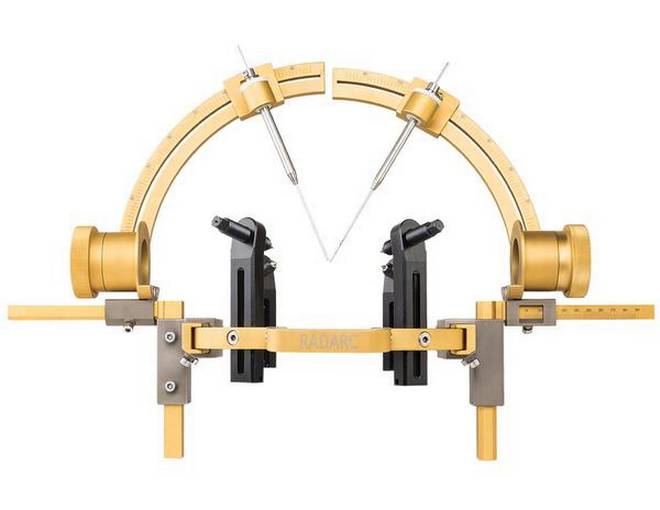
In brain surgeries, precision is everything — a shift of a few millimetres can make the difference between a successful surgery and putting a patient in coma. One device that improves the accuracy of neurosurgery is the stereotactic head frame, which provides a 3-dimensional coordinate system to help surgeons get the precise location of a nerve or tumour in the brain.

However, the device currently used is prohibitively expensive, costing between ₹75 lakh to ₹1 crore. A city-based doctor has designed a low-cost stereotactic frame which can be used to operate on both sides of the brain at a time, unlike conventional frames currently used in hospitals.

The frame designed by Murali Mohan, senior neurosurgeon with BRAINS Sparsh Hospitals, is made of medical grade titanium and costs one-third the current price. Engineers Sharath Bhat and Sadashiv Bhat of the Mahalasa Medical Technology, Bengaluru, developed the device.

Dr. Mohan’s inspiration was the late Balasubramaniam Ramamurthi, known as the father of Indian neurosurgery.

The frame which is CE marked (it conforms to European standards) and is pending patent, is currently being used by a doctors in around six to seven hospitals in Bengaluru and Hyderabad for biopsies and deep brain simulations.

source: http://www.thehindu.com / The Hindu / Home> Sci-Tech> Health / by Cynthia Anand / Bengaluru – May23rd, 2017

Molecule discovery offers Ithope for Parkinson’s cure

Bengaluru :

City scientists have found a new molecule that can enhance the efficiency of the autophagy process in brain cells, that can significantly reduce their degeneration, which is the cause of diseases like Parkinson’s.

The scientists have initiated procedures to patent the process of discovery and the molecule itself -a potential drug -both of which have already been peer reviewed by international scientists.

Autophagy is our body’s housekeeping mechanism: a process where healthy cells clean up toxic proteins, preventing them from aggregating and killing the cells. While research on autophagy first emerged in the 1960s, a lot of serious work has happened in the past decade or so. In fact, the 2016 Nobel Prize for physiology or medicine went to Japan’s Yoshinori Ohsumi for his work in autophagy.

A major reason for diseases like Parkinson’s -which don’t have a cure yet -is aggregation of toxic proteins and inefficient autophagy or the complete lack of it, thereby resulting in the death of brain cells (neurodegeneration).

The new molecule, 6-Bio, discovered by scientists from the molecular biology and genetics unit (MBGU) at Jawaharlal Nehru Centre for Advanced Scientific Research (JNCASR), acts an autophagy modulator.”It (6-Bio) is capable of restoring autophagy and aid clearance of toxic protein aggregates, which otherwise form clumps and kill neu rons (brain cells),” said Ravi Manjithaya from MBGU.

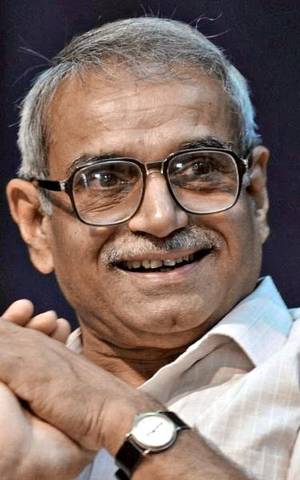
Lead author of the paper S N Suresh

Unlike most other cells in the body, neurons aren’t easily replaceable, which means that once they are lost, they cannot be recovered. The research was led by Manjithaya and the lead author of the scientific paper was S N Suresh, a PhD student at MBGU under Manjithaya. Aravinda Chavalmane and Shashank Rai also contributed to the research.

What does 6-BIO do ?

The molecule enables neuroprotection by autophagy. It augments the efficiency of the autophagy process by enhancing the basal level (the speed at which autophagy happens). “Simply put, it quickens the process of cells taking bad proteins, which have formed clumps, to the cleanroom,” Manjithaya said. The research found a popular protein called GSK-3 Beta (a glycogen synthase protein) doesn’t allow autophagy to take place at a fast pace in brains cells affected by Parkinson’s and other similar diseases. “Our molecule removes this and quickens the process of autophagy,” he said.

Tests and publishing

The findings were published in Autophagy, a scientific journal edited by autophagy scientist Daniel J Klionsky.”Before sending them for peer review and publishing, we conducted tests in our lab, which were positive,” Manjithaya said.
Bad proteins which were found to cause neurodegenerative diseases were produced in yeast, which reacted in the same way as our brain cells. “The proteins began to form clumps and kill the yeast. We then introduced 6-Bio into the yeast and saw if it could prevent the death of the cells. It worked,” Manjithaya explained. A large part of Nobel laureate Ohsumi’s work on autophagy involved experiments on yeast.

Following this, the team tested 6-Bio on a mouse whose brain cells behaved like those of patients with Parkinson’s, and the results were positive again.

They teamed up with James Chelliah and Abhik Paul from JNCASR’s Chelliah Lab and Phalguni Alladi, Vidyadhara DJ and Yarreiphang Haorei from Nimhans. Researchers said the discovery is not a magical cure for Parkinson’s but a breakthrough that can help find a therapeutic solution.

source: http://www.timesofindia.indiatimes.com / The Times of India / News> City News> Bangalore News / Chethan Kumar / TNN / May 23rd, 2017

Shooting for the stars

AstroPhotographyBF21may2017

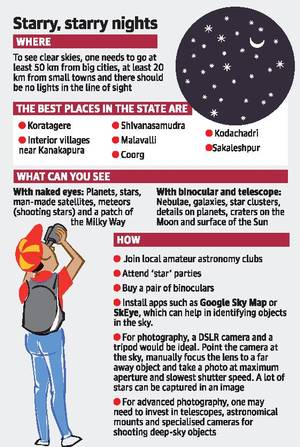
For amateur astronomers who are fascinated by stars, the sky is never the limit. They look beyond it, for galaxies, stars, satellites, meteors and more. While the city’s surrounding areas offer good opportunities for stargazers, of late Bengaluru has been seeing a rise in another kind of space enthusiasm — astrophotography.

Astrophotography is the art and science of photographing objects in space. While an amateur stargazer can only retell his experiences, these photographers capture them in pictures for all to see.

“Astrophotography is picking up fast. We have a Facebook group called Indian Amateur Astrophotographer that has over 3,600 members across India. Many of them are from the city,” says Keerthi Kiran M., a system engineer who is also a member of the Bangalore Astronomical Society (BAS), a Google group with over 3,000 members that promotes astronomy as a hobby.

BAS organises regular workshops on astrophotography and talks by experts. According to Mr. Kiran, many of the group’s members are now trying out astrophotography.

Subhankar Saha, who participated in one the workshops, took up astrophotography six years ago. “Having a basic knowledge in astronomy helped me. The best season for stargazing and astrophotography is between November and May. During this time, I try to head out and photograph deep-sky objects twice a month. I generally travel to Koratagere, near Tumakuru,” he says.

Deep-sky objects include faint objects in the sky such as nebulae and galaxies.

Though Mr. Saha has advanced equipment such as an astronomical mount, a modified DSLR, a specialised camera and three telescopes, he says a beginner can even start with a good mobile phone camera, or a DSLR, and a tripod to take stunning photographs of the night sky. With advanced equipment, one can shoot star trails, the Milky Way and even faint nebulae.

“The astrophotography community is quite vibrant today. A lot of new people are getting into the hobby,” he says.

B.S. Shylaja, director, Jawaharlal Nehru Planetarium, says many students who come for astronomy sessions to the planetarium get into astrophotography. “There is a lot of interest in the subject now.”

Partying with the stars

Karthik Subramanian, who has been an amateur astronomer for about seven years, has been accompanying his friends on regular ‘star parties’ — informal gatherings of amateur astronomers. “Last month, I went on an observing trip along with my friends. We were able to capture the Milky Way through Sagittarius and Scorpius on the camera. For me, the hobby is about appreciating the wonders of nature in the sky.”

Many members of the Association of Bangalore Amateur Astronomers are also astrophotographers. Chandrashekar G., who picked up the hobby 10 years ago, started with a DSLR. Today, he carries over 40 kg of equipment to remote places around Bengaluru to shoot stars and planets.

However, serious astrophotography requires a lot of expertise. “This kind of photography is very challenging. We are trying to photograph objects in the sky which are extremely faint. Autofocus and metering do not work. So, the photographer has to manually focus and set the shutter speed to photograph the night sky. Even then, it needs a very long shutter speed to capture enough light from these faint targets,” Mr. Kiran says.

Astrophotographers use techniques where they shoot many short-exposure images and then combine them to make one image which looks like a long-exposure one. There are a lot of do-it-yourself projects that people can try to track the stars, such as using the barn door tracker, which rotates the camera at the same rate as the Earth’s rotation. And just as light pollution affects the stargazing experience, astrophotography also needs a dark, dry place far away from lights.

It is also an expensive hobby, unlike stargazing, where many objects can be seen with just the naked eye or a simple telescope. “The stars move in the sky. So long exposure can result in streaks. One needs special equipment to track the stars. Normal photographic lens may not suffice for astrophotography. Extremely good quality lenses and telescopes are needed to take good photographs,” Mr. Kiran says.

Some equipment are not available in India and need to be imported. “One requires a lot of passion and a deep purse to pursue this hobby. But, once you get into it, it is very rewarding,” says Mr. Chandrashekar.

source: http://www.thehindu.com / The Hindu / Home> News> Cities> Bengaluru / by Sarumathi K / Bengaluru – May 20th, 2017

PIO doctor to open application of stem cell research in Nitte

Mangaluru :

UK-based orthopaedic surgeon, Dr Anand A  Shetty will start a clinical application of stem cell research in the city along with Nitte University. This will help in curing cancer and other related ailments.

Dr Shetty, who hails from Asode near Koteshwara in Udupi district, was honoured with the ‘Outstanding Clinical Excellence’ award by the UK’s House of Lords this year. Dr Shetty is winner of a host of awards including the prestigious Hunterian Surgical Medal and Hunterian Professorship for 2017 awarded by the Royal College of Surgeons of England for his research on stem cells in particular cartilage repair. Only four Indians have received this award so far.

A knee surgeon and director of stem cell research at Canterbury Christ Church University, Dr Shetty’s main interest lies in stem cell research, cartilage transplant, accelerated bone healing, and robotics in minimally invasive surgery.

In an exclusive tete-a-tete with TOI, Shetty spoke about his future plans for India especially the coastal city. “I began my research on stem cells around three decades ago when it was still in its very nascent stage. I got into cartilage and bone repair area. The biggest breakthrough was in 2000, where we did the first bone transplant surgery in the UK. To get such facility to India, with help of Nitte University, we set-up a multi crore facility in Deralakatte campus three years ago and a similar lab set-up in Hubballi for Dharmasthala hospital,” explained Dr Shetty.

He adds in the second phase his team wants go for cloning. “We want to clone high-milk yielding cow and pig for meat production. To start the process, we want to have clinical application in five years or by 2020 in Mangaluru,” he asserted.

Indian physicians, Dr Shetty says are most respected and trusted in the UK. If a British citizen has a health issue, he first tries to see an Indian doctor. “Racism did exist when I first entered the profession the 1980s. It changed in 1996 when the Labour government came to power,” he adds.

Apart from his surgical innovations, Dr Shetty is also the first surgeon to use robotics in arthroscopic knee surgery and gel-based cartilage repair surgery in the UK.

source: http://www.timesofindia.indiatimes.com / The Times of India / Home> News> City News> Mangalore News / by Kevin Mendonsa / TNN / May 20th, 2017

TSR award for Nagesh Hegde

HegdeBF16may2017

Gangadhara Hiregutti to get Mohare Hanumantha Rao award

Noted journalist Nagesh Hegde, who writes extensively on environment and science issues, has been chosen for the prestigious TSR Memorial Award by the government for 2016.

Gangadhara Hiregutti, editor, Munjavu daily, has been selected for the Mohare Hanumantha Rao Memorial Award.

An expert committee, headed by former judge Indrakala, announced the award on Monday. The awards carries a purse of Rs.1 lakh each and a citation. The awards will be conferred on these two journalists at a function to be organised shortly, according to a release.

Mr. Hegde served as Assistant Editor, Prajavani, and was also with Sudha, a weekly magazine. With a master’s degree in environmental sciences from the Jawaharlal University (JNU), he taught Environmental Geo-Science at Kumaon University, Nainital.

Environmental issues

He wrote extensively on environmental issues during his tenure as feature editor at Sudha.

He has delivered lectures on environmental issues in various parts of the world. He has also worked towards popularising science among rural communities.

Mr. Hegde is the recipient of many awards, including the Karnataka Rajyotsava and that of the Karnataka Sahitya Academy. He has written over a dozen books in Kannada on science, environment and development.

Award for U.R. Rao

U.R. Rao, space scientist, has been chosen for the Bhaskaracharya Award, instituted by Sri Channaveera Swamiji Foundation of Saranga Math in Vijayapura district. This was disclosed by Arun Shahpur, MLC, to presspersons here on Monday.

source: http://www.thehindu.com  / The Hindu / Home> News> States> Karnataka / by Special Correspondent / Bengaluru – May 16th, 2017

Bengaluru doctor wins international award for role in fight against tobacco

Cancer specialist US Vishal Rao of Bengaluru has been honoured with the 2017 Judy Wilkenfeld Award for International Tobacco Control Excellence, for his role in combating tobacco use in the country. Dr. Rao was presented the award on Wednesday at an event organized by the Campaign for Tobacco-Free Kids in Washington D.C.

Dr. Rao’s efforts led to a ban on gutka, chewing tobacco and e-cigarettes in Karnataka. However, the State government recently overturned the ban on chewing tobacco. Dr. Rao is a member of the High-powered Committee on Tobacco Control instituted by he Government of Karnataka. He is also the inventor of a Rs. 50 voice box prosthetic for throat cancer patients whose larynx has been removed.

“With strong government commitment and advocates willing to champion the cause, we can greatly reduce the burden of tobacco use in India,” he added.

“The committee gave the award in recognition of the steps taken towards implementing the Cigarette and Other Tobacco Products (Prohibition) Act, and how Karnataka led the way in this,” said Dr. Rao, speaking over telephone from Washigton. “Another was the implementation of the ban on gutka and chewing tobacco by the Government of Karnataka,” he added.

Dr. Rao said that the battle continued with the recent order from the Food Safety Commissionerate reversing the ban on chewing tobacco. “We have written to the State government that the order contravenes its commitment made to the Supreme Court to ban chewing tobacco and gutka,” said Dr. Rao.

The Wilkenfeld Award was established in honour of Judy Wilkenfeld, the founder of Tobacco-Free Kids’ international program. Dr. Rao is the second Indian to receive the award, the first being Pankaj Chaturvedi of Tata Memorial Hospital in 2013.

source: http://www.thehindu.com / The Hindu / Home> News> Cities> Bengaluru / by Staff Reporter , Cinthya Anand / Bengaluru – May 12th, 2017

Bengaluru firm chosen for building hyperloop pod prototype

Bengaluru :

Hyperloop India has tied up with a city-based Workbench Projects to build the prototype pod that will feature in the global design competition for the super fast transportation system using magnetic levitation technology.

___________________________________

Highlights

  1. Hyperloop India and Workbench Projects brace up for a design competition for the super fast transportation system.
  2. Hyperloop India’s scaled down pod prototype ‘OrcaPod’ has been selected for the final stage of SpaceX’s Hyperloop Pod Design competition.

___________________________________

“Hyperloop India team has partnered with us to build the prototype pod in Bengaluru by the end of July. The building work will start from May 22. This will mark India’s entry into the international Hyperloop race,” Workbench Projects founder and CEO Pavan Kumar said today.

Hyperloop India comprises more than 80 students from BITS Pilani, Indian School of Business and IIM-Ahmedabad, and their scaled down pod prototype  ‘OrcaPod’ has been selected for the final stage of SpaceX’s Hyperloop Pod Design competition, he told PTI.

OrcaPod, being developed by Hyperloop India — one of the five teams shortlisted for Hyperloop One Global Challenge — can reach speeds up to 460 kmph.

Hyperloop envisages transporting passengers or goods inside capsules put inside vacuum created in special tunnels above the ground at speeds of over 1,000 kmph.

On the funding, Kumar said Rs 75 lakh was required to build the pod and so far he had been able to raise Rs 20 lakh through sponsorship.

“As much as Rs 75 lakh is required to build the pod, and so far, I have raised Rs 20 lakh through sponsorship. I have raised this money from corporates, and I am confident I will be able to reach the target before the work begins,” he said.

Hyperloop India signed the partnership with Workbench Projects three days ago for building the 4X2 metre pod.

“My firm will assist Hyperloop India team to connect with fabricators and experts from Peenya and Electronic City for this build,” he said.

The pod will be raced inside a mile-long vacuum tube built by SpaceX at Hawthorne in California, the official said.

Hyperloop Transport Technologies had met Prime Minister Narendra Modi and several others, including chief ministers of various states, expressing interest in starting the project in India.

source: http://www.timesofindia.indiatimes.com / The Times of India / News> City News> Bangalore News / PTI / May 09th, 2017

Reversing drug resistance made possible

Drug-resistant E. coli become sensitive to antibiotics when H2S synthesis is inhibited

Make them vulnerable: (From left) Dr. Saurabh Mishra, Dr. Amit Singh, Prashant Shukla and Dr Harinath have been able to reverse antibiotic resistance in E. coli.

Indian researchers have unravelled the mechanism by which hydrogen sulphide (H2S) gas produced by bacteria protects them from antibiotics and plays a key role in helping bacteria develop drug resistance. And by blocking/disabling the enzyme that triggers the biosynthesis of hydrogen sulphide in bacteria, the researchers from Bengaluru’s Indian Institute of Science (IISc) and Indian Institute of Science Education and Research (IISER) Pune, have been able to reverse antibiotic resistance in E. coli bacteria; E. coli bacteria were isolated from patients suffering from urinary tract infection. The results were published in the journal Chemical Science.

Antibiotics kill by increasing the levels of reactive oxygen species (oxidative stress) inside bacterial cells. So any mechanism that detoxifies or counters reactive oxygen species generated by antibiotics will reduce the efficacy of antibiotics. “Hydrogen sulphide does this to nullify the effect of antibiotics,” says Dr. Amit Singh from the Department of Microbiology and Cell Biology at IISc and one of the corresponding authors of the paper. “When bacteria face reactive oxygen species a protective mechanism in the bacteria kicks in and more hydrogen sulphide is produced.” Hydrogen sulphide successfully counters reactive oxygen species and reduces the efficacy of antibiotics.

The researchers carried out simple experiments to establish this. They first ascertained that regardless of the mode of action of antibiotics, the drugs uniformly induce reactive oxygen species formation inside E. coli bacteria. Then to test if increased levels of hydrogen sulphide gas inside bacteria counter reactive oxygen species produced upon treatment with antibiotics, a small molecule that produces hydrogen sulphide in a controlled manner inside the bacteria was used. “Hydrogen sulphide released by the molecule was able to counter reactive oxygen species and reduce the ability of antibiotics to kill bacteria,” says Dr. Singh.

The small molecule was synthesised by a team led by Prof. Harinath Chakrapani from the Department of Chemistry, IISER, Pune; he is one of the corresponding authors of the paper. “We designed the small molecule keeping in mind that synthesis should be easy, efficiency in producing hydrogen sulphide should be high and the molecule should release hydrogen sulphide only inside bacteria and not mammalian cells,” says Vinayak S. Khodade from the Department of Chemistry, IISER, Pune and one of the authors of the paper who contributed equally like the first author. The researchers were able to selectively increase hydrogen sulphide levels inside a wide variety of bacteria.

To reconfirm hydrogen sulphide’s role in countering reactive oxygen species, the team took multidrug-resistant, pathogenic strains of E. coli from patients suffering from urinary tract infection and measured the hydrogen sulphide levels in these strains. “We found the drug-resistant strains were naturally producing more hydrogen sulphide compared with drug-sensitive E. coli,” says Prashant Shukla from the Department of Microbiology and Cell Biology at IISc and the first author of the paper. So the team used a chemical compound that inhibits an enzyme responsible for hydrogen sulphide production. “There was nearly 50% reduction in drug-resistance when hydrogen sulphide production was blocked,” Dr. Singh says.

“Bacteria that are genetically resistant to antibiotics actually become sensitive to antibiotics when hydrogen sulphide synthesis is inhibited,” says Prof. Chakrapani. The multidrug-resistant E. coli regained its ability to survive antibiotics when hydrogen sulphide was once again supplied by introducing the small molecule synthesised by Prof. Chakrapani.

“As a result of our study, we have a found new mechanism to develop a new class of drug candidates that specifically target multidrug-resistant bacteria,” says Prof. Chakrapani. The researchers already have a few inhibitors that seem capable of blocking hydrogen sulphide production. But efforts are on to develop a library of inhibitors to increase the chances of success.

How H2S acts

The researchers identified that E. coli has two modes of respiration involving two different enzymes. The hydrogen sulphide gas produced shuts down E. coli’s aerobic respiration by targeting the main enzyme (cytochrome bo oxidase (CyoA)) responsible for it. E. coli then switches over to an alternative mode of respiration by relying on a different enzyme — cytochrome bd oxidase (Cydb). Besides enabling respiration, the Cydb enzyme detoxifies the reactive oxygen species produced by antibiotics and blunts the action of antibiotics.

“So we found that hydrogen sulphide activates the Cydb enzyme, which, in turn, is responsible for increasing resistance towards antibiotics,” says Dr. Singh. “If we have a drug-like molecule(s) that blocks hydrogen sulphide production and inhibits Cydb enzyme activity then the combination will be highly lethal against multidrug-resistant bacteria.”

This combination can also be used along with antibiotics to effectively treat difficult-to-cure bacterial infections.

The link between hydrogen sulphide and Cydb enzyme in the emergence of drug resistance is another key finding of the study.

source: http://www.thehindu.com / The Hindu / Home> Sci-Tech> Science / by R. Prasad / May 06th, 2017

Manipal Institute of Technology engineer receives patent for his invention

The Indian patent office has granted patent to the invention of Raghunath Manohar of Manipal Institute of Technology, Manipal University

Manipal :

The Indian patent office has granted patent to the invention of Raghunath Manohar of  Manipal Institute of Technology , Manipal University. His invention – a multi lens system which is a microscope and a component of a telescope – was approved recently. He had applied for it in 2009, and is the only inventor of the device. Earlier, he had received a US patent for ‘Marking Gauge’, for which too, he was the sole inventor.

Giving details about the invention Manohar, deputy engineer (lab), department of Mechanical and Manufacturing MIT said that the telescope has nine lens which form the erecting lens system using nine biconvex lenses of same focal length and diameter 10 cm and 50 mm respectively. The optical system in the apparatus has eight PVC tubes of the required size. This is called the distance tube pieces. The above are slid into a slightly larger PVC container pipe having a collar at one end with a hole at the centre to view the image.

This housing tube has external screw threads cut on it in order to focus and see distant objects clearly. This container tube is now the erecting eyepiece cum compound microscope. To use this as a telescope another bigger tube was used as an objective lens with larger diameter and focal length of 110 mm and 210 cms. This is called the objective tube. This objective tube is fixed to the container tube housing the 9 lens erecting lens system. Thus this now functions as a telescope.

Manohar says that this invention of his has certain advantages over existing microscopes and telescopes: It has a wider field of view about 3 times of existing ones; It can be used as a compound microscope of 80X while some existing ones in addition to giving inverted image give 10X magnification only when used as a simple microscope; This can be made using locally available lenses and PVC pipes; Color free image is obtained due to achromatism of the equivalent lenses which is the characteristic of the optical system.

source: http://www.timesofindia.indiatimes.com / The Times of India / News> City News> Mangalore News / by Kevin Mendonsa / TNN / May 02nd, 2016