Category Archives: Science & Technology

BMCRI doctors reattach severed arm

The forearm of Subbanna, a resident of Chamrajnagar, got severed when it came under one of the wheels of a train. | Photo Credit: The Hindu

First time reconstruction surgery of such complexity has been undertaken by a government hospital in the State

Bengaluru:

Doctors of Bangalore Medical College & Research Institute (BMCRI) Super Speciality Hospital successfully reattached the forearm of a 60-year-old man in a 12-hour operation. This is the first time a reconstruction surgery of such complexity has been undertaken by a government hospital in the State.

At 7.30 a.m. on January 22, Subbanna had got off a train at K.R. Puram station to visit his grandson Naveen who works in the city. But he slipped and fell. His forearm got severed when it came under one of the wheels.

“Other passengers pulled him up to the platform and called me. I took him to Bowring & Lady Curzon Hospital,” said Naveen. Doctors put the severed arm in a plastic bag, which was packed with ice.

Subbanna was then taken to BMCRI Super Speciality Hospital. The operation required expertise of the departments of plastic surgery, orthopaedics and anaesthesiology. “We had to identify arteries, veins and muscles and dissect them to identify where to attach them to the corresponding part on the severed arm,” said Smitha Segu, head of the department of plastic surgery.

“We are hoping that he will get sensation in four to six months. He will have to undergo orthopaedic procedures for another 1.5 years,” said Gautham M., associate professor, plastic surgery department, BMCRI.

Ramlingaiah, professor, orthopaedics department, BMCRI, said, “A surgery of this scale would cost between ₹6 lakh and ₹10 lakh in any private hospital in India. But our team did it for around Rs. 50,000.”

However, since it was the first such operation at the hospital, BMCRI has waived off the fee.

source: http://www.thehindu.com / The Hindu / Home> News> Cities> Bengaluru / by Staff Reporter / February 13th, 2017
A bus takes space dreams to rural pupils

It will traverse 11 States over the next 12 months and interact with children in rural and semi-urban schools

Bengaluru:

As many as 36,000 students of government schools will get to see, feel and learn all about space expeditions, including the upcoming Indian private lunar mission of TeamIndus. Thanks to Moonshot Wheels, which is a snazzy looking bus carrying spacecraft models and 16 experiments.

It was flagged off by Ratan Tata, chairman emeritus of Tata Sons Ltd, on Tuesday.

Space startup TeamIndus is sending a lander and rover to Moon towards the end of this year on an Indian PSLV rocket. It is one of the five teams contesting in a $ 2-million global race called the Google Lunar X Prize.

The bus, of TeamIndus Foundation, will traverse 11 States and 12,500 km over the next 12 months and interact with children in rural and semi-urban schools along the route.

They will be encouraged to imagine what they would like to send to space and present the concepts to the expedition team. These ideas and dreams will be sent up in a concrete form on TeamIndus’s actual Moon capsule.

A few scientists will also travel on the bus. It will carry a model of the Moonshot capsule which, according to TeamIndus, “will be filled with the aspirations of the children whom the bus meets on its journey. These aspirations will then fly aboard the spacecraft to Moon.”

The foundation said Moonshot Wheels will excite the next generation and inspire it about science and technology. TeamIndus has tied up with Agastya International Foundation for the venture.

The bus will educate the children about space through immersive technologies, live satellite tracking, the Moon rover, a spacecraft model and an experience zone.

Each child will get an opportunity to experience and understand the making of a space mission and its technologies. They can interact with rocket scientists and the team behind India’s first private Moon mission, Rahul Narayan of TeamIndus and Ramji Raghavan of Agastya Foundation said.

source: http://www.thehindu.com / The Hindu / Home> News> Cities> Bengaluru / by Special Correspondent / February 08th, 2017

E-waste recycling facility inaugurated

Scientific management of mounting e-waste is need of the hour: Minister

India’s second electronic waste (e-waste) management facility is now closer to Bengaluru, which houses numerous information technology companies. Cerebra Integrated Technologies Ltd. (CITL) started crushing unused electronic gadgets (mobile phones, laptops, home appliances etc.,), for re-use in manufacturing, thus reducing the environmental hazards, on Tuesday at Narasapur Industrial Area in Kolar.

Large and Medium Industries and Infrastructure Minister R.V. Deshapande, who inaugurated the facility, stressed the need to focus on scientific management of e-waste. It has become one of the fastest growing waste streams in the world and a major problem. “IT sector has resulted in huge amount of e-waste being generated. The proliferation of mobiles is happening at very great speed due to the digital era, which is adding to the e-waste generation.”

Unsustainable and unscientific handling of e-waste has resulted in huge environmental hazards and it is a matter of concern, he said. “It is estimated that 2.5 million tonnes of e-waste is generated in India. This will be much more if the unorganised sector figures are also considered.”

Mr. Deshapande said Karntaka was placed number one in the country in industrial investment. The State government was committed to encourage investors to start industries here which will result in more employment generation.

CITL Managing Director V. Ranganathan and former Chairman of the Legislative

Council V.R. Sudarshan were present.

• The e-waste management facility was installed on a 12-acre land with a built-up area of 40,000 sq. ft.

• It boasts of end-to-end destruction of e-waste through zero landfill.

• It was established at a cost Rs. 50 crore.

• It is likely to generate jobs for 100 people at present.

source: http://www.thehindu.com / The Hindu / Home> News> States> Karnataka / by Staff Correspondent / Kolar – February 07th, 2017

City’s Orthopaedic Surgeon Feted

ProfChackoBF07feb2017

City’s orthopaedic surgeon and former President of Karnataka Orthopaedic Association Dr. N. Nithyanand Rao being felicitated at the ongoing 41st Annual Karnataka Orthopaedic State Conference in Hubballi this morning.

The highlight of the conference is an Oration in honour of Prof. Verghese Chacko, Past President of Indian Orthopaedic Association and Head, Department of Orthopaedics, Kasturba Medical College, Manipal.

The Oration was delivered by Dr. Nithyanand Rao, who spoke on “Rapid rise of over-informed patient – Opportunity or ‘probortunity’.”

About 1000 delegates are attending the three-day conference which will conclude tomorrow.

source: http://www.starofmysore.com / Star of Mysore / Home>General News / February 04th, 2017

Call for Documentation of Medicinal Plant Species

MedicinalPlantsBF07feb2017

Mysuru :

A five-day national workshop on tribal healers and tribal medicines organised jointly by Indira Gandhi Rashtriya Manav Sangrahalaya (IGRMS), Southern Regional Centre and Anthropological Survey of India (ASI), Bogadi, Mysuru, began at IGRMS premises on Irwin Road (near Sub-urban bus stand) in the city this morning.

Speaking after inaugurating the workshop, Head of IGRMS, Bhopal, Prof. Sarit Kumar Chaudhuri said the workshop is aimed at bringing all tribal healers on a single platform for display of rare tribal medicines and to demonstrate tribal healing practices from different States of the country. Pointing out that traditional health practices across the country is diversified with changing cultures, diverse ecological conditions, geography, climate and vegetation, Prof. Chaudhuri said that every State has its own and unique traditional health practices.

Highlighting the role of tribals in ethno-medicinal practices, he underlined the need for appropriate documentation of medicinal plant species and unearthing the ethno-botanical knowledge among tribal communities.

IGRMS, Mysuru Incharge Director Vijay Mohan, ex-Director P.K. Mishra, ASI, Mysuru staff Nilanjan Katuve, Social Anthropologist from Ooty Dr. Dekka Parthasarathy, Horticulture Assistant from Bhopal Dheer Singh and others were present.

More than 60 tribal healers from Karnataka, AP, Kerala, TN, Chattisgarh, Jharkhand, MP and Uttarakhand are taking part in this 5-day event which concludes on Feb.8.

The event also features Kerala massage and stream bath. For more details call: 2448231.

source: http://www.starofmysore.com / Star of Mysore / Home> General News / February 04th, 2017

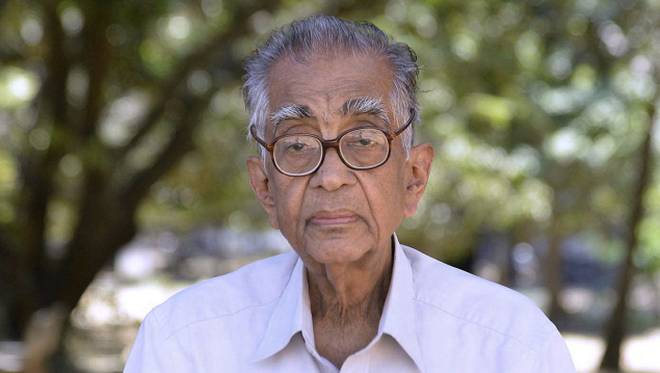
C.V. Vishveshwara, the ‘black hole man of India’, is no more

VishveshvaraBF17jan2016

He was among the first to study “black holes” even before they had been so named so.

Professor C.V. Vishveshwara who did pioneering work on black holes, passed away in the night of January 16, in Bengaluru, after a period of illness. He was nearing 78 years. In the 1970s, while at University of Maryland, he was among the first to study “black holes” even before they had been so named. His calculations succeeded in giving a graphical form to the signal that would be emitted by two merging black holes – this was the waveform detected in 2015 by the LIGO collaboration, and contain the so-called “quasi normal modes” – a ringdown stage that sounds like a bell’s ringing sound that is fading out.

Known to all as ‘Vishu’, he was given to irrepressible, infectious humour and could hold the audience in fits of laughter when he spoke. In 2015, during a short talk he gave at a conference to commemorate the first detection of gravitational waves, at International Centre for Theoretical Sciences Bengaluru (ICTS), he jokingly said that he should now probably be known as Quasimodo (after having first discovered the quasi-normal modes).

Inspired by his father C. K. Venkata Ramayya who was a writer and Padmashri awardee, Prof. Vishveshwara took to composing cartoons, many of which have been published in physics conference proceedings. Spektrum der Wissenschaft, a German popular science magazine, had published many of his cartoons depicting Einstein.

“Though I have many wonderful memories of the 1979 Einstein symposium [held at Physical Research Laboratory, Ahmedabad] the most memorable one was Vishu’s lecture entitled ‘Black Holes for Bedtime’. To me it was a magical experience; an exotic cocktail of science, art, humour and caricature. Equations were not necessarily abstract and unspeakable but could as well be translated in the best literary tradition. Over the years Vishu’s cartoons in the ICGC proceedings were always awaited,” says Prof Bala Iyer a long-time collaborator of Vishveshwara, who is now at ICTS.

Prof. Vishveshwara was the founding director of the Jawaharlal Nehru Planetarium in Bengaluru. Important in his work there is the setting up of the REAP (Research Education Advancement Programme in Physical Sciences). This is a three-year programme that undergraduate students can enrol in, which would complement their college curriculum.

He has written several books to popularise his area of work that are widely read, one of which is ‘Einstein’s Enigma, or, Black Holes in My Bubble Bath’.

He is survived by his wife, Prof. Saraswathi, and two daughters Smitha and Namitha who are both scientists.

source: http://www.thehindu.com / The Hindu / Home> Sci-Tech> Science / by Shubashree Desikan / January 17th, 2017

NRI scientist on a mission to find the next Ramanujan

Bengaluru :

A city-based computer scientist who spent over four decades in the US and racked up an outstanding body of work is starting a first-of-its-kind talent search programme in the state. For this initiative, he has had inputs and backing from another titan in the field of science — Prof C N R Rao, who will inaugurate the programme’s award function in Indian Institute of Science on Friday.

The programme, called NIAS-Maiya Prodigy, involves 10 meritorious students from various parts of the state — some from rural areas — who will receive a scholarship of `50,000. The students can be from any field. The USP of the programme is that the 10 students will have a mentor assigned to them who will guide them in their studies and careers and monitor them over five years. This programme is a joint initiative by the food brand Maiya, National College and the Iyengar Medical Foundation.

Prof Sundaraja Sitharama Iyengar

“Nobody else in the world is doing this, not even in the US,” says Prof Sundaraja Sitharama Iyengar, who conceived the project and had it executed over the past 18 months.

Prof Iyengar is currently the Ryder Professor and Director of Computer Science at Florida International University, Miami, USA. During his career, he has received many prestigious awards including the NRI Mahatma Gandhi Pradvasi Medal at the House of Lords in London on October 2013.

When asked about his biggest accomplishment, he says, “It was mentoring younger minds. Even now, what I want is to discover the next Ramanujan or C N R Rao.” It was this thought, along with the urge to give back to his country that made him come up with the programme.

The seeds of the idea were sown two years ago when he spoke to Prof Rao about his idea, and the latter liked it. Iyengar then set about an exhaustive selection process. After multiple selection rounds, 10 students were chosen for the scholarship, and their names will be announced at 3.30 pm on Friday at NIAS Auditorium, IISC.

Describing the students, Iyengar says, “I came across some bright students with lofty ambitions, and they are all technically good. One of them wants to win a Nobel Prize. Another wants to find a cure for blindness. We have so much potential, but there are problems like inability to articulate well and lack of confidence. Their mentors will work with them and teach them how to ask questions.”

source: http://www.newindianexpress.com / The New Indian Express / Home> States> Karnataka / by Tushar Kaushik / Express News Service / January 06th, 2017

First successful heart transplant at a govt.-run hospital in Karnataka

Procedure done at Jayadeva early on Saturday

A 40-year-old security guard received a new year’s gift – a new heart – when he successfully underwent heart surgery at Jayadeva Institute of Cardiovascular Sciences and Research, early on Saturday. This is the first successful heart transplant at a government-run hospital in Karnataka.

Gangadhar was in need of a heart transplant as his heart was very weak and he used to become breathless even while on medication, sources at the hospital said. A team headed by Dr. Seetharama Bhat successfully conducted the transplant which lasted four hours.

The donor, 30-year-old Mario Shin Yuan Huang, had slipped from a rooftop and was admitted to Manipal Hospital for head injury. “The patient suffered an acute brain stroke. Even with the best possible treatment, we could not save him,” said Dr. Shanthala who treated him at Manipal Hospital. “His family was very keen on organ donation,” she said.

With the help of traffic police, a green corridor was created and the donor’s heart was transported from Manipal Hospital to Jayadeva Hospital at 1 a.m. on Saturday in just 11 minutes.

The transplant holds hope for poor patients who may not be able to afford the high cost of the operation in private hospitals. “In this case, we bore the entire cost of the operation,” said C.N. Manjunath, director of JICSR. “The transplant will cost Rs. 6 lakh to 8 lakh, and if the patient requires ECMO, the cost can rise up to Rs. 12 to 13 lakh,” he added. The institute also roped in the help of several charitable organisations and depending upon their ability to pay, patients’ kin are sometimes asked to make a part of the payment.

source: http://www.thehindu.com / The Hindu / Home> News> Cities> Bengaluru / by Cinthya Anand / Bengaluru – December 31st, 2016

The stage for young minds and innovative ideas

Bengaluru : Karnataka 28/12/2016 : Students of PES college demonstrating their innovative models   | Photo Credit: Special Arrangement
Bengaluru : Karnataka 28/12/2016 : Students of PES college demonstrating their innovative models | Photo Credit: Special Arrangement

New research park to come up on PES University Bangalore South campus

PES University, which unveiled some of its research done by students and faculty on Wednesday, announced setting up of a new research park on their Bangalore South campus, near Electronics City. M.R. Doreswamy, Chancellor of the PES University, said the park, spread across 48,000 sq. ft, will be inaugurated by Union Minister for Human Resource Development Prakash Javadekar on January 7. Vice-Chancellor K.N. Balasubramanya Murthy said the park would incubate prototypes and later help students and faculty members make their products and ideas commercial. Some interesting prototypes displayed were:

Wireless underwater battery charger

A prototype of a wireless charging system for underwater vehicles has now caught national attention. “For charging batteries underground, one has to retract the vehicles out of the water to replace it with charged batteries or deliver power through longer cables underwater. This prototype reduces manual intervention and can be used in maritime systems,” V. Krishnamurthy, Registrar of PES University, said.

Biodiesel reactor plant

This plant can manufacture biodiesel from used edible vegetable oil. The students have tested this fuel with commercial diesel used in college buses and to heat water for hostel students. Mufassira Rahman, a third year biotechnology student, who was involved in the project, said the plant manufactures 70 litres of biodisel a day. She is now trying to work on how the system can be optimised.

Vermi-compost plant

The huge amount of leaves that trees shed have inspired students of the varsity and their mentor to set up a vermi-compost plant to convert it into manure. The plant has a capacity to manufacture one tonne of compost a week. This manure is sufficient for the plants and the nursery on campus.

Pebrine solution

While silkworms produce silk yarn, pebrine spores obstruct the process and is the bane of silkworm rearing farmers. The students have come out with a unique solution, which is a mix of several chemical ingredients that keeps the spores intact without their structure getting modified. The university has been doing field work in Jharkhand on sericulture. The Central Silk Board has also expressed interest in working with them.

Bags project

After development of two satellites, PES University has bagged Sindhu Netra, a project of Research Centre Imarat Hyderabad that is part of the DRDO in which a 10 kg nano satellite is to be developed.

K.N. Balasubramanya Murthy said this project would help identify suspicious ships through imaging satellite.

source: http://www.thehindu.com / The Hindu / Home> News> Cities> Bengaluru / by Staff Reporter / Bengaluru -December 29th, 2016

PES University bags Rs 2.2 crore DRDO project

Bengaluru :

After successfully launching a satellite developed by students with the help of ISRO, PES University has now bagged another project from Defence Research and Development Organization (DRDO).

Hyderabad-based Research Centre Imarat, which is a part of DRDO, has awarded a project called Sindhu Netra to PES University. The estimated cost of the project is around `2.2 crore.
Dr Balasubramnya Murthy, Vice-Chancellor of PES University, said, “This project by DRDO will help in identifying suspicious ships through sattelite imaging.

source: http://www.newindianexpress.com / The New Indian Express / Home> Cities> Bengaluru / by Express News Service / December 29th, 2016