Category Archives: Science & Technology

Evolution of Surgical Practice in Mysore

ASICON, the 76th Annual Conference of Association of Surgeons of India (ASI), is being held in Mysuru for the first time from Dec.14 to 18. To mark the occasion, here we publish a write-up on the ‘Surgical Practice in Mysore’ since the time of Prof. J.F. Robinson by Dr. C.G. Narasimhan, Emeritus Surgeon, Kamakshi Hospital, Mysuru. —Ed
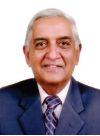
drnarasimhanbf21dec2016

by Dr. C.G. Narasimhan

“In 1970 it was Dr. C.G. Narasimhan, a freshly passed Post-Graduate from Mysore Medical College (MMC) who started surgical practice in a full-fledged way for the first time in Mysore by establishing a surgical centre on Dhanvantri Road and operating at the Raman Nursing Home, which was the second nursing home to come up in the city. With bare minimum facilities and in the absence of scanning equipment like Ultrasound and the CT, major surgeries like abdomino perineal resections and pancreatic surgeries were successfully undertaken in this institution.”

Tracing surgical practice in Mysore, a princely town of yesteryears to the present fast growing semi-metro city is very nostalgic and interesting and I have been a part of this evolution. Practice of surgery in Mysore could be discussed in two parts — one ranging between 1930s and 1960 and another from 1960s to the present era.

While during the former it was confined to the monumental Krishna Rajendra Hospital (KRH) and Holdsworth Memorial Hospital (Mission Hospital), the latter saw the emergence of private surgeons and private hospitals. KRH was attached to the University Medical College as called then, and as history suggests the first qualified surgeon was Dr. J.F. Robinson, FRCS (Edin), between 1930 and 1942. He started the Surgery Department in the hospital. He was also the Principal of the Medical College for some time. He was succeeded by Rajavaidya Praveena Dr. C. Krishnaswamy Rao, who in turn handed over to Dr. S. Puttanna, FRCS.

General surgeons of those days in the true sense of the term were masters of all arts, operating on all cases regardless of the specialties like ENT, bone and joint surgery, burr hole and even Ob, Gynaec. It may be of interest to the present generation to note that as MBBS graduates they were doing lump excisions, hernia repair, haemorrhoidectomy and even appendicectomies.

The Chair of the Head of Department of Surgery in KRH was first occupied by Shastra Vaidya Praveena Dr. S. Subba Rao. Dr. T. Seshachalam, whose name is mentioned in the Bailey & Love text book as the founder of the accessory appendicular artery was the next to occupy the Chair of HoD. Incidentally, he was trained by Dr. Robinson. Dr. Seshachalam was succeeded by Dr. B.N. Balakrishna Rao, FRCS and later by Lt. Col.R. Nagendran, FRCS. The former went to Gwalior Medical College and later became the HoD of Surgery, AIMS, New Delhi.

Prof. M. Authikesavalu, FRCS, became the HoD in late 40s and continued till 1955.Though leonine in his appearance, he was an extremely kind person and a very good teacher. Another FRCS Dr.K. Krishnamurthy was the RMO of KRH at that time. When Dr. Authikesavalu was transferred to Bangalore, Dr. A.K. Gopalarajan (AKG), FRCS, took over as the HoD of Surgery. He was also a very good teacher and very popular among the patients. He held his post till 1964 and our batch was trained under him. Dr. AKG is remembered even today in Mysuru after more than 50 years. K. R. Hospital used to attract patients from the neighbouring districts of Mandya, Hassan and Coorg. The operative procedures were mainly related to peptic ulceration, thyroid problems, Buerger’s disease apart from some traumatic cases here and there.

Wesleyen Mission started its first Hospital in Mysore called Holdsworth Memorial Hospital (HMH), commonly known as the Mission Hospital. It was located in the Mandi Mohalla area of Mysore catering mainly to Muslim and Christian population. Later the hospital gained popularity among the other sections of the society and became one of the landmark hospitals of the city. Surgeon of great eminence Dr. Frank I. Tovey was the chief surgeon of this hospital from early 50s to late 60s. He worked extensively on peptic ulcers in South Indian population. Several of his original work appeared in the British Journal of Surgery and in other journals. Dr. Tovey also did a lot of reconstructive surgery in leprosy patients of T. Narasipur area of Mysuru district. HMH attained glorious heights during Dr. Tovey’s period. He was later awarded the prestigious OBE from the Queen of UK. Dr. John D. Eswaraiah, who succeeded Dr. Tovey, served for the next two decades. Now Dr. Ruebin Prakash has been ably managing the hospital as its Chief Surgeon.

Private Nursing Homes were far and few those days before 1960s.One Dr. D.R. Prasad and his wife Dr. Anandi Bai started perhaps the first full-fledged nursing home in Mysore near the Central Police Station in mid- 40s. Though they did not have a regular surgeon operating there, one Dr. Venugopal from Madras, who was also an honorary surgeon in K.R. Hospital, used to operate cases from 1962 to 1967.After a period of lull, this institution has flourished very well with Dr. Mahesh Kumar, MS, FRCS, as its chief surgeon under a new name Chitra’s Hospital. They have also achieved national accreditation.

Southern Railways found it suitable to start their divisional hospital in Mysore in 1960 with Dr. O.J. Ram as the surgeon and CMO. Presently senior surgeon Dr. G.S. Ramachandra has given an impetus to the surgical department.

The Department of Surgery in KRH by now saw the ever active and ebullient surgeon Dr. R.H.N. Shenoi. Though he stayed in Mysore for a short time he left an indelible mark among the students and colleagues by his teaching and innovative surgeries. Dr. H. Nanjarajaiah, Dr.H.V. Jeevandhara Kumar and Dr.Y.B. Hegde occupied the chair in succession till the late 1990s.

In 1970, it was Dr. C.G. Narasimhan, a freshly passed Post-Graduate from Mysore Medical College who started surgical practice in a full-fledged way for the first time in Mysore by establishing a surgical centre on Dhanvantri road and operating at the Raman Nursing Home which was the second nursing home to come up in the city. With bare minimum facilities and in the absence of scanning equipments like Ultrasound and the CT, major surgeries like abdomino perineal resections and pancreatic surgeries were successfully undertaken in this institution.

Not until around 1973-74 some more nursing homes and private hospitals came up in Mysore. Bantwal Sulochana Madhav Shenoi Trust started Kamakshi Hospital in 1973 followed by Ravi Nursing Home and Kiran Nursing Home in 1974. Routine surgeries were carried out in these institutions.

Upper GI Endoscopy was started for the first time in Mysore in early 80s in Kamakshi Hospital. It was at this point of time two big private hospitals were started. B.M. Hospital was started in memory of his father by Dr. C.B.Murthy, who was a professor of surgery in KRH. It shot into prominence particularly after the fire mishap of the TV serial ‘Sword of Tipu Sultan.’ Apart from general surgery, traumatic and emergency surgery developed considerably in this hospital. The other big hospital was attached to a new JSS Medical College started around 1982-83. Dr.S.B. Vasanth Kumar, Dr.G. Siddesh and Dr.C.P. Madhu started their surgical career as staff of this hospital. Within a short period of time the hospital has grown in size and efficiency. Cardiac procedures are being done in this institution.

Onco surgery was the next to develop in Mysore. Bharath Cancer Hospital was started in the Hebbal area of Mysore by Dr.B.S. Ajai Kumar, a radiation oncologist trained in the US in the year 1991. Dr. Anil Thomas, who was trained at the Kidwai Institute of Oncology, Bangalore, operated for more than a decade before starting his own hospital. Two of our city surgeons Dr. T.V. Ramesh and Dr.K. Subramanya excelled in the treatment of haemorrhoids and anal problems establishing their own units.

Laparoscopic surgery in Mysore was started by Dr. C.G. Narasimhan and by Dr. G. Siddesh in the mid 90s. But the credit of developing it further should go to Dr. Victor Menezes who started his surgical practice as a laparoscopic surgeon. He has his own unit devoted only to laparoscopic procedures.

The scene of medical practice in the city thoroughly changed with the corporate hospitals coming in to Mysore. Vikram Hospital was the first one to come in 2002.Open heart, vascular, thoracic and emergency surgeries are routinely done here. With the advent of Apollo, Columbia Asia and recently Narayana Hrudayalaya Hospitals, the health delivery system has improved to a large extent.

An exhaustive coverage of evolution of surgery needs the mention of some of the lady surgeons who have chosen to practice in Mysore. Dr. Avadhani K. Geetha tops the list. She is perhaps the first lady to become the Head of a unit and also become the HoD of surgery in KRH. Dr. Lavanya Shenoi is the other lady surgeon practicing in Mysore. There are some more of them including Dr.Preethi, who is an associate professor in JSS Medical College.

Development of super specialties was delayed till early 90s when Dr. M.S. Bhaskar was the first Neuro-surgeon and Urologists Dr. K.M. Madappa, Dr. Prakash Prabhu and Dr. M.S. Ranganath arrived on the scene. Plastic and reconstructive surgeries also took shape with Dr. B.N. Jayaram, Dr. Pundalika Herle and Dr.H.V.Sathish started operating in BM, JSS and other hospitals. Of late, a few paediatric surgeons have chosen Mysuru for their practice. With a boom of several new hospitals and the arrival of young surgeons, surgical care is bound to improve in rendering quality treatment to the needy.

Lastly about the Surgical Society of Mysore — It was started in the year 1990 by Dr. D.R. Shekar, a Plastic Surgeon who is settled now in Bengaluru, Dr. C.G. Narasimhan and Dr. R. Srinath who is now retired. For the first time, Mysore hosted the 12th annual conference of KSC/ASI in 1994.It was a great success. Later a conference of the International College of Surgeons was held in 1999. Dr. S. B. Vasanth Kumar was the Vice-President of ICS Indian section for 3 years in succession. In 2003, Mysore hosted the State Conference for the second time. Two of the members of Mysore chapter Dr. C.G.Narasimhan and Dr.G. Siddesh have donned the Chairmanship of the State Chapter in 2004 and 2014 respectively. It is a matter of immense satisfaction that the Mysore chapter has instituted two awards in the Annual State Conference for the Best PG Paper Presentation and for the Best Poster Presentation.

Innovations in the field of surgery is a never-ending phenomena. We have had a challenging journey from open incisions to robotic surgery. Viewing tubular structures in the body has made a tremendous stride including ‘capsule endoscopy.’ Laparoscopic bariatric surgery has offered a great relief for obese patients. I earnestly hope that the younger colleagues in the field of surgery will carry the torch forward.

source: http://www.starofmysore.com / Star of Mysore / Home> Feature Artices / December 15th, 2016
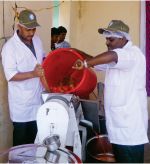
DFRL comes to the rescue of tomato growers

tomatobf20dec2016

Mysuru :

City-based Defence Food Research Laboratory (DFRL) has come to the rescue of tomato growers who often face rock-bottom price for the produce.

Under its rural development programme, DFRL with the help of Spoorthy Janaabhivruddi Samsthe, an NGO, conducted a one-day awareness programme for farmers at Ahalya village on Dec. 11 (Sunday) on tomato processing and various products made out of tomatoes developed by the laboratory.

Scientists and technical staff of DFRL demonstrated various technologies which have been developed for tomato utilisation to reduce the post harvest losses. The technologies have been developed with special focus on progressive farmers, Self Help Groups (SHGs) and rural enterprises. All these technologies are farm-amenable and have been developed keeping in view the traditional Indian palate. The products are good for consumption from 6 months to 9 months when stored at ideal temperature. The products, in ready-to-serve (RTS) or ready-to-prepare (RTP) form requires less preparation before being serving.

A number of tomato-based value-added products, namely tomato RTS beverage, tomato sambar paste, tomato rasam paste, tomato curry paste, tomato sauce, tomato pulp, green tomato chutney, red tomato chutney, tomato powder and intermediate moisture tomato slices were displayed to the farmers.

DFRL is ready to share the technology with the NGOs which plan to help the farmers to set up the tomato processing units as it believes that such units would help in value realisation for the farmers. The project will also be funded by NABARD.

Earlier, the workshop was inaugurated by DFRL Director Dr. Rakesha Kumar Sharma. Janaabhivruddi Samsthe CEO Deepak, NABARD AGM Arvamudhan, Entrepreneurship Development Institute (EDI), Bengaluru, Chairman Yashasvi Naag, DFRL Scientists Dr. N. Gopalan, Dr. O.P. Chauhan, Tanushree, C. Nanjappa, DFRL PRO Dr. Mallesha, Members of Ahalya Village Panchayat and others were present.

source: http://www.starofmysore.com / Star of Mysore / Home> General News / December 14th, 2016

Amasebailu to become first solar GP in Udupi district

The process of installing solar lamps at all houses of Amasebailu Gram Panchayat is nearing completion and with this, Amasebailu Gram Panchayat is all set to become the first ‘Solar Gram Panchayat’ in Udupi district.

Amasebailu Charitable Trust President A G Kodgi told reporters that Amasebailu has two villages, Rattadi and Machattu, with 1,872 houses. The trust had chalked out programmes to instal solar lamps at all households in 2012 itself. But owing to various reasons, the project was delayed. The installation of solar lamps was started in May this year and India Pvt. Ltd was entrusted with the responsibility of installing lamps. According to the conditions agreed upon in the tender, the company gave a five-year guarantee for solar lamps with a half-yearly maintenance and a provision to replace faulty lamps.

In the first phase, 397 houses were illuminated and 548 houses were covered in the second phase. The third phase of lighting 73 houses is currently under way. The estimated cost of the project is Rs 2.13 crore and about 20% of the cost has been shared by Karnataka Renewable Energy Development Ltd, 30% by the ministry of energy and Rs 25 lakh from district administration.

Amasebailu PDO Bhaskar Shetty said some families have already installed solar lamps before the commencement of the project. About 20 streetlights light up with solar power, Shetty said.

“There are 30 temples and a mosque in the Gram Panchayat jurisdiction and efforts are on to promote solar lamps in places of worship as well,” he said. Vishwesha Theertha Swami of Paryaya Pejawar Mutt has agreed to sponsor the installation of solar lamps in these places of worship, Kodgi said.

The cost for installing two solar lamps was Rs 9,900, while it was Rs 16,000 for four lamps. The beneficiaries had to pay Rs 3,000 for two lamps, while it cost Rs 6,000 for four solar lamps.

In the case of Koraga community beneficiaries, the Gram Panchayat has borne the amount of Rs 3,000 per beneficiary while in the case of other Scheduled Castes and Scheduled Tribes beneficiaries, it had spent Rs 2,000 per beneficiary for installation of lamps, he said.

With the accomplishment of the project the efforts of the district administration, Gram Panchayat, Amasebailu Charitable Trust, Karnataka Bank and Sri Kshetra Dharmasthala Rural Development Project have borne fruit, he said.

source:  http://www.deccanherald.com / Deccan Herald / Home> District / DHNS – Udupi, December 10th, 2016

Scientists name new spider after Harry Potter character

Bengaluru :

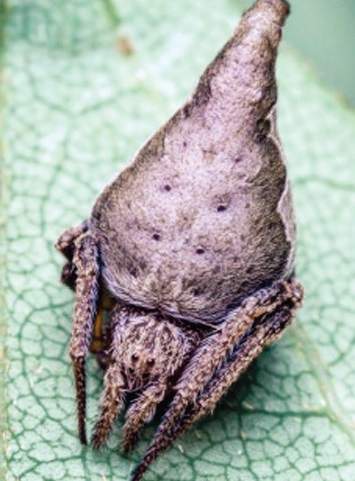
For any hardcore Harry Potter fan, the Sorting Hat, and the medieval wizard Godric Gryffindor is basic knowledge. Three entomologists, who stumbled upon a new species of spider have decided to pay tribute to the character by naming it after him. Though the arachnid bears resemblance to the ‘Sorting Hat’ of Hogwarts School of Witchcraft and Wizardry, it would be hard to spot it if you are trekking in the Western Ghats.

spiderbf13dec2016


Eriovixia gryffindori, is the new spider species discovered, details of which was published in the recent edition of Indian Journal of Arachnology.
The discovery of the arachnid was made at ‘Kans’ forestland of Central Western Ghats at Hosanagara taluk of Shivamogga district, by Javed Ahmed, Rajashree Khalap and Sumukha J N. While Javed and Rajashree hail from Mumbai, Sumukha is from Shivamogga.

Describing the etymology of the spider, the scientists write that naming it after Gryffindor – after whom one of the four houses in Hogwarts School of Witchcraft and Wizardry is named and who once owned the Sorting Hat – was, “An ode from the authors, for magic lost, and found, in an effort to draw attention to the fascinating, but oft overlooked world of invertebrates, and their secret lives.”
Prior to it, they express their fondness of J K Rowling, author of the Harry Potter series as a ‘wordsmith extraordinaire’.
“This uniquely shaped spider derives its name from the fabulous, sentient magical artifact, the sorting hat, owned by the (fictitious) medieval wizard Godric Gryffindor, one of the four founders of Hogwarts School of Witchcraft and Wizardry, and stemming from the powerful imagination of Ms. J K Rowling….” they wrote.

While the team found a female specimen of the Gryffindor spider, they are yet to describe the holotype of a typical male of the species. The paper notes that the particular species of spider is known to be distributed only from Shivamogga district, as of now.
The spider mimics dry foliage, making it ideal for it to reside almost undetected on the forest floor.

source: http://www.newindianexpress.com / The New Indian Express / Home> Cities> Bengaluru / by Express News Service / December 13th, 2016

Manava Rathna Award presented to Kamakshi Hospital for charity : Demonetisation will lead to digital currency and boost Indian economy : K.V. Kamath

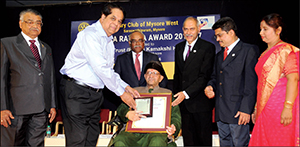
Padma Bhushan K.V. Kamath, President of New Development Bank of BRICS Countries, is seen presenting the Manava Rathna Award to M. Vinod Rao, first Managing Trustee of BSMS Trust that manages Kamakshi Hospital, at a function in city last evening. Also seen are (from left) Star of Mysore Editor-in-Chief K.B. Ganapathy, Chairman of Manava Rathna Award Committee and Founder Trustee, Schevaran Scientific Foundation Rtn. Sam Cherian, President of Rotary Club of Mysore West Rtn. C. R. Hanumanth, Secretary Rtn. B.S. Srinath and Inner Wheel President Ann. Sumana.


Mysuru :

Demonetisation will bring in positive changes in India’s economy and will improve financial status of its people, said Padma Bhushan K.V. Kamath, President of New Development Bank of Brazil, Russia, India, China and South Africa (BRICS) Countries.

Kamath was speaking as the chief guest after presenting Manava Rathna Award to Kamakshi Hospital at Rotary West Auditorium in Saraswathipuram last evening.

The Manava Rathna Award was instituted by Schevaran Scientific Foundation and was presented to Kamakshi Hospital in recognition of its charity. M. Vinod Rao, the first Managing Trustee of Bantwal Sulochana Madhava Shenoy (BSMS) Trust that manages the hospital, received the award. The event was organised by Schevaran Scientific Foundation and Rotary Club of Mysore West.

“Demonetisation has come as a precursor to digital currency and it would strengthen the country’s economy. It will curb corruption as now only documented money would be in circulation and it would be difficult to move unaccounted money. Even the rate of interest on home and vehicle loans would come down which will help bring down inflation. India has been registering an economic growth of 7.3% for many years and this is a positive sign of development. “We must identify the achievements of the country and celebrate them,” he said.

Kundapur Vaman Kamath, commonly referred to as K.V. Kamath, has served as the Chairman of Infosys Limited, the second-largest Indian IT services company, and as the Non-Executive Chairman of ICICI Bank, India’s largest private bank.

“Food prices and real estate rates will come down and it will be a boon to the market economy and the interest rates will come down by around 2 per cent in the next 12 months. All this will benefit the common man,” he said.

Comparing India with other developing countries like Brazil, China and South Africa, Kamath said that while those countries have shown speedy development, India did not get a platform for development. With demonetisation, India can accelerate growth,” he added.

Recalling the introduction of ATMs in the country by the ICICI bank for the first time, he said while many had doubts about its success the ATM culture soon caught the imagination of the other bankers and also the customers.

The noted banker said that in the year 2000 there were only 150 ATMs and at present, there are more than 3 lakh ATMs in India. “This could be possible only due to digitalisation of banks and people’s participation and acceptance,” he added.

“More than anything, demonetisation will curb the menace of corruption in India. Though the move has led to a lot of inconvenience, it will benefit the country in the future. People will slowly switch over to cashless economy,” he opined.

YEOMAN SERVICE TO THE POOR

Kamakshi Hospital Administrator Dr. K.R. Kamath, Medical Superintendent Dr. C. Umesh Kamath and current Managing Trustee of BSMS Trust Mahesh Shenoy too were felicitated on the occasion.

Speaking after receiving the Manava Rathna Award, M. Vinod Rao said that the hospital was established with an intention of serving the poor and people from lower economic groups. The expansion of the hospital with a second unit has been taken up in J.P Nagar, he said.

Star of Mysore Editor-in-Chief K.B. Ganapathy, who was the guest of honour, said that service to mankind is equal to service to God. “This is the reason why Mother Teresa compared her service to the dying and the destitute as service to God,” Ganapathy said.

“I personally know the yeoman services provided by Kamakshi Hospital, specially to the poor and middle-class patients since 40 years. The doctors here and also the paramedical staff are so gentle and kind they sincerely consider their service as God’s service,” he said.

The Hospital well deserves this Manava Rathna Award which would further encourage the hospital doctors and staff to serve the community better and with great responsibility, Ganapathy added.

Administrator Dr. K.R. Kamath said that the hospital was committed to serve the poor and has launched several people-friendly programmes like the ‘Save A Child’ in association with Rotary Mysore West. Under this project, any child needing surgical intervention or special medical care is admitted for treatment free of cost. “It is a matter of pride to receive the award and we will continue to remain committed to the service of the society,” Dr. Kamath said.

Managing Trustee of BSMS Trust Mahesh Shenoy said that the hospital had close association with Rotary Mysore West since its inception.

“We will launch a series of healthcare facilities for the benefit of the poor,” he said. Medical Superintendent Dr. C. Umesh Kamath traced the journey of the hospital since it was established in 1973.

President of Rotary Club of Mysore West Rtn. C.R. Hanumanth, Chairman of Manava Rathna Award Committee and Founder Trustee, Schevaran Scientific Foundation Rtn. Sam Cherian, Secretary of Rotary Club of Mysore West Rtn. B.S. Srinath, Dr S.N. Mothi of Asha Kirana Hospital, Proprietor of Mangalore Ganesh Beedies Dr. M. Jagannath Shenoy and others were present on the occasion.

source: http://www.starofmysore.com / Star of Mysore / Home> General News / December 03rd, 2016

City teen builds audio-based debating website

Bengaluru :

A 12th grader from the city has developed what is possibly the world’s only online audio-based debating platform. The website ‘Debate for Change’, developed by Siddharth Pandiya (16), a student of Greenwood High International School, allows members world-wide to engage in debates on either any of the given topic or a topic of their choice.

The website is functioning since mid-October, currently has 150 members and took Siddharth, a month-and-a-half to build. Members can choose a topic and their stand on it, upon which the website pairs that member with another member who has an opposite stand, and then the debate is conducted by a moderator.

A ranking system has been incorporated in the website, wherein the winner of a debate, decided by the moderator, gets 100 points and the loser 25 points for participation. Until now, Siddharth himself would moderate the debates but now has a team to assist him.

Speaking about what led him to the idea, Siddharth, himself an avid debater since middle school, said, “When I went for debates I only learnt by watching other debaters, I didn’t have any platform to learn. I also feel the overall quality of debating, on TV for example, has deteriorated a lot.

People don’t even care so much anymore, they go to debates because it’s cool, not because they actually like talking about issues. Hence I created this.”
The teen has plans to incorporate many other features into the website, including an option to have video debates .

“I wanted this to be accessible to people with a 2G connection and hence began with only audio input,” he says, and adds, “You can also watch debates that are currently going on with the ‘spectate’ option and you can join tournaments.” He also plans to combine the service with Facebook by next week. He himself has represented India at 14 UN conferences until now and has won awards at every single one, including being awarded the best delegate at Harvard.

source: http://www.newindianexpress.com / The New Indian Express / Home> Cities> Bengaluru / by Express News Servic e / December 06th, 2016

Honour for UVCE principal

Bengaluru :

The University Visvesvaraya College of Engineering (UVCE) principal has been recognized for his contribution to computer science and engineering education.

The Association for Computing Machinery (ACM) conferred Venugopal KR the ACM Distinguished Educator Award 2016. Venugopal has 11 degrees, including a PhD in computer science engineering from IIT-Madras, and another PhD in economics from Bangalore University.

He has authored and edited 64 books and published more than 600 papers. “The contributions of our distinguished members led to breakthroughs that improve our lives, advance the frontiers of scientific discovery and boost economic development,” said Vicki L Hanson, president, ACM.

Venugopal was earlier given the prestigious IEEE Fellow Award, US.

source: http://www.timesofindia.indiatimes.com / The Times of India / News> City News> Bangalore News / Bengaluru / TNN / December 02nd, 2016

Udupi college team wins TCS Rural IT Quiz

tcsruralitbf29nov2016

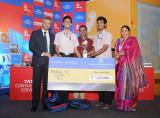
A team from Udupi won the national finals of the Rural IT Quiz organized by Tata Consultancy Services (TCS) held at Bengaluru Palace as part of BengaluruITE.Biz 2016.

Aditya B Nayak and Pranoy DSouza from MGM PU College, Udupi, competed against the winners of state-level quizzes conducted in Gujarat, Madhya Pradesh, Rajasthan, Maharashtra and Chhattisgarh. Students from class 8 to 12 compete in the annual quiz competition which aims to enhance IT awareness among students in smaller towns and districts.

The quiz, conducted by Giri ‘Pickbrain’ Balasubramaniam, was based on the theme of Digital Marketing and its significance in present times. The animation-based quiz format had five rounds — Landing Page, Search Engine Optimisation, Higher Per Hit, Going Viral and Net Worth.

The students received a trophy and an educational scholarship of Rs 1,00,000 from minister Priyank Kharge. The team from Agragami High School, Wardha were the runners-up and they received Rs 50,000.

source: http://www.deccanherald.com / Deccan Herald / Home> State / DHNS – Bengaluru, November 29th, 2016

Buy ‘legal’ properties using this tool

Bengaluru :

One of the major problems faced by people looking for properties in the city is the legality of any such purchases. The controversial demolition drive carried out by the BBMP on encroached storm water drains and lake beds two months back is testament to the dangers of purchasing properties without proper information.

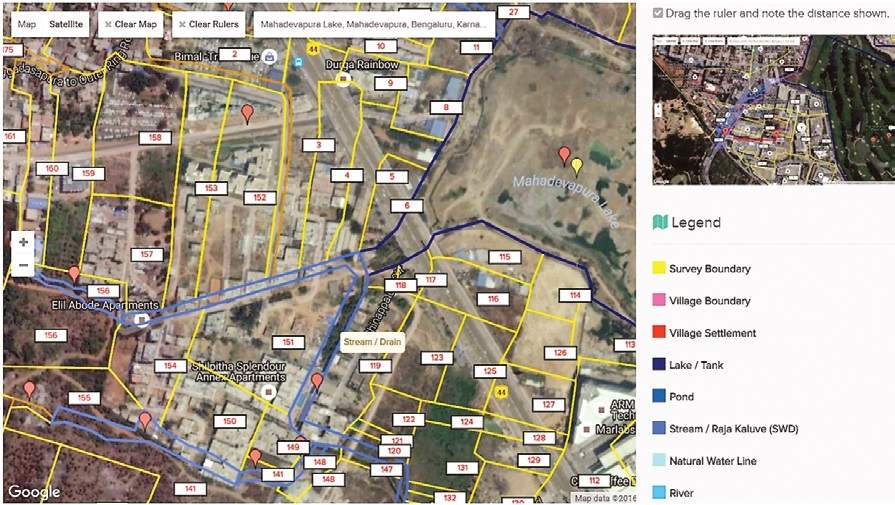
Now, a Bengaluru-based startup has developed a free Google map-based risk assessment tool to help Bengalureans assess encroachment and other information required when evaluating properties.

Sudeep
Sudeep

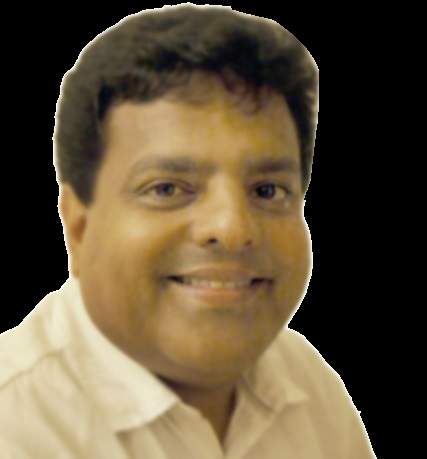
The tool – ZippServ Protect –  uses an intuitive feature to mark the storm water drains and lake encroachments based on BBMP’s revenue map. Users can search for and download relevant information from about 50 GB. One needs to only put in the location of the property on the platform and immediately one will get access to information like the land revenue maps of that particular area. Another feature enables one to measure the distance between location and the drain or lake. “It is a kind of a first level of scrutiny before making a purchase,” says ZippServ Co-founder and CEO Sudeep Anandapuram.

Sudeep and his team have collected information spanning over 800 sq km within the city and it can also highlight the primary and secondary drains and help users to measure the width of a drains and extent of encroachment.

propertymapbf28nov2016
Kathyayini Chamaraj  of CIVIC, a  voluntary citizens initiative, said that in light of government records themselves being faulty there was a need to exercise caution. “I do not know to what extent such tools will be of help when it has often been found that maps and records of authorities like the BDA and BBMP themselves are often faulty and even fabricated,” she says.

source: http://www.newindianexpress.com / The New Indian Express / Home> Cities> Bengaluru / by Ramzauva Chhakchhuak / Express News Service / November 28th, 2016

The stealth superbug, decoded

A team of scientists in Bengaluru is behind the genome sequencing of Candida auris, a fungus that has caused disease outbreaks in five continents this year.

EMERGING THREAT: “A paper by the scientists has shown that many cases have been misdiagnosed in India.” Picture shows the structure of the fungus. Photo: Special Arrangement


On November 4, the Centers for Disease Control and Prevention, a leading public health institute in Atlanta, U.S., reported 13 cases of infection by the deadly fungus Candida auris in several parts of the country. Apart from the U.S., outbreaks have been reported this year in eight countries across four continents — India, Pakistan, South Korea, Kuwait, South Africa, Colombia, Venezuela and United Kingdom.

A paper by scientists from the Indian Institute of Science (IISc) in Bengaluru has shown that many cases of Candida auris have been misdiagnosed in the country. In 2015, a team led by Utpal Tatu, professor of biochemistry, IISc, completed the genotype sequencing of Candida auris, widely considered an emerging superbug fungus as it does not respond to conventional antifungal drugs. The genome data were submitted to the National Center for Biotechnology Information, U.S. and is now considered as the reference genome across the globe.

India, an epicentre

Candidiasis is a fungal infection caused by Candida species, often seen in patients whose immune system is compromised, such as AIDS patients or in case of transplants, malignancies and the use of catheters. Most of the infections are hospital-acquired, especially in ICU settings.

The first case reported was in Japan in an external ear canal infection in a patient in 2009. Since then, most cases have been invasive in nature and India has one of the highest number of infections caused by this superbug, says PhD student Sharanya Chatterjee, a member of the IISc team who studied isolates of Candida from a private hospital in Bengaluru. She found that in many cases, the fungus had been misidentified with another Candida species, Candida haemulonii.

Dr. Tatu’s team was among the first to report the high rate of misdiagnosis of Candida auris. “Current diagnostic procedures to detect fungal infections cannot detect Candida auris, which is resistant to common antifungal treatment. In several patients, by the time we had made the correct diagnosis, it was too late,” says Ms. Chatterjee.

The team of scientists has developed a diagnostic tool to detect Candida aurisusing polymerase chain reactions. “The rise of more virulent forms is connected to the indiscriminate use of antibiotics,” says Dr. Tatu, adding, “The strain found in the United States was resistant to even the third class of antifungal treatment.”

Highly resistant fungus

One reason for the high resistance to existing drugs is that this species has a higher number of drug efflux pumps compared to other species, says Ms. Chatterjee. Drug efflux pumps are proteins that prevent other drugs from crossing the cell membrane. The IISc team’s research was published in the September 2015 issue of BMC Genomics.

Sudarshan Ballal, director, Manipal Hospitals, which provided the isolates for the study, says the research highlighted the need for clinical-academic collaboration. “We have been able to dissect a fungus found commonly in hospitals and study it at the genome level. Some fungi look alike at macroscopic level, but their genotype could be very different, sort of like twins,” he says, adding, “If you know it is Candida auris from day one, you could start off with treatment which it is sensitive to.” Dr. Ballal agrees with Dr. Tatu about indiscriminate use of antibiotics as a possible cause: “Killing all kinds of bacteria gives space for fungi to grow.”

Dr. Tatu and his team of researchers feel that it is high time officials took note of the situation. “It is very difficult to establish how many cases have been misdiagnosed in India as very little study has been done on this, and since most patients who acquire Candida are already quite ill, a delayed diagnosis could be fatal,” he says.

Echoing Dr. Ballal, Dr. Tatu says the emergence of superbugs is a small example of the lacunae between academic research that studies the current disease scenario and current clinical practices, and shows the need for greater collaboration between the two. Apart from Candida auris, Dr. Tatu’s team is also studying numerous other infections, their evolutionary origins, diagnosis and treatment, with a view to filling this gap.

cinthya.anand@thehindu.co.in

source: http://www.thehindu.com / The Hindu / Home> Sci-Tech> Health / Research Health / by Cinthya Anand / November 27th, 2017