Category Archives: Science & Technology

Telemedicine takes advancements in healthcare to distant corners

Bengaluru :

The absence of advanced healthcare services in Kalaburagi had pushed Gaurav (name changed), into a state of panic, after he developed recurrent headaches following a minor fall he suffered last month. Although the report of a CT scan at a local hospital revealed nothing alarming, Gaurav was determined to seek a second opinion. He decided to make use of the telemedicine service available in the state; the images of his brain were transmitted to doctors at a Bengaluru-based teleradiology centre, who diagnosed the problem as subdural hematoma (clot in the brain). He was subsequently referred for a neurosurgical evacuation – a procedure that involves evacuating the hematoma through a small hole. “Staying away from Bengaluru has always been a handicap to getting advanced healthcare services. However, the rapidly expanding telemedicine facility ensured early detection of my problem, and I was cured,” said Gaurav, who underwent a surgery at the Gulbarga District Hospital.

Gaurav is among the many beneficiaries of telemedicine, which has helped many citizens in remote areas of the country seek medical opinion from some of the leading doctors. Meenamma (name changed) was worried sick when her two-day-old baby’s breathing became laboured, and developed poor perfusion – process of delivering blood to a capillary bed – and listlessness. The neonatologists felt it was sepsis. But, the doctors called for a cardiac screening to make sure that the baby did not have any problems in the heart. While conducting the test, the sonographer decided to consult a senior cardiologist, not present at the hospital. However, using tele-echo, the senior doctor was able to take a look at the result of the test, and subsequently diagnosed a coarctation – narrowing of the blood vessel going to the body. The baby was put on medication, and referred for a surgery.

Cardiac paediatrician and co-founder of Teleradiology Solutions, the first-of-its-kind company established in the country, Dr Sunita Maheswari said that the organisation was working with the Karnataka health department to take teleradiology services to the rural interiors of the state. “We already cover four centres in the state. The drive was recently launched by the state government at Bowring Hospital, Bengaluru. We have reviewed scan reports of at least four million patients from across the world in the past 14 years. We started working with the Indian government this month, and we deployed services for district health centres in Tripura. From our headquarters in Bengaluru, we help patients from as many as 16 countries,” she said.

Pointing to the acute shortage of radiologists in rural India, Sunita added, “India has only 10,000 radiologists. Through teleradiology, we can take their services to other areas, where there are hospitals and diagnostic centres, but no radiologists. Also, telecardiology will help patients avail opinion of experts, who are elsewhere. It is one of the leading methods of reaching patients in rural areas, suffering from cardiovascular disorders.”

Teleradiology Solutions works with four hospitals in the state. At a recent discussion on telemedicine held in Bengaluru, head of department of forensic medicine at Victoria Hospital, Dr Devdass PK said that they had managed to analyse and send 3,500 reports through telemedicine facility.

Enabling counselling from the comfort of home

Anuradha (name changed), 45, of Mysuru badly wanted to rid her teenage son of his online addiction. She wanted to put an end to his habit of frittering away entire days, surfing social media and playing games, while paying no heed to family members. Uncomfortable with the idea of taking her son to a counsellor, Anuradha sought recourse to telepsychiatry. Aided by a Bengaluru-based telecounsellor, she managed to curb her son’s addiction to gadgets. “My son is now behaving normally with the members of the family. He was able to receive help without having to leave home,” she added.

Professor in the department of psychiatry at the National Institute of Mental Health and Neuro Sciences (Nimhans), Bengaluru, Dr Manjunath N said, “Telepsychitary was introduced here six years ago. It was made possible through the Karnataka Telemedicine Network Project, introduced by the health department in 2001. Telemedicine service at Nimhans covers 25 district hospitals and six taluks. Although direct consultation with our psychiatrists is yet to begin, we continue to provide help to rural patients.”

Telecounselling eliminates the need for a patient to be physically present in the counsellor’s chambers, and also provides privacy, opined Aruna Arumugam, a telecounsellor with Healtheminds. “Also, it is accessible to those patients who cannot otherwise seek help. We get patients from West Bengal, Karnataka, Uttar Pradesh and Pakistan, seeking help mostly on relationship issues, parenting challenges and depression,” she said.

Opthalmological services made available in rural areas

Karnataka Assisted Diagnosis of Retinopathy of Prematurity (KIDROP) was launched in 2008 by Narayana Nethralaya as a postgraduate teleopthalmology programme. Since 2010, along with the state health department, Narayana Nethralaya has managed to take retinopathy of prematurity screening to 36 centres across the state, along with wide field digital imaging services.

Chairman of Narayana Nethralaya, Dr Bhujang Shetty said, “KIDROP has trained technicians to screen infants in peripheral centres, where there are no specialists using Retcam Shuttle. They can store and subsequently upload images from the rural centres using an indigenously developed internet-based PACS system. This system delivers images live to the remote expert, who then sends the report to the technician.”

E-healthcare centres benefit nearly 40,000 patients

For the past two years, Narayana Health (NH), in collaboration with Hewlett Packard Enterprise (HPE), has been looking to take telecardiology, teleconsultation and tele-ECG services to rural areas. So far, its e-health centres have managed to reach 39,624 patients in Karnataka, Tamil Nadu, West Bengal, Gujarat and Rajasthan.

“The e-healthcare centres (eHCs) are designed such that they can be fit and deployed within a standard shipping container. Or, they are retrofitted to a pre-existing clinic, depending on the community’s existing infrastructure. They are fully equipped with workstations, open electronic medical records, biometric patient identification and integrated diagnostic devices,” a source at Narayana Health said.

“The HP cloud enabled technology allows for data – clinical and administrative – to be monitored across sites via a dynamic dashboard. Teleconsultation with relevant physicians from NH unit hospitals have been established at these eHCs, and dedicated internet services at all sites ensures seamless connectivity to the geographically linked healthcare facility. Outreach activities such as community screening programmes and customised medical programmes are organised with specialist support based on the dominant disease prevalence and incidence in the eHC location and catchment areas,” the source added.

‘We’re training doctors in telepsychiatry’

Since its inception six years ago, only 2,000 patients have availed the services of the telemedicine facilities at Nimhans. Professor at Nimhans’ psychiatry department, Dr Manjunath N attributes the underwhelming response to the lack of trained psychiatrists in telemedicine. “Though patients with common and chronic mental disorders are willing to discuss their problems through e-consultation and e-counselling, lack of doctors trained in manning telemedicine services for psychiatry is the problem. Trained professionals who can offer psychiatric services to rural patients from Bengaluru would solve the problem. We are also training resident doctors in telepsychiatry to overcome the problem of scarcity,” he added.

‘Well-trained technicians, and the will to invest is all we need’

At our vision centres, we make use of a portable Slit Lamp Biomicroscope connected via LAN network to the base hospital, which helps doctors diagnose chronic conditions such as retinopathy of prematurity, a potentially blinding eye condition that affects newborns, irreversible corneal conditions like keratoconus and diabetes-induced retinopathy. All it requires are well-trained technicians and the will to invest in quality equipment.

Dr Siddharthan KS | consultant at cornea and refractive services in sankara eye hospital.

‘Services will boost medical tourism in state’

A prior screening through telemedicine ensures that the patient is screened properly, and helps us confirm if the patient has to travel to avail services at the hospital. Many a time, it has saved patients the trouble of travelling to our hospital. Moreover, teleconsultation also increases the comfort and confidence level of the patients with their doctors, who are far away. This is a boost to medical tourism, since it makes it easier for patients to know more about their doctor.

Dr Harsha Rajaram | vice president at columbia asia hospitals

source: http://www.timesofindia.indiatimes.com / The Times of India / News> Chennai News> Bangalore News / by Sreemoyee Chatterjee / TNN / November 28th, 2016
PES University to launch another satellite

Barely a month, after 250 students launched a nano-satellite PISAT, under the mentorship of PES University staff, another group of students have started work on developing another satellite at the university, the PISAT-2.

While the earlier satellite, which entered orbit on September 26 on board the Polar Satellite Launch Vehicle (PSLV) operated by the Indian Space Research Organization (ISRO), is a stabilised imaging satellite, PISAT-2 will have an ultraviolet imager that will stare at a single point in space for the lifetime of the mission.

“The goal is to search for variable sources, those that change in brightness. These may include explosive events like supernovae, exotic events such as planets falling into their parent stars or events in our neighbourhood such as nearby asteroids or comets,” a statement from PESU said.

Students will work with the Indian Institute of Astrophysics (IIA) on the project which will be supported financially by the university. The Defence Research and Development Organization (DRDO) has also evinced interest in funding the mission, sources said.

With an outlay of Rs. 2.3 crore, 18 to 24 months have been set for the launch.

“PISAT-1 was developed for Earth observation while PISAT-2 will help us head towards deep space exploration,” said Ajay Kumar, a student working on the project.

Explaining the difference between the two missions in terms of technological expertise, Divya Rao, a mentor for the project said, “PISAT-2 will be more advanced in terms of technology like the control systems onboard as well as the composition of the satellite which will have space grade components on board.”

Chancellor of PES University, M.R. Doreswamy said that the institute was committed to extending support for the design and development phase of the satellite. PISAT-1 in the meantime is functioning as per parameters and is healthy. The team will continue to use the satellite for earth observation in the coming months, a team member said.

source: http://www.thehindu.com / The Hindu / Home> News> Cities> Bengaluru / Staff Reporter / November 21st, 2016

Now an app to connect to the nearest blood bank

A mobile app has made it easier for patients to connect to the nearest blood bank in an emergency.

iRelief, a private city-based firm, in association with the State Health Department, has designed the app to provide accurate information on availability with details on specific blood groups at the nearest blood bank.

The app will also allow the user to place a demand for a specific type/group of blood, which will either be delivered to the hospital where the patient needs it or to the nearest blood bank.

Principal Secretary (Health and Family Welfare) Shalini Rajneesh, who launched the app in the city on Thursday along with Minister for Infrastructure Development R. Roshan Baig, said iRelief has entered into an understanding with blood banks in the State to get information on the availability of blood.

There are 200 blood banks in the State, including 40 run by the government. “Real time information on the availability of blood in all these 200 blood banks is also available onwww.drugni c.in.We have shared the live information with iRelief through the Jeev Sanjeevani app that is managed by the Health Department. This is to help increase its reach to patients in need and fixed a cost of Rs. 30 as convenience fee for connecting and confirming supply of blood to the patient in the respective hospital,” said Ms. Rajneesh.

Pointing out that the government is already offering free service through the 104 call centre round the clock, Ms. Rajneesh said: “Any other innovative health service providers are most welcome to join hands with our department to improve reach and quality of health services.”

With a data bank of blood donors, the app also alerts the donors the moment an order for a unit of blood is placed on the app.

Help desk

The private firm has also set up a 24X7 help desk and people can dial 7847840000 for assistance on blood, ambulance and home care services.

About the app

iRelief provides information on availability of blood

User can also place demand for a specific type/group of blood

User will get immediate intimation on availability

Blood will either be delivered to hospital where the patient needs it or made available in nearest blood bank

App can be downloaded on Google Play and Apple App Store

source: http://www.thehindu.com / The Hindu / Home> News> Cities> Bengaluru / by Special Correspondent  / Bengaluru – November 14th, 2016

Meet a canine physiotherapist who has healed over 1000 dogs

krithikabf09nov2016

Bengaluru :

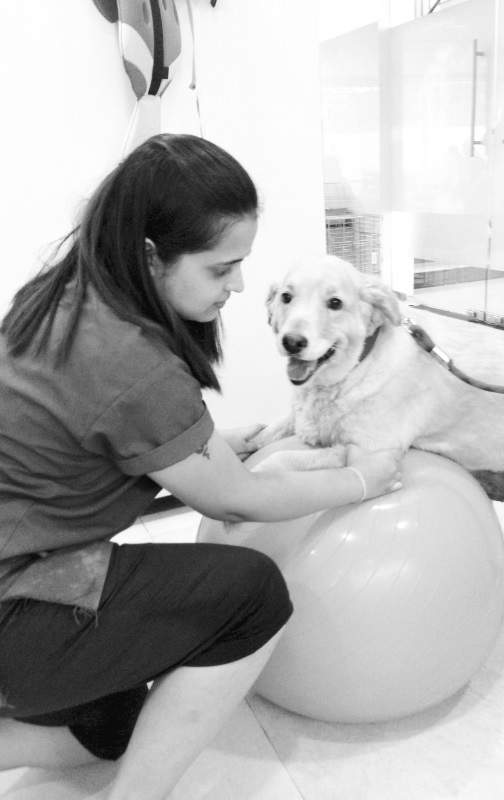
Her love for animals compelled Krithika Ramesh, 33, who holds a masters degree in Zoology, to become a canine physiotherapist and hydrotherapist and has healed over 1,000 dogs. In a chat with City Express, she tell us about her love for animals and more.

When did you take to being a canine physiotherapist and hydrotherapist?

I started my career in March 2013. I thought I could connect to animals easily, which is what moivated me. Dr Pawan Kumar, a veterinarian at Cessna, gave me a platform to explore my skills.

Did you take any special training for this?

I studied canine physiotherapy at the College of Animal Physiotherapy in Aylesbury, United Kingdom.

How has your experience been so far?

It has been fantastic. I don’t realise when the day ends. I have to travel for two hours to reach the hospital, but I look forward to going there and meeting new canine friends everyday.

Any memorable moment you had at the hospital?

I met a five-month-old labrador named Luke. He had hip dysplasia. At the end of the session, he got too attached to me. In fact his parents recorded my voice and play it now. He comes running towards the phone looking for me.

Everyone calls him my boyfriend, and his mother Aparna, jokingly says that I am in her will and I shall inherit him.

Another case is of black labrador called Sirrius.

He was scared of water. His parents were worried, but after a few sessions with me, he got used to it and loves playing in water now.

How is hydrotherapy helpful to dogs?

Hydrotherapy is good form of exercise. It helps in rebuilding muscle strength. In case of paralysis, it stimulates the nerves.

How much time does a dog take to heal with hydrotherapy?

If it has hip dysplasia, it takes close to six months to heal. We conduct two sessions every week for four months and one session for next six months. Paralysis takes an year to heal completely without surgery.

source: http://www.newindianexpress.com / The New Indian Express / Home> Cities> Bengaluru / by Pratima Shantaveeresh / Express News Service / November 05th, 2016

GIT student designs watch for Swiss firm

Belagavi  :

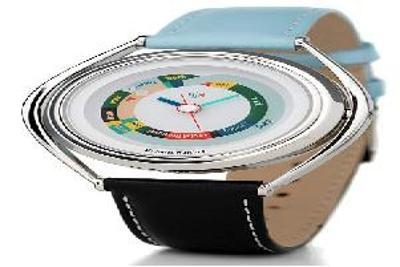
Parth Sabnis, an electrical and electronics engineering student of KLS Gogte Institute of Technology (GIT) who designed the smart PDG wat ch for Switzerland-based Luxius M’iWatch, will represent the brand at the annual GPHG Awards event at Geneva on November 10.

pdgwatchbf30oct2016
Parth Sabnis, 22, is thrilled by the appreciation he’s been getting.

“The company specialises in simple yet sophisticated designs. It was a challenging task as watch design was a new domain for me. I considered it an opportunity when I got the assignment,” Parth told TOI.

Parth, who is from Mumbai, said initially it was a challenge to identify the appropriate tool for the design. After some research, he decided to use Autodesk Maya software due to its sheer versatility. After dis cussions with several clients, he decided to go for a traditional design that incorporates modern technology. The objective was to offer something more than usual ensemble of high-end watches.

Smart PDG Watch features a digital face that would run on Android Wear OS along with a fully hand-crafted analog dial. Parth said the watch symbolises two things which never stop — time and news of the world. “I did not realise the magnitude of the project until I received the invitation to attend the awards function. It couldn’t have happened without the support of the college faculty. They allowed me to got Bengaluru to work on the project and resume classes later. The college authorities appreciated my effort,” he said.

The Smart PDG Watch is a hybrid watch with two interchangeable watch cases and two time zone dials. The first watch case contains a Swiss manual winding, mechanical tourbillon movement. The second case integrates a connected smart watch movement, with a digital dial face, with a notification screen streaming real-time world news at the bottom.

source: http://www.timesofindia.indiatimes.com / The Times of India / News Home> City News> Hubli / TNN / October 29th, 2016

AeroMIT and their flying machines win accolades

AeorMIT, Manipal Institute of Technology's aero-modelling team which won first place at NIT
AeorMIT, Manipal Institute of Technology’s aero-modelling team which won first place at NIT

Manipal:

AeroMIT, Manipal Institute of Technology’s aero-modelling enthusiasts who design, build, test and fly radio controlled aircraft, capped their performances earlier this year with two more accomplishments.
AeroMIT participated in two competitions at NITK, Surathkal and NIT, Calicut and returned with ‘flying’ colours. In the competition at NITK, the team won second and third places and at NIT, Calicut, the team finished first and second.

The first competition that AeroMIT participated in was Engineer, Technical Festival of NITK, Surathkal. MIT team’s event was called ‘Wright Flight’.

The aim of competition was to test flying skills and manoeuvrability of scratch built remote controlled aircraft and compete by executing complex in-flight manoeuvers as well as dropping payload on a bulls-eye target. This involved spot take-off and landing and stable flight.

The second competition was in Tathva, a technical festival at NIT Calicut and their event was called ‘Albatross’. Here the team required to scratch build an aircraft with maximum takeoff weight of 700 grams and adhere to limited wingspan and could take-off from top of a building and spot land on a bulls-eye. It also included points for manoeuvrability, range of flight and speed. The team won 1st and 2nd places.

AeroMIT had on December 28, 2015 outmatched 37 teams including IITs and NITs to clinch the first place in its maiden appearance in the Boeing National Aero-modelling Competition for West zone.

source: http://www.timesofindia.indiatimes.com / The Times of India / News Home> Chennai News> Bangalore / TNN / October 27th, 2016

Corneal transplant gives Kalaburagi man a new life

Access to higher education makes the impossible possible

Siddaramayya Hiremath, who was born visually impaired at a remote village in Jewargi taluk, Kalaburagi district, and later underwent a corneal transplant, is a happy man today. He has now been selected for the post of Second Division Assistant (SDA) in the Directorate of Employment, Bengaluru.

Born in Kanameshwar village in Jewargi, Mr. Hiremath had his first glimpse of the world in 2009, when he was studying in Class 9 at the Government Blind School in Kalaburagi city, after a successful corneal transplant by noted ophthalmologist Prashant Kamalapurkar. This corneal transplant was reportedly a first for the Hyderabad-Karnataka region.

“I have no words to express my joy… one of my patients not only got his vision back, he also completed his education and got a government job after passing the KPSC (Karnataka Public Service Commission) examination,” said Dr. Kamalapurkar.

Mr. Hiremath said that after gaining vision, he completed SSLC at the Government Blind School in Kalaburagi and moved to Bengaluru, where he completed Pre University Course (PUC) at the A.P.S. College.

He later moved to Vijayapura district to pursue BA at the H.A. Nandi College, Almel. He said he took the KPSC exam for the post of SDA in 2015-16 and cleared it. “It would not have been possible to continue my education beyond SSLC (Secondary School Leaving Certificate) since there are no study books in Braille. The visually impaired pursue studies any further only through audio. I am grateful to the donor and Dr. Kamalapurkar, who performed the surgery and provided medicines free of cost,” Mr. Hiremath recalled.

Mr. Hiremath lost his father when he was young and his mother Sharanamma is an agricultural labourer. His brother Ningaiah Hiremath, who is also visually impaired, has been selected to the post of a First Division Assistant (FDA) in a State government department. His younger brother and sister have normal vision.

source: http://www.thehindu.com / The Hindu / Home> National> Karnataka / by Special Correspondent / Kalaburagi – October 20th, 2016

150 patients undergo free angioplasty procedure at Jayadeva hospital

angioplastybf20oct2016

 Around 150 patients underwent free angioplasty and stenting procedures at the ongoing angioplasty workshop conducted by Jayadeva Institute of Cardiovascular Sciences and Research.

The institute, in collaboration with Dr Govindaraju Subramani Heart Foundation and Medtronic Vascular Division, Santarosa, USA, gave away stents worth Rs 1.25 crore free of cost to all patients including farmers, labourers, vendors, autorickshaw drivers, senior citizens from Karnataka, West Bengal, Andhra Pradesh and other states, since October 17, when the workshop began.

Professor and HoD of cardiology and director, Jayadeva Institute, Dr C N Manjunath said the youngest patient at the workshop was a 38-year-old agricultural labourer and the oldest was 83.

He said: “Heart ailments are no more a disease of the elite and elderly population, it also affects the younger age group, women and poor people.”

Pre-discharge counselling sessions were also arranged during the workshop for the patients where doctors gave them suggestions on diet and lifestyle practices to be adopted to reduce health risks.

Interviews rescheduled

The Jayadeva Institute of Cardiovascular Sciences and Research has said that the interviews to fill jobs reserved for the Hyderabad-Karnataka region that were postponed, will now be held on October 24 and 25.

source: http://www.deccanherald.com / Deccan Herald / Home> City / DHNS – Bengaluru, October 21st, 2016

Self-repairing road could fix crater mess

Thondebhavi (Chikkaballapur District) :

The last time Thondebhavi came under the spotlight was almost a year ago when a cloud of ash from a nearby cement plant enveloped it. Now, this nondescript village is grabbing headlines for becoming the first in the country to have a self-repairing road.

Thondebhavi, 65km from Bengaluru and with a population of about 1,200 people, has a 700-metre road with a crack healing capability. This road is the brainchild of Prof Nemkumar Banthia of the civil engineering department at the University of British Columbia, Canada.

This will be a game-changer in road-building, especially in a country where roads are dotted with cracks and potholes. M Suresh of the National Institute of Engineering-Mysuru, who coordinated with Thondebhavi village authorities and University of British Columbia, said: “This road has been built with high strength concrete supplemented with fibres which have a hydrophilic nano-coating. This coating absorbs water. Since most road cracks develop because of unhydrated cement, the hydrophilic coating produces silicates that closes the cracks.”

The lifespan of these roads is 15-20 years. The road, about 100 mm thick and comparatively less than the usual cement road, would go a long way in reducing road-laying cost. Since fly ash is used for these roads, the carbon output is low.

The 700-metre stretch, which connects the village with the road to nearby Gauribidanur town, has enthused residents. Kantharaj, a resident and also president of Kolar Chikkaballapur Districts Co-operative Milk Union Ltd (KOMUL), said: “Earlier, people used to have a tough time on the slushy road. This stretch has come as a boon to villagers and they can transport their agricultural commodities to various places without any hassles.”

Jyothi Reddy, president, Thondebhavi gram panchayat, said the road has been of great help to people of the village. She said she’ll convince nearby cement factory authorities to take up many more roads in the village panchayat. Aswathachar, manager, Pragathi Krishna Gramina Bank, Thondebavi branch said the quality and finish of the road is fine and it’s expected to last longer compared to the normal cement one.

source: http://www.timesofindia.indiatimes.com / The Times of India / News Home> City News> Bangalore / TNN / October 18th, 2016

Cloud-based system to study heart condition wins international prize

The Kalaburagi based software developer and innovator Rupam Das has done it again and won the first prize in the General Health Category of “Code Healthy Challenge” organised by Red Hat Linux’s Open Shift based Cloud platform by New York based website Devpost. He bagged the award for his cloud based online system “Hrydyalysis” to study the ECG signals of a patient and detect the heart condition of the patient.

Along with the award, Mr. Das has won a purse of $10,000. Mr. Das, who has developed several techniques to detect heart diseases including Myocardial Ischaemia, Bradycardia, Tachycardia, Coronary Artery, partial epilepsy, Venticular arrhythmia, T wave alternans and others, claimed that his recent invention was a major breakthrough in the heart-care system.

He said that the system can be adopted widely in rural areas where the health care facilities is still minimal. The Hrydyalysis is now being developed as a full fledged end to end system to convert it into a commercial low cost cardio solution.

As per the new online cloud based system Hrydyalsyis, the patients’ ECG signal as input can be taken and analysed for detecting if the heart condition was normal or not. In case of any abnormality, the system detects the type of diseases and notifies what kind of heart disease the patient was suffering and the severity of the condition. Any low cost ECG machine can be connected to Hrydyalsis and patient’s heart condition monitored accurately, he added.

source: http://www.thehindu.com / The Hindu / Home> National> Karnataka / by Special Correspondent / Kalaburagi – October 15th, 2016