Category Archives: Science & Technology

IISc innovations: Saltwater lamp sensors to check heart, lungs

Indian Institute of Science, Bangalore

Bengaluru :

The Indian Institute of Science (IISc) which has recently been ranked the best university in the country has been buzzing with research innovations for years. In the latest, TOI looks into four innovations that are taking shape at, or, come out recently from the 107-year-old institute.

Solar water purifier & saltwater lamp

An IISc start-up, SuryaGen, has come out with a low-cost solar water purifier and a salt water lamp.
Professor Vasant Natarajan, from the Department of Physics in IISc, whose brainchild SuryaGen is, said: “The solar water purifier can transform water from any source – be it from sea, river, pond, wells, or even water collected from rain – into potable water.”

Impure water is evaporated using solar energy and the vapours are condensed to pure water on a cold surface. This leaves behind bacteria, heavy metals, arsenic, fluoride and other impurities. It can produce 1.5 litres of potable water from 3 litres of impure water.

The saltwater lamp, he said can power 12 LEDs with just half a litre of water and 2 tablespoons of salt. It is suitable for remote areas where grid facility is not available.

Novel sensor to check on heart & lungs

A team of researchers have developed a novel sensor they claim can simultaneously measure both cardiac and respiratory activities. The new device is non invasive, and can be wrapped around a person’s chest. It can help in early clinical diagnosis of many conditions associated with lung and cardiac health. The device is robust, portable, shock-proof, non-electric.

Called the Fibre Bragg Grating Heart Beat Device, it is based on an optical fibre sensor known as a Fibre Bragg Grating. S Asokan, Professor at Department of Instrumentation and Applied Physics led the team. They’ve also developed sensors for various healthcare applications including measuring blood pressure, cardiac markers, blood glucose levels.

“The simultaneous detection of cardiac and respiratory activities with a single device helps in decoding the abnormalities connected to lungs and heart dysfunction. One of the most desirable advantages of this instrument is that it can be used for the detection of original heartbeat shape (Nascent Morphology),” says K Chethana, a member of the team.

Bacteria-free water

With deaths due to water related diseases on the rise globally, high efficient water filtration that is affordable is gaining importance. A research team at IISc claims to have a solution. It has designed a membrane which can almost eliminate bacterial contamination from water.

The newly designed membrane is made of polyethylene, which has several advantages like low cost, strength, durability and stability. It also prevents biofouling – accumulation of micro-organisms on the membrane, which blocks the membrane and increases the overall time, cost and energy required for water purification.

To make the three dimensional porous membrane, the scientists mixed the polyethylene oxide (PEO) with polyethylene during the manufacturing process, and later created tiny pores. Biocidal agents are chemical or biological agents used to kill unwanted organisms.

A large portion of the porous membrane is covered with graphene oxide sheets which are efficient and safe biocidal agents with potential to kill bacterial contaminants. Unlike other biocidal agents like silver, graphene sheets are non-leaching and non-depleting and thus are safe for use in filtration procedure.

source: http://www.timesofindia.indiatimes.com / The Times of India / News Home> City> Bangalore / Chethan Kumar / April 11th, 2016
Directory of mental health professionals released

DirectoryHealthBF10apr2016

Fulfils a long-pending need of the city

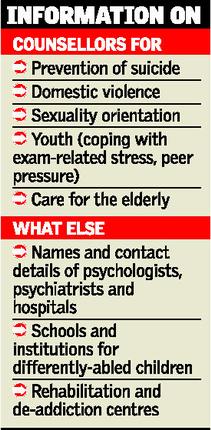
Mental health is a topic rarely spoken about in social circles, making it difficult for those who want to seek help to know where to turn to. To bridge this gap, students of Azim Premji University (APU), Bengaluru, have brought out a directory of mental healthcare professionals in the city.

“One of the reasons behind formulating a directory was the fact that there was no such database for Bengaluru. Friends and relatives often come to us seeking references,” said Benson Issac, faculty, APU, who mentored the students.

Professionals have welcomed the launch of this directory. “With more and more people coming to us seeking therapy, it would be useful to have a directory of mental healthcare professionals,” said P.T. Shivakumar, Additional Professor of Psychiatry, NIMHANS. “People need to have information. Some platforms are offering the information, but I don’t think it is complete.”

The directory was prepared by students of Masters in Development at APU as part of their coursework. “We have tried to provide a complete picture of mental health care. So the directory also lists recreational spaces and wellness centres,” said Saumil Sharma, an MA student.

The team plans to make the handbook easily available to make it accessible to event those who are hesitant to seeking this information.

“We think the directory should be available in cafes and bookshops, workplaces and healthcare institutions,” said Mr. Issac.

Hard copies of the directory were distributed to healthcare professionals recently and will be made available free of cost. A digital version will be uploaded on the university website by Monday.

Fewer options outside

A database of mental healthcare professionals in the State would reduce the burden on institutions in the city. While every medical college in the State has a department of psychiatry, NIMHANS sees several patients from across the State visit the institute before seeking help at the district hospital or the local medical college hospital.

“Sometimes, patients drop out of treatment because they cannot afford to visit a distant centre for the entire duration of the treatment, which can stretch to several months,” said Dr. Shivakumar.

Knowing the options available nearby could help them complete the treatment.

Hidden at workplace

Mental health issues are often hidden at the workplace. People think that the moment someone sees a psychiatrist, they could lose their jobs. “Even government employees fear disclosing this information. Government employees are protected under the Disabilities Act. Even if they have a mental illness, they cannot be easily removed from their jobs,” said Dr. Shivakumar.

To some extent, many companies are supportive, but employees hesitate to reveal their condition, he added.

The directory should be available in cafes and bookshops, workplaces and healthcare institutions.

Benson Issac faculty, Azim Premji University

source: http://www.thehindu.com / The Hindu / Home> News> Cities> Bengaluru / by Staff Reporter / Bengaluru – April 10th, 2016

Nimhans will house India’s 1st adolescent psychiatry centre

India's first adolescent psychiatry centre to open in Nimhans by month-end.
India’s first adolescent psychiatry centre to open in Nimhans by month-end.

Bengaluru :

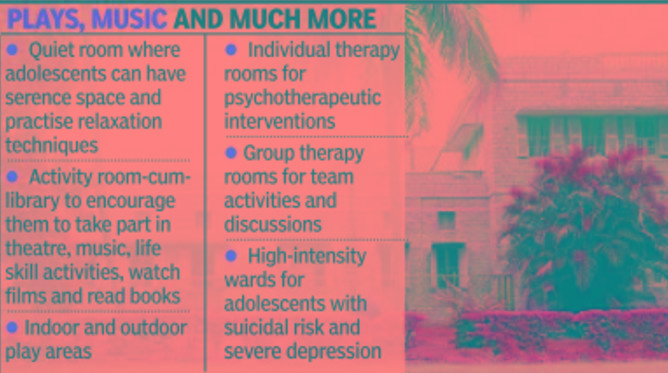
A quiet room where adolescents can meditate; an activity room for theatre, life skill activities, music and films; individual therapy rooms and high intensity wards. These are features of the 24-bed Adolescent Psychiatry Centre (APC) coming up at the National Institute of Mental Health and Neuro Science (Nimhans). When the APC is ready by this month-end, it will be the first adolescent in-patient psychiatry facility in the country.

The APC will cater to the special needs of adolescents (16 to 18 years) with psychotic, substance-use and severe conduct disorders; those who have experienced physical, emotional and sexual abuse; youngsters prone to aggression and violence and those who come for care through the Juvenile Justice Act.

Dr Shekhar P Seshadri, head of the child and adolescent psychiatry department who will be in-charge of the new ward, said they decided to set up the special wing following an increase in number of adolescents coming to Nimhans for therapy. “Adolescents require a separate set-up – different from younger children at one end and adults on the other – as they undergo a transitional period of mental and health development. Their needs are different in terms of privacy, freedom, space for their indoor and outdoor activities, intervention and nature of problems encountered,” he said.

“They require specific interventions such as pharmacotherapy, intensive psychotherapy, group intervention, social skills training, and family-focused intervention and special educational inputs which call for a separate facility in order to make them feel at home within a special comfort zone,” he added.

Adolescents will be admitted for at least two weeks. The period may go beyond three months depending on the nature of their problems and the intervention required. They will be able to have one or two caregivers, usually parents.

“Evaluation and treatment will be provided by multidisciplinary team of psychiatrists, clinical psychologists and psychiatric social workers. The APC can serve as a model for developing much needed facilities for adolescents in other parts of our country,” said Dr Seshadri.

Dr BN Gangadhar, director of Nimhans, said: “The three-storey building opposite to the children psychiatry department is almost ready to operate. We are waiting for a few pieces of furniture and equipment and by the end of April we will call for the inauguration.”

ChartBF01apr2016

Key features:

· Quiet room where adolescents can have calm space and practice relaxation techniques
· Activity room-cum-library to encourage them to take part in theatre, music, life skill activities, watch films and read books.
· Indoor and outdoor play areas
· Individual therapy rooms for psychotherapeutic interventions
· Group therapy rooms for team activities and discussions
· High intensity wards for adolescents with suicidal risk and severe depression.

source: http://www.timesofindia.indiatimes.com / The Times of India / News Home> City> Bangalore / by Sreemoyee Chatterjee / TNN / April 08th, 2016

City architect only Indian at Swiss clock-making competition

Bengaluru:

Dilip Sivaraman, a Benglauru-based architect, believes everything has a soul and requires a human touch. For the same reason, he found love in watches that run mechanically.

“I have always loved the fact that a watch can be powered by you. Till today, I wear the HMT winding watch and it works beautifully,” he said. Little did he know that this passion for watches would make him the only Indian finalist on a global platform for watch-making apprentices.

For Dilip, 38, buying a 1980s clock over a year ago meant revisiting the heritage of clock-making. “I am a purist. So, whatever I buy or have currently in my house is a throwback in time,” said Sivaraman.

However, finding it tough to set the timepiece right, Dilip took to exploring the world of clocks himself. He searched the internet and scoured through online books on clock-making.

Recalling the experience of reading digitized versions of over 200-year-old books, Dilip said, “Most of these were written when technology didn’t exist. While questioning the need for complete traditional clock-making, I decided to integrate the use of technology into it as well.”

Although it took him 18 months, Dilip successfully designed and recreated from the scratch a mechanical regulator clock, which he named Gato.

Last September, while doing a regular follow up on the Academie Horlogere des Createurs Independants (AHCI) website, Dilip chanced upon the AHCI young talent competition for young clock/watch making apprentices. “I showed them the design of my clock while informing them that I’m not a formal student or apprentice. For something that I did out my love for it, they let me complete the project and send in my entry by January,” said Dilip.

Being the only Indian to enter the global competition and emerging among the top ten finalists, Dilip not only received huge support from the watch-making community at Switzerland but also got to meet his icon and renowned high-end watchmaker, FP Journe at the Baselworld watch exhibition in Switzerland this March.

A resident of Murugeshpalya, Dilip has plans to take his passion forward, “I wanted to make a clock that’d last for the next few hundred years and not just perish. At AHCI, I was encouraged to join their community of watchmakers. They have offered to review my work. But, for now, I’m hoping to wind up with Gato and, hopefully, start my next project soon,” he said.

Encouraging Experience

When I started the project I had no idea that it would enter the competition. The clock wasn’t complete and I had to seek an extension of deadline from the event organizers. But when I presented my work at the AHCI competition, watch-makers came up to me asking if I was willing to sell it. That was very encouraging. I hope to see my clock being sold someday and contribute to independent watch making.

source: http://www.timesofindia.indiatimes.com / The Times of India / News Home> City> Bangalore / by Deepika Burli, TNN / April 06th, 2016

New DIY kit could make medical testing easier, more affordable

A device developed by Abbott India Ltd. to monitor blood sugar levels. Photo: By Special Arrangement

Innovation lies in downscaling complicated testing equipment to fit a handheld device

A team from the Indian Institute of Science is developing a handheld medical device, which can measure eight biometric parameters related to blood and urine ( see info box ). It is expected to make testing costs “very affordable” and make monitoring of health statistics more convenient for patients, said the scientists.

This and other developments in the field such as continuous glucose monitoring systems and insulin pumps are changing how doctors and patients are managing diabetes.

“A handheld device to test multiple parameters will definitely help patients as it will reduce the time to obtain results,” said Rakesh Kumar, emergency physician at Apollo Hospitals, Bannerghatta Road.

PathShodh Healthcare Pvt. Ltd., a R&D company incubated at IISc., has developed the device, which is in the prototype stage. The innovation lies in downscaling complicated testing equipment into a handheld device.

Co-founder and Chief Technology Officer Vinay Kumar, who developed the concept as part of his Ph.D. research, told The Hindu , “The motivation behind the product is to transform science for a social mission.”

“Compared to traditional techniques, which are based on optical spectroscopy, we have adopted an electro-chemical technology similar to what is used in glucometers (a device to measure blood sugar levels),” said Navakanta Bhat, professor at IISc., Centre for Nano Science and Engineering, and another founding member of the company.

Apart from glucose, parameters such as HbA1c, haemoglobin and serum albumin cannot be tested by patients at home. The team hopes to change this.

The technology has not been exploited for other medical parameters owing to difficulties in implementation, Prof. Bhat added. “We are trying to make testing very affordable, compared to what is currently available in hospitals,” said Gautam Sharma, vice-president (Business) at PathShodh.

The team expects that the product will become as common as glucometers are today. “We are conducting trials to make sure the accuracy of tests is on par with laboratory tests,” said Mr. Sharma.

Rise in number of diabetics according to the International Diabetes Federation, by 2040, one adult in 10 (642 million) will have diabetes

The federation estimates that India is home to more than 65.1 million people with the disease, compared to 50.8 million in 2010

source: http://www.thehindu.com / The Hindu / Home> News> Cities> Bengaluru / by Staff Reporter / Bengaluru – April 01st, 2016

Giving Voice to the Voiceless

Dr. Vishal Rao | Pushkar V

Losing one’s voice after an operation is very traumatic, and for patients with throat cancer, it becomes an added burden. India witnesses about 25,000-30,000 throat cancer cases each year, out of which at least 5,000 patients stand to lose their voice box due to the advanced stages of the disease.

Thanks to Dr. Vishal Rao, head and neck surgeon at Bengaluru-based HCG Hospital who has come up with a simple and affordable voice box prosthesis, patients can ‘speak’ again and swallow food.

According to Rao, one of the major disadvantages for throat cancer patients is the loss of their voice box when they undergo laryngectomy, the surgical removal of larynx. This is a hollow muscular organ forming an air passage to the lungs and holds the vocal cords.

Rao, a visiting scholar to the Pittsburgh School of Medicine in the US, says, “The larynx houses the vocal cords through which sound is produced. It also lets air travel from the lungs to the mouth. During laryngectomy, when the trachea (windpipe) and esophagus (food pipe) are separated from each other, an opening is created between them which is called the tracheo-esophageal puncture. The device is placed in this opening. Though the patients can eat through their mouths but they cannot speak due to the absence of the voice box.” Once he saw a villager who couldn’t speak for 16 years because he could not afford the imported device. Rao thought, speech and communication are not only the basic tenet to life force but a right to freedom, peace, dignity and justice. “These poor patients were bereft of this essential means of communication owing to costs only,” he says.

Rao realised there was a need for an improved device with a one-way valve enabling laryngectomy patients to speak. In 2013, he started researching on this problem. He and his industrialist friend Shashank Mahesh came up with a technical plan to develop such a device. After working for two years with engineers, physicists, biomedical and material experts, the voice box was built.

Explaining his innovation, the 37-year-old doctor adds, “Regaining one’s voice is much like a rebirth. We have named the artificial voice box as Aum device, because that sound first resonated across the universe. If air passes through the food pipe into the lungs, it will vibrate and create noise, which can be converted into intelligent speech, with coordination from the brain. As food or water should not fall into the lungs, it is a one-way valve device. It weighs about 25 grams and is 2.5 cm long.”

An imported prosthesis is available for Rs 20,000-45,000 and needs to be changed once in six months. “As 80 per cent of patients belong to the poor socio-economic strata, a majority of them are unable to afford the western prosthesis. Our innovation comes as a boon to them. We have priced it at Rs 50, which is less than a dollar at the moment. Presently, there is a clinical study going on at HCG, after which we will take it to other cities, especially to the regional cancer centres where there is a need for such device,” says Rao.

He has used the device on a few patients. Ramakrishna, a 55-year-old watchman from Bengaluru needed to change his imported prosthesis but could not afford it. “When my voice box was removed,  I was given an imported machine, which  I used for two years. I had trouble eating as the food leaked through the device. I am doing better after using the Indian device,” says Ramakrishna.

With more than 20 national and international publications to his credit, Rao has also received many global awards.

source: http://www.newindianexpress.com / The New Indian Express / Home> LifeStyle> Health / by Meera Bharadwaj / March 26th, 2016

Two-Day National Congress of Spiritual Scientists begins

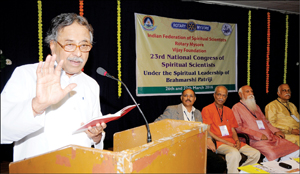
Aravind Jatti, President, Basava Samithi, Bengaluru, is seen delivering the keynote address at the 23rd National Congress of Spiritual Scientists at Rotary School on KRS road here this morning. Others seen are Rotary Mysore President H.S. Venkatesh, Vijay Foundation Managing Trustee Dr. B.R. Pai, Brahmarshi Patriji and Vice-Chairman, Indian Federation of Spiritual Scientists S.K. Rajan.

Mysuru :

The two-day 23rd National Congress of Spiritual Scientists organised jointly by Indian Federation of Spiritual Scientists, Rotary Mysore and Vijay Foundation commenced this morning at Rotary High School auditorium on KRS road here.

Nearly 250 Spiritual Scientists across the country are participating in the meet which will focus on meditation and knowledge of spiritual wisdom and pyramid energy.

Founder of Pyramid Spiritual Societies Movement Brahmarshi Patriji inaugurated the Congress by lighting the traditional lamp.

Delivering the keynote address Aravind Jatti, President, Basava Samithi, Bengaluru said that Culture and Civilisation were two faces of the same coin, the former focussing on inner behaviour and the latter on outer effect.

He stressed the need for a scientific angle to assess spiritualism and added that the concept of meditation was preached ages ago by Basavanna, the unparalleled Social Reformer. He pointed out that meditation was an excellent tool to focus thoughts on any subject.

Several spiritual Scientists will address the gathering.

S.K. Rajan, Vice-Chairman, Indian Federation of Spiritual Scientists, Dr.Jeevandhar Ketappanavar, Expert on works of Kabir Das and Basavanna, Dr. B.R. Pai, Managing Trustee, Vijay Foundation and H.S. Venkatesh, President, Rotary Mysore were present on the occasion.

source: http://www.starofmysore.com / Star of Mysore / Home> General News / March 26th, 2016

Now, information on all govt services just a call away


PatilBF20mar2016

Minister for IT, BT and S&T S R Patil launched ‘Pratispandana Helpline 1800 208 1237’ to provide information and services to the public here on Wednesday’.

The department of IT, BT has set up the centre through its IT service wing KEONICS and it is the first-of-its-kind in Karnataka. It provides all information related to government schemes under one roof, (on toll free number). The centre will be functional from 10 am to 6 pm on all week days (government working days).

On the occasion, Minister Patil said that Chief Minister Siddaramaiah had announced the launch of a helpline in 2015-16 budget. If there is a good response to the people-friendly helpline, similar helplines would be launched in every district in the State. The helpline centre will also facilitate appointments with government officers of different departments in case of public demand. Public can also enquire about the APMC rates, he added.

Information about various hospitals, medical facilities, ration card, Aadhaar, RTI, permits and licences, students’ scholarships, soil cards, services related to education and RTE, will be a call away. The staffers for the service centre had been recruited from Vindhya E-Infomedia private limited, a Bengaluru-based BPO which recruits physically challenged candidates, who will run the helpline, the minister informed.

source: http://www.deccanherald.com / Deccan Herald / Home> State / Bagalkot – DHNS / March 17th, 2016

Bengaluru pals building India’s first driverless car

For Bengaluru techie Roshy John, it was a near-death experience brought about by a sleeply taxi driver that got him thinking.

Chennai:

A few years ago, Bengaluru-based techie Roshy John was one his way home from the airport in a taxi when the sleepy driver almost ran into another vehicle. John took the wheel and drove the driver and then himself home — but the near-death experience got him thinking. Five years later, he and his friends have developed India’s first driverless car — Tata Nano Autonomous.

John, who is practice head, robotics and cognitive systems at TCS, and his 29-member team worked on the software and algorithms in their free time and created a 3D model to test it. The car is yet to be tested on the road, and John is hoping to get permission from the traffic police soon.

In 2011, John purchased a Nano to test the software. “The Tata Nano is considered an engineering marvel. What better car to test Indian technology than on a car made in India?” says John. Across the world, Daimler, Nissan, General Motors, BMW, Google and Tesla are investing big bucks in developing driverless cars .

John used onboard diagnostics, a regular feature in most cars today, and a scanner to monitor the engine. “I had to get data from the car to make it accelerate or slow down based on the RPM,” explains John. Creating an algorithm using a custom cluster (multiple computers), John and his team were able to read all parameters of the engine.

Several other devices were used to extract vitals of the car and its surroundings — wheel encoders to measure the speed of the wheel, multiple lidars (a surveying technology that measures distance by illuminating a target with a laser light) to identify obstacles around the car, HDR cameras and GPS. The data was processed by the software to make the car ‘drive’ like a human.

He attached pedal robots to the accelerator, brake and clutch and connected them to the software. The ultimate test for the team was when the car halted by itself when John jumped in front of it. In May 2012, John’s autonomous car drove the roads of Bengaluru for the first time.

John’s journey wasn’t easy though. They were often interrogated by the police, who got suspicious about the cameras and many computers in the car. To import the scanners, John had to submit a three-page essay to the commissioner of customs before he was given his package. Amidst work responsibilities and project deadlines, John and his team have been at work on the autonomous Nano.

So what is the way ahead for John and his driverless car ? A demo event for people to experience the technology will be scheduled soon. Having invested more than Rs 1 crore on the research, he is testing the technology on other cars. While John has been approached by several auto companies, he has kept the offers at bay. “Right through my career, I have encouraged my team members to experiment with advanced technology. I built this car to satiate my hunger for innovation in robotics and inspire others,” he says.

(This story has not been edited by timesofindia.com and is auto–generated from a syndicated feed we subscribe to.)
source: http://www.timesofindia.indiatimes.com / The Times of India / News Home> Tech> Tech News / by Ranjani Ayyar / TNN / March 16th, 2016

Kshema to honour two clinician scientists

Mangaluru:

To mark National Science Day, the Centre for Science Education and Research and KS Hegde Medical Academy (Kshema) will honour two clinician scientists, Dr VI Mathan and Dr Minnie Mathan, for their contribution to medical research on Monday.

Prof Mathan, who superannuated from Christian Medical College, Vellore, as professor of medicine and gastroenterology and director, has a number of awards to his credit. This includes the Ambedkar Award of the Indian Council of Medical Research for his lifetime contributions to health research. Prof Minnie was the head of the department of gastrointestinal sciences at the college till her superannuation in 1997.

At the event Prof Mathan will speak on the challenges of clinical research and Prof Minnie on integrated research.

source: http://www.timesofindia.indiatimes.com / The Times of India / News Home> City> Mangalore / TNN / February 29th, 2016