Category Archives: Science & Technology

5-day Intl. Herbal Medicine Conference inaugurated

Dr. V. Prakash, Scientist of CSIR - India and Director of Research, Innovation & Development at JSS Mahavidyapeetha, is seen lighting the lamp to inaugurate the five-day international conference on Herbal Medicine organised by NAM S&T Centre and JSS University at Sri Rajendra Auditorium, JSS Medical College, Mysuru, this morning. Also seen in the picture are (from left) Principal of JSS Medical College Dr. H. Basavana Gowdappa; JSS University Director-Academic Dr. P.A. Kushalappa; Director General of NAM S&T Centre (New Delhi) Dr. Arun. P. Kulshreshtha; Vice-Chancellor of JSS University Dr. B. Suresh and Professor-Emeritus of Department of Phytopharmacy & Phytomedicine K. Chinnaswamy.
Dr. V. Prakash, Scientist of CSIR – India and Director of Research, Innovation & Development at JSS Mahavidyapeetha, is seen lighting the lamp to inaugurate the five-day international conference on Herbal Medicine organised by NAM S&T Centre and JSS University at Sri Rajendra Auditorium, JSS Medical College, Mysuru, this morning. Also seen in the picture are (from left) Principal of JSS Medical College Dr. H. Basavana Gowdappa; JSS University Director-Academic Dr. P.A. Kushalappa; Director General of NAM S&T Centre (New Delhi) Dr. Arun. P. Kulshreshtha; Vice-Chancellor of JSS University Dr. B. Suresh and Professor-Emeritus of Department of Phytopharmacy & Phytomedicine K. Chinnaswamy.

Mysuru :

Appealing for a marriage between traditional knowledge and modern science, distinguished scientist of CSIR – India and Director of Research, Innovation and Development at JSS Mahavidyapeetha, Dr. V. Prakash, said that India should innovate new herbal medicinal practices and products by digesting its immense historical-knowledge of herbal medicine. He was delivering the keynote address after inaugurating the five-day international conference on herbal medicine at Sri Rajendra Auditorium, JSS Medical College in city today.

The conference is jointly organised by the Centre for Science and Technology of the Non-Aligned and other Developing Countries (NAM S&T Centre), New Delhi and JSS University, Mysuru. After the first two days (Mar. 30 and 31), the venue of the conference will be shifted to the JSS Campus in Ooty, Tamil Nadu.

Addressing a gathering that had delegates from around 30 countries, Dr. Prakash lauded Mysuru as the ‘Ayur-Valley of the world’ and called for a conjunction of pharmaceuticals with herbal medicines.

He dismissed the speculation of a ‘complete collapse’ of the Asian economy by the year 2020 due to over-population and said that it is not a threat but an opportunity to use the human resource to its best and develop a new herbal supply chain right from pre-harvest till consumption. He also recommended every herb available in the country to be grown like a tea-gardens and make India a ‘healthy nation.’

Speaking about the contemptuous attitude of the world community towards Ayurveda, he said, “In the recent past, there has been an uneasy silence regarding the uses of ayurveda in curing diseases and slowly it is now seen as the best mode of treatment. India and other Asian countries can use this opportunity, research further and develop new products that can help humanity in general. All we have to do is give the herbal medicines a Grandmother’s touch.”

Director General – NAM S&T Centre (New Delhi) Dr. Arun. P. Kulshreshtha and JSS University VC Dr. B. Suresh were the chief guests. JSS University Registrar Dr. B. Manjunatha, Director-Academics and Chairman Dr. P.A. Kushalappa, JSS Medical College Principal Dr. H. Basavana Gowdappa and Professor Emeritus of Department of Phytopharmacy and Phytomedicine K. Chinnaswamy were present.

The third volume of the Compendium on Medicinal Plants was also released on this occasion.

source: http://www.starofmysore.com / Star of Mysore / Home> General News / March 30th, 2015

Students evolve method to extract bio-diesel from decayed coconuts

The students were guided by Ganesh R. Chitnis, head of the department of mechanical engineering, R.N. Shetty Polytechnic, Belagavi, and C.C. Gavimath of Visvesvaraya Technological University. —PHOTO: by Special Arrangement.

A strong urge to innovate, willingness to work in a team, and readiness to welcome new ideas have helped students of R.N. Shetty Polytechnic to evolve a technique to extract bio-diesel from decayed coconuts.

The sixth semester students of diploma in mechanical engineering came out with a process to extract bio-diesel using chemicals such as methanol and sodium sulphate. They were guided department head Ganesh R. Chitnis and C.C. Gavimath of Visvesvaraya Technological University

Byproducts

Byproducts such as oil cakes and glycerine could be used for fertilizer and cosmetics industries, said principal S.P. Hiremath here on Wednesday.

He said the production of bio-diesel was the need of the hour as it was eco-friendly and relatively cheaper and could be made available at Rs. 34 a litre. It could be used on any diesel engine and for generating electricity in a cost effective way. Riyaz D. Maskewale, Manjunath Udameeshi, and Milton Carvalho had taken keen interest to complete the project, he said.

source: http://www.thehindu.com / The Hindu / Home> News> National> Karnataka / by Vijaykumar Patil / Belagavi – April 02nd, 2015

Gadgets make teaching Science simple and fun

Bengaluru:

The Science class in Anthony Claret School in the city is abuzz. Children are learning about photosynthesis. They have in their hands a gadget that beeps when it touches a leaf where photosynthesis is on. Every time there is a beep, there is a round of cheer around. Teaching of Science in some classrooms is changing with efforts to explore the subject better. A Bengaluru-based startup is helping in this endeavour in several schools in the country today. Started by a couple of IIT and IIM graduates, who were tired of their MNC jobs, Experifun designs and develops low cost Science gadgets that can be used in classrooms. The gadgets, uncomplicated and non-flashy, can be used by teachers to explain concepts faster, make learning interesting and inculcate the habit of questioning in children. “We studied in a government school in a small Bihar village. We hardly had any solid teaching in Science there. We know what will work in a place like that. We want the product to reach such schools,” said Rakesh Kumar, founder. The two-year-old startup has created 22 gadgets on various Science topics for classes 6 to 10 and will add six more soon. The team comprises 10 people, including professionals, who have worked in universities abroad. An IIT-IIM graduate, Rakesh has 15 years of work experience in corporate sector. Vivek Pandey, the cofounder, is an electrical engineer from IIT and has 13 years of experience. “When I interact with schools, I find teaching is completely text-based with little practical knowledge. For a lesson on light, the lab uses gadgets like lens that are 15 years old. We decided to create something innovative,” said Rahul Kundu, a team member.

“Often, schools get very expensive gadgets but don’t let children touch it. Also, they need to go to a lab to make anything practical oriented. We wanted to create something portable and light so that it can be easily taken to the class, handled by children and lets teachers complete their syllabus on time,” said Rakesh. “The children get to use the gadgets. It is simple and safe,” said Bindu Pillai, a Science teacher at the Anthony Claret school. Pearson Affordable Learning Fund (PALF), an education fund run by UK-based education company Pearson has invested in the startup. The company has also tied up with government schools in Odisha and Madhya Pradesh.

INSTRUMENTS OF CHANGE

Insulator-Conductor

When you hold a battery, does current flow? You will tend to think it doesn’t because we associate some action with flowing current, like seeing a bulb light up or hearing a bell ring. Pressing an Insulator-Conductor gadget to a material, students can check if it is a good conductor or not.

Charge Sensor

A common example of charge transfer/static electricity is rubbing hair with a balloon and then picking up paper pieces with the balloon. But one can’t see the charge with other materials. Charge Sensor gadget enables that via light.

Plantell

It allows students to see plants make food in real time. They can interact with the plant by changing the amount of light falling on it and get instant feedback with the gadget.

MenDIYleev

The periodic table is not a well-loved topic in school because students have to memorize the order, properties and trends in it. Using some basic math and common sense, students can create their own table using MenDIYleev product, and experience firsthand what the chemist Mendeleev did when he first created it.

Digestion kit

It allows students to visualize the digestive system: where the food gets broken down, who does it and why it needs to be done. They can see what food is actually made of and break it down themselves.

source: http://www.timesofindia.indiatimes.com / The Times of India / Home> City> Bengaluru / by Sruthy Susan Ullas, TNN / March 30th, 2015

Technology, entrepreneurship take centre stage at IIMB convocation

As many as 592 students graduated at the 40th annual convocation of the Indian Institute of Management, Bangalore, on Friday.— File photo

Emphasis was on technology and entrepreneurship at the 40th annual convocation of the Indian Institute of Management, Bangalore (IIMB) here on Friday. As many as 592 students graduated during the ceremony.

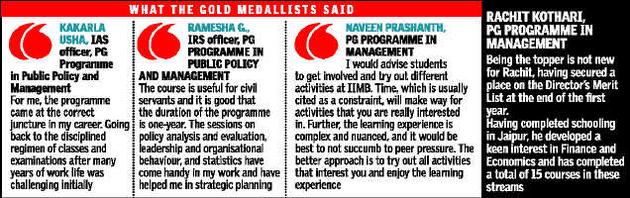
Seven students take home gold medals at the annual convocation. They are: Kakarla Usha, Ramesha G.,Rachit Kothari, Naveen Prashanth, Debaprasad Chatterjee, Saurabh Agarwal and Anupam Nanda.

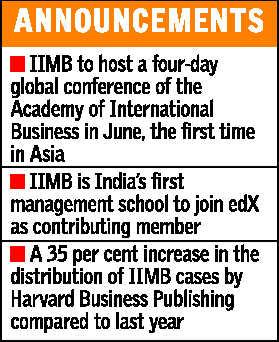
AnnouncementsBF29mar2015

Setting the mood for the evening, Kiran Mazumdar-Shaw, chairperson, Board of Governors, IIMB, urged the graduates to “think like entrepreneurs, not just managers.”

“We are living in times of rapid change where the global business landscape is transforming radically. If you look at the Fortune 500 companies’ list, you will see that 86 per cent of them have either disappeared or dropped off the list,” she said.

“Many B-school graduates seem to have been infected by the entrepreneurial energy emanating from today’s e-commerce firms,” Ms. Shaw said.

Referring to a survey on B-schools, she said one in every nine students from the 2013-15 batch prefers to join an e-commerce firm or a start-up after graduation as compared to just one in 19 students in the 2012-14 batch.

GoldMedallistsBF29mar2015

Similar to Ms. Shaw’s train of thought on technology and globalisation creating a world that is a “boundary-less bazaar of equitable opportunities”, IIMB Director Sushil Vachani said the first important area of focus for the institute has been an increasing emphasis on globalisation of its programs, research and impact. “This year, we launched new international field courses and dramatically raised the number of PGP students who travelled abroad for study,” he said.

Devi Prasad Shetty, Chairperson, Narayana Group of Hospitals, who delivered the convocation address, offered a unique plan to provide health cover for people in the country – paying some part of their mobile bill towards the cause.

“India has 850 million mobile phone users. If each one of them can pay Rs. 20 a month of their mobile bills, we can provide health insurance to all,” he said. Comparing this to the Yeshasvini insurance scheme of the State government, he said, “Ten years ago, the government accepted the proposal to collect Rs. 5 per month from every farmer to provide them health insurance.”

source: http://www.thehindu.com / The Hindu / Home> News> Cities> Bengaluru / by K.C. Deepika / Bengaluru – March 28th, 2015

Oracle picks Bengaluru boy Thomas Kurian for top job

Boy from Bengaluru, Thomas Kurian, 48, has been elevated as president of Oracle responsible for software development.

Bengaluru :

Boy from Bengaluru, Thomas Kurian, 48, has been elevated as president of Oracle responsible for software development, making him perhaps the single most senior executive in the company after co-CEOs Safra Catz and Mark Hurd. Kurian, who joined the $38-billion US company in 1996, was executive VP (product development).

Indians are now at top levels in many IT firms – the notable being Satya Nadella, CEO of Microsoft, and Sundar Pichai, head of most major Google products. A recent entrant is Bhaskar Ghosh, management committee member and group chief executive of technology delivery at Accenture.

Kurian is an alumnus of Bengaluru’s St Joseph’s Boys High School. He holds a BA in electrical engineering from Princeton University, where he graduated summa cum laude (highest distinction). He has an MBA from Stanford University where he was an Arjay Miller scholar. He has served as an advisory member on the boards of several international venture funds and software companies. In Oracle, he has held various product management and development positions.

An Oracle India spokesperson confirmed Kurian’s elevation, but did not respond to a question whether any other executive had been similarly promoted. On Oracle’s website, the highest designation among executives below the CEOs is executive vice-president. If no other executive has been promoted, then Kurian becomes the only president in the company.

Oracle chairman Larry Ellison wrote an email to employees to announce Kurian’s elevation. “I’m pleased to announce that Thomas Kurian has been promoted to president of Oracle, responsible for software development. He has a long track record of developing suites of software products that go to achieve pre-eminent success in the marketplace. His first major engineering effort was developing the Oracle suite of Fusion Middleware,” he wrote. Oracle Fusion Middleware is a business innovation platform for the enterprise and the cloud that enables enterprise to create and run applications maximizing IT efficiency.

Ellison, in his email to employees on Thursday, said Kurian was focusing on engineering products required to transition software technology to the Oracle Cloud. “The transition is going well with the Oracle cloud sales starting to take off…The world can get a glimpse of how well Thomas and his team are doing their job,” he said.

source: http://www.timesofindia.indiatimes.com / The Times of India / Home> Tech> Tech News / TNN / January 09th, 2015

Tribute : Remembering Dr. R.M. Varma of NIMHANS

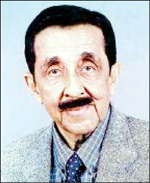
DrRMVarmaBF27mar2015

He gave to society an asset that will be cherished for all times to come

by Krishna Vattam, Senior Journalist

Dr. Raja Martanda Varma, Founder-Director of NIMHANS (the Bangalore-based National Institute of Mental Health and Neuro Sciences), who passed away on March 10 at the age of 94, was a Karma Yogi and truly symbolised the noble concept of ‘Vaidyo Narayana,’ a patient who sees Narayana, God, in a doctor, the reliever of pain and suffering.

He lived upto the Hippocratic oath he had taken at the time of his graduation that requires a new Physician to swear upon a number of healing Gods, to uphold specific ethical standards. “If I faithfully observe this oath (so goes the other important aspect of the Oath), may I thrive and prosper in my fortune and profession in the estimation of posterity, or on breach thereof, may the reverse be of my fate.”

In his long life and profession, it was the first aspect of the oath, faith, that governed his conduct, and fortune, here in Dr. Varma’s view had been ‘fortune’ to have been blessed not with materialistic wealth, ‘fortune’ to have been blessed with an opportunity to serve the society.

Dr. Varma did not visualise science and spirituality as different streams in the approach to life but he saw the convergence of these two streams and as the Founder-Director of NIMHANS, he pioneered the now globally accepted holistic approach for mental and neurological disorders. It is no exaggeration to say, and it is true, that if NIMHANS enjoys as a pre-eminent position as Asia’s best and one among the leading mental health and neurological sciences teaching hospitals in the world over, it was because of the total dedication of Dr. Varma in the functioning of the Institute.

How conscientious and devoted to his duties Dr. Varma had been can be appreciated from an incident as narrated to me by a close friend of Dr. Varma. It appears that after a long time Dr. Varma wanted to take his wife Dr. Malathi Varma for an outing and was driving in Bengaluru. On the way, he noticed a pedestrian being knocked down by a vehicle and the injured was rushed to NIMHANS. Dr. Varma drove back to the Institute telling his wife he will just find out the condition of the patient and asked her to stay in the car itself. Once he was there, he found that the patient needed immediate surgery. After operation, it appears, he came out and asked one of his assistants to find out who was in the car, unaware of the fact for a moment that he had brought his wife in the car.

In the early years of the Institute, which was known as ‘Hucchara Aspatre’ during those days, when the facilities available there were meagre, a patient urgently needed blood transfusion. The doctors went in a car to Avenue Road, brought the donors and saved the patient’s life. The market economy driving the forces and corporate sectors ruling the roost, with greed being the sole aim and deep erosion of values, how many such persons with such concerns can one find in the society at large.

Dr. Varma, hailing from Travancore Royal Family, was a prolific speaker and while I was the President of the Mysore District Journalists’ Association in 1970s, an independent entity and was not affiliated to Karnataka Union of Working Journalists’ Association then, I wrote to him to deliver the Venkatakrishnaiah Memorial Lecture that was instituted by another great freedom fighter and Editor of Sadhvi with an endowment. (I do not know why our Journalists’ Association has lost sight of the endowment and not continued the lecture).

It was a memorable evening and it was here on the occasion the philosopher in him found an expression to expatiate on the limitation of science to perceive certain aspects beyond our comprehension and dwelt on meta-physics and forged a grand convergence of science and spirituality.

Journalist K. Balakrishnan, who profiled Dr. Varma for The Hindu in 2003, summed up the persona of this legendary doctor thus: “Multi-faceted would prove to be an inadequate definition to describe Dr. Varma. A gifted surgeon, relentless researcher, teacher par excellence, exceptional organiser, able and proven administrator, a practical visionary, adventurer, courageous, willing to venture into hitherto untrodden realms, philosopher, artist, a giant among men and above all, self-effacing genuinely caring human being. Dr. Varma is all this and more. He best symbolises the concept of the ideal man who always aspires to better the lot of others without consideration to self.”

I wonder ‘kahan gaye vo log’ (where they have all gone).

[email: krishnavattam@gmail.com]

source: http://www.starofmysore.com / Star of Mysore / Home> Feature Articles / March 22nd, 2015

ISRO scientists recall their student days at NIE

Three alumni, part of MOM feted

R. Shashishekar, Deputy Project Director of MOM, H.S. Venkatesh and R. Narayan, Group Directors, who were felicitated during the valedictory of techNIEks-2015 at the NIE Diamond Jubilee Indoor Sports Complex on Manandavadi road here yesterday, are seen with other dignitaries.

Mysuru :

Three scientists from the Indian Space Research Organisation (ISRO), who are the alumni of The National Institute of Engineering (NIE), Mysuru, were felicitated by the Institute for their significant role in the launching of Mangalyan as part of the Mars Orbiter Mission (MOM).

Deputy Project Director MOM R. Shashishekar, Group Directors SR SPS H.S. Venkatesh and R. Narayan are the alumni who were honoured by NIE during the valedictory programme of techNIEks-2015 held at the NIE Diamond Jubilee Indoor Sports Complex, Manandavadi Road here yesterday.

The three scientists graduated from NIE with a bachelor’s degree in engineering. The institution has provided many professionals to ISRO of whom 5 are working on the MOM.

During a technical session on MOM, Shashishekar said that India has sufficient resources in space technology and delved on the benefits of MOM. He also said that space projects were highly expensive and hence they can’t afford to do any mistakes. He also added that the propellants used are very risky while containing them is a challenge. He further added that the job they do is hazardous and that they accept the challenge without any fear. Venkatesh went down the memory lane and recalled his days in the college.

NIE Principal G.L. Shekar addressed the gathering and said that the institute is proud of its alumni for contributing to the nation’s success and added that felicitating them would motivate budding engineers.

President of NIE Managing Committee Srinath Batni presided over the function.

Secretary NIE Managing Committee S.K. Lakshminarayana was present.

source: http://www.starofmysore.com / Star of Mysore / Home> General News / March 15th, 2015

Arun Pudur: From Bengaluru to billions

ArunPudurBF17mar2015

Recently, Wealth-X listed Indian businessman Arun Pudur as the world’s 10th richest individual under 40; top on the list was Mark Zuckerberg of Facebook.
Arun Pudur, whose net worth is estimated at over four billion dollars, is the CEO of Celframe, which makes world’s second most popular word processor after Microsoft, among other things. Based in Kuala Lumpur, Arun Pudur has diversified into several sectors including mining and real estate.

In an exclusive interaction with Tarannum Khan of Deccan Herald, the reclusive billionaire, who says he does not give interviews as they intrude into his personal space, opens up.

He talks about his humble beginnings in Bengaluru, the milestones in his sensational success, the city which made him, his parents and the qualities that propelled him to the top.

A shorter version the interview appeared in the Panorama section of the Deccan Herald.

You were born in Chennai, when did you shift to Bengaluru?

When I was in my sixth standard, my family decided to move to Bengaluru as my father spent nearly seven to eight months in a year there. When we came to Bangalore, we stayed in Rajajinagar and then moved to Basaveshwarnagar before buying a place in HBR Layout. I stayed there till 2003, when I shifted overseas.

When I lived there, there was nothing in HBR Layout. Now I am told it’s a central part of the city.

When you were born, your family felt, you had a great destiny to fulfil…

My father always used to talk about us being Tirupathi Iyengars, one of the three families, who were the high priests at Tirumala. Though we never managed the temple, we always knew greatness was within us.

My mother always used to say that I was the lucky one in the family. After I was born, my father’s career skyrocketed. He passed away just three months ago. My mother always instilled in me that I was born for greatness.

Your parents wielded a considerable influence on your growth…

My father Sri Ranga, was a cinematographer, who was known for his work in the 16 mm movies, which typically tend to be artsy and low-budget movies. He had built quite a reputation in Kannada and Tulu industries and thanks to him I knew everyone in the industry – be it Vishnu uncle, Ambareesh uncle, even Dr Rajkumar and his sons.
I remember when Shivrajkumar stopped his car on a road and touched the feet of my father. I was shocked that my father, who was just a normal guy at home, commanded that kind of respect in the industry.

He did produce a few movies and television serials. But I asked him to retire early as the movie industry is a really tough business and every Friday fortunes are made and lost. I didn’t want him to be stressed out.

My mom was a housewife, who was my teacher as well. She was a disciplinarian, who made sure that we did our chores ourselves, including washing clothes and utensils.
But she was there 24×7 for me and now, I understand, the value she brought to my life. She taught me the way I should grow.
Now I have chefs, cleaners and a dozen people helping me run the house. But my mom used to do everything on her own.

I have a brother as well, who runs his own consulting business.

While stuyding in Bengaluru, you seemed to have stayed away from well-known schools…

When we moved to Bengalurufor my sixth standard, it was already August. So my father had to scramble to find a school.

Though I was supposed to go to National School in Rajajinagar, the cut off date to transfer had passed. So I joined St Anns Matriculation School. I had never been in a co-ed before, so it was a shock when I saw girls sitting in the classroom.

I had to learn Kannada as well. I think in my entire life it was the only time I failed in a subject.  I am very proud to say that in a matter of six to seven months, before the end of annual exams, I had mastered Kannada, and scored my usual, between 80 to 95 per cent.

The choice of college was also unconventional…
In SSLC, my results were fantastic, so I could have picked any course or college. Typically for Bangalore, everybody was pushing me to take science. But the entrepreneur bug had already bitten me and I wanted to do commerce instead of science.

While I was looking at St Joseph’s and other colleges, my mother wanted me to come home for lunch everyday as we were not allowed to eat outside.

So, I joined the Nijalingappa College in Rajajinagar, which was nearby. Though everyone said it was notorious, the year I joined, a new principal took over and he turned my college years into the strictest time of my life.

Literally, we were not allowed to do anything at all; only in the last year, that is when I was in the third year of B com, we could have a college day.

I was pretty studious and attendance was very important for me. I would sit right on the front bench everyday. College days are the best memories one has in a life and my longest-lasting friends are from this college.
You have been away from Bengaluru for a long time; what are your memories of the city…

It brings joy whenever I think of my days in Bangalore. The City was extremely cold until early 2000. Coming from Madras in the ’80s, where it was scorching hot, I took to wearing sweaters in Bangalore.

Whenever I travel overseas, and whenever I wear a sweater, the first thing that comes into my mind is Bangalore. If anyone asks me where I am from, my immediate answer is not Malaysia, not Chennai, but it’s Bangalore, India.

I remember the time with my friends when we used to ride in our kinetic Honda and drive down to Bannerghatta or the Tumkur road.

And of course, the one-by-two coffee or tea… Though I was not allowed to have tea or coffee at home, when I was out with my friends, we used to have by-two tea, and I think that’s a very Bengaluruthing to have.

There were some bad experiences as well; when we were staying at Rajajinagar, the Cauvery riots happened. We saw how the National School was looted.

I have not visited Bengalurufor a very long time. My parents went back to Chennai as that was where they were born and brought up. But I am in touch with few of my closest friends through Whats App and Viber.

What turned you into an entrepreneur?

I think curiosity, the zeal to solve problems and take on challenges. If you ask any of my school or college mates, they will tell you that I used to look forward to examinations, which may sound very funny, but that’s true.

I never wanted to work for anybody. In my entire life I have spent just one year working for a company in Jayanager. It was a training company. When I had joined the company they had a turnover of five to six lakhs a year. When I left after nine months, I had brought up the turnover to one crore a year.

I was working to open franchises for this training centre. That guy had promised to pay me for every few centres set up, but he did not keep his word.

I have seen top CEOs of multinational companies, who retired with very little to their name. They were running 120 and 130 billion dollar companies and now may have a personal fortune of 30 to 40 million dollars. And that was what I didn’t want to be.

You began your career at the age of 13 in a garage, fixing kinetic Hondas…

We opened the garage for a guy who was working for a shop near our house; he became a friend of us. He was from Tamil Nadu and could not speak Kannada. As we could speak Tamil, though we are Telugus, he became close to us.

He told me there was good money in garage. So we coaxed our mother and borrowed a few thousands to fund the garage at Rajajinagar, just a stone’s throw away from National school. But he disappeared after five or six months and we were stuck with the garage.

When I began my career in the garage, we had no training.  There was no Google at that time or any no manual. I had just had observed how this guy used to fix bikes and picked up from there.

But whenever a bike or a scooter used to come with a problem, I was on my own.

We used to solve problems on the fly and became good at that. I really loved it. I could open and fix back the engine, almost the entire vehicle, in about one hour and fifteen minutes, without any specialised tools.
Sai scooter garage became famous and even scientists from ISRO started coming to us. That is where I think I got the taste of business. That is where I learnt sales, marketing, customer handling, problem solving, managing human resources and financial management.

Running the garage was not a financial necessity to our upper middle class family. But I still ran it till my first year or second year PUC.

I would come back from school, finish homework and then open the garage. On Saturday and Sunday we were open full. It helped me not to get into wrong company, wasting my time, or you can say, chasing girls.

My priority was to show much business I could generate, how much money I could give my mother. My mother, who managed the finances of the house, would keep all the money. We would consider ourselves lucky to even get 10 rupees from her. But I loved the business. That’s why I went into it.
But we decided to close the garage because of my studies; my father wanted me to perform very well in college.

But you started breeding dogs after that…

From my aunt in Chennai, I found out about breeding dogs, and she gave me a Boxer to kick start my business. I started breeding boxers and Rottweilers. I have delivered hundreds of puppies, cut their umbilical cord and taken care of them. Though there was no formal training, I learnt how to manage them. Any dog lover would tell you that a dog will not allow anyone near the puppies unless she trusts you with her life.

Then I used my marketing skills to sell the puppies for up to Rs   20,000, which was good money in the mid ’90s. I was in this business till the end of my final degree.

You started Celframe after graduating; how difficult were the early days…

We opened the first office of Celframe at Lalbagh road. Prior to it, I had done one venture with my brother, which had failed.

Funding is a problem when you are not a big brand or don’t have a big family name behind you. Because of my age, I worked with wrong people, who took advantage of my naivety. I lost quite a bit of money – my own money and also the money of some of my initial backers. But I bounced back and it made me understand people better.
What were the major turning points in your career?

Everything was a turning point – opening the garage, breeding dogs, starting a technology company. But the biggest jump or spike in my revenue happened – if you consider money to be metric of success – when we released our first product called Celframe office.

It is now considered to be the Number 2 office suite in the world by way of sales. Not many people know that Microsoft office makes more than 60 billion dollars annually. When I launched my office suite, companies like Sun had failed in this product category. Even IBM’s Lotus notes had not made a big impact. Coral is still there but its sales are very small.

It is said you were one of the few people the Redmond giant could not smother…

It was more of a David and Goliath kind of situation. Being a monopoly Microsoft used every tool in its arsenal to bring us down. They made sure that no Original Equipment Manufacturer like Dell, HP or IBM would ever buy our products and pre-load them on their PCs.

I will not use the word bully but that is the word everybody uses when it comes to dealing with American tech firms. They use patent, money and media to bring down any small company that may look like a threat.

How did you survive that?

In this industry, partners and distributors get one or two per cent on every deal they make. I decided to give away 40 percent of my revenue and make them partners in success. We treat customers with respect and customise the way they want.

I focused my business more on the public sector as private companies cannot bully the government.  We managed to implement our product in several governments in Asian and African regions.

We made it a policy to promise a 50 per cent reduction in the tech cost of customers using our products. That is, if they are paying 100 million dollars to a competitor, we would deploy our software for just 50 million. We would increase the price over three to four years and by this time they would have realised that we were a fantastic company to work with. We also supported them very well.

That was the biggest hurdle I crossed in business. But now with the mobile ending the old monopolies, things are moving forward amazingly.
You have also made you mark as an investor…
I have diversified into gold mining, coal business, oil and gas, real estate, venturing with top companies. I am looking to build a casino and start an airlines in South Africa.

It’s said that my fortune is four billion dollars but with my diversification it has grown nearly five to six times in the last two to three years.

I am a very cautious investor. You want me in, you need to show me why should I invest money. I would like to know the entire story and the people before I do business. I turn away from a deal if the pressure is too much for me to invest money into it.

I invest only if I can get a majority control on that company. I don’t like to be a minority partner as I am very passionate about what I do. I get involved in minute details from the start to the end. The running of the company is done by CEOs whom I trust. But I get involved in major decisions. If a problem needs solving, I am there in the front. I don’t like to sit back and let my people take the hit.

You say your upbringing taught you the value of money

There was a time when I used to buy jets like buying candies. I had eight private jets of my own. I once tried to sell one of my jets and found that I had lost about 40 percent of what I had actually paid. Then I realised that these toys, homes or yachts, do not add much value to you.

I took the hit, got rid of jets and houses, and reinvested them back into my businesses. I also turned whatever jets and yachts I was left with, into a rental business.

This lesson, appreciating the value of money, was taught by my parents. The strongest reason for my success was the foundation I had when I was young.

What are your future plans?

I am excited about several ventures we are pursuing. We started a technology company called Browsify corporation a few months ago. We are setting up one of the largest mines in South Africa.
I am looking for partners to bring Celframe products to India. It’s ironical that most of the governments use my product, but the Indian government does not. India is still reliant on the investments coming from the US. China did a phenomenal job supporting local companies such as Alibaba.
Though I am known globally for my technology company, very few people know that I have a group company called Pudur group. We are going to make the information public sometime later this year.
You left Bengalurufor Kuala Lumpur, when the whole tech world was coming here…   
I was brought here in 2002 or 2003 by someone I knew in Bangalore. Though the business with him didn’t work out, and I lost quite a bit of money, I loved the way the government was moving over here.

The quality of people, though more expensive than India at the time, was very good. The access to banking was much better; if I needed money, I could always rely on my bank without having my father to co-sign as age was not a barrier.

As I grew, I was given tax exemptions. I have not paid tax in the past eight to nine years. I do pay income tax, though a small amount.
Government is straightforward; if you need an approval, it gets done on time. Malaysia compared to Singapore is a bit slow, corruption does exist here as well.

The support from the government is phenomenal. As it is a small country, they act pretty fast. They can change rules very fast in the interest of the nation.

source: http://www.deccanherald.com / Deccan Herald / Home> Panorama / by Tarannum Khan, Bengaluru / DHNS / March 07th, 2015

Wipro hires ex-TCS executive as COO

Global software major Wipro Ltd on Monday appointed former TCS honcho Abid Ali Neemuchwala as its group president and chief operating officer from April 1.

WiproMPOs17mar2015
“Abid will head service lines of global infrastructure, business application, business process and advanced technology solutions,” the company said in a statement here.

Abid headed the business process services (back office operations) of Tata Consultancy Services (TCS) and held leadership positions during his 23-year career in the IT bellwether.

“Abid brings invaluable experience with his track record of building and scaling businesses. I am confident his understanding of technology and expertise in IT & BPS will help power our businesses to greater heights,” Wipro chief executive T.K. Kurien said.

A chess buff, Abid is an electronics & communication engineer from NIT, Raipur in Chhattisgarh and has masters in industrial management from IIT, Mumbai.

“I am honoured to join Wipro, a company with a rich heritage of technology innovation and unflinching commitment to values. I look forward to contributing towards the company’s next phase of growth,” he said from Dallas in US’ Texas state, where he lives with family.

Abid will also head business operations, geographies comprising continental Europe, Africa, Latin America, strategic engagements, advisor relationships and marketing function.

source: http://www.deccanherald.com / Deccan Herald / Home> Business / IANS / Bengaluru – March 16th, 2015

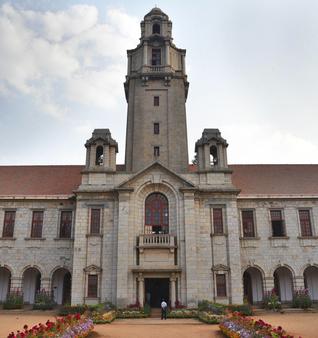
State bags five Gandhian Young Technological Innovation awards

Three of the five awards bagged by the State were for projects by Indian Institute of Science students.— file Photo: Bhagya Prakash K.

The haul this year is more than all previous years combined

With five awards — including three for students of Indian Institute of Science — Karnataka occupies top position among those chosen for the Gandhian Young Technological Innovation (GYTI) award.

Over 1,700 nominations

The fourth edition of the science awards received over 1,700 nominations, covering more than 50 technological specialisations. Eventually, 17 projects were selected for the award for their ability to address social, environmental or technological problems, or the potential to impact a pressing national need.

Bengaluru, with four projects, emerged first when comparing cities in the list, and IISc. had the largest share when comparing institutions.

The haul this year is more than the awards given to institutions here cumulatively over the last three years. In 2014, just one project from the State was selected, while in 2013, it was two. The first edition saw no award coming the city’s way.

This year, Shiva Kumar H.R., Medical Engineering and Language Engineering Lab, IISc., was selected for developing a user-friendly tool that converts printed books in any language to Braille. A project to evaluate blood pressure and arterial compliance with a simple device won the six-member team, represented by Sharath Umesh from the Department of Instrumentation and Applied Physics, IISc., the 2015 award.

Amit A. Vernekar, working at the Department of Inorganic and Physical Chemistry, IISc., was recognised for his work on ‘Novel nanozyme technology for combating oxidative stress related disorders’ that may lead to cures for ageing-related issues, cardiac disorders and several neurological conditions, including Parkinson’s and Alzheimer’s diseases.

The development of a new antibiotic that fights drug-resistant bacteria won Venkateswarlu Yarlagadda and his five-member team from Jawaharlal Nehru Centre for Advanced Scientific Research (JNCASR) the award.

A project to monitor wounds and analysis through image processing on mobiles, proposed by Abhiraj Gupta from Manipal Institute of Technology, Manipal, was the otheraward-winner.

The awards come with a purse of Rs. 50,000, and were recently given away at Rashtrapati Bhavan, New Delhi.

source: http://www.thehindu.com / The Hindu / Home> News> Cities> Bengaluru / by Mohit  M.Rao / Bengaluru – March 15th, 2015