Category Archives: Science & Technology

DNA Centre in Dharwad is now autonomous

Renamed as Kidnar; principal researcher Pramod Gai has been appointed as director of Kidnar with immediate effect

The Karnatak University, Dharwad, (KUD) has the privilege of housing the first-ever and the only DNA testing centre in the state on its campus. The existing DNA Research Centre (DNARC) in the university has now been given the status of an autonomous institution by the state government and has been renamed the Karnatak Institute for DNA Research (Kidnar).

Chief minister Jagadish Shettar  said following persistent demand from the departments of home, medical education and health for setting up a DNA testing unit in the state, the Karnataka government in a Cabinet meeting on February 8 decided to accord autonomous status to the DNARC of Dharwad and renamed it Kidnar. It also decided to appoint principal researcher Pramod Gai as director of Kidnar with immediate effect and transfer the funds granted to DNARC to Kidnar account.

Now the departments like home, medical education, health and family welfare can take the help of this facility as the DNA testing can be done at this Centre instead of sending the samples to CCMB (Centre for Cellular and Molecular Biology), CDFD (Centre for DNA Fingerprinting and Diagnostics), Hyderabad. “This will help complete the investigation into crimes quickly. Depending on testing centres outside Karnataka was causing unusual delays in investigation,” said a senior IPS officer.

The centre has already standardised the techniques of DNA testing from blood, blood stains,tissue, hair, saliva, nail etc. It will have six more scientists and laboratory assistants.

source: http://www.business-standard.com / Business Standard / Home> Economy & Policy> News / by BS Reporter / Chennai-Dharwad, March 20th, 2013
Dr.M.S. Kempegowda is IMA Mysore President

IMAbf19oct2014

Mysore :

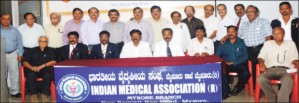
The Annual General Body Meeting (AGM)of Indian Medical Association (IMA), Mysore Branch, was held recently at I.M.A House on New Sayyaji Rao Road here.

The following office-bearers were unanimously elected for the year 2014-2015:

Dr. M.S. Kempegowda, President; Dr. G. Marulasiddappa, President – Election (2015-16); Dr. P. Puttaswamy and Dr. S.B. Prakash, Vice-Presidents; Dr. B.N. Ananda Ravi, Hon. Secretary; Dr. M. Shivanna, Joint Secretary; Dr. Suresh Rudrappa, Treasurer.

Executive Committee Members are: Dr. Dhananjaya, Dr. Sujatha S. Rao, Dr. Y.M. Shiva Kumar, Dr. Chandrasekhar Sosale, Dr. M.R. Shashi Kumar, Dr. Suleman Shamshad Mohammed, Dr. D. Parameshwara Naik, Dr. T.K. Rangaswamy and Dr. N. Chandrabhan Singh.

State Council Members are: Dr. C. Rajan, Dr. N. Chandrashekar, Dr. S.P. Yoganna, Dr. K.B. Gurumurthy, Dr. P. Sathya, Dr. H. Vasudev Naik, Dr. K.H. Basavaraj, Dr. G.R. Jagannatha Babu, Dr. Zakir Ali Khan, Dr. B.R. Anand, Dr. C. Mahadevu and Dr. Murthy.

Central Council Members are: Dr. B.V. Rajagopal, Dr. S. Prasanna Shankar, Dr. B. Ramananda Kumar, Dr. L. Devegowda, Dr. Capt. G.S. Venkatesh, Dr. S.M. Prabhulingaswamy and Dr. A. H. Hareesh, according to a press release from Dr.B.N. Ananda Ravi, Hon.Secretary, IM A, Mysore Branch.

source: http://www.starofmysore.com / Star of Mysore / Home>General  News / Monday ,  October 13th, 2014

Lack of care causing damage to museums: Expert

Mysore  :

With an objective to protect and conserve cultural heritage of the country, the Regional Conservation Laboratory (RCL), Mysore, a regional unit of National Research Laboratory for Conservation of Cultural Property, Lucknow, commenced 10-day workshop on care and maintenance of museum objects at its premises in Siddharth Nagar on Monday. Mysore division additional commissioner M R Ravi inaugurated the workshop.

Speaking on the occasion professor of history and archaeology at the University of Mysore N S Rangaraju, stressing on the importance of conservation of monuments, said authorities need to utilize the facilities in a proper manner to conserve valuable monuments in the state. Though there are numerous experts in the field they are unrecognized, and thus the administration has failed to maintain monuments properly.

B V Kharbade, chief, RCL, Mysore, stressing on the importance of workshops said many people, who maintain museums lack the required knowledge. Internal pollution causes more damage to museums than external pollution. Improper lighting system and humidity are the major threats to monuments. Besides, faulty material used in maintenance too causes huge destruction, he pointed out. The objective of the workshop is to identify factors that cause deterioration of museum objects and to find solutions to prevent them, he said. The workshop will focus on areas such as care, maintenance, handling, storage and display of museum objects.

source:http://www.timesofindia.indiatimes.com / The Times of India / Home> City> Mysore / TNN / October 07th, 2014

We’ve inspired many startups, Kris Gopalakrishnan says

Kris-GopalakrishnanBF13oct2014

Leaving Infosys was something we have been preparing ourselves for many months. So I got into it in a programmed manner. But I will miss the whole life revolving around Infosys.

We were all very close and I can best demonstrate that with this anecdote. Last week, I went to visit a friend in hospital, and Murthy and Shibu came in exactly at the same time. We hadn’t planned it at all.

I had lots of memorable moments in the company. The most memorable was when I was CEO and growth came back strongly in 2011. It had gone down to around 5% (during recession) and many had begun to ask if it was the end of the Indian IT services industry. But when growth returned, it felt good to say ‘it’s not over’.

Another unforgettable moment was in the mid-1980s, when we created a ‘store and forward’ solution for telegrams in India, which was used by the department of telecom. I was in charge of the project. Till then, telegrams involved sending text information in Morse code and somebody translating that into English. Ours was a hardware-software solution that involved keying in the text into a computer, like an email, sending it to an electronic switch that would route it to the right destination.

But the customer was only one – DoT. We didn’t see a large market and we felt it was not our cup of tea. So we sold it to a small Bangalore company around 1989-90. But the project was interesting because we had written the entire software and operating system. I don’t know, but this may have been the solution that was used till telegrams were discontinued last year.

I had the privilege of representing the entire global business as head of the Business Action for Sustainable Development at the Rio Earth Summit in 2012. I was the co-chair of the World Economic Forum early this year. Infosys, with the rest of the Indian IT industry, has transformed the image of India around the world, transformed the image of Indian professionals, creating huge opportunities for them. IT services account for 25% of India’s exports, 6% of its GDP. About 10% of Bangalore’s population is directly employed in IT, and many more indirectly.

I’m sure we have inspired many startups. I will continue to focus on that space. We have already started a Startup Village in Kochi and Vizag. We will start one in Kozhikode later this month.

I’ve been putting money into brain research. There are two big reasons for that. One is that India has a large ageing population, and for a poor country, old-age issues like dementia and Alzheimer’s will present a huge challenge. Solutions found outside India will not be affordable. We need to find them here.

The second is that the next disruption in computing will come from our understanding of the brain. It’s called brain-inspired computing. The current model of writing software may not extrapolate, because it will require too much of maintenance. Nobody programmes the brain, yet it keeps learning. India shouldn’t miss the emerging age of brain-inspired computing.

(As told to Sujit John)

source: http://www.timesofindia.indiatimes.com / The Times of India / Home> City> Bangalore / by Kris Gopalakrishnan, TNN / October 13th, 2014

Heart Protective Fruit : Mathulunga for Chandikya Yaga

DrBhatBF10OCT2014

by Dr. Sathyanarayana Bhat

Principal, Government Ayurveda Medical College, Mysore

During Dasara occasion, to please the Goddess Shakthi, a concluding ritual takes place in many sanctum sanctorum. As part of this ritual, at the end a fruit is sacrificed in the fire. It is Madala fruit, also called Citron in many parts across the globe. Ganapathy Naranga is the Malayalam name to this fruit, which is used in the Ganapathy Havana. Citron was called as Mathulunga in Sanskrit and Charaka Samhitha, oldest medical literature of the world, included it as Cardio protective fruit among the prime 10 drugs. It is note- worthy that the cultivation practices of citron were common in our country. We have such ample evidences.

The great philosopher and thinker of India, Basavanna, who hailed from black cotton soil of our State has citron connections in his family. Madalaambike is his mother’s name which refers to this fruit. Incidentally, my maternal great grand-parents hail from a tiny hamlet near Puttur, DK district. It is called Maapala, which relates to the Tulu name of Citron. Unfortunately, such divine and heart saviour fruit has almost disappeared from our grove as well as minds. Nowhere in the market, we find the fruit.

Theophrastus, Greek Philosopher of third century B.C. says about citron like this. “The fruit is not eaten, but is very fragrant, as is also the leaf of the tree; and the fruit is put among clothes, it keeps them from being moth-eaten. It is also useful when one has drunk deadly poison, for when it is administered in wine; it upsets the stomach and brings up the poison. It is also useful to improve the breath, for if one boils the inner part of the fruit in a dish or squeezes it into the mouth in some other medium, it makes the breath more pleasant.”

“The seed is removed from the fruit and sown in the spring in carefully tilled beds, and it is watered every fourth or fifth day. As soon as the plant is strong it is transplanted, also in the spring, to a soft, well watered site, where the soil is not very fine, for it prefers such places.” This was the cultivation details found in the writings of Theophrastus.”

From ancient through medieval times, the citron was used mainly for medical purposes: to combat seasickness, pulmonary troubles, intestinal ailments, and other disorders. The essential oil of the outermost, pigmented layer of rind was also regarded as an antibiotic. In Ayurvedic system of medicine, the fruit juice is still used for treating conditions like nausea, vomiting, hyper acidity, excessive thirst and morning sickness. Pandith Gopalacharlu is a big name of the proprietor of the past century, who was making the sherbath of Citron. Even today this product is sold over the counter as a popular remedy to cure morning sickness during pregnancy. It is Mathulunga Rasayana. The fruit juice has a high content of Vitamin C and used medicinally as an anthelminthic, appetizer, tonic, in cough, rheumatism, vomiting, flatulence, haemorrhoids, skin diseases and weak eye sight.

There is a rising market for the citron in the US for the use of its soluble fibre found in its thick peel. India can certainly explore such market. Sustainable cultivation and value addition is the need of the hour. Will we keep the citron to posterity?

[Dr. Sathyanarayana Bhat can be contacted on Ph:0821-2444701 or Mob:91-09448081005 or email:sathyanarayana.bhat@gmail.com]

source: http://www.starofmysore.com / Star of Mysore / Home>Feature Articles / Friday, October 05th, 2014

Mangalore’s KMC hospital enters Asia Book of records

Mangalore :

KMC Hospital Mangalore, part of Manipal Health Enterprises, created history on Sunday by entering the ‘Asia Book of Records’ after completing the Asia’s largest Human Heart Beat Simulation. The sound of being alive resonated like an echo when over 2,000 emulated the sound of heart beat to signify ‘World Heart Day’.

“The team tapped their thighs 72 times per minute, creating the sound of a healthy heartbeat-‘Lub dub’ for five minutes in the simulation process and have created a mark by entering the Asia Book of Records. I would like to congratulate each and every one who was involved in creating this world record” said adjudicator Sunita Dhote, who judged KMC on behalf of Asia Book of Records.

After creating the record, as per the tradition, KMC Hospital conducted the Heart Day Run for the 10th consecutive year in partnership with Event Partner MRPL. Athlete Clifford Joshua was the torch bearer for the event and led the awareness campaign in the form of a rally which started from TMA Pai Convention Centre and reached all the important city junctions, namely-MG Road – PVS Circle – Bunts Hostel Circle before reaching KMC Hospital, Ambedkar Circle for the valedictory function.

Sharmila Mandre, Kannada actor said: It is a great feeling to be part of history and better still when it contributes to the greater cause of the society. I think there can never be a more overwhelming response to put forward an awareness message than this.”

Speaking at the occasion, Dr. Anand Venugopal, Medical Superintendent, KMC Hospital said: “There is not a better sound than that of a beating heart. This year, to celebrate a healthy heart we took up this initiative to set a record of the largest Human Heart Beat Simulation. We are proud to take the brand name in the record books that would be etched forever. It is truly a landmark event for us.”

source: http://www.timesofindia.indiatimes.com / The Times of India / Home> City> Mangalore / by Stanley Pinto, TNN / September 28th, 2014

Manipal cardiologist made Fellow of American college of cardiology

Manipal :

Dr Tom Devasia, Professor in the Department of Cardiology, Kasturba Hospital, Manipal has been made Fellow of the elite panel of American College of Cardiology (FACC).

The certification and citation will be officially presented to him at the Annual Convocation of the College on March 16, 2015 in San Diego, California. “Kasturba Hospital is proud to have Dr Devasia on their panel of fulltime consultants in Interventional Cardiology. We congratulate him on his achievement,” said Dr (Col) M Dayananda, Medical Superintendent and COO, Kasturba Hospital, Manipal.

Every year, the American College of Cardiology recognizes selected cardiologists from around the world, based on their long term contribution to the field of cardiology, and inducts them as a Fellow of American College of Cardiology (FACC).

American College of Cardiology is the foremost professional society representing heart specialists in the US and throughout the world. Based on their outstanding credentials, achievements and community contribution to cardiovascular medicine, those who are elected to Fellowship can use Fellow of the American College of Cardiology (FACC) as a professional designation. Fellows of the ACC generally are adult cardiologists, paediatric cardiologists, cardiovascular surgeons, researchers and academicians, or specialists in a cardiovascular-related field.

Candidates are selected to the elite panel as FACC based on letters of sponsorship from other Fellows or faculty who attest professional competence and commitment to excellence that are at par with the best international standards. The ACC supports members on cardiovascular research, training, accreditation, board certification, licensure, medical practice etc; across the entire spectrum of cardiovascular care issues.

source: http://www.timesofindia.indiatimes.com / The Times of India / Home> City> Mangalore / by Stanley Pinto, TNN / October 08th, 2014

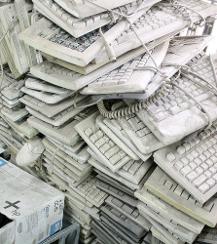
College girl launches e-waste venture in Hubli

Local administrations in India have neglected e-waste disposal and Vijayalaxmi Patil, a student of Deshpande Center for Social Entrepreneurship in Hubli, launched her own firm, e-vision.

Hubli :

A Master of Social Entrepreneurship (MSE) student has taken the initiative of collecting electronic waste from shops and households to prevent environmental hazards which arises when it’s burnt or unscientifically disposed.

Local administrations in India have neglected e-waste disposal and Vijayalaxmi Patil, a student of Deshpande Center for Social Entrepreneurship in Hubli, launched her own firm, e-vision. Her classmates Prasanna Hegde, Jitin Sunny and Sandesh R have joined her in it.

Vijayalaxmi told TOI she was worried about proper disposal of scrap like TVs, old CDs and wires which had accumulated at home. “I browsed the web and learnt that it’s a serious concern. I was disappointed to know that no administration has done anything in this regard in North Karnataka. Finally, I started e-vision with the support of my friends,” she said.

Prasanna Hegde said when they visited electronic shops, owners encouraged them. “It was difficult to convey some people as they thought we earned a lot from their e-waste,” he said.

Jitin, who knows how to asses the value of old electronic gadgets, said people aware about e-waste have been donating voluntarily.

Sandesh R said they’ve been given authorization by 4R Recycling, a company in Bangalore, to collect e-scraps and send them for recycling. “Jindal Aluminium of Bangalore is our client to provide e-waste,” he said.

Sumangala Lingaraj Angadi, a homemaker who gave about 70kg of e-waste, appreciated the students’ move. “I was clueless about disposal of TV, mixer, etc and I didn’t want to throw it in landfills,” she added.

Vijayalaxmi said her team has collected about 700kg of e-waste in the past 2 months. “We want to have a recycling unit in Hubli by next year. We also want to involve traditional scrap pickers,” she said.

Vijayalaxmi appealed to citizens to join hands in her venture. She can be reached at: and 8867323134.

source: http://www.timesofindia.indiatimes.com / The Times of India / Home> City> Hubli / by Sangamesh Menasinakai, TNN / September 28th, 2014

Multipurpose fruit KOKAM: Saviour of your heart

DrBhatBF07oct2014

by Dr. Sathyanarayana Bhat

Principal, Government Ayurveda Medical College, Mysore

The fruits of the Kokam can be used for cooking. It can be explored as best industrial commodity. Nevertheless, it shall also be used as best medicine to save your heart and stomach from ailments. Garcinia indica is the scientific name of the fruit. African and Asian evergreen forests have over 200 species of Garcinia.

Mangosteen is the well-known fruit from this genus across the globe. Among these, Garcinia indica is endemic to Western ghats, particularly, right from Gujarat belt up to Kanyakumari ranges. An evergreen tree with shiny oval leaves, it reaches up to ten meters tall. Garcinia indica is found in forest lands, riversides and wastelands. These plants prefer evergreen forests, but sometimes they also thrive in areas with relatively low rainfall. It is also cultivated on a small scale.

Of late, few attempts are made to grow this useful tree as avenue tree on roadsides. It has a beautiful crown and canopy too. Best selection for coffee estates too as it does not require irrigation, spraying of pesticides or fertilisers.

The peel of fruit is dried under sun to get aamsul or kokam. It is used as a slightly sour spice in recipes from Goa, Karnataka and Maharashtra. Even star hotels serve a dish named as Kokam De Soup. Kokam peel yields a peculiar flavour and blackish red colour. It is a preferred substitute for tamarind and tomatoes in curries. It is the best choice among these. It is also used in cuisine from Gujarat where it is frequently used to add flavour and tartness to dhal, for flavour balance, and parts of South India. The syrup prepared out of its pulp is used to make kokum sherbet. Kokum squash or kokum concentrate is used in preparing a drink, which is bright red in colour. It improves digestion and cools the body during summer. The dried peel can be used round the year.

Sixty years ago, few studies conducted at IISc., Bangalore, reveal that the seed butter of Kokam fruit, is a wonderful wound healer. Burns and foot crack can get better with mere few applications. This is the major industrial potential of the tree. Many studies reveal the anti-cholesterol as well as potential heart tonic effects are not so popular.

Charaka Samhitha, 3000 years old text on Internal Medicine designates Vrikshamla (Kokam) and Amlavethasa (another Garcinia sp) as best heart tonics. Both are best food as well as medicine. During this Dasara, let us decide to go for herbal. Let us make our heart strong.

[Dr. Sathyanarayana Bhat can be contacted on Ph:0821-2444701 or Mob:91-09448081005 or email:sathyanarayana.bhat@gmail.com]

source: http://www.starofmysore.com / Star of Mysore / Home> Feature Articles  / Wednesday, October 01st, 2014

Country’s First Electric Bus Launched in Bangalore

BMTC launched an electric bus at Shantinagar Bus Station on Thursday; Right: A view of the interiors | Sudhakara Jain

The Bangalore Metropolitan Transport Corporation (BMTC) introduced the country’s first electric zero-emission bus in the city on Thursday.

Although the bus has been in Bangalore for over a month now, it was officially launched by Transport Minister Ramalinga Reddy after getting the required permissions from the Transport Department.

The bus will run on a trial basis for the next three months. During this time, it will operate along various routes, beginning with one from Majestic to Kadugodi that is likely to cost `80.

Plans are also afoot to run the bus along the airport routes. The charging point for the bus is at the Volvo depot at Majestic.

“We will study whether the bus is economical and if it can function efficiently in the city. When the battery is fully charged (six hours), the bus can run for about 250 km, which is ideal for BMTC. However, this needs to be tested. We also need to see how it fares on various roads in the city and which routes are best suited to operate the bus,” said BMTC managing director Anjum Parvez.

Transport Minister Ramalinga Reddy said that though the bus is expensive, it is likely to be a good deal as a long-term investment.

“The bus costs about `2.7 crore and this is expensive. But this is one bus in the entire country. Once the demand for the bus goes up and more people express interest in purchasing it, the rates are likely to come down. Moreover, the research and development wings of various bus manufacturers are working on this and it is some only time before the initial cost of the bus is reduced,” he said.

When asked if the state government would be willing to share the cost or offer subsidies, Reddy said, “We will consider various options if the bus is found to be suitable for the city. At present, it is on a three-month trial and following this, a decision will be taken on whether or not to purchase the bus,” he said. He added that what was important was that pollution levels would be brought down by using electric buses, hybrid or CNG-operated buses. The bus, manufactured by Build Your Dreams (BYD), was brought to India by Utopia Pvt Ltd. At least 5,000 such buses are operational in countries such as the United States, Netherlands, Switzerland and some European countries.

GOING GREEN

Zero emission

No oil required

Costs Rs 2.7 crore (Volvo Rs 88 lakh)

Fare from Majestic to Kadugodi – Rs 80

Runs for 250 km with 6 hours of charging

source: http://www.newindianexpress.com / The New Indian Express / Home> Cities> Bangalore / by Express News Service- Bangalore / February 28th, 2014