Category Archives: Science & Technology

Over a cup of tea : Remembering those who do not remember


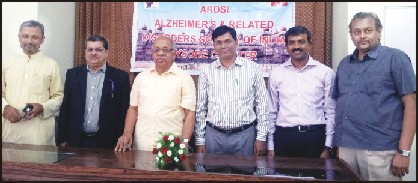
From left: Ln. S. Arun Kumar, Hon. Secretary, ARDSI, B.S. Jayaraman, Chairman, Prof. C.K.N. Raja, chief guest, Dr. H. Joshi, Vice-Chairman, Dr. Murali Krishna, Advisor and Mehul J. Patel, Patron.

by Dr. K. Javeed Nayeem, MD

Yesterday morning I was one of the handful of people from the city who gathered at the F. K. Irani Hall of the Rotary Club for the inauguration of the World Alzheimer’s Month by the Mysore Chapter of the Alzheimer’s and Related Disorders Society of India (ARDSI). Most of the others present there were Pharm D students from the Sarada Vilas College along with members of a few families which had someone afflicted by the disorder. Noted jurist and scholar, Prof. C. K. N. Raja, well-known not only for his eloquence and the depth of his knowledge but also for his astute sense of humour, was the chief guest and as expected, he did full justice to what was expected of him as the principal speaker.

Unknown to most of us, even as we step out of our thirties the neurons or nerve cells that make up the most important component of our brain begin to die steadily. We lose about a million such cells every day for the rest of our lives and while a million is indeed a very big number, there is still no cause for alarm as this loss is only a part of the normal aging process. But in Alzheimer’s disease, which is a slowly progressive degenerative process and which is the commonest form of dementia, the neurons begin to die at a more rapid rate than normal, resulting in loss of memory and other cognitive functions. There is no cure for the disease, which worsens as it progresses, and eventually leads to death.

It is estimated that on an average it affects 1 in 85 people globally and so with this alarmingly high rate of prevalence we do not have to look far and wide to find a household which has someone suffering from it. Therefore, this is a malady that now only needs a seeing eye and an understanding mind. It was first described by German Psychiatrist and Neuro-Pathologist Alois Alzheimer in 1906 and was named after him. Forgetting is perhaps one of the greatest gifts of nature to man because it helps us to lose track of our losses and sorrows. Most of the things that we remember are from among what the mind keeps recalling and refreshing in the process of using its vast information bank. The rest of the things that we are exposed to during our passage through this life are like the trees and telegraph poles that fly past outside the window while we are on a train journey. They are never a part of the landscape when we arrive at our final destination.

But there are exceptions to this rule and we can never know what sometimes appeals to our minds to be considered worthy of being remembered permanently. Pierce Harris, American clergyman and writer has rightly said that “Memory is like a child walking along the sea shore. You never can tell what small pebble it will pick up and store away among its treasured things.”

But imagine a situation where a person who should have remembered all the things that are most essential to lead a normal life, like his or her own name and address and the names and faces of his or her relatives is simply unable to do so. What if one is not able to remember everyday things like what one is supposed to do at the dining table or the wash basin or the bathroom? What would be your fate if you are just not able to recognise your children or your spouse with whom you have been living for years under the same roof? What if you are simply unable to fathom who you are and what you are supposed to do with the world around you?

Very early this morning I was faced with a slightly similar situation when I sat down to organise some resource material about the nuances of human memory for this article. From my rather unmanageable and as yet unorganised repository of books, when I pulled out and dusted the November 2007 issue of the National Geographic which had an excellent article on memory; ‘Why we remember and why we forget’, I was aghast to find that someone had simply torn away all the twenty-four pages that I was looking for, perhaps while it had its short stint in my clinic waiting room! Only then did I realise why it seemed much slimmer than it should have been!

Most often, patients of Alzheimer’s who cannot remember who they are or what they are supposed to do in the world around them suffer in silence. Not so much from the insensitivity of their loved ones as from their overwhelming ignorance. As things stand today, most of us do not have the basic knowledge about the disease and what we can do about it. Even among the most educated class of people the gaps or lacunae in the knowledge about Alzheimer’s and how it can be managed are not unlike the lacunae in the minds of the sufferers themselves. This is because there has so far not been sufficient community effort to educate the people about the magnitude of the problem and how it can be managed.

It is here that the role of bodies like the ARDSI becomes important. The Mysore Chapter of this Society, which is managed by a team of eminently qualified and unusually dedicated individuals, plans to hold many public awareness programmes during the course of this month. And, it is by strengthening them and supporting their activities that we can ensure that we remember all those who cannot remember who they are. And, who knows? One day we may be the ones who stand with blank stares where they now stand. To illustrate the sensitivity with which the problem needs to be managed, I would like to narrate a small story which I read as a child and which has thankfully remained imprinted on my mind over the years.

An elderly man’s wife had become completely bedridden due to Alzheimer’s and was admitted to a hospice for terminal care. The husband used to visit her unfailingly every day, with a bunch of flowers or a get-well card. He would place these on the table near her bed and holding her hand he would talk to her softly for hours, telling her how much he loved her and trying to remind her about the happy days they had spent together. The wife who was certainly beyond any help would simply stare at him or the ceiling with no sign of recognising him or understanding what he said.

A friend who sometimes accompanied him once pointed out to him that the whole exercise seemed pointless. He said “I don’t think she knows who you are now. Why do you waste your time trying to talk to her for so long every time you visit her?”

The husband replied, “Yes, you are right. She perhaps does not know who I am, but I still know who she is.”

[To reach the ARDSI please contact Mr. H. Joshi, Vice- Chairman, Mob: 96633-73701 or Mr. Arun Kumar, Secretary on Mob: 98451-16188].

e-mail: kjnmysore@rediffmail.com

source: http://www.starofmysore.com / Star of Mysore / Home> Feature Articles  / September 05th,  2014
‘Moolika Dasara’ to spread awareness on Medicinal Plants

MedicinalBF09sept2014

Mysore :

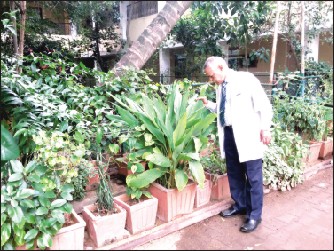
To spread awareness on medicinal plants, Department of AYUSH together with Government Ayurveda College has launched ‘Moolika Dasara’ throughout the district.

Planting Sapling: About 30,000 saplings of over 50 medicinal plants like Bringaraja, Madhushalini, Nelli, Vandagala and Brahmi will be planted in all the taluks of the district.

‘Mane Maddu’: Women participating in Mahila Dasara will be groomed on making ‘Mane Maddu’ (home medicine) using medicinal plant to treat common ailments.

Makkala Dasara: Medicinal plants will be on exhibit at Kukkerahalli lake premises where students will be educated on medicinal plants by Ayurveda Medicine students. A quiz to identify medicinal plants will also be conducted for the students.

Raitha Dasara: Farmers visiting Raitha Dasara will be given medicinal plant saplings free of cost to spread awareness on them.

Mini garden: Institutions and public in city will be encouraged to develop mini garden of medicinal plants.

Awareness Rally: An awareness rally as part of ‘Moolika Dasara’ will be taken out throughout the city by students of Ayurveda College with distribution of leaflets on medicinal plants.

Guests arriving for Dasara programmes will be greeted with a sapling of medicinal plant instead of a bouquet, according to sources in AYUSH Department.

source: http://www.starofmysore.com / Star of Mysore / Home> General News  / September 04th,  2014

Dharwad consultant only Indian doctor on anti-doping team

Hubli :

Here’s another feather in the cap of the twin cities. A consultant in sports medicine from Dharwad will be the only medical officer from India to represent the Asian Football Confederation (AFC), the governing body of Asian football and one of the six confederations making up FIFA, at its under-16 championship to be held in Thailand from September 6-21.

Dr Kiran Kulkarni, 42, who has won the pride of place, says he will be only the sports doctor from the country in the contingent of AFC, which has its headquarters in Malaysia. “I will oversee medical matters and MRIs for age determination as well as implement the anti-doping programme in the tournament.”

He said 16 Asian countries will participate in the tournament. “I will have to monitor the medical staff and doctors from these countries to ensure that there are no doping cases during the course of the tournament.”

Kulkarni, however, is hopeful that allegations of doping will not tarnish the game. Compared to other games, there are very few incidents of doping among players, he claims. “Over the last two to three decades, few complaints of doping have come to light.” He recalls Argentinean midfielder Diego Maradona testing positive for doping as one of the few cases in football’s history.

During AFC’s tournament, doping tests will be conducted at random on about two players from different countries during matches. If players whose urine samples test positive for the presence of a substance used for doping claim innocence, then B-sample tests will be conducted. These samples will be sent to the International Olympic Committee’s laboratory.

If these test positive as well, then the players face jail time. Such players face punishment from six months to two years in jail.

Kulkarni says the team of %medical doctors at the tournament will work to ensure that all things go as planned with regard to medical amenities. “There is a possibility that in the under-16 tournament, the ages of some players vary. To ascertain that players are under the age of 16, an MRI age verification test will be conducted on each player.”

source: http://www.timesofindia.indiatimes.com / The Times of India / Home> City> Hubli / Basavaraj Kattimani, TNN / August 23rd, 2014

City Professor for Intl. meet at Johannesburg

ProfKantappaBF06sept2014

Mysore :

Prof. C. Srikantappa, UGC-Emeritus Scientist at DoS in Earth Science, University of Mysore, will be attending the International conference on “IMA-1024 – Delving Deeper – Minerals as Mines of information” to be held from Sept. 1 to 6 at Johannesburg, South Africa.

This conference will be held once in four years in different parts of the world and nearly 1800 Geologist from across the world will be attending this meeting.

Prof. Srikantappa will be presenting two of his research papers — One on the presence of CO2-rich and alkaline fluids in Precambrian high-grade metamorphic rocks from Satnur-Halagur area in Karnataka and another paper is on the role of alkaline fluids (NaC1 and KCL) which are responsible for U-mineralisation in Gogi, northern Karnataka which is going to be one of the biggest U-mining area in India as per AMD-DAE.

Prof. Srikantappa is the Secretary of Mineralogical Society of India with its headquarters at DoS in Earth Science, University of Mysore. He is also working as the Council Member of International Mineralogical Association (IMA) representing Asia. He is representing India at IMA General Body meeting at Johannesburg.

Prof. Srikantappa is one of the well-known Geoscientist in the country, working on the origin and evolution of oldest rocks belong to Precambrian period in south India. He is the only teacher from University of Mysore who had been awarded the prestigious Alexander-von-Humboldt Fellowship from Germany and UNESCO Fellowship at UK. He has guided 15 Ph.D students and has published nearly 120 research papers. He has presented several research papers at International conferences held at France, Germany, UK, USA, Italy, Spain, Australia and Sri Lanka.

Prof. C. Srikantappa was instrumental in establishing a permanent K-SET center for lectureship and UGC-NET center at University of Mysore in the 2010.

source: http://www.starofmysore.com / Star of Mysore / Home> General News / Septmeber 01st,  2014

City’s science whizkid Shreesha designs ‘ E-Cart ’

EcartBF02sept2014

Mysore :

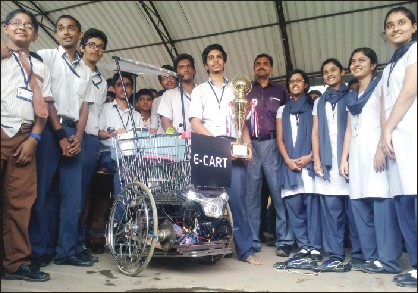
City’s science whiz kid R. Shreesha, a II PUC student of Vijaya Vittala Pre-University College, won the National-level Amateur Scientist Competition organised by PES University in Bangalore recently.

Shreesha won the award for his project ‘e-Cart — The multipurpose Hybrid Vehicle.’ Previously, he had won the second prize for designing a Self-Sustained Wheel Chair last year.

Speaking to Star of Mysore, Shreesha said that the e-Cart was designed for Senior Citizens and the Physically Challenged to carry out their tasks at various levels independently and efficiently. “The e-Cart can be used at the malls as a shopping cart/wheelchair, but also a swift vehicle ‘On Road’ with its most inventive features,” he said.

Shreesha was assisted by M.V. Krishna, Ajaya R. Shankar, T.V. Varun, Himanshu Vikram Sharma and V. Adithya.

Shreesha is the son of R.S. Ramaswamy, a retd. Principal of Mahajana High School and S. Srimathi, a home maker. The Management and Staff of Vijaya Vittala PU college have congratulated Sreesha on his achievement.

The features of the e-Cart include:

• Dual motor front wheel drive.

• Most comfortable rider seat with auto ignition and spacious fold features.

• Walk-along Mode.

• Intelligent auto-drive.

• Body massager seat

• Anti-collusion cruise control.

• Built-in phone/laptop charger

• Built-in billing & payment unit.

• Darkness sensing.

• Temperature controlled cabin.

• The safest of its kind to users with automatic fire extinguish system.

source: http://www.starofmysore.com / Star of Mysore / Home> General News  / August 27th,  2014

Voices from the grassroots : Measuring development …..

DrBalasubramaniamBF25aug2014

by Dr. R. Balasubramaniam

Being in the development sector, I have been fascinated by the evolving obsession of practitioners, donors, academia, and the community in measuring and evaluating. The tools, methodologies and the people involved in this activity are getting better and better. Everyone seems to be so preoccupied and engaged that many consider a programme a failure or bad, if some acceptable form of measurement is not undertaken. I have written numerous proposals and implemented many projects in different sectors of health, education, and community development that I have found myself questioning not just the validity but also some of the metrics and the fundamental premise that drives these measurements. I am not saying that measurements by themselves are wrong; all that I am trying to point out is that we need to understand the programme being measured, the competence of the people measuring, the tools deployed and the metrics of measurement and more importantly the context — before one indulges in this activity.

I would like to explain this a little more clearly with a personal example. I first came to the tribal area in the forests of Heggadadevanakote in Mysore district of South India in 1987 and began running a small dispensary. Obstetrics being one of my favourite subjects, it was only natural that my focus was on maternal health and mortality. Being concerned by the high maternal mortality in the area, I started exploring how one could bring it down. Public health knowledge and practice has established maternal mortality to be an important indicator of health of a community and one always believed that this indicator could measure health outcomes.

It was also the time when everyone including the WHO and the Government of India focused heavily on maternal health and safe motherhood initiatives. The whole health sector was being pushed towards Institutional deliveries and we also got caught up in this excitement. Over the next many years we campaigned for Institutional deliveries and ensured that we created adequate facilities for safe childbirth at our hospitals. We even had a World Bank funded project in 2001-02 to ensure improved maternal and child health outcomes amongst the tribals in the area.

Sometime ago, my wife Bindu, an obstetrician who has been long associated with the programme, was remarking how she was seeing a huge positive change amongst the health seeking behaviours of the tribal women. She told how challenging it was 20 years ago to motivate the tribal women to have Institutional deliveries but now the women sought the hospital on their own. Institutional deliveries, which were non-existent when I first came to the area, had grown to 40% by the end of the World Bank funded project in 2002.

Today, virtually every tribal woman in the area comes to our hospitals to deliver their babies. Our RCH programmes have been written about and studied; World Bank considers the RCH project that they funded us as one of their best; Public Health practitioners and academicians are impressed with the falling maternal mortality and improved health outcomes. It is indeed very reassuring when so many people and institutions with their sophisticated tools and methods call us a public health success.

In 2009-10, I had taken a year away from our projects and this gave me the space, the energy and the willingness to re-look critically at all that we had been doing. I was assessing what it was that I first came to the tribal areas to do and how I had been doing it. Using the metric of improved health outcomes and the falling maternal mortality and morbidity rates; we were definitely an unqualified success. But was this the right metric to measure our work and intent. Can this metric capture everything that exists in this ecosystem? How honest would it be if we did not try and engage ourselves in outcomes that unintentionally emerged because of our programmes, but were not given any attention, as they were not readily visible or worthy of measurement? Or is it that we were ignorant of the metrics that one needed to deploy?

In our intent to reduce the maternal mortality by increasing institutional deliveries, had we not unintentionally taken away the community’s ability to cope and manage this natural phenomenon without any dependence on people or a system outside their community and tradition? We today have a generation of young women who have mostly delivered their babies in our hospitals but who have neither the knowledge, nor the attitude or the skill-sets to ensure that they can continue their century-old tradition of delivering children at home. What if we changed the metric to building the capacity and competence of the community to have cost effective and rational health practices that did not need an expensive health care system that they could neither afford not sustain with their resources.

Isn’t building the capacity and competence of communities to ensure a workable health system that they can run and sustain with their own resources and abilities more important than running a sophisticated health care programme that needs doctors, nurses and managers to come from faraway cities. Well, the metric of measuring what is important for communities is what the development sector needs to focus on rather than what is easily measurable or merely the programmatic and managerial aspects. And the metric needs to be something that attempts to capture what is happening in the whole eco-system rather than just the piece that is the most evident.

[e-mail:drrbalu@gmail.com]

source: http://www.starofmysore.com / Star of Mysore / Home> Feature Articles / August 20th, 2014

Cupping therapy eyes its niche in city

Cupping therapy in progress

Alternative form of medicine with Chinese origins gets its own association for promotion

Cupping therapy, an alternative form of medicine with Chinese origins, is trying to find its space in the city. The International Cupping Association of India was officially inaugurated on Tuesday, and Dr Badruzzama Nadeem, a practising Unani physician who is the moving force behind it, has plans to take it to Chennai, Bhubaneswar, and Patna by the end of next month.

Cupping is an ancient practice where heated cup-like devices are used to create suctions on the skin. These suctions are believed by practitioners to not only detox the body but also help relieve pain in the spinal cord, neck, and shoulder region.

Dr Nadeem explained, “When suction is applied, blood from a radius of three centimetres from where the cup is placed is sucked into the bump.” Practitioners believe that ‘impure blood’ gets collected in one place and blood circulation gets better once the cup is released. They also hold that the method detoxifies the body.

Cupping can be broadly classified into two types — dry and wet. While dry cupping is practised using suction cups made of silicone, rubber, or fibre where the air is sucked out, wet cupping follows the same process except for the little incision made in the bump for ‘impure blood’ to trickle out — a procedure known as controlled bleeding.

A third form of cupping is fire cupping. Here, a cotton ball is soaked in 70 percent alcohol which is then held by a pair of forceps and lit. The lit cotton ball is then placed into the cup and removed as soon as it is placed. Practitioners say the process removes oxygen from inside the cup. It is then placed on the skin quickly to create a small amount of suction as the hot air inside the cup cools.

Dr. Nadeem founded the association, which was inaugurated by Health Minister UT Khader, in a bid to increase awareness. “At the moment there are not more than 65 practitioners in Bangalore,” he said.

INEXPENSIVE, AND HOT

Cupping as an alternate form of therapy is yet to catch on in Bangalore, despite being inexpensive. Treatments can range anywhere from Rs 100 to Rs 500 for dry cupping. “Since wet cupping requires experts, it can range from Rs 200 to Rs 1,500. At the moment we get six to seven patients a day, most of them due to word of mouth,” explained Dr Nadeem.

source: http://www.bangaloremirror.com / Bangalore Mirror / Home> Bangalore> Others / by Tapasya Mitra Mazumder, Bangalore Mirror Bureau / August 20th, 2014

30-year-old home in Jayanagar testifies to the strength of mud

MudhouseBF21aug2014

Open your eyes to alternative, energy-efficient technologies

It could be anyone who could be part of this training. From farmers of Anekal wishing to build their own home, to a mason from Uttarakhand or an IT professional trying to understand the effectiveness of using mud.

Starting on Thursday, Gramavidya will conduct a three-day training programme on ‘Alternative and energy-efficient building technologies’ at the Rajiv Gandhi Rural Housing Corporation Koushalya Shaale, Kengeri.

“A cross-section of those interested gather from across the country for the sessions — consisting of lectures, audiovisual presentations, hands-on training and interactive open-house discussions,” says M.R. Yogananda, who has a doctorate in Civil Engineering from IISc., who spearheads the training. Gramavidya, a non-profit society, promoted by a group of professionals and academicians, disseminates building technologies for sustainable livelihoods. The experts are pioneers in construction methods, who have popularised cost-effective technology throughout the country in renowned constructions like the Auroville.

“We need to disseminate as much information as possible. After all, even professionals who pass out of engineering colleges seem to be uninformed about constructions that are quake-resistant. Energy-intensive beam and column structures are not everything. Interactive sessions can re-invent forgotten vernacular approaches,” says Mr. Yogananda, who is also the consulting engineer of Mrinmayee, offering research and lab-testing facilities for stabilised mud-blocks.

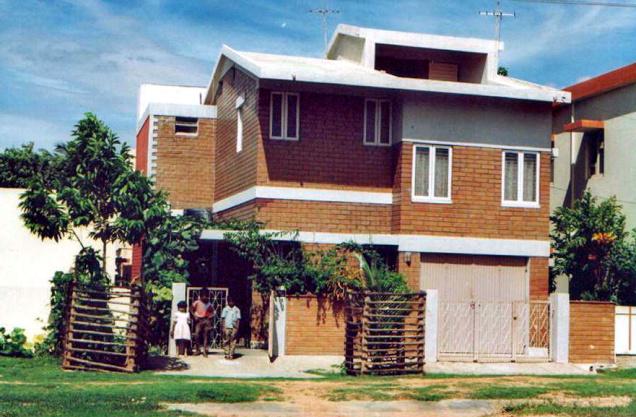
In the mid-1980’s Mr. Yogananda’s house in Jayanagar, built with stabilised mud blocks, became a curious model for people to “wait and test it out in all seasons” as the fear of going in for mud construction was mocked at. No sooner, the house was projected as India’s example of mud revival at the Festival of France in HUDCO’s national seminar. “My house is nearly 30-years-old now, and can go on for generations with its earthy sheen,” says Mr. Yogananda.

For details, 26582970 / 94489 26442 / gramavidya@gmail.com

source: http://www.thehindu.com / The Hindu / Home> News> Cities> Bangalore / by Ranjani Govind / Bangalore – August 21st, 2014

City’s NGO receives award at AIDS conference

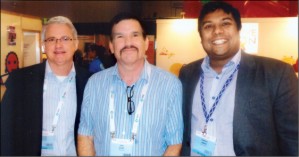
Seen in the picture (from left) are: Michael N. Joyner- Director of Positive Action, VIIV Healthcare, Karl Krupp- Programme Director of PHRII and Dominic Kemps- Director of VIIV Healthcare’s Positive Action Programme during the conference held at Melbourne in Australia recently.

Mysore :

City based NGO Public Health Research Institute of India (PHRII) of India at Yadavagiri in city has bagged an award at the AIDS 2014 conference held at Melbourne in Australia recently.

The award was announced at the conference organised by The Positive Action for Children Fund in association with the International AIDS Society and MTV Staying Alive Foundation.

PHRII had participated in the ‘Every Footstep Counts’ competition in which more than 40 organisations working in the field of HIV/AIDS across the globe had participated.

NGOs and community groups were invited to produce a film, documenting their works on the prevention of transmission of HIV/AIDS from mother to child.

source: http://www.starofmysore.com / Star of Mysore / Home> General News / August 10th, 2014

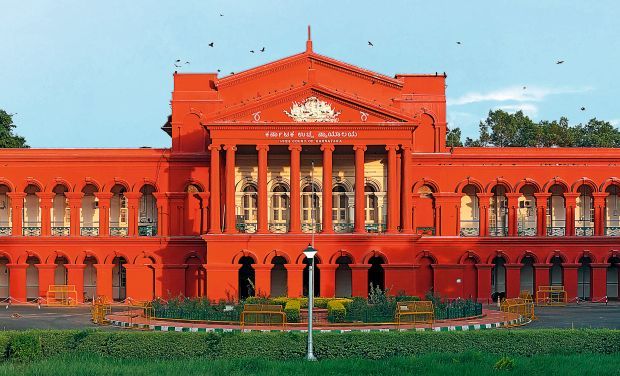
In a first in country, Karnataka High Court will go Wi-Fi

Karnataka High Court

Bengaluru: 

After introducing series of hi-tech facilities for lawyers and the litigants, the Karnataka High Court has added yet another first to its credit in the Indian judiciary. It is all set to introduce Wi-Fi, local area wireless technology on its premises. Recently it had introduced two mobile applications on trial basis for android phones, which can be downloaded through the official website of the high court, aimed at enabling users to get instant access to some links of the official website.

Following various such hi-tech facilities including computer touch screen kiosk systems installed on the high court premises, which allows to check the current status of various ongoing judicial proceedings, the state judiciary had also introduced online display board system for netizens to keep themselves updated over the cases status of all the court halls, both at Principal Bench in Bengaluru and also at the two circuit benches.

The advocates’ association had requested the Chief Justice for the Wi-Fi facilities on the high court premises, who after placing it before a committee headed by him had forwarded it to the Registrar General. The state government was later pressed for taking it forward. The e-department of the state government, which has already examined the case, initiated the process for e-tendering to install Wi-Fi system at the high court. According to the advocates’ association, the entire process is expected to be completed in not more than six to seven months.

Recently, all the court halls in the high court have been fully air-conditioned to beat the summer heat.

source: http://www.deccanchronicle.com / Deccan Chronicle / Home> Nation> Current Affairs / DC Correspondent / August 09th, 2014