Category Archives: Science & Technology

Students of MIT design and test fly their unmanned aerial vehicle

MITMysoreBF26jun2014

Mysore :

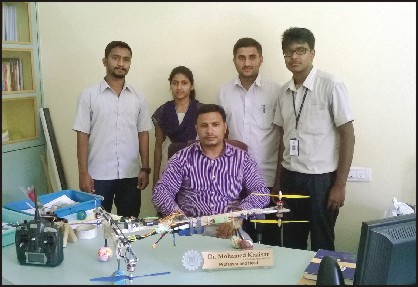
The Eighth Semester Mechanical Engineering students of Maharaja Institute of Technology (MIT), Mysore, have excelled in their project with the ‘Design and Frabication of Unmanned Aerial Vehicle (UAV) – Y4 Copter’ recently.

The project was carried out by Mohan Keerthi, S.T. Savanth, K. Ashwini and P.B. Pramod under the guidance of Dr. Mohamed Khaisar, Professor and HoD, Department of Mechanical Engineering and Dr. Y.T. Krishnegowda, Professor, Dept. of Mechanical Engineering and Secretary,Maharaja Education Trust (MET), Mysore.

An Unmanned Aerial Vehicle (UAV), commonly known as a drone and referred to as a Remotely Piloted Aircraft (RPA) by the International Civil Aviation Organization (ICAO), is an aircraft without a human pilot aboard. Its flight is controlled either autonomously by onboard computers or by the remote control of a pilot on the ground or in another vehicle.

They are usually deployed for military and special operation applications, but also used in a small but growing number of civil applications, such as policing and fire-fighting, and non-military security work, such as surveillance of pipelines. UAVs are often preferred for missions that are too ‘dull, dirty or dangerous’ for manned aircraft.

As a tool for search and rescue, UAVs can help find humans lost in the wilderness, trapped in collapsed buildings, or adrift at sea.

The name Y4 Copter is named after the shape of the aircraft resembling the alphabet ‘Y’ and ‘4’ is due to number of propellers used are four. The complete design and all the stages of fabrication process and assembly were solely carried out by the students at the college premises.

Automation is implemented to maintain the desired roll, pitch and yaw. There are two propellers and motors at the front on two separate arms and two co-axial propellers and motors at the rear end. The relative motions of roll and pitch are achieved by tilting mechanism by servos. There are two servos, one for the roll movement and the other for the pitch movement. The total system is powered by the battery.

The flight and movement of the Y4 Copter is controlled by the wireless system called radio controller. A custom remote is built to communicate with the Y4 Copter which offers long range and security. Dr. B.G. Naresh Kumar, Principal-Maharaja Institute of Technology witnessed the testing and first flight of the Y4 Copter and appreciated it.

source: http://www.starofmysore.com / Star of Mysore / Home> General News / June 20th, 2014

Infosys turns green, proposes 50 MW solar park in Karnataka

Bangalore :

In 2006, soaring hotel costs and traffic snarls led Infosys  to build Le Terrace, a four-star hotel with 500 rooms for its employees and overseas clients in its campus in Bangalore’s Electronics City.

Eight years on, the software industry posterchild is about to embark on generating its own power, in the process saving costs, getting clean reliable power for its operations and fulfilling its broader obligations to society.

(Eight years on, the software…)

Infosys has proposed a 50 mw solar park in Karnataka, becoming the first software company in India to think of generating its own power that will meet a bulk of the electricity needs of its offices in Bangalore, Mysore and Mangalore.

Karnataka’s Energy Minister DK Shivakumar told ET on Monday that Infosys had held one round of talks with the state government in which it had expressed keenness to build the solar power facility. “The company will buy land on its own,” he said.

Infosys confirmed the intent and said it will submit a formal proposal to the government once they finalise the land. “We hope to commission the park in about a year,” said Infosys Executive Vice President Ramadas Kamath told ET. Asked why Infosys is entering captive generation, he said that his company wanted to be self-sufficient in energy.

“We want to promote use of clean energy and reduce carbon emission. Solar is the best option. Several parts of  Karnataka  have good solar intensity. We now have solar technologies wherein you recover your investment in eight years. It has less of maintenance hassle, and easy to build,” said Kamath, who heads facilities, administration, security and sustainability at Infosys.

Kamath said the idea to build a solar park had been mooted a year ago by Infosys’ Head of Green Initiative Rohan Parekh, and had won the support of the company’s board of directors. “Narayana Murthy and the Board have been very keen that we do this,” Kamath said.

The company has already started looking for some 300 acres of land in regions of Karnataka where solar intensity is high. The company expects project cost, including land, to be about Rs 360-380 crore, small change for a company that is sitting on a cash pile of Rs 30,000 crore. Infosys estimates that it would require about five acres of land to generate one megawatt of solar power and excluding land costs, each MW of capacity will require its shell out around Rs 6.5 crore.

All the Infosys offices in Karnataka, which between them have around 65,000 seats, consume about 95 million units a year. The pro- posed 50 MW will generate about 84 million units, nearly 90% of Infosys present energy needs. 1 MW capacity equals 1000 kilowatts or 1.67 million units of energy a year and is enough to light up anywhere between 300 and 350 homes in cities such as Delhi, Mumbai or Bangalore.

“We will buy the balance from the grid,” Kamath said, adding that the company would consider scaling up its generation capacity based on its experience with the 50 MW initially planned.

Grid power presently costs the company, which has managed to halve its per capita consumption of power between 2007 and 2013, about Rs 5.65 per unit, while its own solar power would cost about Rs 3 per unit after factoring in depreciation . Barring a few states, grid power is unreliable in most parts of India, forcing companies to also have diesel-operated generators for back-up power and raising their overall power costs. Companies such as Infosys, which carry out mission-critical operations for mostly overseas clients, need uninterrupted power and its solar experiment, if successful, could lead to other firms to think along similar lines.

source: http://www.articles.economictimes.indiatimes.com / The Economic Times / Home> Tech> ITeS / by K. R. Balasubramanyam, ET Bureau / June 17th, 2014

Country’s first government Liver Clinic brings hope

Bangalore :

Chethana (name changed), 10, had a virtual rebirth on Friday when she underwent a bile duct enlargement correction surgery at the newly-launched Liver Clinic here.
The nation’s first government-owned liver clinic offers a glimmer of hope for thousands of chronic liver disorder patients. The north Karnataka girl was among six persons who underwent surgeries at a surgical gastro8enterology workshop. The operations, which were done at the Victoria Hospital premises, were beamed live to the inauguration venue.
The Liver Clinic, run by the department of gastroenterology, Bangalore Medical College and Research Institute (BMCRI), offers to %conduct liver transplants on poor patients for Rs 5 lakh as against Rs 40 lakh charged by corporate hospitals. The state government has %sanctioned Rs 7.5 crore for the clinic.
As many as 150 patients with various liver disorders have been awaiting transplant and have registered with the Zonal Coordination Committee for Organ Transplants in Karnataka (ZCCK). Thirty other patients have been screened for transplant. The Liver Clinic is likely to conduct transplants in a couple of months.

Launching the clinic, medical education minister Sharan Prakash Patil said: “There are 20,000 patients waiting for liver transplants in India and only 1,000 of them have the access and financial capability to undergo it. Through this initiative, we want to encourage our surgeons to help poor patients. There is need to establish an autonomous gastroenterology institute.”
“We have a highly trained team of transplant surgeons, anaesthetists as well as nurses ,” said Dr Nagesh NS, %transplant surgeon and %clinic chief.

Dr K V Ashok Kumar  , retired head of the department of gastroenterology at BMCRI, and one of the brains behind the clinic, said: “After I retired, I came back to work for Rs 20,000 only to make this dream come true. We believe the poorest patient sho8uld get treated with the best of facilities.”

According to WHO data, there are annually over 2 lakh deaths due to liver disorders in India accounting for 2.31% of total deaths in the country.

source: http://www.timesofindia.indiatimes.com / The Times of India / Home> India / TNN / June 14th, 2014

Pilikula chirps with artificially hatched birds

A Moscovy duck born after being artificially hatched in an incubator at Pilikula Biological Park. — PHOTO: RAVIPRASAD KAMILA / The Hindu

More than 25 birds in Pilikula Biological Park born out of incubators

If you spot jungle fowls Moscovy ducks or yellow and red pheasants chirping in Pilikula Biological Park, they could have been born through artificial hatching of eggs.

The park has gone a step forward after the success of captive breeding of animals. It took up artificial hatching of eggs of some birds under controlled environment a year ago. As a result, more than 25 birds have born in this fashion, according to its director H. Jayaprakash Bhandary.

The park took to artificial hatching as some birds in captivity (in aviary) got disturbed by the movement of visitors and some birds did not sit on eggs for hatching. As a result success rate was less, he told The Hindu.

Thus, some grey and red jungle fowl, Moscovy ducks and yellow and red pheasants have born out of hatching in a controlled environment, he said.

Mr. Bhandary said that eggs were first put in an incubator for the hatching process under a controlled environment. Once the young ones came out of eggs they would be shifted to a brooder for a few days.

Then the young ones would be shifted to a mini cage and once they grew up, they are moved to the aviary. The entire process of artificial hatching would take between 21 days and 24 days.

source: http://www.thehindu.com / The Hindu / Home> News> Cities> Mangalore / by Ramprasad Kamila / Mangalore – June 19th, 2014

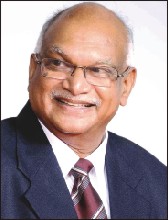
Former Acting Director of CFTRI Dr. G. Venkateswara Rao passes away

VenkateswaraRaoBF19jun2014

Mysore :

Dr. G. Venkateswara Rao (63), former Acting Director of CFTRI, passed away on June 11 at JSS Hospital in city following a cardiac arrest. A resident of CFTRI Layout in Bogadi, he leaves behind his wife and two sons.

Born on Feb. 19, 1951, Dr. Rao obtained his M.Sc in Chemistry from Andhra University in 1973 and Ph. D in Food Science from University of Mysore in 1983.

Dr. Rao joined Flour Milling Baking and Confectionery Technology, CSIR-Central Food Technological Research Institute (CFTRI) in 1974. He pursued research in the area of wheat science and technology for over 39 years.

He superannuated on February 2013 after holding the position of Acting Director, CFTRI for one-and-half years.

Dr. Venkateswara is a recipient of German Academic Exchange Service Fellowship during 1978 to 1980 and worked at Federal Research Institute for Cereal and Potato Processing, Detmold, Germany. He has visited Sultanate of Oman on the invitation of the Government to conduct study on Food Processing in that country.

source: http://www.starofmysore.com / Star of Mysore / Home> General  News / June 14th, 2014

Varsity to honour Prof. C.N.R. Rao with Study Chair

CM fetes Bharat Ratna in City

 Prof. C.N.R. Rao and his wife Indumathi Rao, who were felicitated at a function held at Crawford Hall in city this morning, are seen with (from left) Mysore University VC Prof. K.S. Rangappa, Chief Minister Siddharamaiah, MLA Vasu, District Minister V. Sreenivasa Prasad, NIE President M. Sreepada Rao, KSOU VC Prof. M.G. Krishnan, Administrative Officer of Jawaharlal Nehru Centre for Advanced Scientific Research, Bangalore, Dr. Jayachandra and NIE Principal G.L. Shekar.
Prof. C.N.R. Rao and his wife Indumathi Rao, who were felicitated at a function held at Crawford Hall in city this morning, are seen with (from left) Mysore University VC Prof. K.S. Rangappa, Chief Minister Siddharamaiah, MLA Vasu, District Minister V. Sreenivasa Prasad, NIE President M. Sreepada Rao, KSOU VC Prof. M.G. Krishnan, Administrative Officer of Jawaharlal Nehru Centre for Advanced Scientific Research, Bangalore, Dr. Jayachandra and NIE Principal G.L. Shekar.

Mysore :

Bharat Ratna Prof. C.N.R. Rao, who is also the Head of the Scientific Advisory Council to the Prime Minister of India, was this morning felicitated by Chief Minister Siddharamaiah at a function organised jointly by the University of Mysore, Karnataka State Open University (KSOU) and the NIE at Crawford Hall in city.

Prof. Rao, who also is the Hon. President of Jawaharlal Nehru Centre for Advanced Scientific Research, Bangalore, was adorned with a Mysore Peta, shawl and garland while his wife Indumathi Rao was also felicitated.

The Chief Minister also unveiled a plaque of Vignana Bhavan at Mukta Gangotri, which will be formally inaugurated by him later today.

University of Mysore Vice-Chancellor Prof. K.S. Rangappa, presiding over the function, said that the University has planned to set up ‘Prof. C.N.R. Rao Study Chair’ during the centenary celebrations and added that Chief Minister Siddharamaiah had assured all financial assistance for the same.

Prof. Rangappa also urged Prof. Rao to give his valuable opinions on development of the standard of higher education in the University of Mysore to both the Central and State governments.

KSOU Vice-Chancellor Prof. M.G. Krishnan, NIE President M. Sreepada Rao, District Minister V. Sreenivasa Prasad, MLA Vasu, Mysore University Registrar Sri Jayadev Raje Urs, NIE Principal G.L. Shekhar, who introduced Prof. Rao to the audience, members of the teaching and non-teaching faculties of NIE, KSOU and University of Mysore, members of the Academic Council, Syndicate of the University, Board of Management members of KSOU and NIE and others were present.

source: http://www.starofmysore.com / Star of Mysore / Home> General  News / June 14th, 2014

NRDC ready to commercialise UAS’ patent-pending instant Ragi Mudde Mix

The National Research Development Corporation (NRDC) is ready for the  commercialisation of instant ragi mudde mix, a patent-pending product of the University of Agricultural Sciences, Bengaluru’s (UAS-B) Department of Food Science and Nutrition (FSN) of Process Technology.

The department, led by Dr H B Shivaleela, professor and university head, FSN, academic council member and scheme head. She, along with S Meenakumari and Rani Arvind, provided the technical know-how about the product to NRDC, which could be accessed by the small and medium food companies in India.

The instant ragi mudde mix formula has been developed to suit both small-scale and  mechanised processing. It does not involve a tedious process or require advanced processing equipment.

It could simply be blended with a specific amount of water in the desired cups/bowls, and heated in a microwave for four minutes, or steamed for four minutes in a pressure cooker.

“Ragi is known for its phyto-chemicals and calcium and fibre content. Developing an instant ragi mudde mix would now allow consumers easy access to the required daily nutrition intake,” said Dr Shivaleela.

The invention is aimed at developing simple process to prepare the ragi-based dumpling mix, which is a specialty food of Karnataka. The mix has brought stability and enhanced the value addition to cater to the growing demand of the product, particularly by the natives of Karnataka and Andhra Pradesh.

“There is also immense export potential for the instant ragi mix. People from Karnataka and Andhra Pradesh residing overseas can now pick it off supermarket shelves,” said N G Lakshminarayan, manager, business development; coordinator, IPFC, and chief vigilance officer, NRDC.

“A novel feature of the invention is that the mudde mix is a processed flour blend and ready to be used to prepare the Karnataka specialty, which is consumed by all strata of the local population,” said Dr Shivleela.

“In fact, the readymade mix is far more convenient with no lump formation during the predation process in contrast to the conventional process of preparing ragi mudde, which requires skill,” she added.

Therefore, UAS-B viewed it as a nutritionally-improved value-added processed food, saving considerable time vis-a-vis the traditional mode of preparation.

The option of easy preparation and cooking in microwave ovens could attract modern consumers towards instant ragi mixes in an age of ready- to-cook versions of processed foods.

source: http://www.fnbnews.com / FnBnews.com / Home> WideView> Top News / by Nandita Vijay, Bengaluru / Saturday – June 07th, 2014

A R Ramalingam, activist and former botany professor, dies

Mysore :

A R Ramalingam, activist and former botany professor of UoM and Karnatak University (Dharwad), died on Friday morning. The 78-year-old veteran was ailing for some time. Being the voice of the oppressed class, Ramalingam had inspired many people to fight for their rights.

He leaves behind his wife Kusuma and daughter Vijaya Narasimhan. His doctor-son Ajay, who ran an NGO providing safe drinking water to the villagers of Mysore taluk, died long ago.

Born in a rich zamindar’s family from a village in Vishakhapatnam district of Andhra Pradesh, he arrived here in the late 60s and joined UoM as a botany teacher. While discharging his duties at the university, he took up various public issues and fought for them, becoming a rebel of sorts.

While being in the forefront of various pro-people movements and agitations in the city, Ramalingam joined Mysore Grahakara Parishat (MGP) and worked for the cause of consumers and the general public.

His long-drawn battle against the government on the issue of establishing Rare Metal Plant (RMP) at Ratnahalli village near here made him to face the wrath of the government. The fight also made him move out of Mysore city — he was transferred to Karnatak University. But the undeterred activist kept fighting on the issue. His agitation, backed by some progressive organizations in the city, was so intense that it forced the central government to constitute an expert team which ordered that the plant should not harm the people. But Ramalingam, who had tasted the crops and many horticultural produces grown in the vicinity of the plant, found them to have been affected by the radioactive emissions from the plant. He had contended that the tamarind fruits grown near the plant were small in size due to radiation. He also got the fruits tasted in a private lab in Mumbai and Hyderabad to substantiate his claim.

The agitations and movements carried out by him posed danger to his teaching profession, and the rebel in him deprived him of retirement benefits. On occasions, he led a miserable life having almost nothing to sustain. He lived in a small rented house in the city. The activist was made to run from pillar to post to meet his medical expenses.

Green crusader

Ramalingam had a lot of love for the environment, particularly trees. By identifying the species of trees, he branding some of them as Heritage Trees, so as to prevent their felling. After his retirement in 1997, he settled down in Mysore and fought for several public issues, particularly the contamination of drinking water and water sources, by associating himself with MGP.

He used to give lectures to rural and urban groups and students on safe drinking water. His booklet in Kannada explains the importance of safe drinking water, complete with details on how water gets contaminated. It also narrates simple and inexpensive methods to make water potable. Consumers from across the district have been benefitted from his work on water issues.

His detection of a cause of pollution of the water source of Mysore city prompted the city corporation to take remedial action. Similarly, he had made the corporation repair a dilapidated structure of a water reservoir.

To make bacteriologically contaminated water potable, he developed a simple copper-plate method and inexpensive chlorination kits. He had also developed an easy method to estimate the amount of dissolved solids in water. He propagated simple and inexpensive rainwater harvesting methods.

In 2008, he unearthed a tea powder adulteration scandal in Mysore. His campaign for burning several hundred kgs of adulterated tea powder forced the civic authorities to raid shops and confiscate adulterated tea. Most of his public-interest activities were financed by himself.

As per wishes, his family members donated his body to JSS Medical College.

source: http://www.timesofindia.indiatimes.com / The Times of India / Home> City> Mysore / by M B Maramkal, TNN / June 06th, 2014

Maritime Firm Makes Hot Picks at UVCE

Bangalore :

For the first time in its campus placement process, a Nagpur-based company has selected 22 students of University Visvesvaraya College of Engineering (UVCE) with a pay package each of a whopping Rs 18 lakh per year!

A first-time recruiter at UVCE, Phoenix Maritime Sea Services, a ship management company providing services to shipping firms and merchant navy academies, has picked 11 mechanical, three electronics and communication and eight electrical and electronics students for jobs based out of Karnataka.

“A single company making so many offers with such impressive packages has not happened before,” said UVCE Principal K R Venugopal. However, there is a catch, he says. “The company requires students to pay `3-4 lakh towards training as a means to ensure students don’t take it up and leave.”

Vinay P, a mechanical engineering student, who has received the offer, said Phoenix works like a consultancy company to provide further training. “After we are trained, we can join merchant navy companies where our CTC may even increase,” he said.

Thumping Into UVCE

E-commerce giant Amazon selected two computer science students offering `11 lakh per year, investment banker Goldman Sachs selected one mechanical student for `10 lakh, Adobe offered two computer science students `8.3 lakh and Oracle offered seven students `7.5 lakh per year. But it is not the big payers that got students excited this time.

According to Varun K, a third year electrical and electronics student and placement coordinator, the maker of the legendary Bullet motorcycle, Royal Enfield, came to UVCE for the first time offering three mechanical students Rs 3.60 lakh per year.

“More than Phoenix, we were excited with RE coming here, which is the first time they are recruiting outside Chennai,” he said.

In the fag-end of its 2013-14 placement process, the 97-year-old UVCE had 87 companies visiting its campus making 539 offers to 301 students.

With results from six companies awaited, another 20 students could be placed. In 2012-13, there were 699 offers to 362 UVCE students.

Other Maiden Recruiters

First-time recruiters Godrej & Boyce made offers of `3.60 lakh each to seven students and Dell Research and Development also offered `5.50 lakh each to seven computer and information science students.

Other maiden big payers this year were Google, which came with an offer of Rs 13 lakh per annum and Tokyo-based Work Applications, which came with `30 lakh per annum.

However, they did not select any student.

“We have done better than R V College of Engineering, PES Institute of Technology and even M S Ramaiah Institute of Technology. But BMS College of Engineering is competing neck-and-neck with us,” Varun added.

source: http://www.newindianexpress.com / The New Indian Express / Home> Cities> Bangalore / by Bharath Joshi / June 07th, 2014

Florence Nightingale Award presented to Nurses

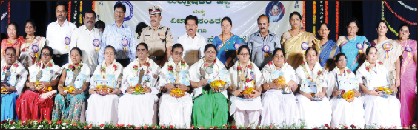
 The Florence Nightingale award recipients are seen with dignitaries at the award presentation ceremony organised by the District Wing of Karnataka State Government Nurses' Association to mark the Nurses' Festival at Jaganmohan Palace here yesterday.
The Florence Nightingale award recipients are seen with dignitaries at the award presentation ceremony organised by the District Wing of Karnataka State Government Nurses’ Association to mark the Nurses’ Festival at Jaganmohan Palace here yesterday.

Mysore :

“Private hospitals have become extortion zones where deliveries are being deliberately done under caesarian section,” alleged MLA M.K. Somashekar.

He was speaking after inaugurating a function organised by the District Wing of Karnataka State Government Nurses’ Association at Jaganmohan palace here yesterday to mark Nurses’ Festival and presentation of Florence Nightingale Awards for the 6th year.

Somashekar lauded Cheluvamba Hospital where normal deliveries were common, thanks to the good doctors and nurses. He said that an appeal has been made to the Chief Minister to establish a District Government Hospital in K.R. Constituency.

Speaking on the occasion, Police Commissioner Dr. M.A. Saleem said that nursing profession was a noble one and asked nurses to emulate Florence Nightingale. The Association General Secretary Vijaya Nayak presented a charter of demands to the MLA.

The Florence Nightingale award for 2014 was presented to nurses Uma H. Bellary, Indiramma, Sunandamma, Winfred, V. Sowbhagya, Elizabeth Saralakumari, Susheelamma, D.K. Leelavati, R. Leela, Jayanandakumari, Sumitra Bai and Tanuja. The Best Service Award for 2014 was presented to T.M. Meenakshi, B.P. Ghanavati, B.M. Anita, S.V. Padmalata, P.P. Kamini of K.R. Hospital, Dhanalakshmi of Lakshmidevamma Hospital in Jayalakshmipuram, lecturer Pushpalata and student Lingarajamma.

DHO Dr. H.T. Puttaswamy, MMC&RI Dean and Directo Dr. B. Krishnamruthy, K.R. Hospital Medical Superintendent Dr. B.G. Sagar, Cheluvamba Hospital Medical Superintendent Dr. S. Radhamani, ESI Hospital Medical Superintendent Dr. Ramesh Jevur, Association District President Shivamma, State President B.S. Bhyramma and others were present.

source: http://www.starofmysore.com / Star of Mysore / Home> General  News / June 08th, 2014