Category Archives: Science & Technology

Latest technologies for Al Hammadi hospitals

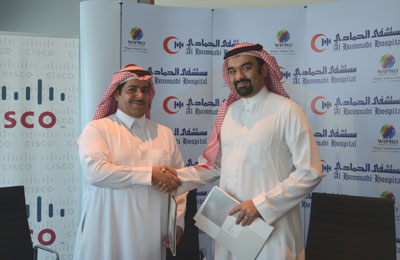
Cisco, a leader in networking and Wipro has signed a deal with Saudi-based Al Hammadi Development and Investment Company to launch three smart and connected hospitals with latest technologies in the medical grade infrastructure.

AlHammadiBF10feb2014

Al Hammadi has partnered with Cisco and Wipro to deliver capabilities such as private health cloud, optimised clinical workflow solutions and solutions that will increase the quality of care while transforming the experience of patients and medical staff, said a statement.

The solutions include Cisco’s latest end-to-end networking and security solutions, its Virtual Desktop Infrastructure (VDI) and Wipro’s Hospital Information System (HIS) Cloud-enabled Application to be installed in three of its hospitals in the kingdom as part of a SR90 million ($23.9 million) contract.

Mohammed Al Hammadi, CEO, said: “Cisco’s and Wipro’s technology solutions will help us deliver a state-of-the-art network infrastructure to enable us to offer the very best in healthcare. We are confident the our 90 Million SAR investment will enable us to stay ahead of the game by helping is create and deliver three outstanding healthcare facilities to cater of the health needs of our citizens.”

Subramanian Krishnan, sales head, Saudi Arabia, Wipro Arabia, said: “Healthcare business models are constantly evolving with health IT as the industry expands. Our HIS solution will help Al Hammadi Hospitals to control various processes that govern this sector and as well as escalating costs while also leveraging existing infrastructure.

“HIS has advanced intelligence tools that enable the management of the healthcare facilities to take informed real-time decisions. It supports workflows, alerts and notifications which help keep critical business as well as clinical parameters in control.” – TradeArabia News Service

source: http://www.tradearabia.com / Trade Arabia / Home> Health & Environment> Story / Trade Arabia News Service / Dubai – January 31st, 2014

Dr. Nithyanand Rao assumes charge as President of KOA

DrNithyanandBF08feb2014

Bangalore:

Dr. N. Nithyanand Rao, renowned Orthopaedic Surgeon of Mysore, took over as the President of Karnataka Orthopaedics Association (KOA) here this morning at the 38th Annual Conference of the Association held at NIMHANS Centenary Hall in Bangalore.

Speaking after assuming charge, Dr. Rao made a vision statement in which he said, “As a practising consultant, I will strive to make learning of contemporary practices and science a distinct and regular feature; will strive to make the industry collaborate with young surgeons by supporting fellowships across the best institutions in India and overseas; will introduce voting for future KOA elections online; will bring in technology for administrative support; will work towards empowering district bodies to reach out to issues to ensure that practising surgeons anywhere are connected.”

source: http://www.starofmysore.com / Star of Mysore / Home> General News / February 02nd, 2014

Excellence award to CFTRI Scientist

DrMuraliKrishnanBF07feb2014

Mysore :

Dr.G. Muralikrishna, Chief Scientist, CSIR-Central Food Technological Research Institute (CFTRI), Mysore, has been awarded the prestigious “Carbohydrate Excellence Award for the year 2013”.

The award, instituted by the Association of Carbohydrate Chemists and Technologists, India, was given away at the International Conference on Challenges in Chemistry and Biology f Carbohydrates” – Carbo – XXVIII held recently at Dehradun.

Dr. Muralikrishna, a carbohydrate chemist of repute, has delineated the structure-function relationship of many dietary fibre components and non-digestible oligosaccharides derived from cereal brans and pulse husks.

He has more than 60 Peer-reviewed publications and several patents to his credit and is the recipient of prestigious awards such as Laljee-Godhoo Smarak Nidhi (2002) and AFST(I) Fellow (2008) by the Association of Food scientists and Technologists (India) for his outstanding work on carbohydrates and their degrading enzymes.

He has guided 8 Ph.D and given several lectures in National and International Symposia. He is an Advisory Board Member for the E-Journal entitled “Trends in Carbohydrate Research and peer reviewer for more than 12 International journals.

source: http://www.starofmysore.com / Star of Mysore / Home> General News / February 01st, 2014

Bangalore becomes first Indian city to have free wifi hotspots

Bangalore : 

Bangalore has become the first city in India to have free wifi hotspots.

The project, launched at the iconic MG Road in central Bangalore, allows a person to browse upto three hours a day and download upto 50 MB of data.

Five different locations including MG road in the city now have free wifi and the IT department of Karnataka wants to spread it to 10 more locations by next month.

The project is in its pilot phase and Bangalore-based service provider D-VoiS is involved in the implementation.

“We are trying to make this as safe as possible. A person logs in, and we at our server will be able to check who is logging in, through what instrument or handset, what he is checking, downloading etc… so it is completely safe, said Srivatsa Krishna, IT Secretary, Karnataka government.

“The service provider has set up HD cameras in the locations which can also help in a big way when it comes to security, not just the content on net,” Mr Krishna added.

The free wifi comes along with apps too. Soon to be active will be the parking app, the garbage app and the likes. The parking app can show the nearest slot for parking and the garbage app would tell you the nearest garbage throw away point.

“These days the youngsters and all of us are nothing without bandwidth. We all need internet. Browsing, Twitter, Facebook, downloading movies… wow we are all so connected. And this according to me makes us feel empowered. We will be sending out the right message to investors. I dream of the day when each youngster can say he has access to the internet.” said Mohandas Pai, former Infosys board member and advisor to the Government’s ambitious IT Vision.

“I have tried logging on and it is fast. If am around Brigade with friends I could check which eating joints are available, what’s new and so on” said Sindhu, a student in Bangalore.

The youngest city as it may be, Bangalore is also the start-up city where young entrepreneurs, especially those creating cool apps, find this space as an opportunity for their little start up to ‘click’.

source: http://www.ndtv.com / NDTV / Home> Cities> Bangalore / by Radhika Iyer / January 24th, 2014

World’s 1st biosimilar drug for breast cancer

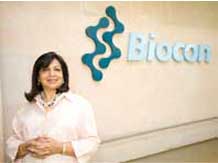
Biocon with Mylan eyes emerging markets for first joint drug.

BioconBF29jan2014

Bangalore-based bio-pharmaceutical company Biocon on Saturday launched the world’s first biosimilar (developed in an organism) Trastuzumab injection for the treatment of breast cancer here. This is the first drug developed by Biocon in partnership with US-based generic drug maker Mylan . The new drug, CANMAb, will be used to treat HER2-positive advanced breast cancer.

Kiran Mazumdar-Shaw, chairperson and managing director, Biocon, said the company would also launch the injection in other emerging markets. The CANMab injection will compete with Roche’s Herceptin . Herceptin’s global sales were $6.4 billion in 2012 and Indian $21 million.

The drug has been jointly developed out of five molecules with Mylan, since a partnership was signed in 2009. Mylan will also launch CANMab under a different brand in India.

The injection is available in 150mg and 440mg doses at Rs 19,500 and Rs 57,500, respectively. The 440mg dose costs a fourth less than competing drugs, Mazumdar-Shaw said.

Biocon has set up a factory in Bangalore to make the new injection for itself as well as Mylan. Mylan will source its requirements from Biocon for both Indian and developed markets, a senior company official said.

Biocon entered into partnership with Mylan for joint development of a series of drugs for the treatment of various cancers in 2009. At present, four other drugs are under development, of which will begin clinical trials later this year, said Abhijit Barve, president (research and development), Biocon.

Mazumdar-Shaw said breast cancer was the most prevalent cancer among Indians and CANMAb would offer a cheaper option. About 150,000 new patients are diagnosed with breast cancer every year in India, of which nearly a fourth of the cases are HER2-positive and eligible for treatment with CANMAb. Lack of cheap treatment has limited the extent of HER2 testing and it is believed that the proportion of HER2-positive patients is probably higher, she said.

“Biocon intends to make a significant difference in the treatment paradigm for HER2-positive breast cancer in India by enhancing access to more affordable treatment with CANMAb, which offers the same level of safety and efficacy as the reference product. The launch of CANMAb in India is an important milestone for our biosimilars programme and demonstrates our ability to deliver on our promise of affordable innovation with a high quality, world- class product,” the Biocon chief said.

Biocon aims to capture about 15 per cent of the market for anti-breast cancer drugs in India in a year. The market is estimated at Rs 130 crore a year, set to double in 2014.

source:http://www.business-standard.com / Business Standard / Home> Companies> News / by BS Reporter / Bangalore – January 18th, 2014

IHST: Science in heritage

I believe this is the only university in the country with the focused mandate of bridging Indian Shastras and Western Sciences. We will develop this University into an IIT class of an Institution for the traditional Health Sciences of India….”

— Sam Pitroda, Advisor to the Prime Minister on Innovation


Among the few good decisions made by the decrepit and discredited BJP government last year, before it plunged into the election process, was to clear the proposal by Foundation for Revitalisation of Local Health Traditions (FRLHT) to set up a health university in Bangalore. The university, named the Institute for Trans-Disciplinary Health Sciences and Technology (IHST), will be launched on Sunday. It’s heritage with science, not mumbo jumbo.

FRLHT, near Yelahanka, has been around in Bangalore for a long time — 20 years. Founded as a trust in 1993 by inventor and innovator Sam Pitroda and Darshan Shankar, FRLHT’s declared mission was the “Application of traditional knowledge blended with modern science and technology to design healthcare solutions that are low-cost, safe, effective and accessible to rural and urban populations in India and globally.” The new university itself has two clear purposes: One, it is for “lowering costs and enhancing access, quality and reach of healthcare to millions,” and two, to “facilitate creation of transformative knowledge and original Indian contributions, to the world of medicine and life sciences.”

What is interesting, and indeed ironical, is that in the midst of all the chicaneries that our netas across political parties are engaged in to scuttle the implementation of the Madhav Gadgil committee recommendations on the Western Ghats, or the modified Kasturirangan panel version of it, these two pioneers chose Bangalore to set up the venture because of its proximity to the ghats. The city is situated so that it provides the best access to both the Western and Eastern Ghats, which are rich in medicinal plants.

Just to remind readers, some netas and sundry entrepreneurs have been severely distressed in peninsular India ever since UNESCO inscribed 39 serial sites in the Western Ghats on the World Heritage List in recognition of their bio-diversity and natural habitat values. The heritage status, alongside the Gadgil committee recommendations, had seemingly put paid to their ‘development’ project proposals in the ghats. Their hopes are now revived since Very-Moving Veerappa Moily has taken over the Union environment portfolio and has begun to approve doubtful proposals at dizzying speed. The good minister, perhaps, should meditate on them through a weekend at Kedarnath. It’s all very quiet over there.

Pitroda and Shankar, and their team of unheralded, quiet and studious professionals, are moved by completely different concerns. They believe that the Indian knowledge systems could have “contemporary relevance” and lament that “post colonial India has forgotten its own heritage.” They are working with the belief that along with the rigour of modern methods and applications standards of medicinal research, if investments could be made in the modernisation of Indian systems of medicine, there could be big dividends in terms of “low cost solutions for millions in primary health care.” To achieve this, they seek the “conservation of medicinal flora, fauna, metal and minerals.”

The field of study is broad and inclusive. They take in “the village-based prakrit stream with one million community-supported healers (birth attendants, bonesetter, herbal healers),” as well as “the town-based samskrit stream with 400,000 licensed physicians.” The database at FRLHT includes 6,560 medicinal plants, 200,000 herbal formulations and 100,000 medical manuscripts. All this to “construct a new Indian model of integrative healthcare for the 21st century.” The database cross-references local systems of medicine and ingredients in several Indian languages and compares them with modern pharmacopeia.

The foundation’s work has been recognised elsewhere in India and abroad. The modest 17-acre campus in north Bangalore has research laboratories and a 100-bed research hospital with over 150 professionals — scientists, physicians and paramedics; botanists, ecologists, Sanskrit scholars, computer programmers, and community health strategists. Among the interventions they propose to evolve are strategies for nutrition, healthy ageing, low-cost delivery of safe drinking water, herbal remedy for malaria, and programmes for trans-disciplinary health sciences and technology. Because, “no single system of healthcare has best health solutions for all health needs.”

FRLHT is an organisation that has been taken seriously by health experts around the world. Among other achievements, it has already led “the largest global program for insitu conservation of medicinal plant gene pools at 110 conservation sites… across 13 States” and, as mentioned, set up India’s “only comprehensive computerised database and herbarium of medicinal plants.” It has even set up a network of village “folk healers.”

This is rare good news for Bangalore, which is otherwise burdened with an inept and unimaginative state government and an officialdom in the limbo of an election year. If Pitroda could do to healthcare and wellness what he and his team of dedicated professionals did for Indian telecommunications, we will all live in a happier and healthier India. So, welcome IHST.

source: http://www.bangaloremirror.com / Bangalore Mirror / Home> Columns> Views / by Prakash Belawadi, BM Bureau / January 17th, 2014
Elected as Fellow by Natl. Academy of Psychology

DrPrakashBF29jan2014

Mysore :

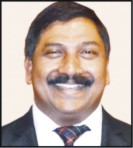
Dr. P. Prakash, professor in Psychology, Mysore University, has been elected as a Fellow by National Academy of Psychology (NAOP), India, for his contribution to the discipline and distinguishing himself as an authority on reading and dyslexia in India.

He has been working in the area employing multiple approaches — methods that include behavioural (including eye tracking), neural (includes brain imaging), and genetic basis of reading and dyslexia.

This year Prof. Prakash has co-edited a volume on Psycholinguistics in South Asia and South East Asia, which has just been published by Cambridge University Press, Cambridge.

A recipient of many prestigious fellowships, he has been a Mombusho scholar (Japanese Government Fellowship, 1991-93) and later AIEJ Fellow (1999) in Japan. He was also a Fulbright Fellow twice – during 2000-01 at A & M University, Texas and later in 2011 at Haskins Laboratories, Yale University. He was also Erasmus Mundus Visiting Professor at Potsdam University, Potsdam, Germany (2006). He was visiting colleague in Singapore National University, University of Alberta (Canada).

source: http://www.starofmysore.com / Star of Mysore / Home> General News / January 29th, 2014

Awarded Cardiology Fellowship

dr.ArunaBF28jan2014

Mysore :

Dr. Arun Srinivas, Senior Interventional Cardiologist, Professor & Head, JSS Hospital, was awarded the prestigious Fellowship of the European Society of Cardiology (FESC) at the ESC meeting held in Mumbai on Jan. 17 & 18.

Dr. Arun Srinivas was awarded the Fellowship for his outstanding services and experience in Interventional Cardiology for over 25 years.

He has the distinction of having pioneered and introduced interventional cardiology services in city 12 years ago.

He has treated more than 50,000 patients and performed over 20,000 angiography and angioplasty procedures, valvuloplaties, congenital heart disease device closures, pacemaker/ICD implantations and peripheral arterial inter- ventions.

Dr. Arun Srinivas is one of the senior-most Interventional Cardiologists in Karnataka and has obtained fellowship in Coronary Interventions & Pediatric Cardiology from Royal Melbourne Hospital, Australia and Peripheral Vascular Interventions from Miami Vascular Institute, Florida, USA.

source: http://www.starofmysore.com / Star of Mysore / Home> General News / January 22nd, 2014

India’s MRPL makes first Latin American oil purchase: Reports

(MRPL, which operates a 300,000…)

New Delhi :

India’s Mangalore Refinery and Petrochemicals has made its first purchase of Argentina’s  Escalante crude , two sources with knowledge of the tender award said, in another sign trade routes have been redrawn by the US shale oil boom.

The purchase was for loading in end-February or early March and trader Glencore will deliver a one million barrel parcel at prices flat to dated Brent, the sources said.

“If they are getting South American and Caribbean grades through spot tenders this means these grades are available at cheaper rates than their competitors in west Africa and the Middle East,” said an Asian oil trader.

“Voyage time for a cargo from South America to India is about a month. This could be the begining of South American grades gradually showing up in state refiners’ oil purchases,” he said.

It is the first time MRPL has purchased any Latin American grade.

MRPL, which operates a 300,000 barrels per day refinery in Southern India, aims to buy as much as 40,000 bpd of Latin American grades in the next fiscal year beginning from April 1, Vijay G Joshi, its refinery director said on Wednesday.

Rising US shale oil output is re-routing the flow of Algerian, Latin American, Canadian and West African crudes, which used to flow regularly to the United States.

India’s biggest refiner Indian Oil Corp last year bought one million barrels of Canadian White Rose through a spot tender, becoming India’s first state-run refiner to buy Canadian oil .

Indian refiners are seeking to diversify their oil sources as Western sanctions over Tehran’s nuclear programme squeeze imports from Iran, once India’s second-biggest supplier. Supplies from Libya and Sudan have also been disrupted.

Escalante is a medium sweet crude with a density of 24 API degrees, extracted from the basin with the same name in southern Argentina by Pan American Energy, controlled by British BP.

source: http://www.articles.economictimes.indiatimes.com / The Economic Times / Home> News> International> Business> World News / Home> Collections> Indian Oil Corp / by Reuters / January 16th, 2014

State-level milking contest : Cow from Bangalore yields 46 litres milk

MLA Tanveer Sait is seen presenting prize to the first prize winner of State-level milking contest held at J.K. Grounds in city yesterday. Others seen are actor Darshan, MLA Vasu, Mayor N.M. Rajeshwari, MP A.H. Vishwanath, District Minister V. Sreenivasa Prasad, Ex-Mayor Dhruvakumar, MNGS President D. Nagabhushan and others.

Mysore :

Bangalore may be the Silicon city but it does not lag behind in dairy skills which came to fore yesterday when a cow from the State capital yielded 46 litres of milk to win the prize of Rs. 1 lakh at the three-day State-level milking contest held at J.K. Grounds in city in memory of Late actor Thoogudeepa Srinivas by Mysore Nagara Gopalakara Sangha (MNGS).

Dairy farmers from Bangalore also outclassed their counterparts from Mysore by winning top three positions in the contest which had been a tradition of Mysore.

Cows belonging to Pradeep Devegowda, a resident of Adugodi, Venkatesh Sommanna, residing near Nettakallapa Circle and Lakshman Hogebandi of Bangalore yielded 46.75 litres, 40.75 litres and 40.40 litres winning the first three places respectively as a cow belonging to Aishwarya, a relative of former Mysore Mayor Dhruvakumar, which yilded 39.95 litres finished fourth.

Pradeep Devegowda won Rs. 1 lakh and a pair of silver lamp weighing 2 kg. Venkatesh Somanna won Rs. 75,000 and a silver crown weighing 1 kg. Lakshman Hogebandi won Rs. 50,000 and a silver crown weighing 1 kg. as First, Second and Third prizes respectively while Aishwarya of Mysore got Rs. 25,000 as the Fourth prize.

A total of 17 cattle from different parts of State particularly from in and around Bangalore participated in the competition and the prizes were presented to the winners by actor Darshan Toogudeepa at a function organised at Srikanta Datta Narasimharaja Wadiyar stage at J.K. Grounds yesterday.

District in-Charge Minister V. Sreenivasa Prasad, MP A.H. Vishwanath, Mayor N.M. Rajeshwari, MLA Vasu, Mysore Nagara Gopalakara Sangha President D. Nagabhushan and others were present.

source: http://www.starofmysore.com / Star of Mysore / Home> General News / January 20th, 2014