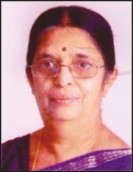
Karnataka Muktaka Sahitya Academy, Mysore, will confer the coveted DGV Muktaka Sahitya Award on Prof. H.S. Lakshminarayana Bhatta, popularly known as ‘Kaggada Bhatta’, during its 14th anniversary celebrations to be held on Feb. 16 in city.
Four eminent personalities — Dr. V.S. Sampathkumaracharya (Music), Dr. J.S. Hegde (Medicine), Prof. B.N. Manjunathaiah (Education) and Prof. S. Shivaji Jois (Literature) — who have rendered yeoman service in their recpective fields will be felicitated on the occasion.
Profile of Prof. Bhatta
Born in 1946, Prof. Bhatta is a M.Sc. Degree holder in Physics, a ‘Visharada’ from All India Hindi Prachara Sabha, an ‘Uttama’ from All India Bhagawad Geetha Study Centre, Gorakhpur. He has served as Professor of Physics in Visweshwarapuram Science College, Bangalore and also as Principal of the same college.
He has given a number of discourses and lectures on DVG’s Mankutimmana Kagga and other Muktaka literatures in and outside the State. He has aired a number of programmes on Kagga on Doordarshan and Akashavani and has participated in online programmes with listeners.
Prof. Bhatta has to his credit a number of books on Kannada Literature including his Ghamaghamisuva Vanasuma, DVG – Timmaguruvina Darshana (Gundopanishat). He has received a number of awards and titles for his work in this field.
source: http://www.starofmysore.com / Star of Mysore / Home> General News / January 20th, 2014
Lakshmi, a homemaker from Periyapatna, who delivered her first child at government-run Chaluvamba Hospital here years ago, chose the same hospital for her second delivery, the lack of privacy notwithstanding.
The 27-year-old Lakshmi was one of 200 new mothers crammed into the wards of the century-old hospital, which sees, on an average, 40 new babies coming into the world daily. The rate at which deliveries happen at the hospital makes it Karnataka’s busiest maternity ward.
Like her, many mothers have to struggle for beds as large number of women from across the state comes here. With wards always being full, new mothers have to make do with the floor, awaiting their turn for cots. However, beds and necessary treatment will be provided to them while they wait for cots.
Hospital’s medical chief Dr B Krishnamurthy said that women from Bangalore, Ramnagara, Bidadi and Chikkamagalur have delivered here apart from women from old Mysore region of five districts. He claims may be the busiest maternity hospital in state because even in Bangalore’s Vani Vilas hospital not many deliveries are conducted than us. “I have attended state level health meetings but have never come across so many deliveries taking place in single day in any other hospital in Karnataka.”
Even Sumaya Banu from Hunsur preferred this hospital for her second delivery. Her husband, Jaffer, a driver, says the facility is no less than private hospital. Even 20-year-old Ciema Kauser, who delivered her first child, too was fine with the hospital’s situation.
Biggest challenge is to accommodate all mother to-be arriving here. We can’t say no to anyone but if they agree to the situation, we are okay with it but we ensure to provide quality treatment without for free, the medical superintendent says.
Of the total 420 beds available in hospital, over 50 pc beds are reserved for new moms, who will be treated for three days in case of normal deliveries and five days for C-section deliveries Nearly 80 pc deliveries are normal. Claiming people throng here because of quality treatment, Krishnamurthy, head of department of pediatrics, says we have improved services and security to prevent deaths and baby-swapping over the years.
source: http://www.articles.timesofindia.indiatimes.com / The Times of India / Home> City> Mysore> Private Hospital / by Lawrence Milton, TNN / January 11th, 2014
Soon, alternative medicine and two-wheeler emergency care units may be used to tackle cardiovascular disease – the world’s largest killer.
According to the World Health Organisation (WHO), the disease accounted for 30 per cent of deaths around the globe in 2013.
A team of medical professionals from India and the USA have come up with the dual approach.
“Since cardiovascular disease is a lifestyle disease, it can be prevented with the right diet and lifestyle. Alternative medicine, that is the use of herbs, naturally derived materials and non-pharmacological tools, has demonstrated significant benefits in prevention of cardiac diseases directly or indirectly,” said Dr Naresh Shetty, president, M S Ramaiah Memorial Hospital, at a symposium held here on Wednesday.
The MS Ramaiah Medical College (MSRMC), Narayana Health, The Institute of Trans Disciplinary Health Sciences and Technology and University of Illinois have taken the initiative to partner with the local community, clinics, and community health workers to provide mobile healthcare services to patients using two-wheelers.
“Traffic and accessibility to the patient is critical in emergency situations. We have proposed the two-wheeler model of emergency care so that the paramedic can carry the required medicine and equipment to the patient,” said Dr Arunachala Ramesh, head of the department of emergency medicine at MSRMC.
“The focus is to develop preventive emergency medicine strategies for highest risk individuals. Patients identified in the highest risk category will receive more intensive healthcare that utilises ambulance, paramedics and health worker home visits,” Dr Shetty explained.
source: http://www.newindianexpress.com / The New Indian Express / Home> Cities> Bangalore / by Express News Service – Bangalore / January 09th, 2014
Infosys’ former board member TV Mohandas Pai will deliver a lecture on “How to make India a $10-trillion economy”. PTI
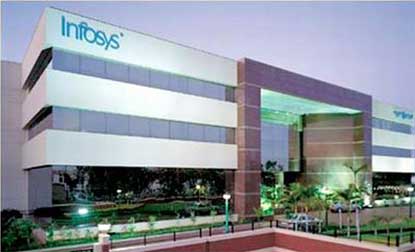
Day before Infosys Q3 results were unveiled, it has been revealed the company will brainstorm its future strategic direction in Mysore, in a three-day annual summit to be held during January 11-13.
The internal event will host former directors, board members, investors, key customers, foreign analysts and academicians. Former board member TV Mohandas Pai will deliver a lecture on “How to make India a $10-trillion economy” while co-founder Nandan Nilekani will talk on “Handling large projects.”
The other key non-Infosys executive will be Vishal Sikka, member of the executive board at SAP, who will speak on innovation. Sources indicated that former independe-nt director Deepak Satwale-kar and co-founder K Dinesh are also expected to attend the event called STRAP 2014, add-ing “the idea is to get all the key people together from Infosys across the globe and provide a networking platform.”
There has been a growing disquiet in the manner in which the over $7-billion IT-services firm was drifting away from a highly competitive Indian IT landscape, with growth lagging its peers’, and losing its status as the bellwether of the industry.
The annual strategy and the action-plan meet will focus on the IT major’s roadmap and the preliminary understanding of the overall demand environment. Traditionally, the event is held in Mysore but, last year, it was held in Bangalore.
source: http://www.financialexpress.com / The Financial Express / Home> Economy / by fe Bureau / Bangalore – January 10th, 2014
Ashraff, 15, can rattle off the atomic weight of the first 15 elements in the periodic table in one breath. Vaibhav, a Class 11 student, says he reads 25,000 words per minute.
Geniuses in the making? But both these kids introduce themselves as average students. The magic mantra, they say, are memory enhancing workshops.
It’s the season to charge those grey cells, and what better way than a workshop. From pills and tonics to tips and techniques, memory enhancers are the in thing. And these workshops have much on offer to help students fare well.
One common technique is the pegging model, where subjects difficult to memorize are pegged to something else. “We train them in the law of imagination. Students are taught to visualize. Next, they connect the visuals to themselves. The link could be ridiculous but helps easy recall,” says Biswaroop Roy Chowdhury, a memory trainer, Dynamic Memory, Faridabad. Biswaroop visits Karnataka often to conduct workshops.
D Krishnamurthy, a memory technologist in Hanumanthnagar, works on similar lines. “Rote memory is constant repetition. If you forget one key word, you tend to forget everything. Here, you aren’t losing anything because it’s systematic. There are visual and imaginary elements to it,” he says. Predictably, January is a busy time for him. “There are more students during January and February, when the knowledge gathered through the year is cluttered and needs organization,” he says.
There are others who promise more. Life strategist Md A A Ahmed conducts exam maximizer programmes which comes in beginners and advanced capsules. Level 1 gives tips on learning long answers in a single reading, memorizing key words in 120 seconds, and helps concentrate on boring subjects. Ahmed wants to patent a technique called flash reading, which he has developed. Here, a student can read 30,000 words in a minute. According to him, the student actually comprehends what he reads, and it’s not merely rote learning.
Midbrain Masters, a training centre headquartered in Malaysia, says it can help children activate their ‘midbrain’. “An activated midbrain helps improve concentration, enhance memory and speed up the learning process,” says Rajeev Ahuja, trainer.
Experts, however, feel sheer rote learning is promoted in such cases. “Many of these techniques look at rote or associative memory. Since our academic system is based on rote learning, and not much on analytical skills, it helps score marks. The methods assist them retain more facts but doesn’t do much to improve cognitive ability,” points out Sulatha Shenoy, director, Turning Point Psychological Centre.
“There are some simple facts where there’s nothing to understand; like Gandhiji’s date of birth, or the boiling point of a liquid. One has to have an imaginary understanding of it,” says Biswaroop.
Memory apart, these workshops also focus on concerns like confidence levels, stress, emotional baggage, etc. “Students complain about issues like the mood to study and short attention span. We train them to overcome such obstacles,” says Ahmed.
POINTS TO BE NOTED
Workshops should look at emotional, social abilities, leadership skills and teamwork. Most students I get are looking to improve memory. What they really need is an interest in the subject, some motivation, and better teachers.
Sulatha Shenoy | director, turning point psychological centre
Several factors lead to poor memory. Most kids multi-task while studying; some fiddle with their phones, some listen to music. Many suffer from low self-esteem and become anxious. All workshops address these problems. However, the techniques they learn don’t help in the long run. Boards like CBSE have started insisting on analytical learning. When Narayana Murthy says our engineering graduates are not employable, it is not surprising. Marks are important, but there’s more to life.
Vikram Prabhu | psychiatrist, sagar hospital
There’s no quick-fix to enhance memory. The techniques cannot be universally applicable. Factors like emotional stress, motivation level and interest affect memory. Feedback and follow-up is important to see if the techniques are working.
Meera Ravi | psychologist, prerana academy
Such workshops stem from the idea of rote learning. If a teacher deals with a subject engagingly, kids will learn. If not, they will have to look at mechanical ways of doing it. It boils down to good teaching approaches and pedagogy.
Maya Menon | teacher foundation
I feel like I have textbooks in my head. I know what’s on which page. When we have to look at tabular columns during exams, things are much easier for me because I know them by heart.
Vaibhav | class 11 student who attended Ahmed’s workshop
source: http://www.articles.timesofindia.com / The Times of India / Home> City> Bangalore> Rote / by Sruthy Susan Ullas, TNN / January 10th, 2014
1) Satish N. Chandra 2) The silver team: Staff of Ag Flex Technologies Ltd.,
by S. Kenneth Shishir
Mysore :
Most of us are unaware that silver has been used as anti-microbial agent in our daily lives without realising this. For example, the silver plates our elders used to eat their meals in, silver tumbler for con-sumption of water. If we look around Silver has always been referred to in a positive aspect; Every cloud has a silver lining; Silver bullet; think silver etc.
We all know that silver is a soft, white, lustrous transition metal, which possess the highest electrical con-ductivity of any element and the highest thermal conductivity of any metal. The metal which occurs naturally in its pure, free form (native silver) is used in manufacturing jewellery and other articles.
During Medieval times, from Romans to Persians and even our own Raja of Jaipur used to carry water in silver containers. They used silver in one form or the other to help in keeping themselves healthy.
But in recent years, silver is being used in medical sector and is used as disinfectant and micro-biocides and for burn care as creams and ointments. While many medical anti-microbial uses of silver have been supplanted by antibiotics, further research into clinical potential continues due to presence of many anti-biotic resistant bacteria. Silver is an inherently immune Noble metal to virtually all pathological bacterium found including MRSA, VRE, Acinatobacter, etc.
Action of silver against bacteria is multi-pronged attack. First, it cleaves the cell wall then disrupts the breathing mechanism of bacteria. Finally it binds to the DNA assuring total kill of the bacteria and no chance of resistance to silve.r
City based industry Ag Flex Technologies Ltd., an ISO 9001-2008 Export oriented unit at Hebbal Industrial Area in city has been into this process since many years and is now supplying silver coated materials to Industries manufacturing health care products such as wound dressings, therapy socks for regular wear and Diabetic wear and other textiles related products.
Satish N. Chandra, CEO and MD, Ag Flex Technologies Pvt. Ltd. who, along with his brother N.S. Prasad started the industry in city in 2008 and the industry was fully functional in the year 2009. It took them over 3 years to get various approvals from their customers who have been testing it continuously to assure themselves of the quality and longevity of the products which are branded as Flexsil.
Satish, speaking to SOM said that they started the industry in Mysore as it was the home town of his father and because of availability of natural resources and smart interactive labour.
He said that our goal is to bring commonsense science using the most commonly used delivery medium in the world -textiles. The focus of our group of highly dedicated scientists and innovative business development team is application based product line, from healthcare to home goods with everything in between cutting across Consumer, Industrial and Institutional arenas.
He said that they were trying to put science to work by creating sustainable silver solutions which was essential for better, safer and healthier life of the people.
Ag Flex offers a wide range of innovative products and services through its silver metalized fibres and yarns for markets including Military, Health Care, Consumer and Home Products.
He said that silver coated yarns used in the manufacture of socks and sportswear inhibits the growth of odour causing bacteria and neutrali-ses odour causing ammonia. It is also used in surgical dressings because of its anti-bacterial and anti-fungal properties. A clinical trial is being undertaken at a multi- specialty hospital in city. The silver coated yarn is now being used in the sportswear of cyclists to prevent odour, fungal and bacterial infections due to sweat.
Satish said that many multi-national companies were working with them and they would release the products soon.
Some of their major clients are Toyota, Yamaha and Panasonic in Japan and their manufacturing partners for socks are in Turkey and Bangalore. Currently, tests are going on at a prominent University in Japan for checking flow of blood in lungs to determine if lungs are working well. This will help immensely as there is no need for X-ray, Doppler, etc. which are momentary tests. With this new technology one can be monitored round the clock to see lung function. Their aim is to have multiple sensors using the very conductive Flexsil products to help get a 3D view of the lung function. This indeed will be a real game changer for pulmonary diagnosis.
Ag Flex also plans to use similar technology to monitor blood sugar levels without invasive actions. This is something down the line but certainly on the radar of Ag Flex. The conductive properties of Flexsil are also used for various anti-static applications and for what is called as “Electro Magnetic Interference (EMI) Shielding.” This will enable one to be protected against harmful radiation from various electronic devices. For example, for pregnant ladies EMI Shielding inner-wear will be offered to protect the foetus from being exposed to dangerous radiation from every day appliances to instrumentation. This effect was shown by wrapping a mobile phone with Flexsil and when one tried to call the number the phone was “not-reachable” though the phone was very much on. Once the fabric was removed the phone functioned normally.
All these products can sustain laundry cycles and yet maintain their efficacy. Ag Flex has tested data after 100 commercial laundry cycles without dimini-shing the properties. Hence they say that their product is good for the life of the finished goods.
Besides manufacturing silver coated yarn the company also supplies silver in other forms too. Actimist, a sanitizer spray which also uses silver and will be available in the market soon. Test data from Japan shows reduction of anti-biotic resistant bacteria called as MRSA, E.Coli and Salmonella by 99.99999% in one minute. This is something Ag Flex is very proud of since this is their proprietary technology and can be used on any hard surfaces at home, hospitals, public places and even on one’s hands as sanitizer. Actimist also controls offensive odours without perfumes as perfumes may cause allergic reaction to many individuals.
Ag Flex also makes metalized foam (sponge) which is used for both anti-microbial and EMI Shielding applications. These foam when metalized with Silver are so unique that when you cut the foam you can see the silver coating uniformly even in the inner layers of the foam
Ag Flex also houses a beautiful garden where they have flowers, fruits and vegetables using treated water from process. The water used in highly purified as their process requires this. For this, they use complex and multi-step purification process. As they make very good water they also use the same for their drinking purposes.
Inside the tank Satish showed SOM a silver metalized sleeve which has helped in keeping the water fresh even when not used for many days.
Satish said that the mission at Ag Flex Technologies is to be a world class silver solution provider for anti-microbial and conductive applications and is committed to achieve this goal by being environ-mentally responsible and offering innovative products in an ethical manner.
source: http://www.starofmysore.com / Star of Mysore / Home> Feature Articles / January 18th, 2014
Facebook has acquired Little Eye Labs, a Bangalore-based start-up, according to the company’s announcement on 8 January.
The company builds mobile app analysis tools for app developers and testers.
“This is Facebook’s first acquisition of an Indian company, and we are happy to become part of such an incredible team,” the company said on its website.
The acquisition price has not been disclosed. However, TechCrunch reports Facebook paid between US$10 and $15 million to acquire the Indian startup.
According to the company, Little Eye Labs was founded about a year ago by a bunch of program analysis geeks who wanted to build better tools for Mobile developers. They were later backed by GSF and VenturEast Tenet Fund.
The company had released their official version of Little Eye for Android in early April last year.
“The entire Little Eye Labs team will move to Facebook’s headquarters in Menlo Park, California,” the company has stated. “From there, we’ll be able to leverage Facebook’s world-class infrastructure and help improve performance of their already awesome apps. For us, this is an opportunity to make an impact on the more than 1 billion people who use Facebook.”
Current customers of Little Eye will receive further information on plans to offer a free version of Little Eye until June 30, 2014, the company has assured.
source: http://www.pcadvisor.co.uk / PC Advisor / Home> News / by Zafar Anjum, MIS Asia / January 10th, 2014
(From left) Vipin Lokesh, Laksh Shetty and N. Amruth
Mysore :
Young minds needs to be encouraged at an earlier stage for them to flourish in their field of interest. Three students of St. Joseph’s Central School, Vijayanagar, have made the city proud by emerging victorious in the South Zone Qualifier round of BrainCafe Budding Scientist contest held in Bangalore recently.
Vipin Lokesh, a II Std. student, created a device which can light up 26,000 bulbs of Mysore Palace using an improvised windmill. He has been selected as a finalist for the National level BrainCafe Science contest final to be held in Mumbai on Jan 18. There were 28 contestants in this category during the contest held in Bangalore.
Another student, Laksh Shetty, of VI Std., secured the second place in his category. His project demonstrated the application of scissor mechanism and hydraulics to make equipments we use in everyday life. The project exhibited innovative models of foldable water pipe and folding bridge designed using scissor mechanism. Similarly, foldable water pipe developed by Laksh is easy to manufacture, affordable, convenient to use and facilitates in conservation of water. There is also hydraulic scissor lift, hydraulic elevator and a simpler version of Doremi’s scissor mechanism gadget which can be used to reach objects that are beyond our reach.
N. Amruth, a student of IV Std., has created a device called ‘Makeway Add Life.’ The device is placed in the dashboard of an ambulance. The LED blubs glows in the dashboard and people will get to know that they should make way for the ambulance.
Amruth was awarded the third place in the contest.
source: http://www.starofmysore.com / Star of Mysore / Home> General News / January 17th, 2014
Three Bhatnagar Awards and one Bharat Ratna were awarded to city scientists in 2013. Prof D D Sarma, chairman of the Solid State and Structural Chemistry Unit of IISc, said, “2013 has been a good year for science in India and for the city.”
A research group, led by Prof C N R Rao of Jawaharlal Nehru Centre for Advanced Science, established the most important ingredient for high catalytic activity for artificial photosynthesis that will ‘break’ water to produce high energy, hydrogen and oxygen. This ingredient is a single electron in a particular orbital in the oxides of manganese and cobalt.
The group of Prof D D Sarma of the Solid State and Structural Chemistry Unit of IISc, Bangalore, discovered that manganese ions, dropped in small quantities into semiconductor nanocrystals, such as zinc sulphide or cadmium sulphide, can emit intense colours of all hues from green to red, when excited with UV radiation.
This has huge significance in the field of display and lighting and can change the way nanocrystals are used in practical devices.
Researchers like Yamuna Krishnan, who won the Bhatnagar award this year at NCBS, Tata Institute of Fundamental Research (TIFR), devised a new cell biology technology that can simultaneously measure the pH in two different places in one cell.
In another study, a group led by Prof Arindam Ghosh of the Department of Physics, IISc, who too got a Bhatnagar award this year, established some remarkable properties of a hybrid layer of graphene on molybdenum disulfide, in a recent publication.
source: http://www.newindianexpress.com / The New Indian Express / Home> Cities> Bangalore / January 02nd, 2014
Dr. R. Indira, Chairperson, Department of Studies in Sociology and Director, International Center, University of Mysore, has been elected as Secretary of the Indian Sociological Society for a period of two years from January 2014.
Prof. Indira is the fourth woman to be elected as the Secretary of the Indian Sociological Society in its 62-year-old history and the first Woman Secretary from South India. With nearly 4,000 members, the Indian Sociological Society is considered the second largest professional body of sociologists in the world, after the American Sociological Association.
Prof. Indira has earlier served as the member of Managing Committee of the Indian Sociological Society and the President of the Karnataka State Sociological Association.
source: http://www.starofmysore.com / Star of Mysore / Home> General News / January 13th, 2014