Category Archives: Science & Technology

Infosys announces Science Foundation prizes

The Infosys Science Foundation on Tuesday announced the winners of the Infosys Prize 2013 across six categories: Engineering & Computer Science, Humanities, Life Sciences, Mathematical Sciences, Physical Sciences and Social Sciences.

InfosysBF26nov2013

The winners were recognised for their outstanding achievements and contributions to scientific research. The Infosys Science Foundation also announced an increase in the prize purse by Rs 5 lakh to Rs 55 lakh for each category for 2013. The prize for the humanities category will be split equally between the two winners.

Prize winners include, Ramgopal Rao from Indian Institute of Technology, Mumbai in Engineering and Computer Science; Nayanjot Lahiri, Professor – Department of History, University of Delhi in Archaeology; Ayesha Kidwai, Professor – Centre for Linguistics, School of Language, Literature and Culture Studies, Jawaharlal Nehru University in Linguistics.

Rajesh Gokhale, Director, Council of Scientific and Industrial Research – Institute of Genomics and Integrative Biology, New Delhi in Life Sciences; Rahul Pandharipande, Professor – Department of Mathematics, Eidgenössische Technische Hochschule, Zürich (ETH Zurich) in Mathematical Sciences; Shiraz Naval Minwalla, Professor – Department of Theoretical Physics, Tata Institute of Fundamental Research in Physical Sciences; and Aninhalli R Vasavi, Senior Fellow, Nehru Memorial Museum and Library in Social Sciences.

Member of Infosys Board Srinath Batni said, “Continuing its efforts to encourage and attract young minds towards science and research in the country, the Foundation has decided to increase the prize money from Rs 50 lakh to Rs 55 lakh with an aim to build a strong future in science, mathematics and humanities.”

The seven winners were chosen based on significant progress showcased in their chosen spheres, as well as for the impact their research will have on the specific field.

In addition to the prize purse, each category award includes a gold medallion and a citation certificate. The winners of the Infosys Prize 2013 were evaluated by a panel of jurors comprising eminent scientists and professors from around the world.

source: http://www.deccanherald.com / Deccan Herald / Home> Business / DHNS / Bangalore – November 12th, 2013

City’s Gandian technologist on a mission to take sustainable technologies to common people

(Top) Prof. U.N. Ravi Kumar (Below) Prof. Ravi Kumar showing Anila stove.
(Top) Prof. U.N. Ravi Kumar
(Below) Prof. Ravi Kumar showing Anila stove.

By Depalan

Mysore :

Prof. U.N. Ravi Kumar is a man driven by passion and reminds you of what Aristotle once wrote ‘Energy of mind is essence of life’. A practical man that he is, Prof. Kumar has taken a step further, from creating awareness to creating actionable awareness. He is a pioneer of sorts as when he was a Professor at National Institute of Engineering (NIE), Mysore, he initiated the Centre for Appropriate Rural Technology (CART).

There was a realisation that there were many technologies available for rural development but the target group for whom these technologies are designed, namely the rural and the poor, were not getting the benefits due to lack of proper implementation. Prof. Kumar firmly held Gandhian thought of technology as a means to empower and not to enslave.

Accordingly the Centre, under his aegis, took initiative to collect available information on rural technologies, compile them and methods to disseminate them to people needing technological assistance. He is known for his tireless efforts in Ecological Sanitation as also Rainwater Harvesting and Biochar Stove. The common feature being dissemination of technology in a practical and sustainable manner, using locally available materials and requirements that makes it affordable and easy to use.

Ecological Sanitation or EcoSan is sustainable and eco-friendly model for toilet which conserves water, prevents contamination and recycles human waste as sanitised manure. The objective being to protect human health and environment while reducing water consumption in sanitation system and recycling nutrients to help reduce need for artificial fertiliser in agriculture.

EcoSan works on the principle of keeping the solid waste separate from liquid, consequently there is a separate exit for urine. Unlike faeces, urine is full of nutrients hence diluted and used as fertilizer. Sanitation is a major issue in India with staggering 65% people not having access to proper sanitation facilities and forced into open defecation. These open faeces are extremely harmful and contaminate air, water and soil.

This has contributed to spread of communicable diseases. Lack of water is a major concern as also the cost involved in laying drainage system and so on. This is where EcoSan toilets gain critical significance. Further, even in areas where water tables are at comfortable levels the flush toilets and septic tank seepages tend to contaminate groundwater and thus are polluting and disease spreading. The case is worsened in water logged areas.

EcoSan provides a perfect solution to these problems and has revolutionary potentials. It is a safe, sustainable and affordable sanitation solution. With increasing population and pressure on natural resources, EcoSan provides an effective alternative model.

There are roadblocks, the most important being, as Prof Ravi Kumar puts it “we have faecal-phobia”, we as a society don’t want to talk about faeces or matters related to toilet. “We just want to flush it down, literally!” This issue also has socio-historical baggage and tends to excite extreme emotions among people. The reason why these are neglected at the policy making level, ironically with detrimental effect on common people. Thankfully with much determination and persuasion EcoSan is now functioning as a pilot project in three locations at Udupi, Bangalore rural and Raichur district through UNICEF intervention.

As a community initiative, EcoSan toilets have been adopted in Mosara Halla in H.D. Kote and Kurabara Kunte in Devanahalli as also by schools in Doddaballapur, Krishnapura, Moodalakoppal and Kempammanahosur.

EcoSan toilet’s spin off benefit too is significant in terms of organic manure. “This will reduce the dependence on chemical fertilisers” asserts Prof. Kumar. Many farmers are falling into debt due deteriorating soil nutrient content caused by intensive use of chemical fertilisers, they are trapped in a vicious attritional cycle. Prof. Kumar informs “an individual’s faeces produces 7.5 kg of NPK over a year, this is the manure requirement for cereals that is consumed by an individual in a year. Life is in a self sustaining cycle”. It is not that these are new knowledge; many communities have been practicing these since ages like for instance the Tibetans.

Prof. Kumar points to Mahatma Gandhi as a source of inspiration, when he visited Wardha he found that Gandhiji practiced compost toilets. EcoSan generates opportunities that add value to human waste and decentralised waste management. Prof. Kumar has also been instrumental in the creation of Nesara, an organic farmer’s community in Mysore with a motto of safe food at affordable price.

Prof. Kumar took me to the porch of his house to show the model of Biochar stove, called Anila, he had developed that has earned him international repute. It is unique in its design as biomass fuel is placed between two concentric cylinders while the outer filling biomass undergoes pyrolysis thus produces biochar, these activated carbon helps in heat recovery and also negligible smoke.

Biochar has appreciable carbon sequestration value and is a soil enhancer, these highly porous charcoal helps retain soil nutrients and water. Also, biomass of any sizes could be added and therefore is not dependent on wood. “In villages there is a substantial bio-residues during agriculture related activities that go waste, like arecanut husk or coconut shell these can be turned into efficient biofuel and biochar manure,” informs Prof. Kumar.

Anila is a cost effective and efficient smokeless stove that is ‘carbon negative’. Though there is a demand for the stove in rural areas, Prof. Kumar is gloomy as he is not able to break even. There is an institutional support needed for these efforts apart from of course policy making that understands the needs of common people and sustainable development.

e-mail: depalan@gmail.com

[Depalan conducts Nature Walks in and around Mysore. He can be visited at www.iseeebirds.blogspot.com] 

source: http://www.starofmysore.com / Star of Mysore / Home> Feature Articles / November 28th, 2013

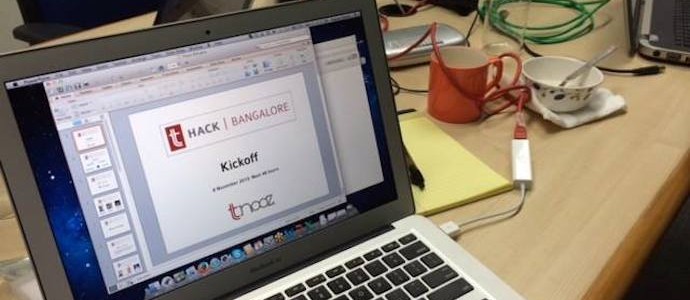
THack Bangalore: Winners – waitlist predictor, social travel and trip planning

For the first time in India, a travel vertical focused hackathon (THack) took place in the country’s own Silicon Valley – Bangalore.
ThackBF23nov2013

THack Bangalore was planned to be slightly different from the other THacks we have been doing for a few years.

In our regular hackathons (recent ones in SFO, Boston,  Sydney ), we make travel APIs available to developers in advance. Participants are given eight (sometimes more) days to build hacks/products on top of the APIs and, finally, present at a showcase on the final day.

However, THack Bangalore (hosted at Cleartrip‘s Bangalore office) turned the idea around, with no travel branded APIs made available – rather, a 48-hour, open hackathon concluding on midday Sunday 12 pm on November 10.

The event attracted 60 developers forming 22 teams. One team among the 22 included students, the remaining 21 teams were developers and engineers working at various companies.

Participants came from a string of organisations including Amadeus, Nibodha Technologies, RedBus, C-soft Technologies , TripThirsty, OLA Cabs, Cleartrip , Yahoo,  Armor Technologies, FindMyCarrots ,  and PayPal.

Tnooz CEO Gene Quinn briefing developers.

Highlights

Amadeus had two teams involved in the event – one developed a service which alerts a traveller about local events during his/her travel. The other team developed a trip recommendation engine based on user’s social media data.

The team from Armor built NFC-based use cases for the airline industry. For example: A traveller browsing and buying inflight products and food using NFC technology.

Yahoo hackers built a marketplace for finding information regarding destination related souvenirs – browse, read, customize and buy souvenirs.

Teams from RedBus built crowd-sourced location tracking engine for buses and cars. A number of travel planning hacks were also built in the event.

The judging team – Mahesh Murthy, founder of SeedFund; Ram Badrinathan, CEO of GlobalTHEN ; Mukund Mohan, head of Microsoft Ventures – focused on four areas: creativity, originality, technical proficiency, and business purpose/revenue scope.

Every team was given four minutes to present their final product to the judges and fellow participants, followed by two minutes of Q&A (these turned out on a number of occasions to live consulting sessions).

Third place

The third place was shared by two teams.

Hack 1: This team of three from Nibodha Technologies built a trend-based travel opportunity creation engine. Depending on a local trend, the engine creates automatic posts with travel content in it that can be posted to a company’s social media pages.

Example: Sachin Tendulkar’s last test match (before he retires) that is scheduled to happen in Mumbai is a local trend. The hack engine picks this trend, validates a travel opportunity, and creates a post something like this – “Travel to Mumbai to watch Sachin’s last test match, hotels in Mumbai starting at $50, book here: <a link>”.

Hack 2: This team of two from OLA Cabs built a personalized destination recommendation platform by retrieving data from Facebook friends. The team says:

“We were developing Facebook app for the first time. We spent nearly half the event time in figuring out auth-token and FQL. Best thing we did was we kept going, kept the spirits up. We didn’t know then, but others were struggling as well.”

Second place

This team of two from RedBus built a real-time group trip planning service – bringing people who wish to travel together into a closed group where they can discuss their travel ideas, share details, and create a travel plan.

All searches and destination suggestions by people (in a group) gets pinned to the group’s wall. Each pin can be upvoted or downvoted by group users. All of these activities happen realtime so that group users get an update.

The team used technologies like Node.js and Redis to enable real time communication between users. Also, Wikipedia pages were scraped and Google APIs like search, images, maps, places were used to aggregate a lot of information into pins.

The team also wrote an algorithm to find the best possible order of locations in cities to help users who do not have much knowledge about the location.

The team says:

“This was our first experience in a hackathon and it was a memorable one. From sleepless nights to Redbulls to long hours of coding and designing, it was fun and a good learning experience. We interacted with other teams and were able to understand and learn a lot. Also we got to know about a lot of interesting ideas that we never thought could help solve problems in travel.”

The winner

All three judges unanimously picked Salil Panikkaveettil. Working on his own, Panikkaveettil built a prediction service which will work out if an Indian railway’s wait-list ticket will be confirmed or not.

The Indian Railway is the fourth biggest train network in the world. Considering this fact and the technically challenged railway reservation service, there exists a good chance for a user to end up in wait-list status.

Panikkaveettil built PNR.me, a service which tells in advance whether a waiting list ticket will be confirmed or not with 75% accuracy, (a kind of Big Data hack). Panikkaveettil works as an online marketing analyst at BankBazaar.

Panikkaveettil was awarded Rs 50,000 for winning the THack, the second team was awarded Rs 30,000, and the third place teams were awarded Rs 10,000 each.

Judges pointed out that a number of the products had very good solution developed as hacks, but they lacked a real business problem which needed solving

They also pointed out that a hack always need not result in a big product/company, and only 2% of the hacks developed make it to become a big company.

source:  http://www.tnooz.com/ TNOOZ / Home> Articles / by Karthick Prabu / November 13th, 2013

Biocon sets up CoE; says biotech sector aims $100 b revenue

Bangalore :
Biotechnology major Biocon today announced the setting up of a centre of excellence (CoE) here for advanced learning in applied biosciences and said the biotech sector aims at a revenue of $100 billion by 2025.

The centre — Biocon Academy — would train and develop industry ready talent for India’s biopharma sector and enable global competitiveness, the company said.

“India has a potential of becoming a global innovation hub for biotechnology. The Indian biotech sector is estimated of the size of $11 billion today and it has grown at the CAGR of 20 per cent over last 10 years. The aim of the sector is to realise the revenue of $100 billion by 2025,” Biocon Chairperson and MD, Kiran Mazumdar-Shaw said here.

“If this is the trajectory that we need to aim for, it may call for a very impotent talent pool, and a very large talent pool that enables us to achieve this goal,” she added.

Stating that India has a very large opportunity to aim and achieve its goal of $100 billion by 2025, Mazumdar-Shaw said: “In order to do that we need appropriate talent to get us there.”

She said: “Today as we all know there is a very large gap that exists between the quality of human capital available and the need of the industry. While we have the academic sector in our country graduating a large number of biotech professionals we do believe they are not industry ready.”

“We have today over 725 biotech institutes in India, graduating 40,000 students per annum, but is it the appropriate relevant and rich talent pool we are getting? For which the answer is no, because barely 2,000 students get employed each year,” she added.

Pointing out that the challenge is huge and immense, Mazumdar-Shaw said: “What BT Finishing Schools (Government of Karnataka initiative) and we at Biocon through the academy are planning to do each year, it is very very small scale…. Over the next few years if we were able to actually create or expand the talent pool by 10,000 each year — that will be quite a lot.”

To a question on actual demand from the industry for graduates, she said “it is difficult to answer that — it is bit of a chicken and egg situation. If you had the talent pool you will have industries that will come in. You will have much more entrepreneurial companies being formed because of the right talent.”

“As we don’t have the right talent for now — we don’t have enough industries formulating in the biotech space.”

Adding to that she said “Biocon hires 1,000 new employees each year; we find it very difficult to get the right kind of students — it takes a lot of time to train these students to be industry ready. Out of 1,000 we hire almost 80 per cent are freshers.”

source: http://www.thehindubusinessline.com / Business Line / Home> Companies / by PTI / Bangalore – November 11th, 2013

Rare brain surgery saves 9-year-old Iraqi girl

Bangalore :

As young Zaman was wheeled into the operation theatre, her head shaved, her mother Ninaya Khalil bent down to scoop up long locks of hair spread on the floor. Zaman had gone in for a complex surgery, and Ninaya wanted the hair for keepsake. Just in case. For Zaman had a ‘time bomb’ ticking inside her little head.

“I wanted to keep her hair, I didn’t know if she would come out alive,” says Ninaya, happy and relieved a week after her daughter’s surgery on November 1.

Zaman Adlaab, 9, from Iraq, was flown down to Bangalore, the left side of her body paralyzed. Zaman needed a surgery to remove a knot of arteries which was rupturing, leading to bleeding in her brain.

It began when Zaman was just six. She began complaining of severe bodyache that was followed by repeated convulsions. A few days later, she fell unconscious, white liquid oozing out of her mouth. Terrified, Ninaya took her daughter to a hospital in Iraq for an MRI, for a clear image of the brain.

“Doctors detected bleeding in Zaman’s brain. A surgery was performed and Zaman spent 15 days in the ICU. After the surgery, Zaman appeared healthy, apart from partial paralysis in the left side of her body,” recalls Ninaya.

The nightmare returned after two-and-a-half years. The bodyache and convulsions recurred, and she fell lifeless again. “A surgery was needed to get rid of the root cause. Although there was some risk involved, we had no other option. The doctors said a third fit could prove fatal,” says Adlaab Mehsin, Zaman’s father.

They came down for the surgery at Fortis Hospitals. “Bleeding in Zaman’s brain was due to Arteriovenous Malformation (AVM), a knot or ball-like structure formed by arteries which are “not fully developed”. Unless this knot was removed, chances of AVM rupturing the third time were high. Moreover, the AVM was sitting on the right side of the basal ganglia, a part of the brain that controls motor movement of the opposite side of the body. This made the surgery even more complex,” said Dr S Satish, consultant neurosurgeon, Fortis Hospitals.

The surgery, that went on for over nine hours, has given the girl a new life. “I feel no pain. I want to go home and start cycling with my brothers,” says a lively Zaman, waiting for the metal plates holding her scalp together, to be removed.

What is AVM?

* Arteriovenous Malformation is a condition that arises when immature blood vessels (arteries) in the brain form a ball-like structure. Often defined as a ‘time bomb’ by experts, AVM can rupture anytime without any symptoms, due to blood flow pressure and causes bleeding inside the brain.

* Brain AVMs occur in less than 1% of the population

* Cause unknown, are usually congenital but not hereditary

source: http://www.articles.timesofindia.indiatimes.com / The Times of India / Home> City> Bangalore> Time Bomb / by Garima Prasher, TNN / November 11th, 2013

Bangalore: Not a waste, for sweet drums are made of these

Students of University of Agricultural Sciences displaying compost produced through the drum composting method at Krishi Mela in Bangalore on Thursday. - Mohan Kumar B N/DNA
Students of University of Agricultural Sciences displaying compost produced through the drum composting method at Krishi Mela in Bangalore on Thursday. – Mohan Kumar B N/DNA

Don’t throw out that kitchen waste! It could make money for you!

Scientists from the department of soil science and agricultural chemistry, University of Agricultural Sciences (UAS), Bangalore have devised a method whereby kitchen waste could be turned into compost that could be used to grow plants in your balcony, or be even sold.

Drum composting is the method of collection, digestion and decomposition of wet waste from domestic kitchens, vegetable markets, schools, colleges,offices, agriculture, agro-based industrial wastes, into compost.

“There are two types of drum composting: Drum vermicomposting and drum bio-composting,’’ says HC Prakash, professor, department of soil science and agricultural chemistry at UAS.
According to him, on an average an individual produces about 250-400 gm of wet wastes. “For about Rs5,500-7,000, you can have a solution for your kitchen waste problem,” he says.

“In India, about 1.3lakh tons of garbage is generated daily and, Bangalore city alone about 6,000 tones of it,’’ Prakash said.

Drum dry composting involves storing of wet waste in a plastic drum with its bottom punctured with a large number holes to allow aeration and draining of water. The garbage is stored for three weeks for ‘pre-digestion’ and during the period the temperature in the garbage rises and gradually decreases. When the temperature has declined to a low, half a kg of earthworms are introduced in the drum. The waste has to be sprinkled with water occasionally to enable the earthworms to survive, ingest, digest and excrete vermi casts otherwise known as vermicompost which is rich in nutrients needed by plants. It could also be sold in market.

Things to watch out: The waste should not contain plastic, glass pieces or non-vetegarian waste. He cautions that once the earthworms are introduced into the drum, in order to ensure the growth and development of worms, further waste should be stored in a second, similar drum. In this method, the drum is rotated 15-20 times twice a day. Rotation allows air circulation in the waste, eliminates fetid smell, and aids decomposition of waste.

“Here application of cow dung slurry or bio-culture helps speedier preparation of compost. If cow dung slurry is not available, even mere rotation of drums twice a day is enough for preparation of compost,’’ Prakash says.

DRUMMING UP SOME FACTS
On an average a 200-litre capacity plastic drum produces about 75 kg of compost in about 75 days

The cost of the drum and the composting is about Rs 5,500-6,000 for drum dry composting and Rs 6,000-7000 for drum bio-composting

Simple and easy to operate and can be adopted in household roof tops, gardens and parks

Aerobic microbial composting minimizes flies and mosquitoes in the area

Prevents soil and water pollution

Ecofriendly and maintains a clean environment

Can be a source of livelihood for unemployed youths.

source: http://www.dnaindia.com / DNA / Home> Bangalore> Report / by Y Maheswara Reddy / Place:Bangalore, Agency:DNA / Friday – November 08th, 2013

A chamber of secrets

This museum chronicles the evolution of product packaging from the 1900s. Weave through the mesmerising stories of humble soft drink bottles and wooden radios.

A soft-spoken man of average height and an engaging baritone, Vimal Kedia looks like a regular Marwari businessman. Until you meet him at the imposing Manjushree Heritage Packaging Museum, nestled off Bommasandra in Electronic City. In his element, surrounded by over 200 beloved products in various packages, from Cadbury Fryhocolates to Agfa and Kodak cameras, he turns into a repository of information.

Did you know, for instance, that in the 1950s, Coke bottles were narrow-necked glass items, with a marble in a glass casing within? “When you would tilt the glass bottle to drink, the marble moved up, blocking the gas, thereby retaining the fizz,” he rattles off. “Ceramic bottles were considered a premium and expensive material in the ’50s and ’60s. Ceramic Coca- Cola bottles had a metallic cap, but were heavy and bulky. Later, in 1993, the company began using high-grade plastics that had made an entry into the market. They were lightweight, retained the gas easily and were reusable.”

Nuggets of fascinating information like this emerge from the 1,200 sq ft Museum (launched in 2009), the country’s first and only packaging museum, devoted to the study and showcase of products and their packaging from the 1900s. Kedia, managing director of Manjushree Technopack Ltd, hopes to help FMCG analysts, marketing honchos and brand designers understand how product packaging has evolved over time. To that end, he also published a coffee table book Reflections in January this year, a comprehensive analysis of 50 brands that have evolved over time, and is planning another book in March or April. Dig deeper, though, and you realise that it is a 30-year-old labour of love.

Story of change 
It began after Kedia’s tryst with business at the age of 22, that he was forced to pursue due to financial constraints on his family. He discovered the entrepreneur in him and started his career by selling umbrellas. The Northeast, where he lived, was prone to long and hard spells of rain. The 57-year-old’s sharp instincts and ability to find something profitable in what may otherwise seem ordinary, was born out of dire circumstances.

Today, that has translated into a fascinating repository of items from across country — Nestle tin cans, Ponds talcum powder and Khodays’s rum bottles. An impressive showcase at the entrance displays an array of glass products, in which the Coca Cola bottles take pride of place. Kedia says, “I have a huge network. I search for shops that sell packaged items at throwaway prices — they are considered scrap. Who preserves a Ponds talcum powder case or a Nutrine biscuit box?” These items then find their way into the museum shelves.

Admittedly fascinated by soft drink bottles, he rues missing out on procuring a limited edition collection of Coke bottles, preserved by a man who sold the collection to the company before moving abroad. “I wish I had caught hold of him — it would have added value to my collection.” The evolution of the Coca Cola bottle, spread across six decades, highlights how need-based inventions shape a design sensibility, he believes.

Collectibles galore
A variety of other items populate the Museum — Tipu Sultan’s gun case, a hand-painted 1940s Cypress powder box made in clay, miniature glass liquor bottles and Chanel and Estee Lauder perfumes dating back to the ’60s, painstakingly catalogued and labelled by Kedia. There is a definite progression in style, design, packaging and usage of material, as evidenced by a range of vanity cases used by airhostesses of Indian Airlines in the ’60s. While the first few are heavy, made of wood and rexine, and lined with velvet, the later ones are made of lightweight rexine, and then come plastic cases with metal reinforcements.

“Plastic was considered avant-garde — it was not easy to procure and India didn’t possess the technology to make it. Wood was most common as it was cheap and there were a lot of carpenters. Metal was also hard to work with as one needed a blacksmith to bend and mould metal sheets,” explains an enthusiastic Kedia.

As you walk further in, a range of musical instruments catch your eye, mostly made of rexine, silk casing, wood and cardboard. Metal was too heavy. A real gem here is the first radio made by HMV, in wood. “Radio players would come in wood or cardboard cases, never metal as it would vibrate when music played,” we learn.

A rare Ronson cigarette, and cigar boxes made in moisture-proof metal are next. Another favourite case study is liquor bottles, which, says Kedia, have largely retained their design. Even now, premium liquor is sold in glass. “People like the feel of glass. Even now, the VAT 69 bottle looks the same as it did 40 years ago.”

But preserving history is no mean feat. He stores most aluminium and metal chocolate and biscuit boxes, hairdryers and powder cases in well-illuminated almirahs to keep them dust and moisture-free. Items made of wood, metal and glass are kept on open shelves, and cleaned every week. “I will shift the entire museum to a new factory in Bommasandra soon, where I will have air-conditioners,” he says, explaining that air conditioning helps keep dust at bay. He is also planning to rope in a curator.

Kid in a candy store
Kedia cherishes each item in this space. He puts down his knowledge of the subject to his extensive travels over the years and power of observation. His Rs 360-crore business stands strong, and he continues to be the South Asian leader in packaging, %with a dominating presence on the National Stock Exchange and Bombay Stock Exchange.

With a President’s Award for Outstanding Entrepreneur in 1998, Kedia feels instincts have guided him well thus far, and wants his museum to be a harbinger of valuable lessons for young minds. So far, the global head of Unilever R&D, head of purchase of Coca Cola, purchase and procurement team at PepsiCo among others have paid a visit to his museum and have marvelled at his collection, and he is a proud collector in business circles. “It’s been a cumulative process for me, and each item carries a beautiful story. I doubt I’ll ever stop collecting such items.”

source: http://www.bangaloremirror.com / Bangalore Mirror / Home> Columns> Sunday Read / by Sindhuja Balaji, Bangalore Mirror Bureau / November 17th, 2013
CFTRI’s chapati-maker wins ‘Engineering Marvel’ award

CFTRI Scientist Dr. B. S. Sridhar (right) receiving the Engineering Excellence Award from the guest at a function held in New Delhi recently.

Mysore :

The Continuous Automatic Chapati Machine designed by the Engineers of CSIR-Central Food Technological Research Institute, Mysore was the jury’s choice for the ‘Most Impactful Engineering Marvel’ for the Engineering Excellence Awards (EEA) 2013.

The EEA awards instituted by Engineering Watch Magazine, the prestigious engineering journal, are given in recognition of engineering marvels created by Indian engineers/ scientists/ technologists.

A total of 25 awards were given in different categories at an award function held at New Delh recently.

The machine designed by CFTRI technologists can bake around 800-1,000 chapatis per hour continuously and is in commercial production. The machine has come handy in large scale catering situations and has been used in producing food for calamity relief operations, according to a press release.

source: http://www.starofmysore.com / Star of Mysore / Home> General News / November 07th, 2013

Super speciality Cleft centre inaugrated at St. Joseph’s hospital in city

 Hans-Gunter Loffler, Deputy Consul General of the Federal Republic of Germany, is seen cutting the tape to inaugurate the new cleft treatment centre at St. Joseph’s Hospital in city last evening as Bishop of Mysore Rt. Rev. Dr. Thomas Antony Vazhapilly; Alexander Gross, CEO, Deustche Cleft Kinderhilfe, Germany; Dr. Brigitte Winkler, Schweizer Hilfe fur Spaltkinder, Switzerland, Hospital Administrator Fr. Mari Raj and others look on.
Hans-Gunter Loffler, Deputy Consul General of the Federal Republic of Germany, is seen cutting the tape to inaugurate the new cleft treatment centre at St. Joseph’s Hospital in city last evening as Bishop of Mysore Rt. Rev. Dr. Thomas Antony Vazhapilly; Alexander Gross, CEO, Deustche Cleft Kinderhilfe, Germany; Dr. Brigitte Winkler, Schweizer Hilfe fur Spaltkinder, Switzerland, Hospital Administrator Fr. Mari Raj and others look on.

Mysore :

Deutsche Cleft Kinderhilfe e.V., a first-of-its-kind super specialty cleft treatment centre was inaugurated at St. Joseph’s Hospital in city yesterday by Hans-Gunter Loffler, Deputy Consul General of the Federal Republic of Germany.

Bishop of Mysore Rt. Rev. Dr. Thomas A. Vazhapilly presided over the function held at St. Mathias School auditorium.

The guests of honour included prominent dignitaries like Alexander Gross, CEO, Deustche Cleft Kinderhilfe, Germany; Dr. Brigitte Winkler, Schweizer Hilfe fur Spaltkinder, Switzerland and Dr. Margrit Leuthold, Executive Director, Swissnex India.

Speaking at the occasion, Hans-Gunter Loffler said, “It is indeed a proud moment for us, as Germany is a good partner to India not just in the business and cultural domain but also in social and developmental activity.”

Addressing the gathering, Alexander Gross said, “Our aim is to make quality healthcare accessible to the underprivileged.”

Deutsche Cleft Kinderhilfe cleft centre at St. Joseph’s Hospital will offer comprehensive therapeutic, diagnostic and surgical facilities under one roof. In addition, the centre will be the first-of-its-kind exclusive facility in the Mysore region to provide free treatment to severe congenital facial deformities like NAM–Nasoalveolar Moulding therapy and orthodontic care under one roof coupled with the many complex and specialised surgeries including orthognathic surgery, rhinoplasty, pharyngoplasty, distraction osteogenesis and many secondary corrections which are quite complex in nature.

Apart from this the Centre will also provide orthodontics, speech and ENT-related treatment for cleft children.

The new cleft care facility is fully equipped with a dedicated high-tech operation theatre and ICU with state-of-the-art high-tech equipments/ technology including laminar air flow, epoxy flooring, high-end anaesthesia work station with ETCO2 and cardiac monitors, sevoflurane compatible anaesthesia machines along with a post operative rehabilitation facility for those who have undergone advanced cleft correction treatment/surgery.

The hospital has an exclusive blood bank having all the 4 components of blood 24/7 and facility of Apheresis which is a one-of-its-kind in Mysore.

Patients requiring cleft correction treatment can contact Dr. S. Manu Prasad, Project Director of the centre, on Mob: 09886701781

About Deutsche Cleft Kinderhilfe: In order to improve the living condition of the affected children and their families, Deutsche Cleft Kinderhilfe was founded in 2002. There are already ten cleft centres in India, in which operations are performed on over 2,000 children and teenagers each year. The comprehensive, free treatment also includes subsequent medical checkups, speech therapy, counselling and accommodation as well as transport costs for the children and their families, who are destitute in some cases.

In India, Deutsche Cleft Kinderhilfe has been actively setting up cleft centres in the past few years and at present successfully runs nine centres at Agra, Ahmedabad, Bhubaneswar, Coorg, Patna, Surat, Srinagar and Visakhapatnam. It also supports a cleft centre in Bangalore and Noida.

With over 10,000 free cleft lip and palate surgeries to its credit in India, the organisation is still midway on its long journey to provide high end comprehensive cleft care. Cleft in most cases, remains a childhood curse, as these otherwise completely normal children are socially ostracised coupled with health issues. If treated well and at a young age they are able to lead a completely normal and productive life.

source: http://www.starofmysore.com / Star of Mysore / Home> General News / November 06th, 2013

Health Care Global, Bangalore launch new cancer surgery options

The first declipseSPECT in Asia has been introduced to Health Care Global’s (HCG) Bangalore facility to aid cancer treatments. The radio-guided surgical instrument provides 3D imaging and guidance support for minimally invasive tumor surgery.
Dr. Joerg Traub from the German manufacturer, SurgicEye GmbH, announced the launch of the new cancer services on Thursday, Aug. 29, 2013, saying:I am convinced that HCG is the best location for the first declipseSPECT installation in Asia. The declipseSPECT will add one more innovation to HCG’s high quality service, providing 3D imaging and guidance support for least invasive surgery and quality assurance in the operating room to document the complete removal.This cutting-edge technology is principally used for breast cancer, oral cancer, gynaecological cancers and skin cancer. Dr Mahesh Bandemegal, a consultant oncologist at HCG Bangalore, said the declipseSPECT was “the most accurate way of detecting and avoiding false negativity” in the localization of lymph nodes.The declipseSpect is a handheld gamma probe device for radio-guided surgery. Sentinel lymph node biopsy is the minimally invasive procedure used to determine the extent of cancer in the body. The large 3D viewing screen on the declipseSPECT is ideal for optimizing laparascopic procedures and ensure the best possible patient outcome.The oncology surgeons are delighted to have this new equipment in Bangalore as it takes the guesswork out of locating the sentinel lymph node, not only giving a 3D location, but also advising of the depth at which the lymph node is located.

For further information contact HCG at:  #8, P. Kalinga Rao Road, Sampangi Ram Nagar, Bangalore – 560 027 / Ph : 080 40206000

source: http://www.digitaljournal.com / Digital Journal / Home> Must Read Articles> Health> In the Media / by Dawn Denmar / August 31st, 2013