Iconic international science festival receives warm response in city.
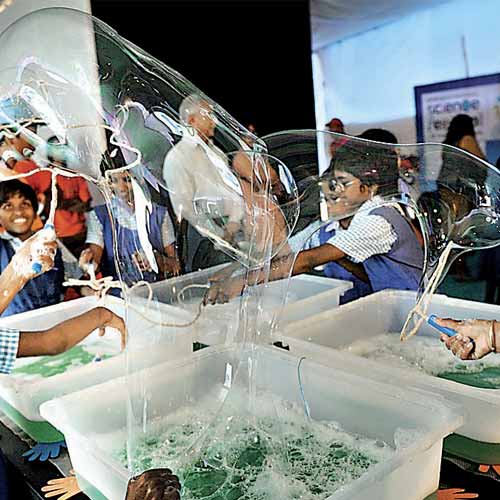
School children try their hands at Bubble Magic, one of the main attractions at the Edinburgh International Science Festival. – A Veeramani / DNA
“Now I am sure I want to become a doctor and perform surgeries,” burst out an excited Pushpak R.
What made him decide on his future career was a visit to the Evergreen Room, a dummy operation theatre at the first ever Indian edition of the iconic Edinburgh International Science Festival at the Bhartiya City, near Hebbal here on Friday.
The venue of the 10-day science event teemed with young, would-be scientists accompanied by parents and teachers. The fest was inaugurated by Karnataka minister for agriculture Krishna Byre Gowda in the presence of EISF, Dr Simon Gage and British deputy high commissioner to India, Ian Felton. The fest kicked off with 17 exciting events.
On the first day there were over 15 workshops which were interactive, apart from live shows and exhibits which had a bit for every age group, such as aero modelling, chemistry experiments, evergreen room (dummy operation theatre), bubble magic workshop, splatastic, science circus, international photo exhibition, forensic science experiments, illusion room, smoke bonanza, lego robosports etc.
AT the dummy operation theatre, students helped to treat a deep leg wound and perform key hole surgery using a real surgical equipment. They also gained experience with a miner surgical procedure to remove a cyst and learn how and why blood samples are taken.
During Splatastic, students explored the properties of different polymers, making some of their own colourful snakes, observe liquid to solid chemical reaction, produce their own designer slime and test the slime on the splatometer. Other crowd pullers were ‘Adventure Robots’, wherein participants built lego robots, using basic computer programming software, and Math Masters, which saw students learn tips and tricks for super fast mental math circulations and solve puzzles to develop lateral thinking.
But easily the show stopper was Bubble Magic, hosted by Discovery India. Children indulged in creating interesting shapes out of bubbles ranging from the tiniest of them to unbelievably huge ones.
Children had great fun trying to catch smoke-filled bubbles in their palms, to standing inside a giant bubble, and even turning a ‘round bubble square’.
source: http://www.dnaindia.com / DNA / Home> Bangalore> Report / by DNA Correspondent / Place:Bangalore, Agency:DNA / Saturday – August 31st, 2013
Manipal Centre for Virus Research (MCVR), a research department at Manipal University (MU) has been awarded the Research Cooperative Agreement Grant (RCAG) worth $1.143 million.
The award has been sanctioned by the Center for Disease Control and Prevention (CDC), United States Department of Health and Human Services, through the coordinating office, Global Health (GH). The grant was awarded for the application submitted by Dr. G Arun Kumar, professor and head, MCVR and Dr TMA Pai Endowed Chair in Translational Virology, for his project titled Hospital Based Surveillance of Acute Febrile Illness in the Western Ghat Region of India, which is on detecting etiologies of emerging infectious disease in the Western Ghats region of Karnataka and Kerala.
The other departments of Manipal University involved in this grant are the departments of Statistics, Public Health, Microbiology (Kasturba Medical College, Manipal & Mangalore), Community Medicine (Kasturba Medical College, Manipal) and the School of Communication.
According to Dr. Arun Kumar, the study will provide authentic information on the causes of the fevers (acute febrile illness), the distribution of such causes and diseases in the community over time, as well as its geographical spread. This will help to design future clinical case management strategies and public health interventions to reduce death and disability, by reducing the economic effects and ensuring good health among the people of the region.
Secondly, this grant includes a lot of technical support by the sponsoring agency and will result in significant technical capacity building at MCVR.
“The grant has been provided by the world’s best public health laboratory and the mechanism of cooperative agreement grant involves significant technical assistance. This grant gives us an opportunity to work with internationally renounced scientists from world class institutions like CDC, Atlanta, thereby increasing our global visibility and providing us with future opportunities for various international collaborations in the field of Virology,” said Dr Kumar.
source: http://www.deccanchronicle.com / Deccan Chronicle / Home> News> Current Affairs / DC / August 25th, 2013
Bangalore::Hack 2013, the first ever hackathon initiated by Sequoia Capital in India, will take place in Bangalore on September 14-15, 2013. Bangalore::Hack 2013 will bring together Bangalore’s finest developers, programmers and designers to showcase their ability to create innovative products. Divided into teams, these hackers will compete to create and develop cool coding hacks in tracks that involve mobile applications, web apps and systems and cloud infrastructure.
The aim of the hackathon is to facilitate the creation of a strong network of developers, committed to experiment, innovate and create new age technology. Through this hackathon, Sequoia Capital along with its portfolio companies aims to connect with the developer community and provide a forum to the ecosystem as they build cool world changing technology. Sequoia Capital is one of the leading ventre capital investors globally and has partnered with multiple technology companies in India including Capillary Technologies, Druva, Healthkart, Just Dial, Mu Sigma and Prizm Payments. Globally, Sequoia Capital is well known for being an early investor in companies like Google, Yahoo, Apple, Dropbox and Linkedin.
Bill Coughran , Partner, Sequoia Capital will be the chief guest for this event, and also be available as a mentor and guide to the participants. Bill was Vice President of the centre that invented C/C++/UNIX in Bell Labs. He was SVP of Engineering with Google when they built Chrome, Maps and Youtube. Over 20 CTOs from the Sequoia Capital portfolio team in India will be present and will work with the hackers during the event.
The format of the hackathon is informal. It is meant to showcase talent and ideas and collaborate to code in an intense 24 hour burst. The event will also have some of the best designers, technical architects, distinguished engineers and chief scientists of various companies from India and abroad to help guide efforts and mentor hackers.
Find out more about and register for the Bangalore::Hack 2013 here
source: http://www.yourstory.in / Your Story / Home / by Team YS / August 23rd, 2013
Dr Lawrence Lobo who passed away on August 22, and whose funeral Mass is scheduled at 3.30 pm on saturday, August 24 at Bendure Church, was a pioneer of medical outreach programme in the then South Kanara, with station at Puttur. A genial person, he used to attend public meetings with his wife and constant companion, Dr Celine.
These days compulsory rural service for fresh doctors is a big issue, with young medicos opting for practising in the lucrative urban centres. Apart from the income flow, such doctors, coming from rich, capitation-fee-paying families, do not want to experience the hardships of non-urban postings. They are keen to recover the heavy investment made in securing their medical degree within the shortest time. The non-urban areas are shunned despite the fact that now there is basic infrastructure at rural health centres. This was not so fifty-five years ago when far-flung rural areas were covered through a outreach programme from taluk towns in rickety vans and backed by half-baked para- medical personnel. If you are in government medical service, you are transferred frequently and suffer the privations of the station as best as you can. This is reflected in the medical career of Dr Lawrence Lobo who was one of the pioneers of medical outreach programme and ended up as District Medical Officer and Superintendent of Wenlock Hospital, Mangalore. But, we must start at the beginning.
Dr Lawrence was born on July 1, 1929 in Mangalore. Fifth of the six children of Rao Saheb Francis Lobo and Lilly, he had his first year of education at Ooty, where his father was deputy collector. The next one year was at St. Agnes, Bendore, and from then on up to B.Sc., which he completed in 1949, at St Aloysius College. He got his MBBS from Madras Medical College in 1954 and worked as a house surgeon in General Hospital, Madras, for one year before joining the State Medical Service.
The first posting of Dr Lawrence was at Puttur where he had to manage the first mobile unit in the district which was introduced in December 1956. It had to penetrate a vast area of villages six days a week, covering one route each day. There were no roads as we know them now. The van had to negotiate mud tracks and cross unbridged streams, often at the risk of getting stuck in the mud in the midst of nowhere. Some of the villages covered were Shiradi, Nelyadi, Koila, Mani, Kabaka, Balpa, Aranthod, Chokadikatte, Kanakamajalu, Nidpally and Panaje. Starting time, at 7AM, was the only certainty in their day’s programme. Each station was allotted two hours or until all the patients were attended to. Return to base was anytime from 7 pm to 11 pm. The mud tracks were so primitive that it took one hour to cover 10 KM.
Apart from Dr Lawrence, the complement of the medical van included driver, cleaner, compounder, health inspector, midwife and peon. He used to stay in a lodge in Puttur where he used to have breakfast before starting and dinner on return. Lunch was packed sandwiches, washed down with spring water boiled in the van. On Sundays he would team up with the surgeon in the Puttur Government Hospital and help out with surgical operations. Though there were no proper facilities for operations in Puttur, the medical duo had to improvise things to help people who did not have money for bus (then Rs.1.50) to go to Mangalore. Dr. Lawrence recalled that even simple things like snare, which is required to probe foreign bodies in the nose, for instance, were not available and he made his own snare by using zinc iron wire. From Puttur Dr. Lawrence went on a short stint to Coimbatore.
In 1958 Dr. Lawrence was transferred to Mangalore Wenlock Hospital as assistant surgeon. By this time the newly started KMC Medical College had Wenlock as part of its clinical setting. Dr. Lawrence held the concurrent post of Associate Professor of Medicine. Then there was a transfer to K R Hospital in Mysore and he was finally transferred back to Mangalore as District Medical Officer which post he held from 1980 to 1984 when he retired on attaining the then super-annuation age of 55 years. Two months later the retirement age was raised to 58 years. Meanwhile, Dr. Lawrence had earned his MD in General Medicine in 1972.In 1991 he received the Rajyotsava Award for his contribution to medical education.
Dr Lawrence has no regrets about his early retirement. He joined St John’s Medical College in Bangalore as Medical Superintendent which post he held for 13 years and called it a day in 1977. Recalling the conditions in medical practice in those days, Dr Lawrence said that now the field has gone high-tech with less of clinical medicine and more of sophisticated instruments. Even without such equipment, clinically diagnostics in those days was quite good. Incidentally, Dr. Lawrence’s starting salary was Rs.293 per month. Salary apart, he said that of all his postings, the most satisfying was his stint of 18 months as Medical Officer of the mobile unit serving those who had no other medical care in those days
Retired to his heritage bungalow, Church Hill, near Mangalore Nursing Home, Dr Lawrence spent his time reading, watching TV and socialising. Dr Celine whom he married in 1962 gave him company.
source: http://www.daijiworld.com / DaijiWorld.com / Home> DaijiWorld / by John Monteiro / Saturday – August 24th, 2013
(1) iPrint 3D printer is seen printing a 3D design at the college. The gear wheels used in the printer was also printed using iPrint 3D printer developed by them ( 2) City’s young innovators (from right) Nikhil Furtado, T.S. Rachith, M.S. Abhishek and Gaurav seen with Prof. Manjula, Associate Professor, Department of Physics, Vidyavardhaka College of Engineering.
Mysore :
Final year students of Vidyavardhaka College of Engineering in city have developed what they claim as the country’s first 3D printer called “iPrint 3D.”
Nikhil Furtado, a final year Mechanical Engineering student of the college, said that 3D printing is a process of making a three dimensional solid object of virtually any shape from a digital model which is achieved by using an additive process, where successive layers of materials are laid down in different shapes. 3D printing is also considered distinct from traditional machining techniques.
He said that this technology is used in the fields of jewellery, footwear, industrial design, architecture, engineering and construction (AEC), automotive, aerospace, dental & medical industries, education, geographic information systems, civil engineering and many others.
Explaining about the process of printing, he said that 3D printing is also called “additive manufacturing” because it uses an “additive process” as opposed to what is called a “subtractive process.” To explain the difference, he gave an example of a sculptor chiselling a block of stone — he said that the sculptor chips away until he has the sculpture just as he wants it, and then throws out what’s been whittled away. The sculptor began with a block of material and then subtracted from it which is a subtractive process.
But in additive manufacturing, the 3D printer doesn’t take anything away — it simply creates each bit of the object where it needs it, layer by layer, successively, in an additive process.
He said they have just taken the technology and developed a low cost 3D printer that can print 3D models that are designed on 3D Modelling software (CAD). In its pure dimensions, this printer can print anything within a build area of 20x20x20cm with either PLA (Poly Lactic Acid) or ABS (Acrylonitrile Butadiene Styrene) and added that the 3D printer works on the same principle as a CNC machine.
Nikhil said that each 3D-printed object begins with a digital Computer Aided Design (CAD) file, created with a 3D modelling program. The digital file sends instructions that the 3D printer understands; the software then slices the design into hundreds or thousands of horizontal layers. The 3D printer reads this file, and proceeds to create each layer exactly as per the specifications, resulting in a three dimensional object.
When asked about the inspiration behind this invention, the group said that the idea to build a 3D printer occurred to them a year ago , but started working on the project only in May and finished it by August. A major part of the time (2 months) taken was to procure the components, from India and abroad. The time taken to assemble the machine and calibrate it was three weeks.
The team which developed iPrint 3D are: T.S. Rachith, Gaurav and Nikhil Furtado, final year students of Mechanical Engineering with the able support of M.S. Abhishek, alumnus of the same college, Karan Seth, VP, Corporate Affairs & Marketing, Mumbai and Chetan M. Rao & and S. Manoj, final year students, Electronic Design & Deployment, NIE IT. The iPrint 3D printer will be launched in the college tomorrow.
When enquired about their future plans, they said that plans are “to commercialise the printer and make it accessible to the general public and to take 3D printing to the masses.” He further said that they will be creating awareness by conducting workshops and demos at various conferences and colleges, one of them being the ‘ZONAL NASA Conclave’ which will be held in city from Sept.5 to Sept. 7 at the University School of Design, Mysore University.
For details,email: contact@iprint3d.co
source: http://www.starofmysore.com / Star of Mysore / Home> Feature Articles / August 30th, 2013
At affordable prices, AyurVaid is treating those below the poverty line with its blend of ayurveda and allopathy practices
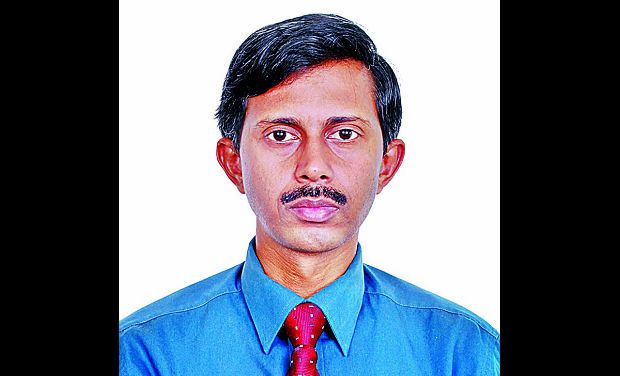
“Earlier, my impression of ayurveda was that it is full of grandma’s remedies and not scientific” —Rajiv Vasudevan, Founder / Photo. RA Chandroo
Started 2006
Location Bengaluru and Kochi
Initial investment Rs 55 lakh
Social impact Provides quality ayurvedic healthcare to the poor at subsidised rates
***
A frail looking Mini Shaji sits on a bed in the corner of the general ward of AyurVaid’s hospital in Bengaluru. Wearing a brick red nightgown, Shaji’s painfully thin frame looks devoid of all energy, but there is a glimmer of hope in her eyes. Six months back, the 36-year-old Shaji, who suffers from rheumatoid arthritis, could not move without the help of a walking stick. A friend directed her to the AyurVaid centre at Ramamurthy Nagar. After 10 days of in-patient treatment, Shaji can now walk slowly without a stick. Though still weak, she’s now hopeful that the weight she lost because of her ailment will be regained too. Her doctor, Rashmi Johnson, says she suffers from rheumatoid arthritis, joint pain, swelling and deformity of joints. The doctors at AyurVaid have treated Shaji in the traditional ayurvedic way and she has discontinued her allopathic treatment of two years. The good news is that the pain has gone. Johnson says Shaji will need to repeat this treatment for 15 days every six months till she is cured. “She has started walking but we cannot cure the deformity once it is formed,” she says.
AyurVaid uses traditional methods of ayurveda, which translates into “life-knowledge”, to treat patients at its three hospitals in South India. It’s the first Ayurvedic hospital to get the National Accreditation Board for Hospitals & Healthcare Providers (NABH) certification, usually given to allopathic hospitals for conforming to prescribed standards of hygiene and operating processes. Interestingly, AyurVaid’s treatment methodology is a blend of ayurveda and allopathy. While it relies on classical ayurveda for treatment, its hospitals also use modern tools such as lab tests and scans, and sometimes refer cases to allopathy doctors, whenever required.
Its founder Rajiv Vasudevan, 50, stumbled onto ayurveda by chance. A BTech in mechanical engineering from NIT Calicut, he began his career with ISRO, before proceeding to do an MBA from IIM Calcutta. Vasudevan worked in the corporate sector briefly before joining the Kerala government as CEO of Technopark, Thiruvananthapuram, where he was responsible for the formulation of Kerala’s IT policy. In 2003, Vasudevan was appointed special officer with the Government of Kerala with a mandate to devise a road map for development of biotechnology in the state. This put him in charge of authenticating and validating ayurveda drugs. “Earlier, my impression of ayurveda was that it is full of grandma’s remedies and not scientific,” says Vasudevan, who began to realise the holistic healing potential of this ancient stream of medicine.
Ayurveda has more relevance now than ever before, says Vasudevan, pointing out that the healthcare market today is dominated by acute tertiary and emergency care, with no concept of prevention. At most, there is primary prevention in the form of health check-ups. But, he says, the main requirement is secondary and tertiary prevention. “Say, somebody has the beginning of arthritis or asthma. How do I prevent it from becoming a full blown acute condition? This is where ayurveda can play a role.”
Under the same facilities, the treatment cost at AyurSeva is 60% of what it is at AyurVaid
Taking centrestage
Vasudevan started AyurVaid with Rs 55 lakh, pooled from his own savings, along with friends and family. The first hospital opened in Kochi, in 2006, followed by two more in Bengaluru, one in Mumbai’s Dharavi, Asia’s largest slum, and one in Chennai. Dharavi was an attempt to develop an independent ultra low-cost yet viable model that would serve the healthcare needs of bottom-of-the-pyramid patients, but the 18-bed hospital closed in June last year after three years of operation. “The problem was we could not get enough patients because the poor usually go to a doctor only for emergency treatment, which ayurveda does not provide,” says Vasudevan. Its day-care centre in Chennai, too, closed down due to issues faced by its local partner.
Ayurvaid now has three hospitals, two in Bengaluru and one in Kochi, with total 51 beds, 17 doctors, 24 nurses and a patient base of over 35,000. These cover all major specialities including orthopaedics, neurology, dermatology, gynaecology, ophthalmology, auto-immune disorders and gynaecology. Treatment is segmented into two groups — AyurVaid and AyurSeva — both offered in the same facility. While the former is intended for middle and upper-middle class patients, AyurSeva is aimed at being affordable to the poor. “We follow a cross-subsidisation model,” says Vasudevan. An AyurVaid patient pays Rs 300 per consultation, while an AyurSeva patient pays Rs 100. The treatment cost for AyurSeva patients is 60% of what an AyurVaid patient will pay. AyurSeva patients are identified as those with a BPL card, or those who can prove that they can’t afford treatment.
While AyurSeva patients are admitted in the general ward, AyurVaid patients have the option of either opting for a general ward or private rooms. Nursing and doctors charges too are subsidised, although there is no change in method of treatment.
For now, there are more AyurVaid patients walking in, helping offset the hit on margins due to AyurSeva. The average price of treatment for an outpatient is currently about Rs 1,500 per day.
Due to low capital involved, AyurVaid broke even in just three years
Making a case
While lifestyle diseases is commonly associated with those living in urban pockets, Vasudevan believes the poor are equally susceptible to such chronic diseases. “The moment the poor get some money in their hands, that goes into food. They end up having rich oily food from the street, which leads to ‘lifestyle disease’. When they fall ill, they are unable to work, leading to poorer food choices,” he says, adding that this is a vicious cycle and it is important to extend ayurveda treatment to the poor.
Though government-run hospitals have made their presence felt, Vasudevan points to the generally poor conditions in such hospitals as a reason why healthcare needs better models like his. “What is really free is a question in government hospitals. For the money you pay unofficially to people, you don’t get quality treatment. There is no reliability and accountability,” he says.
However, the absence of medical insurance has been a deterrent. Though IRDA formally notified that insurance companies may cover ayurveda care provided in government or NABH accredited ayurveda hospitals, Rashtriya Swasthya Bima Yojna (RSBY), a government-run health insurance scheme for the poor, which provides for cashless insurance for hospitalisation in public and private hospitals, does not include ayurveda treatment. Vasudevan feels that RSBY is critical to help ayurvedic treatments reach the poor, given that over 35 million BPL citizens are already covered under the scheme and the poor will have a very good option to consider for their chronic diseases. “Take sciatica or osteoarthritis for example. Without ayurveda coverage, a person may be compelled to go in for surgery [IVDP surgery or TKR] by an allopathy specialist. Surgery can be obviated in such cases through ayurveda, at a significantly cheaper cost, faster recovery and superior medium to long term outcomes,” he says.
Though challenges abound, for now there seem to be takers for Vasudevan’s business model. Acumen Fund, a non-profit venture philanthropy fund that invests in social enterprises in South Asia and Africa, has invested Rs 6 crore in AyurVaid in phases since 2008. According to Sachindra Rudra, director, Acumen Fund India, the investment was to help the firm expand its cross-subsidy model for treatment of chronic medical conditions using an appropriate integration of ayurveda and allopathy in a patient-centric, quality conscious and process-oriented approach.
As of FY13, revenues were Rs 3 crore, with pharmacy sales accounting for 20-25%, consultation income for 10% and the rest coming from in-patient and out-patient service fees. In the healthcare industry, where break even typically happens in six-seven years, AyurVaid broke even in three years. Vasudevan attributes this to the low capital investments needed in ayurvedic hospitals. In a regular allopathic hospital, each bed costs Rs 75 lakh to Rs 1.5 crore, while an ayurveda hospital bed costs Rs 3-8 lakh. “We hope to be profitable as a company in four or five months,” adds Vasudevan.
Vasudevan plans to use the hub-and-spoke model to expand — one hospital with in-patient facilities in the city, supported by four day-care hospitals. “We want to start with the Bengaluru cluster and set up four more in-patient hospitals and 12-16 satellite day-care centres,” he says. The idea is to have hospitals everywhere, instead of having one large hospital in one part of the city. Though with 14.2 million people living below the poverty line, Karnataka itself is a huge market, over the next 18-24 months AyurVaid plans to replicate the Bengaluru model across Mumbai, Delhi and Chennai, and is looking to raise around $5-10 million in a second round of funding.
Yet another opportunity that AyurVaid is looking to tap into is to become a ‘diabetes specialist’ with focus on prevention, reversal and management of diabetes and diabetic complications. “With India emerging as the diabetes capital of the world, with over 70 million diabetics, and many undiagnosed/emerging diabetics, AyurVaid with its root cause management approach has clear advantages to offer,” says Vasudevan. But he will need a proactive government on his side to achieve what he has set out to. Whether that happens or not remains the million-dollar question.
source: http://www.business.outlookindia.com / Outlook Business / Home> Entrepreneurs> Health-Medicine-Fitness / Section: Enterprise / by Shabana Hussain / August 31st, 2013
The designer also holds 3 Limca Book of Records, one each in India Book of Record and Asia Book of Record for his innovations.
It is said that necessity is the mother of inventions, but here is an innovator from city who says that he invents for passion and not for awards.
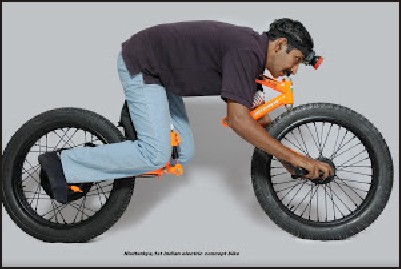
Santosh, a motor bike design enthusiast, who lives in Saraswathipuram, has come up with an electric-concept bike.
Santosh completed his ITI in Electronics from NIE in city and works at Reckitt Benckiser, a pharmaceutical company, as a technician but his real love is motor cycles.
Santosh has named his electric-concept bike as ‘Nisttarkya,’ which means ‘Unimaginable’ in Sanskrit.
The bike weighs 40 kgs with both wheels size at 3.00×18″ drives on 36 V, 350w hub motor and is powered by three 36 V rechargeable batteries.
The most noticeable feature of ‘Nisttarkya’ is its riding position. It has two shock absorbers, one for the front, one for the back and headlight mounted on the rider’s head.
The riding position is so peculiar that it makes one wonder as to how it is possible to ride it at all. But Santosh says, that is why it is a ‘concept’ bike. It will have to be further refined and fine tuned before it can reach marketable potential.
Santosh, speaking to Star of Mysore, said: “all the parts of the bike were made at home for which I have been working for the past 18 months. Though the design looks simple to naked eyes, there is a lot of technology involved in it and my friends have helped me a lot.”
This shy natured innovator said that he was not behind any records but simply loves motor cycles. Incidentally, his father Jeevandhar is also an ardent bike enthusiast.
Santosh, in order to pursue his passion, used to participate in rallies, where he learnt technology and design. “You learn a lot when you get your hands dirty in mechanics,” he says.
Speaking of viability, Santosh says he spent Rs. 60,000 to built Nisttarkya and is thankful for all the assistance he got from his friends.
For now, Nisttarkya runs for 30 kms with an hour of charging but one has to keep a watch for the potholes and take a few breaks during the ride.
Santosh can be contacted on e-mail: santhosh.bikes@gmail.com.
source: http://www.starofmysore.com / Star of Mysore / Home> Feature Articles / by S. Kenneth Shishir / August 28th, 2013
Jubilant Biosys , a Bengaluru-based subsidiary of Jubilant Life Sciences, today announced the USFDA acceptance of The Investigational New Drug (IND) filing for a novel molecule targeting prostate cancer.
This molecule will now progress towards the next phase of development and is anticipated to go into clinical trials by late 2013, a company statement said here.
(Jubilant Biosys, a Bengaluru-based…)
“We are elated with this successful outcome, which is the result of excellent collaboration between the scientists at Endo and Jubilant Biosys. Being at the forefront of pharmaceutical, life sciences and healthcare innovation, Jubilant pursues its goal to enable affordable healthcare to patients worldwide,” President, Global Drug Discovery Services, Jubilant Life Sciences SubirKumar Basak said.
The multi-target oncology collaboration between Jubilant and Endo began four years ago, and is focused on developing best-in-class, differentiated therapies that address the unmet needs of cancer patients worldwide. The collaboration has delivered on multiple milestones across the discovery continuum.
source: http://www.articles.economictimes.timesofindia.com / The Economic Times / Home> Pharmaceuticals> Collections> Cancer Patients / by PTI / August 07th, 2013
The widely celebrated Edinburgh International Science Festival will be on from August 30 to September 8 at Bhartiya City.
You may not be a surgeon, or a perfumer, or even a scientist; but here’s a chance to play one and have a gala time while you are at it. Come August 30, and the world’s largest science festival—Edinburgh International Science Festival (EISF)—will be in town.
For the first time, this well-known science event will be held India in the form of EISF-India. Bangalore is hosting the EISF-India at Bhartiya City near Hebbal and the event will go on till September 8.
According to the website www.sciencefestival.co.uk, which has details on the ESIF-India, the crowd pullers at the show are expected to be the four engaging workshops—ER (Evergreen Room) Surgery, Splat-tastic, Pongy Potions and World of Bubbles—which promise to keep people of all ages, especially children, engrossed with almost real-life situations in the science and medical world.
In the ER Surgery, visitors can actually go through all the steps of performing an emergency surgery in a simulated conditions on a ‘patient’ and actual surgeons will provide details on how to go about it.
Splat-tastic will lure you to experiments involving the generation of slimes and learn about polymers, and also test the viscosity of your slimy creations on a ‘splat-o-meter’; while Pongy Potions will transform you into a chemist who can actually produce, say, perfumes on the go using a fair amount of chemistry.
Children may get a real kick out of Bubble Magic, which involves creating various interesting shapes out of bubbles ranging from the tiniest of them to unbelievably huge ones.
Over the past 25 years, the festival has been making science fun, exciting and engaging for young minds, EISF and Bhartiya City officials said.
They have planned an array of interactive workshops, live shows and exhibits, besides a science circus, an international nature photo exhibition, forensic science experiments, illusion room, smoke bonanza and lego robosports, which will keep people belonging to all age groups enthralled.
Eight of EISF’s specially trained science communicators will travel to Bangalore to deliver the workshops and train the local teams ahead of the event.
EISF–India is being presented jointly with Bhartiya City, in association with Art Konnect and MyCity4Kids, and is being supported by the Scottish Government’s Edinburgh Festivals Expo Fund.
According to EISF, the Bangalore event could be a starting point to create and develop more science festivals across the country over the next five years.
Simon Gage, director and CEO, EISF, said: “This festival is a bold first step in our plans to present more work in India and to bring our science festival to a nation that is currently making incredible advances in science and technology.”
Snehdeep Aggarwal, founder-chairman, Bhartiya City, said: “It (EISF’s foray into India) will engage our youth and spark their curiosity in science and technology.”
source: http://www.dnaindia.com / DNA / Home> Bangalore> Report / by DNA Correspondent / Place: Bangalore, Agency: DNA / Friday, August 09th, 2013
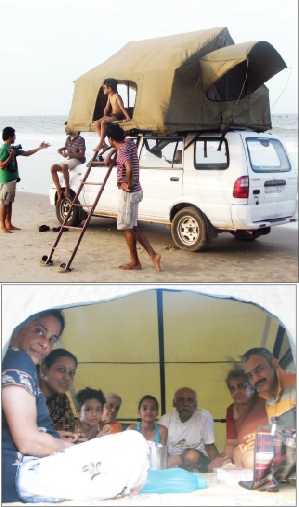
A city-based mechanical engineer’s passion for outdoor adventures has led him to build a tent on the roof of his Chevrolet Tavera four-wheeler.
C.S. Ramaswamy, the owner of Sumuki Associates which designs, develops and manufactures machinery and equipment at Lakshmipuram in city, says he always wanted to build a mobile shelter that was practical and affordable.
When asked about what inspired him to build such an innovative equipment, he said that 25 years ago, a foreign magazine carried a photo of a jeep with camping equipments on the roof top and since then, it had become his dream to design a tent on the roof of his father’s Ambassador car. “Unfortunately my creation could not be mounted on it as the car was sold three months ago.” After this, it seems he decided to design the tent to be mounted on his Tavera.
Recalling his inspiration for the mobile shelter, Ramaswamy said that years ago when he and his friends who were into photography and adventure went out, sometimes they would get stuck in the rain and since then he wanted to invent a mobile shelter.
Ramaswamy began to work on a solution for this ‘rainy’ problem way back 1979 in his garage workshop set up at his residence by his encouraging father by tinkering with his father’s scooter, trying to change its body shape and improvise a shelter over the seats.
Now speaking of his mountable tent, Ramaswamy said the tent is made of imported waterproof fabric measuring 8ftx8ft and weighing approximately 80 kgs. The tent also houses many essential camping accessories such as rocket stoves, chemical toilets, change room and compact showers. “In fact, it is a star mobile hotel room,” he says in delight. But he is not far from truth; this is indeed a luxury when out camping in a forest and all this right on top of one’s vehicle.
Ramaswamy says this is a design he came up with after many tries and once he had the design in place, he single-handedly built the tent. “The work began in May and was completed in August of this year,” he said.
He said that the tent can be custom-built for any car ranging from a SUV to even the most compact cars like Nano, albeit the smaller the roof, the lesser number of people it can accommodate.
Ramaswamy feels his tent is a great solution especially for people who want to trek and travel in India where camp facilities do not exist. Also the fact that the tent can be set up in jiffy makes it even more practical. “The tent is easy to set up even in the dark, and can be easily folded back in the morning,” says Ramaswamy.
These, he says, are not meant only for campers and adventurers. “It can be useful during disaster management and can also be used by the army, forest per- sonnel & security forces, site managers in remote areas, field scientists, outdoor shooting crew, media etc.” When asked about the cost involved in making the rooftop tent, he said that it cost him Rs. 52,000. Ramaswamy says he doesn’t plan to mass manufacture it but if any one wants one, he would build it for them. Interestingly, he has good hands to support him from his wife Savithri, his eldest son Shravan also a mechanical engineer and younger son Pranav an IP student at NIE. Looks like many more innovations may come out of this innovative family. Ramaswamy can be contacted on email- sumukiassociates@gmail.com.
source: http://www.starofmysore.com / Star of Mysore / Home> Feature Articles / by S. Kenneth Shishir / August 22nd, 2013