Category Archives: Science & Technology

Surgeons find a breakthrough in Aneurysm

Bangalore :

Neurosurgeons at Manipal Hospital have come across a breakthrough in the otherwise complicated aneurysm surgery. The conventional method involved getting to the blood stream through an insertion in the large femoral artery in the upper leg, but this time, the doctors have corrected a balloon formation in an artery wall of the brain by creating a puncture in the patient’s hand.

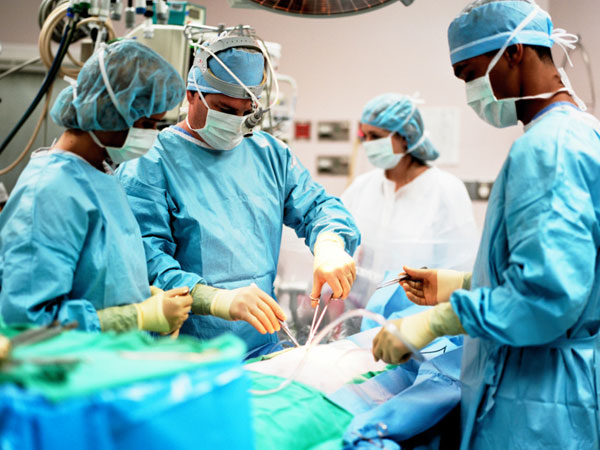
SurgeonBF28jul2013

The path-breaking technique was designed to solve a problem that had occurred at the operation table when surgeons discovered that there were major complications in the arteries surrounding the heart, which could complicate the surgery.

“Coiling, where a flexible wire is inserted from the upper leg could not be done in this case; so we tried this method and it clicked,” said one of the doctors.

The 50 year old patient, reportedly, had undergone surgery clipping to block aneurysm in the middle of the brain, but the clip had come off, leaving no option but to make an insertion through the hand.

The operation is successful and the patient is recovering fast.

source: http://www.news.oneindia.in / OneIndia News> News> India / by Pallavi Sengupta / Wednesday – July 17th, 2013

Wi-fi hot spots to come up in ‘a few weeks’

The project is being implemented by D-VoiS, free of charge. / File Photo: R. Ravindran / The Hindu

The government’s plan to provide free wireless internet services on two commercial roads in Bangalore — Mahatma Gandhi Road and Brigade Road — found mention in Friday’s Budget speech, presented by Chief Minister Siddaramaiah.

This brings hope to many that the project, which was slated to be launched in March, will see the light of day. Government sources told The Hindu that the project is being implemented by Bangalore-based internet service provider D-VoiS, free of charge.

The Chief Minister proposed that similar pilot schemes will be launched in Hubli-Dharwad, Mangalore and Mysore.

The idea was first proposed by the Karnataka ICT group in its report submitted in January. T.V. Mohandas Pai, member of the group, said the project is slated to take off in “a few weeks’ time”. The pilot is being done for free, hence, no allocation has been made. But the larger idea is to extend this and make wi-fi spots in places like shopping complexes or transit points in the city.

source: http://www.thehindu.com / The Hindu / Home> News> Cities> Bangalore / by Staff Reporter / July 13th, 2013

FIT partners BD India to unveil first India-specific clinical recommendations on Insulin Injection Technique

Forum for Injection Techniques India (FIT India), in association with Becton, Dickinson & Co. (BD India), a global medical technology company has now unveiled the first-ever India-specific clinical recommendations for best practices in insulin injection technique in Bengaluru.

The recommendations have been put together by a scientific advisory board comprising endocrinologists and diabetologists. These include the optimum size of the needle, need for site rotation, educating the patients about avoiding reuse of needles, and training them for lipohypertrophy which is a lump under the skin caused by the accumulation of extra fat at the site of many subcutaneous injections including insulin. It also covered the safety aspects and identification of proper injection sites.

Correct insulin injection technique is critical for optimal control of diabetes. Improper use or reuse of injection devices may lead to undesirable consequences including pain with bleeding and bruising, the needles breaking off and lodging under the skin, contamination.

According to Dr KM Prasanna Kumar, former head of Department of Endocrinology & Metabolism, MS Ramiah Medical College, Bengaluru, and the CEO of the Bengaluru Diabetes Centre, “The recommendations by FIT India will help optimize insulin injection technique in diabetes and be of immense help for healthcare workers and patients alike. They will improve the acceptance of insulin delivery and injections, thereby ensuring improved glycemic controls and better health outcomes for diabetes patients.”

“In India, there is a psychological resistance to the initiation of insulin therapy even though it is considered one of the best and most dependable treatment options in diabetes management. It is important to get the injection technique right to regulate patient’s glycemic control. This is where these India-specific recommendations would be helpful for diabetic patients,” he added.

India is facing a diabetes epidemic. WHO predicts that by 2025, the country will account for half of the world’s diabetic patients. The disease has become a significant issue for Karnataka too. According to figures by the National Programme for Prevention and Control of Cancer, Diabetes, Cardio-vascular Diseases and Stroke (NPCDCS), about 10.2 per cent of people in the state suffer from diabetes compared to the national average of seven per cent. In the slums of Bengaluru, the incidence of diabetes is as high as 14.7 per cent.

“Insulin administration is the most effective method for blood glucose control, but inappropriate injection techniques can compromise the effectiveness of the therapy. The FIT insulin injection recommendations are a timely initiative in India which will bring great benefit to patients and will help us to continue improving patients’ experience with insulin injection,” said Vishal Taneja, director- BD Medical-Diabetes Care.

FIT is an autonomous organisation established following the Third International Injection Technique Meet in Athens in 2009.

source: http://www.pharmabiz.com / PharmaBiz.com / Home> News> Technology / By Pharmabiz.com Bureau, Bangalore / Friday – July 12th, 2013

Not good enough for Manipal, but good enough for Massachusetts

From MIT to MIT…

Rahul Gupta has written 22 international research papers. During his Manipal days, the engg student never topped in class but recently got a call from the more famous MIT to present papers

An Information Technology student who was never a topper in terms of grades and marks has penned 22 international research publications on business analytics, artificial intelligence and information retrieval. Rahul Gupta, who has just completed his engineering from Manipal Institute of Technology, is likely to surpass the current record in the Limca Book of Records for the highest number of research papers written by an undergraduate student. Official confirmation from Limca records is expected soon.

“Teachers tend to judge students on their ability to score high marks. It should be discouraged,” Gupta, the first in the family to take up engineering, said. His parents, Rajendra Gupta and Gayatri Gupta, are government servants. “I have covered a whole range of marks by getting a meagre GPA of 5.5 out of 10 in first semester to 9.9 out of 10 in the eighth semester. I believe that marks can never define the ability of student,” Gupta said.
Research and development is Gupta’s passion and he has won several awards in this field. He has already given 35 technical presentations all across the country and was invited by the Massachusetts Institute of Technology (MIT), USA to present two research papers last week.
Last year, he was called to Cape Town, South Africa to present his innovative software which was in a form of a research paper. His papers have been published in leading science organisations and journals like IEEE, Springer and ASME and he is credited with being the youngest in the reviewing team for many science journals and international conferences.
“Engineering was a platform to learn something new each day,” Gupta, who is from Jaipur, said. “My attendance in every subject was close to 100 per cent which is rare in an engineering course. Attending lectures was never a burden and it helped me realise that there is so much more to explore in artificial intelligence, which is my main field of research. Of the total 22 research papers that I have published in last two years, I was first author in 21 of the papers. Labs and practical sessions are of great interest. In the last two years, working late night in labs was my favourite way to spend time. I mostly used to be alone. ”
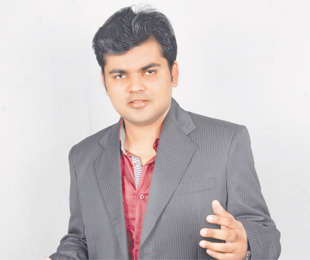
EngineerBf22jul2013
The two papers co-authored by Gupta which were presented at the Sixth International Conference of MIT’s Learning International Networks Consortium (LINC) in Cambridge, Massachusetts last week were: A Satellite EDUSAT: ‘Changing the State of Education in India’, and ‘E-learning: Enabling the Differently Able People in India’.
The papers he presented this year include: ‘Stock Market Prediction Accuracy Analysis Using Kappa Measure’ at the International Conference on Communication Systems and Network Technologies (CSNT) held at Gwalior from April 6 to 8 and ‘Working mechanism of Sponsored Search using a new algorithm to calculate CTR’ at the International Conference on Artificial Intelligence, Soft Computing (AISC) held in Bangalore from February 18 to 20.
Record research
Rahul Gupta is likely to erase V P Sree Divya’s feat of 16 international and national level research publications from the Limca Book of Records. Divya, a BTech graduate from Sri Nidhi Institute of Science and Technology (SNIST), Hyderabad, had seven more in the pipeline when she entered the record books. Eleven of her published works were presented at international conferences and three in journals of international repute.
The two papers co-authored by Gupta which were presented at the Sixth International Conference of MIT’s Learning International Networks Consortium (LINC) in Cambridge, Massachusetts last week were: A Satellite EDUSAT: ‘Changing the State of Education in India’, and ‘E-learning: Enabling the Differently Able People in India’.
The papers he presented this year include: ‘Stock Market Prediction Accuracy Analysis Using Kappa Measure’ at the International Conference on Communication Systems and Network Technologies (CSNT) held at Gwalior from April 6 to 8 and ‘Working mechanism of Sponsored Search using a new algorithm to calculate CTR’ at the International Conference on Artificial Intelligence, Soft Computing (AISC) held in Bangalore from February 18 to 20.
source: http://www.bangaloremirror.com / Bangalore Mirror / Home> Cover Story / by Deepthi Shridhar, Mangalore / Saturday – June 29th, 2013

Women at Work: Wipro’s Sangita Singh

Sangita Singh, pictured, is the only woman to have ever led a business unit at Wipro

Sangita Singh, a senior vice president at Wipro Ltd., India’s third-largest software exporter by sales, is one of the few women to rise up the ranks in an industry dominated by men. The 44-year-old mother of a young teenager is the only woman to have ever led a business unit at the Bangalore-based outsourcing firm.

Despite growth in India’s $110 billion information technology industry, few women are seen at the helm of operations in the sector. Ms. Singh says companies are growing conscious about the lack of representation of women at key positions. “I would be very surprised if, in the next five years, you don’t have women in senior positions at Indian IT companies,” she says, adding that firms, including her own, have recently made an effort to recruit more women staff.

At Wipro, where Ms. Singh’s career has spanned two decades, the IT executive has donned several hats, including the role of chief marketing officer and the head of the company’s business applications software unit.

This week on India Real Time’s  “Women at Work” series , Ms. Singh speaks about why few Indian women venture into the world of business, the challenges of being a female executive, and what organizations can do to retain women employees.

Edited excerpts:

The Wall Street Journal: At what stage do Indian women decide to pull the plug on their careers?

Ms. Singh: When a woman starts her career, she is young, ambitious, and wanting to make a difference. You see a lot of women in that stage. In fact, they do better than men at that stage. The real challenge is when they reach the crossroads, when they have to get married or have kids.

WSJ: What can organizations do to prevent this?

Ms. Singh: Most of the organizations have started opening crèches and offering some form of flexible working hours to such women. But they have not been able to address the softer aspects around it, which is mentoring, counseling, or the relationship with the individual at that time, to give them courage and motivation.

Organizations have to take personal interest in giving such women flexibility to take breaks. It can’t just be lip service. Give them roles where they can balance both family and work and get past that crossroads stage.

Even society can play a role in terms of making sure that they instill a sense of pride in women wanting to achieve their best.

WSJ: What challenges have you faced as a woman executive?

Ms. Singh: The crossroads stage was the toughest one. One has to have supreme motivation to be able to ride through this stage.

Also, people have very low expectations about what a woman will bring to the table. So if they do well, it’s good, but if they don’t, it is fine.

WSJ: What mistakes do women often make at the workplace?

Ms. Singh: Sometimes, women themselves create barriers. They don’t take the initiative to network. As a result, there could be an issue of access, because you are not known enough. Networking may come easily to a man, but it doesn’t to a woman.

What is important is to be aware of those things. If you are conscious about it and start working on it, it will help you. If you think that you are not being included in a network, you have to take that initiative of networking with people. Don’t wait for organizational mandates to say you need to have a woman chief executive, because you have had three men CEOs. You be the agent of change and demonstrate those traits that they would need in a leader.

At the end of the day, everybody wants to run a successful business. If you have the ability to deliver a successful business, leaders will take that call of you being at the head of affairs. A lot of the onus today lies on us rather than the organization.

Follow India Real Time on Twitter   @IndiaRealTime 

source: http://www.blogs.wsj.com /  The Wall Street Journal – India / India Real Time / Home> Economy & Business> Article / by Dhanya Ann Thoppil / July 01st, 2013

These doctors have gone several extra miles

Bangalore :

Little did Dr Swaminath G, a psychiatrist, know that a casual visit to an NGO working with tribals in Mysore district 17 years ago, would change the course of his life.Swaminath was shocked by what he saw: Tribals suffering from mental illness had nowhere to go and would wander deep into the forests, with danger lurking at every step.

His trysts with the wild have not stopped since. He holds free monthly psychiatric camps in association with the Swami Vivekananda Youth Movement, every second Sunday at Kenchenahalli, 80km from Mysore. “The camp caters to 40-50 persons suffering from mental illness,” he says.

Swaminath is also involved in Chittadhama, a residential rehabilitation centre for homeless persons with mental illness, 4km from HD Kote in Mysore district.

“With help from a group of psychiatrists, psychologists and psychiatric social workers, we rescue mentally ill homeless persons in this tribal land and other districts. At the centre, the patients are fed, cleaned and given new clothes. After initiating treatment, a search is launched for their families. The inmates are reintegrated with their families at the earliest,” he says.

Swaminath’s feats are legion in urban jungles too. He’s treated people who haven’t ventured out of their bathrooms for eight years. “One such patient, a lawyer, is likely to go back to his profession, thanks to the acceptance of his family and colleagues,” he adds.

From Halli to Halli

Dr Channakeshava TA, 43, a senior specialist with a government hospital in KGF, Kolar district, has a special love for villages. In his 15-year career, he’s never sought an urban posting. Dr Channakeshava, in fact, has made sure his services are restricted to villages, and travelled to many parts of the state to conduct medical camps. And he’s determined to stick to the itinerary.

So what drives Dr Channakeshava? “I’m a villager myself, from Mayanayakana Hosahalli in Ramanagaram district, so I choose to stay connected with them. As a child, I’ve seen villagers suffering and dying due to a lack of health facilities,” he added.

Dr Channakeshava says rural health service is not easy. “Just to answer nature’s calls, I’ve had to travel 2km. Forget medical equipment, there was no proper drinking water in many villages. These things discourage freshers, especially women, from venturing into rural areas,” he points out.

Channakeshava feels today’s doctors must not restrict themselves to special surgeries but also focus on implementing national and state health programmes on immunization, nutrition, sanitation awareness and potable water.

The ‘village doctor’ beams as he narrates how implementation of contraception programmes in villages in Tumkur and Kolar districts has resulted in many villagers going in for smaller families.

Addicted to de-addiction

Dr Vishal Rao US, consultant oncologist in Bangalore, makes it a point to vanish into the hinterland every now and then. With a team of like-minded doctors and in association with Satya Sai Seva Organisation, he conducts rural outreach programmes, especially on deaddiction, in Madanapalli and Tharanahalli in Andhra Pradesh and several parts of Karnataka.

Dr Vishal says they focus not only on the effect, but also the cause. “Over the years, healthcare focus in rural areas has been on delivering medical care. But seldom is the focus on the cause of the problems, such as smoking, chewing tobacco or alcohol. We could achieve much through counselling, preventive education and deaddiction activities,” he explains.

Vishal and his team create this awareness. “We go house to house and make power point presentations on the ill-effects of tobacco. Villagers are motivated into quitting the habit by discussing the associated diseases and economic burden of treating them. Counselling includes education on community health aspects of sanitation, diet and hygiene, which have a far-reaching impact on rural health,” he adds.

Dr Vishal says doctors should reach out to the rural masses as healthcare in cities is exorbitant. “For the rural patient, treatment includes travel expenses to the city and accommodation,” he says.

source: http://www.articles.timesofindia.indiatimes.com / The Times of India / Home> City> Bangalore> Villages / TNN / July 01st, 2013

Software paradigms : A Home-grown entrepreneurial success story

SPICity Phase II of Software Paradigms Infotech (SPI) will be inaugurated tomorrow at # 316 – 318(P), Hebbal Industrial Area, Mysore, at 4 pm. Minister for IT and BT S.R. Patil will be the chief guest. Swami Muktidanandaji, President, Ramakrishna Ashram, Mysore, will be the guest of honour. B.V. Naidu, Chairman and CEO, Sagitaur Ventures India Pvt. Ltd. will preside. Sid Mookerji, Global CEO & Co-founder of SPI, will be present.

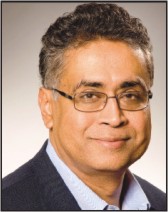
SidMukerjiBF18jul2013

 Mysore : 

SPI was founded in 1994 by Sid Mookerji in the United States with the company headquarters in Atlanta. Sid, a graduate of BITS Pilani and the Goizueta Business School, had worked extensively overseas. Sid saw an opportunity during his stint at a leading retail giant in the US that led him to start his own company. He grew up in Mysore and calls the city his home.

“I always knew that if I started my own company, I would do it right here in Mysore,” says Sid Mookerji, Global CEO & CoFounder, SPI. In 1997, SPI’s first offshore development centre was established at an incubation centre in Mysore with three employees and one client. Local leadership was provided by K.K. Mookerji, a retired scientist from CFTRI. Success came quickly and today the company has 1,500 knowledge workers globally with nearly a 1,000 of them based in city.

SPICity: The Mysore office boasts of a state-of-the-art Offshore Development Centre (ODC) called ‘SPICity’ that sits on a sprawling campus spanning 13 acres in Hebbal Industrial Area. A second ODC is situated in Kathmandu, Nepal. The Phase 2 of SPICity that is built to accommodate an additional 1,000 employees is being inaugurated on July 13 by S.R.Patil, Minister of Planning and Statistics, IT, BT and S&T.

Since its inception, the company has come a long way and now has offices in North America, South America, Australia, Singapore, Brazil, India and Nepal. Primarily an IT services and solutions provider for retailers around the globe, SPI also has a Financial Services division and recently forayed into Products, Platforms & Solutions building intellectual property in the Retail domain.

SPI has made its mark globally and has won various prestigious awards — ‘Highest Exporter Award (IT)- Mysore Region’ for four consecutive years by the Govt. of Karnataka; Atlanta Business Chronicle’s 2012 ‘Pacesetter Award’; named as one of ‘Georgia’s Fast 40’ companies by the Association for Corporate Growth, Atlanta.

Corporate Social Responsibility (CSR) and community development programmes have been an integral part of SPI. Under the stewardship of Sophie Mookerji (Chairperson and Co-founder, SPI), SPI Foundation supports a wide range of socio-economic and educational causes. For example, SPI has adopted Kudremala Higher Primary School in Mysore and has been providing funds and volunteers’ time to the school. Funds are provided to sponsor education, upgrade the school’s infrastructure and support other rural schools.

source: http://www.starofmysore.com / Star of Mysore / Home> General News / July 12th, 2013

A tribute ….Dr. H.A.B. Parpia, the man

Mysore : 

Freedom fighter,  Scientist,  Activist

By Maj. Gen. S.G.Vombatkere (Retd.)

Dr. Hossain Ali Bhimji Parpia, “Hossy” to his friends, passed away in his home in Mysore on 9th July 2013. It is difficult to break up his 90-years lifetime into his “working years” and his “retired life” because he was a do-er, a go-getter, in his thoughts, words and actions throughout his life.

In his early years as a volunteer at Gandhiji’s Sewagram Ashram, he learned about truth, freedom and secularism from his personal interactions with the Mahatma. Later, while in college at Bombay (now Mumbai), he was a student leader active in the freedom movement, beaten and arrested by Police under British rule. This motivation and experience in his formative years made him what he was in later life — a fighter with a powerful drive to use his skills and abilities to better the lives of his fellow countrymen.

He went to USA for higher studies and earned his Ph.D in Food Science & Technology from Oregon State University at Corvallis, returning to India in 1951. It was in Corvallis that he met Carolyn Wilkes, who joined him in Bombay, where they were married on Republic Day 1953, and Carolyn relinquished her US citizenship to become an Indian citizen.

His expertise in food technology was recognised by Pandit Nehru, who urged him to join the CSIR and this led him to CFTRI in 1956. As Director from 1962-72, Dr. Parpia’s remarkable abilities helped place CFTRI on the world map for research in food science and technology. His initiative got CFTRI recognised as a centre for academic research. He was doctoral guide to 18 candidates for their PhD degrees, and was Visiting Faculty in Food Science at M.I.T, USA, from 1967-78. This led to key, prized UN appointments in Rome, New York and Tokyo in the areas of food science and technology, development and education, between 1972 and 1984.

In his eventful professional life as a scientist, he rose to be an authority in his chosen field, with a host of scientific publications. He organised national and international workshops and symposia, and chaired sessions at many other international and national events. It would need too much space to mention the awards and honours that he received in India and USA for his work in food science and its practical applications. He was a member of several professional scientific bodies both in India and abroad, and a regular reader and contributor to their journals.

He later remained in touch with his profession as Founder-President, Afro-Asian Federation of Food Science and Technology Institutions.

On retirement, Dr. & Mrs.Parpia settled in Mysore. Never one to sit back and put his feet up, he along with six others, Dr. Bhamy V. Shenoy notable among them, founded Mysore Grahakara Parishat (MGP) in 1989, to address Mysore’s consumer, civic and environmental problems and was its first President.

As a student of comparative religion and his early exposure to the Mahatma, he had respect for all religions. When the fallout of the 1992 Babri Masjid demolition hit Mysore, he was among the few intrepid, communally neutral stalwarts who, with moral and physical courage, dared to walk the troubled streets of Mysore, calling upon all to cease violence.

Though some people saw a rough exterior when he strongly objected to wrong-doing, corruption and inefficiency in government working, Dr. Parpia was in reality gentle at heart, compassionate and generous. He never turned away anybody who came to him for help, involving himself in their problems, with his ready personal participation, advice or financial assistance.

He actively participated in the civic and environmental affairs of Mysore City and was the initiator of Mysore Agenda Task Force (MATF) by personal liaison with the then Chief Minister, S.M.Krishna. Along with Sheila Irani, he conducted the activities of People’s Education Trust as its President, and was devoted particularly to education of the girl child and to women’s empowerment.

Dr. Parpia was vigorous and tenacious in pursuing issues of education and food adulteration at the local level, and reforms and policy at national level concerning civil liberties, food, agriculture and elections. He always used his considerable influence and personal contacts for greater social benefit, never with partisan aims. In later years, even failing health did not diminish his zeal and he continued to wield his pen and telephone to fight for causes that were close to his heart.

At a personal level, Hossy was gifted with a quick wit and a wry sense of humour. With a prodigious memory, he always had an appropriate anecdote or joke for every occasion and, together with Carolyn, was always excellent company. A man of impeccable integrity and forthright honesty, he was a mentor to many and a beacon for his dedication to the principles of democracy and secularism, and peaceful protest.

His passing away is an irreparable loss to Carolyn and their four children and ten grandchildren. It is also a great loss to his many friends and admirers in India and abroad, who will miss his towering presence.

source: http://www.starofmysore.com / Star of Mysore / Home> Feature Articles /  By Maj. Gen. S.G.Vombatkere (Retd.) / July 10th, 2013
Former CFTRI Director H.A.B. Parpia passes away

Dr. H.A.B. Parpia
Dr. H.A.B. Parpia

Mysore :

Dr. H.A.B. Parpia (91), former Director of Central Food Technological Research Institute (CFTRI), Mysore and Founder-Member of Mysore Grahakara Parishat (MGP), passed away at 7.30 am early this morning at his residence in Emerald Enclave, behind Infosys, Mysore.

He leaves behind his wife Carolyn Wilkes of Corvallis, Oregon whom he married in 1953, two sons — Fareed and Ijaz who reside in the US; two daughters — Sheralyn, who resides in Italy and Juli, who has married Vivek Cariappa, the well-known Organic farmer who resides at Krac-a-Dawna Organic Farm in H.D. Kote taluk.

As per Parpia’s last wish, his body was donated to the Mysore Medical College and Research Institute in city today.

A large number of his admirers, well-wishers and friends paid their last respects to the departed soul.

A profile

Born on September 5, 1922, Dr. Parpia was taught by private tutors until the age of 10 and then went to Primary and Secondary School in Burhanpur, Maharashtra and Bhopal, Madhya Pradesh.

After spending a year in “SEVAGRAM” Mahatma Gan-dhi’s Centre at Wardha as a volunteer, he finished High School in Bharda New High School, Bombay and also studied at St. Xavier’s College, University of Bombay.

He completed Bachelor’s Degree in Microbiology (Industrial & Medical) and Chemistry with first class Honors in 1946. He studied Food Technology at the University of California, Berkeley, California for one Semester, then moved on to Oregon State University for further advanced study and completed his Ph.D in 1951. After returning to India in 1952, he joined Pure Products and Madhu Canning Ltd., Bombay as Chief Technologist and Production Manager (1952-56).

Dr. Parpia joined CFTRI (Council of Scientific and Industrial Research-CSIR), Mysore, as Asst. Director in charge of Information, Statistics, Process Development and Food Plant Design in 1956. He was promoted as Asst. Director General, CSIR, 1959 in charge of Industrial Liaison Office and Extension (at that time CSIR had 45 National Research Laboratories as its component parts), Delhi.

He joined Kisan Products Limited in 1961 (an Associate Company of Cadberry – Schwepps of UK) as Chief Executive, Bangalore.

Dr. Parpia was requisitioned by the Government of India to work as Chief Defence Research Co-ordinator of CSIR during India’s war with China, 1962, Delhi.

Dr. Parpia was appointed Director of CFTRI in 1963 as well as Director of FAO International Food Technology Training Centre at CFTRI and also Director of International School of Milling Technology at the Institute, 1972.

He joined Food and Agricultural Organisation of the United Nations, Rome, as Senior Officer in charge of Agro-Food Industries Development, 1972.

He was appointed Principal Adviser, UN Conference on Science and Technology, 1978 for Development, New York. He has visited over 70 countries to help them write their country papers on need of science and technology for accelerating their development and improving the quality of life, as a preparation for the Vienna Programme of Action to be prepared by the Conference. He was appointed Director of Planning and Evaluation at the UN University Headquarters in Tokyo, Japan, 1981. He has prepared total scheme for creation of Ministry of Food Processing Industry, Government of India. He retired in 1994 and returned to Mysore.

CFTRI condoles Dr. Parpia’s death

Mysore, July 9- The Director and staff of Central Food Technological Research Institute (CFTRI) have in a press release condoled the death of Dr. H.A.B. Parpia, who served as the Director of the premier food research Institute from 1963 to 1972.

Paying tributes to Dr. Parpia, Prof. Ram Rajasekharan, Director, CSIR-CFTRI, said: “Dr. Parpia was instrumental in taking the Institute to a global platform. Besides, he was an exemplary humanitarian and would go to great extent to take up social causes. The Institute remembers him for the fine human being and the leader that he was.”

source: http://www.starofmysore.com / Star of Mysore / Home> General News / July 09th, 2013

New age healer of all maladies

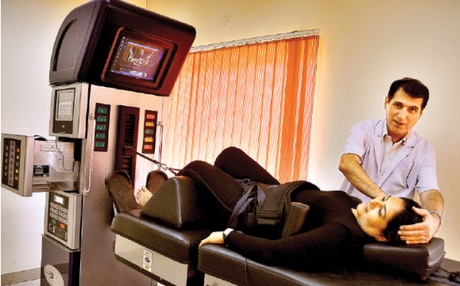
Dr Ahmed J Ansari is a new age healer, who with his revolutionising techniques and equipment, has given a new dimension to alternative healing. (Photo: Sudhakar Jain)

Holistic healing follows the alternative medicine route and Dr Ahmed J Ansari from Bangalore has been a leading light for several years with his Pristine Natural Health Centre.

Ansari never asks his patients to stop their allopathic drugs; all he wants is for them to be open to other therapies and a strong desire to be cured. An ardent practitioner of Baha’i, Ansari’s caring and compassionate nature perhaps bolsters the treatments he offers at his clinic.

Pristine offers painless and non-invasive therapies for orthopaedic ailments. Ansari’s team of orthopaedic surgeons use the two tonne massive DRX 9000, imported from NASA, US. It’s indeed space-age cure for back pain. It is used to correct slipped disc (spondylosis), of the neck and lower back. Approved by the US Food and Drug Administration (FDA), this treatment has proved to be economical and has a noteworthy success rate with low incidence of recurrence. The treatment takes 20 to 30 days and needs 30 to 45 minutes session every day. The DRX9000 gradually relives nerve compression by applying pressure to the affected areas. The treatment enlarges the space around the disc, strengthens spinal ligaments and keeps the lower spine properly aligned.

From space-age cure to molecular therapy, Pristine is path-breaking in its approach. Ozone therapy is another popular and safe therapy at Pristine. Ozone is one of the most potent purifiers of water and more than a hundred major cities in Europe have been using ozone for over a century.

There are different routes of entry of Ozone (O3) to the body—intravenous infusion, drinking ozonized water, through skin with ozone water bath and ozone injections to joints. “Having treated hundreds of patients since the last decade, we have not found a single patient developing any form of allergy or complication to it,” says the doctor.

In an age when the atmosphere is laden with toxic stuff, Chelation is emerging as a popular therapy. The water from gouging the earth is contaminated with toxic, heavy metals. The vegetables that we ingest are full of poisonous heavy metals. Even the air we breathe is laden with these heavy metals emitted from factories. These heavy metals invade the organs of our bodies and binds with the tissues, including our arteries, thereby hardening them. This hardening affects the efficiency of arteries, resulting in deterioration of the organ’s functions.

“We, at our centre, administer EDTA (Ethylenediaminetetraacetic acid) that is used to chelate heavy metals from the body. Chelation therapy helps eliminate and reduce heavy metal toxicity, aiding in the pooling of blood to different organs and leading to healthier functioning of organs. EDTA also helps to reduce blood cholesterol levels,” says Ansari. He adds, “Since EDTA is so effective at removing unwanted minerals and metals from the blood it has been the standard FDA approved treatment for lead, mercury, aluminum and cadium poisoning for more than 50 years.”

Platelet Rich Plasma (PRP) therapy is a relatively new treatment designed to aid in the healing and regeneration of orthopaedic soft tissues in injuries of muscles, tendons and ligaments. Of late it is used in cartilage injuries, defects and arthritis. Any injured, inflamed or degenerated area in the body needs good blood flow to repair or regenerate the damaged tissue. Blood flow to the area increases to aid in healing.  The blood carries platelets and growth factors that allow for healing of the tissue by creating new matrix of the respective soft tissue.

In PRP the patient’s blood is taken with a simple blood draw. Using a special centrifuge machine this blood is spun down to separate out and concentrate the platelets and growth factors that are essential for tissue healing. This small amount of fluid with concentrated platelets and growth factors is called platelet rich plasma (PRP).  Nothing else is added to the patient’s blood so there is no risk of allergy, reaction or rejection. PRP therapy is a purely natural process using the body’s own healing factors.

Once these platelets and growth factors are in the area of injury, they become activated.  They also recruit other healing proteins and factors to the area and healing and regeneration of the tissue begins.

“PRP therapy is an option for two different patient populations. One is the patient with chronic injury that never seems to go away.  The other is the patient with an acute injury, which might otherwise take 8-12 weeks to heal and is looking to do something to speed up recovery.  That is why PRP has become popular among athletes and those with sports injuries,” signs off the doctor.

source: http://www.newindianexpress.com / The New Indian Express / Home> LifeStyle> Health / by Sangeeta Cavale Radhakrishna / July 07th, 2013