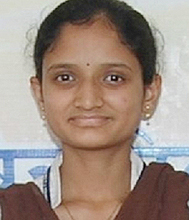
Rashmiparvathi from Puttur has won a gold medal in the International Sustainable World Energy Engineering Environment Project Olympiad-2013 for her science project. The event was held at Houston, Texas, USA from May 8 to 12.
Rashmiparvathi who has secured 93 per cent in her PUC exam, wants to pursue studies at the Indian Institute of Science, Bangalore.
A team including Rashmiparvathi, Ayush Panara from Rajkot, Nambirajan Konar, Kushal Suvarna, Dhanyeshwari and Manoj Kumar from Mumbai had participated in I-SWEEP, an international science fair that focuses on energy, engineering, and environmental projects fair. The team also won two silvers and one bronze medal.
Rashmiparvati was earlier in the news when she won a gold for her invention of remedy for skin ailments, made of a salt from coconut palm petiole.
source: http://www.mangaloretoday.com / Mangalore Today / Home> Main News / by Mangalore Times News Network / Puttur – Monday, May 19th, 2013
A miniature steam engine is the main attraction at the Railway Museum’s Sriranga Pavilion at the City Railway Station in city.
This is said to be the first of its kind model of a railway engine that actually runs on steam on miniature tracks laid inside the museum. The mini locomotive measures 84 cms in length, 31 cms in width, 36 cms in height and runs on a track measuring 15 cms in width. This engine is said to be a replica of Fairy Queen, a steam engine of the pre-Independence era.
The miniature model has been created by J.R. Antony Raj Padua and S. Shivakumar, technicians of the Mechanical Department of South Western Railways (SWR).
“Using scrap materials at the Railways Workshop and discarded brass items, we created this replica under the supervision of our superiors in six months’ time, spending Rs. 15,000,” they said.
This steam engine has a boiler unit in which the steam generated from boiling water is passed through a cylinder containing pistons which make the wheels of the engine move forward. Like the real engine, this too can move backwards when engaged in reverse gear.
Though such miniature railway engines were built in the past too, they were electric-powered. But this engine is the absolute replica of the Fairy Queen, which used to run on steam.
SWR General Manager Ashok Kumar Mittal flagged off the mini engine yesterday. Mysore Division DGM Vinod Kumar, Engineering Division Senior Divisional Engineer Kashi Vishwanath, Sr. DCM Dr. Anup Dayanand Sadhu, Publlic Relations Officer Ravindra and others were present.
source: http://www.starofmysore.com / Star of Mysore / Home> General News / May 19th, 2013
Rashmiparvathi K ,17, has made her remote village Nekkila near Bannur in Puttur taluk, 60 km from the city, proud.
She has won the gold for her science project in the International Sustainable World Energy Engineering Environment Project Olympiad (I-SWEEP) 2013 held in Houston, Texas, USA from May 8 to 12.
Her project titled, ‘Salt from coconut palm petiole & its anti-microbial activity’ was among the four projects selected to represent India at I-SWEEEP, an international science fair that focuses on energy, engineering, and environmental projects. The team won one gold, two silvers and one bronze medal.
Rashmiparvathi, who returned home on Wednesday, told TOI that it was a wonderful experience to be a part of an international event. “I could present my project and I shared the happiness with other students. I want to be a scientist in future,” said Rashmiparvathi, who is the daughter of Ravishankar K, an agriculturist and Durgarathna, head of the department of Hindi, Vivekananda Degree College, Puttur.
Rashmiparvathi, who has secured 93% in the PUC exams, is keen on studying basic science at Indian Institute of Science, Bangalore.
“Her dedication and hard work helped her bag international laurels. She was guided by a progressive farmer Shankar Bhat Badanaje in her research,” said her father Ravishankar.
Rashmiparvathi is a student of Vivekananda PU College, Puttur.
Her study has found that the bio-waste of coconut petiole can be used as a substitute for increasing the plant soil nutrients and as anti-microbial agent against certain fungi that cause skin diseases.
Ayush Panara from Rajkot, Nambirajan Konar, Kushal Suvarna, Dhanyeshwari Manoj Kumar from Mumbai are the other students from India bagged medals at the I-SWEEP. The students were qualified to participate in the I-SWEEEP fair through the Indian Science and Engineering Fair (INSEF) organized by Science Society of India (SSI).
source: http://www.articles.timesofindia.indiatimes.com / The Times of India / Home> City> Mangalore / by Vinobha KT, TNN / May 18th, 2013
Want to listen to Hindustani classic music of Gauhar Jaan, the first Indian musician to record on the gramophone in 1902 or the first recording of the national anthem by Vishwa Bharati Chorus or the speeches by Mahatma Gandhiji, Subhash Chandra Bose and HH Aga Khan III.
Head straight to Voices of India, the first audio exhibition of vintage recordings, organized by the Archive of Indian Music (AIM) in association with the Alliance Francaise on the latter’s premises in Vasanthnagar from May 10 to 17.
According to Vikram Sampath, whose brainchild AIM is, the exhibition will be held under seven categories – Hindustani classical music, Carnatic classical music, theatre music, folk music, early cinema, devotional and patriotic music and voices.
The visitors will have the pleasure of listening to Gangubai Hangal, Kesarbai Kerkar, Inayat Khan (sitar), Bundu Khan (sarangi), Kannada theatre of old Mysore (Bidaram Krishnappa and Rachappa), Bangalore Nagarathnamma, one of the earliest south Indian musicians to record on the gramophone in 1904, Bengali folk music, Tamil folk (Kavadi Chindu), K L Saigal from the movie Tansen (1943), Indu Bala from the movie Ankh ka Taara (1932), violin-flute duet by T Chowdaiah and T R Mahalingam, G N Balasubramaniam, Narayan Stuti by Juthika Roy and Kamal Dasgupta, Kaloo Qawwal (qaawaali), Wahidan Bai of Agra singing a naat in praise of Prophet Mohammad, speeches by Gandhiji, Tagore, Kazi Nazrul Islam and Sohrabjee Dhondee of Parsi theatre. It provides a kaleidoscope of the rich musical legacy of our country.
Vikram said there will be an exhibition of all these personalities with their rare photographs and biodata. The visitors can see the exhibits and listen to music and voices of their choice through a cell phone or a computer at the exhibition. The exhibition is open from 10am to 7pm from May 11. The entry is free. It will be inaugurated on May 10 at 6.30 pm.
HIGH TRACK RECORD
Archive of Indian Music (AIM) is a non-profit trust that seeks to digitize and preserve old and rare gramophone records of our country. The primary objective of AIM is to preserve the voices of ancestors and make them easily and electronically available through an online portal for researchers, musicians, students of music and the public at large.
AIM currently has collected close to 10,000 records and a range of gramophone records. TV Mohandas Pai is patron of AIM. The tracks can be listened to free of cost on.
source: http://www.articles.timesofindia.indiatimes.com / The Times of India / Home> City> Bangalore> Indian Music / by S Kumar, TNN / May 04th, 2013
Biotechnology major Biocon plans to launch in July its novel biologic drug Itolizumab branded as ‘Alzumab’ to be used for the treatment of chronic plaque psoriasis in the country.
“We plan to launch Alzumab (Itolizumab) in July this year in the country. It is a novel, first-in-class biologic for the treatment of psoriasis,” Biocon Chairman and Managing Director Kiran Mazumdar- Shaw told agencies in an interview.
It will be manufactured at the company’s Biopharma manufacturing facility at Biocon Park in Bangalore, she added.
Psoriasis is an inflammatory auto-immune skin disease that follows a typical relapsing and remitting course with the disease affecting two to three per cent of the total population in the country.
“The market for such a drug is huge in India as the disease affects quite a number of people,” she added.
The global market for psoriasis treatments is estimated to cross USD 8 billion by 2016, Biocon said.
The company had received marketing authorisation for Itolizumab from the Drugs Controller General of India (DCGI) in January, 2013.
“We also plan to extend the clinical development of the drug for other auto-immune diseases like rheumatoid arthritis , multiple sclerosis and vitiligo in future,” Mazumdar-Shaw said.
The company has also completed a pre-IND (Investigational New Drug) meeting for Itolizumab with the US Food and Drug Administration as it plans for a global clinical development of the new medicine.
This is company’s second novel biologic developed in India. BioMab EGFR, an anti-cancer monoclonal antibody being the first.
source: http://www.articles.economictimes.indiatimes.com / The Economic Times / Home> News> News By Industry> Healthcare/Biotech / by PTI / April 28th, 2013
Charitable donations of wealthy Indian firms is only 0.6-1% of GDP, compared with 2.2% for American companies
Pic: Business Standard
Many believe that Indian businessmen have cash registers for hearts. Their philanthropic contributions are believed to be insignificant in comparison to their wealth. According to the 2012 Forbes list, the wealth of the 100 wealthiest Indians is around $250 billion—13.89 per cent of India’s GDP. But, according to the estimates of a 2010 report of Bain Company, the charitable donations of Indians is only 0.6 per cent to 1 per cent of the GDP, when the charitable contribution of Americans is around 2.2 per cent of the GDP.
But, before one jumps to a conclusion, there is the other side of the story as well. On a program aired on the CNN recently, Ratan Tata, former chairman of Tata Sons, said that of 60-65 per cent of the Industrial proceedings of Tata Sons goes into programmes for education, medical, rural development or eradication of poverty. Only two per cent of the industrial proceedings go to the family.
Tata is the chairman of the Tata Trusts, which is among the largest private sector philanthropic trusts in India.
He is not alone. In February 2013, Azim Premji, the Chairman of Wipro became the first Indian to sign the giving pledge. Premji had also donated $ 2.3 billion to a trust to fund Azim Premji Foundation, an education-oriented non-profit. The giving pledge group was founded by Warren Buffett and Bill and Melinda Gates in 2010 to urge rich businessmen to donate a significant part of their wealth. With a net worth of $ 16 billion, Azim Premji is the 3rd richest Indian, and the 41st richest person in the world. Premji is also among the world’s top five givers. But, many think of them as an anomaly in a country where businessmen have billion dollar homes.
Gurcharan Das, author and former Procter and Gamble India CEO said philanthropy is a new idea in India when countries like the United States have a culture of philanthropy. “More and more people will donate to charitable causes in the future.” he said.
However, evidence suggests that philanthropy in India is often informal, and far more than suggested by data. Bibek Debroy, an economist, and a research professor at Centre for Policy Research said though Indians do a lot of philanthropy, much of it is to religious institutions, is informal and does not appear in the official records.
Veena Jha’s recently published work, “India Emerging: The Reality Checks” sheds light on the long philanthropic tradition in India. Charitable donations have increased radically in the post-reform period. Studies of ‘The Society for Participatory Research in Asia’ between 2000 and 2002 shows that 53 per cent of the charity in India operates in rural areas and nearly half of it is unregistered.
Some studies suggest that nearly half of Indian households give charity. In India, non-profit activity, especially private nonprofit activity, is much higher than the global average. According to Bain and India’s annual philanthropy report, the private donation to charity had gone up by 50% from 2006 to 2011.
“A part of the philanthropic donations in India is to institutions abroad, like the universities and think-tanks. This is partly for visibility. But, many of them have studied abroad, and feel indebted to their alma mater.” Bibek Debroy said.
In 2010, Anand Mahindra had donated $ 10 million to the Harvard University, and Ratan Tata’s $ 50 million donation to the Harvard Business School in 2010 was the largest international donation in its history. In December 2012, a Delhi-based entrepreneur Sharik Currimbhoy had pledged $12.12 million to Columbia University, and businessman Siddharth Yog had gifted $11 million to the Harvard Business School.
Some economists have proposed an estate tax and corporate social responsibility (CSR) practices to increase the philanthropic contribution in India. While the former was not to the liking of the Finance Ministry, at least in the budget for 2013-14, the latter is there in the Companies Bill, 2012 which is yet to be passed by the Rajya Sabha.
Ajay Shah, a professor at National Institute of Public Finance and Policy (NIPFP), said an estate tax will help inter-generational class mobility and to reduce the concentration of wealth.
“Incentives do matter. But, I do not see this as a black-and-white issue. It is perfectly possible for a man at the bottom to rise to the top, and I admire people who come from a humble background, but in our country, it is very difficult to do so,” he said.
However, he voiced views against CSR. ” But, CSR is a bad idea because it puts managers in control of the purported charitable objectives of shareholders.” Ajay Shah said.
But, doing charity is intrinsically difficult. Steve Jobs had once said that he is not deeply engaged in philanthropy because there is no measurement system—-It is very hard to measure whether you have succeeded or not.
According to the Bain and India philanthropy report, 80 per cent of the individuals and 90 per cent of the NGOs are satisfied with the efficacy of their philanthropic activities. Many economists think that this is because people often donate for the “feel-good” factor, and prefer to believe that their money goes into the right causes.
Many, like Bill Gates had proposed solutions to this problem which is magnified in India, where philanthropy is informal, and the feedback mechanism weaker. Some proposed solutions include measuring the funding for social causes, the teacher absentee rate, and the extent of corruption.
Gurcharan Das opined that this is not severe problem. “The Gates’ foundation is known for their accountability and their work to counter AIDS in many poor countries, including India. Though it is hard for individuals to do philanthropy, they can pick a good NGO to donate their money to. It only takes a Google search to find out the NGOs that are more accountable.” he said.
But, Nitin Pai, the founder of The Takshashila Institution said because it is difficult to measure the outcome in philanthropy, people often measure the outputs. “Across the world, they tend to focus on impressing the donors, which is not always a good thing. Feedback mechanisms, if not properly designed, can skew the outcome. It is important to realize that this is intrinsically difficult.” he said.
And, charity will never be sufficient. Economist Jagdish Bhagwati once said that an outright redistribution of wealth would only increase the food consumption of the poor by one chapatti a day. Some economists have estimated that sharing the total wealth in developing countries would leave its citizens with a few dollars a day. It is clear that charity will not solve the problem of world poverty.
“Poverty is too big a problem to be solved by charity alone, but that does not undermine the case for charity.”, Ajay Shah said.
source: http://www.business-standard.com / Business Standard / Home> Companies> Features / by Shanu Athiparambath / New Delhi – April 20th, 2013
Persons with haemophilia made their day under the sun as Manipal Haemophilia Society celebrated World Haemophilia Day at End Point here on Saturday.
SMH Kirmani, former Indian stumper and Malathi Holla, Paralympics silver medallist in discus/shot put and Arjuna award winner made their day as well as that of their families in the event sponsored by Novo Nordisk Haemophilia Foundation and supported by Manipal University.
The Society planned an afternoon of fun and frolic for persons with haemophilia. There was Team Mangalore with their colourful kites of various shapes and sizes adorning the skies and music to go with it. A mass tera-band musical exercise was performed by more than 300 students of various colleges of university for benefit of persons with haemophilia who need regular exercise to keep them fit to prevent episodes of bleeding.
Dr Annamma Kurien, president of Manipal Haemophilia Society, the person behind the show, welcomed the gathering and gave a brief of the work being done by the Society to encourage and give hope to persons with haemophilia. Kirmani acknowledged the importance of getting associated with such a noble cause. He was all praise for Malathi Holla who has conquered challenges from her wheelchair to bring laurels to the country.
Kirmani released a music CD titled ‘Sa Re Ga Ma Pa 1, 2, 3, 4’ which was distributed to all persons with haemophilia. Students of Melaka Manipal Medical College sang a song composed by Dr Kurien.
Malathi awarded scholarships to children with haemophilia in three categories. District surgeon Dr Anand Naik dwelt on efforts made by the government to provide factor VIII and IX to PwH which could remarkably help in fighting the disorder.
Dr H S Ballal, pro-chancellor, Manipal University, said the public-private partnership model can help fight this bleeding disorder.
The formal function was followed by a cricket match between Manipal XI led by Dr Ballal and Haemophilia XI led by Kirmani. Haemophilia XI included children and youngsters with haemophilia and Manipal XI included officials and others of Manipal University.
source: http://www.articles.timesofindia.indiatimes.com / The Times of India / Home> City> Mangalore / by TNN / April 21st, 2013
Ramesh Manikatti (50), a native of Bagalkot was rushed to a city hospital last month with symptoms of Paraparesis, a disease of progressive weakness of the lower limbs. The disease over a few months had made his limbs weak and dysfunctional over time.
Ramesh had earlier been evaluated in Goa and Hubli but was not given a definitive treatment due to the complexity of the disease and was referred to Apollo Hospitals in Bangalore. He was evaluated by neurosurgeons Dr K N Krishna and team, and neurologist Dr Sreekanta Swamy. The MRI of the spine showed swelling of the spinal cord due to abnormal cross connection of spinal blood vessels which is known as dural arteriovenous malformation, a surgical condition which needs spinal surgery to disconnect the abnormal connection between the vessels sitting on the spinal cord.
Dr Sharath Kumar G G, Consultant Neurointerventionist, Apollo Hospitals, further evaluated and recommended a spinal angiogram be done under local anesthesia in angiography suite. The exact site of the pathology was identified and treated simultaneously in the same sitting using endovascular glue injection, a procedure in which abnormal blood vessel was blocked with a glue like medication using small catheters in the blood vessel there by disconnecting the abnormal connection. This led to the avoidance of the surgery and the patient showed significant improvement on the next day.
According to Sharath Kumar, “The main challenge during the minimally invasive procedure was to get around the disease. Paraparesis was making the patient’s lower limbs dysfunctional with each passing day. The treatment had to proceed very cautiously as the limbs were totally distorted. The next challenge was the connection of spinal blood vessels. The task was to separate the connection between the vessels on the spinal cord.”
Ramesh was discharged after two days and is on the path of complete recovery.
source: http://www.articles.timesofindia.indiatimes.com / The Times of India / Home> City> Bangalore / by Hetal Vyas, TNN / April 15th, 2013
Six class X and one first PUC students from Puttur, about 50 km from here, will represent India in International Environment and Sustainability Project Olympiad (INESPO), an international science competition, to be held at Middleburg in Netherland from June 2 to 7.
The selected students are: Shivaprasad B, Aditya SN, Dhimanth S, Sreekumar, Ashish K, Sindhura Shankar (Sri Ramakrishna High School) and Abhiram PS, (PUC student of Vivekananda PU college). They will form four teams to showcase their science project.
INESPO is a Netherland-based international Olympiad which will be held on a yearly basis. The first Olympiad was held in 2009 for students between 13 and 18 years of age with an aim of spreading awareness about environmental problems among students.
Vasanthi K, science teacher of Sri Ramakrishna High School, told TOI that the students worked hard for over two months to complete their projects. “They submitted their project details online to NESPO and got selected,” she added.
Shivaprasad who has teamed up with Aditya is excited to take part in this competition. Shivaprasad said, “I am extremely happy because I and my friends will be visiting a foreign country for the first time.”
Each participant will need Rs 1 lakh each to take part in this science contest. “We will be happy if someone sponsor us,” he added.
Shivaprasad and Aditya will present a project titled Germicidal Dustbin – a novel way of minimizing clinical pathogens. These students have designed a dustbin equipped with ultra violet lamp. Once the dustbin is closed UV rays emitted from the lamp will kill the pathogens in the dustbin.
Shivaprasad said the dustbin can be used in hospitals to prevent diseases that spread through clinical wastes. This duo has done this project under the guidance of Rekha P D, deputy director of Yenepoya Research Centre and Vasanthi K.
Details of students names and their projects:
Dhimanth S and Sreekumar will present “Development of an effective biocide from Acacia Concinna,” done under the guidance of Vasanthi K.
Ashish K and Abhiram PS will present “Extended applications of pollution free Vitex Nigundo.”
Sindura Shankar will present “A novel product to increase crop production by enriching pollination.”
source: http://www.articles.timesofindia.indiatimes.com / The Times of India / Home> City> Mangalore / TNN / April 04th, 2013
Infosys has signed a five-year agreement with RWE Supply & Trading (RWEST), a leading European energy trading house, to provide technology services to “transform its trading operations to create business efficiencies and drive growth from new markets and commodities”.
Central to the agreement is an ‘innovation and gain-share’ model supported by a joint investment framework to identify and implement innovative business and technology projects that will deliver measurable benefits to RWEST, the Bangalore headquartered IT major said in a statement.
The agreement highlights include consulting and technology services for applications transformation and business platforms, and transition to a managed services model for application management, it said.
Marcus Schaper, Head of IT at RWEST, was quoted as saying: “Infosys was able to offer us a full range of technology services coupled with a strong track record supporting energy and financial trading systems. They brought commercial flexibility and a long-term perspective to create a compelling case for our dynamic business.”
Kush Sharma, Head of Utilities at Infosys in Europe, said: “We are confident that this association with RWEST will enable strategic growth through the transformation of their trading platform. We will help them use savings generated to make investments that can drive operational efficiency and, more importantly, competitive advantage”.
source: http://www.articles.timesofindia.indiatimes.com / The Times of India / Home> Tech> Tech News / PTI / April 02nd, 2013