Category Archives: Science & Technology

Karnataka urges Centre to speed up construction of Nano institute


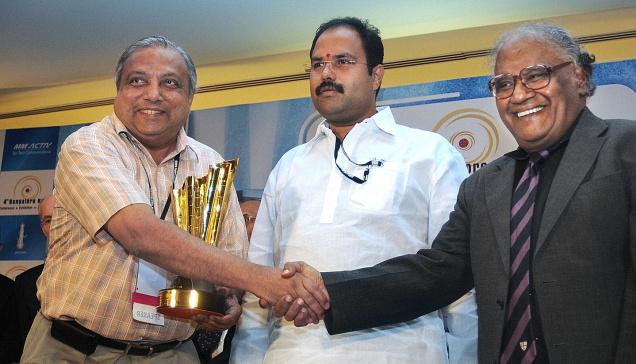
Empowering education: Dr G. Sundararajan, Director, International Advanced Research Centre for Powder Metallurgy and New Materials (ARCI), receiving the 4th Bangalore Nano National Award from Prof C.N.R. Rao, National Research Professor, Chairman, Scientific Advisor Council to the Prime Minister of India, at the inauguration of the 4th Bangalore Nano 2011 - conference, exhibition in Bangalore on Thursday. Mr Anand V. Asnotikar, Karnataka Minister for Science and Technology and Fisheries, is also seen. — Photo: G.R.N. Somashekar / Business Line
Empowering education: Dr G. Sundararajan, Director, International Advanced Research Centre for Powder Metallurgy and New Materials (ARCI), receiving the 4th Bangalore Nano National Award from Prof C.N.R. Rao, National Research Professor, Chairman, Scientific Advisor Council to the Prime Minister of India, at the inauguration of the 4th Bangalore Nano 2011 – conference, exhibition in Bangalore on Thursday. Mr Anand V. Asnotikar, Karnataka Minister for Science and Technology and Fisheries, is also seen. — Photo: G.R.N. Somashekar / Business Line

Bangalore :

The Karnataka Government has urged the Centre to speed up construction of the Rs 100-crore Indian Institute of Nano Sciences and Technology being set in Bangalore.

The Karnataka Science and Technology Minister, Mr Anand V. Asnotikar, at the fourth edition of Bangalore Nano, reading the Chief Minister, Mr D.V. Sadananda Gowda’s speech copy, said “The civil works of the institute has been taken up and is being taken up by the Central Government at a cost of Rs 100 crore.

“The State Government has already allotted 14 acres of land on Tumkur road.

“I request the intervention of Prof C.N.R. Rao in moving the Department of Science and Technology (DST) to hasten the development work,” he added.

To give emphasis and for the promotion of nano technology in Karnataka, the State Government is planning to give an acre of land for setting up of ‘Nano Lab’ by the Jawaharlal Nehru Centre for Advanced Scientific Research in the neighbouring premises of Mahatma Gandhi Institute for Rural Energy and Development at Jakkur in Bangalore.

Mr Asnotikar said “For the Nano Park planned in the State, the Government is committed to involve private sector. Expression of interest has been called for it and the park will come up on a public-private-partnership mode.”

The Government is planning to locate the Nano Park near the Bangalore International Airport at Devanahalli.

“This initiative will give a major fillip to the nanotechnology sector in the state and create additional jobs like IT and biotech sector,” Mr Asnotikar said.

“The Government is committed to providing enhanced budgetary support for nano initiatives, such as those of the Vision Group on Science and Technology, in the forthcoming 2012-13 Budget, he added.

LITTLE SEED

Giving his inaugural speech, Prof C.N.R. Rao, President, JNCASR; Chairman, Scientific Advisory Council to the Prime Minister of India; Chairman, Karnataka Vision Group on Science and Technology and Vision Group on Nanotechnology, said, “The little seed that was sowed four years ago is no more a small plant now. It has grown into a tree-Bangalore Nano. It is a national event now.

“Being a citizen of Bangalore and Karnataka, I am happy to take this initiative.”

He said that Karnataka is the foremost State taking keen interest in the field of education in science.

He congratulated the Government and said, “Every time I speak to dignitaries in New Delhi, I tell them that I wish all States across India follow Karnataka in empowering education in science and engineering.”

AWARD

The Bangalore Nano National Award 2011 was presented to Dr G. Sundararajan – Director, International Advanced Research Centre for Powder Metallurgy and New Materials (ARCI), Hyderabad.

The previous recipients of the award were Prof. C.N.R. Rao in 2007, Prof. Dipankar Chakravorty in 2008 and Prof Ajay K. Sood in 2010.

At the tradeshow, 25 exhibitors from across world and about 140 organisations from 12 countries such as Russia, Germany, the US, Japan, Switzerland, Canada and Poland are participating.

The event is also showcasing 115 posters done by young scientists and researchers from institutions such as the IISc, JNCASR, IITs, NCBS and international universities.

source: http://www.thehindubusinessline.com / Business Line / Home> Economy / The Hindu Bureau   anilu@thehindu.co.in / Bangalore, December 08th, 2013
Mathematics wizard Shakuntala Devi passes away

Bangalore : 

Legendary Mathematics wizard Shakuntala Devi, dubbed as the world’s fastest ‘human computer’ and who made complex mental calculations as a child prodigy, died at a hospital here today following respiratory problems.

Devi, who has enthralled fans with her prowess for decades, was 83.

“She passed away at Bangalore Hospital,” Shakuntala Devi Educational Foundation Public Trust Trustee D C Shivadev told PTI. Doctors declared her dead at 8.15 a.m., he said.

Devi was hospitalised a couple of weeks ago for critical respiratory problems, Shivadev said. “She developed heart and kidney problems later,” he added.

A household name in India, Devi cast a spell adding a 16-digit number with another one and multipliying the result with an equal array of numbers almost instantaneously, finding the cube root of the resultant and pops up with an answer in just about the time taken for a wink.

Devi, who had no formal education and who simply picked up reading and writing, had the ingenous ability to tell the day of the week of any given date in the last century in a jiffy.

“God’s gift. A divine quality,” is how Devi had once felt of her unique distinction that began showing visibility since the age of three. She has been quoted as saying that none in her family showed any signs of the same head for figures. “Not even remotely, although my dad was a stage magician.”

Rated as one in 58 million for her stupendous mathematical feats by one of the fastest super-computers ever invented-the Univac-1108-, Devi believed in using grey cells to silicon chips.

Born on November 4, 1929, Devi figured in the Guiness Book of World Record for her outstanding ability and wrote numerous books like ‘Fun with Numbers’, ‘Astrology for You’, ’Puzzles to Puzzle You’, and ‘Mathablit’

Hailing from a simple orthodox Kannada Brahmin family, Devi’s father was a circus performer who did trapeze, tightrope and cannonball shows. He had rebelled against becoming a temple priest.

Devi was also an astrologer and gave remedies purportedly based on date and time of birth.

It was while Devi was playing cards with her father at the tender age of three that he found his daughter’s calculation abilities. It turned out that she beat him not by sleight of hand, but by memorising the cards.

At the age of six, she demonstrated her calculation skills in her first major public performance at the University of Mysore and two years later, she again proved herself successful as a child prodigy at Annamalai University.

However, despite apprehensions in some quarters, Devi did not lose her calculating ability when she turned adult like other prodigies such as Truman Henry Safford.

In 1977, Devi extracted the 23rd root of a 201-digit number mentally. In the same year in Dallas, she competed with a computer to see who gives the cube root of 188138517 faster and she won.

On June 18, 1980 she demonstrated the multiplication of two 13-digit numbers 7,686,369,774,870 x 2,465,099,745,779 picked at random by the Computer Department of Imperial College, London. She answered the question in 28 seconds flat.

This event is mentioned in the 1995 Guinness Book of Records.

“Why do children dread mathematics?”, she was once asked.

“Because of the wrong approach. Because it is looked at as a subject,” pat came her reply.

“Mathematics is life, you have math in everything, right from time to your date of birth to the food you eat and the air you breathe,” she states. The right age to train children in mathematics is six, says Shakuntala, who sparkled at three.

source: http://www.thehindubusinessline.com / Business Line / Home> News / by PTI / Bangalore, April 21st, 2013

India-based Firms Break New Ground in Hiring

Wipro and Tata have found success in recruiting thousands of workers in a short period of time. So how do they do it?

U.S. companies struggling to land top talent outside their home countries could learn a lesson from Wipro  and Tata Consultancy Service . Both companies are huge global technology service providers based in India that recruit thousands of new young employees every year, so their recruiting teams are constantly thinking about how to attract and retain the best people.

In fiscal 2012, Tata recruited 70,400 employees around the world, including 32,263 fresh hires from college campuses, according to its annual report. And the company’s attrition rate was just 12.2 percent. In comparison, corporate India reported an average attrition of  19.3 percent for 2012 , according to Aon Hewitt’s Annual Salary Increase Survey.

The key to successfully hiring so many employees is to look beyond pedigrees, and focus on finding smart people who can be trained to do the job, says Prasad Menon, chairman of Tata Quality Management Services, which provides business excellence training and structure to all Tata companies.

Tata recruits candidates from hundreds of colleges every year, and they are not all “tier one” schools, such as the prestigious Indian Institutes of Technology, Menon says. But that doesn’t matter. “The students at these schools are no less intelligent. They just haven’t received the best training.”

Menon’s attitude speaks to what some call  ” The India Way” of leadership . Wharton School management professor Peter Cappelli and others have noted that India-based firms have traits including a tendency to seek holistic engagement with employees and to improvise amid complex, volatile business conditions.

Tata assumes most recruits will come to the company with skill gaps, so it created a six-month training program that covers everything from engineering and technical skills to teamwork, leadership and other soft skills. “The training enables youngsters from less-privileged background to be as good if not better than those from elite universities,” he says, “and it makes them very loyal to the company.”

THE BENEFITS OF AVERAGE

When companies open themselves up to candidates from lower-ranking schools, they also have a better opportunity to fit employees to the corporate culture, says Abhijit Bhaduri, chief learning officer and head of corporate human resources development for Wipro, the $7.3 billion multinational information technology provider headquartered in Bangalore. Wipro has more than 140,000 employees, and hired 13,000 employees last fiscal year.

“We understand the value of engagement,” Bhaduri says of Wipro’s hiring process. “It doesn’t matter if someone comes from a second-rung college. We look at whether the person will enjoy the type of work we offer and our culture.”

Bhaduri is the author of Don’t Hire the Best: An Essential Guide to Picking the Right Team, which talks about the importance of assessing personality and culture fit along with skills and education when recruiting.

He urges Wipro recruiters to use behavioral interviewing to determine whether candidates will be happy in a role—not just whether they have the right technical qualifications. “IQ and GPA have a limited impact on a person’s success,” he says. “Excellence comes when they enjoy what they do.”

Like Tata, new recruits at Wipro participate in an extensive training program. Wipro puts new hires through an eight-week program called Campus to Corporate. “They all come with different skills and degrees of recall,” he says. “This program gets them all on a common platform.”

Wipro’s training center can accommodate 4,000 people per day, and Bhaduri’s team offers a catalog of voluntary and mandatory training courses employees can take to improve their technical, communication and leadership skills as they move up the corporate ladder. Such access to training and career opportunities helps Wipro keep attrition down, and it transforms candidates with even the most mediocre academic training into valuable, long-term employees. Wipro reported an annual attrition rate of 14.4 percent as of April 2012.

“Global sourcing is a very difficult challenge, Bhaduri says, “but when you look beyond labels, you find the people who will be a good fit for your company, and those are the ones you want to stay.”

However neither company has a perfect record with respect to employees. Tata recently agreed to pay $29.8 million to settle a class-action lawsuit over wage disputes by Indian employees working in the United States. The lawsuit claimed Tata deducted taxes from their India-benchmarked salaries then forced them to turn over their U.S. federal and state tax refunds to the company. The settlement will be shared among 12,800 employees.

Both firms have also been accused of underpaying employees, although Bhaduri says that other aspects of the corporate culture help to attract and retain the best employees. “Salary is always important to everyone … but workplaces cannot compete on salary alone,” he says. He argues that the ability to work with talented people and to take on challenging projects motivates employees as much as salary. “The opportunity to grow one’s skills is an important driver for many.”

Sarah Fister Gale is a writer based in the Chicago area.  Comment below or email editors@workforce.com  

source: http://www.workforce.com / WorkForce / Home> Featured Articles / by Sarah Fister Gale / April 02nd, 2013

City students bag 2nd prize for Hybrid Bicycle

HybridBicycleBF17apr2013

Mysore  :

 The students of final year Automobile Engineering Department of D.Banumaiah’s Polytechnic in city, who participated in the ‘Do-it-Yourself’ State-level Project Exhibition, organised jointly by BCN Polytechnic, Lakshmeshwar in Gadag and Board of Technical Education, Bangalore, won the second prize for their Hybrid Bicycle concept for the academic year 2012-13.

The city students, who have developed the Hybrid Bicycle are S. Harish, Idrish Pasha, H.P. Praveen Sharma, V. Srinivasa, Syed Ummer, J. Nagaraju and H.M. Narayana. They were guided by A.R.Nanda Kumar and HOD B. Lakshminarayan.

The Hybrid Bicycle runs with the help of both petrol and solar energy. The advantages of this bicycle are: rapid developments in hybrid technology to improve engine efficiency, reduces pollution, helps reduce dependency on fossil fuels which directly affects fuel prices, powered by an electric motor and a small internal combustion engine, gives better mileage and are much cleaner than normal vehicles with lesser CO and other green house gas emission.

source: http://www.starofmysore.com / Star of Mysore / Home> General News / April 12th, 2013

An astronomical wonder

The phenomenon is a testimony to the fact that our ancient sculptors were extremely knowledgeable in the areas of astronomy and architecture | EPS

Most people in Karnataka are aware of the ancient astronomical observatories at Stonehenge in England, Newgrange in Ireland, Temple at Karnac in Egypt, Machu Picchu – Intihuatana Stone in Peru and the Jantar Mantar in Delhi but are oblivious to the astronomical wonder in the ancient cave temple of Gavi Gangadhareshwara atop a small hillock in Basavanagudi, Bangalore.

A celestial happening marks the Makara Sankranthi every year and the sun rays illuminating the South-facing idol inside the cave, indicates the shift of the Sun’s movement northwards (Dakshinayana to Uttarayana). In the evening, as the sun sets in the west, sun’s rays falling from the south-western part of the temple passes through an arch and a couple of windows placed perpendicular to each other and later through the horns of the Nandi(the bull mount of Lord Shiva) to fall on the idol of the temple for about 15 minutes(4.55 pm to 5.15 pm). It is as though the sun himself pays homage to Lord Shiva while welcoming Makara Sankranthi.

The phenomenon is a testimony to the fact that our ancient sculptors were extremely knowledgeable in the areas of astronomy and architecture. In the courtyard of the temple, there are mysterious monolithic stone structures – two large vertical discs on pillars, a large trident of Shiva, a small two-headed drum and two fans.

It is believed that such discs are not found in any other temple in Karnataka or south India. Their significance has been explained recently by scientists Dr.Jayanth Vyasanakere and Dr. B S Shyalaja of the Jawaharlal Nehru Planetarium, Bangalore, who have come to the conclusion that this temple has astronomical significance.

The study published in Current Science Journal opines that Suryapana and Chandrapana have been positioned for astronomical observations in the medieval period. The shadow of the bronze pillar (Dvajastamba) falls on the eastern disc for 40 minutes. The two discs have been installed in alignment to the summer solstice sunset and that explains the significance of the phenomenon on Makar Sankranti.

The discs stand parallel to each other a few metres apart. They have ornate sculptures of bulls appearing to support the weight of the discs and two perpendicular lines that intersect at the centre of the disc. “This kind of arrangement cannot be seen anywhere in the world. The arrangement is made specifically for astronomical purposes.” Dr. Shylaja explained.

Researchers believe that this apparatus was used to precisely mark the solstices and hence, measure time and their deductions which are based on marking the shadow of the western disc till the ‘last possible minute’ (which was around 40 minutes before the actual sunset) and then predicting the situation at the time of sunset.

The alignment of the arch, windows and Nandi to ensure that the sun’s rays fall on the idol on Jan 14th and the alignment of the two discs to summer solstice sunset is a fact that was unknown till now. The walls and windows have also been built in such a way that the light should reach the cave on Jan 14th.

Dr. S.K.Aruni of the Indian Council of Historical Research (ICHR) speculates that the cave was initially occupied by Jain monks by comparing the secluded location of the cave with similar ones in Sravanabelagola and Melkote. As per historical sources, this belief is supported by the dominance of Jainism in the region in the early part of the second millennium AD.

Later, it is believed that Kempegowda built the structures that are seen today in the early part of the 17th century, introducing the illumination event and making it a Shaivite temple.

The monolithic structures, the stone umbrella (Chatri) adjacent to the temple and a watch tower (Kavalu-Gopura) point to that fact. Legends shroud the presence of a dark tunnel going into the bowels of the hill.

Ardent devotees believe that there are actually two of these tunnels; one goes all the way to the north of India, to the City of Shiva, Varanasi, and the other to a temple town, Shivaganga, 50 km north-west of Bangalore. However this has not been proved but a tunnel exists on the banks of Kempegowda’s Kempambudhi tank, a few hundred metres away.

A high-walled prakara surrounds the cave temple considered a fine piece of Indian rock-cut architecture of the 9th century. In addition to a monolithic idol of Lord Shiva made of granite, the temple houses a rare idol of Agni, the fire god.

source: http://www.newindianexpress.com / The New Indian Express / Home> Cities> Bangalore / by Dr.Mamatha B R – Bangalore / April 11th, 2013

Mysore railway workshop : Only one in the country that manufactures train brakes

Railway Workshop's Deputy Chief Manager P.A. Salahuddin (extreme left) is seen explaining about the components of Composite Brake Block while senior Section In-charge Ananth Kumar and Railway Workshop Chief Manager U. Subba Rao (extreme right) look on. Picture right shows Subba Rao pointing at the latest model of Disk-Wheel Brake of a LHB bogie.
Railway Workshop’s Deputy Chief Manager P.A. Salahuddin (extreme left) is seen explaining about the components of Composite Brake Block while senior Section In-charge Ananth Kumar and Railway Workshop Chief Manager U. Subba Rao (extreme right) look on. Picture right shows Subba Rao pointing at the latest model of Disk-Wheel Brake of a LHB bogie.

Among the many feathers in the cap of Mysore city — as the first of its kind in the entire nation — is the Railway Workshop in Ashokapuram where Composite Brake Blocks (CBBs) for trains are being manufactured on a large scale, sufficient to meet the demands of South Western Railways (SWR).

Among the 17 units of the Railways across the country, Mysore Railway Workshop is the only one which manufactures CBB, while the rest outsource them from private companies, said U. Subba Rao, Chief Workshop Manager, in an exclusive interview with Star of Mysore yesterday.

He said that the Railway Workshop in Mysore, established in 1924, took up the initiative of manufacturing the CBB around 12 years ago. However, it got the official clearance from Railway Ministry only last year. Till last year, the workshop had produced 75,000 CBBs while this year, it had touched one lakh, said Rao and added that the Mysore Workshop had won the Railway Minister’s second Best Innovation Award for the year 2012.

“The CBB is lighter in weight compared to the conventional cast-iron tread brakes and is less harsh on the wheels, thus enhancing their longevity. Life span of each brake component is around three months or nearly one lakh kilometers,” said Rao.

Deputy Chief Workshop Manager P.A. Salahuddin and Senior Section In-Charge of the CBB workshop, Ananth Kumar, explained about the CBB manufacturing process.

The Railway Workshop at Mysore was established as a Base Workshop of the erstwhile Mysore State Railway in 1924. With the formation of integrated Southern Railway in 1951, this workshop became part of Southern Railway.

Other activities of the workshop include periodic overhauling of all types of BG coaches, refurbishment of coaches, intermediate overhauling of bogies, manufacturing of toy trains and conversion of coaches.

source: http://www.starofmysore.com / Star of Mysore / Home> General News / by K.M. Chengappa / April 09th, 2013

Doha: Dr B M Hegde to grace Bunts Qatar first Annual Day event

Doha :

The stage is set for the first-ever Annual Day celebration of Bunts Qatar to be held on Friday April 5 at 4.30 pm at Al Jazeera Academy.

Padma Bhushan Dr B M Hegde will be the chief guest. Guests of honour will be Chidanand Naik, general manager of Pallonji Qatar, Sarvotham Shetty, president UAE Bunts, and K D Shetty, chairman, Bhavani Shipping lines.

BuntsQatarBF11apr2013

Within a short span of time, the association has become known for its charity and social works in Qatar, apart from sports and cultural activities. Former president of Tulu Koota Qatar and managing director of Advanced Technical Services M Ravi Shetty was elected its first president. It aims to extend every possible help to the needy members of the community, with motto of ’unite for a good cause and support the needy’. With this in mind, every year Qatar Bunts will be honouring one personality for his or her service to the community in Qatar.

The event will included dances, songs and skits by the members of the Forum. The first edition of the Association’s souvenir ‘Gari’ will also be released on the occasion.

Those who have contributed to the community will be presented mementos. Also, the Outstanding Community Service Award will be present.

Chief guest Padma Bhushan Dr B M Hegde will be felicitated by the Association, so also the guests of honour.

Orchestra by guest artistes will also add charm to the occasion.

ProfBelleBF11apr2013

About Dr Belle Monappa Hegde

Prof Belle Monappa Hegde is a physician par, excellence, an astute clinician and a teacher in the true Guru tradition. Prof Hegde’s encyclopaedic knowledge, brilliant oratorical skills and natural instinct to teach have endeared him to generations of students and teachers across the globe.

Prof B M Hegde was born on August 18, 1938, to V Shankar Hegde and Chandravathi. After his early education at Hiriadka and Udupi, Prof Hegde proceeded to Madras for his medical education. Through out his tenure as a medical student at Stanley Medical College, Madras, Prof Hegde was a brilliant student and had received a Gold medal and a special prize in surgery from Madras University. He did his MD (Medicine) from Lucknow University with scholarship of Govt. of India. Subsequently, he went to England on Commonwealth Fellowship and had passed the Membership of Royal College of Physicians of UK examination. He then underwent advanced training in Cardiology at Harvard Medical School, Boston under Nobel Laureate Bernard Lown; and at the National Heart and The Middlesex Hospitals in London under Late Walter Somerville and Late Richard Emanuel. He is now the Fellow of all Royal Colleges and the American College of Cardiology.

Prof Hegde started his teaching career as a tutor in 1962 in Manipal. He then served the Kasturba Medical College, Mangalore and Manipal for 45 long years, occupying with distinction the posts of professor of Medicine, director PG studies, principal, dean, pro, and vice-chancellor of Manipal University.

Prof B M Hegde’s academic brilliance has been recognized globally. He is affiliate professor of Human Health (University of Northern Colorado); and former professor of Cardiology (The Middlesex Hospital Medical School, University of London). He is also the chairman, State Health Society’s Expert Committee, Govt of Bihar. He has been the visiting professor to number of universities in India and many countries abroad.

Prof Hegde has been the recipient of numerous National and International Awards. To name a few: Dr B C Roy National Award for being an Eminent Medical Teacher, Dr J C Bose Award for Life Science Research, Pride of India Award from the US, Distinguished Physician of India Award from A P I, Healer of Mankind Award (from Symbiosis University, Pune), Vaidya Ratnakara award, Karnataka Rajyothsava Award among many others. Prof Hegde has been examiner for the MRCP (UK) and MRCPI (Dublin) examinations. Prof Hegde’s monumental contributions to the art of bed, side clinical examination regarding “how to detect early splenic enlargement”, “auscultation for mitral valve prolapse” and “how to assess the second heart sound with the stethoscope correctly” have been published in prestigious medical journals, such as, The Lancet, The German Tribune, The Practioner and the JRCP (London) over the years and two of these have been cited in the American College of Physicians book on Bed side diagnosis.

Prof Hegde is a prolific writer and his articles are frequently published in various magazines and newspapers and his talk shows are sought after in the electronic media. Prof Hegde has penned nearly 35 books and over 3,000 articles in lay press. During the last decade, Prof Hedge along with 15 world renowned scientists, some of them Nobel Laureates, has been publishing a journal titled “Journal of the Science of Healing Outcomes”, of which he is the Founder Editor, in, Chief. Late Prof Rustum Roy, considered to be the father of nanoscience, was Prof Hegde’s mentor and had helped Prof Hegde to start the journal. Professor Hegde’s service to the society through Bharatiya Vidya Bhavan and its activity are legendary.

In 2010, Prof B M Hegde was conferred the prestigious Padma Bhushan Award by the President of India. Professor Hegde’s dear wife, Late Malathi Hegde, was his conscience keeper. They have three children,  two doctor daughters, an engineer son, sons in law, daughter in law and three grand children. They are a close knit family.

In recognition of his outstanding contributions as a dedicated teacher in the true Guru tradition, a physician par excellence, original researcher, a medical philosopher, and an able administrator, the Sri Venkateswara Institute of Medical Sciences (State University) presented Professor B M Hegde the award of the Honorary Degree of Doctor of Philosophy (PhD Honoris Causa) in 2011.

He was the first Bunt and the first medical doctor from Karnataka to be awarded the Padma Bhushan.

source: http://www.daijiworld.com / Home> Top Stories / Media Release / Wednesday, April 03rd,2013

Lighting up lives of the underprivileged

Dharwad :

Karnataka Vikas Grameena Bank which covers nine districts of north and coastal Karnataka has come up with a scheme to attract students to school in association with Selco Solar Company, under a programme called “Light for Education”, which is being implemented in a few government schools.

According to a study, about ten percent of the children who go to government primary schools do not have electric lights in their homes. It is more so among the nomadic tribes, who go from place to place. It is their children who suffer the most as they are forced to read in the dim light of an oil or kerosene lamp. This nips most of their aspirations and creativity in the bud.

“Not only that, using kerosene lamps is dangerous as well, as we have heard of incidents of lamps falling on dozing children leading to fatal accidents. It is in this background that the bank has decided to help students with safe lights,” said KVGB chairman Sambasiva Reddy.

Under the programme, 50 students are identified and given solar lamps. The importance of this programme is that the batteries of these lamps can be charged only at the school where charging unit will be placed. The unit is a large one which can charge up to twenty five batteries at a time. Since the lamps can be charged at the school, children who use the lamps should necessarily come to school for charging. Lamps are made of good quality but since it cannot be charged independently, there can be no malpractice and it cannot be sold by unscrupulous persons and even by drunken parents. The lamps will be given to children studying in fourth standard and they can use it till they complete their seventh standard.

The Bank and Selco Solar Company have cast a responsibility on the school to maintain the solar charging panel and to keep track of the fifty solar lamps given to their students. The lamp and the solar panel will be serviced by Selco Solar Company.

The first beneficiary under the said scheme is the Government Kannada Primary School No.7, situated on Savadatti Road, Dharwad which has sheltered only students of poor background.

source: http://www.articles.timesofindia.indiatimes.com / Home> City> Hubli / by Gururaj Jamkhandi, TNN / March 31st, 2013

Grit and gumption help student achieve rare feat

Dharwad :

Coming from a poor agriculturist family in a parched village of Harlapur in Kundgoltaluk of Dharwad, ShridharBhandiwad could not have dreamt of having a lucrative job in a software company in Bangalore. But his determination to convert the challenges into opportunity has helped him achieve what was once considered impossible.

A fresh engineering graduate, Shridhar is now a software engineer working for BEL at Bangalore and earning a salary package of Rs 6.4 lakh per annum. What is more commendable is Shridhar bagging four gold medals for securing highest marks in the BE Computer science course.

Shridhar, son of Yallappa Bhandiwad and Sulochana did his schooling at Government Kannada Medium School in Harlapur and secured 91 per cent of marks in SSLC. He joined Karnatak Science College in Dharwad for PUC but money was a major constraint to pursue education further.

With an annual family income of Rs 15,000, Yallappa was unable to fund his son’s education. It was at this time that a friend Arvind Joshi informed Shridhar about NGO Vidyaposhak which is helping the deserving economically weak students to pursue education.

Shridhar’s efforts to contact Vidyaposhak clicked. Once in the ambit of Vidyaposhak, Shridhar had no worries over financial arrangement till he completed his BE. Vidyaposhak which studied his family background, economic status and academic performance ensured that he was helped with funds and study materials.

He got 72 per cent in PUC II year science and could get a seat at the University BDT College of Engineering in Davanagere for BE in computer science.

Shridhar did not disappoint those who helped him. Studying hard he managed to remain a topper during the course and secured highest aggregate marks (87.45 per cent) in B E final year and also highest marks in Computer Science subject and won four gold medals.

“But for the support from Vidyaposhak I could not have achieved anything. Right now I have some loans to be cleared and soon I want to start donating to Vidyaposhak,” Shridhar said.

Shridhar wants to do his MTech and help the needy.

source: http://www.articles.timesofindia.indiatimes.com / Home> City> Hubli / by Gururaj Jamkhandi, TNN / Dharwad, April 01st, 2013

Yureka begins at Yuvaraja’s College

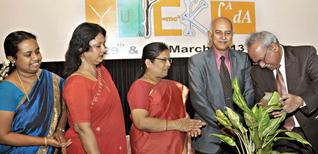
Mangalore University Vice-Chancellor T.C. Shivashankara Murthy inaugurating the science festival in Mysore on Friday.— Photo: M.A. Sriram / The Hindu

Yureka, a science festival, began at Yuvaraja’s College here on Friday. Mangalore University Vice-Chancellor T.C. Shivashankara Murthy inaugurated the two-day event at Maharaja’s College centenary hall.

CFTRI V. Prakash, former director, the Central Food Technological Research Institute, was the chief guest. S.N. Gayathri, principal, Yuvaraja’s College; Maha Jabeen, administrative officer; and Ruby Salestina M, convenor, Jnanavahini committee, were present.

Science Explorer, Chalk Talks, Science quiz, Science on Screen, Wealth Out of Waste, Cooking without Fire are some of the programmes being held. Entertainment programmes too are planned.

In Science Explorer, participants are supposed to uncover the basic laws governing various scientific phenomena in day-to-day life. “The participants’ creativity, imagination, correctness of the proposed concept and explanation will not only fetch them a prize but also make the spectators appreciate the fact that science is all around us,” a press release said.

Awareness

Chalk Talks aims to create awareness about the wonders of science among students and to train them in talk with a chalk instead of a power-point presentation. It aims to encourage them to come up with simple experiments not found in the curriculum.

source: http://www.TheHindu.com / Home> National> Karnataka / by Staff Correspondent / Mysore, March 30th, 2013