Category Archives: Science & Technology

Aissel product development centre opened in Hubli

Hubli, OCT. 2:

Aissel Solutions, an analytics and CRM solutions provider which has presence in US and India, has opened its product development centre at Hubli.

The company’s centre is located at Hubli’s IT Park. “This will be the key development centre of Aissel and has over 3,500 square feet of space with high-bandwidth connectivity,” Prasad Patil, CEO Aissel told Business Line.

So far Aissel has been able to deliver solutions to its clients in the US and has created product for medical thought leader management and is competing with few Silicon Valley based pharma CRM providers.

Early this year, the company has signed up with three global pharmaceutical / medical devices companies to implement business intelligence (BI) software and analytics solutions.

Prasad said “We are currently working with a Minnesota based company supporting their dental division in finding out the right dental experts in the US, who they can partner with to grow the products sales.”

The new facility was opened by Vijay Sankeshwar, Chairman and Managing Director, VRL Logistics. The first two employees of the company, Amit Vikram and Nityanand Channur were also honoured.

The company currently has 30 people in Hubli centre and has plans to double the head count by end of this year.

“There were a lot of apprehensions when we started off about a year and a half back in Hubli. Getting experienced people in Hubli was difficult especially in a challenging product development environment,” Patil said.

“Now the team determines the success and there is tremendous availability of talented people in the region and the KOL Management product was released to the global market in less than a year’s time,” he added.

anil.u@thehindu.co.in

source: http://www.TheHinduBusinessLine.com / Home> Industry & Economy> Info-Tech / by Hindu’s Bureau / Hubli, October 02nd, 2012


Organic food catching on

The awareness on the benefits of organic food is rising slowly yet steadily. To promote the same, a biodiversity mela was organised by Sahaja Samrudha, an organic farmers association with farmers and seed-savers of Karnataka on Saturday at Lalbagh. The mela brought together food crops from all over the state which includes 200 varieties of rice and 120 varieties of millets, fruits, vegetables and seeds.

According to Somesha B, CEO of Sahaja Organics, the awareness about organic food has been rising steadily. “There has been an increase in consumers from the last year to this year. However, reducing the pricing in the coming days will only be possible as consumption increases,” he said adding that there is a need to popularise the benefits of organic products in urban Karnataka.

There are 18 stalls and this is the first time that such a mela is being held in the state. “We are trying to promote organic food by organising melas like these,” he added.

“We want to link producers to the market. For instance, there are many varieties of grains which are nutritious that are disappearing. A variety of brown top millet called koralu, which is grown in some parts of the state, has been completely neglected. The fiber content and the nutrition value is very high. Besides it can be grown in waste lands and is a solution to the climate change. However, grains like these are fast disappearing,” said Krishnaprasad, secretary of Sahaja Samrudha.

According to stall owners, the prices of organic products is about 20% more than regular food stuff.

At the mela, there are various varieties of rice, millets, oils, health drinks, seeds, spices, herbal soaps and also snacks which have been made from organic products.

The mela has been held to raise awareness to the public about the importance of biodiversity and raise awareness on the ‘convention of biological diversity to be held between October 8 and 19 in Hyderabad. There is also a plan to organise a mela on the theme food for good health in the next two months.

source: http://www.dnaindia.com / Daily News & Analysis / Home> Bangalore> Report / by DNA Correspondent, Place:Bangalore, Agency:DNA / Sunday, September 30th, 2012

Microsoft’s Windows 8 AppFest enters Guinness book of records

Microsoft’s AppFest makes a record with 2,567 developers coding non-stop for 18 hours.

Microsoft had arranged Windows 8 AppFest, the non stop coding arena at Karnataka Trade Promotion Organization (KTPO), Bangalore. This has entered Guinness book of records . The event started at 2pm on Friday ended 8 am Saturday, which became the world record.

Microsoft’s AppFest is crowned with “Most participants in a software development marathon in one location“.

O’Neill, who had supervised the coding fest on behalf of Guinness World Records, said the following words. “Congratulations to all of the developers at the Windows AppFest for setting an official Guinness World Record for the Most Participants in a Software Development Marathon in One Location. The spectacle of thousands of developers toiling through the night has demonstrated great commitment to their work,”

Microsoft India Chairman, Bhaskar Pramanik said, “Microsoft is making significant investments and working with 1.2 million developers, over 1000 Independent Software Vendors and more than 2000 System Integrators to empower them with the tools, technologies and training required to develop high end skills and compete in a global marketplace.

The event was powered with 2 GB bandwidth. Microsoft has taken care of power failure with six power generating stations . Windows 8 release date was confirmed to be on 26th September by officials of Microsoft.

source: http://www.thetodaystech.com / Home / Sunday, September 23rd, 2012

Bangalore to Ladakh, in search of the sun

Bangalore:

What are the fundamental processes taking place on the sun? How does it work? A team of scientists from Bangalore-based Indian Institute of Astrophysics (IIA) hopes to find answers to these queries as they embark on a project to study the sun. Aiding them will be the world’s largest solar telescope – the Rs 300-crore state-of-the-art National Large Solar Telescope (NLST) that will be set up in Ladakh. The aim, say scientists, is also to rekindle interest among students in astronomy.

The NLST with a 2-metre aperture will be prepared and installed in the Pangong lake at Merak village in Ladakh by 2016-17.

“NLST will help scientists carry out cutting-edge research aimed at understanding the fundamental processes taking place on the sun. The core team to build the telescope is already in place and we are just waiting for funds to be allocated to start building the telescope,” Siraj Hasan, former IIA director and project head told TOI.

NLST will be a major facility for carrying out solar observation and its unprecedented high spatial resolution will provide crucial information on the nature of  magnetic fields in the solar atmosphere. “This project was long due, as we haven’t had a project in this line since the 1950s when the solar tunnel telescope was installed in Kozhikode,” Hasan added.

The IIA is the nodal agency for the telescope project but various scientific bodies like the Indian Space Research Organisation (Isro), Aryabhatta Research Institute of Observational Sciences, Tata Institute of Fundamental Research (TIFR) and Inter-University Centre for Astronomy and Astrophysics (IUCAA) will collaborate.

“For the past three years we have been doing a lot of background work on the project like detailed concept design, finding a suitable location, preparing reports. Everything is ready for us to take off. Projects like this will inculcate more interest in research among youngsters and attract brilliant minds into astronomy,” he said.

source: http://www.timesofindia.indiatimes.com / Home> City> Bangalore / by Rhik Kundu, TNN / September 23rd, 2012

Microsoft Appfest in Bangalore sets Guinness Record

Microsoft Windows 8 Appfest made history by setting a new Guinness world record for most participants in a software development marathon at one location here today.The Appfest saw participation of 2,567 developers coding non-stop for 18 hours.

The event, hosted by Microsoft and aimed at encouraging developers to build, design and test applications (apps) for the Windows platform, had commenced here last afternoon.

Paul O’Neill, Vice President, Guinness World Records Commercial announced Microsoft’s entry into the Guinness world records for “Most Participants in a Software Development Marathon in One Location”.

A certificate validating the record was presented to Jon DeVaan, Corporate Vice President for Windows Development at Microsoft, and Bhaskar Pramanik, Chairman, Microsoft Corporation India Pvt Ltd.

At the closing of the Windows Appfest, O’Neill said, “The spectacle of thousands of developers toiling through the night has demonstrated great commitment to their work.”
Pramanik said: “This Guinness Record at Windows AppFest is a great accomplishment by all the developers who participated. Over the course of the 18 hours of the Windows AppFest we saw some outstanding talent and many innovative apps being developed.”

source: http://www.DeccanHerald.com / Home> Business / Bangalore, September 22nd, 2012  (PTI)

Mysore’s visionaries

Radhika and Sanjeev Jain scan documents obtained from the Karnataka State Archives and discover that two illustrious doctors, Dr B K Narayan Rao and Dr M S Mekhri, made remarkable contributions to the modernisation of hospitals in the erstwhile Mysore State.

As part of our effort to study the history of medicine in Karnataka, we pored through the documents obtained from the Karnataka State Archives and discovered a report of Dr B K Narayan Rao and a document that talked of grant of foreign scholarship to Dr M S Mekhri.

While B K Narayan Rao was the first eye surgeon of Mysore State, Dr M S Mekhri was co-founder of Bangalore Medical College and Research Institute. Their journeys abroad, during the late 1920s and early 1930s, were aimed at modernising not merely Minto Hospital, but many medical institutions in the Mysore State.

Maharaja Chamarajendra Wodeyar whose vision was to make Mysore a ‘model state’ on par with, if not better than, British India set about modernising Mysore through interventions in different spheres, including medicine. As part of this agenda, doctors were specially sent abroad to minutely document the latest advancements in medical knowledge and practice.

Narayan Rao’s visit

One of the consequential visits was that of Dr B K Narayan Rao, for over four months in 1933, to reputed ophthalmic and other medical institutions in Europe and England. Dr Rao, who was then Superintendent of Minto Hospital and Principal, Mysore Medical College, covered 37 hospitals across Berlin, Prague, Vienna, Paris, London, Italy, Switzerland and Geneva.

The outcomes of the visit were: an opening for future Mysore medical postgraduates to study in Vienna; recognition of the work at the Minto Hospital by the Royal College of Physicians and the possibility of recognising Mysore’s MBBS degree. However, what is remarkable is the descriptive 32-page report that Dr Narayan Rao submitted, subsequent to the visit, accompanied by photographs of hospital buildings and equipment, and blueprints of hospital layout plans. The report is rich in detail ranging from treatments to hospital design. Dr Rao comments on new surgical methods and treatment techniques.

He also mentions the rise of plastic surgery as a specialisation after World War I.
Having visited many university hospitals, especially the eye clinics at Vienna, Amsterdam, Berlin and Prague, Dr Rao highlights how they incorporate both practice and research. Subsequently, one of the foremost recommendations he makes to the then government is the need for research laboratories in our hospitals without which “our work can never attain the high quality of many western institutions.”

Lamenting the absence of adequate diagnostic instruments in Mysore hospitals, a situation not unfamiliar even today, Dr Rao says that if the University Eye Clinic, Berlin with about 50 beds and a daily out-patient attendance of 100 patients “has 5 slit lamp microscopes, 4 perimeters, 3 heretometers, we with 125 beds and 300 out-patient attendance have but one of each.” Additionally, “it is a frequent experience for patients to go from Minto to Victoria and vice versa for their BP taken because the one instrument is ‘out of order’”! Further, the few instruments we have are “jealously guarded against both breakage and use”!

Dr Rao’s report ends with a series of recommendations to set up: annual fund to hospitals; library to support research, trained staff to keep records and statistics, testing laboratories and notably, to employ women in these labs. Women, he adds, could also work as almoners, i.e., welfare workers. Citing financial constraints, only a few of the Dr Rao’s recommendations were considered: library, personnel for maintaining records, research and teaching in bigger hospitals, and providing fellowships for specialised training abroad. Others were to wait for better times.

Mekhri’s visit

The other momentous visit is by Dr Muhammad Shaffiuddin Mekhri to England in 1930 for specialised training in Ophthalmology. Dr Mekhri had at the time just completed his MBBS in Madras Medical College and begun working as a Medical Probationer at the Minto Ophthalmic Hospital earning Rs 100/month.

But Dr Mekhri’s great skill and interest was noted by Dr Narayan Rao and Dr Mahommed Usmon, Senior Surgeon in Mysore. What was in dispute however was whether Dr Mekhri could be granted study leave since he had only put in six months of service at the hospital and whether his pay was adequate to maintain himself in England.

The travel and stay was estimated for six months at about Rs 3,575, including passage money at Rs 750 and scholarship amount at Rs.2700 (=£150). The matter was finally resolved with the government approving a one year scholarship of “£275 together with passage to and fro”.  But what is fascinating is the petition submitted by Dr Mekhri to the Government of Mysore where he discusses, along with his meritorious academic record, his “main object…to serve his fatherland and to be one of the humble servants of the Universally beloved sovereign” the Mysore Maharaja.

He mentions his choice of serving in Mysore as a Medical Graduate getting a meager Rs 100 instead of going to Madras where as House Surgeon and subsequently Asst. Surgeon he would have earned Rs 200 rising to Rs 1,000.

What is even more fascinating is his allusion to the immemorial service rendered “faithfully and with distinction” by many generations of the Mekhri family to the Mysore Maharajas. This includes Dr Mekhri’s father Mohamed Jafar Mekhri (City Superintendent of Police) his grandfather Mohamed Myruddin Ali Khan Mekhri (Palace Pensioner) and great grandfather Bakshi Mohiuddin Ali Khan Mekhri (Adalat Committee Bakshi).

The petition symbolises a double movement of a desire for modernity but a means of accessing modernity through not only academic proficiency but also monarchic patronage. It highlights the contrary pulls on science and technology in Mysore that adopted the universalism and modernity of science but evolved under conditions of feudal patronage.

The Mysore State saw itself as a modernising monarchy that had to implement graded reform in the social and political spheres, having to contend with ‘tradition’ but also emerging identities of caste and religion. However, in spheres such as medicine, especially in the incorporation of advancements in science and technology, the state marched ahead with its modernising project.

source: http://www.DeccanHerald.com /  Home> Supplements> Spectrum> Heritage / September 18th, 2012

Reviving the Family Doctor

Neighbourhood health clinics are trying to revive the dying breed of GPs

Image: Manoj Patil for Forbes India
HEALING TOUCH Chains of clinics with GPs are making a difference by ensuring that patients don’t have to run around for elementary diagnosis

In August, Norwest Venture Partners invested Rs 25 crore in Bangalore-based NationWide Primary Healthcare Services, a chain of clinics that promotes family doctors. Healthspring, another similar chain from Mumbai, has received Rs 20.5 crore from Catamaran Ventures, Reliance Venture Asset Management and BlueCross BlueShield Venture Partners.

In Bangalore, The Family Doctor chain has announced an ambitious plan to expand to 30 clinics (up from its existing 13 in the city) across the country.

Such initiatives to prop up neighbourhood clinics mark a trial-and-error approach to revive the dying breed of once-ubiquitous family doctors.

General practitioners lost out somewhere along the growth path of large hospitals. With big money coming in for specialists, being a GP wasn’t good enough. Despite long hours and the perils of being on call 24/7, graduating doctors went for specialisations.

Dr Shantanu Chattopadhyay, founder & MD, NationWide, says, “If you go to a medical college today, probably only three in a class of 100 would like to be general physicians.” In a class surveyed by Forbes India, the number was zero.

Dr Ramnik Parekh, president, Federation of Family Physicians’ Association of India, reiterates the lack of the doctor-next-door. “There are 1.7 million family doctors in India. One-third of them hold MBBS degrees, one-third are ayurvedic or homeopathic doctors, and the rest are unqualified or quacks,” he said.

Dr Rana Mehta, executive director of consulting firm PricewaterhouseCoopers (PwC), estimates there are about 200,000 family doctor clinics
in the country.  That roughly works out to 0.16 GPs per 1,000 people. In stark contrast, Canada has 10 GPs per 1,000.

This is where chains like NationWide, Healthspring, and The Family Doctor are trying to make a difference by bringing together GPs, and ensuring that patients don’t have to run from pillar to post for elementary diagnosis.

If you go to a hospital with a sprained neck, for instance, the outpatient department will straightaway direct you to an orthopaedic for whom you may have to fork out at least Rs 400.

Add to that the expenses for a battery of tests that a specialist is likely to recommend. The Family Doctor, on the other hand, charges Rs 125 per patient, NationWide Rs 200 and Healthspring Rs 350.

The teething problems were there, of course.  Naresh Malhotra, director, The Family Doctor, had told Forbes India on an earlier occasion: “We had priced our consultation fee at Rs 50, but no one came in because they had doubts about us being professionals. Then we increased it to Rs 125 and our patient pool doubled.”

Buoyed by its success, the chain plans to open 100 clinics across the country by the end of 2013.

The Family Doctor keeps
its operating costs low by working out of an area of 400-800 square feet. For stability, they are looking to hire women doctors as they “tend to stick around in the organisation for longer”. The clinic won many fans last year when it alerted civic authorities about a possible outbreak of malaria after it diagnosed at least 11 patients with similar symptoms.

An organised chain of qualified family doctors also substantially eases the burden on large hospitals by detecting primary-stage ailments, and reducing cases that require complicated procedures. NationWide and Healthspring have earned plaudits among the on-the-move professionals in Bangalore and Mumbai, respectively, for delivering quick and efficient services.

NationWide founders Dr Shantanu Chattopadhyay and Dr Shantanu Rahman are trying to create India’s version of the UK’s National Health Service.

One of the ways of achieving this is through their database that tracks patients’ medical records. This plays the role of family doctors who would treat patients from their childhood and know their medical history like the back of their hands. “When people move into a new city, they struggle to find such practitioners. It’s an area we are trying to work on,” said Chattopadhyay.

If numbers are to be believed, the concept is slowly catching on. Healthspring CEO Kaushik Sen said they’ve treated about 50,000 patients across four clinics since September 2011, while The Family Doctor has seen about 60,000 (including repeat patients).

At NationWide, about 1,000 have signed up for annual memberships that include 24/7 doctor-on-call and discounts on lab and pharmacy services.

Why are patients returning to GP clinics? “The key lies in establishing good relationships. Any good GP practice is based on trust,” said Rahman. Doctors are hired on a full-time basis and the chains are doing away with referral fees to ensure they don’t chase monetary benefits.

Ronald Mascarenhas, a 71-year-old from Mumbai, is very happy with the personalised care provided by the clinics.

“I have taken the diabetic plan at Healthspring and pay Rs 9,500 annually. Compared to big hospitals in Mumbai, it works out to be very economical because all my diabetic tests are covered and  extra consultancies for cold, fever, etc are free. These places are good for people who live alone. They are not like general hospitals, where you go for a check-up and then you are forgotten. They even call to check and remind me that my blood test is due,” he said.

Aruna Sakhuja, a 69-year-old entrepreneur, was touched when her physicians from NationWide paid her a visit after she underwent surgery at a large hospital. “No one does that these days,” she said.

This article appeared in Forbes India Magazine of 28 September, 2012

source: http://www.forbesindia.com / Home> UpFront, BreakPoint / by Nilofer D’Souza / September 19th, 2012

Karnataka State Neonatal Conference begins

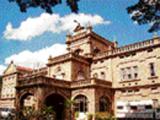
In a bid to improve the quality of neonatal care in the state, the three-day conference, 15th Karnataka State Neonatal Conference, saw the participation of over 300 doctors, nurses, post graduate and medical students wherein top experts in the field spoke about the latest practices in new-born care in the country.

The conference that took place at Jnana Jyothi Auditorium, Central College Compound University, also featured an exhibition that featured the latest equipment in neonatal care in India.

“When you look at problems globally, infection remains one of the biggest problems when it comes to taking care of newborn babies but that problem in compounded that much more in developing countries like India,” said Dr Venkatesh HA, neonatologist and organising secretary of the conference.

“Conferences such as these are very important because they prove as refresher courses for everyone from practising paediatricians to post graduate students. We are not trying to impart them with the latest advances but more about helping them improve the quality of care they provide newborns,” he added.

As part of the conference, one-day workshops were held in top hospitals across the city on Friday wherein nurses and doctors were trained in directly. “We wanted to provide them with hands on experience. Those workshops which were held in hospitals such as St John’s Medical Hospital saw the participation of over 200 people,” he added.

When it comes to conferences such as these, Dr Janaki Viswanath, neonatologist from KR Hospital, said that doctors need to be kept abreast of effective care. “The neonatal mortality rate in India is about 40% to 45%. States such as Uttar Pradesh and Bihar rank high in the list with a high percentage. The state with the lowest number is Kerala followed by Tamil Nadu, and Karnataka is the third lowest in that list,” she said.

One of the most important highlights of the conference that concluded on Sunday, was the special training imparted to nurses, according to Viswanath.

“We had a whole session just dedicated to training nurses and the kinds of methods they can employ to ensure the health of a new born. It is important to make sure we provide the best for children. If we are able to take care of a cardiac patient at 70 years of age, we should know that we are only giving that person with a few more years of quality life but if we can provide the same care to a newborn, we are giving at least 70 more years of quality life,” she added.

source: http://www.dnaindia.com / Daily News & Analysis / Home> Bangalore> Report / by DNA Correspondent, Place: Bangalore, Agency: DNA / Monday, September 10th, 2012

IAF to host an exhibition of models of its aircraft

Bangalore, Sep 7 (ANI):

A month prior to its anniversary on October 8, the Indian Air Force (IAF) is all set to host an exhibition of various aircraft models in Bangalore.

This exhibition would open for general public on September 8 and 9 and will be the first of its kind.

A preview of this educative and informative expo was held on Thursday at Orion Mall in the city.

Group Captain Maruti, the Command and Public Relations Officer of the Training Command, said the motto of the exhibition was not meant to show off the country’s air power, but to educate the masses about various aircrafts.

“Indian Air Force is celebrating the 80th anniversary that falls on the 08th October, 2012. As a mark of this 80th anniversary, we are having this exhibition, mainly to have a people contact to make people aware and conscious of the Indian Air Force,” said Maruti.

Group Captain Anil Tiwari, the Commanding Officer of the Electronic Training Institute, said they have tried to display a variety of aircrafts, missiles and electronic items.

“We will be putting maximum models on display and there will be different kinds of models, including the ones which we are developing and ones which are already in use. Besides aircraft we have also displayed electronic equipments like weapon locating radar with which we can identify the location of weapons. We are also showcasing the indigenous missile, which India is developing,” said Tiwari.

“It is actually a good initiative by the IAF. It is a good thing actually. So many aircraft, I didn’t know so many aircraft. I got to learn more. I didn’t know about Avnov and all those things that is a good plane. I just read the features and all. Actually seeing all these, actually makes me feel join the Air Force. Very good thing, it’s very knowledgeable and I need to thank the IAF for doing this actually,” said Rakshit a visitor at the preview of exhibition.

Bangalore has been the venue for Aero India shows every second year for the past two decades and more.

It is also the home to some of the prime establishments of the IAF such as the Headquarters of Training Command, various ground and flying training centres, institute of aviation medicine and above all the ASTE (Aircraft Systems and Testing Establishment) that certifies every other flying machine flown by the gallant air warriors. (ANI)

source: http://www.truthdive.com / Home> News> Entertainment / posted by News Desk / September 07th, 2012

Wipro to expand Kolkata project

Kolkata, Aug 27

Wipro Technologies will expand its campus in Kolkata, Chairman Azim Premji said Monday but refused to comment on the company’s proposed special economic zone (SEZ) project in the city.

“We will carry out expansion on our existing project,” Premji, who was here for an interaction with industry captains, told reporters without giving further details.

The project, a SEZ, is in the the satellite township of Salt Lake and employs 7,500 people.

During the previous Left Front rule, Wipro had bought 50 acres to set up its second campus at New Town, Rajarhat, in the north eastern fringes of the city as a SEZ. But the Mamata Banerjee-led government’s opposition to SEZs has put a question mark on its future.

Last December, Premji had met Banerjee and indicated that Wipro would invest Rs.700-800 crore in its second campus, providing employment to 15,000 people.

Another project by Infosys too has run into trouble after being denied SEZ status by the state government.

There are now four IT SEZs in the state – Wipro, Unitech, DLF and Bantala IT SEZ.

IANS

source: http://www.india.nydailynews.com / Home> News / Monday, August 27th, 2012