Category Archives: Travel

Tindipotha gastronomic delight from a food truck

TindiPothaBF10may2014

by Phalgunn Maharishi

The residents of Mysore, especially in the neighbourhoods of Bannimantap and Rajeev Nagar are now familiar with a big truck parked on the roadside near JSS Dental College with shining lights and people surrounding it eating costly food. But wait a minute! Costly food in a big truck? Well, it seems to be costly as the big truck sells fresh American-Mexican food but that’s not really costly. “A Mysorean can now fill his stomach with some classy food for just Rs. 80 on an average,” said Syed Manju while speaking about his big boy “Tindipotha.”

Syed Manju previously held the position of an Area Manager handling Public Relations and Marketing for 28 years in Costco, USA, the Number 3 retailer in the world which directly competes with Walmart, before heading towards Mysore to come up with his dream boy. “I had a passion towards cooking due to which I quit the job and came to Mysore with an interest in doing something unique, something which never existed here. That’s when Tindipotha was born,” commented Syed Manju while speaking about how it all started. The ecstatic and energetic Syed Manju keeps travelling back and forth between Mysore and Bellingham (90 miles north of Seattle in the United States) where his wife (Diane Houston), little girl Zara (16) and a little boy Iyan (14) lives.

Originally born in Channapatna and brought up in Mandya, Syed Manju is a self made man. He studied B.Sc and Diploma in Film Acting. He soon landed into Kannada Film Industry during his late 20s by directing films like Neenakkaga and Kanoonige Sawaal after which he travelled to USA for a trip to stay with his brothers and sisters for a while. Manju said, “Don’t ask me how, but I got my green card over there” with a wink and also added, “I never wanted to be there forever. Infact I had plans of directing more films in Kannada, but my fate made me stay there,” with a sweet smile. The last film produced by Manju was Appaji starring late Dr. Vishnuvardhan in the lead role released in 1996.

Coming back to Tindipotha, it all started roughly an year ago when Syed Manju and his brother Rafi Manju bought an old truck and got it rebuilt in Mandya to bring the new fancy boy to the streets of Mysore. “I was scared in the beginning. It was something new, something which the Mysoreans never experienced before. A new food to a new market. We had to prepare American-Mexican style foods with the ingredients available in Mysore and it didn’t seem easy for us in the beginning. But we did it and still doing it. It’s been an year and we are doing good,” said Syed Manju while speaking about Tindipotha.

Tindipotha has recently transformed itself from being just a food truck into a youth junction where we can find college going kids spending their cool evenings eating the sizzling new dishes like Nachos, Chicken Melt, Roti Lapat, Gilli Chicken, Turpi Chicken, Rollito, Apple Dream, Lava Pie, and many more summing up to over twenty different types of food.

“My brother Rafi Manju manages the front end and cash while my nephew Syed Umair Manju is our grill master. He even looks after the crew. Farhan, the cousin of Umair, assists the crew inside out and Tausif does all the deep fry and plating. Siddique and Atiq have been newly added to the crew and are learning ropes. Tausif, Siddique and Atiq are all family friends. We are all family and its a family business. The whole crew, except me and my brother, are college going kids,” said Syed Manju while introducing the team of Tindipotha.

People love the food. We had an interactive session with some regular customers of Tindipotha who expressed their hearts out. Bashar and Abdur Razzak, who stay in Bannimantap said, “This is really nice. It’s different than what we find elsewhere. We don’t find such tasty food at any other place, especially the Nachos! We come here for Nachos,” when asked to express how they feel about Tindipotha. Areb and his friends Mohammed Fahad and Rakshad, who come all the way from Bangalore just to eat at Tindipotha, said that they still haven’t yet got over the taste of Chicken Melt. The trio commented, “Its been a year and we still come here to eat the same thing,” with a laugh. Dental students Alley and Ahmad, who are from Iran visit Tindipotha atleast twice a week and mentioned that they love the tasty food and also the hospitality given to them by Syed Manju and his crew.

While speaking about the unpredictability of such food business in a city like Mysore, Syed Manju said, “Usually weekends are the busiest days for us, yet we can never predict. Sometimes customers ask me, which is the best dish prepared here! Well, I tell them to close their eyes and put their finger on the menu and we will serve it. If they don’t like the food, let them not pay us but if they like it, they need to pay us double.” He also added, “We are different from other eating places in the city saying that we smile at our customers which we can never find in any other hotels in Mysore. We also appreciate each and every customer, thank them and enquire in person whether they liked the dish. The food is also custom made for every single customer according to his likes and dislikes and we keep changing the taste one plate at a time.”

Tindipotha is for sure a place to be cherished and one of its kind in Mysore. It’s both vegetarian and non-vegetarian food truck with some tasty healthy and classy American-Mexican food at low prices. Do you want to try some different custom made food? Just head towards Tindipotha in Bannimantap near JSS Dental College between 7 pm and 11 pm any day! For more details, type in TINDIPOTHA in facebook and you will get the fan page.

source: http://www.starofmysore.com / Star of Mysore / Home> Feature Articles / May 04th, 2014

Shine Spa for Sheraton named Best Luxury Hotel Spa at World Luxury Spa Awards

Shine Spa for Sheraton at the Sheraton Bangalore Hotel at Brigade Gateway has been awarded with the Best Luxury Hotel Spa award in India at the recently concluded World Luxury Spa Awards. The World Luxury Spa Awards is an annual search for the best spas across the globe based on votes by their guests. This annual voting process pans over thousands of spa guests from 144 countries, who are given the opportunity to vote online. Apart from Shine Spa for Sheraton, other competing spas in 2014 included small sized privately owned spas to globally renowned spa groups.

“We are incredibly excited to receive this recognition,” said Saurabh Bakshi, General Manager, Sheraton Bangalore Hotel at Brigade Gateway. “This award is truly the icing on the cake to an incredible year. The very heart of the hotel and all its success to date is our staff; an extraordinary team in every way, consistently placing the guest experience above everything else,” he added.

source: http://www.travelbizmonitor.com / TravelBizMonitor.com / Home / by TBM Staff – Mumbai / Thursday, April 24th, 2014

This village is the stork’s domain

Kokkarebellur, a small village in Maddur taluk of Mandya district of Karnataka is named after the painted storks.

The word ‘kokkare’ means crane in kannada. Apart from Painted Storks, the spot-billed pelicans are also found here and it is rather disheartening to know that these birds have been classified as the “near threatened category” in IUCN Red List of 2009. Incidentally, this village is one of the 21 breeding sites existing in India and unlike any other bird sanctuary you may have visited.

A bird’s haven

For starters, Kokkarebellur is not a reserved forest sanctuary but a small village where the storks and pelicans coexist freely among the villagers and mostly in tamarind trees in the middle of the village.

The villagers are used to regular visits by tourists and photographers and can help you find the trees where the birds nest. The painted storks and pelicans are found in big herds during the migratory season. And make no mistake, these birds are huge. The painted storks have snow-white plumage with patterned bright pink and black stripes and have a yellow tapering bill. The pelicans have grey and white plumage, short stout legs, large webbed feet, flat and an enormous bill with an elastic bag of purple skin hanging below the throat that helps them collect fish from water.
The uniqueness in Kokkarebellur is the long established bonding between the birds and the villagers who have adopted this bird as their heritage, since they consider the birds as harbingers of good luck and prosperity to the village.
The happy co-existence of the villagers and the birds is because the villagers actually look after the birds, train them till they fly back to their nests. The spot-billed pelicans are protected by the law in India. In Kokkarebellur, a community-based project has been instituted to carry on the historical links of the pelicans with the villagers.
With increased nestling activity in recent years, efforts to conserve these birds have been fruitful and are also being hailed as a “role model” for replication at other places. Birds are seen nesting in clusters of 15 to 20 pairs per tree and the strange part is that they use the same set of trees every year.

The birds typically arrive after monsoons in September. They then make their nests, lay eggs from October to November and fledge around for three months till March, after which they tirelessly feed their hatchlings through the summer season.

As summer peaks in May, they re-migrate. Apart from the painted stork, you can also find little cormorants, black Ibis, grey herons, black-crowned night herons, ring necked parakeets and Indian pond heron.

Kokkarebellur is a must visit simply because this is probably the only place, where you can spot these winged beauties at such close quarters.

source: http://www.deccanherald.com / Deccan Herald / Home> Supplements> Spectrum / by Bindu Gopal Rao / April 15th, 2014

On the banks of the Tunga

The River Tunga, Mathur./ by Special Arrangement / The Hindu

On how the pundits of Mathur set an example.

Mathur, the Sanskrit speaking village in Shimoga, Karnataka, is not new to the readers of these columns. This is an attempt to share my experience during a visit to the village where a three-day festival took place.

The annual utsavam for Lord Chenna Kesava Murthy and His Consort, Mahalakshmi, was a grand affair with all the elements of tradition in place.

This festival started on a Poornima day with the utsava murti getting a bath in the waters of the Tunga to the background of Vedic mantras chanted by scholars.

The deity was brought in a palanquin to a chariot, beautifully decorated. It was 10 a.m. and the deity was placed on His mount Garuda and installed in the chariot, which set off in a procession led by nagaswaram players, bhajan singers following them.

Chanting of Vedas

The pitch perfect chant of the Vedas is something unique to the place. The unhurried and harmonious rendition in flawless diction transports one to a different world. .

The car was taken around the four Maada streets. Approximately half way through, around 1.30 p.m., the procession was halted for a sumptuous feast at the village community hall. Pundits and their families and scholars from the neighbourhood, who had gathered for the festival partook of the lunch.

Lord Chennakesava being taken on the Pallakku after the river bath./ by Special Arrangement / The Hindu

The procession was resumed at 7 p.m. to complete the circumambulation of the Mada streets and it was around 2.30 a.m.

On the next day, again the deity was bathed in the Tunga and the chariot began its run. It was called Rathotsava and the deity with His consort was seated on a horse.

The final day was set aside for the chanting of the Vedas. An interesting highlight was the smearing of holy powder on all gathered. Everybody then went to the river to have a bath. The three-day festival closed with dinner but not before bhajans were sung early in the evening.

Right from the cleanly swept streets that are decorated with marvellous kolams to the conduct of festivals that combines hospitality, the pundits of Mathur showcase heritage quietly. What is more they show that it is possible to make tradition a way of life.

Wish to visit the village and stay in the agraharam? Chenna Kesava Dikshitar is the person to approach. Several foreigners stay in Shimoga and visit the village to learn Sanskrit.

(The writer can be contacted at sbpl@airtelmail.in )

Meet the pundits

The Kalyana Nagar Association, Mandavelipakkam, (No. 29, West Circular Road) has arranged the sambhashanam of the Sanskrit Pundits of Mathur, 9.30 a.m. onwards tomorrow, Saturday, at the Association premises.

For details contact 24952997 and 24611674.

source: http://www.thehindu.com / The Hindu / Home> Features> Friday Review> Faith / by  T. S. Viswanathan / April 17th, 2014

Bengaluru, India Hotel Recognized at Hotel Investment Conference South Asia

Bengaluru , INDIA :

Though it’s the first Fairfield Inn to open in Asia Pacific, this Bangalore business hotel  has already made quite an impression. At the 10th Annual Hotel Investment Conference South Asia (HICSA), the Fairfield by Marriott Bengaluru Rajajinagar was named Best Mid-Market/Budget Hotel Opening, beating out three other well-known hotel brands for the title.

The annual conference, held April 2nd and 3rd, brings together influential decision-makers from the industry for meetings, networking and collaboration, and also honors new hotels that opened in the region within the last year.

To win the prestigious Best Mid-Market/Budget Hotel Opening award, this premium Bengaluru hotel  was evaluated on development cost, construction tenure, TripAdvisor ratings, location (access, visibility and proximity to demand), façade and public areas, guest rooms (interiors, design and amenities), food and beverage, facilities (spa, retail and entertainment), corporate social responsibility and judges’ discretion. This year’s judges included Cyril Jacob, Managing Director of Archetype Group; Manav Thadani, MRICS, Chairman – South Asia HVS; Ravish Swarup, Chief Executive Officer of Praxis Services; Ritu Bhatia Kler, Managing Director Total Integrated Design; Uttam Dave, industry expert; and Vinapy Gupta, VP Asset Management at SAMHI Smart Hotel Investments.

This extended-stay Bangalore hotel took the top spot in all categories with its contemporary, stylish interior, business-friendly in-room amenities, all-day dining restaurant Kava and modern fitness center.

In addition to the awards, the event included a full agenda of panels and seminars, with breaks for networking. Popular sessions included the Role of Social Media and Technology-Based Innovations; Big Data: The Next Frontier for Innovation, Competition and Productivity; How to Solve Development Woes; Business of Leisure, Wellness and Luxury; and More Than a One Night Stand (Extended Stay).

About the Fairfield by Marriott Bengaluru Rajajinagar
When the Fairfield by Marriott Bengaluru Rajajinagar first opened, it broke ground in more ways than one. The hotel is the first from the brand to open in Asia Pacific, and offers a unique blend of contemporary style and warmth.

source: http://www.digitaljournal.com / Digital Journal / Home> Press Release> Marketwired / Bengaluru – April 10th, 2014

Bidar abounds in wildlife

Diverse fauna B V Prakash finds a sizeable population of blackbucks in the plains of blackbucks roaming freelyin the wild together witha variety of birds, foxes, porcupines and hares.
BidarBF08apr2014

The northern part of the state is generally considered to be a dry belt, devoid of water bodies, vegetation and wildlife. But the surroundings of Bidar, the northern most district, seems to be an exception. 
For not only a few large reservoirs like the Karanja are around, but pockets of sparsely wooded forests are found fairly well in these parts.The vast grasslands and the wooded country are home to blackbucks and a plethora of bird species.
After Ranebennur Blackbuck Sanctuary in Haveri district and Jayamangali Blackbuck Conservation Reserve in Tumkur district, a sizeable population of blackbucks is found in the plains of Bidar as I learnt during a recent visit here.
Apart from sighting free roaming blackbucks in the wild, one can also spot a good variety of birds, some rare species at that.Some smaller animals like the fox, porcupine, black-naped hare and wild boars add to the diverse fauna.
The weather was fair and the sky, a clear blue as I arrived after an exhaustive train journey of 18 hours.
As the drive to the grasslands to sight the blackbucks was slated for the afternoon, lunch and rest was the only immediate occupation.
However, I utilised the time to take a walk around and familiarise with the place.
Abundant greenery
Situated near a small village called Khanapur at about 16 km west of Bidar, the location itself is in a scenic surrounding with a gently forested hill to the east gradually sloping towards west to the brink of a beautiful blue lake.
Called Vilaspur tank after the village nearby, it is an expansive reservoir built for the purpose of drinking and irrigation.
With a chain of not so tall hillocks on the other side, the lake is almost hidden.
The afternoon safari took off in right earnest with Nipun, the enthusiastic manager joining me for the drive.
It was not just a driver but a well-informed naturalist as I learnt during the safari. Passing through the town, we drove southward to a vast field of grassy meadows.
The terrain with undulating ups and downs, abundant grass and bushes and a small tank is quite ideal for the blackbucks.
The far side of the plains is walled off by the air force station which being out of bounds for visitors, has become a boon for the these animals to roam around freely.
As we drove into the fields, we could see groups of blackbucks like tiny specks from the distance.

But the first denizen that we bumped into was the Indian fox, which is a rare sighting here.

When the fox felt our presence was not too comfortable, it galloped away into the bushes.

Driving further we were more closer to the blackbucks.
They usually wander in groups of 10 to 30 or even more with one or two males in charge of the  herd.
The males have a pair of antlers and are dark brownish and black.
The females are light fawn coloured and smaller in size.
It was a surprise for me to know that the blackbucks are native only to the Indian subcontinent.
The blackbucks once roamed freely all over the plains of India but their numbers reduced drastically with excessive hunting and encroachment of their habitat for agriculture and industry.
However, categorising blackbucks as ‘near threatened species’ by International Union of Conservation of Nature (IUCN) in 2003, has come as a blessing and their population seems to have stabilised to some extent.
We drove along several herds of them, grazing, strolling or sparring before spotting a rare bird, the Indian Courser.The following morning we went out for a nature walk amidst the nature.The bird-life here is pretty good with scores of green bee eaters, robins, sunbirds and red vented bulbuls.

But the best sighting was that of the white-browed bulbul.

The evening was spent on a coracle ride spotting more birds.
As ducks, cormorants and kingfishers  passed by, a panoramic sunset marked the end of the day.
source: http://www.deccanherald.com / Deccan Herald / Home> Supplements> Spectrum / by B V Prakas / DHNS / April 08th, 2014

Suttur Seer releases book on Karnataka Tourism

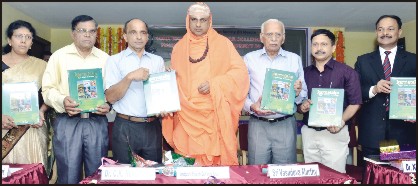
 Suttur Seer Sri Shivarathri Deshikendra Swamiji is seen releasing the book ‘Karnataka: A delight for tourists’ authored by Prof. K.S. Nagapathi (third from left), Director, Mahajana Tourism Development Institute, at a function in the Institute premises here this morning. Others seen are (from left) Dr. Vijayalakshmi Bhagavat, Vice-President, Mahajana Education Society (MES), Dr. C.K. Renukarya, Director, Mahajana PG Centre, R. Vasudeva Murthy, President, MES, Dr. Niranjana Vanalli, Director, CPDPS, University of Mysore and Prof. K.V. Prabhakara, Principal, Mahajana First Grade College.
Suttur Seer Sri Shivarathri Deshikendra Swamiji is seen releasing the book ‘Karnataka: A delight for tourists’ authored by Prof. K.S. Nagapathi (third from left), Director, Mahajana Tourism Development Institute, at a function in the Institute premises here this morning. Others seen are (from left) Dr. Vijayalakshmi Bhagavat, Vice-President, Mahajana Education Society (MES), Dr. C.K. Renukarya, Director, Mahajana PG Centre, R. Vasudeva Murthy, President, MES, Dr. Niranjana Vanalli, Director, CPDPS, University of Mysore and Prof. K.V. Prabhakara, Principal, Mahajana First Grade College.

Mysore :

“Prof. K.S. Nagapathi’s book on Karnataka tourism provides a deep insight into the tourist spots across the State,” opined Dr. Niranjana Vanalli, Director, CPDPS, University of Mysore.

He was speaking at a function organised to release Prof. K.S. Nagapathi’s book ‘Karnataka: A delight for tourists’ and also the inauguration of a new auditorium and Life Sciences laboratory at Mahajana Tourism Development Institute (MTI) Auditorium, KRS Road, in city this morning.

Suttur Seer Sri Shivarathri Deshikendra Swamiji, who inaugurated the new auditorium and the Lab, also released the book.

Regretting that tourism has not grown as an industry in the State, Dr. Vanalli said hospitality and treating guests are part of our culture.

Noting that we have failed in developing tourist spots in attracting larger number of tourists, he said the State lacked circuit tourism, besides poor road network connecting prominent tourist destinations and improper development of tourist spots. This is mainly due to lack of vision, Dr. Vanalli added.

Asserting that there are very few books on tourism, Dr. Vanalli lauded Prof. Nagapathi, Director, Mahajana Tourism Development Institute, for coming up with a book, which provides a comprehensive information on tourism.

Pointing out that the growth of tourism would boost employment opportunities, Prof. Vanalli said that the book, despite the highly valuable contents, had some drawbacks such as non- inclusion of index and no mentioning of several other lesser known tourist spots in the State.

He also suggested that the book be digitised for the benefit of tourists across the globe.

source: http://www.starofmysore.com / Star of Mysore / Home> General News / April 02nd, 2014

Pedaling to Glory

Shreyas is all set to participate in the Ultra BOB Race Championship

The Ultra BOB Race Championship, India’s first ultra cycling event, will take place from April 4 to 6 in the city.

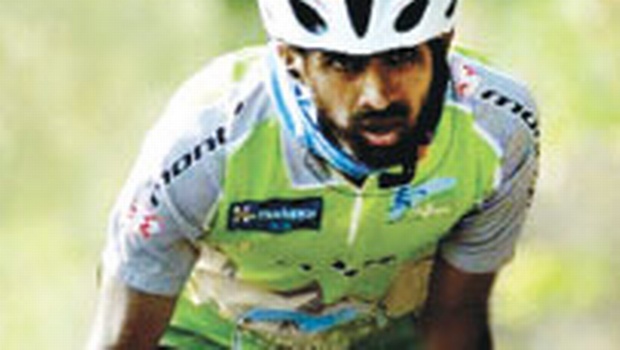
The rider from India is city-based Shreyas K, who works for a US-based firm. Shreyas has qualified for the 4th edition of the race.

He began his cycling career in 2011 and has come a long way in a short time. The whole idea of staying out of one’s comfort zone, testing your limits by pushing yourself, enduring all pain and suffering is what enticed the lad into long distance cycling.

“Every time you ride, it feels better than before, and the distance is just a mere number you might want to a keep count of,” said Shreyas.

Through the Bangalore Bikers Club, he volunteered to take part in the third edition of the race.

“I have not participated in races around the world, and I am looking forward to doing so in the near future,” Shreyas added.

“As a kid, when I got on a bike for the first time, I tasted freedom. It was for the first time, I really escaped home on my own. Then, as I grew up, I got busy. My priorities changed. Studies, work, family took over. I was lucky to get a second chance to get on a bike again. I wasn’t satisfied with just one or two bikes, I wanted more. That is when, with the help of my mentors, I started my own bicycle tune-up business,” he said.

“The goal was to provide services to friends, their friends and every biker in the city. For me, riding is synonymous with freedom. There is nothing I care about while I’m riding,” he added.

source: http://www.newindianexpress.com / The New Indian Express / Home> Cities> Bangalore / by S. S. Shreekumar – Bangalore / March 27th, 2014

A story in pictures

BOOK Monuments of Gulbarga is a book that captures ancient art and architecture through photographs.

Gulbarga01-31mar2014

Domes, tombs, minars , forts, moats and off-course masjids . Are you thinking of Delhi? Why travel thousands of kilometres to experience the reminiscences of the sultanate? Prefer going to Gulbarga, a night’s journey from Bangalore. Instead, feel every bit of Gulbarga’s history by just turning the pages of a book. “Monuments of Gulbarga, Treasure House of Islamic Architecture”, a photo-book authored by Mr. Mohammed Ayazuddin Patel gives you this experience.

Gulbarga, now a district headquarters in northern Karnataka, was the capital city of Bahamani Sultanate for two centuries. It was at its zenith in the 15{+t}{+h}century and was home to hundreds of monuments. The Sultanate was founded by Bahaman Shah or Allauddin Hasan Gangu. He shifted the capital from Daulatabad in the present-day Maharashtra to Gulbarga and laid the foundation for a magnificent city. The other great kings of the dynasty were Mohammed Shah and Mujahid Shah.

Resembles Spain`s Mezquita

The book provides a pictorial account of the history of the Bahamani kingdom. Beginning with a nostalgic photo of a tomb of Allauddin Hasan Gangu Bahamani, the founder of the dynasty, the book vividly portrays the beautiful Gulbarga fort, its ramparts, fine arches and abutments. The Jama Masjid, built within the fort, resembles the Great Mosque of Cordova (Mezquita) in Spain with grand corridors and lofty entrance. Various pictures of Shahi Jama masjid in the book unfurl a tableau in front of the onlooker. This masjid located in Shahbazaar was constructed for the members of the royal family. ‘It has a unique architectural style of Mughals and the Persian style’, the book says.

The mausoleums of Mujahid Shah, Daud Shah, Ghiyat-al-din Shah, and Shams-al-din resemble that of Hasan Gangu. Unique is the Tomb of Feroz Shah, with intricate jalis and twin domes. The pictures of 800-year-old Holkonda fort capture the Islamic culture and the simplicity of Tughlaq style aptly. This fort houses an idgah and a Dargah of Hazarath Mohamad Mashaq Sahib, a Sufi saint believed to have come to Gulbarga at the request of Bahamani Sultans.

Gulbarga is famous for the tombs of Sufi saints and Pirs . Noted among them is Dargah of Khaja Bande Nawaz Gesudaraz, built by Mohammad Shah Bahamani. It has a Bijapuri arch built by Afzal Khan, army general of the Ailshahis. Other Sufi tombs being Dargah Khabullah Hussaini with beautiful paintings and calligraphy, Dargah Hazarath Kamal-e-Mujarrad and Dargah Hazarath Shaik Sirajuddin Junaidi.

Majestic, but dilapidated is the Ferozabad fort, built by Feroze Shah Bahamani. He was known for his flair for fine-arts and architecture. This fort, on the banks of Bheema river, encompasses a huge mosque, Tosha khana , and palacial buildings. In spite of its beauty and historical significance, this fort is ill-maintained. Arrays of dung cakes adorn the walls of the sepulchral edifices. Weed-infested mahals are on the verge of collapse due to vagaries of nature. Crumbling structures like Kanchini Mahal, once magnificent and awe-inspiring narrate a story of wanton negligence.

The Chor Gumbad with floral designs, Chand Bibi Gumbad or Kali Gumbad with exquisite Chajjas andJalis , Upli Gumbad – incomplete, yet beautiful, the utterly neglected tomb of Jaccha Bibi, the Siddi Ambar Gumbad with a rectangular porch, are only a few identified among tens of such monuments wailing for attention.

Water conservation

The photos of Hirapur form an interesting set. Hirapur, a suburb of Gulbarga has Ibrahim Adil Shahi Jama Masjid, built in black stone decorated with immaculate designs.

The town has wells, embedded with finely crafted staircases, jharokas and of all, ingenious technology of water conservation to avoid excessive evaporation in soaring temperatures. The wells are still seen as an evidence of splendour, but grossly uncared for.

Strewn inside the fort and atop the bastions are numerous canons, cast in brass and other alloys, weighing several tons, flaunting an intimidating appearance. Famous among these canons is Baragazi Toop atop the Burj in the fort.

Gulbarga is dotted with tombs and mausoleums lost in history, beckoning the curious eyes with their regality. This book displays a tableau of medieval Islamic culture and gives a splendid account of the forgotten monuments. The author also gives an account of Hindu and Jain monuments and pilgrim centres. Patel dedicates quite a bit to the revered Sharanabasaveshwara Temple, Sannati Chandralamba Temple, Ganagapura Dattatreya Temple, and Mallinatha Basadi at Malkhed, but, there is no reference to the nearly 700 year-old-shrine of the Madhwa saint Jayateertha on the banks of river Kagina at Malkhed, a major pilgrim centre.

BookGulbarga31mar2014

Patel, a national award winner, also records Aiwan-e-shahi, Osmania Intermediate College, MSK Mills established in 1884 by the Nizams. He is President of National Graduate Art and Photographers Association.

TAMRAPARNI R. RAGHAVENDRA

source: http://www.timesofindia.indiatimes.com / The Times of India / Home> Features> Friday Review / by Tamparni S. Raghavendra / March 28th, 2014

All the way from Germany in search of Krumbiegal’s works

Krumbiegal was a landscape designer who designed the Brindavan Gardens, Lal Bagh, Chamundi Gymkhana…

LandscapeBF27mar2014


by S.N. Venkatnag Sobers

We have come across many incidents in the past where foreigners have visited India in search of their roots or to know more about their relatives who lived in India for a long time. Many of them have also visited India for research work, especially from England, as ours was a British Colony.

Mysore city recently had one such visitor from Dresden, Germany, who had come here to study the works done by Gustav Hermann Krumbiegal, a German Botanist and garden designer, who is known for his works at the Lal Bagh Botanical Gardens, Bangalore and for the planning of the avenues of Bangalore.

Dr. Anja Eppert, Garden Superintendent, Dresden, was in Mysore to study the works of Krumbiegal. She visited Brindavan Gardens, Chamundi Gymkhana inside Mysore Race Club premises, Mysore Palace, Fernhills Palace, Ooty, which are said to be designed by Krumbiegal during his stay in Mysore.

Her visit has gained prominence as the German Authorities in Dresden have decided to celebrate the 150th anniversary of Krumbiegal and also introduce him to Germans as majority of them do not know much about him.

Speaking to Star of Mysore, Dr. Anja said that some of the gardens designed by Krumbiegal have not been well-maintained. “In case of buildings, it is a different as they get older and sometimes have to be demolished and reconstructed. But, in case of gardens they have to be maintained well throughout. Gardens tell us stories about the kind of people who lived at the time when it was created. It is very important to tell people about the historical relevance of the parks,” she opined.

Dr. Anja added that the German authorities had taken up the research works of Krumbiegal and had sent her on a visit Mysore, Bangalore and Ooty. She mentioned that the German Counselor General in Bangalore informed the authorities about the works done by Krumbiegal during his stay here and that is when they decided to organise an exhibition on Krumbiegal works.

The exhibition will be held next year at Pillinitz Castle and Park in Germany. The German authorities have also planned to publish a book on Krumbiegal. Dr. Anja said that a similar exhibition is also being planned in Bangalore as it would be a good opportunity to exchange garden culture among the two countries.

During her visit to Mysore and Bangalore, Dr. Anja was accompanied by Prasanna Kumar, Retd. Deputy Director of Horticulture, who was in-charge of gardens in Mysore, especially at Lalitha Mahal and had knowledge on Krumbiegal’s works.

For those who do not know about Krumbiegal, he was born in Lohmen near Dresden, and his early studies were in Wilsdruff and Dresden after which he trained in horticulture. In 1884, he worked in Schwerin and from 1885 to 1887 he worked as a landscape gardener in Hamburg. In 1888, he moved to England, designing flower beds at the Hyde Park and became a staff at the Royal Botanical Gardens in Kew. He then took up a position in 1893 with the Princely State of Baroda as Curator of the botanical gardens there. He also worked with the Government Botanical Gardens at Ootacamund and was responsible for redesigning the architecture. In 1908, he was requested by Krishnaraja Wadiyar, the then Mysore ruler, to serve him and he succeeded John Cameron at the Lal Bagh Gardens as an economic botanist and superintendent.

Krumbiegal introduced numerous plants and was involved in designing the landscape for Brindavan Gardens in KRS. He was also actively involved with the Mysore Horticultural Society that was started in 1912. He obtained seeds from other countries and sent collections in return to Kew and USA. These included Indian specialties such as bamboo rice, varieties of other rice, mango and others.

Outside his key work area, he was often involved in architectural design. The Dewan of Mysore appointed him as an architectural consultant despite protests from the British Resident in Mysore. During the Second World War, Germans in India were declared as enemies and Krumbiegal was along with other Germans kept in an internment camp in Bangalore.

Krumbiegal was responsible for the introduction of many ornamental plants and flowering trees. He was also involved in the choice of avenue trees for Bangalore. The road adjoining Lal Bagh is named after him as ‘Krumbiegal Road’.

source: http://www.starofmysore.com / Star of Mysore / Home> Feature Articles / March 21st, 2014