Category Archives: Travel

KIA logs 100 millionth passenger

Bengaluru :

The Bangalore International Airport Limited (BIAL) on Friday greeted its 100 millionth passenger at the Kempegowda International Airport. He was Vinay Kulkarni, 50, who arrived from Mumbai on a Jet Airways flight.

On an average, 52,000 passengers transit through KIA every day, officials said.

BIAL MD GV Sanjay Reddy said: “This is a special moment for us. The achievement comes within 8 years of operations and is a testimony of our ability to meet the rapid demand and growth of domestic and international air traffic.”

BIAL determined the 100 millionth passenger after it created an algorithm based on actual passenger numbers from the start of airport operations in May 2008 to March 2016.

KIA is India’s third busiest airport with the highest passenger traffic in southern India.

source: http://www.timesofindia.indiatimes.com / The Times of India / News Home> City> Bangalore / TNN / March 19th, 2016

Meet the Woman Forest Guard

An epitome of confidence and courage

netragowdaBF12mar2016

by M.T. Yogesh Kumar

Her confidence and fearlessness deserves to be commended. Her work in dense forest in close proximity of wild animals needs a special mention of her courage.

The woman in question is Netra Gowda, who is serving as a Guard in Forest Department posted at Bandipur Forest Range. A native of Honnavar in Uttara Kannada district, she is the daughter of Timmappa Gowda and Mahadevi. She is learnt to have landed as a Forest Guard not by choice but by chance and has been serving for the last six years.

About six years ago, Netra was an Arts student at SDM College in Honnavar. A friend of hers was learnt to have given her an application form for the post of Forest Guard. She then filled the form rather casually and submitted to the Forest Department. To her surprise, she got through the written test and was selected for the post of Forest Guard and was posted to Bandipur Forest Range.

On the first day of her posting she was taken by the Forest Department staff in a jeep into the forest for getting her familiar to the wild environment. By sheer coincidence, the jeep was attacked by a wild elephant and Netra was terribly upset and shaken to the core. She even confessed to her parents about her inability to get used to the harsh facts of working in the forest. However, Netra was encouraged by her sister Jaya and parents not to give up and was instilled courage to face the odds in her career.

Netra took up her job with confidence, girt and courage and there was no looking back since then.

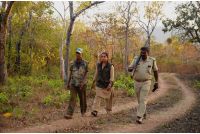
Now, Netra is a member of a team of four forest guards entrusted with patrolling an area of 12.75 sq.km of Kadamattur Katte belt near Maralahalla Camp in Bandipur Forest Range.

She has encountered ‘Prince’, the popular tiger, a couple of times during her patrolling duty. She has also recently seen Prince’s offspring Madesh with its mate and three cubs in the deep forest, not to mention leopards and wild elephants.

Speaking to Star of Mysore, Netra said “I was very afraid in the beginning to venture into the forest alone, but I received a lot of encouragement from my colleagues and parents. Now I am very confident and proud to be a forest guard. The initial reluctance is no more and now I am effectively managing the responsibility I am entrusted with by the Department and feel at home in the forest amid wildlife.”

Project Tiger Director Mallesh speaking to Star of Mysore said that all the staff serving in the Bandipur Forest Range were provided with all facilities

source: http://www.starofmysore.com / Star of Mysore / Home> Feature Articles / March 12th, 2016

Experts to Document Ashoka Circuit in State

Kalaburagi :

A joint initiative of HKRDB and Calcutta University to document an Ashoka Circuit for Karnataka from Sannati to Siddhapura has been launched.

Head of Ancient History Department of Calcutta University Prof Susmita Basu Majumdar is the Principal Investigator. As part of this expedition, a documentary will be filmed and a pictorial Pali-English-Kannada dictionary will be compiled.

Karnataka has perhaps the largest number of Ashoka sites and those dating back to the 3rd century BC are the earliest legible records found from Afghanistan in the northwest, Andhra Pradesh in the south, Odisha in the east to Girnar in the west. The project will first document all the Ashokan sites in Karnataka and then establish the full circuit from Afghanistan.

AshokaBF02mar2016

A team of three, Prof Susmita Basu Majumdar, artist Rajib Chakraborty and film maker Ranjay Ray Choudhury visited the Chandralaparameshvari temple at Sannati on Sunday, to document the spot where the Ashoka edict was found.  They found the original idol of deity Mahakali broken into four pieces lying on the western side of the temple on the banks of river Bhima.

Prof Basu Majundar took the initiative to re-join the idol and narrated the interesting story behind the discovery of the Ashoka inscriptions. In 1986, a portion of the roof of the temple collapsed and caused damage to the 12th century seated four handed figure of goddess Mahakali wearing mundamala and holding damaru, trishula, kapala and sword.

Presently, this beautiful piece of sculpture only shows the trishula and kapala and the other two hands are broken but the temple authorities informed that the present image of Chandraparameshwari which is worshiped in the temple is a replica of the previous Goddess.

The khandita pratima of the deity lying on the banks of Bhima was almost awaiting the visit of this team and when the sculpture was joined it looked as if the beautiful Goddess had reappeared.

The idol base had a protruding pillar like hinge which was fitted into a stone socket. The stone on which the Ashoka inscription was engraved was used to form the base of this deity. When the idol was damaged, the inscription was discovered.

This inscription carried the separate edicts one and two and rock edits 12 and 14 of Ashoka (274-232 BC). Karnakata was the southernmost boundary of the Ashoka’s Mauryan Empire.

This inscription was discovered in 1989. Now the original idol which is about 600 years old is also restored to the temple. The matter is being reported to the ASI for further action.

source: http://www.newindianexpress.com / The New Indian Express / Home> States> Karnataka / by Express News Service / March 02nd, 2016

It was an event to feel, savour and be Japanese

Japan Habba

JapanHabbaBF22feb2016

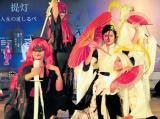
An array of Japanese cultural events and stalls offering delicacies from that nation were some of the highlights of the 12th edition of Japan Habba that was held at the Jnana Jyothi Auditorium on the Central College campus in the City on Sunday.

Jyunichi Kawaue, Consul and Head of the Consulate, Consulate of Japan, Bengaluru, inaugurated the annual festival that is held with the aim of promoting Indo-Japanese relations and creating an opportunity for people to know more about Japanese culture.

The theme of the day-long event this year was ‘Chouchin’- the traditional Japanese lantern which embodies festival in Japan- and these were also available for sale at the venue. The main attraction of the cultural programme was the song and dance of ‘Sawara Bayashi’ (festival song and dance of the city Sawara in Chiba prefecture near Tokyo) performed by both Japanese and Indian enthusiasts using the ‘Chouchin’.

Japanese expatriate Kazumasa Kuboki’s performance of the Kannada song ‘Prema Chandrama’ stole the show. Other highlights included a Bollywood dance by Japanese women and children, performances of Japanese songs and dances by Indians and Japanese and performances of traditional Indian classical and folk dance.

Several interesting events in the gallery also kept many visitors engaged. There was a tea ceremony demonstration where visitors could see how a traditional Japanese tea ceremony (sado) is performed and try out ‘ocha’ (green tea) and sweets. A large area was also dedicated to the ‘Yukata’ trial where people could wear the Japanese summer kimono (garment) called ‘yukata’ and take pictures.

Many were also seen writing Japanese letters (kanji) in calligraphy style. Other popular attractions included a traditional Japanese toy corner and display of crafts like ‘origami’, ‘kirigami’ and ‘Ikebana’.

There were a few food and refreshment stalls as well where people were seen savouring some authentic Japanese cuisine set out by restaurants in the City, besides Indian snacks. In all, the event offered a good insight into Japanese culture and traditions and an enjoyable day out.

The event was organised by the recently formed Japan Habba Trust. Prof K N Ninge Gowda, Registrar (Evaluation), Bangalore University, presided over the programme. The guests of honour on the occasion were Yoichi Yasui, chairman, Japanese Association of Bangalore and P N Karanth, honorary secretary, Indo-Japanese Chamber of Commerce and Industry-Karnataka.

source: http://www.deccanherald.com / Deccan Herald / Home> City / DHNS – Bengaluru, February 22nd, 2016

The Omen : Wadiyar’s Rajendra Vilas Palace

Mystery of a temple-tower and a Palace-dome!

WadiyarsBF11feb201y6

Nothing seems to go well for the much loved and regarded Wadiyar dynasty of erstwhile Kingdom of Mysore these days. Rather since independence of our country in 1947. The problem for the then last Maharaja Sri Jayachamarajendra Wadiyar [1940-1950] began when, under wrong advice by his much-hailed Dewan Sir Arcot Ramaswamy Mudaliyar [1946-1947], His Highness refused to sign the all-important Accession Treaty with the Union Government and lost its goodwill for ever. The dilly-dallying did not last long though.

Since then, the events in the Mysore Palace (Amba Vilas Palace), the Bengaluru Palace and the Palace in Ooty (Udhagamandalam) Fern Hill Palace and other minor Palaces in city and may be, elsewhere are under the shadow of ill-omen. Nothing seemed to go well for the Royalty — from domestic affairs to the ownership and management of its multi-crore rupees worth of properties spread all over the State and who knows abroad.

The Wadiyar dynasty, which never drew the battle-sword from its sheath or fired a shot from the gun or cannon eversince Hyder Ali usurped the throne in 1761 till this day, lived a leisurely, languid life under the suzerainty and protective wings of the British Raj. However, after the death of Krishnaraja Wadiyar IV, whom Mahatma Gandhi rightly called the Raja Rishi, the philosopher King of the kind described by the Greek philosophers, the dynasty seemed to lose its hallow of earlier glory.

The political events in the country moved so fast, the Wadiyars were unable to anticipate the consequences. The worse happened after the death of Sri Jayachamarajendra Wadiyar, the father of the scion of the royal family Sri Srikanta Datta Narasimharaja Wadiyar leaving behind the burden of many unsettled property issues among his children and the Government. His son Sri Srikanta Datta Narasimharaja Wadiyar himself died without issues on Dec. 10, 2013 and the Maharani Pramoda Devi Wadiyar had to resort to the Hindu tradition of adopting Yaduveer Gopal Raj Urs, a grand nephew of her husband and rechristen him as ‘Yaduveer Krishnadatta Chamaraja Wadiyar.’ But, the Maharani and her adopted son Yaduveer are now to carry on a different kind of battle — in the law courts. And to think that so many valuable properties are lying around like imaginary assets without generating any income or income commensurate with its value is indeed sad.

What could be the cause for this ashanthi, for these problems haunting the Royal family? Is it similar to the legendary curse of Alamelamma to the Wadiyars that is thought to be the cause for the dynasty not having a son to inherit the throne by a direct descendent of the ruling King? We do not know. But here is a probable cause for the present troubles of the dynasty after the death of Sri Krishnaraja Wadiyar IV as told to me by a reader of this paper.

The root cause is traced to the Palace atop Chamundi Hill, known as Rajendra Vilas Palace, now lying in a state of total neglect — euphemistically called under repair and renovation.

But before I come to that, a brief history of the Palace atop the hill itself. It all started when one englishman by name Sir Arthur Cole constructed his bungalow here in 1822. The kingdom was under the suzerainty of British East India Company following the fall of Tipu Sultan in 1799 and Sir Arthur Cole must have been in the service of the company. Lord William Bentinck, the Governor-General of India [1833-1835], had stayed here in 1834 for a few days, according to history.

Later when the British left, under the royal ownership, it was used as a Summer Palace, a hill station residence at an altitude of 1000 feet above mean sea level. It is said, Mahraja Krishnaraja Wadiyar IV was taught English and Philosophy here in this ‘Summer Palace.’

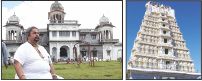
It was re-built as a Palace in the Indo-Saracenic architectural style found in Rajasthan by Krishnaraja Wadiyar IV and completed in 1938-39. The Palace was further developed with a high dome during the period of Sri Jayachamarajendra Wadiyar. However, the Maharaja was cautioned by the Chief Priest of the Palace and the Chamundeshwari temple not to raise the dome to a height which will be higher than that of the vimana gopura atop the tower of the Chamundeshwari temple closeby, hardly 1000 meters away. The warning was ignored.

The Palace was leased to a hotel for some years where ‘sinful’ activities were taking place. And later it was closed. Sri Srikanta Datta Narasimharaja Wadiyar ran it as a hotel for a while but failed and then the Palace fell into disuse and royal neglect. The Palace, located on 15 acres of land, was valued at Rs. 6 crore during the year 2000.

Srikanta Datta Narasimharaja Wadiyar wanted to remodel the Palace with special interiors and re-start the hotel after his vision: “The Rajendra Vilas Hotel will have the stamp of a five-star luxury and heritage Palace hotel. Ancient scenes of Khedda operation, Dasara processions and Jumboo Savari will be depicted on murals by artists,” Wadiyar used to say to journalists who talked to him on seeing the construction work being carried out. Sadly he did not live to see his dream-hotel operational. But, what about the prognosis of the Palace Priest?

Would the property problem of the Wadiyars find a final resolution if the dome of the Palace is reduced in size or removed to comply with the Chief Priest’s warning? Or would it help the Wadiyars if the Palace itself is given up as belonging to the presiding deity Chamundeshwari on the lines how properties of some temples are considered belong to the deity as owner?

God only knows. But I would be happy if Wadiyars are allowed to live in peace by the government and the law of the land under a democratic governance. After all, the Wadiyar Kings were good Kings, benevolent Kings, encouraged art, literature, sculpture and worked to make Mysore a great cultural capital of Karnataka.

e-mail: kbg@starofmysore.com

source: http://www.starofmysore.com / Star of Mysore / Home> Abracadabra….Abracadabra / by K.B. Ganapathy / February 11th, 2016

First women’s car rally this Sunday

The city will flag off its first-ever women’s car rally on February 7, where 30 participants will drive through regular traffic for 80 km from Whitefield to Devanahalli. The challenge will be to reach the destination in two-and-a-half hours.

“It’s not impractical as this is no race, but a rally. Only motorable roads have been chosen and the endeavour is to create awareness and draw women into driving,” said Rati Dhandhania Mundrey, Chairperson, FICCI Ladies Organisation, which is hosting the event with Karnataka Motor Sports Club.

“We are setting a platform for women to shed their inhibitions,” she said.

Participants are allowed to bring in a navigator, but have to follow the Road Book issued by the Karnataka Motor Sports Club (KMSC). Specified routes and check points will be unveiled before the rally. According to the organisers, security is in place with rally permits from the police and ambulance accompanying them.

The rally will be flagged off at 9.45 a.m. on February 6 at Tata Motors Whitefield and will end at Hotel Royal Orchid in Devanahalli.

source: http://www.thehindu.com / The Hindu / Home> News> Cities> Bengaluru / by Ranjani Govind / Bengaluru – February 05th, 2016

Makkaji Chowk – 4: Bombay Anand Bhavan

Dominating building with Enchanting entrance !

by R.Chandra Prakash

RevathiPrasadBF31jan2016

Revathi Prasad left his poverty-ridden homeland at a tender age to distant unknown places, to eke out a living, without a basic sense of local languages and cultures, and ended up in establishing Bombay Anand Bhavan in the year 1921 in Mysore. He belonged to Agarwal community and his ancestors had a petty kirana shop in the village Banail, in present Western Uttar Pradesh. Before coming to Mysore, he had undergone apprenticeship in making sweets and maintaining accounts with a relative in Nagapattnam. Over a period of 40 years between 1921 and 1961, the shrewd business sense of Revathi Prasad, very well-supported by sincere and hard-working Ramachandra Sharma (Masterji), a Brahmin from the same village, went on to make Bombay Anand Bhavan (BAB) a gem in the crown of Makkaji Chowk, the “Kohinoor” of sort.

The two roads, H.R. Street and K.T.Street, joined into a V-shaped triangle from a higher elevation, staring down at a very imposing three-storied, double-winged stately building. Its dominant nature was further enhanced as it was separated from other buildings in the neighbourhood by two lanes on its either sides. Large English name board on the first floor, supplemented by a Kannada name board on the second floor; and a vertical tall neon sign board — BAB — at the centre of the second floor enhanced the building’s dominating character. This building certainly gave the customers a feel of entering a very imposing a mansion of grandeur.

The entrance of BAB was a very powerful commercial proposition and complimented the business carried on inside. BAB had three commercial outlets in the front. First, a Beedi Shop on the left of the entrance. Second, the Sweet Meat Stall on the right. One had to climb four wide but comfortable steps between them to enter the Hotel. Third, on the extreme right, besides the Sweet Meat Stall, there was a Newspaper shop.

The Beedi Shop and Balakrishna

The outer periphery of the Beedi Shop was semi-circular in shape. At the outer edge of the shop there was highly polished two parallel brass pipe railings. There was glass and wood showcase behind the brass railings. On the wall of the shop there were wooden shelves with small partitions. Here one found cigarettes of all brands — Wills, Players, Passing Show, Berkley, Scissors, Blue Navy Cut, Char Minar and, of course, that sweet smelling Marcopolo in a brown blackish tin box! Some expensive cigarettes such as Players and Wills were available in paper packets as also round tin boxes. Biscuits of every type and brand, including Milk Maid brand Glucose biscuits with its own special mild sweet fragrance in waxed cardboard packing. They were imported from Australia in those days. Hair oils of different brands, Horlicks and perfumes were also on display. One also saw the colourful key chains, nail cutters, hanging on hooks on the partition boards of the shelves, so also the colourful cigar lighters, purses and, of course, the metallic boxes for keeping cigarettes.

Also available were the beedis of all brands in paper wrapped small bundles of 25 beedies — Mangalore Ganesh beedi, Puttu Shet beedi, Peer beedi, Hari Bhai red thread, Hari Bhai green thread; and, of course, Cuban Cigar wrapped in transparent sheets and stacked in thin plywood boxes. Match boxes of all varieties and sizes and not to forget very popular brand of Cheeta Fight, Snuff powders – Ambal and Andal brands in small tin canisters were available.

One could also find aerated soda, kept in watered wooden round crates to keep the bottles cold and the contents fresh. There was the very popular Goli [glass ball] Bottled Soda. One could get Orange, Lemon and Cola Goli soda as well. The metal-capped drinks were a bit expensive and Goli sodas were cheaper and very popular.

Balakrishna, a very devout Kaali Bhakta from Kerala, was employed as its salesman. He was a very lean person but had long, dangling, coiled and well oiled hair grown in honour of Kaali. He performed multiple tasks sitting cross-legged on an elevated seat on the eastern side small corner of the shop. Making a Paan ( made out of betel leaf) was his speciality. He would mix various ingredients stored in different boxes and bottles of varied shapes and dimensions, as per the need of a given customer. Scented tobacco, more so Baba Jarda of varying potency was put only on special requests for an extra charge. What an expertise Balakrishna had in this task. Later, his younger brother Mani joined him. Subsequently, both of them set up their own Beedi Shop near the Silver Jubilee Clock Tower.

On the right hand corner, just beside the seat of Balakrishna, a coir rope with burning tip hanged, kerosene lamp with lighted wicks and box containing the cut pieces of cigarette cardboard packets to help light the beedies and cigarettes were fixed to the wooden pillar.

This small, heavily loaded with convenience goods Beedi Shop supplemented the culinary delight inside the hotel. It was by habit that people chewed Paan and smoked Beedi, Cigarette or Cigar after the sumptuous meal in the hotel.

Sweet-meat Stall and the “Malavalli Boys”

Sweet-meat was a special area of interest for the owner for two reasons. He was the original promoter of such North Indian sweets to Mysore and Mysoreans. Unlike the other eatables, sweet-meat is a purchase for emotional and compulsive satisfaction of the customers.

BAB’s sweet-meat stall was a rectangular shop right at the centre of the building, perched over the footpath at a height of about two-and-half-feet above the ground. At the back end of the shop was a huge mirror in a teakwood frame, in a slanted position, top portion projecting a bit outward and lower portion pushed-in. This gave a special angle to the mirror and also the display. Mirror magnified the dimension of the shop and its contents, apart from giving more than life-size look to the items on display due to bright lighting from the roof of the stall. Each sweetmeat was specially arranged on a large stainless steel plate and silver foils were stuck to each one of them. These large plates of sweet-meat were arranged on white marble steps, which gave them maximum exposure to the customer standing at the lower end of the shop. Savouries were arranged at lower steps. There were two seats on either sides of the shop from where two salesmen attended to the customers during rush hours.

Bombay Anand Bhavan sweets were prepared with pure ghee and had earned fame all over the State. The credit should also go Linga, the specialist in making sweets and Chenna, the specialist in making crisp and mouth-watering savouries. Both of them were middle-aged and came from villages near Mallavalli. They always proclaimed proudly that they were “Malavalli ka hudugas – the boys.” They were ably supported by Murugesh, who supplied raw materials to these two master-chefs. Each of them had very interesting personalities of their own.

Newspaper Shop and Jinarajaiah

When a Newspaper and Book Shop was opened in the BAB building, there were not many such shops in Mysore. It was a shop of small width but large length with a large glass frontage. This was rented by Raja Rao of Newspaper House-fame but given to one Jinarajaiah to run it on his behalf. Jinarajaiah was a sturdy looking and very hard working person. Every day he extended the shop by a foldable tin platform on which he displayed his newspapers, magazines and even books. He would spend couple of hours in the day in arranging his wares in the morning and putting them back into stacks in the evening. He was very friendly with the customers and even suggested which magazine or book would be of interest to them. Gradually he built up a very credible clientele. Young and old gentlemen and even a few female clients came to this shop to satisfy their hunger for news and knowledge. Reading was the main source of knowledge in those days. TV was unheard of. On the days of release of new Kannada books there would be huge crowds waiting for the bundles to be opened. Such was the magnetic personality of Jinarajaiah.

Newspapers of all hues from English Madras Mail to Times of India, The Hindu to Deccan Herald; Kannada Thai Naadu to Prajavani; Tamil Dina Tanti to Dina Mani; Hindi Hidustan to Navabharat Times; and even one or two Malayam, Telugu and Gujarati newspapers were available. Those were the heydays of political and cultural upheaval in the Madras State, and everyday large crowds of patrons of language and politics back home used to wait for the arrival of Dina Tanti by afternoon train.

Prajamatha, Koravanji and later on Sudha and Kasturi became the popular Kannada magazines. In Tamil, Kumudam, Kalki and Kadir were popular. On the days when Narasimhaiah’s detective book and the books by Tarasu or Anakru were released, there used to be huge crowds at the shop. Posters were hung at the shop announcing the date of release of these books. The shop attracted Kannada writers, intellectuals, professionals and artists. Artist Tippeswamy was a regular there. Weeklies and fortnightlies from England and children’s cartoon magazines like Lion and Tiger were also available. Sold on stealth were pornography and sun bathers — naturalists, photo magazines. Later on, may be out of financial compulsions, even the cheap porno books and booklets in Kannada were sold here.

Jinarajaiah is said to have committed suicide due to some domestic reasons. If it were so, it is an unfortunate end of a very passionate and knowledgeable workaholic.

These three shops at the entrance of Bombay Anand Bhavan by themselves were very important and lucrative commercial enterprises. They were benefited by the large clientele of BAB and at the same time they built their own categories of customers. Jointly they generated great business and intellectual activities in Makkaji Chowk.

[Makkaji Chowk-5: Bombay Anand Bhavan (Part – II) will recall the hotel business inside the BAB building]

source: http://www.starofmysore.com / Star of Mysore / Home> Feature Articles / Sunday – January 31st, 2016
Braille-embedded train to chug out of Mysuru today

BrailleMaleBF26jan2016

All reserved coaches of Mysuru-Varanasi Express to bear Braille signage

The Mysuru-Varanasi Express will become the country’s first Braille-embedded train. The bi-weekly express (Train No. 16229/16230), which chugs out on Tuesday, will leave Mysuru for Varanasi on Tuesdays and Thursdays.

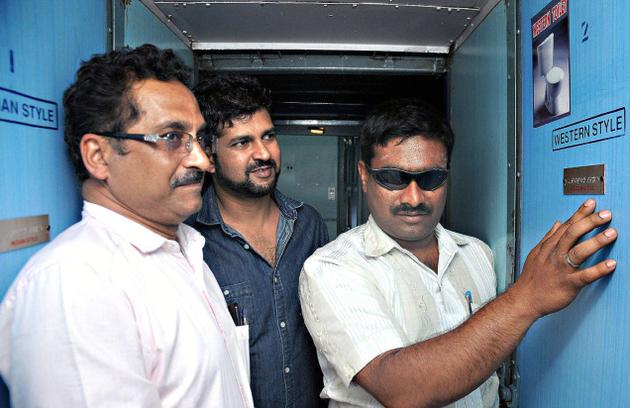
It has been provided with metallic Braille signage indicating berth numbers, location of alarm chains, toilets, and emergency windows. There are also instructions on how to operate the emergency exit windows. The initiative has been financed by Mysuru MP Pratap Simha from the MPLAD fund.

Though the Puri-Delhi Purushottam Express was the first train in the country to have a Braille-embedded coach, the Mysuru-Varanasi Express will be the first in the country where all reserved coaches have been embedded with Braille signage, said Rajkumar Lal, Divisional Railway Manager, Mysuru Division, South Western Railway.

Braille signage has been introduced on one rake of the express and it will soon be introduced in the second rake as well. The Chamundi Express and the Mysuru-Talguppa Express are the other two trains that will be provided with Braille displays after this, Mr. Lal said. “The plan is to extend the facility to all reserved coaches of long-distance trains in a phased manner,” he added. Braille signage indicating the coach number is next on the agenda.

The Braille signage indicating berth numbers and location of toilets will be of great help to the visually-challenged travelling on the Mysuru-Varanasi Express.— PHOTOS: M.A. SRIRAM

Netravati, a visually-impaired person, welcomed the initiative and said that it will help them identify the seats or berths without seeking help from others. “We will be more independent as sometimes, people do not respond to us as they tend to be in a hurry to locate their berths,” she said.

source: http://www.thehindu.com / The Hindu / Home> National> Karnataka / by R. Krishna Kumar / Mysuru – January 26th, 2016

Rehearsal for Republic Day Celebrations in City : Show Jumping to be the highlight of R-Day at the new venue — Torchlight Parade Ground

ShowJumpingBF23jan2016

Mysuru :

With the District Administration taking all measures to ensure total success of the Republic Day celebrations at the new venue — Torchlight Parade Ground in Bannimantap, the Police Department held a rehearsal at the venue this morning.

A total of 30 contingents, including more than 15 Police teams (City Police, Mounted Police, CAR, DAR, KSRP, Home Guards, Traffic, Women, Fire Services, Police Band, etc.) and hundreds of children from schools, including NCC and Scouts & Guides across the city took part in the rehearsal.

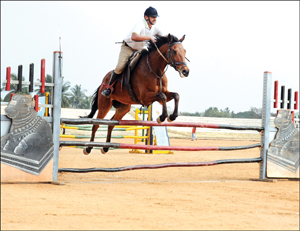
For the first time, the Mounted Police will be performing equestrian events and show jumping during the celebrations.

The participants were rehearsed to a few patriotic songs and march past. Pavani, an LKG kid of Teresian School, who was the youngest participant at the parade, presented an attractive dance performance.

KSRP Commandant Ramdas Gowda supervised the rehearsal, which was led by CAR ACP K.N. Suresh. CAR DCP B.V. Kittur, Palace Police Inspector Chandrasekhar and others were present.

The rehearsal will also be held tomorrow, which will be attended by City Police Commissioner B. Dayananda.

source: http://www.starofmysore.com / Star of Mysore / Home> General News / Saturday – January 23rd, 2016

City’s Windflower Resort recognised by The World Travel Brands

WindflowerBF10jan2015

Mysuru :

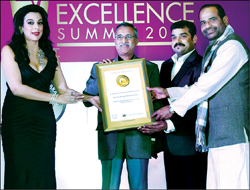
Adding yet another feather to its cap, the Windflower Resorts and Spa, Mysuru, was recognised by the World Travel Brands at the Travel Brands Award held in New Delhi recently.

The award of recognition was received by Achuta Rao, Senior Vice-President (Operations), Windflower Resorts and Spa, Mysuru, from celebrity Pooja Bedi at a function held at The Vivanta Taj in New Delhi which was attended by Prahlad Kakkar, Shashi Tharoor, Anupam Kher and MP Bidhuri of South Delhi.

World Travel Brands is a premium status offered exclusively on an invitation basis to brands from the Travel, Tourism and Hospitality industries in countries such as India, USA, UK, UAE, Australia, New Zealand, France, Canada, and Singapore.

source: http://www.starofmysore.com / Star of Mysore / Home> General News / Sunday – January 10th, 2016