Category Archives: Travel

City Rly. Station gets automated ticket vending machines

TicketAtmsBF27oct2015

Mysuru :

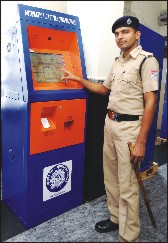
Now passengers will not have to stand in long queues for the tickets at the City Railway Station. The South Western Railway (SWR), in an effort to ease ticket purchase, launched the Automatic Ticket Vending Machines (ATVMs) at the Railway Station this morning.

The machines were commissioned by SWR DRM Rajkumar Lal at the entrance of Railway Station in the presence of SWR Senior Divisional Commercial Manager Anil Kumar.

The AVTMs, which are introduced for the first time in Karnataka, works on smart card which is made available at the ticket booking counters. A total of five machines are installed at the City Railway Station. While three machines are installed at the main entrance, the other two are installed at the back entrance (CFTRI gate). Passengers can top-up the smart cards in multiple of Rs. 50 to a maximum of Rs. 5,000. Initially, passengers have to pay Rs. 70 (Rs. 50 towards security deposit and Rs. 20 towards ticket value).

Passengers can purchase unreserved and platform tickets and also renew season tickets through smart cards.

Smart cards come with a one year warranty after which it can be renewed. The security deposit is refundable after deducting Rs. 10 in case a passenger decides to return the smart card.

The operation of ATVM facility is similar to that of Bank ATMs and for the benefit of the public the display is made available in Kannada, Hindi and English languages.

This apart, the much awaited e-toilet, battery operated vehicles for senior citizens and electrically operated laundry facilities will be launched on Nov.3, according to the South Western Railway authorities.

source: http://www.starofmysore.com / Star of Mysore / Home> General News / Tuesday ,October 27th, 2015

Pages from History : Dasara through the ages

DasaraBF180ct2015

by Prof. A.V. Narasimha Murthy, former Head, Department of Ancient History and Archaeology, University of Mysore

Navaratri or Dasara is one of the most popular festivals in our country but it is celebrated in a variety of ways in different parts. Actually it is a festival symbolising the destruction of evil and establishment of good (dushta sikshana and shista rakshana). This festival has a hoary antiquity going back to the time of the puranas and epics. The word Dasara is derived from the Sanskrit Dashahara meaning ten days. Basically, Navaratri is a festival of Mother Goddess who received power from no less than Vishnu, Shiva and Agni. Each one of the Gods gave different powers to Her so that She could free the world from the tormentors of different types. Thus was born the indomitable energy personified in the form of Goddess and people heaved a sigh of relief. Navaratri means paying respects and showing gratitude to Mother Goddess.

As the demons had obtained various boons from Shiva or Vishnu, the Goddess had to assume different forms to achieve her goal. She is worshipped in the following nine forms namely, Mahakali, the destroyer of Madhu Kaitabha; Mahishamardhini, the destroyer of Mahishasura; Chamundi, the vanquisher of chanda-munda; Kali, the killer of Raktabija; Durga, the harbinger of destruction of Kamsa; Raktadantri, the great destroyer; Shakambari, the destroyer of famines; Durga, the destroyer of demon Durga; Bhramari, the killer of demon Aruna. Thus Devi assumed these forms to accomplish her task. In course of time, the worship of Saraswati and Lakshmi were also added.

Another significant aspect of this ritual is the exalted position of unmarried girls (kannikas) who are supposed to personify the great Goddess. These unmarried girls are worshipped as Kumari, Trimurti Kalyani, Rohini, Chandike, Sambhavi, Durga, Subhadra and Kali. Each one of them is worshipped during the nine days; they are fed and given gifts too.

It has been our unique tradition that these festivals are recommended to human beings only after they are tested by the Gods. The Gods themselves did this after vanquishing the demons. It is said that Sri Rama invoked the Goddess and achieved great victory over Ravana on the day of Vijayadashami. Thus even Sri Rama worshipped her before taking up a major fight. Even the great epic Mahabharata extols the greatness of this festival.

The Pandavas, who had hidden their weapons under the Shami tree (banni mara) worshipped the Goddess, took out the weapons and started their Digvijaya or Victory March and consequently achieved great success over the Kauravas. It has to be noted that in all these instances, the great Goddess is invoked and worshipped not for any personal gains but for the annihilation of the wicked people, upholding of dharma and to save the good people.

Thus when it was useful to the Gods, the human beings felt that it should be useful to themselves also and hence began celebrating Navaratri. No dobut, it was celebrated in the ancient period but it has not been recorded either in literature or in inscriptions till we come to the medieval period. It was believed that Samudragupta, Harsha, Vikramaditya VI, Ballala II, Singhana and a host of others started their Digvijaya on the Vijayadashami Day.

However, with the dawn of Vijayanagar period, historical records are available in plenty. Particularly, the writings of the foreign travelers who stayed for a short period in Vijayanagar empire have given graphic description of the various rituals and durbar during this period. The earliest reference to Dasara festival during the Vijayanagar period is seen at the time of King Devaraya II (1424-1446). Abdul Razzak, a Persian traveler, who was invited as a guest for Dasara, was greatly impressed by the festival and has given a long description. The infidels of this country who are endowed with great power are fond of displaying their pomp and glory. Navaratri was celebrated at Mahanavami platform (dibba) in Hampi. All the subordinate kings assembled here and made gifts to the emperor. Elephants played an important role besides horses. There were many pavilions and some of them revolved around. The King sat on the gold throne kept on the ninth storey. Acrobatics displayed were of high order and people enjoyed it. The King gave prizes to the participants who included men and women. The last three days, namely Durgashtami, Mahanavami and Vijayadashami were spectacular. Krishnadevaraya’s Dasara was held from morning till night and thousands of lamps were lit during the night. Wrestling was a great attraction. Fire works were of high order.

On the Vijayadashami Day, the King held a review of the forces. Another traveler by name Nuinz has also given a similar description, besides Barbara, Nikitin and others. From all these features, it becomes clear that Vijayanagar Kings laid the firm foundation for the pompous but religious celebration of Dasara.

The Wadiyars of Mysore can easily be regarded as the cultural successors of Vijayanagar empire. They improved upon the Dasara of Vijayanagar period to suit their own needs and requirements in such a manner that it became more pompous and dazzling than Vijayanagar Dasara. In fact, Dasara has become synonymous with Mysore Wadiyars.

The earliest reference to Wadiyar Dasara is found during the period of Raja Wadiyar, who ruled from 1578 to 1617. Not only did he celebrate it at Srirangapatna but codified the rules and regulations for its celebrations. Though his son Narasaraja died a day earlier (7.9.1610) to Dasara, he celebrated the Mahanavami festival and further ordained that the death of a close relative of the royal household should not become a cause to stop or postpone Dasara. Dasara of this period was celebrated in three stages: The first one was the celebration of first eight days; the second is the Mahanavami festival and the third is the Vijayadashami. This has become more or less standardised from the period of Raja Wadiyar. He took up diksha by wearing a separate dress and kankana and worship of the Navagrahas, worshipped the throne and ascended it. The relatives, brahmanas and officials paid respects to the King. On the moola nakshatra day, Saraswathi Puja was performed. The Mahanavami Day was reserved for the worship of Royal Sword (Pattada Katti). Then the homa at Chamundi Hill concluded with poornahuti. In the evening, the durbar took place. On the Vijayadashami Day, he sent the weapons to the Banni tree with royal honour. In the evening he went in a procession to that place, worshipped the Banni tree and returned in the night with lights.

During the period of Kanteerava Narasaraja Wadiyar, the festival was celebrated with traditional grandeur. Special worship was offered to the images of Ranganatha and Narasimha. During the durbar, the chiefs, feudatories and others would pay respects. The tenth day was reserved for public procession of the King to conduct Sami puja.

Krishnaraja Wadiyar III (Mummadi) performed Dasara in the traditional manner. Queen Mother Lakshmammanni also worshipped the throne and blessed the King. The Maharaja used to come from the Palace in Nazarbad and return after the function. British Durbar was an added attraction. One particular day was specially reserved for them from 1814.

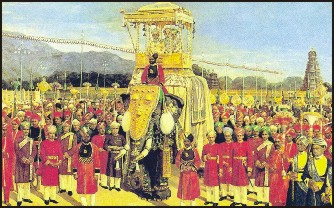
In the meantime, the present Palace was completed in 1912 and it became the venue of Dasara durbar. Krishnaraja Wadiyar IV (1895-1940), who won the admiration from Mahatma Gandhi and generally referred to as Rajarishi, conducted Dasara in a pompous and meaningful manner. On the very first day of Dasara, he worshipped Goddess Chamundeshwari on the hillock. The evening durbar was meant for officers and invitees. They had to come in a special dress of white trousers, black long coat, uttariya and a laced turban to be in the durbar. All the invitees were garlanded according to their status. On the ninth day, he performed Ayudha Puja which included worship of Lakshmi, Royal sword, royal horse, royal elephant, royal chariot etc. On Vijayadashami Day the Maharaja used to go to Bannimantap sitting on a howdah mounted on an elephant. Maharaja, Yuvaraja Kanteerava Narasaraja and Jayachamaraja Wadiyar were seated in the howdah. The same procedure was followed during the rule of Jayachamaraja Wadiyar. As Ashoka road was too narrow, the procession passed through Sayyaji Rao road and the whole route was illuminated. This type of Dasara was held till 1969.

In the year 1970, Dasara was not held publicly. The Karnataka Government decided to hold Dasara as Nada Habba or the festival of the people. However, religious ceremonies were performed in private at the Palace. Cultural events, poets meet, cultural and industrial exhibition were conducted. On Vijayadashami Day, an idol of Goddess Chamundeshwari in the golden howdah was taken in procession. At Bannimantap, the Governor took the salute at the torch-light parade. Thus Dasara or Navaratri became a cultural event and a festival of the people and not of the royalty. This festival not only reminds us of our past glory but is a symbol of our unity and strength to move towards our democratic goal. Whatever may be its form, we pray to Goddess Chamundeshwari to shower her blessings on all of us for a better tomorrow.

source: http://www.starofmysore.com / Star of Mysore / Home> Feature Articles / October 17th, 2015

Vintage cannons ready to boom

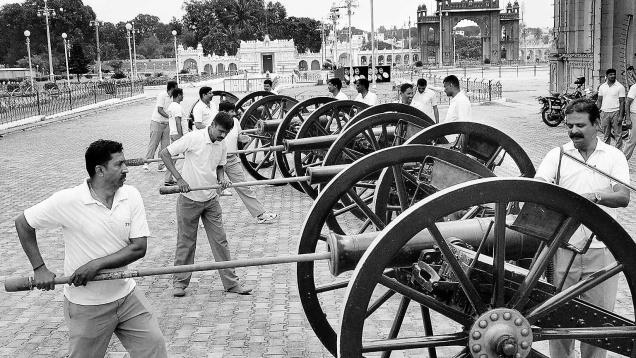
Policemen cleaning the vintage cannons as part of the forthcoming Dasara festivities.— PHOTO: M.A. SRIRAM

As Dasara approaches, seven cannons, which had been housed at the iconic Mysuru Palace, had been handed over to the Gun Shed Troupe, a team of police personnel attached to the City Armed Reserve (CAR) which operates the cannons.

The vintage artillery, used to fire 21 gun shots on the day of Jamboo Savari, is being readied for the big day.

A 32-member police team has cleaned the cannons, which are installed on two-wheeled carts.

The team is expected to start rehearsals to acclimatise elephants to the booming sound of the cannons firing.

The rehearsal is done under the watchful eyes of Forest Department officials and the elephants’ mahouts and kavadis.

On the day of Vijayadashami, cannons are fired 21 times outside the palace fort to signal the beginning of Jamboo Savari.

Rehearsals are conducted three to four times in the run-up to the Dasara finale every year to prevent the elephants from getting nervous as a result of the sound and smoke.

Siddaraju, a head constable of CAR, who is part of the Guns Shed Troupe, said ammunition for the cannons – gun powder – is procured either from Arsikere or Channarayapatna in Hassan district.

The powder is first dried and then about 1.8 kg is packed in a cotton bag and tied with a thick thread.

The bag is then inserted into the barrel of the cannon for firing. Three rounds each are fired from seven cannons to complete a 21-gun salute. The cannons are fired at the palace and also at Bannimantap, where the procession concludes. Each round of fire needs cleaning to remove leftovers inside the cannon, before another round.

Earlier, two kg of gun powder was used for firing but the quantity had been reduced over two years. Each cannon needs about five persons to operate.

source: http://www.thehindu.com / The Hindu / Home> National> Karnataka / by Shankar Bennur / Mysuru – September 30th, 2015

‘Forests and Wildlife can be protected only if there is transparency in the Dept.’

WildlifeWardenBF30sept2015

Says Hon. Wildlife Warden N.M. Naveen Kumar

One should not work in the forest just for the sake of working but should have the passion for wildlife, its protection and conservation. One such person, who not only has the passion for wildlife but also wants to create awareness among the young generation about the importance of forests and wildlife, is N.M. Naveen Kumar, Hon. Wildlife Warden of Chamarajanagar district, who holds a M.Sc degree in Public Policy and Management from University of London. He has been appointed by the State Government for the second term. Chamarajanagar District Wildlife Division consists of six ranges in Bandipur National Park, complete BRT Tiger Reserve, M.M. Hills Wildlife Sanctuary and a major portion of Cauvery Wildlife Sanctuary.

In a tete-a-tete with Star of Mysore, Naveen Kumar spoke about Wildlife Wardens, their duties, responsibilities and challenges. Excerpts…

by S. Kenneth Shishir

Star of Mysore (SOM): Who is an Honorary Wildlife Warden?

Naveen: An Hon. Wildlife Warden is a gazetted public servant, appointed under Section 4, Sub Section BB of the Wildlife Protection Act 1972. It is a statutory post that is created by an Act of Parliament.

SOM: What are the duties and responsibilities of Hon. Wildlife Warden?

Naveen: The notification issued by the Ministry of Environment and Forests has clearly stipulated the duties and responsibilities of the Hon. Wildlife Warden. The primary duties according to the Act are of enforcement in nature, namely, Control of poaching and clandestine trade in wild animals and products; Detection and prosecution of offences under the aforementioned Act; Preventing damage to the habitat of wildlife; Initiating measures for dealing with man-animal conflicts including the assessment and payment of compensation, etc.; Carrying the message of conservation to the people and enlisting public support for nature and wildlife conservation.

SOM: What powers do you have to carry out these duties?

Naveen: Hon. Wildlife Warden has the status of a deemed public servant under Section 59 of the Wildlife Protection Act 1972 and has powers of entry, search, seizure and detention under Section 50 for prevention and detection of offences under the aforementioned Act and also has powers to inspect records of licences under Section 47 Sub Section B of the Wildlife Protection Act 1972.

SOM: Do Forest officials extend co-operation to Hon. Wildlife Wardens in carrying out works?

Naveen: Co-operation is being extended to a limited extent only by a few honest officers who have the passion for wildlife conservation.

The officers whose priorities (unfortunately in majority) have certain personal agendas and they see the Hon. Wildlife Warden, especially an educated, informed and pro-active ones, as a thorn in their flesh.

SOM: Could you elaborate?

Naveen: The problem with the functional process of the Forest Department is that it is completely beyond public scrutiny unlike the works of Revenue, PWD or Police Department. For example, the Forest Department’s functioning is beyond the sight of the common man (Public) because forest is a technical subject and most importantly, the general public has no right of entry. This has created an atmosphere where “Power – Transparency = Corruption.”

Therefore, the role of Hon. Wildlife Warden becomes very crucial as he/she is the only representative of the public who has powers of entry and access into the forest.

SOM: How is the Anti-Poaching Force working in Bandipur?

Naveen: We have increased the number of Anti-Poaching Camps and to a large extent, they have been instrumental in preventing and contain poaching. But on the ground in case of Bandipur, more than 60% of the Anti-Poaching Camps do not have a gun despite several written observations in this regard.

SOM: How do they work without weapons then?

Naveen: Patrolling on foot with a machete in their hands and any observations of human intervention, animal deaths, etc. are being reported to the head quarters in the evenings. Moreover, Anti-Poaching Camps are under-staffed and in case of Bandipur, there are 68 vacant positions with 28 persons at the guard level being transferred with a replacement of only 10 guards which has left Bandipur National Park to the mercy of poachers and timber smugglers.

SOM: What are your suggestions to improve forests?

Naveen: In order to protect, conserve and improve the forests, there has to be transparency and open public scrutiny of the Department’s functioning; Corrupt officers, especially those trapped by Lokayukta and against whom cases are pending, should not be given sensitive postings in places like Nagarahole and Bandipur National Parks; The subordinate staff vacancies should be filled on priority; Weapons should be issued and hardness allowance extended to those working in the Wildlife Divisions. They should also get basic incentives like Life Insurance, canteen benefits on the lines of Police Department.

SOM: What are the challenges faced in the forest?

Naveen: Some of the major challenges being faced in the forest include sand lifting from core area sometimes with the connivance of officials concerned, timber smuggling which is being routed to depots and small game poaching especially deer, variety of fowls, hares and so on.

SOM: Has the night traffic ban been effective?

Naveen: Of course yes. Night traffic ban has been effective in ensuing peace and tranquillity for wild animals and has averted a lot of road kills. It is an outstanding example of what a passionate officer (in this case Dr. R. Raju, IFS) can contribute to the wildlife if he really minds.

SOM: What measures have been taken to end or control man-animal conflicts in forest borders?

Naveen: The Congress-led State Government has taken up a major project which is worth Rs. 230 crore. The Railway Barricade Project for border areas of both Bandipur and Nagarahole National Parks is the first in the country which is an initiative of C. Srinivasan, retd. APCCF, Project Tiger. Upon completion of this project, man-animal conflicts, especially man-elephant conflicts, would drastically subside.

Apart from this, night patrolling along sensitive areas and Village Watch Committees has been functioning to control Man-Animal conflicts.

SOM: What is your message to the younger generation who are interested in nature and wildlife conservation?

Naveen: Just remember, wildlife conservation is all about ‘swimming against the tide.’ Never hesitate to voice your opinion against the system when it is not in the interest of conservation. Help in protecting, preserving and conserving forest and wildlife by creating awareness about its importance to mankind. Those interested in wildlife conservation or have suggestions pertaining to wildlife and forest conservation may contact Naveen Kumar on e-mail: nmnaveen@yahoo.com

source: http://www.starofmysore.com / Star of Mysore / Home> Feature Articles / Wednesday – September 30th, 2015
Dreams on wheels

Candida Louis at Gurez in Kashmir where she was given a rousing reception by school girls.

It was on a hazy morning last month that Candida Louis rode into the largely unexplored Gurez Valley in Kashmir on her Royal Enfield.

It didn’t take long for the news to spread about the girl on motorcycle, a rare sight in those parts of the world. The next thing the 24-year-old knew was she in the middle of a mob of girls who had come to meet the brave one. They were awestruck by the adventurous spirit of the Bengaluru girl and wanted to ride pillion, which she obliged. “Its such experiences and people I meet that count more than covering thousands of kilometres,” said the IT professional with Infosys, who is on a three-month vacation to live her dream.

Circumstances conspired to help her fulfil that dream in a flurry. First, Dalton Louis gifted his only daughter with a Royal Enfield on her birthday last November and then seven months later a television channel approached her to be part of a group of ten riders in a programme meant to cover 30,000 kilometres in 22 states.

The supportive parents gave their nod and so did her employer. And before she knew it, she was on the road this July. Though the programme was wound up just in 20 days, Candida declined to be dispirited and continued her journey solo with the same target.

Since then she had covered 8,200 kilometres in over 12 states and till now she didn’t have a single bad experience despite many apprehensions about her safety by her loved ones. She reached Kochi from Munnar and was at Vypeen on Tuesday.

Staying at different hotels and experiencing variety food, the youngster plans to write about her travelling experience for a mobile app, which she said would help her meet fuel expenses.

The end of the journey in Goa in November would just be the beginning of wait for her next big adventure. “I always dreamt of going around the world in a motorcycle and I wanted to start it covering India,” she signed off.

source: http://www.thehindu.com / The Hindu / Home>National> Kerala / by M.P. Praveen / September 30th, 2015

Golden jubilee of St Michael’s Seminary in Belagavi on Friday

Belagavi :

The alma mater of many priests in the diocese of Goa, Karwar and Belagavi — St Michael’s Seminary here will be observing its golden jubilee celebrations on Tuesday.

Located at Macche on the Belgaum-Goa road via Chorla, about 12 kms from city, the seminary is well known amongst the Catholic religious circles across the nation and is hailed as one of the finest seminaries where more than 200 priests including two bishops have passed out.

At the celebrations that will be held at the premises of the seminary, three archbishops and six bishops will be taking part in the holy eucharistic celebrations that will be held at 4pm followed by a programme to commemorate the golden jubilee.

Archbishop of Bengaluru Rev Bernard Moras will be the main celebrant for the mass accompanied by archbishops, bishops and about 500 priests from three states of Karnataka, Goa and Maharashtra will be celebrating the mass.

Rev Fr Joseph Rodrigues and team of priests under the guidance of bishop of Belagavi Rev Dr Peter Machado have made elaborate arrangements for the golden jubilee celebrations.

source: http://www.timesofindia.indiatimes.com / The Times of India / News Home> City> Hubballi / by Ravindra Uppar, TNN / September 28th, 2015

City artisans sculpt 5 feet tall elephant from a single block of rosewood

20 craftsmen took three years to create the 900-kg sculpture

RosewoodMPOs09sept2015

by S. Kenneth Shishir

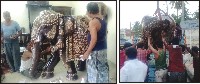
City artisans, who are also recipients of State Awards, have sculpted a five feet tall elephant from a single block of rosewood.

Artisans Khalil ur Rahman Khan alias Parveez Khan, Fazlur Rahman Khan alias Touseef Khan, Hafeez ur Rahman Khan alias Tanveer Khan and Habeeb ur Rahman alias Asif Khan, sons of late A. Majeed Khan, a recipient of Karnataka State Award in 1985 and National Award in 1991, have sculpted this wooden elephant at their workplace Majeed Fine Arts on Anegundi Road in Mandi Mohalla in city.

Khalil ur Rahman, the eldest among the four brothers, speaking to SOM, said that Mysuru is the birth place for inlay work and is famous for rosewood inlay craft all over the world.

He said that to promote rosewood inlay work and to keep the tradition alive, his father late A. Majeed Khan, established Majeed Fine Arts in city in the year 1972 and since then many artisans have been trained in the inlay work by his father, who have made big names now.

Khalil further said that the Karnataka Government recognising the outstanding and excellent inlay works made by his late father awarded him with a State Award in 1985 and a National Award in 1991.

He said that his brother Fazlur Rahman Khan is a recipient of Karnataka State Award in 1995 and a National Award in 1997 while another brother Hafeez ur Rahman is a recipient of Karnataka State Award in 2003.

Khalil said that his younger brother Habeeb ur Rahman is also a recipient of the State Award in the year 2003 with himself being a recipient of the State Award for the year 2004-05.

When asked why did he and his brothers choose to sculpt an elephant when they could have sculpted anything, Khalil said that getting a single piece of rosewood was very rare and added that he procured the rosewood at an auction in Kushalnagar about three years ago. He further said that he and his brothers decided to sculpt a big elephant from the single piece of rosewood as Mysuru is famous for the world famous Dasara in which elephants play an important role especially during the Jumboo Savari.

When asked whether it was he and his brothers alone sculpted the elephant? Khalil said that they took the help of 20 craftsmen to complete their dream project and sculpted the elephant from a single solid block of rosewood.

He said that to decorate the sculpture they used inlay work. While 60% of the inlay work has been done using ‘Mother of Pearls,’ the remaining 40% work was done using natural wood colours for further decoration of the wooden elephant.

He said that to represent Karnataka, we have used the logo of the State along with our National Emblem on the side and a Gandaberunda on the forehead of the elephant besides birds, animals, flowers, etc.

When asked about the procedure of sculpting the elephant, Khalil said that as the first step, we made a design and drew an outline image and patterns on the solid rosewood block. Then the rosewood was carved into proper shape and cut into three parts (Head, body and tail) to give proper shape. The motifs that had to be inlaid were hand-cut and the area where the motifs had to be inlaid were carefully scooped out and the motifs were inlaid and fixed, he said and added that the sculpture was then smoothened using sandpaper and polished to give a bright look and joined together.

Khalil said that after the elephant was sculpted, it was 5 ft. tall, 3 ft. wide, 6.6 ft. in length and weighed about 900 kgs. The wooden sculpture has been shifted to Cauvery Emporium on Sayyaji Rao Road where it is kept on display now.

source: http://www.starofmysore.com / Star of Mysore /Home> Feature Articles / Wednesday – September 09th, 2015

Pages from history : A Chinese Inscription in Karnataka

by Prof. A.V. Narasimha Murthy, former Head, Department of Ancient History & Archaeology, University of Mysore

India and China had cultural relations with each other in the early centuries Before Christ (BC). In fact, the name China or Cheena is a Sanskrit form of a dynasty named Tsin, which ruled in China. Thus China owes its modern name to India and this is a great Indian contribution.

India and China had political and cultural relations around third century BC. According to traditional stories, King Ashoka is said to have sent 18 Buddhist monks to China for the propagation of Buddhism there. One such group reached China in 218 BC. The story of Bodhisattva was quite popular in China around the second century BC. By about third century, the Hanas invaded China and the Chinese King requested help from many countries including India. During that period, he saw cotton cloth which the Indian merchants had brought for trade, and they liked the cotton cloth and traded in them. In fact, China was famous for silk (Chinambara) which is mentioned in our epics and puranas.

During the rule of Ming dynasty, the Buddhist monks, Dharmaraksha and Kasyapa Matanga were taken to China and they translated many Buddhist works into Chinese language. Those Buddhist monks passed through Bamiyan, Kashgar, Kuchi, Karashahar and they became great Buddhist centres.

People from India used to go to China through two routes which were full of risks. More than 500 years later, devotees used to go through Nepal and Tibet and it became quite popular. Special mention should be made of great saints like Dharmaraksha, Kumarajiva, Vimalaksha, Punyatrata etc. In fact, many great Buddhist scholars of Nalanda went to China to get better recognition there. The celebrated travellers Fahien and Huentsang made everlasting contributions towards Buddhism in China. The latter stated that he is unwilling to go back to China leaving the sacred land of Buddhism. Gradually, Buddhism declined in China and Tao and Confucian leaders became more important and began giving trouble to Buddhists. Sacred Buddhists texts like Vinayapitaka, Sutrapitaka, Abhidamma- pitaka were translated into Chinese language. In fact, some of these are not available in India and Buddhists had to depend upon Chinese texts. This glorious period came to an end in early medieval period. It never saw such a glory again.

Under this background, a Chinese inscription found in Karnataka may be examined. There is an inscribed stone in the Shantika Parameshvari Temple in Kumta, North Canara district of Karnataka. It contained letters which were neither Brahmi, Nagari or Kannada and created a furore among the local people. But the people were helpless and even the traditional epigraphists were of no avail. Today people do not know how this stone came to the local temple. At that juncture, a photograph and a estampage were taken and they were sent to Prof. Noboru Karashima of Tokyo University, who was studying Indian inscriptions. In fact, Tokyo University had a course of study on Indian epigraphy under Dr. Karashima. The latter conducted an international conference on Indian epigraphy at Tokyo, which I had the good fortune to attend.

After getting the estampage of the inscribed stone, Karashima deciphered it and read it as ‘Guong Dong Kaiyi Kasshong Ven Veng Jhima.’ It means that this is the Samadhi (tomb) of Guong Dong Ven Veng who established this township. Further Guong Dong is a town in Southern China. He established this in honour of the great God. This information is not sufficient to write more about the saint whose tomb was established here. Obviously, it was meant for worship in those days but it lost its significance and importance in course of time. Suryanath Kamath had published a note in a newspaper.

Further research on this problem yielded some more interesting information. By about 1850, the British were scary of the Chinese individuals who were known to be robbers and were deported to an Island as life sentence. By about 1833 roughly, fifteen men and ten women were freed. Among them some were Buddhists while others were Christians. The Christians married Goan girls or boys and began working as labourers in tea estates, some took up basketry. However, they continued to do thefts and hence local Police kept a strict eye on them and their movements. It is said that most of these people, both men and women, went and settled in Karwar. The bamboo and basketry work done by these people was famous till recently.

Now, we may come back to the saint whose Samadhi has been described above. Hence, it is quite likely that the Samadhi stone which was set up there might have been brought to Kumta where it is now lying.

According to the local people, some of the Chinese merchants who were moving from place to place for the purpose of trade noticed a Chinese inscription and out of respect for the saint brought it to Kumta. It was lying somewhere in the town. In India, local people play an important role in the preservation of our ancient relics in general and inscriptions in particular. As there were no museums in those days, inscribed stones used to be brought to the local temples and kept in a corner. The same thing should have happened to this stone also. In the early days the Chinese merchants used to visit Kumta and had a temporary settlement there.

In other words, this confirms that the Chinese merchants used to visit Kumta for the purpose of trade. They used to be in good numbers and spread themselves in different parts. Thus Kumta became an important centre for the Chinese merchants.

The North Karnataka gazetteer prepared over a hundred years ago, quotes many elders of Kumta who had seen Chinese merchants staying there. In fact, they used to develop friendship with young and beautiful local girls and paid them heavily to be with them. This also made the local Chinese merchants closer to the local people, for their generosity in paying money. This normally happens with foreign visitors. Having come to India and settled down here, the Chinese elevated their saint to greater heights and began worshipping them. In fact, they must have converted them to the level of Gods. In that way, this Chinese inscription though short, is significant and adds a page in the cultural history of Karnataka. The tradition continued till recently is a point of importance, in spite of the present political scenario. Let us bow to saint Guong Dong.

source: http://www.starofmysore.com / Star of Mysore / Home> Feature Articles  / Saturday – August 29th, 2015

Steps initiated to protect century-old war memorial

The historically significant war memorial ‘French Rocks’ at Harohalli in Pandavapura of Mandya district is in a pathetic condition.

Officials start evicting encroachers of the area

Evicting the encroachers from the historical war memorial at Harohalli in Pandavapura taluk of Mandya district has finally begun.

The memorial, known as ‘French Rocks’, was set up in memory of French soldiers, who had come to Pandavapura to help Tipu Sultan during his battles against the British. Tipu Sultan had granted a plot to the French army for establishing a burial ground for soldiers.

The war memorial once had at least 65 graves of different styles and structure.

As the graves were architecturally significant and contained the details of names of deceased soldiers, age and their ranks and file etched in marble plaques.

Nevertheless, the local people had encroached a major portion of the graveyard by demolishing several graves.

Historians had been requesting the district administration to protect the memorials by evicting the encroachers.

A team of revenue officials, led by Assistant Commissioner of Pandavapura (Revenue) H.L. Nagaraju and tahsildar B. Shankaraiah visited the war memorial on Wednesday and cleared the encroachments. The team had destroyed various crops cultivated at the graveyard. Mr. Nagaraju said the taluk administration would initiate steps to facelift the memorial soon.

“We will first remove the weeds and then protect the graves,” he said.

source: http://www.thehindu.com / The Hindu / Home> National> Karnataka / by M.T. Shiva Kumar / Mandya – August 27th, 2015

A motorcycle expedition for public cause

Deepak Timmoji and Tangachan Androz with the Border Security Force officials during their expedition..— Photo: SPECIAL ARRANGEMENT

With the objective of creating public awareness against corruption, communalism and environmental pollution, Deepak Thimmoji, an architect, and Thankachan Andrews, a farmer, had launched an expedition on motorcycle from here in 2012. Based on the video clippings they had captured on the mobile phone and cameras during their expedition, a short film in English language of 57-minute duration, titled ‘Dream Ride’ has been produced.

They had started from Shivamogga on June 8, 2012 on their motorcycles of 500 cc capacity each. In the 44-day journey, the duo travelled 12,000 kilometres. As part of the expedition, they visited 19 States, including Kerala, Puducherry, Tamil Nadu, Andhra Pradesh, Odisha, West Bengal, Jharkhand, Bihar, Uttar Pradesh, Uttaranchal, Himachal Pradesh, Jammu and Kashmir, Punjab, Rajasthan, Gujarat, Maharashtra, Goa and Daman. During the journey, they interacted with students in educational institutions and with gram panchayat members, focussing on the need to conserve environment and end corruption.

Mr. Andrews told The Hindu that as creation of awareness on environmental pollution was the primary objective of the expedition, they avoided using plastic water bottles. “As the increase in human needs is blamed for the destruction of environment, we kept our needs at minimum leve6l during the expedition. We slept in tents that were set up on the roadside and cooked food on our own,” he said.

Mr. Thimmoji said, the motorcycle expedition also helped them understand the plural culture and rich natural diversity of the nation. The short film would motivate the youths to take up similar adventures, he said.

The film is produced by ByZero productions. Mr. Thimmoji said, the short film would be screened on the campuses of educational institutions and adventure and sports clubs. The DVD of the short film would be released at Kuvempu Rangamandir here on August 21. The programme will commence at 5.30 p.m. A travelogue in Kannada, authored by Mr. Thimmoji covering the experiences during the expedition, would also be released on the occasion.

source: http://www.thehindu.com / The Hindu / Home> National> Karnataka / by Veerendra P.M. / Shivamogga – August 20th, 2015