Category Archives: Records, All

Book Talk : A. Kiran Subbaiah

City’s Multifaceted Sculptor
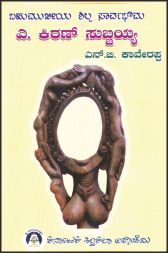
SculptorBF26jul2016

Title : Bahumukhiya Shilpi Sarvabhouma A. Kiran Subbaiah

Author : N.B. Kaverappa

Pages : 100 (including 20 pages of pictures)

Price : Rs. 100

Publisher : Ila Mudrana, Bengaluru

by Dr. Prakash Padakannaya

Recently I attended a book release function at Kalamandira where a Kannada book entitled ‘Bahumukheeya Shilpa Sarvabhowma A. Kiran Subbaiah’ was introduced and officially released in the presence of several artists, Academy officials, and art lovers of Mysuru. The book was authored and designed by N.B. Kaverappa, a well-known artist and founder of Bharani Art Gallery in the city. Karnataka Shilpakala Academy, Bengaluru, celebrating its 20th anniversary, is the publisher of this unique book.

I am not an expert on sculpture art but I was curious about the book and also the sculptor as I had heard many remarkable things about Kiran Subbaiah’s work from the author. After the function, I bought a copy of the book availing 50% discount offered on the book releasing day.

The book, though runs into only 71 pages, is very well designed with attractive cover page and several illustrative quality pictures without which the descriptions would have been incomplete. The editorial comments by L. Shivalingappa and preface by the author provide the necessary background for the book. The author, who knew A. Kiran Subbaiah personally for the past three decades, has been very successful in presenting the life and work of this extraordinarily talented sculptor and his magnificent sculpture in a lucid yet scholarly way.

The book has been divided into two parts. The first part, ‘inside the sculptor’s life’ deals with the life sketch of Mr. Kiran Subbaiah while the second part, ‘inner turmoil beneath the external looks of sculptures’ describes major works of the sculptor with illustrations. The first part narrates the innate aptitude that Mr. Subbaiha had from childhood for sculpturing; and his extraordinary and eventful yet dedicated saga of what he has accomplished in the field so far.

His passion for sculpturing was ignited when he visited Beluru-Halebidu temples during his college days. His prodigious skill was exemplified by the fact that he could master the entire syllabus of five year diploma course in sculpture at Chamarajendra Technical Institute, Mysuru, in just one year. It is irony that such a prodigy was forced to leave the Institute after three years of basic training (he was not allowed to go for advanced course by his supervisor though the same teacher in later years pleaded him to apply for the lecturer’s vacancy, which Mr. Subbaiah turned down). Such incidents also testify how creativity and dedication triumph over all odds.

Mr. Subbaiah’s perseverance and diligent experimentation in sculpturing with all kinds of stones made him probably one of the greatest contemporary sculptors of our land. Hailing from Kodagu, today he owns a museum of sculpture ‘Shilpanikethan’ in Mysuru, which houses hundreds of wonderful stone sculptures carved by him.

The author makes a sincere attempt at highlighting the sculptures sculpted by Mr. Subbaiah, in terms of both breadth and depth of sculptor’s creativity, in the second part of the book.

The illustrations of his work presented in the book demonstrate that Mr. Subbaiah is as proficient with traditional style as with contemporary and modern style. Normally a sculpture has only a front view. But Mr. Subbaiha has mastered the art of carving multifaceted or many-sided sculptures using a single stone (the same piece may depict one image when seen from front and a different image when seen from sides or back). It is like four different sculptors carving four different sculptures on four sides of a stone! This is an astounding feat by any standard!

Mr. Kaverappa describes the way Mr. Subbaiah goes about creating these multisided sculptures. It seems when Mr. Subbaiah has a piece of stone in front of him ideas keep running and he visualises them in his mind first. Then he makes a rough sketch directly on the stone and begins carving. When he has multiple ideas and icons in his mind’s eye, he first whittles all of them coarsely on the stone. Then, he starts the fine work simultaneously on all of them till they attain their proper shapes. Again, at the end he would start fine finishing work concentrating on one of them at a time.

The book also gives an account of a master piece in making, the most wonderful work of art by Mr. Subbaiah, the stone sculpture of ‘Lord Adishesha’ displaying 135 hoods with a special pedestal. When completed, this pedestal will also depict 45 snake Gods with different poses carved on it. Presently, Adishesha deity at Pashupathinatha temple in Nepal holds the world record with 108 hoods. Adishesha that Mr. Subbaiah is making with 135 hoods a height of 4 feet and 3 inches without the base (5 feet and 1.5 inches with the base) shall get that name and fame. Shree Yanthra, Om Yanthra, and Gayathri Manthra have been engraved on the back side of this unique statue. This statue carving took three years till now. It seems another 6-8 months’ hard work is required to finish the intricate carving of the main statue and the pedestal. According to Mr. Subbaiah, once he starts this arduous task, he has to devout at least 8-10 hours per day for this work for several months!

The author of the book has sprinkled some of his own observations on the work of Mr. Subbaiah throughout the book. One of them is related to the artists who have influenced Mr. Subbaiah. Kaverappa has mentioned the influence of Henry Moore, one of the greatest modern sculptors of 20th century, in Mr. Subbaiah’s creations. He has also rightly observed that five-sided sculptures (five in one) are not viable as a visual treat as it actually disturbs the composition of the sculpture as a whole. One cannot miss ubiquitous presence of ‘shringar rasa’ (flavour of erotic/ romantic love) in most of the contemporary sculptures of Mr. Subbaiah.

Editor of the book, L. Shivalingappa, in his foreword comments that depiction of shringar rasa theme in Mr. Subbaiah’s sculptures is a lot more powerful than words can explain. Mr. Subbaiah himself acknowledges that ‘…the female nude form…from time immemorial… has caught the fancy, imagination, liking and admiration of a vast majority of mankind, artists, sculptors and writers’ (page 19). Mr. Subbaiah is no exception!

The book gives us a list of multisided sculptures done by the sculptor since the year 2008, list of recognitions conferred, and a list of glossary along with the direct contact address of the sculptor at the end for the benefit of readers and art lovers. Some of the colour reproductions of original work are also excellent.

When I finished reading the book, I felt that there is a genius sculptor, probably one of the best in the country, living amongst us in ‘namma Mysuru’ without getting due recognition (may be it does not matter to Mr. Subbaiah). I do hope that this book will help people of Karnataka to know and feel proud of the genius sculptor in Appaneravanda Kiran Subbaiah. Both Karnataka Shilpakala Academy and N.B. Kaverappa should be commended for their great service to the art and culture of Karnataka by introducing this master sculptor and his works to the public. It is a must read book to all those interested in sculpture art.

About the author of the book

Author of this book, Nellamakkada B. Kaverappa (in pic.) is an eminent senior artist of Kodagu living in Mysuru. He is well-known as the founder of Bharani Art Gallery, the first private art gallery in the city that he established in 1994 with a noble purpose of promoting visual art. Artists who like to exhibit their work are given the gallery for free of rent and also an independent guest room to stay (also free) for the duration of the expo. Artists from neighbouring States as well as other countries such as Australia and Finland have exhibited their paintings in Bharani Art Gallery.

Mr. Kaverappa has immense interest and actively involved in creative visual art (multihued) and literature. As an artist, he has been part of many Karnataka Kala Melas. He exhibited his ‘Creation’ series of oil paintings at Ahmedabad, Gujarat and ‘Dance of Kodavas’ at India International Centre, New Delhi. He has been honoured by Karnataka Kodava Sahitya Academy (in art field), Kodava Samaja Bangalore and Kodava Samaja, Mysuru. His oil portrait of legendary ‘Haradas Appacha Kavi’ is the most authentic one and is displayed at Kodava Samaja Bangalore as a gift. He is also a frequent writer in Kannada and Kodava periodicals. He has translated two books for Karnataka Lalithakala Academy.

source: http://www.starofmysore.com / Star of Mysore / Home> Feature Articles / July 20th, 2016

Release of Book on JC Wadiyar’s compositions marks Vaggeyakaras’ Day

Pramoda Devi Wadiyar (fourth from left), who inaugurated the Vaggeyakaras’ Day celebrations organised by Karnataka Sangeetha Nritya Academy at Jaganmohan Palace in city on Monday, is seen releasing a book titled ‘Jayachamarajendra Wadiyar’s Compositions’ authored by Musicologist Karnataka Kalasri Vid. V. Nanjundaswamy (third from right). Others seen are Academy Member-Convenor Dr. Sukanya Prabhakar, KSGH Music and Performing Arts University VC Dr. Sarvamangala Shankar, Academy Chairperson Gangamma Keshavamurthy, Registrar Banashakari V. Angadi and author’s wife Prof. H.S. Umadevi Nanjundaswamy.

Mysuru :

“Jayachamarajendra Wadiyar’s contribution to music as a composer and critic will always be cherished by musicians,” opined Dr. Sarvamangala Shankar, Vice-Chancellor, KSGH Music and Performing Arts University.

She was speaking at a function organised by Karnataka Sangeetha Nritya Academy, Bengaluru, at Jaganmohan Palace in city on Monday to mark Vaggeyakaras’ Day.

Dr. Sarvamangala said that thousands of composers like Patnam Subramania Iyer, Bidaram Krishnappa and Mysore Vasudevacharya laid a strong foundation for music with rich literature. She added that music and literature were both soothing elements for mind but not just that as a music should have a good literature for real value.

Pramoda Devi Wadiyar, who inaugurated the programme, also released the book ‘Jayachamarajendra Wadiyar’s Compositions,’ authored by Musicologist Karnataka Kalasri Vid. V. Nanjundaswamy, on the occasion. The day also witnessed Dr. Veena and troupe rendering compositions of Mysore Vasudevacharya and Jayachamarajendra Wadiyar, lecture by the author, veena recital by Vidu. Rajalakshmi and troupe and violin duet by Tejas Manjunath and Pranav Manjunath.

Academy Chairperson Gangamma Keshavamurthy, Registrar Banashakari V. Angadi and others were present.

source: http://www.starofmysore.com / Star of Mysore / Home> General News / July 20th, 2016

In her shoes

Special Arrangement / The Hindu

The fascinating story of Anu Vaidyanathan, the first Asian woman to compete in Ultraman Canada.

As someone who goes to bed praying the morning papers will publish findings that pizza is good for weight loss, two questions popped up when I read Anywhere but Home: Adventures in Endurance, written by Anu Vaidyanathan, “the first Asian female to have competed in Ultraman Canada”. It sounds suspiciously like auditioning for a superhero movie set in Nova Scotia, but what is it really? The answer is easy enough, as it exists in the finite and definable realms of sport and mathematics: a 10-km swim, a 420-km bike ride, and an 84.4 km run. (Four weeks later, again in Canada, Vaidyanathan switched her allegiance to a different superhero: Ironman. This time, a 3.8 km swim, a 180-km bike ride, a 42.2 km run.) I then asked the tougher question, the answer to which lies in the diffuse dimensions of metaphysics: Why?

I get why people climb the Everest. It sounds like something you’d want on your obituary note, or at least your Facebook post. But what glories can swimming, running and biking bring? As it turns out, Vaidyanathan is searching for a “why” too.

Despite the broad motivational-poster nature of the narrative (sample quote: “If it were easy, it wouldn’t be worth doing”), Anywhere but Homeis also an intimate portrait of a single woman in India — “a quintessential Tamilian Brahmin — five times a year at least, during Pongal, Nombu, Ganapathi Chaturthi, Krishna Jayanti and Deepavali” — brushing off the “when are you going to settle down?” question, training on bad roads, without much money for equipment, putting her body through unimaginable stress, all because… Because… The answer, finally, comes from writer and Holocaust survivor Victor Frankl. What athletes do with their goal-setting “frees them up from commerce or the meaningless pursuit of goals that depend on other people’s validation.” The other reason: “the grand challenges of survival were absent because we were children of luxury.” Hence the transformation of life into a hurdle race with a series of self-imposed challenges.

Vaidyanathan writes like a runner — breathlessly, without getting sidetracked. The pages seem to pant. The prose is observant (“watching dark grey clouds tease the distance between them and my rear-view mirror”), if sometimes too cute (a chapter is titled “An Inheritance O’Floss”). And often very funny, in the way everything circles back to running, even romance. About an early boyfriend, she writes, “I think I was in love. You would have to be, with a boy who took you on a 13-km run through the woods on a first date.” Later, she writes about dating a tall, soft-spoken German boy who did not understand why a ride was so much more exciting than a movie. “Miffed with his lack of understanding, I took off on a long run.”

I must say I saw the German boyfriend’s point. Vaidyanathan is quite a character, someone whose idea of a memorable Thursday includes a 3.5-km swim, a two-hour run, an hour of commuting on the bike, and 30 minutes of upper-body weights. (One can only imagine what her idea of a perfect Valentine’s Day is.) She never seems to rest. If she’s not working towards a PhD in Electrical Engineering, she is at home in Bangalore plunging into a start-up.

Anywhere but Home is mostly the story of a solitary pursuit but filled with family and friends. We meet the people Vaidyanathan leaves behind when she goes off on her runs and bikes and swims, the people she yearns to be with while living out of suitcases. We get to know her roommates and boyfriends (though we never seem to know when the relationships ended). We meet members of the running community, people who seem to think nothing of scrounging up enough money to fly off to exotic locations (Brazil! China!) for endurance events. And everyone is so giving. During a run, when Vaidyanathan was suffering from dehydration, sleeplessness and worries about an unsupportive crew, “Lena held my hand for nearly two kilometres, running alongside me, reminding me to never give up.”

The last chapter deals with another sort of hand-holder, finding “someone crazy enough to marry me”. And we sense a calming down, especially after the birth of Vaidyanathan’s son. “Giving birth brought with it a moment of great clarity. There was magic beyond what any class in engineering, science or objective observation had taught me. However, to sustain that magic past the endorphin rush of birth would involve a great deal of humility… Overnight, I went from being someone’s daughter to being someone’s mother.”

The epiphany lasted about six weeks. Soon, Vaidyanathan was back on the road, participating in a 10 km race. It wasn’t easy, but she finished, “just for the pleasure of having my son know that his mother embraced life’s challenges.”

Anywhere But Home: Adventures in Endurance; Anu Vaidyanathan, Harper Sport, Rs. 350.

source: http://www.thehindu.com / The Hindu / Home> Books> Literary Review / by Baradwaj Ranjan / July 23rd, 2016

Bengaluru students develop gloves for speech impaired

The team of engineers with their mentor H R Nandi Vardhan

Bengaluru :

A team of engineering students has developed a glove that converts sign language into voice, helping people with speech impairment communicate better.

The smart glove, named Mudra ,converts gestures recognised under Indian sign language into spoken English.

The prototype that can convert gestures into speech

The prototype was developed by the students of Amrita School of Engineering — Abhijith Bhaskaran, Anoop G Nair, Deepak Ram and Krishnan Ananthanarayanan — as part of their final year project.

“In Sanskrit, mudra means gesture,” says Krishnan.

The idea for the project was born when the students were discussing the problems faced by the differently-abled. “As engineers, we wanted to give back to society. That is how we came up with this idea,” says Anoop.

Explaining how the device works, he says, “The flex sensor in the glove predicts the orientation of the fingers. The gyrometer, accelerometer and magnometer predict the movements of the hand in a 3D space. The sensor processes this data and produces audio output through the speaker.”

“We will start developing the device in two to three weeks,” he adds.

The team took 16 weeks to build the prototype and spent Rs 7,500. The glove can currently recognise numbers 1 to 10, and gestures corresponding to words such as morning, night, goodbye and thank you.

It can detect four different positions of each finger, and as many as 70 gestures can be configured. “We have begun validating its social feasibility. The preliminary results are very encouraging,” says Abhijith.

A lot of research went into the project, chips in Deepak. “We didn’t know how to go about it at first. We then studied about various sensors, their uses and the materials that can be used.”

The team claims that there are no side effects of using this glove and it is as comfortable as a riding glove.

H R Nandi Vardhan, assistant professor, Department of Electronics and Communication Engineering, mentored the team. “Initially, we thought of using a camera. But we realised that the cameras would be expensive and non-portable.”

While the gloves are only in the prototype stage, the team is looking for people to invest in the product. Once the cost is minimised, it can hit the markets.

source: http://www.newindianexpress.com / The New Indian Express / Home> Cities> Bengaluru / by Akhila Damodaran / July 23rd, 2016

Kolkata Metro to chug on Bengaluru-made wheels

Rail Wheel Factory gets nod to supply wheels to Kolkata Metro

Bengaluru :

The Rail Wheel Factory (RWF) in Yelahanka has been given the green signal to supply wheels to Kolkata Metro Rail Corporation. This marks the first time any Metro Rail in the country has opted for cast wheels for coaches, opening up a whole new market for the factory.

The clearance was given on Monday by the Research Design and Standards Organisation, Lucknow, an organisation under the Ministry of Railways, Rajeev Gupta, General Manager of RWF, told Express.

“We will be providing wheel sets (wheels and axles) for the coaches of the Kolkata Metro, which are being readied at the Integral Coach Factory in Chennai. They will initially be supplied for the trial runs of three coaches of a Metro train, which would be 24-wheel sets,” the GM said.

This followed three months of negotiations and paper work between the Kolkata Metro and RWF. The trial runs could take place over a year since it is a whole new experiment being undertaken of using cast iron wheels for Metro coaches. “When it is successful, we will be permitted to supply wheels. We could bag an order to supply between 500 and 1000 wheels,” Gupta said.

When asked about the chances of it passing the trial runs, he said, “We will sail through it. We have successfully conducted the Finite Element Analysis test, which is a simulation test done emulating a train running at high speed.” The fastest Metro trains run at a speed ranging between 60 to 70 kmph. “Our wheels run at 110kmph regularly and all Rajdhani trains have them. They can touch up to 130 kmph,” Gupta said.

RWF, the country’s largest manufacturer of wheels sets, had approached Delhi Metro Rail Corporation and Bangalore Metro Rail Corporation in connection with the supply of wheels. “However, since Metro trains only use forged iron wheels which are imported, RWF was not able to convince them to make it a wheel-supplier.” It has the capacity to manufacture nearly 2 lakh wheels and 72,000 axles by casting technology.

source: http://www.newindianexpress.com / The New Indian Express / Home> States> Karnataka / by S. Lalitha / July 22nd, 2016

IISc. to prepare biodiversity mapping of Permude GP area

T. V. Ramachandra
T. V. Ramachandra

The Centre for Ecological Sciences at the Indian Institute of Science (IISc.), Bengaluru, will prepare the biodiversity mapping of Permude Gram Panchayat area soon, according to T.V. Ramachandra, a scientist at the centre.

Speaking at a workshop on ‘Biodiversity and natural resources’ organised by St. Aloysius College here on Saturday, he said that a survey of biodiversity under the jurisdiction of the panchayat would be conducted for two days from Sunday.

Mr. Ramachandra said that there was a proposal to set up industries covering the Permude Gram Panchayat area under the Mangaluru Special Economic Zone. The government could take a call based on the study report by the IISc.

He said that gram panchayats should prepare a people’s biodiversity register under the Biological Diversity Act, 2002. It is a gram panchayat-level register that documented local biodiversity and the local community’s traditional knowledge on biodiversity including its conservation and traditional uses. But most gram panchayats in the country did not prepare it. The register helped gram panchayats take decisions.

Replying to a question from a participant, Mr. Ramachandra disagreed with the government’s claim that the tree cover in the country was increasing.

“They [some government officials] are considering even area under paddy as tree cover,” he said adding that independent researchers should come forward to conduct a field study and prove how some of the claims of government officials were misleading.

Unless independent researchers proved the reality with accurate data, the government believed the data provided by its officials.

“They [government officials] are giving wrong data. There is a need to counter it with facts,” Mr. Ramachandra said adding that tree cover in many districts was coming down. “For example, it was down by 45 per cent in Shivamogga district,” he said.

Mr. Ramachandra said that there should be seven trees per person.

The three-day workshop organised by the college included field study for its students. A team of resource persons from the IISc. spoke on different aspects of biodiversity.

They spoke on documentation of biodiversity, data management and publication. The students and faculty of the college were informed about the methods of assessing village biodiversity, undertaking biodiversity studies of terrestrial and aquatic ecosystems.

Swebert D’Silva, principal of the college, was present.

source: http://www.thehindu.com / The Hindu / Home> News> Cities> Mangaluru / Special Correspondent / Mangaluru – July 24th, 2016

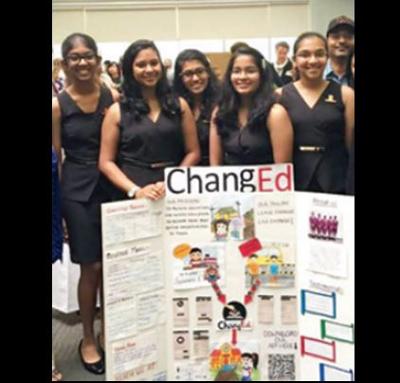
All-girl team bags tech award in San Francisco

ChangEDbf19jul2016

Age is no barrier for Nidhi Nair, Aanchal Agarwal, Suchrithaa Rajkumar, Vidhi Kothari and Anushka P Nair. The 14-year-olds won the People’s Choice Award across all categories and bagged second place in the middle-school category at the coveted Technovation Challenge 2016 in San Francisco, USA.

This was not the first feather in their cap. The girls were also in the team that earned Prime Minister Narendra Modi’s appreciation in the Digital India and Save the Girl Child initiatives.

For the People’s Choice Award, the 9th graders of New Horizon Public School (NHPS), Indiranagar, competed with 400 teams from across the globe to devise an Android app they call ChangEd, that stood for Change for Education through Donation. Through this app, NGOs working in the education sector could sign up and have their projects funded through donations. The product enabled users to donate even small change using payment gateways like Paytm.

ChangEd used its inbuilt intelligence to route the donations to NGOs, based on factors like urgency of the demand and amount required.

Suchrithaa Rajkumar said: “It was great exposure for us. It taught me how to deal with unexpected situations.” Teammate Vidhi Kothari agreed: “It was great to meet so many worshippers of technology .” The team started preparing a model of the app when they were in the 8th grade and submitted their idea in 2016.

They received the award on July 14 at the competition organized by Adobe Foundation, CA Technologies, Google, Verizon, Intel, Oracle, Dropbox, United Nations Women, UNESCO and MIT Media Lab.

“This is not just any achievement. It signifies a triumph of girl power and teamwork… These are the precise values we try to inculcate in students at NHPS,” said Sandhya Raman, principal.

source: http://www.timesofindia.indiatimes.com / The Times of India / News Home> City> Banglaore / TNN / July 19th, 2016

Revival of Bhutanal tank to be completed by October

Dredging of Bhutanal tank under way near Vijayapura.—Photo: Rajendra Singh Hajeri

The century-old Bhutanal tank here is all set to get revived by October as the work to fill the tank is nearing completion.

Lorries and earthmovers have been engaged in dredging the tank and a pipeline is being laid to draw water from the Krishna. “The dredging work is expected to be completed by August 15 and the pipeline laying work by October. The tank, constructed in 1911, is being revived for the first time,” Rajendra Rudagi, Assistant Engineer, who is monitoring the project, said.

He told presspersons during a visit here on Friday that of the 3.94 lakh cubic metres of silt, 2.75 lakh cubic metres had been removed. Mr. Rudagi said that the tank was spread over 322 acres while the catchment area covered around 87 km. He said that the tank had four rivulets from which water flew to it during the monsoon. “One rivulet comes from Torvi village, two from Ittangihal village and one from Kardendoddi village,” Mr. Rudagi said. The official said that as these water sources were closed for decades, the rivulets were being cleaned for easy flow of water to the tank. Mr. Rudagi said that filling the tank would not only help supply drinking water to the city but also recharge the ground water in the catchment areas.

source: http://www.thehindu.com / The Hindu / Home> National> Karnataka / by Staff Correspondent / Vijayapura – July 16th, 2016

Bengaluru biker becomes first Indian to compelete the Trans Am Bike Race in US

Bengaluru biker becomes first Indian to compelete the Trans Am Bike Race in US

A practice that began as an 18-kilometre cycle ride to school every day in the suburbs of Manipur’s Thoubal district has culminated into Thoudam Opendro Singh becoming the first Indian to complete the Trans Am Bike Race (TABR) in the US, covering a distance of 4,400 miles in less than 25 days. A resident of Bengaluru for nearly two decades, Opendro is an avid cyclist , who has been regularly taking part in long-distance biking tours in and around Karnataka as well as in Maharashtra and Tamil Nadu.

Describing his recent feat as a fantastic experience, the 38-year-old technical professional says, “TABR is an annual self-supported, ultra-distance cycling race across the US that follows a specific trail, covering 10 states. I rode from the north-west coast to south-east coast of the country with a group of bikers. The race started at Astoria in Oregon and went on to Idaho, Montana and Wyoming in the north, Colorado, Kansas and Missouri in the central part and Illinois, Kentucky and Virginia in the east. Yorktown in Virginia was the finish point.”

From idyllic countryside to hilly terrains as high as 11,500 feet from the sea level, this race packs quite an adventurous trip, according to Opendro. “During the initial days of the journey, we either camped at a particular location or tucked ourselves into sleeping bags outside petrol pumps or other public places. But later, when the weather started becoming colder at high altitudes, we halted at motels overnight and then hit the road in the morning,” he adds.

So, do you think resorting to bicycles can be a solution to Bengaluru’s growing traffic and pollution? “Although Bengaluru is expanding in area, when it comes to commuting space, the city is rapidly shrinking. We have a lot of cycling enthusiasts in the city, and clubs and groups supporting them. But to make cycling a regular mode of transport, more constructive efforts need to be made and common people made me aware of the benefits of the cycling,” he sums up.

www.timesofindia.indiatimes.com / The Times of India / News Home> City> Bangalore / Reema Gowalla / July 16th, 2016

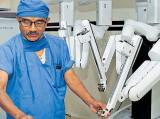
Kidwai first govt hospital to get machine for robotic surgery

KidwaiBF14jul2016

Kidwai Memorial Institute of Oncology has become the first government hospital in Karnataka to set up a robotic machine to perform critical oncological surgeries.

The Centre has contributed Rs 12 crore for the Rs 16-crore machine known as Da Vinci Xi Surgical System, with the institute bearing the rest of the cost.

“This machine can perform critical surgeries in sensitive parts of the body including stomach, without causing any pain or infection. Since it does not involve any side effects, patients are cured soon,” said institute director Dr K B Lingegowda.

Head of the surgery department, Dr Krishnamurthy said, “All kinds of surgeries can be performed with ease using the robotic machine including oesophagus, rectum, prostate and uterus cancer.”

Cost not an issue

Dr Krishnamurthy added that the cost of the surgery was very high with the tools used in the surgery alone costing between Rs 80,000 and Rs 1 lakh.

“However, the cost is not an issue for patients getting treatment at our hospital under various government schemes,” he said. Dr Krishnamurthy said doctors will visit Korea to train on the machine and added that on an average, the machine can perform two surgeries a day.

source: http://www.deccanherald.com / Deccan Herald / Home> City / DHNS – Bengaluru, July 14th, 2016